Author

admin

Browsing
  • Many of these contests have implications for conference tournament seeding and March Madness positioning.
  • Key matchups include North Carolina at Duke, Florida at Kentucky, and Michigan State at Michigan.
  • Several teams, including Duke and Florida, have already secured their conference’s regular-season titles.

The final weekend of the regular season in many collegiate sports usually means a rivalry game. That is indeed the case in many basketball hotbeds around the nation as the men’s campaign concludes.

While these contests always mean bragging rights, there’s a bit more on the line for some of the involved teams as they hope to improve their positions for upcoming conference tournaments and of course for March Madness. Our last edition of the Starting Five offers Saturday double dips in the ACC and SEC, and the weekend lineup concludes with a Sunday top-10 showdown in the Big Ten.

Here’s a look at our picks of games to watch.

No. 22 Vanderbilt at No. 25 Tennessee

Time/TV: Saturday, 2 p.m. ET, ESPN.

A Tennessee win would complete a sweep of its in-state foe as well as lock in an SEC tourney double bye for the Volunteers. The 4 seed could also be in play for the Commodores if some tiebreakers go their way, but toppling the archrival Vols will be incentive enough. Their first encounter in Nashville was played at Tennessee’s preferred deliberate pace resulting in a 69-65 victory, so Vandy’s back-court duo of Tyler Tanner and Duke Miles will need some early makes to increase the tempo. Tennessee hopes to have top scorer Nate Ament back in the lineup after he sat out the win at South Carolina, but if he can’t go the interior defense will still be formidable thanks to J.P. Estrella and Felix Okpara.

Louisville at No. 23 Miami (Fla.)

Time/TV: Saturday, 2 p.m. ET, ESPNU.

The Hurricanes’ win at SMU this week effectively locked them into the No. 3 seed for the ACC tournament, but they’d still like to close the regular season on a high note on their home floor. The Cardinals have dropped their last three league road contests and could use a confidence boost entering the postseason. While a healthy Mikel Brown is capable of going nuclear, Ryan Conwell has been the steady hand in the Louisville lineup who will also demand attention from the Miami defense. The Hurricanes are led by the inside-out combo of Malik Reneau and Tre Donaldson.

No. 5 Florida at Kentucky

Time/TV: Saturday, 4 p.m. ET, ESPN.

With the SEC regular-season title secured, the Gators now turn their attention to improving their path to a repeat NCAA crown with a top regional seed. They’ll look to take the next step toward that goal at the expense of the wildly inconsistent Wildcats, who have likely done enough to remain on the right side of the bubble but seem destined for a brief stay in the dance. The Gators’ nine-point triumph over Kentucky in Gainesville three weeks ago was part of the late-season scoring surge for Xaivian Lee, whose contributions from the perimeter have made Florida’s experienced front line even more dangerous. The Wildcats will have to count on Otega Oweh to take advantage of the friendly rims at Rupp Arena.

No. 18 North Carolina at No. 1 Duke

Time/TV: Saturday, 6:30 p.m. ET, ESPN.

Like the SEC, the ACC race is already settled with the Blue Devils again ahead of the field. That will hardly affect the charged atmosphere at Cameron Indoor Stadium as Duke looks to avenge its lone league loss at the expense of its most despised rival. The Tar Heels will likely see Duke again in less than a week, but again, there will be no lack of intensity on either side. There might be good news for UNC if Caleb Wilson is able to return from a month-long absence due to a hand injury. The Heels have handled several opponents without him, but that likely won’t apply to Duke. Expect another big night from the Blue Devils’ Cameron Boozer as he plays for what will almost certainly be the final time in front of the Crazies.

No. 8 Michigan State at No. 3 Michigan

Time/TV: Sunday, 4:30 p.m. ET, CBS.

The Big Ten race is – stop us if you’ve heard this one before – over. The Wolverines have the top seed in hand, and the Spartans also have a double bye clinched. But did we mention this is a rivalry game? This one is also a rematch, with the Wolverines taking the first meeting 83-71 in East Lansing on Jan. 30. The Spartans had no answer for Michigan’s Yaxel Lendeborg in that one, though they’re hardly alone in that regard. When Michigan State needs to make something happen, Jeremy Fears is usually involved.

This post appeared first on USA TODAY

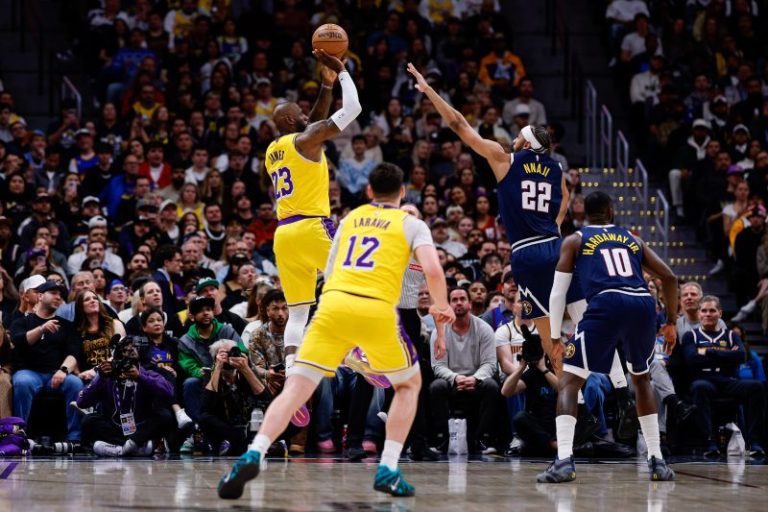
LeBron James has broken yet another NBA record held by Kareem Abdul-Jabbar.

In the final seconds of the first quarter of the Los Angeles Lakers’ game against the Denver Nuggets on Thursday night, James posted up Zeke Nnaji along the baseline before hitting him with a turnaround fadeaway for the 15,838th made field goal of his career — the most all-time by a player.

Though he passed Abdul-Jabbar as the NBA’s all-time leading scorer in 2023, the fact that it took another three years to surpass him in made field goals speaks to the evolution of the game, and the power that the 3-ball and the free throw line have in today’s NBA.

James and Abdul-Jabbar are the only two players to score at least 15,000 career field goals; the next closest is Karl Malone with 13,528. The only other active player in the top 10 is Kevin Durant, who is in ninth with 11,075.

Most field goals made in NBA history

Here’s the top 10 list, per the NBA:

This post appeared first on USA TODAY

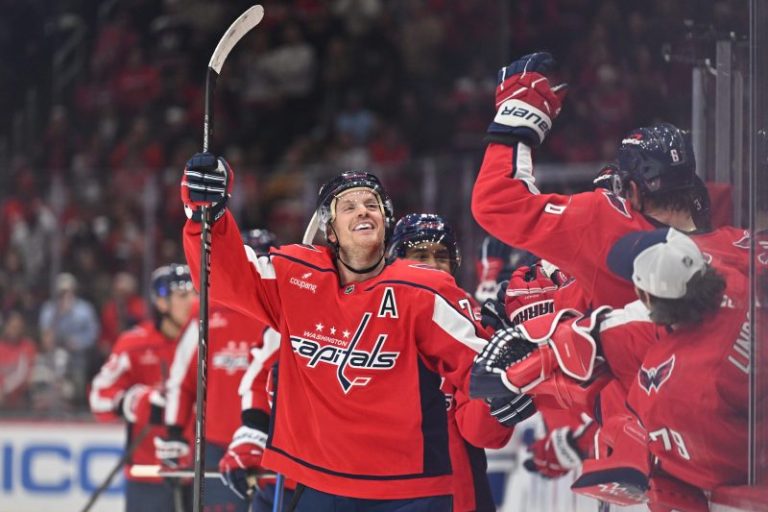
The Washington Capitals traded longtime defenseman John Carlson to the Anaheim Ducks early Friday morning in one of the surprise moves of the NHL trade deadline. At least on the surface.

Carlson, 36, has been a career Capital, appearing in 1,143 games for the franchise over 17 seasons after he was selected with the 27th overall pick in the 2008 NHL Draft. He owns basically every major franchise record for a defenseman — games played, goals (166), assists (605) and points (771) — and was a key component of the franchise’s breakthrough Stanley Cup win in 2018. He finished in the top five in Norris Trophy voting three times, including a runner-up finish in 2019-20.

‘Since joining our organization 17 years ago, John Carlson has exemplified what it means to be a Washington Capital every day,” Capitals GM Chris Patrick said in a statement. “John’s determination, leadership, persistence and skill helped our franchise reach new heights and cemented him as a cornerstone and one of the greatest players in Capitals history. His contributions to our organization and the Washington, D.C., community both on and off the ice have been immeasurable.

‘We are incredibly grateful for everything John has given to our team and wish him and his family nothing but the best moving forward with Anaheim.”

So … who won the deal?

Capitals trade grade: A-

Sentimentality aside, getting a first-round pick — either this summer if the Ducks make the playoffs or next year — and third-round pick for a 36-year-old defenseman who will be a free agent this summer is a tidy bit of business. The Capitals are just four points out of the playoffs, but they are tied for the most games played in the conference. They made a shrewd decision to throw in the towel in what seems to be a seller’s market, earlier on Thursday trading another veteran in Nic Dowd.

The Capitals now have 22 picks in the next three NHL drafts and clearly have their eyes on the future … which could also see franchise icon Alex Ovechkin depart this summer with the 40-year-old’s contract set to expire. A trade of a franchise icon is never fun, but this move helps set the Capitals up for more winning down the road.

Ducks trade grade: B+

This trade feels very much like a win-win as the Ducks are adding a defenseman who can still get it done, particularly on the offensive end. Carlson has been quite productive again this season, scoring 10 goals and dishing 36 assists for 46 points in 55 games. He carries a plus-11 rating.

He also brings loads of playoff experience for a team that hasn’t played spring hockey in a while, having appeared in 137 postseason contests, winning the Stanley Cup in 2018. That’s the last year the Ducks made the playoffs. Maybe you’d like to keep your first-round pick, but getting a player like Carlson comes at a price; plus, Anaheim is already oozing with young talent thanks to its years in the wilderness.

This post appeared first on USA TODAY

First Majestic Silver (TSX:AG,NYSE:AG) CEO Keith Neumeyer’s silver price prediction of over US$100 per ounce came true in 2026. When will silver prices make a more lasting hold in triple digit territory?

The silver price was up over 189 percent year-on-year as of March 2, 2026, on the back of economic uncertainty and ongoing geopolitical tensions, as well as support from long-term demand fundamentals.

The silver price broke through its previous all-time high in October 2025, blasting through the US$50 per ounce mark. From then, it rallied to new highs again and again.

Only a few weeks into 2026, the price of silver finally hit triple digits when it overtook the US$100 level. It went on to rise to its latest all-time high of US$121.62, which it set on January 29, 2026.

The catalysts for silver’s price surge above the critical US$100 level included the trade tensions between the US and Europe following US President Donald Trump’s renewed bid for Greenland; Trump’s public statements about possible military airstrikes on Iran; and a significant structural supply deficit exacerbated by increased institutional investment demand.

Well-known figure Keith Neumeyer, CEO of First Majestic, had frequently said he believes the white metal could hit the US$100 mark or even reach as high as US$130 per ounce.

Neumeyer has voiced this opinion often over the past decade. He put up a US$130 price target in a November 2017 interview with Palisade Radio, when silver was just US$17 per ounce. He reiterated his triple-digit silver price forecast in multiple interviews with Kitco over the years, including one in March 2023.

In 2024, Neumeyer made his US$100 silver call in a conversation with ITM Trading’s Daniela Cambone at the Prospectors & Developers Association of Canada (PDAC) convention, and in April of that year he acknowledged his reputation as the ‘triple-digit silver guy’ on the Todd Ault Podcast.

Speaking with Chris Marcus of Arcadia Economics on January 16, 2026, a day after the price of silver had broken through US$93 per ounce for the first time, Neumeyer stated that “triple digits is definitely on its way.” He was finally proven right less than two weeks later.

At times Neumeyer has been even bolder, suggesting in 2016 that silver could reach US$1,000 if gold were to hit US$10,000.

In order to better understand where Neumeyer’s opinion comes from and why a triple-digit silver price finally materialized, it’s important to take a look at the factors that affect the metal’s movements, as well as where prices have been in the past and where other industry insiders think silver could be headed.

First, let’s dive a little deeper into Neumeyer’s US$100 silver prediction.

In this article

    Why has Neumeyer called for a US$100 silver price?

    Neumeyer’s belief that silver could hit US$100 is based on a variety of factors, including its consistent deficit, its industrial demand and how undervalued it is compared to gold.

    When he first made the prediction more than a decade ago, there was significant distance for silver to go before it could reach the success Neumeyer had boldly predicted.

    Neumeyer expected a triple-digit silver price in part because he believed the market cycle could be compared to the year 2000, when investors were sailing high on the dot-com bubble and the mining sector was down. He believed it was only a matter of time before the market corrected, like it did in 2001 and 2002, and commodities would see a big rebound in pricing. It was during 2000 that Neumeyer himself invested heavily in mining stocks and came out on top.

    “I’ve been calling for triple-digit silver for a few years now, and I’m more enthused now,” Neumeyer said at an event in January 2020, noting that there are multiple factors behind his reasoning. “But I’m cautiously enthused because, you know, I thought it would have happened sooner than it currently is happening.”

    Another factor driving Neumeyer’s position is his belief that the silver market is in a deficit at a time when demand is rising from new industrial sectors. In a December 2023 interview with Kitco, Neumeyer stressed that silver is more than just a poor man’s gold and he spoke to silver’s important role in electric vehicles and solar cells.

    In line with this view on silver, First Majestic is a member of a consortium of silver producers that in January 2024 sent a letter to the Canadian government urging that silver be recognized as a critical mineral.

    Silver’s inclusion on the list would allow silver producers to accelerate the development of strategic projects with financial and administrative assistance from the government.

    In this 2024 PDAC interview, Neumeyer once again highlighted what he says is a sizable imbalance in the silver’s supply-demand picture. “We’re six years into this deficit. The deficit in 2024 looks like it’s gonna be bigger than 2023, and why is that? Because miners aren’t producing enough silver for the needs of the human race,” he said.

    More controversially, Neumeyer is of the opinion that the white metal will eventually become uncoupled from its sister metal gold, and should be seen as a strategic metal due to its necessity in many everyday appliances, from computers to electronics, as well as the technologies mentioned above. He has also stated that silver production has gone down in recent years, meaning that contrary to popular belief, he believes the metal is actually a rare commodity.

    Neumeyer’s March 2023 triple-digit silver call was a long-term call, and he explained that while he believed gold would break US$3,000 that year, he thought silver will only reach US$30. However, once the gold-silver ratio is that unbalanced, he believes that silver will begin to take off, and it would just need a catalyst.

    ‘It could be Elon Musk taking a position in the silver space,’ Neumeyer said. ‘There’s going to be a catalyst at some time, and headlines in the Wall Street Journal might talk about the silver supply deficit … I don’t know what the catalyst will be, but investors and institutions will wake up to the fundamentals of the metal, and that’s when it will start to move.’

    In 2024, gold experienced a resurgence in investor attention as the potential for US Federal Reserve interest rate cuts came into view. In an interview with Cambone at PDAC 2024, Neumeyer countered that perception, stating, “There’s a rush into gold because of the de-dollarization of the world. It has nothing to do with the interest rates.”

    In an April 2025 Money Metals podcast, Neumeyer reiterated his belief that silver is in an extreme supply deficit and that eventually silver prices will have to rise in order to incentivize silver miners to dig up more of the metal.

    ‘You need triple-digit silver just to motivate the mining companies to start investing again because the mining companies aren’t going to make the investment because there’s just so much risk in it,’ he said.

    After the price of silver surged from the US$50 level up into more than US$70 per ounce in late December 2025, Neumeyer actually cautioned investors not to get too excited about a potential quick run to US$100 during an interview with The Deep Dive.

    “I’m crossing my fingers that it doesn’t go to US$100 on this move. I don’t think that would be particularly healthy at all. I would prefer to see it start to slow down here and chalk a little bit sideways for two to three months and find a level that people can get use to. It’s going to take sometime for people to get used to US$70 silver,” he advised.

    While he admitted high silver prices are great for silver producers such as First Majestic and their shareholders, he said “personally, I’d rather see some stability,” and have silver reach triple digits in 12 to 24 months out so that the mining sector has more time to react and better take advantage of higher silver prices.

    A month later, when silver was above US$100 per ounce, during an interview with Kitco at the 2026 Vancouver Resource Investment Conference (VRIC), Neumeyer said, “calling triple digit silver and it’s actually happening is pretty interesting,” but he believes it’s still early stages in this new bull market and he’s done predicting metals prices.

    “What we do know is that we’ve created a new pricing paradigm, we’re not going back to the old pricing that we’re all used to over the past 20 or 30 years,” he added.

    What factors affect the silver price?

    In order to glean a better understanding of the precious metal’s chances of breaching the US$100 range again, it’s important to examine the elements that could push it to that level or pull it further away.

    The strength of the US dollar and Fed rate changes are factors that will continue to affect the precious metal, as are geopolitical issues and supply and demand dynamics.

    Although Neumeyer believes that the ties that bind silver to gold need to be broken, the reality is that most of the same factors that shape the price of gold also move silver.

    For that reason, it’s helpful to look at gold price drivers when trying to understand silver’s price action. Silver is, of course, the more volatile of the two precious metals, but nevertheless it often trades in relative tandem with gold.

    First, it’s useful to understand that higher interest rates are generally negative for gold and silver, while lower rates tend to be positive. That’s because when rates are higher, investment demand shifts to products that can accrue interest.

    The Fed’s rate moves have played a key role in pumping up silver prices over the past year. However, Trump doesn’t think Fed Chair Jerome Powell is lowering rates fast enough.

    Trump’s feud with the Fed over interest rates escalated in early January 2026 when the US Department of Justice served the Fed with grand jury subpoenas targeting Powell with a criminal indictment. The uncertainty over Fed independence is driving gold prices higher as investors expect a weaker dollar.

    While central bank actions are important for gold, and by extension silver, another key price driver lately has been geopolitical uncertainty. The past decade has been filled with major geopolitical events such as the Israel-Hamas conflict, the Russia-Ukraine war, and rising tensions between the US and other countries including Russia, China and Iran, and more recently Venezuela, Canada and Denmark.

    Trump’s tariffs have also rattled stock markets and ratcheted up the level of economic uncertainty pervading the landscape in 2025 and continuing into this year. This has proved price positive for gold and silver, with silver outperforming gold in the last year.

    However, silver’s industrial side can not be ignored. In an economically uncertain environment, the industrial case of silver could weaken in the short term, but in the longer term silver’s demand side is still highly prospective for larger gains.

    Samuelson explained in March 2025 that silver is particularly vulnerable to a supply shock as the London Bullion Market Association’s physical silver supplies had already decreased by 30 to 40 percent, while gold had only lost 3 to 4 percent.

    The next month, Smirnova explained that silver has been in a supply deficit of 150 million to 200 million ounces annually, but production has been stagnant or declining over the past decade.

    Looking at the runup in silver prices into the triple digits that occurred in late 2025 to early 2026, this structural supply-demand deficit, magnified by an explosion in industrial demand for solar energy and AI data centers, played an outsized role. Further adding fuel to the fire was record-low physical inventory levels in COMEX and Shanghai vaults, which caused a shift from ‘paper’ silver to physical hoarding.

    Higher industrial demand from emerging sectors due to factors like the transition to renewable energy and the emergence of AI technology will be highly supportive for the metal over the next few years. Solar panels are an especially exciting sector as manufacturers have found increasing the silver content increases energy efficiency.

    Frank Holmes of US Global Investors (NASDAQ:GROW) said in a December interview that silver’s “ability to be a transformative part of renewable energy,” particularly in solar panels, is an outsized factor in the latest run in the silver price. “And I don’t think that is going to go away,” he added.

    Could silver hit US$100 per ounce again?

    It seems likely that we will reach a US$100 per ounce silver price again in 2026 as there is plenty of support for Neumeyer’s belief that the metal is undervalued and that “ideal conditions are present for silver prices to rise.”

    For much of 2025, silver and gold rose higher on factors including persistent inflationary pressures brought on by Trump’s aggressive tariff announcements and the ongoing geopolitical risks in the Middle East. The commodity’s price uptick also came on the back of very strong silver investment demand.

    In the fourth quarter, silver rapidly outpaced gold’s gains, and by early January silver reached US$95, more than doubling in value from its Q3 close of US$46. It continued higher to breach US$120 by the end of the month.

    While silver and gold prices both pulled back significantly over the following days, silver spent February consolidating and stabilized above the US$80 mark in the second half of the month.

    On March 1, the silver price once again approached the US$100 mark as the US started a war with Iran, peaking at US$96.40 before seeing a smaller pull back.

    As silver’s momentum continues upwards and the price stabilizes at these higher values, silver market experts are agreeing with Neumeyer’s triple-digit silver hypothesis that the price of silver still has further room to grow.

    “You know, whether in the short term or the long term, one way or another, we’re going to run into a supply demand brick wall. And when that day happens, we could see triple-digit silver prices in a very, very short period of time,” he said. “I figure it’s going to be US$200 to US$400 an ounce, at least, before this is all over.”

    This set up bodes well for those not only invested in physical silver, but in silver mining stocks as well.

    “I have to be honest, I was not necessarily expecting triple-digit silver this quite this fast,” he said. “I was saying, if and when we break through US$54 silver, then the path of least resistance becomes a conservative, measured move target of US$96 or within a few pennies … So, I’m not really surprised at all, and in fact, I think we’re headed higher in the fullness of time.’

    Penny sees Fed policy actions as a potential catalyst for silver’s next leg up.

    “I think it’ll be the Fed’s response to the next crisis that causes the big move, the 1979 moment where you go up,” he explained, noting that in 1979, the price of silver went up 700 percent in 12 months. “I think that that moment still lies ahead. It’ll be the Fed’s response to the next crisis that is the catalyst for that huge move.”

    Eugenia Mykuliak, founder and executive director of B2PRIME Group, shared another reason she believes Fed rate cuts are bullish for silver.

    In late January, Citigroup (NYSE:C) analysts upgraded their silver forecast to US$150 per ounce in the second quarter of 2026. ‘We expect the bullish factors to stay intact in the very near term, supporting strong investment/speculation demand and likely leading to further physical tightening in major ex-US trading hubs,’ said the firm.

    FAQs for silver

    Why is silver so cheap?

    The primary reason that silver is sold at a significant discount to gold is supply and demand, with more silver being mined annually. While silver does have both investment and industrial demand, the global focus on gold as an investment vehicle, including countries stockpiling gold, can overshadow silver.

    Additionally, jewelry alone is a massive force for gold demand.

    There is an abundance of silver — according to the US Geological Survey, to date 1,740,000 metric tons (MT) of silver have been discovered, while only 244,000 MT of gold have been found, a ratio of about 1 ounce of gold to 7.1 ounces of silver. In terms of output, 26,000 MT of silver were mined in 2025 compared to 3,300 MT for gold.

    Looking at these numbers, that puts gold and silver production at about a 1:7.88 ratio last year, while the price ratio on March 3, 2026, was around 1:62 — a huge disparity.

    Can silver hit $1,000 per ounce?

    As things are now, it seems unlikely, and at the same time almost a possibility, that silver will ever reach highs of US$1,000 per ounce, which Keith Neumeyer predicted in 2016 could happen if gold ever climbed to US$10,000 per ounce.

    This is related to the gold to silver production ratio discussed above. At the time of the 2016 prediction, this ratio was around 1 ounce of gold to 9 ounces of silver, or 1:9.

    If silver was priced according to production ratio today, when gold is at US$5,000 per ounce, then silver should be around US$555. However, the gold to silver pricing ratio today is around 1:62, although that’s a bit lower than the typical range of 1:70 to 1:90. In early March 2026, gold is trading around US$5,100 per ounce and silver is about US$82 per ounce.

    Is silver really undervalued?

    Many experts believe that silver is undervalued compared to fellow currency metal gold. As discussed, their production and price ratios are currently incredibly disparate.

    While investment demand is higher for gold, silver has seen increasing time in the limelight in recent years, including a 2021 silver squeeze that saw new entrants to the market join in.

    Another factor that lends more intrinsic value to silver is that it’s an industrial metal as well as a precious metal. It has applications in technology and batteries — both growing sectors that will drive demand higher.

    Silver’s two sides have remained prominent as the market navigates persistent supply shortages and shifting investor sentiment. Following a record high in 2022, according to data from the Silver Institute, silver demand reached 1.16 billion ounces in 2024, supported by a fourth consecutive year of record industrial fabrication at 680.5 million ounces. However, total 2024 demand saw a 3 percent decline due to a 22 percent drop in physical investment, which hit a five-year low as Western investors took profits at higher prices.

    Is silver better than gold?

    There are merits for both metals, especially as part of a well-balanced portfolio. As many analysts point out, silver has been known to outperform its sister metal gold during times of economic prosperity and expansion.

    On the other hand, during economic uncertainty silver values are impacted by declines in fabrication demand.

    Silver’s duality as a precious and industrial metal also provides price support. As a report from the CPM Group notes, “it can be seen that silver in fact almost always (but not always) out-performs gold during a gold bull market.”

    At what price did Warren Buffet buy silver?

    Warren Buffett’s Berkshire Hathaway (NYSE:BRK.A) bought up 37 percent of global silver supply between 1997 and 2006. Silver ranged from US$4 to US$10 during that period.

    In fact, between July 1997 and January 1998 alone, the company bought about 129 million ounces of the metal, much of which was for under US$5. Adjusted for inflation, the company’s purchases in that window cost about US$8.50 to US$11.50.

    How to invest in silver?

    There are a variety of ways to get into the silver market. For example, investors may choose to put their money into silver-focused stocks by buying shares of companies focused on silver mining and exploration, or even precious metals royalty stocks. As a by-product metal, investors can also gain exposure to silver through some gold companies.

    There are also silver exchange-traded funds that give broad exposure to silver companies and the metal itself, while more experienced traders may be interested in silver futures. And of course, for those who prefer a more tangible investment, purchasing physical bullion in silver bar and silver coin form is also an option.

    Securities Disclosure: I, Melissa Pistilli, hold no direct investment interest in any company mentioned in this article.

    This post appeared first on investingnews.com

    Sranan Gold Corp. (CSE: SRAN,OTC:SRANF) (OTCQB: SRANF) (‘Sranan’ or the ‘Company’) continues to work towards the filing of its annual audited financial statements, management’s discussion and analysis, and CEO and CFO certifications for the fiscal year ended September 30, 2025 (the ‘Required Filings’). The Company has obtained approval from the Alberta Securities Commission to extend the Management Cease Trade Order (‘MCTO’) under National Policy 12-203 Management Cease Trade Orders (‘NP 12-203’) until March 15, 2026.

    The additional delay in filing is attributable to the timing of certain outstanding third-party confirmations, including from an international vendor and the Company’s bank in Suriname, which were received later than anticipated. As a result, completion of the audit was deferred by approximately one week. The audit is now in its final stages, with only minor outstanding items remaining. Sranan remains in ongoing communication with its auditor to confirm any remaining documentation requirements and has committed to providing any outstanding materials promptly upon request. Sranan anticipates that the Required Filings will be completed on or before March 13, 2026. The interim first-quarter financial statements are expected to be filed within 48 hours thereafter, and in any event no later than March 15, 2026.

    The Required Filings were due to be filed by January 28, 2026. In connection with the anticipated delays in making the Required Filings, the Company made an application for a Management Cease Trade Order (‘MCTO‘) under National Policy 12-203 Management Cease Trade Orders (‘NP 12-203‘) to the Alberta Securities Commission, as principal regulator for the Company, and the MCTO was issued on January 29, 2026. The MCTO restricts all trading by the Company’s CEO and CFO in securities of the Company, whether direct or indirect. The issuance of the MCTO does not affect the ability of persons who are not directors, officers or insiders of the Company to trade their securities. The MCTO will remain in effect until the Required Filings are filed or until it is revoked or varied.

    Both the Company and its auditors are working diligently towards the completion and filing of the Required Filings, and the Company will provide additional updates.

    The Company confirms that it intends to satisfy the provisions of the alternative information guidelines described in NP 12-203 by issuing bi-weekly default status reports in the form of a news release until it meets the Required Filings requirement. The Company has not taken any steps towards any insolvency proceeding and the Company has no material information relating to its affairs that has not been generally disclosed.

    For further information with respect to the MCTO, please refer to the Company’s news releases dated January 21, 2026, February 4, 2026, and February 18, 2026, available for viewing on the Company’s SEDAR+ profile at www.sedarplus.ca.

    About Sranan Gold
    Sranan is engaged in the business of mineral exploration and the acquisition of mineral property assets in Suriname. The Company’s flagship Tapanahony Project covers 29,000 hectares in one of Suriname’s most prolific artisanal gold mining districts and Sranan recently announced the acquisition of the 18,468-hectare Lawatino Project situated in southeastern Suriname along the Central Guiana Shear Zone.

    For more information, please visit http://www.sranangold.com.

    For further information, please contact:
    Oscar Louzada, CEO
    +31 6 25438975

    THE CANADIAN SECURITIES EXCHANGE HAS NOT APPROVED NOR DISAPPROVED THE CONTENT OF THIS PRESS RELEASE.

    Forward-looking statements
    Certain statements made and information contained herein may constitute ‘forward-looking information’ and ‘forward-looking statements’ within the meaning of applicable Canadian and United States securities legislation. These statements and information are based on facts currently available to Sranan and there is no assurance that the actual results will meet management’s expectations. Forward-looking statements and information may be identified by such terms as ‘anticipates,’ ‘believes,’ ‘targets,’ ‘estimates,’ ‘plans,’ ‘expects,’ ‘may,’ ‘will,’ ‘could’ or ‘would.’

    This news release contains forward-looking statements, including, but not limited to, statements regarding management’s expectations about obtaining the MCTO and completing the Required Filings within the anticipated timeline. Forward-looking statements are subject to various risks, uncertainties, and other factors that could cause actual results or events to differ materially from those expressed or implied by such statements. Sranan does not undertake any obligation to update forward-looking statements or information, except as required by applicable securities laws. For more information on the Company, investors should review the Company’s continuous disclosure filings that are available at www.sedarplus.ca.

    To view the source version of this press release, please visit https://www.newsfilecorp.com/release/286289

    News Provided by TMX Newsfile via QuoteMedia

    This post appeared first on investingnews.com

    Modern society has a metals problem. The demands of modern consumer culture, the energy transition and the emergence of artificial intelligence (AI) and robotics have created a dilemma.

    As demand rises, the supply of many metals is at a bottleneck brought about by a number of factors, from government red tape to civil unrest, as well as lack of capital expenditures leading to fewer new discoveries and mines.

    On top of this, mining companies focused on essential metals like copper are facing additional challenges, as in many cases the easy discoveries have already been made and existing mines are seeing declining grades, causing further constraints to supply.

    BHP (ASX:BHP,NYSE:BHP,LSE:BHP) Digital Officer Mikko Tepponen suggests that the very technologies that rely on metals and mining can be the answer in his presentation at the 2026 Prospectors and Developers Association of Canada conference.

    Addressing data fragmentation in exploration

    Once companies open up capital expenditures to the exploration side of the mining sector, several questions arise, most notably: Where are the minerals?

    At its core, exploration relies on the geosciences, with a geologist in the field, sampling rocks, conducting surveys and using the data gathered to estimate where the best place is to put a drill for a look below the surface.

    Mining is a data-driven enterprise, and depending on the project, the information can come from a range of methods, from modern techniques to historic observations, meaning the data is fragmented across a variety of sources and formats.

    AI and machine learning can be good at processing and interpolating large quantities of information. However, data accessibility creates another roadblock.

    “Across our industry, vast volumes of exploration data are sealed in archive rooms, and legacy systems can’t read through third-party data sets,” Tepponen said. “That data is neither structured, searchable nor interoperable. That means AI cannot make easy sense of it, and in many cases, that data was never extracted.”

    For Tepponen, one of the challenges the mining industry needs to overcome is data fragmentation. Without enough data or proper information, there is an increased risk of making the wrong exploration decisions.

    “Time matters because capital is finite. Drill meters are expensive, and decisions about capital allocation have multi-year impacts down the line,” he said.

    The way BHP has implemented a data-centric approach is building a central data platform that integrates the decades of exploration data, standardizes it and makes it accessible through a central team within the company.

    Tepponen says the platform supports 52 standardized core geoscience types, backed by more than 100 years of data, helping its exploration teams save months of time.

    “Our geoscientists can access more than 4 million drill hole cores and 9,000 geophysical surveys through one portal,” he added.

    Using BHP’s in-house AI extraction tool, one team of geoscientists obtained data from thousands of drill holes from 30,000 legacy document records. They then used the central data platform to combine that with modern drilling data.

    According to Tepponen, the team completed the work in a few hours, while doing so manually would have taken months, and results were higher quality than the previous method.

    However, he stressed that the integration of AI into its workflow wasn’t about replacing geoscience teams, but about “amplifying the work of geoscientists by creating a digital tool that enables them to focus on higher value.”

    Additionally, the information in the platform is not limited to BHP’s data. Tepponen explained that the entire system is built on an open-source database designed to break down data silos and enable cross-sector collaboration.

    Using targeted optimizations to avoid disruptions

    While exploration poses a bottleneck to the development of new projects for future supply, disruptions to existing operations significantly impact current output.

    It’s often impossible to predict major events like extreme weather, civil unrest or regulatory changes. However, operators can foresee some disruptions that result in hundreds of hours of downtime throughout the industry every year.

    Tepponen outlined one persistent problem: oversized rocks and foreign objects making their way through processing plants.

    “If an uncrushable rock or piece of metal gets into the crusher, it can cause blockages, damage belts and create significant downtime,” he said. “If it travels downstream, it can damage equipment and create critical bottlenecks.”

    In Western Australia, BHP employs a hub-and-spoke model that connects five mines to a central processing facility. If one of the hazards disrupts operations at the facility, it can affect operations at the mines connected to it.

    Additionally, fixing these issues exposes maintenance teams to higher-risk tasks, so eliminating the problem in the first place improves both productivity and safety.

    Tepponen explained that historically, workers would be used to identify the hazards before they were loaded onto the truck, but once they reached the conveyor, they became much harder to remove.

    The company now employs a real-time monitoring system that detects objects, alerts controllers and can automatically stop the conveyor.

    “These are actually very simple technologies available commercially off the shelf. Cameras and machine learning control systems applied to a real world operational constraint,” he said.

    In the prior three years, these incidents had caused over 1,000 hours of downtime, according to Tepponen. However, since it installed the monitoring system, the company hasn’t experienced any major disruptions or destruction events caused by oversized rocks, a change that he said amounts to hundreds of thousands of metric tons per year of increased processing.

    “It’s a small system-level optimization that can deliver outsized returns on the AI journey. This is not a massive program. This is identifying simple constraints, applying proven technology,” he said, and emphasized the process of controlled testing, iteration and then deploying at scale. ‘That’s how systematic innovation actually happens.’

    Testing scenarios with digital twin simulations

    In his third use case example, he turned to BHP’s semi-autogenous grinding (SAG) mill at its Escondida operation in Chile, at which differing particle size and hardness in ore feed was impacting production.

    The company used AI to create a digital twin of the value chain, which included everything that was known about the operation, such as ore body knowledge, processing behavior and operational constraints.

    “That digital simulation enabled scenario testing and gave us the ability to inform blasting and blending strategies to predict granularity,” Tepponen said, noting that monthly production losses attributed to the problem fell by around 70 percent.

    “The lesson, when the ore body knowledge is connected directly to the processing decisions, the system becomes more stable and predictable.”

    BHP has since applied the approach to other operations, including ones in Australia and Chile.

    “The Gen AI integration is multicultural, so non-technical users and the technical users can run scenarios in their first language,” he said, an aspect that he said is very important for the local companies at its operations.

    Building foundations, collaboration key to AI usefulness

    Tepponen was emphatic that AI alone wasn’t a “superhero.” BHP needed to specifically design these AI platforms in order to achieve these results.

    “One of the most important lessons we have learned is we don’t actually get value from AI by starting with AI. The value comes from the foundations, consistent data standards, interoperability. You need to start at the bottom and make your way to the top.”

    Tepponen also stressed the value of collaboration, noting that companies tend to be protective of their intellectual property, but opportunities are being missed that could be mutually beneficial.

    “The hard truth is, no company can solve this problem of data fragmentation and system integration,” he said, and the industry would benefit from a collaborative approach on standards, interoperability and data throughout the value chain.

    Securities Disclosure: I, Dean Belder, hold no direct investment interest in any company mentioned in this article.

    This post appeared first on investingnews.com

    It’s almost dancing time.

    As everyone flips their calendars to March, the countdown to women college basketball’s 2026 NCAA Tournament is officially on. Before March Madness begins on March 18, the participants must be determined. And the first spots are up for grabs as conference tournaments kick off around the nation on Wednesday.

    South Carolina (SEC), UCLA (Big Ten), Duke (ACC) and TCU (Big 12) each earned No. 1 seeds and double-byes in their respective conferences and have the easiest path to winning their postseason tournaments. All four teams won their conference tournament last season and are looking to repeat.

    The winners of the conference tournaments earn an automatic bid into March Madness. Every other team will have to sweat it out on Selection Sunday on March 15 to see if they received at-large bid.

    USA TODAY Sports is following along with the Power Four conference tournaments. Follow along for live updates, highlights and results here:

    Final: Kansas 56, UCF 35

    Kansas is moving on to the second round after a blowout win over UCF, which didn’t score more than 10 points in any frame in the game.

    Jaliya Davis led Kansas with 10 points, while Lily Meister and Elle Evans added eight points each. Jacorriah Bracey of UCF had 10 points in the loss.

    Final: Oregon 82, Purdue 64

    Oregon built up a 23-point lead in the first half and never surrendered. Purdue attempted to mount a comeback in the second half, getting the deficit down to 12 points in the fourth quarter, but it wasn’t enough.

    Purdue and Oregon each had 25 made field goals in the game, and the Boilermakers had eight 3-pointers compared to the Ducks’ five.  What put Oregon over the edge was the free throw disparity: Oregon went 27-of-29 from the line, accounting for one-third of its points, while Purdue went just 6-of-13. Three Boilermakers fouled out in the fourth quarter.

    Katie Fiso led Oregon with 20 points on 7-of-14 shooting, including a 6-of-7 from the free throw line. Ehis Etute had a double-double for the Ducks, putting up 16 points and 12 rebounds.

    No. 11 Oregon will advance to play No. 6 Maryland on Thursday at approximately 9 p.m.

    Final: Alabama 65, Missouri 48

    Ace Austin scored 14 points and was one of four Alabama players to score in double figures as the No. 11 Crimson Tide beat the No. 14 Tigers on Wednesday night at the SEC Tournament in Greenville, South Carolina.

    Alabama (22-9) also got 13 points from Diana Collins, 12 points from Ta’Mia Scott and 10 points from Essence Cody. Karly Weathers also grabbed a game-high 16 rebounds.

    Jordana Reisma paced Missouri (16-16) with 15 points, while Grace Slaughter had a double-double of 11 points and 11 rebounds.

    Alabama grabbed 14 offensive rebounds and turned them into 23 points. The Crimson Tide outscored the Tigers 24-11 in the fourth quarter to pull away.

    The Crimson Tide will face No. 6 Tennessee at 8:30 p.m. ET on Thursday on the SEC Network. −Mitchell Northam

    Halftime: Kansas 27, UCF 19

    Kansas women’s basketball has a 10-point lead over UCF heading into halftime.

    The Jayhawks’ bench has kept Kansas in the driver’s seat, outscoring the starters 16-11. Brittany Harshaw has six points off the bench, while Jaliya Davis added six points and two assists.

    UCF shot 26% from the field and was kept off the free throw line in the first half. Jacorriah Bracey has a team-high six points for UCF. − Cydney Henderson

    No. 11 Kansas vs. No. 14 UCF , 9 p.m. | (ESPN+)

    UCF starting lineup

    Head coach: Sytia Messer

    • 2 Kristol Ayson | G 5’9 – Senior
    • 3 Jacorriah Bracey | G 5’9 – Senior
    • 13 Summer Yancy | G/F 5’11 – Sophomore
    • 33 Mahogany Chandler-Roberts | F 6’2 – Sophomore
    • 35 Khyala Ngodu | C 6’3 – Junior

    Kansas starting lineup

    Head coach: Brandon Schneider

    12 S’Mya Nichols | G 6’0 – Junior

    13 Libby Fandel | G 6-1 – Freshman

    22 Sania Copeland | G 5-7 – Senior

    25 Jaliya Davis | F 6-2 – Freshman

    52 Lilly Meister | F 6-3 – Senior

    Halftime: Alabama 31, Missouri 20

    Behind 10 points from Essence Cody, the No. 11 Crimson Tide led the No. 14 Tigers at the break in the final game on the opening day of the SEC Tournament in Greenville, South Carolina.

    Alabama knocked down five 3-pointers in the first half, and turned six offensive rebounds into nine second-chance points. Sitting courtside supporting the Crimson Tide is Sarah Ashlee Barker, a former two-time All-SEC selection who was picked in the first round of the WNBA Draft last spring by the LA Sparks.

    The winner of this game will face No. 6 Tennessee at 8:30 p.m. ET on Thursday on the SEC Network. −Mitchell Northam

    Halftime: Oregon 47, Purdue 24

    Oregon methodically built up its lead in the second quarter, outscoring Purdue 26-12 to go into halftime with a 23-point advantage. Oregon finished the second quarter on a 6-0 run, holding Purdue to a two-minute scoring drought.

    The Ducks have dominated inside, with 22 points in the paint and 16 second-chance points off seven offensive rebounds. Purdue has eight offensive rebounds, but hasn’t been able to capitalize with seven second-chance points. 

    Ehis Etute is leading Oregon with 12 points and eight rebounds in just 11 minutes of play. − Chloe Henderson

    Final: Arizona State 54, Arizona 51

    The victory marked the third time the Sun Devils have defeated the Wildcats this season.

    Heloisa Carrera has 16 points for the Sun Devils, who got points from every one of the nine players that saw the court. Arizona State shot 40% from the field and dominated the paint, outscoring Arizona 36-18.

    Daniah Trammell and Sumayah Sugapong each had 12 points for Arizona.

    It wasn’t a clean game by either team. Arizona State (20) and Arizona (18) combined for 38 turnovers. — Cydney Henderson

    #14 Missouri vs. #11 Alabama, 8:30 p.m. ET | SEC Network

    Missouri starting lineup

    Head coach: Kelli Harper

    • 10 Jordana Reisma | F 6-3 Senior
    • 22 Chloe Sotell | G 6-0 Sophomore
    • 1 Shannon Dowell | G 5-10 Junior
    • 23 Abbey Schreacke | G 6-0 Junior
    • 0 Grace Slaughter | G 6-2 Junior

    Alabama starting lineup

    Head coach: Kristy Curry

    • 21 Essence Cody | F 6-4 Junior
    • 20 Diana Collins | G 5-9 Junior
    • 15 Ta’Mia Scott | G 6-0 Senior
    • 22 Karly Weathers | G 5-11 Senior
    • 23 Jessica Timmons | G 5-8 Senior

    No. 11 Oregon vs. No. 14 Purdue | 8:30 p.m., Peacock

    Oregon starting lineup

    Head coach: Kelly Graves

    • 2 Katie Fiso | G 5-11 Sophomore
    • 14 Ari Long | G  6-0 Junior
    • 3 Sofia Bell | G 6-0 Junior
    • 1 Mia Jacobs | F 6-2 Senior
    • 35 Ehis Etute | F 6-0 Freshman

    Purdue starting lineup

    Head coach: Katie Gearlds

    • 3 Nya Smith | G 5-9 Sophomore
    • 11 McKenna Layden | G 6-2 Junior
    • 23 Kiki Smith | G 5-7 Junior
    • 44 Tara Daye | G 5-10 Junior
    • 22 Kendall Puryear | F 6-3 Sophomore

    Final: Auburn 50, Texas A&M 49

    Khady Leye’s layup with 5.3 seconds to play lifted No. 15 Auburn to an upset win over No. 10 Texas A&M in the opening round of the SEC Tournament on Wednesday night in Greenville, South Carolina.

    Leye finished with 11 points and a career-high 15 rebounds in the first SEC Tournament victory for the Tigers (15-16) under first-year coach Larry Vickers. Kaitlyn Duhon added 14 points for Auburn, while Harissoum Coulibaly chipped in 11.

    Ny’Ceara Pryor powered the Aggies (14-12) with 25 points and four assists. The loss for Texas A&M snaps a five-game winning streak and likely ends their hopes of making the NCAA Tournament under fourth-year coach Joni Taylor.

    The Aggies lost leading rebounder Fatmata Janneh to an apparent right knee injury just before halftime when she hit the floor hard after a foul. Janneh did not return to the game, but was seen near the Aggies bench in the fourth quarter using crutches.

    Auburn will face No. 7 Ole Miss on Thursday at 6 p.m. ET on the SEC Network. −Mitchell Northam

    Final: Illinois 82, Wisconsin 70

    Illinois controlled from the beginning, and an early 10-0 run helped the Illini keep a safe distance from its border rival for the entire game.

    Illinois heavily benefitted from the free throw line, going 24-of-29. That helped the Illini overcome a dismal 2-of-19 shooting from the 3-point line. Destiny Jackson led Illinois with 21 points on 5-of-8 shooting, including an 11-of-13 from the free throw line.

    Wisconsin made 7 of its 11 shots from the free throw line and 8 of 21 free throws, but that wasn’t enough for the Badgers. Gift Uchenna led the Badgers with 26 points.

    Illinois will advance the second round and play No. 7 Michigan on Thursday. −Chloe Peterson

    Halftime: Arizona State 29, Arizona 28

    Arizona State has a one-point advantage over Arizona heading into halftime of the first round matchup at the Big 12 women’s basketball tournament.

    Buckets are hard to come by in the physical battle. The Sun Devils are shooting 13-of-29 from the field and have an edge in the paint, outscoring the Wildcats 18-6. Heloisa Carrera and Marley Washenitz each have eight points for Arizona State.

    The Wildcats are shooting 11-of-30 from the field. Sumayah Sugapong leads Arizona with 10 points and three rebounds.

    Arizona vs. Arizona State: Flagrant 1 foul called

    Things are getting chippy between the in-state rivals. Arizona forward Nora Francois was called for a Flagrant 1 foul on Arizona State guard Marley Washenitz on a rebound attempt. Referees determined the contact was excessive, hard and unnecessary.

    Wisconsin starter Destiny Howell leaves game with injury

    Destiny Howell left the Wisconsin-Illinois game with an apparent leg injury in the third quarter. Howell was helped off the floor by Wisconsin’s trainers, briefly sat at the end of the bench, then walked to the locker room under her own power. She then returned to the bench later in the quarter.

    Howell averages 14.1 points per game for the Badgers. She had four points on 1-of-5 shooting, along with three rebounds and two assists, at the time of her injury on Wednesday night. She returned to the game with five minutes left in the third quarter. −Chloe Peterson

    Arizona State goes on 9-0 run vs. Arizona

    A lot is riding on this matchup for Arizona State. The Sun Devils need a win to keep their March Madness hopes alive as one of the first four out in USA TODAY Sports latest bracketology. With the stakes high, Arizona State appeared to have early jitters. They started the game 2-of-7 from the field with four turnovers and quickly found themselves in 10-2 hole early against Arizona. But Arizona State went on a 9-0 run to take a 11-10 lead over Arizona. − Cydney Henderson

    Texas A&M’s leading rebounder goes down with apparent knee injury

    Seven seconds before halftime of Texas A&M’s opening round SEC Tournament game against Auburn, junior forward Fatmata Janneh was fouled and hit the floor hard. Bon Secours Wellness Arena went quiet as Janneh grabbed her right knee and screamed in pain.

    Texas A&M head coach Joni Taylor and the team’s trainer rushed to the floor to console a visibly emotional Janneh. After a few minutes, Aggies assistant coach Darius Taylor and another staffer helped the 6-foot-2 forward off the floor, keeping her from putting any weight on her right leg.

    At halftime, Texas A&M trailed 23-21 with Janneh contributing two points and three rebounds. On the season, the transfer from Saint Peter’s is averaging 12 points and 10.2 rebounds per game — one of five SEC players averaging a double-double this season. — Mitchell Northam

    Halftime: No. 10 Illinois 41, No. 15 Wisconsin 33

    Illinois used an early 10-0 run in the first quarter to take the lead two minutes into the game, and hasn’t relinquished it since. Berry Wallace is leading the Illini with 11 points.

    Wisconsin has had trouble taking care of the ball, turning it over 12 times in the first half. That has led to 13 Illinois points off of those turnovers. — Chloe Peterson

    No. 10 Arizona State vs. No. 15 Arizona

    How to watch Arizona State vs. Arizona

    The Battle of the desert tips off at 4:30 ET on ESPN+

    Arizona State starting lineup

    Head coach: Molly Miller

    • 0 Gabby Elliott | G 5-10 – Senior
    • 11 Marley Washenitz | G 5-7 – Senior
    • 13 Last-Tear Poa |  G 5-11 – Senior
    • 14 Heloisa Carrera | F 6-2 – Sophomore
    • 21 McKinna Brackens | F 6-1 – Junior

    Arizona Wildcats starting lineup

    Head coach: Becky Burke

    • 3 Sumayah Sugapong | F 5-7 – Junior
    • 4 Noelani Cornfield | G 5-6 – Senior
    • 11 Tanyuel Welch | G 5-10 – Junior
    • 13 Nora Francois | F 6-2 – Senior
    • 33 Daniah Trammell | F 6-1 – Freshman

    Colorado extends coach JR Payne through 2031

    Colorado enters the Big 12 Tournament this week hoping to secure the wins necessary to make what would be its fourth NCAA Tournament trip in five years. And the Buffs will keep around the coach that has guided them to the Big Dance for the long term.

    JR Payne received a contract extension through 2031, Colorado announced Wednesday afternoon. Already in her 10th season at the helm of the Buffs, she is the second-longest tenured coach in program history.

    Payne — who grew up in Vancouver, played at Saint Mary’s, and previously coached at Southern Utah and Santa Clara — took over at Colorado in 2016. She’s had just two losing seasons and has won at least 20 games in each of the last five years. With Jaylyn Sherrod leading the way, the Buffs went to the Sweet 16 in 2023 and 2024, snapping a two-decade drought for the program of not making the second weekend of March Madness.

    Colorado will face the winner of UCF and Kansas in the Big 12 Tournament on Thursday night at 8 p.m. ET in Kansas City. — Mitchell Northam

    No. 15 Auburn vs No. 10 Texas A&M

    How to watch Auburn vs Texas A&M

    The first-round matchup between Auburn and Texas A&M tips off 6 p.m. ET on SEC Network.

    Auburn Tigers starting lineup

    Head coach: Larry Vickers

    • 1 Mya Petticord | G 5-9 Senior
    • 2 Ja’Mia Harris | G 5-11 Junior
    • 3 Harissoum Coulibaly | G 5-10 Freshman
    • 4 Kaitlyn Duhon | G 5-10 Junior
    • 6 Khady Leye | F 6-2 Sophomore

    Texas A&M Aggies starting lineup

    Head coach: Joni Taylor

    • 1 Ny’Ceara Pryor | G 5-3 Senior
    • 10 Lemyah Hylton | G 5-11 Senior
    • 20 Janae Kent | G 6-1 Junior
    • 32 Lauren Ware | F 6-5 Graduate
    • 44 Fatmata Janneh | F 6-2 Junior

    Final: Georgia Tech 72, Florida State 60

    Georgia Tech moves on to the second round of the ACC tournament after a 72-60 win over Florida State. The Yellow Jackets will face No. 6 Virginia Tech on Thursday. Georgia Tech, who was led by La’Nya Foster and her 18 points, shot 47% from the field. In addition to Foster’s contributions, it was sophomore guard Erica Moon who made several clutch baskets in the fourth quarter to help seal the win.

    Florida State scored 21 points off 16 Yellow Jacket turnovers and had 34 bench points to Georgia Tech’s eight, but ultimately, the Yellow Jackets were too much for the team. Florida State, which finished the Wednesday match shooting 37%, was led by Sydney Bowles. Bowles was the lone player in double figures with 16 points.

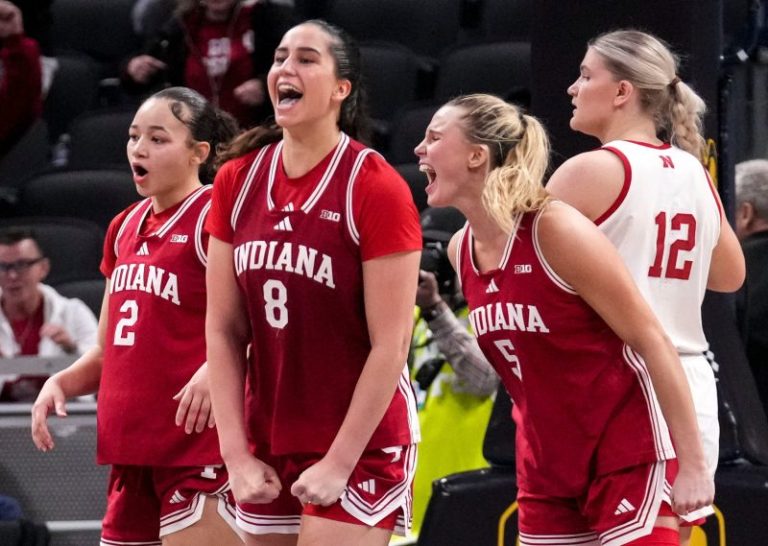
    Final: Indiana 72, Nebraska 69

    Nebraska dominated early, using a 29-15 first quarter to stretch its double-digit lead into the third.

    But the Hoosiers weren’t phased. Indiana, down 18 with five minutes left in the third quarter, went on a 10-0 run over three minutes. The Hoosiers took their first lead with less than one minute left in the game, then fended off multiple last-second Nebraska attempts to steal the game.

    Indiana will play No. 5 Ohio State on Thursday at around 2:30 p.m. for a chance to advance to the quarterfinals. — Chloe Peterson

    Indiana women’s basketball making a push

    Indiana is making a late push against Nebraska in the fourth. The Hoosiers were down by as many as 15 points in the second quarter, but they’ve cut that deficit to as little as three points with six minutes left in the game.

    Indiana has been able to limit Amiah Hargrove, who had 19 points in the first half but just two so far in the second, and Britt Prince, who has just five second-half points after 13 in the first half. — Chloe Peterson

    Halftime: Nebraska 45, Indiana 28

    Nebraska ran away early in this game, outscoring Indiana 29-15 in the first quarter. Indiana spent much of the second quarter trying to play catchup.

    But the Hoosiers have been hampered by early foul trouble to three starters, as Shay Ciezki and Maya Makalusky each picked up two fouls in the first quarter. Ciezki led the Hoosiers with 11 points in the first half, while no other Indiana player had more than six.

    Nebraska, on the other hand, has been firing on all cylinders. Amiah Hargrove had 19 points on 8-of-9 shooting in the first half, and Britt Prince had 13 points on 5-of-9 shooting. — Chloe Peterson

    No. 12 Nebraska vs. No. 13 Indiana starting lineups

    Nebraska starting lineup

    Head coach: Amy Williams

    • 2 Logan Nissley | G
    • 14 Callin Hake | G
    • 23 Britt Prince | G
    • 4 Petra Bozan | F
    • 33 Amiah Hargrove | F

    Indiana starting lineup

    Head coach: Teri Moren

    • 2 Nevaeh Caffey | G
    • 5 Lenee Beaumont | G
    • 10 Shay Ciezki | G
    • 3 Maya Makalusky | F
    • 8 Edessa Noyan | F

    Iowa hopes Hannah Stuelke can return

    Iowa senior Hannah Stuelke, who missed the Hawkeyes’ win over Wisconsin on March 1 after suffering an elbow injury against Illinois three days prior, could return for the postseason. But Stuelke will have to clear a few hurdles.

    ‘It’s a pretty severe elbow injury — the torque of it, the swelling, the range of motion, the pain, the length of time that what really takes an injury like this one to feel better, better,’ Jensen told the Des Moines Register on Wednesday, two days before Iowa’s Big Ten Tournament opener. ‘So she has not practiced. We’re trying to figure out when to try it.

    ‘If she can go, I think she’ll go through that with some adrenaline. But it’s her strong hand, her dominant arm. So we’re just trying to give it as much rest to see what it feels like. But there’s a lot more than just the pain tolerance. If it can’t move, it can’t move. You can do some things with it. So we’re just trying to give it every minute.’ — Heather Burns

    Georgia Tech goes coast-to-coast

    Junior guard D’Asia Thomas-Harris built upon the Yellow Jackets’ promising outing against Florida State with a nifty steal-and-score that extended the team’s third-quarter lead to 14. — Meghan L. Hall

    Halftime: Georgia Tech 39, Florida State 29

    Georgia Tech leads Florida State, 39-29, after two quarters. Despite missing six players for Wednesday’s matchup, the Yellow Jackets have played with plenty of pace and space. They’re crashing the boards as they typically do and haven’t lost a step offensively despite some pressing defense from Florida State.

    The Yellow Jackets shot 46% from the field, and on the other end of the ball, held Florida State to 35% shooting and just eight percent (1-of-12) from 3-point range. Georgia Tech also 80% from the line, while Florida State didn’t take or make a single free throw in the half.

    The Yellow Jackets are led by La’Nya Foster, who has 13 points and five rebounds at the half. Sydney Bowles has 7 points for Florida State. — Meghan L. Hall

    Cal coach gets 100th career win at ACC Tournament

    During the first round of the ACC Tournament, Cal coach Charmin Smith earned her 100th career win after a 75-52 victory over Wake Forest

    ‘Really proud of our group today,’ Smith said postgame. ‘We settled in in the second quarter and were able to get a convincing win. All we want to do is just try to stay in Atlanta as long as possible. It’s a good day for the Bears.’ — Meghan L. Hall

    Final: BYU 76, Houston 66

    The game was tied at halftime, but BYU came out the locker room motivated and outscored Houston 27-15 in the third quarter to take a double-digit lead into the fourth quarter. BYU was able to hold off Houston for the win.

    Olivia Hamlin led the way or BYU with 16 points off the bench, while Delaney Gibb and Lara Rohkohl each added 15 points. Meanwhile, Shun’teria Anumele had a game-high 17 points in the loss. — Cydney Henderson

    No. 9 BYU vs. No. 16 Houston

    BYU starting lineup

    Head coach: Lee Cummard

    • 2 Sydney Benally | G 5-9 – Freshman
    • 11 Delaney Gibb | G 5-10 – Sophomore
    • 13 Lara Rohkohl | F 6-3 – Senior
    • 14 Kambree Barber | G 6-0 – Sophomore
    • 24 Brinley Cannon | G/F 6-1 -Sophomore

    Houston Cougars starting lineup

    Head coach: Matthew Mitchell

    • 26 Jorynn Ross | F 6-3 – Junior
    • 0 TK Pitts | G 6-1 – Senior
    • 1 Briana Peguero | G 5-7 – Senior
    • 7 Kyndall Hunter | G 5-7 – Senior
    • 14 Jade Jones | F 5-10 – Freshman

    Big 12 court has flaw

    The Big 12 women’s basketball tournament is being played on ASB GlassFloor LED court at the T-Mobile Center in Kansas City, Missouri. The state-of-the-art LED court, the same one used during 2024 NBA All-Star Game events, features visual effects, including dynamic court design, shot charts and immersive animations.

    “Our team had the opportunity to practice on it back in November, and it was an incredible experience for our players,’ Baylor Women’s head coach Nicki Collen said in a statement.’The court is not only visually impressive, but it plays well and represents where our sport is headed.’

    However, some eagle-eyed viewers have noticed at least one flaw. The half-court line is hard to see on the court due to the design. — Cydney Henderson

    No. 10 Illinois women’s basketball vs. No. 15 Wisconsin

    Illinois starting lineup

    Head coach: Shauna Green

    • 1 Aaliyah Guyon | G 5-7 Sophomore
    • 2 Destiny Jackson | G 5-6 Freshman
    • 8 Jasmine Brown-Hagger | G 5-9 Junior
    • 23 Berry Wallace | F 6-1 Sophomore
    • 30 Cearah Parchment | F 6-3 Freshman

    Wisconsin starting lineup

    Head coach:Robin Pingeton

    • 1 Destiny Howell | G 6-0 Graduate Student
    • 13 Ronnie Porter | G 5-2 Senior
    • 15 Gift Uchenna | F 6-3 Senior
    • 20 Kyrah Daniels | G 6-0 Junior
    • 24 Laci Steele | G 5-11 Junior

    Georgia Tech center splashes 3-pointer

    Georgia Tech center Ariadna Termis showed no fear when she was passed the ball. Termis sank a beautiful 3-pointer in the first quarter, something you don’t see as often from those who play the position. — Meghan L. Hall

    Georgia Tech injury report

    Georgia Tech will be without six players when it takes on Florida State during the first round of the ACC Tournament later Wednesday. The following players are out:

    • #1 McKayla Taylor | C 6-1 – Freshman
    • #4 Leyre Urdiain | G 5-11 – Freshman
    • #12 Jada Crawshaw | F 6-0 – Junior
    • #13 Deborah Mukeba | C 6-5 – Sophomore
    • #22 Ines Noguero | G 5-11 – Senior
    • #33 Savannah Samuel | G 6-1 – Senio

    UCLA’s Lauren Betts performs halftime show

    UCLA women’s basketball doesn’t tip off its postseason until the Big Ten Tournament quarterfinal round on Friday, but some players are already dancing.

    Charlisse Leger-Walker, Lauren Betts and Gabriela Jaquez joined UCLA cheerleaders for a special halftime performance to Tate McRae’s ‘Just Keep Watching’ during UCLA men’s 72-52 win over Nebraska on Tuesday.

    — Cydney Henderson

    Wake Forest ‘nervous’ in Cal matchup

    Wednesday’s matchup against the Cal Golden Bears did not go as Wake Forest hoped. The Deamon Deacons fell 75-52. Head coach Megan Gebbia said postgame she believed nerves played a factor.

    Wake Forest only has one player on its roster who had been to the ACC Tournament before this season, plus four transfers, including Cal Poly’s Mary Carter. On Wednesday, Carter led Wake Forest with 13 points.

    ‘I felt like we were a little nervous early on. I had to go in at halftime and say, ‘Shoot when you’re open,” Gebbia said. ‘As a coach, you don’t want to have to say that at halftime to some of the players that I felt were playing a little tentative. You have to come out with a lot of energy and a lot of effort and just confidence in yourself.’It’s unfortunate that it had to be this type of loss I would have liked for it to be a little bit closer, but the lesson is it’s a 40-minute game.’ — Meghan L. Hall

    Final: Florida 86, Mississippi State 68

    Me’Arah O’Neal and Liv McGill each scored 22 points apiece as the Gators kept their postseason alive with a win over the Bulldogs on Wednesday in the opening round of the SEC Tournament in Greenville, South Carolina.

    It’s the fifth time O’Neal, a sophomore and the daughter of NBA legend Shaquille O’Neal, has scored north of 20 points. She also added four rebounds for Florida (18-14), while McGill had seven rebounds and 10 assists.

    Destiney McPhaul and Favour Nwaedozi paced Mississippi State (18-13) with 12 points apiece in the fifth consecutive loss for the Bulldogs. Sam Purcell’s team is now at the mercy of the NCAA Tournament Selection Committee when it comes to March Madness inclusion. The Bulldogs end the regular season with a 2-9 record in Quad 1 games and a 1-3 record in Quad 2 games.

    Florida will face No. 6 Oklahoma on Thursday at 1:30 p.m. ET on the SEC Network. — Mitchell Northam

    Final: California 75, Wake Forest 52

    Cal led 32-21 in the first half and outscored Wake Forest 29-12 in the third period and ran away with the win. By the time the fourth quarter arrived, the lead had ballooned to as high as 29 points. Cal will play No. 7 Syracuse in the second round of the ACC Tournament.

    The Golden Bears shot 44% from the field and held the lead for 35 minutes, 46 seconds. Calwas led by Sakima Walker, who finished her day with 17 points and 10 rebounds. The Golden Bears also added 19 points from their bench on Wednesday, which is noteworthy.

    Wake Forest, which shot 38% from the field, was led by Mary Carter. Carter was one of two Demon Deacons who finished in double figures The Wake Forest guard finished with 13 points and five rebounds. — Meghan L. Hall

    8 players ejected at Sun Belt Tournament

    Eight players were ejected from a second round game in the Sun Belt Women’s Basketball Tournament in Pensacola, Florida, on Wednesday afternoon after a fight broke out between No. 9 Coastal Carolina and No. 12 South Alabama.

    South Alabama led by nine points with about 5:39 remaining in the fourth quarter when a scuffle ensued between Cordasia Harris of South Alabama and Tracey Hueston of Coastal Carolina. Coaches and players from the benches spilled out onto the floor and one referee was caught in the crossfire, hitting the floor after taking a hit from a player. Read more here. — Mitchell Northam

    Halftime: BYU 29, Houston 29

    The first-round matchup between BYU and Houston, the Battle of the Cougars, has proved to be a low-scoring affair so far and we’re all tied up at halftime. 

    Neither team is shooting particularly well. BYU is 9-of-23 (39%) from the field, while Houston is 10-of-33 (30%) from the field.

    BYU’s Delaney Gibb leads all scorers with 11 points and four rebounds. Sydney Benally has five points, while Lara Rohkohl has four points. However, BYU has given up 15 turnovers that have kept Houston in the game. 

    Jade Jones and Kierra Merchant each have seven points for Houston. — Cydney Henderson

    Halftime: Florida 46, Mississippi State 30

    Me’Arah O’Neal — yes, the daughter of NBA legend Shaquille O’Neal — is powering the Gators in the first half with 15 points on 5-of-10 shooting from the floor and 3-of-5 from 3-point land. Florida has also scored 14 points off 12 turnovers by the Bulldogs, while Mississippi State has two points from nine turnovers by the Gators.

    NCAA Tournament hopes for both teams hinge on the outcome of this game. Mississippi State is in a better position on the bubble currently with a NET of 39, but would feel more optimistic about its prospects of cracking the field of 68 with a win here. Florida likely needs to win multiple games in Greenville, South Carolina this week to get in a bubble position. Mitchell Northam

    Cal forward exits with injury

    Cal forward Claudia Langarita, a starter for the Golden Bears, exited the second quarter of Wednesday’s matchup with Wake Forest with 9:41 remaining in the period. It’s unclear how Langarita was hurt, but she went down and stayed down for several moments before being helped off the court by nearby training staff.

    Langarita attempted to stretch her out to the side, but she ultimately went back to the locker room. The Cal forward had a visible limp and appeared to be rubbing her right hip.

    Langaratia emerged from the locker room minutes later, standing behind the Cal bench with a heat wrap on her back. She eventually sat down on the bench with just under three minutes left in the period, but did not return to action before the half. — Meghan L. Hall

    Wake Forest and Cal struggle to score

    In the opening quarter of Wake Forest and Cal’s matchup, neither team could get many shots to fall. Wake Forest shot 31% from the field and Cal shot 24%. Both teams made four field goals. Cal leads 11-10 over Wake Forest. — Meghan L. Hall

    Final: Kansas State 91, Cincinnati 66

    No. 12 Kansas State cruised to the second round of the Big 12 women’s basketball tournament following a dominant 25-point win over No. 13 Cincinnati, where the Wildcats shot a whopping 53% from the 3-point line.

    Taryn Sides (20 pts) and Jordan Speiser (20) combined for eleven of Kansas State’s 17 made 3-pointers, which set a Big 12 Tournament record. Nastja Claessens made five 3-pointers and finished with 18 points in the win.

    Mya Perry led Cincinnati with 23 points (7-of-19 FG, 4-of-7) and was in tears when she checked out of the final game of her college career. Perry put her jersey over her face as head coach Katrina Merriweather tried to console her.

    Florida out in front early

    The Gators are off to a quick and balanced start with four of their five starters scoring to build a 10-4 lead halfway through the first quarter.

    Neither team is shooting particularly well with Mississippi State hitting 33% of its shots from the field and Florida 30%.

    No. 13 Mississippi State vs. No. 12 Florida

    Mississippi State Bulldogs starting lineup

    Head coach: Sam Purcell

    • 4 Tryanna Crisp | G 5-8 – Senior
    • 5 Chandler Prater | G/F 5-10 – Senior
    • 25 Favour Nwaedozi | F 6-3 – Junior
    • 33 Kharyssa Richardson | F 6-2 Senior
    • 40 Madison Francis | F 6-2 – Freshman

    Florida Gators starting lineup

    Head coach: Kelly Rae Finley

    • 13 Laila Reynolds | G 6-1 – Junior
    • 23 Liv McGill | G 5-9 – Sophomore
    • 8 Me’Arah O’Neal | F 6-4 – Sophomore
    • 9 Alexa Dizeko | F 5-111- Senior
    • 14 Caterina Piatti | F 6-4 – Freshman

    No. 12 Miami vs No. 13 Stanford

    Final: Miami 83, Stanford 76 (OT)

    Stanford tried to continue its push in overtime, but ultimately ran out of steam. Miami moves on into the second round of the ACC Tournament with an 83-76 win. The Hurricanes will play No. 5 Notre Dame next.

    Miami finished shooting 51% from the field, with three scorers in double digits, including Ra Shaya Kyler, who had a double-double with 24 points and 11 rebounds, and Gal Raviv, who had 20 points, six rebounds and six assists.

    Stanford shot 43% from the field and 44% from deep behind 12 3-pointers.. Courtney Ogden led the Cardinal with 22 points. — Meghan L. Hall

    Stanford and Miami go to overtime

    Miami led 65-52 after three quarters (and by as much as eight in the waning minutes of the fourth), but Stanford forced several Hurricane turnovers that helped the Cardinal climb back into the game. Stanford switched to a zone defense and that made the difference.

    Stanford’s Courtney Ogden cashed in on five straight points with less than a minute remaining to tie the game up at 70 and force overtime. Ogden has 22 points on the day.

    Miami pulling away

    With about five minutes left in the third quarter, the game was tied at 49. However, Miami turned up the heat. The Hurricanes finished the period on a 16-3 run, punctuated by a deep 3-pointer from Natalie Wetzel to close the quarter. Wetzel’s 3-pointer pushed Miami’s lead to 13.

    Stanford and Miami trading baskets

    At the halfway point of the third quarter, the Cardinal and Hurricanes are trading 3-pointers and baskets in the paint. The defense has intensified and so has the scoring.

    Stanford has a 51-49 lead with 4:49 left in the third, led by 14 points from Hailee Swain. Ra Shaya Kyle has 17 for Miami.

    Halftime: Stanford 39, Miami 37

    With Stanford’s season and NCAA Tournament dreams seemingly hanging in the balance against Miami, the Cardinal survived an early surge from the Hurricanes. After a 19-10 first quarter from Miami, it was all Stanford in the second quarter. The Cardinal took the period 29-18.

    Miami’s Gal Raviv leads all scorers with 12 points. Hailee Swain and Courtney Ogden both have 11 points for Stanford. — Meghan L. Hall

    Stanford on an 18-11 run

    After trailing 19-10 after the first quarter, Stanford went on an 18-11 run to cut Miami’s nine-point lead to 2 points with 3:39 remaining in the half. Courtney Ogden leads Stanford with 11 points. The Cardinal have NCAA Tournament hopes hanging in the balance as one of the first four out in USA TODAY Sports latest bracketology. — Meghan L. Hall

    Miami Hurricanes starting lineup

    Head coach: Tricia Cullop

    • 0 Ra Shaya Kyle | C 6-5 – Senior
    • 33 Amarachi Kimpson | G 5-8 – Junior
    • 12 Natalie Wetzel | F 6-3 – Freshman
    • 5 Ahnay Adams | G 5-6 – Sophomore
    • 14 Gal Raviv | G 5-9 – Sophomore

    Stanford Cardinal starting lineup

    Head coach: Kate Paye

    • 2 Hailee Swain | G 5-11 – Freshman
    • 6 Shay Ijiwoye | G 5-6 – Sophomore
    • 40 Courtney Ogden | F 6-1 – Junior
    • 12 Lara Somfai | F 6-3 – Freshman
    • 3 Nunu Agara | F 6’2 – Junior

    No. 12 Kansas State vs. No. 13 Cincinnati

    Halftime: Kansas State 40, Cincinnati 29

    It’s raining 3-pointers in Kansas City. Kansas State (8-of-15) and Cincinnati (4-of-8) are shooting over 50% from beyond the arc in the first round of the Big 12 Tournament, but the Wildcats have an eleven-point edge heading into halftime.

    Nastja Claessens (12 points) and Taryn Sides (11 points) combined for six of Kansas State’s eight 3-pointers.

    Cincinnati is outrebounding Kansas State 27-18, including 10 offensive rebounds, yet find themselves down double-digits because of turnovers. The Bearcats have given up 13 turnovers, which Kansas State converted to nine points. Mya Perry has a team-high nine points (3-of-5 from 3) for Cincinnati. — Cydney Henderson

    Kansas State Wildcats starting lineup

    Head coach: Jeff Mittie

    • 3 Brandie Harrod | G 6-1 – Freshman
    • 4 Nastja Claessens | F 6-1 – Junior
    • 6 Gina Garcia | G 5-10 – Freshman
    • 11 Taryn Sides  | G 5-7 – Junior
    • 34 Tess Heal | G 5-10 – Senior

    Cincinnati Bearcats starting lineup

    Head coach: Katrina Merriweather

    • 1 Mya Perry | G 5-11 – Senior
    • 3 Reagan Jackson | G 5-8 – Junior
    • 4 Caliyah DeVillasee | G 5-8 – Freshman
    • 10 Kylie Torrence | F 6-2 – Freshman
    • 32 Destiny Thomas | C 6-4 -Junior

    No. 16 Arkansas vs. No. 9 Kentucky

    Final: Kentucky 94, Arkansas 64

    The Wildcats outscored the Razorbacks 29-10 in the third quarter and never looked back. Kentucky outrebounded Arkansas 35-20 and outscored them in the paint 40-30.

    Although the Razorbacks were perfect on 10 3s, the Wildcats were 16 for 22 from behind the arc to keep pace.

    Kentucky had six players in double figures including all of their starters. Carla Strack had a double-double with 20 points and 13 rebounds. Amelia Hassett added 18 points on 6-of-11 from behind the arc.

    Kentucky faces Georgia in the tournament quarterfinals at 11 a.m. ET on Thursday (SEC Network).

    Tonie Morgan pacing Kentucky run

    Tonie Morgan has more points than the entire Arkansas team in the third quarter. The senior has scored 12 with six rebounds. The Wildcats now have four players in double figures and lead 70-43. The Razorbacks season looks to be coming to an end.

    Kentucky taking charge

    The Wildcats have gone on a 12-2 run to start the third quarter and their lead has ballooned back to 19 points. Amelia Hassett made her fifth 3-pointer to trigger an Arkansas timeout. Clara Strack has a double-double for Kentucky with 14 points and 11 rebounds.

    Halftime: Kentucky 42, Arkansas 33

    The Razorbacks closed out the first half on a 15-4 run to get back within single digits of the No. 19-ranked Wildcats. Arkansas is outscoring Kentucky 18-12 in the paint. Taleyah Jones has 12 points to lead the Razorbacks.

    Amelia Hassett has 12 points and Clara Strack 11 points and eight rebounds for Kentucky, which had led by as many as 20 points. — Heather Burns

    Arkansas trying to claw back

    The Razorbacks have outscored the Wildcats 23-13 in the second quarter. Emily Robinson has eight points including two 3-pointers. Taleyah Jones has 12 points, two rebounds and two assists.

    Kentucky on a 7-0 run

    The Wildcats have jumped out to a 16-4 lead early after a 7-0 run against Arkansas. Asia Boone leads Kentucky with six points on a pair of 3-pointers. — Heather Burns

    Arkansas Razorbacks starting lineup

    Head coach: Kelsi Musick

    • 11 Wyette Mayberry | G 5-7 – Senior
    • 22 Bonnie Deas | G 5-9 – Freshman
    • 10 Taleyah Jones | G 5-10 – Senior
    • 21 Ashlynn Chlarson | C 6-3 – Junior
    • 23 Emily Robinson | G 5-10 – Junior

    Kentucky starting lineup

    Head coach: Kenny Brooks

    • 5 Tonie Morgan | G 5-9 – Senior
    • 7 Teonnie Key | F 6-5 – Senior
    • 8 Asia Boone | G 5-8 – Junior
    • 13 Clara Strack | C 6-5 – Junior
    • 32 Amelia Hassett | F 6-4 -Senior

    SEC women’s basketball tournament bracket

    Women’s college basketball bracketology

    Conference tournaments begin Wednesday in women’s college basketball for a handful of leagues, including the ACC, SEC, Big Ten, Big 12, Big East, Atlantic 10 and Summit.

    It’s possible a lot of the projections will change by the time USA Today Sports rolls out another bracketology next week as teams will play in high-stakes games against marquee in-conference opponents on neutral courts. Up for grabs are a few undecided spots in the top 16 and positioning on the bubble. Read more.

    Big 12 women’s basketball tournament schedule today

    All times Eastern

    Wednesday, March 4

    First Round

    • Game 1: No. 12 Kansas State 91, No. 13 Cincinnati 66
    • Game 2: No. 9 BYU 76, No. 16 Houston 66
    • Game 3: No. 10 Arizona State vs. No. 15 Arizona | 6:30 p.m. (ESPN+)
    • Game 4: No. 11 Kansas vs. No. 14 UCF | 9 p.m. (ESPN+)

    Big 12 women’s basketball tournament bracket

    SEC women’s basketball tournament schedule today

    All times Eastern

    Wednesday, March 4 – First round

    • Game 1: #16 Arkansas vs. #9 Kentucky | 11 a.m. ET (SEC Network)
    • Game 2: #13 Mississippi State vs. #12 Florida | 1:30 p.m. ET (SEC Network)
    • Game 3: #15 Auburn vs. #10 Texas A&M | 6 p.m. ET (SEC Network)
    • Game 4: #14 Missouri vs. #11 Alabama | 8:30 p.m. ET (SEC Network)

    SEC women’s basketball tournament bracket

    Ranking March Madness top players

    The 2025-26 women’s college basketball regular season is over for the Power 4 conferences and a handful of players rose to the top ahead of the 2026 NCAA Tournament.

    UConn’s Sarah Strong and Azzi Fudd are among the top players set to tipoff March Madness later this month. USA TODAY Sports ranked the top 10 players in women’s college basketball ahead of the conference tournaments that begin Wednesday, March 4, for the Power 4. Read more.

    The USA TODAY app gets you to the heart of the news — fast. Download for award-winning coverage, crosswords, audio storytelling, the eNewspaper and more.

    This post appeared first on USA TODAY

    College football lost a legendary coach when Lou Holtz, most known as a former Notre Dame coach in addition to preeminent college football pundit, died on Wednesday, March 4.

    Holtz, 89, died after being placed in hospice care on Thursday, Jan. 29. He will be remembered most recently for being an analyst on ESPN for college football.

    But for older college football fans, he will be remembered for coaching the storied Fighting Irish to their last national championship, coming in 1988.

    Here’s a look at highlights from Holtz’s Hall of Fame College Football coaching career:

    Lou Holtz hired at William & Mary

    After helping Ohio State win a national championship as an assistant coach in 1968, Holtz landed his first head coaching job. He was hired by William & Mary in 1969.

    He led the then-Indians (now the Tribe) to a Southern Conference title in 1970 and a berth in the Tangerine Bowl. Overall, he had a 13-20 record with William & Mary, including a 9-4 record in conference play.

    North Carolina State

    Following his successful stint with William & Mary, Holtz earned his first FBS job when he was hired by NC State in 1972. After winning just three games in three consecutive seasons, Holtz led the Wolf Pack to three straight top 20 rankings, which included a top-10 finish in the Coaches poll in 1974.

    Overall, he achieved a 33-12-3 record, with a 16-5-2 record in ACC play, including the ACC championship in 1973. His teams went 2-1-1 in bowl games.

    New York Jets, NFL

    On Feb. 10, 1976, Holtz made a move to the pros, taking a job as the head coach of the New York Jets. However, his one-and-only year in the NFL did not go well. He led the Jets to a 3-10 record, resigning with one game left in the season.

    Upon his departure from New York, Holtz commented: ‘God did not put Lou Holtz on this earth to coach in the pros.’

    Hired at Arkansas, wins Paul ‘Bear’ Bryant Coach of Year Award

    Holtz’s departure from college coaching was a brief one. After one season in the NFL, he was hired by Arkansas in 1977. He coached the Razorbacks to a 60-21-2 record over seven seasons, including a berth in six bowl games.

    In his very first season, Holtz led Arkansas to a 31-6 win over Oklahoma in the 1978 Orange Bowl. In 1979, Holtz was a candidate to replace Woody Hayes as the Ohio State head coach, but ultimately turned it down, not wanting to follow Hayes.

    Following a 6-5 record in 1983, Holtz was fired by the Razorbacks.

    Hired at Minnesota

    In 1984, one year after his firing from Arkansas, Minnesota hired Holtz before the 1984 season. The Golden Gophers were coming off a one-win season in 1983. In Holtz’s first year, they won four games, including three in Big Ten play.

    Holtz led Minnesota to an Independence Bowl berth in 1984. However, Holtz did not coach in that game, as he had at the time already accepted the job to become the next Notre Dame football head coach.

    Lou Holtz hired at Notre Dame

    Holtz was hired by Notre Dame in 1986 following a 30-26-1 mark under Gerry Faust between 1981-85. Holtz removed the names from the back of the Notre Dame uniforms to emphasize teamwork over individuals.

    He led the Fighting Irish to a 5-6 record in 1986, but five of the six losses came within a combined 14 points. They ended the season with a 38-37 comeback win over USC, which saw them down by as many as 17 points in the fourth quarter.

    The team went 8-4 in 1987, earning a berth in the Cotton Bowl. That set the stage for the 1988 season.

    1988 national championship

    Holtz’s signature season as a head coach came in 1988, leading Notre Dame to a 34-21 win over West Virginia in the Fiesta Bowl, to claim the program’s 11th national championship.

    On Oct. 15, 1988, the Fighting Irish defeated Miami to end their 36-game winning streak. That game is remembered as the ‘Catholics vs. Convicts’ game in pop culture today. The Hurricanes were the defending national champions and ranked No. 1 at the time.

    Notre Dame also had wins over No. 9 Michigan, No. 2 USC and No. 3 West Virginia en route to the 12-0 national championship season.

    Retirement from Notre Dame

    Following an 11-year run with Notre Dame, Holtz announced his retirement from coaching after the 1996 season. He finished his career with the Fighting Irish with a 100-32-2 record. Particularly, he posted a 64-9-1 record between 1988 and 1993. Overall, Holtz led Notre Dame to nine consecutive bowls, which is still the school record.

    Notre Dame began the 1989 season with 11 straight wins before losing to Miami in the regular-season finale. The 23 wins in a row are a school record. The Fighting Irish defeated Colorado 21-6 in the Orange Bowl to finish second in the polls. They also finished second in the polls in 1993, behind Florida State.

    Out of retirement to coach South Carolina

    Following a two-year stint with CBS Sports as a commentator, Holtz decided to come out of retirement in 1999 and was hired by South Carolina. He had served as an assistant coach for the Gamecocks in the 1960s.

    Holtz and the Gamecocks went 0-11 in 1999 in his first season, but the program had just one win in 1998. He led USC to a 19-7 combined record in 2000 and 2001, including back-to-back wins in the Outback Bowl.

    Second retirement from South Carolina

    The Gamecocks went 5-7 in consecutive seasons in 2002 and 2003 before Holtz ended his tenure with a winning 6-5 record in 2004. A major brawl with Clemson broke out in Holtz’s final game with South Carolina.

    In 2005, the NCAA put South Carolina on probation for three years after 10 admitted violations under Holtz, including five of which were considered to be major.

    ‘There was no money involved. No athletes were paid. There were no recruiting inducements. No cars. No jobs offered. No ticket scandal, etc,’ Holtz said after the sanctions were handed down.

    ‘There were five major violations, and four of them involved our academic office. Concerning these four violations, you will have to consult the university.

    Elected to College Football Hall of Fame

    Holtz was inducted into the College Football Hall of Fame in 2008. Along with the 1988 national championship, he finished his coaching career with 249 wins over 35 years with six different schools.

    He was joined by Billy Cannon and Troy Aikman in the 15-person calls in 2008.

    Lou Holtz awarded the Presidential Medal of Freedom

    On Dec. 3, 2020, Preisdent Dondald Trump awarded Holtz the Presidential Medal of Freedom.

    ‘America recognizes Lou Holtz as one of the greatest football coaches of all time for his unmatched accomplishments on the gridiron, but he is also a philanthropist, author, and true American patriot,’ the White House press release said. After growing up in a small town in West Virginia, Holtz attended Kent State University, becoming the first member of his family to enroll in college. At Kent State, Holtz played football, studied history, and joined the Army Reserve Officers’ Training Corps.

    ‘For the next 7 years, he honorably served as an Officer in the United States Army Reserves. When asked about his service during an interview with the American Legion, Holtz said, “I was taught at an early age that I had an obligation to serve my country.”

    Lou Holtz beef with Ryan Day

    In 2023, ahead of an Ohio State-Notre Dame matchup, Holtz called the Buckeyes and their head coach Ryan Day, ‘too soft.’

    “He has lost to Alabama, Georgia, Clemson, Michigan twice — and everybody who beats them does so because they’re more physical than Ohio State,” Holtz said in 2023. “I think Notre Dame will take that same approach.”

    Ohio State, of course, earned a 17-14 win over Notre Dame, and Day was quick to call out Holtz after the game.

    “I’d like to know where Lou Holtz is right now,” Day said postgame to NBC Sports. “What he said about our team, I cannot believe. This is a tough team right here. We’re proud to be from Ohio. It’s always been Ohio against the world, and it’ll continue to be Ohio against the world.’

    Lou Holtz coaching career record

    • 1969: William & Mary, 3-7
    • 1970: William & Mary, 5-7
    • 1971: William & Mary, 5-6
    • 1972: NC State, 8-3-1
    • 1973: NC State, 9-3
    • 1974: NC State, 9-2-1
    • 1975: NC State, 7-4-1
    • 1977: Arkansas, 11-1
    • 1978: Arkansas, 9-2-1
    • 1979: Arkansas, 10-2
    • 1980: Arkansas, 7-5
    • 1981: Arkansas, 8-4
    • 1982: Arkansas: 9-2-1
    • 1983: Arkansas, 6-5
    • 1984: Minnesota, 4-7
    • 1985: Minnesota, 6-5
    • 1986: Notre Dame, 5-6
    • 1987: Notre Dame, 8-4
    • 1988: Notre Dame, 12-0
    • 1989: Notre Dame, 12-1
    • 1990: Notre Dame, 9-3
    • 1991: Notre Dame, 10-3
    • 1992: Notre Dame: 10-1-1
    • 1993: Notre Dame, 11-1
    • 1994: Notre Dame: 6-5-1
    • 1995: Notre Dame, 9-3
    • 1996: Notre Dame, 8-3
    • 1999: South Carolina, 0-11
    • 2000: South Carolina, 8-4
    • 2001: South Carolina, 9-3
    • 2002: South Carolina, 5-7
    • 2003: South Carolina, 5-7
    • 2004: South Carolina, 6-5
    • TOTAL: 33 seasons, 249-132-7 (.651)
    This post appeared first on USA TODAY

    Wednesday, March 4, was a day for defensemen to change teams.

    Tyler Myers got the ball rolling by accepting a trade from the Vancouver Canucks to the Dallas Stars. The 6-foot-8 Houston native will be playing in his home state on the same team as 6-foot-7 defenseman Liam Bischel.

    Nick Blankenburg also moved from the Nashville Predators to the Colorado Avalanche for a 2027 fifth-round pick.

    But the biggest move of the day was the Utah Mammoth acquiring defenseman MacKenzie Weegar from the Calgary Flames.

    “Acquiring MacKenzie solidifies our back end as we continue to push towards the playoffs, and he will be a great addition to our team on and off the ice,” Mammoth general manager Bill Armstrong said.

    Here are the details and grades on the MacKenzie Weegar trade:

    MacKenzie Weegar trade details

    The Utah Mammoth acquire defenseman MacKenzie Weegar from the Calgary Flames for defenseman Olli Määttä, forward Jonathan Castagna and three 2026 second-round picks (Utah’s own and others previously acquired from the Ottawa Senators and New York Rangers). Both players had to waive their no-trade clauses for the deal to go through.

    Utah Mammoth trade grade: A-

    Armstrong has been aggressively remaking the defense since the team moved to Utah in 2024. He added Mikhail Sergachev, John Marino and Ian Cole that first season and Stanley Cup winner Nate Schmidt last summer. Weegar gives the Mammoth a solid top four as they try to hold onto their wild-card position. And the Mammoth landed him without trading Tij Iginla, who would seem a natural to be part of a trade to Calgary, where his father Jarome had starred.

    Calgary Flames trade grade: B-

    Considering that Weegar is signed through 2031, it’s surprising that the Flames didn’t pry away a first-round pick. But three second-rounders are good in what’s expected to be a deep draft. Olli Määttä is a pending unrestricted free agent and Castagna, a third-round pick, is averaging a point a game in his third season at Cornell.

    When is the NHL trade deadline?

    The NHL trade deadline is at 3 p.m. ET on Friday, March 6.

    This post appeared first on USA TODAY