Author

admin

Browsing

The San Antonio Spurs, simply, couldn’t make up for their wretched third quarter.

After being outscored in the period by 16, San Antonio tried to battle back — eventually closing the gap to 12 points midway through the fourth quarter — but fell to the Thunder, 119-98, Tuesday, Jan. 13. And with that, Oklahoma City claimed its first win in four tries this season against the Spurs.

Reigning MVP Shai Gilgeous-Alexander carried the Thunder, scoring 34 points on 11-of-23 shooting, adding 5 rebounds and 5 assists. For Gilgeous-Alexander, it was his 28th game this season of 30 or more points. It also marked his 111th consecutive game with at least 20, leaving him just 15 games shy of tying Wilt Chamberlain’s all-time record of 126.

But it was defense that led the way for Oklahoma City, especially in the second half. The Thunder blocked a season-high 11 shots against the Spurs and forced San Antonio into 12 turnovers.

One other area where the Thunder reasserted their dominance was the paint; after struggling down low in recent weeks, Oklahoma City outscored the Spurs in the paint by a margin of 56-40.

Victor Wembanyama scored just 17 points on 7-of-15 shooting and Stephon Castle led the Spurs with 20 points.

Thunder forward Jalen Williams chipped in 20 points and Alex Caruso added 13 off the bench.

Scroll down below for highlights and a recap of the action.

Spurs vs. Thunder highlights

End Q3: Thunder 95, Spurs 76

The third quarter was one of runs.

First came Oklahoma City, which launched an 11-0 run early in the period. Then it was San Antonio, which responded with a 7-0 spurt, one that came — for the most part — with Victor Wembanyama, who had crashed knees with Shai Gilgeous-Alexander, on the bench.

The Thunder then answered with another massive run, this one 14-1, one that helped them take a commanding lead headed into the fourth. In fact, the Thunder outscored San Antonio 40-24 in the third.

Oklahoma City rode its defense to ignite in transition and leave the Spurs scrambling to get back.

Gilgeous-Alexander dropped 15 points in a massive third quarter to give him a game-high 30 points.

The Thunder bench was also key in the quarter and now has 28 points, compared to just 19 from the San Antonio reserves.

WATCH: Wemby erases a Chet Holmgren shot

End Q2: Thunder 55, Spurs 52

If the first half was any indication of what’s to come, hoops fans should be thrilled.

Both teams have battled through 12 ties and seven lead changes in what was a competitive — if uneven — game, at least on offense.

Oklahoma City, which has lost the first three matchups thus far against the Spurs, had indicated that it was not pleased with its defensive performance in the first games of the series. This time, to slow the Spurs down, Oklahoma City has leaned on a spot 2-3 zone that has flustered San Antonio.

Interestingly, both teams struggled from the 3-point range, combining to shoot just 9-of-34 (26.5%) from beyond the arc, though there was one player who was lighting it up from deep. Spurs forward Julian Champagnie laced 3 of his 7 tries from 3 to chip in 9 points.

Victor Wembanyama and Stephon Castle are pacing the Spurs with 10 points apiece, while Shai Gilgeous-Alexander leads all scorers with 15.

End Q1: Thunder 32, Spurs 26

It wasn’t high scoring, but it was filled with plenty of action.

The fourth meeting between these two teams started with a back-and-forth first period that was emblematic of why this budding rivalry has been so fascinating. Both teams flashed offensive sizzle (with a pair of early Victor Wembanyama dunks) and clamp-down defense.

Reigning MVP Shai Gilgeous-Alexander posted a solid quarter, scoring 13 points on 5-of-8 shooting to lead all players. His foil at point guard, De’Aaron Fox, struggled from the floor and was held scoreless on 2 attempts.

San Antonio’s 6 offensive rebounds helped the Spurs take an early edge in second-chance points (8-5) and its bench also outscored OKC’s (15-7). But the Thunder closed the period on a 12-2 run to take an early lead.

Rookie guard Dylan Harper came off the bench but led all Spurs players with 7 points.

And we’re off

The Spurs picked up in this rivalry right where they left off, starting the game with two straight dunks — one by Stephon Castle and the other by Victor Wembanyama — the latter coming over rival Chet Holmgren.

As Wembanyama trotted down the court, he made sure to scrunch his face in disapproval.

Minutes later, Castle and Wembanyama collaborated on a give-and-go that Wemby finished with an alley-oop — again over Holmgren.

The Thunder, however, would answer with a steady dose of buckets but trailed 13-11 into the first media timeout.

Starting lineups

San Antonio Spurs

  • De’Aaron Fox
  • Stephon Castle
  • Julian Champagnie
  • Harrison Barnes
  • Victor Wembanyama

Oklahoma City Thunder

  • Shai Gilgeous-Alexander
  • Cason Wallace
  • Aaron Wiggins
  • Jalen Williams
  • Chet Holmgren

How to watch Spurs vs. Thunder

  • Date: Tuesday, Jan. 13
  • Time: 8 p.m. ET (7 p.m. CT)
  • Where: Paycom Center in Oklahoma City
  • TV: NBC
  • Stream: NBC Sports App, Peacock

Spurs vs. Thunder odds, lines

All odds via BetMGM as of afternoon of Tuesday, Jan. 13

  • Spread: Thunder (-8.5)
  • Moneyline: Thunder (-325); Spurs (+260)
  • Over/Under: 230.5

Spurs, Thunder injuries tonight

  • San Antonio Spurs guard Devin Vassell remains out as he continues to recover from a left adductor strain.
  • Oklahoma City Thunder guard Luguentz Dort will miss the game with left foot soreness, and center Isaiah Hartenstein is out with a right calf strain.
This post appeared first on USA TODAY

Phoenix Suns guard Dillon Brooks picked up his league-leading 14th technical foul of the season on Tuesday, Jan. 13, and two more will lead to an automatic one-game suspension.

That seems inevitable, but making history will take work.

Brooks leads Draymond Green and Luka Doncic, each who have nine technical fouls apiece this season. Yet Brooks must accelerate his pace to set the single-season technical fouls record.

That mark belongs to Rasheed Wallace, the retired center who amassed 41 technical fouls during the 2000-01 season when he was playing for the Portland Trail Blazers. Consider this: That means on average Wallace got whistled for a tech every other game during the 82-game regular season.

Brooks’ latest tech came during the Suns’ 127-121 loss to the Miami Heat. That gives him 14 technicals through 40 games for an average of about one technical foul every three games. To catch Wallace, he’ll need 27 techs over the final 42 games of the regular season, an average of .64 technical fouls per game.

Even if the record eludes him, Brooks has established himself as a player adept at drawing technical fouls. He had a career high of 18 technical fouls during the 2022-23 season when he was playing for the Memphis Grizzlies, and he has at least 11 technical fouls over each of the past six seasons.

Not that all of them are deserved. That is, according to Brooks.

‘They give me a (technical) for who I am,” Brooks said after picking up his 13th technical foul against the Washington Wizards on Jan. 11, according to Sports Illustrated. ‘That’s weird and that’s unappreciative.”

Brooks will be facing a disadvantage Wallace didn’t during his record-breaking season.

Before the 2005-2006 season, the NBA implemented the rule that a 16th technical foul triggered an automatic one-game suspension. But during the 2000-01 season, Wallace drew whistle after whistle without worrying about an automatic suspension.

Though Brooks has earned attention for his penchant for technical fouls, he’s helped lead the Suns (24-16) as the team’s second-leading scorer with 21.1 points per game and stellar defense.

This post appeared first on USA TODAY

Another day, another wild spin of the NFL coaching carousel.

Not even 24 hours after his team suffered its latest playoff disappointment, getting trounced at home in the wild-card round by the Houston Texans, Mike Tomlin is stepping down as head coach of the Pittsburgh Steelers after 19 seasons − none of the sub-.500 variety. It ends the longest active marriage between an organization and HC.

Pittsburgh becomes the ninth franchise in need of a new head coach in what’s still an unfolding hiring cycle. The Steelers’ next hire will become just their fourth coach since 1969, Tomlin preceded by Hall of Famers Chuck Noll and Bill Cowher, that trio bringing six Lombardi Trophies to the Steel City.

Tomlin’s departure becomes the headliner of a wild week-and-a-half of coaching turnover. The Giants and Titans made changes during the season. The Falcons fired head man Raheem Morris (and GM Terry Fontenot) on the final day of the regular season. Black Monday claimed two-time NFL Coach of the Year Kevin Stefanski, former Super Bowl-winning coach Pete Carroll and ex-Cardinals coach Jonathan Gannon. John Harbaugh was fired by the Baltimore Ravens and Mike McDaniel by the Miami Dolphins in the days after Black Monday.

It’s always possible another vacancy could open − especially with so many qualified candidates suddenly flooding the market. But adding the Steelers to the list, let’s analyze the nine* jobs that are presently open − ranked from most attractive to least. (*Subject to change.)

1. Baltimore Ravens

Quarterback situation

They don’t come much better than two-time league MVP Lamar Jackson, who’s as dynamic as anyone who’s ever played the position. Naturally, he has detractors − not yet able to win the Super Bowl and more pointed recent questions about his work ethic and relationship with Harbaugh. Jackson also tends to get banged up and misses a lot of practice time. Still, most teams would love to have such problems behind center.

However there’s a major financial issue facing Jackson and the team in the aftermath of what was a massively disappointing season for him personally and the team as a whole. Jackson carries a $74.5 million salary cap number in both 2026 and 2027, the final two years of his five-year, $260 million extension. Those are untenable figures for any team looking to maintain or improve a roster, suggesting some kind of renegotiation or new extension is needed − assuming Jackson remains in Baltimore, which seems a virtual given.

Backup Tyler Huntley is about to hit free agency. Cooper Rush, who was signed to be the primary backup a year ago but struggled when Jackson was out and eventually replaced by Huntley, is signed for the 2026 season but could be a cap casualty.

Roster

Heading into the 2025 season, the Ravens were widely viewed as a team with one of the best talent quotients in the league. Yet it’s fair to say that, while acknowledging its injuries, the team added up to much less than the sum of its parts over the course of an 8-9 campaign. Baltimore wound up with six players earning Pro Bowl honors in a season when Jackson and star RB Derrick Henry didn’t. Kyle Hamilton is arguably the game’s best safety, leading a talent-laden secondary. But there’s clearly work to be done on both lines.

Salary cap

GM Eric DeCosta is set to have about $28 million at his disposal this year, per Over The Cap, putting the team in the upper half of the league in terms of spending power. However Jackson’s contract muddies that outlook. Pro Bowl C Tyler Linderbaum, TE Isaiah Likely, Pro Bowl P Jordan Stout, S Alohi Gilman, LB Kyle Van Noy and Pro Bowl FB Patrick Ricard are among the pending free agents.

2026 NFL draft

Baltimore is scheduled to pick 14th in the first round this year, which would match the earliest spot it has selected in the past decade. Given the roster holes free agency is likely to create, DeCosta is likely to have a busy offseason.

Outlook

As currently constructed, the Ravens remain one of the league’s most formidable teams − yet probably one that needed a new voice and philosophy after Harbaugh held sway for nearly two decades. He maintained them as a near-perennial contender and won Super Bowl 47 but has been dogged in recent years by rampant tactical failures and repeated challenges holding onto fourth-quarter leads. The organization should have its pick from plenty of qualified candidates, but the main priority may be finding someone who will jibe with Jackson while getting the rest of the roster to play all the way up to its estimable potential.

2. New York Giants

Quarterback situation

Jaxson Dart’s rookie season was a mixed bag, his swagger a nice fit in the Big Apple even if his typically reckless on-field approach too often undermined his health and availability. After the Giants traded back into last year’s first round to obtain Dart, it will be incumbent on the next coach and his staff to rein in the young slinger enough to reasonably protect himself while also giving him sufficient leeway to leverage his multi-dimensional play-making ability and get this offense truly humming. Russell Wilson’s one-year stay is up, but Jameis Winston remains in 2026 as one of the league’s top backups.

Roster

The team’s enviable young core is damaged but not irreparably so. Incandescent WR Malik Nabers (ACL) and rookie RB Cam Skattebo (ankle) didn’t survive the 2025 season. OLB Abdul Carter, the third overall pick of last year’s draft, could wind up being the best player on the team – but he’s got plenty to work on in terms of his professionalism, on and off the field. Veteran OLB Brian Burns, DL Dexter Lawrence II and LT Andrew Thomas are all Pro Bowl-caliber players. The defense needs extensive work behind its front, and Thomas is the only player whose name should be written in pen on the O-line … when he’s healthy enough to play.

Salary cap

GM Joe Schoen, who’s running the coaching search and will retain his post despite coach Brian Daboll’s firing in November, is currently set to have about $11 million in cap space. It’s a figure that has the Giants middle of the pack league-wide, but the clubs above them have significantly more spending power – especially if they decide to target WR Wan’Dale Robinson, who’s coming off his first 1,000-yard season, or frontline Cor’Dale Flott, who are both headed for free agency.

2026 NFL draft

In contention for the No. 1 overall pick barely a week ago, the Giants will now select fifth in this year’s first round. They still owe the Houston Texans their third-rounder to consummate last year’s draft night deal to get Dart.

Outlook

Despite largely residing in the wilderness since they won Super Bowl 46 to cap the 2011 season, the Giants remain one of the league’s flagship franchises and a plum job – even if the organizational stability they boasted for years seems to have largely evaporated. Schoen has made questionable decisions during the draft and free agency but has also amassed an ample amount of talented players to win – and maybe fairly quickly if the right coach is able to translate potential into production.

3. Cleveland Browns

Quarterback situation

Insert shrug emoji? As much national interest as they generated in 2025, Dillon Gabriel and Shedeur Sanders − mostly Sanders − were a mixed bag as rookies. They have fairly distinct skill sets, yet both flashed their positive traits while also raising enough questions to suggest neither is likely to be instantly anointed QB1 in 2026 by Stefanski’s successor. Deshaun Watson is under contract for one more season – for a fully guaranteed $46 million – and returned to practice late in the season after undergoing multiple Achilles surgeries after originally being injured during the 2024 season. He could obviously rejoin the mix, yet also (still) seems like a problematic figure – in a football context and otherwise – as the next staff tries to get this club back to the playoffs. Going fishing for another option in the 2026 draft is certainly on the table.

Roster

It’s fair to call DE Myles Garrett legendary at this point, and he might legitimately be the best player in the NFL. He’s also one whose prime is being wasted and only a year removed from requesting a trade after expressing a belief he’d never win a Super Bowl in Cleveland – which tracks given no player ever has. Yet there’s a lot to like around Garrett, particularly a highly promising 2025 draft class that includes DT Mason Graham, LB Carson Schwesinger, TE Harold Fannin Jr., WR Isaiah Bond, RBs Quinshon Judkins and Dylan Sampson … and maybe one or both quarterbacks. WR Jerry Jeudy and CB Denzel Ward are generally among the league’s better players at their respective positions, though 2025 wasn’t a banner year for either. With Gs Wyatt Teller and Joel Bitonio out of contract, it’s high time to reconstruct the offensive line – particularly if GM Andrew Berry and the next coach target another young QB.

Salary cap

Currently, Berry will need to trim more than $12 million to simply be cap-compliant once free agency starts, and he and the team won’t get relief from ownership’s Watson gaffe for another year – whether or not he’s on the roster in 2026. TE David Njoku is the most high-profile pending free agent, but Fannin and the cap crunch likely make him expendable.

2026 NFL draft

The Browns own the sixth overall pick this year plus the first-rounder of the Jacksonville Jaguars, wherever that lands. Berry could put together a package to target a specific quarterback, but such a gambit could be quite expensive given what appears like a dearth of high-end prospects at the position this year. And continuing to load up on needed talent elsewhere wouldn’t be a bad fallback as Cleveland resets − while also potentially giving Sanders, Gabriel or someone else the opportunity to run with the reins a little longer.

Outlook

Dismissing Stefanski was a bold (and perhaps misguided) choice given what he’d accomplished despite the drawbacks of this job – especially after he and Berry got saddled with Watson and had to prematurely offload Baker Mayfield. Moving forward, quarterback remains the obvious issue holding back a team that will likely continue to look up at the rest of the AFC North until it’s solved. But, if it gets rectified by Berry and the next coach in short order, this team could emerge as a powerhouse in almost no time.

4. Pittsburgh Steelers

Quarterback situation

Monday night’s resounding loss to Houston is now even likelier to be Aaron Rodgers’ final game in the NFL given how closely he linked his decision to come to Pittsburgh with his affinity for Tomlin. Regardless, with his one-year deal about to expire, Rodgers also had as much agency in his future with the Steelers as the team did. At present, Mason Rudolph − he’s spent all but one of his eight NFL seasons primarily as a backup in Pittsburgh − and Will Howard, a sixth-round draft pick last year, are the only passers under contract for 2026.

Roster

Built to win now – which was always the expectation under Tomlin – there’s a talented group here … but a decidedly aging one. Perennial All-Pros like Cam Heyward and T.J. Watt, who are both north of 30, headline the league’s most expensive defense − which also includes DB Jalen Ramsey and LBs Alex Highsmith and Patrick Queen. Offensively, Rodgers offered heavy praise and admiration for the team’s generally young and talented offensive line. But WR DK Metcalf is the only bona fide downfield weapon, and the backfield committee of Kenneth Gainwell and Jaylen Warren won’t strike fear into most defenses.

The bigger question here is how the organization wants to proceed – specifically whether GM Omar Khan and the next coach want to do a hard reset and divest a lot of the veteran talent and the cost associated with it.

Salary cap

With nearly $40 million in the coffers – maybe more if there’s a veteran purge – Khan’s free agency budget currently ranks among the league’s top 10. Still, the Steelers have historically put a premium on drafting, developing and rewarding their own players. This doesn’t seem like the time for them to go on an extensive spending spree. Rodgers, Gainwell, LG Isaac Seumalo and WR Calvin Austin are among Pittsburgh’s notable free agents.

2026 NFL draft

Reminder: It’s going to occur in Pittsburgh. No pressure, Omar. Khan owns the 21st pick of the first round and has an extra selection in Round 3, courtesy of last year’s trade of WR George Pickens to the Dallas Cowboys. Still, for a franchise so badly in need of a young quarterback to help redefine it, this probably isn’t the year you’re going to find that guy in the draft.

Outlook

If this was a blind résumé, there wouldn’t be a second thought about slotting the Steelers behind their feckless rivals in Cleveland. The Browns, for example, have a lot more long-term assets on their roster − and the ability to further fortify it – than does Pittsburgh. But would you rather work for a franchise that’s almost never sniffed the Super Bowl or for the Rooney family, whose six Lombardi Trophies are tied for the most in league history? It’s likely Pittsburgh is headed for the losing season in 2026 that it never experienced under Tomlin. But there’s an opportunity here to be great – and a demand for excellence that hasn’t been fulfilled in recent years, Tomlin losing his last seven playoff games in decisive outcomes. That alone is illustrative that this job historically comes with an unrivaled level of NFL job security. Aspiring candidates should be beating a path to the confluence of the Three Rivers in a bid to lead one of pro sports’ truly great teams.

5. Tennessee Titans

Quarterback situation

Cam Ward, the No. 1 pick of the 2025 draft, was basically treated to a learning experience as a rookie. He was hamstrung by the lack of talent around him, to say nothing of the consequential chaos that firing coach Brian Callahan at midseason created. Ward made his fair share of mistakes, too, taking way too many sacks – which certainly isn’t to suggest all of the league-high 55 he absorbed were his fault – while also regularly reverting to his college habit of trying to extend plays that probably wouldn’t have good outcomes under most circumstances. But given the challenges he faced, it’s hard to give Ward a fair evaluation for 2025 – and, to his credit, he remained accountable and didn’t back away from the leadership chops that helped make him such a coveted prospect to begin with.

Will Levis, the 33rd overall pick of the 2023 draft, presents an interesting dilemma. This team obviously belongs to Ward, which would theoretically make Levis, who’s under contract for 2026, somewhat intriguing trade bait entering an offseason when quarterback-needy teams may not have a lot of alternatives. But he’s also coming off surgery to his throwing shoulder, which kept him on injured reserve for all of 2025. It might be worth trying to showcase Levis in the preseason in hopes of getting something in return for him.

Roster

Ward needs to be a foundational piece and should get at least another two years to prove as much. Otherwise, there’s not much to hang your hat on here aside from Pro Bowl DT Jeffery Simmons, whom the team refused to trade at last year’s deadline, and maybe OL Peter Skoronski. Much of the damage here was done via misguided forays into free agency by the front office that preceded first-year GM Mike Borgonzi.

Salary cap

Borgonzi is projected to have upwards of $105 million to spend in free agency this year, more fiscal resourcing than any other team has. However he’d probably be wise to be far more measured than his predecessors given this team seems at least a year away from being a year away. Borgonzi’s time in Kansas City would suggest he’ll spend intentionally in the short term while establishing a new culture as he focuses on drafting the players who will need to get the Titans off the mat.

2026 NFL draft

Tennessee’s 3-14 record once again tied for the league’s worst. But this year, the tiebreakers didn’t pan out in Borgonzi’s favor, the Titans slotted with the No. 4 pick. They’ll certainly get an excellent prospect, just no opportunity to leverage the value of a first or second overall selection.

Outlook

Borgonzi should have plenty of discretion to chart a path as he now gets to pick his own guy to run the team. But it will be interesting to see how things play out given the disconnect in the recent past between former coach Mike Vrabel, the front office and ownership. And there probably will be some pressure to try and microwave a winner here as the franchise plans to move into its new stadium in 2027 − preferably with a bang.

6. Las Vegas Raiders

Quarterback situation

It’s bad. Right now. The decision to trade for and extend Geno Smith last year smacked of an organization unwilling to embrace an obviously needed rebuild. Aidan O’Connell and Kenny Pickett seem like quality backups at best – and there’s probably not much reason for Pickett to re-sign here. All that aside, a team that holds the No. 1 pick of the 2026 draft seems almost certain to invest anew at the position, whether it’s for Heisman Trophy winner Fernando Mendoza or someone else.

Roster

It’s bad. Right now. Pro Bowl DE Maxx Crosby has long been a loyal warrior, but even he was disillusioned by the end of the 2025 campaign given how his injury situation was handled. Kolton Miller is a solid left tackle. He’s also 30 and missed 13 games this season. Recent first-rounders Brock Bowers and Ashton Jeanty should be cornerstones – but good luck finding a winner that was built around a tight end and running back, respectively … and the decision to select Jeanty sixth overall last year deserves even more scrutiny now than it did at the time.

Salary cap

It’s great. Right now. The Raiders also have upwards of $100 million in their free agency coffers. But whether it’s minority owner Tom Brady or GM John Spytek who earmarks those funds, they’d be wise to not throw more good money after bad at a talent deficit that obviously requires longer-term thinking and an infusion of young players from the draft.

2026 NFL draft

Vegas won’t pick atop every round but pretty close to it. The Raiders also picked up a fourth-rounder for dealing WR Jakobi Meyers, who was unabashedly eager to leave Sin City, at the trade deadline. The big question is whether they actually pull the trigger for a quarterback off the top … or try to flip the pick and address their numerous needs elsewhere before replacing Smith in earnest further down the road.

Outlook

This operation is nicely set up to rise from the ashes … provided it recognizes it’s covered in ashes and shouldn’t be pursuing coaches in their seventies. But it’s also worth monitoring how things proceed. It’s widely assumed Brady is calling a lot of the shots behind the scenes even as Spytek and Carroll were the ones front and center answering questions about the franchise’s direction and philosophy − and still hard to say what those are exactly after a categorically disastrous and wasted year.

7. Atlanta Falcons

Quarterback situation

Uh, yeah. What seemed like a powder keg two years ago when Fontenot signed Kirk Cousins to a massive free agent contract before taking oft-injured Michael Penix Jr. eighth overall in the 2024 draft – without revealing that strategy to Cousins from the jump – has indeed blown up in this franchise’s face. Penix hardly set the league on fire in his second season and is now dealing with his latest ACL injury, one that seems likely to keep him off the field at the start of next season. Meanwhile, Cousins now knows he’s a placeholder but may very well be needed in that role given the unknowns with Penix. However Cousins does only have $10 million guaranteed remaining on the final two years of his contract, which should theoretically make him far easier to trade or release if the next regime so chooses.

Roster

There are certainly some studs in house. RB Bijan Robinson, WR Drake London and G Chris Lindstrom all rank among the best players at their respective positions – Robinson seemingly on the cusp of being one of the league’s faces. Rookie pass rushers Jalon Walker and James Pearce Jr. and S Xavier Watts gave the defense a much-needed boost and should form its nucleus for years to come. The cupboard’s hardly bare beyond that, though much will depend on how the existing depth chart aligns with the preferences of the next decision makers.

Salary cap

Fontenot’s replacement will have to trim about $4 million off the books before free agency begins in March, a pretty easy lift. The issue is that Atlanta has little bandwidth to retain pending free agents like TE Kyle Pitts, OLB Arnold Ebiketie or RB Tyler Allgeier – a valuable sidekick who spares Robinson a lot of the harder miles. London is already somewhat overdue for a contract extension, and Robinson is newly eligible for one – and his price tag could get astronomical, relative to his position, the longer the team waits to reward him. Unloading Cousins in some fashion would cause a lot of money to flow back into the budget – but such a decision obviously comes with its own ramifications.

2026 NFL draft

A year after the shocking selection of Penix, Fontenot dealt back into the bottom of the 2025 draft’s first round for Pearce – and he unequivocally has the makings of a good player, leading the Falcons with 10½ sacks. But the opportunity cost of what seemed like something of a desperate reach at the time is the loss of this year’s Round 1 choice – No. 13 overall – which now belongs to the Los Angeles Rams. Fontenot also spent this year’s fifth-rounder in a separate trade in 2025 – but that’s aging well so far given it put Atlanta in position to choose Watts.

Outlook

The quarterbacking morass is a major issue – and that probably would have been the case even if Penix was fully healthy. There are some enticing components of this roster, though another of Fontenot’s unorthodox strategies – which hasn’t borne the desired results – was pouring so much first-round capital into offensive skill players. The good news is that winning the NFC South should remain a bar that’s not all that difficult to clear – and Atlanta was only one win shy of doing it this season. But whether or not the Falcons are sensibly constructed for the long haul is another question entirely, as desperate as 83-year-old owner Arthur Blank is to win the franchise’s first Super Bowl.

8. Arizona Cardinals

Quarterback situation

Unclear as it was whether deposed Gannon would move forward with Kyler Murray, it’s equally unclear if another coaching staff would embrace a player who tends to freelance and hasn’t done much to craft a rep as the locker room CEO most successful NFL quarterbacks are. Murray is guaranteed $36.8 million in 2026, and cutting him would incur a cap hit of nearly $55 million – though that’s hardly prohibitive in this era of the ballooning salary scale. A decision on his future could be further accelerated given nearly $20 million more will be guaranteed to Murray in 2027 if he remains on the roster on March 15. The two-time Pro Bowler and top pick of the 2019 draft is also only 28 and might yet fetch something on the trade market – especially if the Cards are willing to eat some money to facilitate a transaction.

But moving on from him – if that winds up being the eventual course of action – isn’t as daunting a prospect on the field given career backup and occasional bridge QB Jacoby Brissett remains under contract after operating the offense at a much higher efficiency level than Murray did in 2025.

Roster

The makings of a really good passing game are in place (though a more balanced offense would likely benefit the greater good). Trey McBride has emerged as the league’s best receiving tight end, WR Michael Wilson was a revelation late in the season, and Paris Johnson is a top-shelf left tackle. WR Marvin Harrison Jr. continues to be something of a disappointment – especially relative to draft mates like Nabers, Brian Thomas Jr. and even Ladd McConkey. First-round DL Walter Nolen III only appeared in six games before suffering a season-ending knee injury. Elsewhere, OLBs Josh Sweat and Zaven Collins had solid seasons. Otherwise, there’s a lot of work to be done here on both sides of the ball.

Salary cap

Similar to the Giants, GM Monti Ossenfort has some spending power with a projected $21 million budget. While that’s much more than some teams have, it’s a lot less than those that are shaping up as the significant free agent power brokers in 2026. Murray’s situation also seems bound to have further impact here.

2026 NFL draft

Ossenfort has a full complement of picks, including No. 3 overall – though that would likely force him to reach for a quarterback this year if that’s the way the franchise wants to go. Like the three other 3-14 teams from the 2025 season, the Cards will rotate near the top of every round.

Outlook

It appeared like they were building toward a positive crescendo under Gannon. But Murray’s health – and whatever else is going on there – a torrent of other injuries and simple bad luck (in the form of eight losses by one score) caused the bottom to fall out over the past few months. Arizona’s issues are further amplified by its membership in the NFC West, which currently serves as the home of three of the league’s very best teams. The road back to relevance here seems to remain long and winding.

9. Miami Dolphins

Quarterback situation

McDaniel’s departure, which comes two months after former GM Chris Grier and the team divorced, does seemingly pave the way for what seems like the inevitable exit of QB Tua Tagovailoa as well. The 2020 first-rounder not only had his worst season on the field since his rookie year, benched after Week 15, he also made a habit of airing the locker room’s dirty laundry. Tagovailoa signed a four-year, $212.4 million contract extension ($167.2 million of it guaranteed) before the 2024 season. Compensated at $53.1 million annually on average, he currently ranks sixth on the league’s QB compensation scale … but was nowhere near No. 6 from a performance perspective.

Cutting him this year triggers close to $100 million in dead cap money whether it’s eaten entirely in 2026 – the requisite $99.2 million hit would establish a new record among cap financial mistakes – or spread over two years. There is a $15 million option due in March that the Fins could trigger to mildly assuage the financial fallout for Tagovailoa, whose contract has $54 million guaranteed in 2026. His pact, combined with a troublesome concussion history, make him virtually untradeable. But with a complete leadership turnover at the top of the organization, swallowing the bitter financial pill that would come with cutting Tua, who’s expressed a desire for a fresh start, now seems far more palatable. And logical.

Coming off their rookie seasons, Quinn Ewers and Cam Miller are the only other quarterbacks on the roster currently under contract for 2026. Ewers did a solid enough job in his three-game audition following Tagovailoa’s benching.

Roster

There’s some talent in place, but it’s worth wondering how much of it might be going out the door in the coming weeks and months. WR Jaylen Waddle and, especially, RB De’Von Achane are dangerous playmakers − though it’s worth wondering if they might have more value as trade commodities given the new direction the Dolphins have signaled. Selloffs are probably less feasible for DT Zach Sieler, S Minkah Fitzpatrick and OLB Bradley Chubb, who will all be at least 30 this year and come with hefty contracts. WR Tyreek Hill, who dislocated his knee in September, is owed $36 million (none of it guaranteed) in the final year of his contract − circumstances almost certain to lead to his release. OLB Chop Robinson and C Aaron Brewer could be players to build around.

Salary cap

Miami is currently more than $23 million over budget on its 2026 cap. Dumping Hill would balance the books, however parting with Tagovailoa would add $11 million to the deficit − if he’s designated as a post-June 1 cut. Otherwise, his release would accelerate another $42.8 million alone onto this year’s expenditures. Not pretty. But at least this won’t be a team that should be looking to make a free agency splash in 2026 anyway.

2026 NFL draft

A 7-10 season confers the 11th overall pick this year − certainly a range that should bring a very good player if not one likely to step in immediately at quarterback, assuming Tagovailoa isn’t long for Miami. Grier acquired an additional third-rounder from Houston during last year’s draft, and interim GM Champ Kelly picked up another one for dealing OLB Jaelan Phillips at the trade deadline. Helpful assets, if not to Grier or Kelly.

Outlook

Miami hasn’t won a playoff game in more than 25 years, the longest dry spell in the league. Tagovailoa briefly seemed like the guy to stop the revolving door behind center that’s spun almost perpetually since Dan Marino retired after the 1999 season. Those will remain clear and present challenges for the next administration, which likely faces a very daunting 2026 − when the successful establishment of an improved culture is probably the most important win this team can hope for. But after that? It’s certainly not difficult to recruit NFL players to Miami, it’s just going to remain a matter of getting the right ones. And if it’s a clean slate the next decision makers want, this might be an optimal opportunity − even if it means not much headway will likely be made until 2027 … at the earliest.

This post appeared first on USA TODAY

Some NHL draft-eligible players have established themselves as top-flight prospects. 

Others have some work to do if they want to be drafted as highly as they expect. 

The second half of the season will be incredibly important for the latter group of players. 

Some youngsters hoping to hear their names called early in June’s NHL draft in Buffalo exceeded expectations to start the year. Those players must prove the impact they’ve made wasn’t a fluke and that they belong among the top players. On the flip side, some players lacked production, which raised a red flag, so a big second half will go a long way.

10 NHL draft prospects needing a red-hot second half

Vancouver (WHL) left wing Mathis Preston

Preston’s skill and speed have been evident all year long, but his production has fallen off a bit this year. Scouts seem to be concerned with that, understandably. That said, Preston placing 27th on NHL Central Scouting’s mid-term North American ranking seems harsh. Recently traded to the Vancouver Giants, Preston can reset and get back to his high-octane offensive production. If he can, maybe he can climb back into the top-10 discussion across the board.

Boston University (NCAA) center Tynan Lawrence

After an injury-filled start to the season in the USHL, Lawrence returned to action and instantly showed he is one of the league’s most dangerous scorers and a two-way presence. But this month, Lawrence moved to the NCAA mid-season, as Boston University had a spot open on the roster. Now Lawrence must prove again he can be a dangerous scorer and reliable center against bigger, stronger and faster competition. 

Jukurit (Finland) defenseman Alberts Smits

Smits is arguably the highest-rising player from the start of the season. He’s been a beast defensively while showcasing his puck skill, skating and willingness to get involved offensively. His raw physical tools are as good or better than any other defender in this class. After a wicked world juniors, Smits is set to play for Latvia’s Olympic squad. If he has a solid tournament, he could be the top blueliner in the draft. 

Miami (Ohio) University (NCAA) center Ilia Morozov

The youngest player in college hockey has been a surprise this season. He’s become a top-line center who plays on the top power play and penalty kill. There are plenty of doubters about his game, though, as he’s done most of his scoring against lower-end schools and struggled against the top teams in the nation. Morozov must show teams he’s not just a projectable bottom-six player and his offensive game has a bit more juice.

Boston College (NCAA) left wing Oscar Hemming

Oscar Hemming’s season just started. Off-ice drama around his release from the Liiga team that held his rights prevented him from joining the OHL’s Kitchener Rangers and the BCHL’s Sherwood Park Crusaders. Hemming finally landed in the NCAA at Boston College. The sniper has found the back of the net at every level he’s played at. NHL scouts will be happy just to see him on the ice. 

Michigan (NCAA) left wing Adam Valentini

NHL Central Scouting has ranked Valentini woefully low all year. Public analysts have him all over their boards. The uber-intelligent, highly skilled winger has averaged nearly a point per game in college as a 17-year-old. His defensive game is better than most give him credit for as well. At 5-foot-9, according to Central Scouting, most teams are concerned with his size, but the off-ice decision to go to college instead of the OHL may have irked scouts.

Geneva (Swiss) right wing Simas Ignatavicius

A Lithuanian playing in Switzerland, Ignatavicius, has become a more notable name as of late. Central Scouting has him as a top-10 player from Europe. Only three players from Lithuania have ever been drafted: Darius Kasparaitis (1992), Dainius Zubrus (1996) and Andrey Pedan (2011), who has played for Russia internationally. A big second half could help ensure Ignatavicius ends up a first-round pick like Kasparaitis and Zubrus.

Kamloops (WHL) left wing J.P. Hurlbert

Hurlbert’s offensive prowess has been there all season long. He led the WHL in scoring for most of the season, just recently being passed in total points but still holding a slim lead in points per game. Hurlbert is a highly skilled offensive tactician who can pick apart teams, especially on the power play. He needs to show that his game is rounding out and he’s not just a power-play specialist. 

Vancouver (WHL) defenseman Ryan Lin

With a recent injury set to keep him out of the lineup for a month or more, Lin’s second half will be a bit abbreviated, making it all the more important. Lin is averaging well over a point per game, but as a 5-foot-11 defenseman, teams are concerned about his ability to defend bigger, stronger players. When he returns, he’ll have his work cut out for him if he wants to remain a top-15 prospect. 

Prince George (WHL) defenseman Carson Carels

After surprisingly making Canada’s world junior squad, Carels’ stock has skyrocketed. The question now is whether he can maintain this momentum and hold down a spot around the top 10. He’s produced quite nicely at the WHL level, but there are some concerns about his play in his own end at times, and he can make some questionable decisions. How the second half goes could determine if he’s a top-10 pick or fringe first-rounder.

This post appeared first on USA TODAY
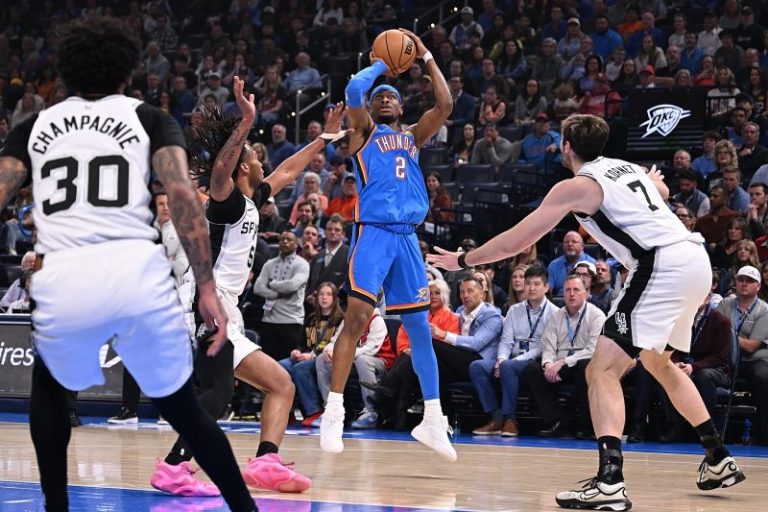
The Philadelphia Phillies suddenly are cautiously optimistic about their hopes of signing free agent infielder Bo Bichette.

The New York Yankees are growing pessimistic about re-signing free agent outfielder Cody Bellinger.

And the New York Mets are hoping that their stunning short-term, up-front offer can be the ultimate influencer for free agent outfielder Kyle Tucker.

It has taken 10 weeks for the market to develop for the marquee free-agent class, and now with Alex Bregman’s five-year, $175 million contract expected to become official Wednesday with a Thursday morning press conference scheduled in Chicago, the attention turns to the Big 3: Tucker, Bellinger and Bichette.

Tucker, 28, who is also being courted by the Toronto Blue Jays and Los Angeles Dodgers, has been offered a three- or four-year contract by the Mets that will pay him an average of $50 million a season. It would be the third-highest AAV in baseball history behind Shohei Ohtani’s 10-year, $700 million contract with the Dodgers ($70 million AAV) and Juan Soto’s 15-year, $765 million contract with the Mets ($51 million AAV). The Blue Jays have discussed a long-term contract with Tucker that pays him less money per season, while the Dodgers also are lurking with a huge short-term deal.

Bellinger, 30, and the Yankees have been negotiating all winter, with the Yankees calling him a priority, but their talks have hit a stalemate. The Yankees have offered a five-year deal worth $155 million to $160 million, according to two people with direct knowledge of the negotiations, with no deferrals and potential opt-outs. Bellinger, however, is seeking a seven-year contract.

The Yankees’ argument is that no position player this winter has received longer than a five-year contract, and their offer to Bellinger would make him the fourth-highest paid outfielder in baseball. Bellinger argues that since he’s younger than Kyle Schwarber (33 in March), Bregman (32 in March) and Pete Alonso (31), who received five-year deals this winter, he should receive a longer deal.

While the Yankees and Bellinger are at a stalemate, with the Yankees starting to question how badly he wants to return to New York, Bellinger could be the ideal back-up plan for the teams that don’t land Tucker. The Blue Jays, Mets and Dodgers have all expressed varying degrees of interest in Bellinger.

Bichette, 27, and the Phillies, meanwhile, had their first meeting Monday in a zoom call with both sides expressing strong interest in the other. The two sides came away from the meeting believing that there was genuine interest in one another.

The Red Sox, who believed their five-year, $165 million offer would lure Bregman back to Boston, now are expected to aggressively pursue Bichette. The Blue Jays remain in the hunt, and the Dodgers continue to hang around.

We’ll see how it plays out, but after 10 weeks of a deep free-agent freeze, suddenly, we’re starting to see a little thawing in the marketplace.

Who gets burned before breaking out that sunscreen in spring training?

Follow Nightengale on X: @Bnightengale

This post appeared first on USA TODAY

Aided by rising demand for permanent magnets, the rare earths market entered 2025 on firmer footing, with prices and investor sentiment trending higher.

That early optimism, however, was quickly overtaken by mounting geopolitical risk as US-China trade tensions returned rare earths to the center of global supply chain concerns.

Through the first quarter, uncertainty around tariffs and the prospect of tighter Chinese controls weighed heavily on downstream industries and reinforced the strategic value of rare earths.

That risk crystallized in early April, when China issued Announcement 18, a sweeping export control regime covering a range of medium and heavy rare earths — including terbium, dysprosium, samarium and yttrium — as well as related oxides, alloys, compounds and permanent magnet technologies.

Framed by Beijing as a national security and nonproliferation measure, the policy added a new layer of regulatory friction to supply chains underpinning electric vehicles, defense systems, clean energy and advanced manufacturing.

The response was swift. In Washington, the Trump administration moved to reassess US critical minerals security, singling out rare earths as a strategic vulnerability.

“An overreliance on foreign critical minerals and their derivative products could jeopardize US defense capabilities, infrastructure development, and technological innovation,” the White House said, underscoring a shift from market-driven concern to national security imperative.

For Jon Hykawy, president and chief executive at Stormcrow Capital, the Trump administration’s rare earths ambitions and its understanding of the minerals markets was the most impactful trend of 2025, commenting, “By far the biggest impact was the implication from re-elected US President Donald Trump that rare earths and other critical materials, to be found in Ukraine or Greenland or Canada or wherever, are the most bigly important things, ever.’

The seasoned market analyst also questions the administration’s broader goals.

“Critical materials are, to me, what is necessary for ensuring that important projects can be completed,’ he said.

‘But President Trump has also decided that climate change is a scam, that electrified vehicles and wind power are terrible and coal and oil are where it’s at,’ Hykawy continued.

‘In that case, whether or not Trump has even the concept of a plan regarding what a rare earth actually is, and he isn’t using ‘rare earth’ as a catch-all phrase for ‘weird metal that I don’t know how to spell,’ then rare earths or lithium are not critical materials, as far as the USA should be concerned: if you don’t need ‘em, they ain’t critical.”

China’s rare earths chokehold exposes supply chain fault lines

By mid-year, the impact of China’s controls was being felt most acutely in the automotive sector. European suppliers warned of production shutdowns as licensing delays rippled through tightly integrated supply chains.

The Asian nation controls roughly 70 percent of global rare earths mine output, as well as 85 percent of refining capacity and about 90 percent of magnet manufacturing.

That concentration left markets highly exposed when Beijing escalated restrictions again in October, expanding export controls to cover a total of 12 rare earths and associated permanent magnets.

Although some measures were later paused through November 2026, earlier dual-use restrictions stayed in place, reinforcing the perception that rare earths are now a tool of geopolitical leverage.

“At its core, China has shown a greater willingness to use its dominance in critical minerals to advance its trade and geopolitical influence, potentially causing significant disruptions to global supply chains for industries like automotive, aerospace, defense, and electronics,” states a S&P Global Energy report.

Against that backdrop, efforts to diversify supply accelerated.

In the US, government support moved from rhetoric to capital. The Department of Defense committed US$400 million to MP Materials (NYSE:MP) to expand processing at Mountain Pass and build a second domestic magnet plant, securing a US-based source of permanent magnets for defense applications.

Days later, Apple (NASDAQ:AAPL) announced a US$500 million agreement with MP to supply recycled rare earth magnets for hundreds of millions of devices starting in 2027, tying supply chain security to sustainability.

As Hykawy explained, these developments are setting the stage for ex-China supply:

“We are at the beginning of producing, processing and utilizing rare earths in a supply chain entirely outside of China. There is absolutely nothing that prevents us from building that western supply chain except time and money. Rare earth deposits of all types, including ionic clays and their relatively inexpensive production of heavy rare earths, are readily available outside of China.”

He went on to note that there has been a misconception about the impacts of rare earths production, paired with a lack of investment and expertise that has prevented a faster buildout.

“It’s a media cliché that rare earth mining and processing is somehow much more destructive to the environment than other types of mining, but that’s also just plain wrong,” Hykawy added.

“Unfortunately, building that supply chain will take money and, especially, time, because we need the people who know how to do all of this, and there is no substitute for the time required to give them their required experience.”

Rare earths supply security and growing demand

As global demand for rare earths accelerates and supply chain risks heighten, experts believe the sector’s importance on the global stage will keep intensifying.

During a Benchmark Week presentation, Michael Finch of Benchmark Mineral Intelligence explained that rare earths have “become far more strategic in nature” over recent years, with applications spanning electric vehicles, consumer electronics, wind energy, robotics and modern military systems.

While permanent magnets remain a headline driver, non-magnetic uses now account for a larger share of total demand, underscoring the material’s broad industrial importance.

Demand projections for rare earths forecast robust growth, underpinned key segment expansion.

According to Finch’s data an average 100 kW EV traction motor contains roughly five kilograms of neodymium-praseodymium and about one kilogram of dysprosium oxide, illustrating how electrification is fueling consumption.

Additionally, permanent magnet applications are projected to grow at an 8.5 percent compound annual rate through 2030, with magnetic and non-magnetic uses expected to reach parity over the next decade.

Military demand is also a significant driver.

“(There are) 418 kilograms of rare earths going into an F 35 type two fighter (jet), 2.6 metric tons going into a type 51 (naval) destroyer, and 4.6 metric tons going into a Virginia class submarine,” said Finch.

As stated, supply remains heavily concentrated in China which controls 91 percent of the overall supply chain, from mining to permanent magnets. Finch emphasized that this concentration creates a single-country risk, noting, “When a country owns so much of a supply chain, it’s easy to use it as a bargaining chip.”

The global rare earths supply chain is gradually diversifying. North America and Africa are emerging as key growth regions, with projects expected to significantly expand non-Chinese production in the coming decade.

Finch pointed to Africa, which could account for up to 7 percent of global supply after 2030, driven by low capital intensity and favorable mining costs. Despite this progress, he cautioned that complete self-sufficiency outside China remains a distant prospect, emphasizing the need for rapid investment and strategic coordination to secure supply.

Rare earths investment bolstered by government support

In addition to the Department of Defense’s MP Materials investment, the US government has established a price floor for NdPr oxide, the high-value rare earths ingredient inside permanent magnets.

During a fireside chat at Benchmark Week, Ryan Corbett, CFO of MP Materials, explained the impact of the price floor in support of the burgeoning US supply chain. He told the audience that the deal is “absolutely transformational,’ and pointed to China’s ability to control pricing by flooding or starving the market. “What good is it to invest billions of dollars if the second you turn your refinery on, prices go from US$170 to US$45?” said Corbett.

In October, the Trump administration announced another strategic investment aimed at reshoring critical supply chains through a US$1.4 billion public-private partnership with Vulcan Elements and ReElement Technologies.

Under the agreement, the Commerce Department will provide US$50 million in CHIPS Act incentives for neodymium-iron-boron magnet production in exchange for an equity stake, alongside up to US$700 million in conditional Defense Department loans to support facilities targeting up to 10,000 metric tons of annual output.

On the private investment side, Rare earths developer Pensana (LSE:PRE,OTCPL:PNSPF) secured a US$100 million strategic investment to advance its mine-to-magnet ambitions in the US, at the end of 2025.

Although the rare earths sector saw several multimillion-dollar deals in 2025, exploration capital remains scarce.

According to S&P Global’s Senior Principal Analyst, Mining Studies & Mine Economics, Paul Manalo the rare earths account for 1 percent of global exploration budgets, however, that number has improved in recent years.

“For the sixth consecutive year, budgets for rare earths were up reaching US$155 million in 2025; it’s the highest level since 2012,” Manalo said during the S&P Global Market Intelligence 2026 Corporate Exploration Strategies webinar.

Although exploration budgets are growing, the expert said 80 percent of that capital is being deployed in only four countries: Australia, Brazil, USA and Canada. “Just like in other minor metals, the juniors are the primary drivers for exploration of rare earths, with only a few majors dabbling in it,” Manalo told listeners, adding, “There are few rare earth mines outside of China, so most pending exploration is for late stage projects.”

The government funding and strategic stockpile proposal were acknowledged as a good starting point by Stormcrow Capital’s Hykawy, who also cautioned that they may not be as meaningful as markets anticipate.

“I give the efforts so far an ‘A’ for enthusiasm but a ‘C-‘ for effectiveness. From what I have seen, the powers-that-be are beavering away to create a supply chain that can provide what the world is demanding, today,” he said.

“Unfortunately, many of their efforts can’t bear fruit for 5 years or more, and none of these agencies seemed to think it worthwhile to try and evaluate what will be required in 5 or 10 years.”

More long-term foresight is needed.

“Technology giveth, but technology also taketh away, and while no one can be sure what the technology-driven need will be in 5 or 10 years, we should at least try to incorporate that into planning,” he said.

“If the wrong projects are being backed, the economics for that producer or processor in 5 or 10 years are not going to look good and money and time will have been completely wasted.”

Securities Disclosure: I, Georgia Williams, hold no direct investment interest in any company mentioned in this article.

This post appeared first on investingnews.com

CALGARY, AB / ACCESS Newswire / January 13, 2026 / Valeura Energy Inc. (TSX:VLE,OTC:VLERF)(OTCQX:VLERF) (‘Valeura’ or the ‘Company’) announces: (i) the Company’s Q4 2025 performance was in line with its guidance outlook for 2025 and resulted in a new record cash position; (ii) completion of a successful drilling campaign at Block B5/27 drove strong ongoing oil production and is expected to contribute to reserves replacement; and (iii) a guidance outlook for 2026 supporting its objective to continue generating long-term value for shareholders.

Q4 and Full Year 2025 Highlights

  • Record cash position of US$305.7 million as at 31 December 2025 with no debt;

  • Oil production averaged 24,721 bbls/d in Q4 2025, resulting in full year average oil production of 23,242 bbls/d(1) for 2025;

  • 2.523 million bbls of oil were sold in Q4 2025, with 8.466 million bbls sold for the full year 2025;

  • Price realisations in Q4 2025 averaged US$64.0/bbl, resulting in revenue of US$161.4 million, and US$594.4 million of revenue for the full year 2025;

  • Greenhouse gas (‘GHG’) intensity reduced by 13% for full year 2025, yielding a 30% reduction since Valeura originally acquired its Thailand portfolio in 2023; and

  • Nine production-oriented development wells were completed at the Jasmine and Ban Yen fields in Q4 2025 with 100% success rate, including a new record length for a horizontal well in the Gulf of Thailand.

2026 Guidance Highlights

  • Full year oil production mid-point of 21,000 bbls/d(1);

  • Capex and exploration spending mid-point of US$185 million, including approximately US$70 million associated with the Wassana field redevelopment; and

  • Adjusted Opex mid-point of US$205 million(2).

(1) Working interest share production, before royalties.

(2) Adjusted Opex is a non-IFRS financial measure, more fully described in Valeura’s Management’s Discussion and Analysis dated 14 November 2025. Includes lease spending of US$25 million.

Dr. Sean Guest, President and CEO commented:

‘We closed out 2025 with strong production performance and an even stronger financial position. Our Q4 drilling programme at Jasmine and Ban Yen was ambitious and innovative, and delivered a 100% success rate, with all wells being completed as producers. All across the business, our team remains committed to this type of world class performance and I believe this is reflected in the continual strengthening of our balance sheet, which now includes over US$300 million in cash, and no debt.

That commitment to excellence is also apparent in our strong safety performance and positive direction of travel on key environmental, social, and governance metrics. We saw no deviations from our high standards during the year and continue to show progress in our GHG intensity, which has now been reduced by approximately 30% under Valeura’s operatorship.

As we raise our sights to the year ahead, our long-term objective of delivering 20 – 25 mbbls/d(1) from our four producing assets remains intact, with this year’s performance expected around 21 mbbls/d(1), a number we see as a lull in advance of the start-up of our Wassana field redevelopment, which remains on track for first oil production in Q2 2027.

We continue to aggressively pursue other growth ambitions as well. The spirit of collaboration is strong between our team and our operating partners both in the large farm-in blocks in the Gulf of Thailand, and in our deep gas play in Türkiye where testing operations are now underway.

Our aspirations to grow inorganically are continuing as a priority. We believed that our appetite for larger, more transformative deals is well-supported, both by the financial wherewithal we bring to bear, and by the rich opportunity set we see emerging within our core Asia-Pacific region.’

(1) Working interest share oil production, before royalties.

Q4 and Full Year 2025 Overview
Working interest share oil production before royalties averaged 24.7 mbbls/d in Q4 2025. This was an increase of 7.6% over the prior quarter, reflecting the impact of new oil production wells coming on stream at Block B5/27, in addition to ongoing steady operations at the Company’s other producing fields. On a full year basis, working interest share oil production before royalties was higher as well, averaging 23.2 mbbls/d in 2025, an increase of 1.8% over 2024.

Oil sales totalled 2.523 million bbls in Q4 2025, which was higher than the 2.274 million bbls produced in the quarter, as a result of sales from crude oil held in inventory at the beginning of the quarter. The resultant revenue was US$161.4 million, based on an average sales price of US$64.0/bbl. The Company continues to realise a premium to the benchmark Brent crude oil price. For the full year 2025, the effect of quarterly over-lift / under-lift positions is negligible, with oil sales totalling 8.466 million bbls, a figure which is very close to the full year’s production of 8.483 million bbls. Valeura’s average 2025 sales price was US$70.2/bbl.

Valeura’s cash position strengthened to a new high of US$305.7 million at 31 December 2025, with no debt.

Operations Update
Operations progressed safely throughout 2025, and with no deviations from the Company’s high standards for environmental, social, and governance stewardship. Of note, Valeura is continuing to pursue efficiency gains across its portfolio that have a positive impact on the Company’s GHG emissions. Valeura estimates that its GHG intensity has reduced by 13% compared to the Company’s 2024 performance, and overall has achieved a 30% reduction since originally acquiring its Thailand portfolio.

Construction activities of a new-build central processing platform (‘CPP’) for the Wassana field redevelopment are progressing ahead of schedule. The project is now approximately 45% complete, underpinning management’s confidence in achieving first oil production from the redeveloped Wassana field (100% operated interest) on time, as planned, in Q2 2027. Moreover, with the majority of project costs either locked in or subject to fixed-price contracts, the Wassana field redevelopment project also remains on budget.

At the Company’s deep gas play in the Thrace basin of Türkiye, Transatlantic Petroleum LLC (‘Transatlantic’), who are conducting operations on Valeura’s behalf, have re-entered and hydraulically stimulated the Devepinar-1 well. Gas has been continually produced to surface through the well’s casing for over three weeks. With this success, Transatlantic has opted to continue work on the well, and is now installing production tubing to facilitate a longer-term production test. Transatlantic has satisfied its earning requirements and is now entitled to a 50% undivided working interest in the western portion of the Company’s lands, as further described in Valeura’s 15 October 2025 announcement. Once approved by the regulator, Transatlantic will hold a 50.0% working interest in the western portion of the Company’s lands, Valeura will hold 31.5%, and Pinnacle Turkey, Inc. will hold the remaining 18.5%. Valeura’s working interest in the eastern portion of the lands (Banarli licences) remains at 100%, subject to Transatlantic completing the drilling and testing of a new well. The Company intends to release more details on the Devepinar-1 well test and the future plans for the deep gas play later in Q1 2026.

Block B5/27 Drilling
Valeura has just completed the drilling of one deviated and eight horizontal wells on the Jasmine and Ban Yen fields at Block B5/27 in the Gulf of Thailand (100% operated interest). The drilling programme primarily focused on accessing unswept oil accumulations within producing reservoirs. All wells were successful and have been completed as producers. As a result, oil production rates before royalties from Block B5/27 have increased from approximately 7,300 bbls/d over the seven-day period prior to start of the drilling programme, to recent rates of approximately 8,600 bbls/d over the seven-day period immediately following the drilling programme.

Several of the wells were engineered to intersect additional appraisal targets while drilling toward their primary development targets. As a result, Valeura has identified various additional oil accumulations which will form the basis of future infill drilling campaigns on Block B5/27. This success is expected to add to the ultimate production potential of the block, which has already exceeded its production expectations many times over, and has seen its economic field life extended every year under Valeura’s operatorship.

Since taking over operatorship of its Thai portfolio in 2023, Valeura has been introducing new technologies and drilling approaches which are expected to increase the ultimate recovery of the fields and lower costs. One well in the recent drilling programme, JSB-28ST2H, achieved a new record as the longest horizontal well interval ever drilled in the Gulf of Thailand, at 3,875′. In addition, two of the wells drilled from the Jasmine B platform used a novel new approach whereby the shallower sections of the pre-existing wells were re-used, with the new well bores being drilled as sidetracks through the existing 7′ casing. This approach reduces drilling time and mitigates certain downhole drilling risks. Further, all horizontal wells drilled in this campaign were completed using autonomous inflow control devices which reduces the inflow of non-oil fluids into the wellbore. This technology has now been adopted extensively by Valeura as a value-enhancing innovation, across all its Gulf of Thailand assets.

2026 Work Programme andGuidance Synopsis
Valeura currently has one drill rig on contract, with a charter term spanning January through August 2026. The Company’s planned work programme for 2026 entails drilling an aggregate of 16 development and appraisal wells on the Jasmine, Nong Yao, and Manora fields. The overall objective of the development and appraisal programme is to mitigate natural production declines while also continuing the Company’s multi-year performance of adding reserves. The base plan also includes the planned drilling of two exploration wells across its operated Gulf of Thailand portfolio.

The Company is planning total capex and exploration spending of US$175 – 195 million in 2026. This amount includes approximately US$70 million for the completion of construction and installation of the new CPP at the Wassana field, in preparation for development drilling in Q1 2027. The Company is planning exploration expenditure of approximately US$7 million.

Valeura continues to model that its portfolio of four producing Gulf of Thailand fields will deliver working interest share oil production before royalties within the range of 20,000 – 25,000 bbls/d into the 2030’s. The Company’s 2026 work programme is in line with this expectation, with full year average production guidance of 19,500 – 22,500 bbls/d, or a mid-point of 21,000 bbls/d (working interest share, before royalties).

Adjusted opex in 2026 is forecast as US$190 – 220 million and at the midpoint would be the lowest opex that the Company has achieved since assuming operatorship in Thailand. Of note, adjusted opex guidance includes anticipated spending of approximately US$25 million on leases related to floating production, storage, and offloading vessels employed across the Company’s operations.

The Company’s production and capex forecast is predicated on the Company having one drilling rig on contract for approximately eight months of the year. Should prevailing economic conditions warrant revising the drilling programme to include more drilling, Valeura would update its guidance expectations accordingly.

Valeura is also actively working with PTT Exploration and Production Plc (‘PTTEP’) to pursue both exploration and development planning on Blocks G1/65 and G3/65 in the Gulf of Thailand, where Valeura is farming in to earn a 40% non-operated working interest (the ‘Farm-in Transaction’). High priority work streams are focussed on the Bussabong gas development area, which could result in an investment decision in 2026, and the Nong Yao northeast oil exploration area, to define a suitable timeframe for exploration drilling. Upon completion of the Farm-in Transaction, Valeura intends to more fully articulate a work programme for both blocks and will update the guidance at that time. Completion of the Farm-in Transaction requires government approval, which is expected following Thailand’s general election in Q1 2026.

Upcoming Announcements
Valeura intends to announce the results of a third-party reserves and resources evaluation as of 31 December 2025 in approximately the second half of February 2026. Thereafter, the Company plans to release its full audited financial and operating results for the year ended 31 December 2025 on approximately 18 March 2026.

For further information, please contact:

Valeura Energy Inc. (General Corporate Enquiries)+65 6373 6940
Sean Guest, President and CEO
Yacine Ben-Meriem, CFO
Contact@valeuraenergy.com

Valeura Energy Inc. (Investor and Media Enquiries) +1 403 975 6752 / +44 7392 940495
Robin James Martin, Vice President, Communications and Investor Relations
IR@valeuraenergy.com

Contact details for the Company’s advisors, covering research analysts and joint brokers, including Auctus Advisors LLP, Beacon Securities Limited, Canaccord Genuity Ltd (UK), Cormark Securities Inc., Research Capital Corporation, Roth Canada Inc., and Stifel Nicolaus Europe Limited, are listed on the Company’s website at www.valeuraenergy.com/investor-information/analysts/.

About the Company

Valeura Energy Inc. is a Canadian public company engaged in the exploration, development and production of petroleum and natural gas in Thailand and in Türkiye. The Company is pursuing a growth-oriented strategy and intends to re-invest into its producing asset portfolio and to deploy resources toward further organic and inorganic growth in Southeast Asia. Valeura aspires toward value accretive growth for stakeholders while adhering to high standards of environmental, social and governance responsibility.

Additional information relating to Valeura is also available on SEDAR+ at www.sedarplus.ca.

Advisory and Caution Regarding Forward-Looking Information
Certain information included in this news release constitutes forward-looking information under applicable securities legislation. Such forward-looking information is for the purpose of explaining management’s current expectations and plans relating to the future. Readers are cautioned that reliance on such information may not be appropriate for other purposes, such as making investment decisions. Forward-looking information typically contains statements with words such as ‘anticipate’, ‘believe’, ‘expect’, ‘plan’, ‘intend’, ‘estimate’, ‘propose’, ‘project’, ‘target’ or similar words suggesting future outcomes or statements regarding an outlook. Forward-looking information in this news release includes, but is not limited to, anticipated 2026 full year oil production rates; anticipated capex and exploration spending in 2026, including the proportion included for the Wassana redevelopment project and for exploration expenditure; anticipated 2026 adjusted opex, and the proportion thereof relating to leases; the Company’s reduced GHG intensity representing an ongoing ‘direction of travel’; the Company’s ability to realise its long-term objective of delivering 20 – 25 mbbls/d from its four producing assets; timing for development drilling and for first oil production from the Wassana field redevelopment; the Company’s continued aggressive pursuit of its growth ambitions; the ability for the Company’s financial wherewithal and opportunity set to support inorganic growth; the Company continuing to realise a premium to the benchmark Brent crude oil price; the Company continuing to pursue and achieve efficiency gains across its portfolio; the transfer of working interest in the deep gas play to Transatlantic and resultant working interests of the parties, and the Company obtaining regulatory approval thereof; the Company’s intention to release more details on the Devepinar-1 well test and the future plans for the deep gas play and the timing thereof; additional oil accumulations at the Jasmine and Ban Yen fields forming the basis of future infill drilling campaigns on the block; drilling success adding to the ultimate production potential of the B5/27 Block; new technologies and drilling approaching resulting in an increase in the ultimate recovery of its fields; the duration and composition of Valeura’s 2026 drilling programme; the Company’s anticipated exploration expenditure for 2026; the ability for drilling to mitigate natural production declines while also continuing the Company’s multi-year performance of adding reserves; and government approval and timing for completion of the Farm-in Transaction.

Forward-looking information is based on management’s current expectations and assumptions regarding, among other things: political stability of the areas in which the Company is operating; continued safety of operations and ability to proceed in a timely manner; continued operations of and approvals forthcoming from governments and regulators in a manner consistent with past conduct; future drilling activity on the required/expected timelines; the prospectivity of the Company’s lands; the continued favourable pricing and operating netbacks across its business; future production rates and associated operating netbacks and cash flow; decline rates; future sources of funding; future economic conditions; the impact of inflation of future costs; future currency exchange rates; interest rates; the ability to meet drilling deadlines and fulfil commitments under licences and leases; future commodity prices; the impact of the Russian invasion of Ukraine; royalty rates and taxes; future capital and other expenditures; the success obtained in drilling new wells and working over existing wellbores; the performance of wells and facilities; the availability of the required capital to funds its exploration, development and other operations, and the ability of the Company to meet its commitments and financial obligations; the ability of the Company to secure adequate processing, transportation, fractionation and storage capacity on acceptable terms; the capacity and reliability of facilities; the application of regulatory requirements respecting abandonment and reclamation; the recoverability of the Company’s reserves and contingent resources; future growth; the sufficiency of budgeted capital expenditures in carrying out planned activities; the impact of increasing competition; the ability to efficiently integrate assets and employees acquired through acquisitions; global energy policies going forward; future debt levels; and the Company’s continued ability to obtain and retain qualified staff and equipment in a timely and cost efficient manner. In addition, the Company’s work programmes and budgets are in part based upon expected agreement among joint venture partners and associated exploration, development and marketing plans and anticipated costs and sales prices, which are subject to change based on, among other things, the actual results of drilling and related activity, availability of drilling, offshore storage and offloading facilities and other specialised oilfield equipment and service providers, changes in partners’ plans and unexpected delays and changes in market conditions. Although the Company believes the expectations and assumptions reflected in such forward-looking information are reasonable, they may prove to be incorrect.

Forward-looking information involves significant known and unknown risks and uncertainties. Exploration, appraisal, and development of oil and natural gas reserves and resources are speculative activities and involve a degree of risk. A number of factors could cause actual results to differ materially from those anticipated by the Company including, but not limited to: the ability of management to execute its business plan or realise anticipated benefits from acquisitions; the risk of disruptions from public health emergencies and/or pandemics; competition for specialised equipment and human resources; the Company’s ability to manage growth; the Company’s ability to manage the costs related to inflation; disruption in supply chains; the risk of currency fluctuations; changes in interest rates, oil and gas prices and netbacks; potential changes in joint venture partner strategies and participation in work programmes; uncertainty regarding the contemplated timelines and costs for work programme execution; the risks of disruption to operations and access to worksites; potential changes in laws and regulations, the uncertainty regarding government and other approvals; counterparty risk; the risk that financing may not be available; risks associated with weather delays and natural disasters; and the risk associated with international activity. See the most recent annual information form and management’s discussion and analysis of the Company for a detailed discussion of the risk factors.

The forward-looking information contained in this new release is made as of the date hereof and the Company undertakes no obligation to update publicly or revise any forward-looking information, whether as a result of new information, future events or otherwise, unless required by applicable securities laws. The forward-looking information contained in this new release is expressly qualified by this cautionary statement.

This news release does not constitute an offer to sell or the solicitation of an offer to buy securities in any jurisdiction, including where such offer would be unlawful. This news release is not for distribution or release, directly or indirectly, in or into the United States, Ireland, the Republic of South Africa or Japan or any other jurisdiction in which its publication or distribution would be unlawful.

Neither the Toronto Stock Exchange nor its Regulation Services Provider (as that term is defined in the policies of the Toronto Stock Exchange) accepts responsibility for the adequacy or accuracy of this news release.

This information is provided by Reach, the non-regulatory press release distribution service of RNS, part of the London Stock Exchange. Terms and conditions relating to the use and distribution of this information may apply. For further information, please contact rns@lseg.com or visit www.rns.com.

SOURCE: Valeura Energy Inc.

View the original press release on ACCESS Newswire

News Provided by ACCESS Newswire via QuoteMedia

This post appeared first on investingnews.com

HIGHLIGHTS:

  • Production guidance of 50,000-55,000 oz gold
  • Cash Costs of $1,850-$1,950/oz gold and All In Sustaining Costs of $2,025-$2,125/oz gold
  • Pre-stripping of Veta Madre open pit expansion at La Colorada
  • $27M exploration program funded from operating cash flow

Heliostar Metals Ltd. (TSXV: HSTR,OTC:HSTXF) (OTCQX: HSTXF) (FSE: RGG1) (‘Heliostar’ or the ‘Company’) is pleased to provide production and cost guidance for 2026 as well as details of growth plans across the portfolio. The Company plans to produce 50,000-55,000 ounces of gold at by-product cash costs of $1,850-$1,950oz gold and a consolidated All-In Sustaining Cost (AISC) of $2,025-$2,125oz gold. Heliostar will utilize the cash generated from ongoing operations to continue to invest in exploration and growth initiatives across the Company’s portfolio, including advancement of the flagship Ana Paula development project towards production.

Project Category 2026 Guidance
La Colorada Mine
Gold Production (Ounces) 20,000-22,300
Silver Production (Ounces) 130,000-145,000
Cash Costs (per gold ounce)1,2 $1,650-$1,750
All-In Sustaining Cost (per gold ounce)1,2,3,4 $1,775-$1,875
San Agustin Mine
Gold Production (Ounces) 30,000-32,700
Silver Production (Ounces) 160,000-175,000
Cash Costs (per gold ounce)1,2 $2,000-$2,100
All-In Sustaining Costs (per gold ounce)1,2,3,4 $2,150-$2,250
Heliostar Consolidated
Gold Production (Ounces) 50,000-55,000
Silver sold (Ounces) 290,000-320,000
Cash Cost (per gold ounce)1,2 $1,850-$1,950
All-In Sustaining Costs (per gold ounce)1,2,3,4 $2,025-$2,125


  1. Cash costs and AISC are non-GAAP measures. Please refer to the ‘Non-GAAP Financial Measures’ section of this news release for further information on this measure.
  2. AISC is based on the World Gold Council definition.
  3. Mine site AISC includes only the portion of corporate G&A allocated to the operating mines. Consolidated G&A includes the aforementioned corporate G&A allocated to the operating mines plus all corporate stock-based compensation.
  4. Annual average exchange rate from all costs based on Mexican peso to US dollar (18 pesos per one dollar).

The La Colorada mine (‘La Colorada’) will continue to produce metals from processing Junkyard and other stockpiles with a focus on additional re-leaching opportunities at the operation. The San Agustin mine (‘San Agustin’) successfully resumed mining operations in December 2025 (see the press release dated December 17, 2025) and will continue mining, crushing, stacking and leaching activities to produce gold and silver through 2026 and beyond.

La Colorada

In 2026, the Company expects to produce 20,000-22,300 ounces of gold at an AISC of $1,775-$1,875 per ounce of gold. This will come from crushing and stacking stockpiles, including the Junkyard Stockpile ore, a portion of the Truckshop Stockpile and re-leaching opportunities.

Development of the Veta Madre open pit expansion project is planned to commence in early Q3. The Company plans to conduct pre-stripping of 11 million tonnes of waste in 2026 to access the 43,000 ounces of in-situ gold in reserves at Veta Madre starting in the first half of 2027. This is a key growth initiative that will drive increased production at the mine in 2027.

De-risking drilling of Veta Madre and Veta Madre Plus (a planned cutback and possible expansion, respectively) is ongoing. The results of this program will provide technical information for a refined pit design and may lead to additional mineral reserves. Heliostar has also budgeted for regional exploration beyond the main mine trend at La Colorada with the aim of unlocking the full geologic potential of the larger, under-explored land package. In addition, the Company has planned for a dedicated drill program in the second half of 2026 to investigate the underground potential below the existing open pits at La Colorada. Heliostar intends to invest up to $5.8M in resource development and exploration activities at La Colorada in 2026.

San Agustin

After successfully restarting open pit production in December 2025, the operation will produce at steady state through 2026 and beyond. The Company expects the mine to produce 30,000-32,700 ounces of gold at a site-level, by-product AISC of $2,150-$2,250 per ounce of gold. The increase in cost compared to that shown in the January 2025 Feasibility Study is driven by general inflation, higher contractor mining costs and allocation of corporate general and administrative costs.

Drilling focused on expanding the oxide reserves at the Corner Area and around the existing open pit is ongoing, with 13,000 metres budgeted in 2026. In addition, Heliostar has planned up to 5,000 metres of drilling to investigate the high-grade portions of the large, polymetallic sulphide deposit that sits both adjacent to and beneath the oxides currently being mined. Further, $2.0M has been earmarked for exploration of Heliostar’s claims across the district, including early-stage exploration of the silver-rich Consejo veins mapped at surface. The Company plans to invest up to $9.7M through this year to unlock the full geologic potential of the property.

Ana Paula

The ongoing 20,000 metre infill and expansion drill program at Ana Paula will continue through Q1 2026. Given the success to date, an additional 6,500 metres have been approved to continue to upgrade inferred material currently in the Preliminary Economic Assessment mine plan. Heliostar has commenced work to complete a Feasibility Study for Ana Paula, scheduled to be completed in the first half of 2027. This important milestone will fully define the construction and operating plans to develop a 100k ounce per year gold mine.

Heliostar plans to continue to advance the existing 412 metre production-scale decline into the Ana Paula deposit in 2026. This work is planned to start in Q3 and is part of a broader de-risking and early works program to support production at the mine in the second half of 2028. The completion of the decline will also provide a platform for underground drilling to continue to expand the Ana Paula deposit at depth and explore for the causative intrusion and potential mineralized contact skarn deposit.

In addition, $1.5M has been budgeted for early-stage, regional exploration at Ana Paula. This includes a drone magnetics survey, ground-based gravity survey, property-wide soil sampling and geologic mapping. The Ana Paula project sits on a largely unexplored 56,334ha land package – one of the largest in the prolific and highly prospective Guererro Gold Belt. In total, Heliostar plans to invest $6.6M in resource development and regional exploration at Ana Paula in 2026, in addition to the $15.0M required to extend the decline.

Other Properties

At Cerro del Gallo, Heliostar is advancing permitting discussions alongside active engagement with the local communities and social benchmarking surveys. The Company’s workplan includes an update of the geologic model to allow flotation trade-off testing, further metallurgical test work of the sulphide portion of the deposit and hydrological data collection.

Unga and San Antonio will see modest exploration and metallurgical programs, respectively.

The total planned exploration, development and study expenditure for these properties is $4.9M.

Statement of Qualified Persons

Gregg Bush, P.Eng., Qualified Person, as such term is defined by National Instrument 43-101 – Standards of Disclosure for Mineral Projects, has reviewed the scientific and technical information that forms the basis for this news release and has approved the disclosure herein. Mr. Bush is employed as Chief Operating Officer of the Company.

Non-GAAP Financial Measures

Management believes that the reported non-GAAP financial measures will enable certain investors to better evaluate the Company’s performance, liquidity, and ability to generate cash flow. These measures do not have any standardized definition under IFRS and should not be considered in isolation or as a substitute for measures of performance prepared in accordance with IFRS. Other companies may calculate these measures differently. Additional details of the Company’s calculation of Cash Costs and All-In Sustaining Costs can be found in the most recent MD&A.

About Heliostar Metals Ltd.

Heliostar is a gold producer with production from operating mines in Mexico. This includes the La Colorada Mine in Sonora and San Agustin Mine in Durango. The Company also has a strong portfolio of development projects in Mexico and the USA. These include the Ana Paula project in Guerrero, the Cerro del Gallo project in Guanajuato, the San Antonio project in Baja Sur and the Unga project in Alaska.

FOR ADDITIONAL INFORMATION PLEASE CONTACT:

Charles Funk
President and Chief Executive Officer
Heliostar Metals Limited
Email: charles.funk@heliostarmetals.com
Phone: +1 844-753-0045
Rob Grey
Investor Relations Manager
Heliostar Metals Limited
Email: rob.grey@heliostarmetals.com
Phone: +1 844-753-0045


Neither TSX Venture Exchange nor its Regulation Services Provider (as that term is defined in the policies of the TSX Venture Exchange) accepts responsibility for the adequacy or accuracy of this release.

Cautionary Statement Regarding Forward-Looking Information

This news release includes certain ‘Forward-Looking Statements’ within the meaning of the United States Private Securities Litigation Reform Act of 1995 and ‘forward-looking information’ under applicable Canadian securities laws. When used in this news release, the words ‘anticipate’, ‘believe’, ‘estimate’, ‘expect’, ‘target’, ‘plan’, ‘forecast’, ‘may’, ‘would’, ‘could’, ‘schedule’ and similar words or expressions, identify forward-looking statements or information. These forward-looking statements or information relate to, among other things, the Company’s plans, prospects and business strategies; the Company’s guidance on the timing and amount of future production and its expectations regarding the results of operations; the completion of additional studies, including and the Feasibility Study for Ana Paula; exploration and metallurgical programs; and expectations for other economic, business, and/or competitive factors.

Forward-looking statements and forward-looking information relating to the terms and completion of the Facility, any future mineral production, liquidity, and future exploration plans are based on management’s reasonable assumptions, estimates, expectations, analyses and opinions, which are based on management’s experience and perception of trends, current conditions and expected developments, and other factors that management believes are relevant and reasonable in the circumstances, but which may prove to be incorrect. Assumptions have been made regarding, among other things, the receipt of necessary approvals, price of metals; no escalation in the severity of public health crises or ongoing military conflicts; costs of exploration and development; the estimated costs of development of exploration projects; and the Company’s ability to operate in a safe and effective manner and its ability to obtain financing on reasonable terms.

These statements reflect the Company’s respective current views with respect to future events and are necessarily based upon a number of other assumptions and estimates that, while considered reasonable by management, are inherently subject to significant business, economic, competitive, political, and social uncertainties and contingencies. Many factors, both known and unknown, could cause actual results, performance, or achievements to be materially different from the results, performance or achievements that are or may be expressed or implied by such forward-looking statements or forward-looking information and the Company has made assumptions and estimates based on or related to many of these factors. Such factors include, without limitation: precious metals price volatility; risks associated with the conduct of the Company’s mining activities in foreign jurisdictions; regulatory, consent or permitting delays; risks relating to reliance on the Company’s management team and outside contractors; risks regarding exploration and mining activities; the Company’s inability to obtain insurance to cover all risks, on a commercially reasonable basis or at all; currency fluctuations; risks regarding the failure to generate sufficient cash flow from operations; risks relating to project financing and equity issuances; risks and unknowns inherent in all mining projects, including the inaccuracy of reserves and resources, metallurgical recoveries and capital and operating costs of such projects; contests over title to properties, particularly title to undeveloped properties; laws and regulations governing the environment, health and safety; the ability of the communities in which the Company operates to manage and cope with the implications of public health crises; the economic and financial implications of public health crises, ongoing military conflicts and general economic factors to the Company; operating or technical difficulties in connection with mining or development activities; employee relations, labour unrest or unavailability; the Company’s interactions with surrounding communities; the Company’s ability to successfully integrate acquired assets; the speculative nature of exploration and development, including the risks of diminishing quantities or grades of reserves; stock market volatility; conflicts of interest among certain directors and officers; lack of liquidity for shareholders of the Company; litigation risk; and the factors identified under the caption ‘Risk Factors’ in the Company’s public disclosure documents. Readers are cautioned against attributing undue certainty to forward-looking statements or forward-looking information. Although the Company has attempted to identify important factors that could cause actual results to differ materially, there may be other factors that cause results not to be anticipated, estimated or intended. The Company does not intend, and does not assume any obligation, to update these forward-looking statements or forward-looking information to reflect changes in assumptions or changes in circumstances or any other events affecting such statements or information, other than as required by applicable law.

To view the source version of this press release, please visit https://www.newsfilecorp.com/release/280186

News Provided by Newsfile via QuoteMedia

This post appeared first on investingnews.com

The Trump administration is considering a direct equity stake in a Louisiana-based refinery to establish what officials say would become the only large-scale producer of gallium in the US.

The Department of Defense is set to invest US$150 million in preferred equity in Atlantic Alumina, known as ATALCO, as part of a strategic partnership with an affiliate of Pinnacle Asset Management, according to Bloomberg.

The unannounced deal will fund an expansion of ATALCO’s alumina output and the construction of a new circuit to recover gallium, a critical metal used in military systems and advanced semiconductors.

Under the agreement, ATALCO will pair the Pentagon’s investment with an additional US$300 million from Pinnacle. The US government is also expected to provide additional funding within 30 days of the transaction’s closing.

“This strategic partnership is an essential step in reducing reliance on foreign nations for critical minerals,” ATALCO said.

Once fully built out, the facility is expected to produce more than 1 million metric tons of alumina annually and up to 50 metric tons of gallium per year. Gallium is typically recovered as a by-product of alumina refining, and China currently dominates both global alumina processing and gallium supply.

ATALCO has operated continuously since the late 1950s at its refinery in Gramercy, Louisiana, where it processes Jamaican bauxite into alumina, a fine white powder used in aluminum production.

After the closure of a neighboring refinery in 2020, the facility became the last alumina refinery of its kind in the country. The company says it currently supplies roughly 40 percent of domestic alumina demand.

The investment is a continuation of the Trump administration’s shift toward taking direct financial stakes in companies it views as strategically important in its effort to rebuild a domestic supply chain for rare earths and critical minerals.

Last November, the government backed a US$1.4 billion public-private partnership involving Vulcan Elements and ReElement Technologies, a subsidiary of American Resources (NASDAQ:AREC), to expand domestic rare earth magnet production.

In October, officials explored taking an equity stake in Critical Metals (NASDAQ:CRML), a US-listed company developing Greenland’s Tanbreez rare earths deposit.

Securities Disclosure: I, Giann Liguid, hold no direct investment interest in any company mentioned in this article.

This post appeared first on investingnews.com

Doug Casey of InternationalMan.com and the podcast Doug Casey’s Take shares his thoughts on gold, silver and more heading into the new year.

Casey, who is also a best-selling author, sees higher prices for both precious metals ahead.

Securities Disclosure: I, Charlotte McLeod, hold no direct investment interest in any company mentioned in this article.

This post appeared first on investingnews.com