Author

admin

Browsing

The global lithium market endured a bruising 2025, with persistent oversupply and softer-than-expected electric vehicle (EV) demand driving prices for the battery metal to multi-year lows.

Lithium carbonate prices in North Asia slipped below US$9,550 per metric ton in February — their weakest level since 2021 — triggering production cuts and project delays, particularly in Australia and China. Despite brief rallies later in the year, prices remained under pressure, reflecting a market struggling to absorb rapid supply growth.

That imbalance has been years in the making. Global lithium carbonate output surged 192 percent between 2020 and 2024 while demand lagged, leaving the market with a large surplus.

Analysts estimate that supply exceeded demand by more than 150,000 metric tons in both 2023 and 2024, with inventories continuing to cap price recovery in 2025. Although the surplus is shrinking, high stockpiles have kept prices rangebound, with lithium carbonate largely hovering near US$10,000 for much of the year.

Volatility punctuated the lithium industry in the second half of 2025.

Prices rebounded sharply in July on supply cut speculation, briefly pushing lithium carbonate to an 11 month high above US$12,000 before retreating as producers denied meaningful reductions and inventories remained ample.

Policy uncertainty in the US, including threats to EV incentives, and regulatory signals from China further weighed on sentiment, underscoring the market’s sensitivity to both geopolitics and headlines.

Despite the prolonged downturn, analysts increasingly view 2025 as a potential inflection point. With roughly a third of global production estimated to be unprofitable at current prices, further supply rationalization appears likely.

Forecasts point to a sharply narrower surplus in 2025 and a possible deficit emerging in 2026, suggesting that while lithium’s near-term outlook remains constrained, the sector’s long-term fundamentals — driven by electrification, the energy transition and data-intensive technologies — remain intact.

Lithium in 2025: A tale of two markets

In contrast, the second half of 2025 saw a boost in prices across the lithium space as market fundamentals improved due to Contemporary Amperex Technology (SZSE:300750,HKEX:3750) curtailing operations at the Jianxiawo lepidolite mine in early August. Despite reports that Jianxiawo would restart operations in December, it is unclear if the mine, which is one of the world’s largest, is back in operation.

Concern over the removed supply pushed carbonate prices higher from mid-October through the end of the year, when they rose from US$10,417.37 to US$14,131.44, a 34 percent increase.

Battery energy storage demand key to lithium growth

Another trend Klein pointed to was the rapid growth in the battery energy storage system (BESS) market, which is expected to grow by 44 percent in 2025, representing a quarter of all battery demand.

“We’ve been talking about BESS being a very fast, growing and big part of the market, but it’s now become the consensus opinion that it’s very strong not only in China, but elsewhere,” said Klein.

Although BESS is one of the fastest-growing segments of the battery market, Klein believes its growth potential is not fully understood. “The market’s probably still underestimating that narrative about battery energy storage,” he said, adding that it is only now starting to be understood by people who are in the industry.

“But for the broader, generalist investor who still equates lithium with EVs, they don’t fully understand the battery energy storage angle, so I think they’re still underestimating that,” said Klein. The market is projected to balloon from US$13.7 billion in 2024 to US$43.4 billion by 2030, growing at a compound annual growth rate of 21.3 percent.

Industry analysts expect BESS installations could expand from roughly 205 gigawatt-hours in 2024 to between 520 and 700 gigawatt-hours by 2030, driven by renewable integration, grid stability needs and declining costs.

While EVs have dominated the lithium narrative, Del Real said the real opportunity was “never just a play on EVs or hybrids — it was a play on grid storage, energy storage,” with cheaper battery cells unlocking faster adoption.

That mispricing has created a contrarian opportunity, he added, noting that lithium’s neglect over the past six months has rewarded patient investors. “It’s lonely in the forest sometimes,” Del Real said. But when sentiment turns, “the re-rating can be spectacularly profitable if you know how to play it.”

Lithium exploration budgets evaporate

Lithium exploration budgets were sharply reduced in 2025 as miners retrenched amid prolonged price weakness.

S&P Global’s 2025 corporate exploration strategies study shows that spending on lithium and other critical minerals exploration fell significantly, even as overall non-ferrous exploration dipped only slightly.

Lithium, which had previously broken the US$1 billion mark for exploration spending, saw its allocation cut as junior companies tightened their belts and delayed programs. Cuts were most pronounced in traditional exploration hubs such as Canada, Australia and the US, where weakened junior sectors hit budgets hardest; meanwhile, regions like Chile, Peru and Saudi Arabia recorded relative gains in broader exploration funding.

Lithium remains a structurally important exploration commodity despite a sharp pullback in spending, Kevin Murphy, director of metals and mining research at S&P Global, said during a December webinar.

Murphy described the metal’s rise over the past decade as a “lithium renaissance.”

Once “completely inconsequential for exploration,” lithium has become the third most explored commodity globally over the past five years, underscoring how central it has become to future-facing supply chains.

However, that momentum stalled in 2025 as ongoing price weakness forced a reset. Murphy said lithium exploration budgets were “absolutely gutted,” falling to roughly half of 2024 levels, a decline he described as expected given depressed prices and the completion of several late-stage programs that wrapped up in late 2024 and early 2025.

“The lithium price has been depressed for too long for the budgets to be resilient,” he said, framing the downturn as cyclical rather than structural.

Lithium stocks stage H2 rally

Speaking at this year’s Benchmark Week event in November, Sean Gilmartin, senior equity analyst at Bloomberg, explained that lithium equities staged a sharp rebound in H2 after years of underperformance.

After lagging broader materials and chemical indexes for much of the first half of the year, lithium stocks surged in the second half of the year, closely tracking rising spot prices.

“Over a three year window, lithium names were still very much lagging,” Gilmartin said, “but we’ve flipped the script in a few months. Year-to-date, we’re seeing on average 47 percent gains, closely aligned with spot markets.”

He attributed the turnaround to stronger-than-expected lithium demand, particularly from BESS, as well as supply curtailments in China, which have tightened the market.

Despite the rebound, he cautioned that volatility remains a defining feature of the lithium equities space.

“You need to have a long-term view, and you have to be very adherent to your thesis,” Gilmartin said, noting that the demand story remains intact and that fundamentals continue to support growth through 2026 and beyond.

Securities Disclosure: I, Georgia Williams, hold no direct investment interest in any company mentioned in this article.

This post appeared first on investingnews.com

Nickel prices were stagnant in 2025, trading around US$15,000 per metric ton (MT) for much of the year.

The metal’s primary price motivation stemmed from persistent oversupply from Indonesian operations.

Overall, sentiment remained weak amid soft demand growth from the construction and manufacturing sectors, and declining interest in nickel as electric vehicle (EV) battery makers began to eye cheaper chemistries.

Nickel supply in 2026

The big question going into the new year is if nickel supply and demand will come into balance.

The most significant contributing factor over the last several years has been an abundance of supply from Indonesia, which has become the world’s top nickel producer.

The US Geological Survey estimates that full-year 2024 nickel production came in at 2.2 million MT, a staggering increase over the 800,000 MT it believes the nation produced in 2019.

In February 2025, the Indonesian government changed its quota system, effectively increasing nickel ore output to 298.5 million wet metric tons (WMT) from 271 million WMT in 2024. At the time, it said the increased production capacity was being limited to major production areas and was designed to reduce supply pressures.

The increase helped drive the amount of nickel sitting in exchange warehouses. Stockpiles at the London Metal Exchange (LME) had risen to 254,364 MT by the end of November, up from 164,028 MT at the start of 2025.

Meanwhile, the nickel price sank to US$14,295, toward the lower end of profitability for low-cost Indonesian miners.

The profitability question has raised the possibility of cuts — according to Shanghai Metal Market, the Indonesian government is proposing to cut nickel ore output to around 250 million MT in 2026. If the reduction comes to pass, it would mark a significant decline from the 379 million WMT laid out by Indonesia in 2025. Discussions on the final amount are ongoing, and the outlet states that it will be some time before the target is finalized.

“The global market is still forecast to remain in surplus — around 261,000 MT in 2026 — so further cuts would need to be significant to alter fundamentals,” she explained.

Additionally, there could be a wait-and-see approach as other new policies adopted by the Indonesian government in 2025 begin to take hold. The first, introduced in April, saw a shift from a flat 10 percent royalty to a more dynamic rate of 14 to 18 percent, depending on nickel prices. The second came in October, when the government cut the validity period of mining licenses from three years to one, providing the government greater oversight of production levels.

These prices, however, aren’t supportive of western producers, which began curtailing operations in 2024 when the LME average price was US$16,812 and reached US$21,000 in May of that year.

For her part, Manthy suggested that to get back to that range, there needs to be a more coordinated approach to constraining supply, and it may not make an immediate difference.

“To push prices to that range, cuts would need to be deep enough to erase most of the projected surplus. Given the scale — hundreds of thousands of MT — this seems unlikely without coordinated action. Even then, investor sentiment would probably require sustained prices above US$20,000 to materially improve producer attractiveness,” she said.

Nickel demand in 2026

The challenges faced by nickel go beyond oversupply; demand growth for the base metal is also soft.

Nickel’s primary use case is in the production of stainless steel, much of it destined for the Chinese housing market, which has yet to recover from its collapse in 2020.

While the Chinese government tried to stabilize the market in 2024 and earlier in 2025, it has done little to reverse the downward trend. According to a CNBC report on December 2, November sales were down 36 percent from the same period in 2024, and declined 19 percent through the first 11 months of the year.

“China’s property sector weakness has weighed on stainless steel demand, which accounts for over 60 percent of global nickel consumption. Even with broader economic growth, this stagnation has kept nickel prices subdued. A property turnaround would help, but given the surplus outlook, price upside would likely be limited,” Manthey said.

Adding to nickel’s woes is soft growth from the EV market.

Much of the increase in nickel production over the last five years was to fuel the need for EV batteries, but more recently producers like Contemporary Amperex Technology (SZSE:300750,HKEX:3750), one of the world’s largest battery makers, have shifted chemistry to lithium-iron-phosphate (LFP).

Nickel-manganese-cobalt batteries had been seen as superior due to their higher energy density and longer range. But recent advances in LFP technology have erased that gap, with vehicles using the chemistry achieving ranges of over 750 kilometers. Additionally, LFP batteries are cheaper to produce and less volatile, making them safer.

According to a December 1 Reuters article, nickel battery demand rose 1 percent year-on-year in September, while LFP battery demand increased 7 percent. However, the news outlet notes that most of the nickel demand was likely driven more by a rapidly growing EV market than by the benefits of its chemistry.

Although Reuters also notes that nickel chemistry remains the dominant battery technology in western EV markets, that too comes with a caveat, especially in the US, where the elimination of the EV tax credit in September has cratered EV demand. While US EV sales reached a record 1.2 million through the first nine months of 2025, much of that was driven by consumers seeking to take advantage of the US$7,500 credit before it expired.

Early data from Cox Automotive analysis indicates that American EV sales are down 46 percent in Q4 from the third quarter, and 37 percent from the same period last year.

Against that backdrop, Ford Motor (NASDAQ:F) has scaled back its EV plans, taking a US$19.5 billion writedown, and will pivot to extended-range EVs — which use gas-powered engines to augment range — and hybrid cars. Similarly, in mid-December, the EU dropped its plans to ban the sale of all internal combustion engine light vehicles by 2035.

These policy changes likely aren’t good news for nickel watchers.

“Any slowdown in energy transition policies adds to bearish sentiment for battery metals, including nickel,” Manthey said.

Nickel price forecast for 2026

Manthey suggested that nickel prices will remain under pressure throughout 2026.

“We expect prices to struggle to hold above US$16,000 given the surplus. Upside risks hinge on unexpected supply disruptions or stronger-than-forecast stainless and battery demand, but sustained levels above US$19,000 look unlikely under current fundamentals. We see prices averaging US$15,250 in 2026,” she said.

That’s in line with the World Bank’s 2026 nickel price outlook of US$15,500, rising to US$16,000 in 2027.

The primary reason for these projections is the ongoing nickel market surplus.

While it didn’t make a price prediction, Russia’s Nornickel, one of the world’s largest nickel producers, suggests that the market will see a surplus of 275,000 MT of refined nickel in 2026.

Low prices will be a challenge for nickel producers and investors alike. Until there is a shift in market fundamentals, a rebound for nickel doesn’t appear to be in the cards in the short or even medium term.

Securities Disclosure: I, Dean Belder, hold no direct investment interest in any company mentioned in this article.
This post appeared first on investingnews.com

Lundin Mining (TSX:LUN,OTC Pink:LUNMF) has agreed to sell its Eagle mine and Humboldt mill in Michigan to Talon Metals (TSX:TLO,OTCID:TLOFF), pivoting its US-based operations to focus on domestic supply.

The transaction will see Lundin Mining receive 275.2 million Talon shares, representing 18.4 percent of Talon’s outstanding equity, with a total implied value of approximately US$83.7 million based on recent trading prices.

Following the deal, Lundin Mining’s stake in Talon will rise to 19.99 percent.

The Eagle mine, acquired by Lundin Mining in 2013, has produced more than 194,000 metric tons of nickel and 185,000 metric tons of copper. It had generated over US$3.2 billion in revenue as of the third quarter of 2025.

The strategic rationale for the deal centers on consolidating US nickel-copper assets under a single operator, while allowing Lundin Mining to concentrate on its larger-scale copper operations in Brazil and Chile.

Talon will operate the Eagle mine and Humboldt mill while adding new exploration opportunities, including the Tamarack project and its newly discovered Vault zone. Discovered through recent drilling, Vault features 47.33 meters of 11.01 percent nickel and 11.4 percent copper, as well as platinum-group metals.

“The combination of Talon and Eagle will create a pure-play US nickel company anchored by the Eagle mine, the only primary nickel mine currently operating in the United States,” said Lundin Mining President and CEO Jack Lundin.

“This transaction unlocks meaningful synergies, including the opportunity to leverage the Humboldt Mill as a shared, centralized processing facility,’ the executive added.

Darby Stacey, who has managed Eagle mine operations since commissioning, will assume the role of CEO and director of Talon. Lundin Mining will nominate Jack Lundin and Juan Andrés Morel to Talon’s reconstituted 10 member board.

The deal also includes arrangements such as a production payment agreement for non-Eagle ore processed at the Humboldt mill, transitional services provided by Lundin Mining and investor rights protections.

The transaction is expected to close in early January 2026, pending approval from the TSX and customary closing conditions. Talon will continue to trade on the TSX under the symbol TLO.

Securities Disclosure: I, Giann Liguid, hold no direct investment interest in any company mentioned in this article.

This post appeared first on investingnews.com

(TheNewswire)


THIS NEWS RELEASE IS INTENDED FOR DISTRIBUTION IN CANADA ONLY AND IS NOT INTENDED FOR DISTRIBUTION TO UNITED STATES NEWSWIRE SERVICES OR DISSEMINATION IN THE UNITED STATES.

TORONTO, ONTARIO (December 22, 2025) TheNewswire – Laurion Mineral Exploration Inc. (TSX.V: LME|OTC: LMEFF|FSE: 5YD) (‘LAURION’ or the ‘Corporation’) is pleased to announce that it has closed its previously-announced non-brokered private placement (the ‘Private Placement’) consisting of flow-through units (the ‘FT Units’). Pursuant to the Private Placement, the Corporation issued 4,619,130 FT Units at a subscription price of $0.33 per FT Unit, for aggregate gross proceeds to the Corporation of $1,524,313.

Each FT Unit consists of one common share of the Corporation (each, a ‘FT Share‘) and one-half of one common share purchase warrant (each, a ‘Warrant‘). Each Warrant entitles the holder thereof to acquire one non flow-through common share of the Corporation at a price of $0.39 per share for a period of 24 months from the date of issuance. The FT Shares and the Warrants comprising the FT Units qualify as ‘flow-through shares’, as defined in subsection 66(15) of the Income Tax Act (Canada) (the ‘Tax Act‘).

The gross proceeds of the Private Placement will be used for ‘Canadian exploration expenses’ (within the meaning of the Tax Act), which will qualify, once renounced, as ‘flow-through mining expenditures’, as defined in the Tax Act, which will be renounced with an effective date of no later than December 31, 2025 (provided the subscriber deals at arm’s length with the Corporation at all relevant times) to the initial purchasers of FT Units in an aggregate amount not less than the gross proceeds raised from the issue of the FT Units. LAURION intends to allocate the proceeds from the Private Placement to advance the Corporation’s 2026 drill program on the Ishkõday property. Planned drilling will focus on key areas within the A-Zone/McLeod and CRK Trend, as well as the historic Sturgeon River Mine area. These zones have been prioritized based on their structural characteristics, surface observations and past drill results, as LAURION continues to build on its growing understanding of the broader mineralized system.

‘This financing enables us to keep advancing our disciplined, technically driven approach to unlocking the potential of the Ishkõday system,’ said Cynthia Le Sueur-Aquin, President and CEO. ‘We are targeting areas with strong structural and geological signals, guided by strong technical fundamentals and a clear strategy for long-term value creation.’

In connection with the Private Placement, certain arm’s-length finders received an aggregate of $66,559 as a cash finder’s commission and an aggregate of 201,693 finder’s warrants. Each finder’s warrant entitles the holder thereof to acquire one non flow-through common share of the Corporation at a price of $0.33 per share for a period of 24 months from the date of issuance.

Pursuant to applicable Canadian securities laws, all securities issued pursuant to the Private Placement are subject to a hold period of four months and one day, expiring on April 23, 2026. The Private Placement remains subject to the final approval of the TSX Venture Exchange (the ‘TSXV‘).

About LAURION Mineral Exploration Inc.


The Corporation is a mid-stage junior mineral exploration and development company listed on the TSXV under the symbol LME and on the OTCPINK under the symbol LMEFF. LAURION now has 278,716,413 outstanding shares, of which approximately 73.6% are owned and controlled by insiders who are eligible investors under the ‘Friends and Family’ categories.


LAURION’s emphasis is on the exploration and development of its flagship project, the 100% owned mid-stage 57 km2 Ishkõday Project, and its gold-rich polymetallic mineralization.


LAURION’s chief priority remains maximizing shareholder value. A large portion of the Corporation’s focus in this regard falls within the scope of its mineral exploration activities and more specifically, advancing the Ishkõday Project. A consequence of LAURION’s success and advancement over the past several years is that the Corporation has become positioned as an acquisition target for appropriate potential acquirors. Accordingly, the Corporation’s Board of Directors is aware that possible strategic alternatives and transactional opportunities may arise and/or could be procured in the short or medium terms. The Corporation will promptly issue a press release if any material change occurs.


FOR FURTHER INFORMATION, CONTACT:


LAURION Mineral Exploration Inc.


Cynthia Le Sueur-Aquin – President and CEO

Tel: 1-705-788-9186 Fax: 1-705-805-9256


Douglas Vass – Investor Relations Consultant

Email: info@laurion.ca


Website: http://www.LAURION.ca


Follow us on: X (@LAURION_LME), Instagram (laurionmineral) and LinkedIn ()


Caution Regarding Forward-Looking Information


This press release contains forward-looking statements, which reflect the Corporation’s current expectations regarding future events including with respect to LAURION’s business, operations and condition, management’s objectives, strategies, beliefs and intentions, the use of proceeds of the Private Placement, the Corporation’s ability to advance, expand and/or develop the Ishkõday Project and any possible strategic alternatives and transactional opportunities that may arise and/or could be procured in the future with respect to the Corporation. The forward-looking statements involve risks and uncertainties. Actual events and future results, performance or achievements expressed or implied by such forward-looking statements could differ materially from those projected herein including as a result of a change in the trading price of the common shares of LAURION, the TSXV not providing its final approval for the Private Placement (including the payment of finders’ fees in connection therewith) or any strategic alternatives or transactional opportunities, the interpretation and actual results of current exploration activities, future prices of gold and/or other metals, and those factors disclosed in the Corporation’s publicly filed documents. Investors should consult the Corporation’s ongoing quarterly and annual filings, as well as any other additional documentation comprising the Corporation’s public disclosure record, for additional information on risks and uncertainties relating to these forward-looking statements. The reader is cautioned not to rely on these forward-looking statements. Subject to applicable law, the Corporation disclaims any obligation to update these forward-looking statements. All sample values are from grab samples and channel samples, which by their nature, are not necessarily representative of overall grades of mineralized areas. Readers are cautioned to not place undue reliance on the assay values reported in this press release.


NEITHER THE TSX VENTURE EXCHANGE NOR ITS REGULATION SERVICE PROVIDER (AS THAT TERM IS DEFINED IN THE POLICIES OF THE TSX VENTURE EXCHANGE) ACCEPTS RESPONSIBILITY FOR THE ADEQUACY OR ACCURACY OF THE CONTENT OF THIS NEWS RELEASE.


Copyright (c) 2025 TheNewswire – All rights reserved.

News Provided by TheNewsWire via QuoteMedia

This post appeared first on investingnews.com

Nico Iamaleava is staying put.

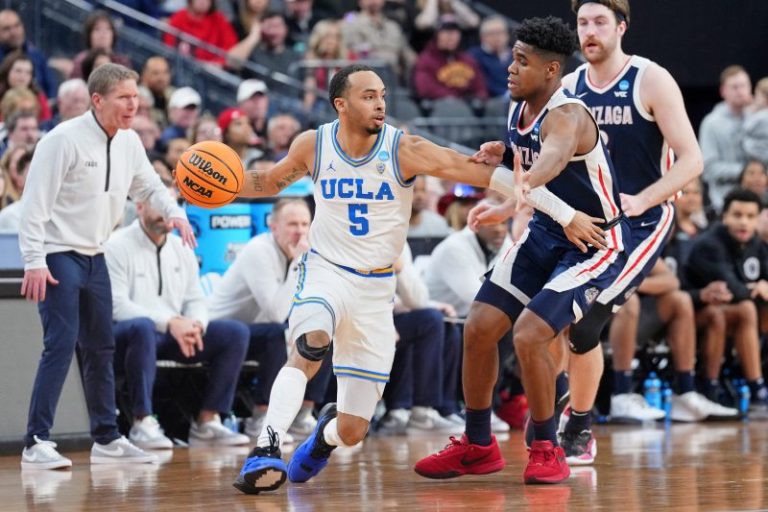
The quarterback announced on Monday, Dec. 22 he will be returning to UCLA, choosing to stay with the Bruins instead of transferring or turning pro in a major get for incoming coach Bob Chesney.

Iamaleava’s decision to return is somewhat surprising as there was uncertainty about what his next move would be. After UCLA ended the season with a loss to rival Southern California, Iamaleava said it was ‘a great learning year’ for him and he hadn’t thought about whether he would stay or transfer. He could have departed and if he had decided to leave, there were expected to be plenty of suitors who would want him for 2026.

However, Iamaleava put all of it to rest before the transfer portal even opened on Jan. 2.

Iamaleava is one of the most followed quarterbacks since his high school days in Southern California, as he’s been a model for how name, image and likeness has changed college football.

He had a highly followed departure from Tennessee after he had led the Volunteers to the College Football Playoff. Iamaleava opted to return back to his home state of California and play for UCLA. His choice was intriguing as he was a high-profile player joining a middling team that was coming off a 5-7 season, but hoped it would be a place where he could prove he could be an NFL quarterback.

It ended up not being the season UCLA had hoped. The Bruins started the campaign 0-4 and coach Deshaun Foster was fired after UCLA lost by 25 points to New Mexico in Week 3. UCLA finished the season 3-9, its worst since 2018, and lost its last five games.

Despite the tough season, Iamaleava provided some bright moments and showed why he was a five-star recruit and coveted transfer with his powerful arm, mobility and quick decision-making. He led UCLA to an upset of then-No. 6 Penn State, throwing for 166 yards and had a game-high 130 rushing yards with five total touchdowns to get the first win of the season.

It was the start of a three-game winning streak that brought some optimism back to UCLA before the rough finish. Even though the Bruins had five losses to end the season, Iamaleava showed grit and continued to play through some injuries he suffered during the skid, missing just one game.

In 11 games, Iamaleava had 1,928 passing yards, 13 touchdowns and seven interceptions, while also being the team’s leading rusher with 674 yards and four touchdown runs. 

After UCLA ended the season with a loss to rival Southern California, Iamaleava said it was ‘a great learning year’ for him and he hadn’t thought about whether he would stay or transfer. It was widely believed he could depart and if he had decided to leave, there were expected to be plenty of suitors for his services.

Instead, Iamaleava stays home to play under Chesney, who arrives after guiding James Madison to the playoff. Iamaleava gives the new coach a starting point for building his first roster in Westwood as he doesn’t have to look for a new signal-caller, but can build an offense around the quarterback.

Just finishing his redshirt sophomore season, Iamaleava has two years of eligibility left in his college career. 

This post appeared first on USA TODAY

Jake Paul knows how to draw in a crowd. He knows how to market himself. He knows how to bring in the big bucks. Unfortunately for him, taunting a former two-time heavyweight champion and then getting knocked out is priceless. There is no rebounding from that.

That won’t stop Paul from trying though. The YouTuber-turned-boxer took to Instagram on Monday to flaunt vast wealth, guns and cigars aboard what appears to be a private plane.

At least seven guns can be seen in the photo, ranging from pistols to rifles, and only a higher power could possibly know how much money is in frame.

Regardless, fans are not responding well to the image, with many comments clowning Paul for such a post, from typos to the blatant superiority complex to everything in between.

What is Jake Paul’s net worth?

According to Celebrity Net Worth, Jake Paul is estimated to be worth around $200 million. His fight with Anthony Joshua netted him an additional $94 million per reports.

What is Jake Paul’s boxing record?

Paul owns a 12-2 career record with seven of those wins coming via knockout — the first time in his career that he had lost in such a manner. His loss against Anthony Joshua was his first defeat since 2023, when he lost via split decision to Tommy Fury.

Paul’s injuries

Paul suffered a fractured jaw during his fight against Anthony Joshua. The jaw was broken in two places, and Paul needed surgery to insert metal plates on each side. Paul also noted that a few of his teeth needed to be removed as well.

Despite the injuries though, Paul is not backing down from his professional boxing career. ‘We’re going to heal the broken jaw, come back and fight people my weight and go for the cruiserweight world title,’ Paul said on social media.

Paul has hinted that his next fight will be against Canelo Alvarez, but nothing has been confirmed on that front as of yet.

This post appeared first on USA TODAY

Metcalf was suspended for two games for the incident, in which he appeared to grab the shirt of a fan wearing a blue wig in the front row before shoving him.

Metcalf plans to appeal the suspension, according to multiple reports.

If the ban stands, Metcalf will miss the remainder of the regular season. The Steelers, however, can clinch the AFC North before playing Sunday’s game against the Cleveland Browns if the Baltimore Ravens fall to the Green Bay Packers on Monday. If the Ravens win and the Steelers lose, however, Metcalf would be out for the Week 18 showdown between the two teams that would decide the division.

The two-time Pro Bowl wide receiver, who did not speak to reporters after the game, was not removed from the Steelers’ 29-24 win over the Lions after the clash. Steelers coach Mike Tomlin did not divulge any details after the game about how the team handled the episode.

‘I heard about it, but I hadn’t seen it and I hadn’t had an opportunity to talk to DK, and so I have no comment,’ Tomlin said.

The fan spoke with the Detroit Free Press of the USA TODAY Network and identified himself as his name was Ryan Kennedy from Pinckney, Michigan. He said he called Metcalf by his full legal name – DeKaylin Zecharius Metcalf – and that the receiver then ripped his shirt.

On Monday, he issued a statement denying allegations he had used ‘any racial, misogynistic, or hate-based language during the incident.’

Metcalf was not subject to discipline from the league during the game because officials did not flag him.

The Lions spoke with the fan about the incident but did not eject him, the team told the Free Press.

Metcalf, 28, was traded to the Steelers this offseason, signing a four-year, $132 million extension as the top weapon for new quarterback Aaron Rodgers. His 56.7 yards per game, however, is his lowest average since his rookie season.

This post appeared first on USA TODAY

As the five-game Christmas Day slate nears, the NBA has turned the page from the focus on the NBA Cup.

And though the Oklahoma City Thunder have dropped two of their last three games, it still may be too early to say that the team has long-term vulnerabilities, especially since those losses came against excellent Western Conference teams in the San Antonio Spurs and Minnesota Timberwolves.

Out East, things are a little more wide open, where it looks like there are a handful of teams that can compete for a conference title.

Here are USA TODAY Sports’ NBA power rankings after Week 8 of the 2025-26 regular season:

USA TODAY Sports NBA power rankings

Note: Records and stats through Dec. 21. Parentheses show movement from last week’s rankings

NBA Week 9 power rankings: Top 5

1. Oklahoma City Thunder, 25-3 (—)

2. Detroit Pistons, 22-6 (—)

3. San Antonio Spurs, 21-7 (—)

4.New York Knicks, 20-8 (+1)

5.Denver Nuggets, 20-7 (-1)

Atop the list there’s a relative lack of movement, but the interesting development is whether Oklahoma City is merely hitting a speedbump, or whether there are significant holes. The Spurs, however, look like a team that can compete regularly with the Thunder, given their size and defensive capability and their speed at guard. The Knicks, fresh off their NBA Cup championship, have won 12 of their last 14 games.

NBA Week 9 power rankings: Nos. 6-10

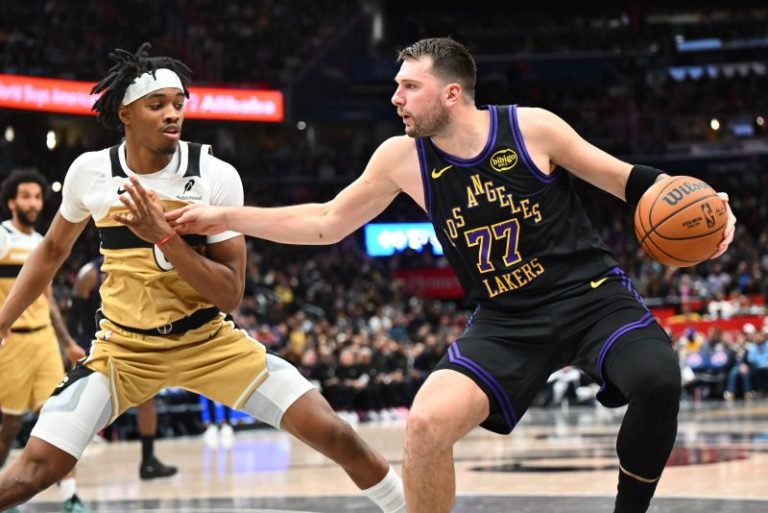
6. Los Angeles Lakers, 19-8 (+1)

7. Minnesota Timberwolves, 19-10 (+1)

8. Houston Rockets, 17-9 (-2)

9. Boston Celtics, 17-11 (—)

10. Philadelphia 76ers, 16-11 (+5)

The Rockets have taken a bit of a tumble, losing four of their last six, and the quality of some of those defeats are concerning; losses against the Kings and Pelicans shouldn’t be happening. Anthony Edwards splashed his game-winning 3 over the Thunder, and the Timberwolves and their sixth-ranked defensive rating (112.3) suddenly have some swagger. And Tyrese Maxey, who is third in the NBA in scoring at 31.7 points per game, has the 76ers soaring.

NBA Week 9 power rankings: Nos. 11-15

11. Orlando Magic, 16-12 (-1)

12. Phoenix Suns, 15-13 (-1)

13. Toronto Raptors, 17-13 (-1)

14. Cleveland Cavaliers, 15-14 (+2)

15. Atlanta Hawks, 15-15 (-1)

The Magic have sputtered a bit recently, losing four of their last seven games, though there is a caveat here: those losses have come against the Spurs, Knicks (twice) and Nuggets, who have a combined winning percentage of .730. The Cavaliers need to confront their roster and whether they should be aggressive at the trading deadline.

NBA Week 9 power rankings: Nos. 16-20

16. Chicago Bulls, 13-15 (+4)

17. Memphis Grizzlies, 13-15 (+1)

18. Miami Heat, 15-14 (-5)

19. Golden State Warriors, 14-15 (-2)

20. Dallas Mavericks, 11-18 (-1)

The Bulls have won three consecutive and second-year forward Matas Buzelis has dropped 52 points on 73.1% shooting over his last two games. With Tyler Herro (toe) missing time, the Heat have won just two of their last 10 as their shooting has dipped in the last month. At this point, it’s clear the Warriors need to tweak the construction of their roster to give Stephen Curry (28.8 points per game; ninth in the NBA) some more help.

NBA Week 9 power rankings: Nos. 21-25

21. Portland Trail Blazers, 12-16 (+1)

22. Utah Jazz, 10-17 (+2)

23. Milwaukee Bucks, 11-18 (-2)

24. Charlotte Hornets, 9-19 (-1)

25. Brooklyn Nets, 8-19 (—)

Despite ranking 11th in the Eastern Conference, the Bucks somehow have the NBA’s second-best effective field goal percentage (57.4%), which adjusts for 3-point shots. Utah ranks seventh in the NBA in points per game (119.9) and sixth in rebounds per game (45.7). The Nets have won five of their last eight, as Michael Porter Jr. (25.6 points per game) has started to carry the offense for Brooklyn.

NBA Week 9 power rankings: Nos. 26-30

26. New Orleans Pelicans, 7-22 (+3)

27. Indiana Pacers, 6-22 (-1)

28. Los Angeles Clippers, 7-21 (-1)

29. Sacramento Kings, 7-22 (-1)

30. Washington Wizards, 5-22 (—)

New Orleans has gotten a massive boost in Zion Williamson’s return, even though he has come off the bench in his three games back. Nonetheless, the Pelicans have won four consecutive. No team has been worse at possessing the ball than the Clippers, who rank dead last in turnover percentage (16.6%). And Washington’s defensive rating of 122.7 is nearly 20 points lower than the league’s top team, the Thunder (103.2).

This post appeared first on USA TODAY

  • Philip Rivers has made a remarkable return, but where does he rank among the top QBs of the 21st century?
  • Our top 25 ranking features 12 passers who are still active, including Rivers.
  • Tom Brady reigns atop the list, but there are several other Hall of Fame-caliber players not far behind.

Philip Rivers’ return to the NFL this season is undoubtedly one of the wildest, most unexpected turns the league’s, ahem, script has taken in years. Now, the entire country will get a chance to watch him play Monday night, his second start of the 2025 campaign after a hiatus of nearly five years, as his Indianapolis Colts host the San Francisco 49ers in a game with playoff implications for both squads.

Yet the stage is also a perfect time to take stock of the stellar career Rivers had already had – he was a semifinalist to join the 2026 Pro Football Hall of Fame class − until his return forced a HOF clock rest until at least 2031.

But where does Philly Riv rank in the bigger picture? We thought the best context was to slot him among the NFL quarterbacks who have played in the 21st century. (So while former MVPs like Kurt Warner and Steve McNair were eligible, for example, they might not have made the list based on their excluded accomplishments from the 1990s.)

With that in mind, here are your top 25 passers from the past 25 years – and, dadgummit, we know you won’t disagree with a single aspect of this ranking!

25. Andrew Luck

There’s a tinge of football tragedy to his story – the can’t-miss guy from Stanford charged with the impossible task of replacing Peyton Manning in Indianapolis and without a sufficient level of support around him. Yet Luck seemed on his way to doing exactly that before he made the equally courageous and controversial decision to retire amid injuries and his own mental health demons in 2019 after just seven seasons. Named the Comeback Player of the Year in 2018 – shoulder issues cost Luck all of 2017 – he threw 39 TD passes in his last hurrah and notched a playoff victory. The Colts haven’t won one since.

24. Matt Hasselbeck

A three-time Pro Bowler with a solid game and some awesome one-liners, he probably didn’t get his just due while spending the bulk of his career in Seattle. But while quarterbacking the precursors to the Legion of Boom years, Hasselbeck led the Seahawks to the playoffs six times, including their first Super Sunday appearance – and those ‘Hawks might have been the franchise’s first champions had the officials not assisted the Steelers in Super Bowl 40.

23. Dak Prescott

He hasn’t managed to end the Dallas Cowboys’ three-decade championship drought … but he probably doesn’t deserve all that much blame, either. Prescott broke the all-time passing yardage record for “America’s Team” earlier this season and needs eight more TD passes to take the club record (248) currently held by Tony Romo. And say this for Prescott: He’s been a classy ambassador for an organization that always has a sideshow element.

22. Joe Burrow

He took the Cincinnati Bengals to a Super Bowl and pair of AFC title games … meaning Burrow’s probably ranked too low. But, in all seriousness, he’s been MVP-caliber pretty much since coming back from the knee injury that prematurely ended his rookie season in 2020.

21. Carson Palmer

He took the Bengals to the playoffs twice – not quite Burrow but not bad, either. (And it will always be a shame that Palmer’s first career postseason pass, a 66-yard completion, ended with him crumpled in the pocket, knee torn up. That 2005 Bengals team seemed like one that could have made a Lombardi run of its own.) Not only that, Palmer’s 38-21-1 regular-season mark with the Cardinals is easily the best in the century-old club’s history among QBs who started at least 15 games.

20. Kirk Cousins

Granted, maybe he’s a better businessman than quarterback – but that’s mostly a nod to his negotiating chops. While postseason and prime-time success eluded Cousins while he was in Washington and with the Minnesota Vikings, his 44,394 career passing yards and 296 TDs both rank within the top 20 in league history.

19. Jared Goff

The No. 1 pick of the 2016 draft has had two distinct career chapters with the Los Angeles Rams and Detroit Lions. You almost forget the four-time Pro Bowler led LA to Super Bowl 53 – maybe because that loss to the New England Patriots was so forgettable and foretold Goff’s trade to Detroit. But while he seemed like a consolation prize – at best – in the Matthew Stafford swap, Goff has quarterbacked the best Lions teams of the Super Bowl era (since 1966), even if he hasn’t yet gotten them to their first Super Sunday. By the time this season wraps, he should have four straight with at least 29 TD passes and 4,400 yards in Motown.

18. Cam Newton

At 6-5, 245 pounds, he was a unicorn among dual-threat quarterbacks. He accounted for 45 touchdowns during his 2015 MVP season, which culminated in a Super Bowl 50 berth for Newton’s Carolina Panthers following a 15-1 regular season. He still holds most of the franchise’s career passing records.

17. Donovan McNabb

He had a love-hate relationship with the locals – some of the critiques self-inflicted – but he remains the Philadelphia Eagles’ all-time leader in passing yards (32,873) and TDs (216). And while McNabb wasn’t the guy who finally got Philly its first Lombardi Trophy, he did take the Eagles to five NFC championship games and one Super Bowl appearance.

16. Michael Vick

He never played in a Super Bowl nor earned a league MVP trophy – or even All-Pro honors. But there’s no denying Vick’s cultural impact or his electric play – perhaps the most incomparable dual-threat talent ever given his breakaway speed and cuts, plus a left arm that could rifle a ball to any part of the field. Let’s also give Vick a tip of the cap for being unfailingly accountable for the mistakes he made off the field following his two-season suspension for dogfighting – and his good-faith efforts on that front have continued even though he knows some will never forgive him.

15. Joe Flacco

You’ll never meet a more down-to-earth quarterback … to the degree you meet quarterbacks … and to the degree that matters. But this guy’s a real one. He’ll be 41 next month yet can still effortlessly launch a beautiful spiral 50 yards downrange. And while Flacco might seem like a vagabond at this point, let’s not forget he went 10-5 in the playoffs with the Baltimore Ravens – including that sublime four-game run in 2012 that concluded with Super Bowl 47 MVP honors. If Flacco can find one more temporary QB1 gig before he quits, he should get to 50,000 career passing yards … maybe even 300 TDs.

14. Brett Favre

His trifecta of MVP awards and good guy image are residuals from the 1990s. But Favre remained a captivating player in his final 11 seasons, retiring after the 2010 campaign with most of the league’s major passing marks and in possession of his signature Ironman streak (321 consecutive starts, truly Gehrig-esque). And Favre was splendid – on the field anyway – right to the end, reaching the NFC championship game twice in his final four seasons, once with the Green Bay Packers and also with the Vikings.

13. Russell Wilson

Hard to say if any player has ever had more shifting narratives around him. Did Wilson drive the Seahawks to all that success they had during the 2010s, or was he mostly a passenger? And there’s no doubt his post-Seattle years have been even less kind to his legacy, wherever it lands. But there’s no denying his numbers (121 career wins, nearly 47,000 passing yards, and almost 400 combined passing/rushing TDs). And no one can take away Wilson’s Super Bowl 48 ring, still the only one in Seahawks history … even if he probably should have a Super Bowl 49 ring, too.

12. Philip Rivers

So what if he was the third-best quarterback of the 2004 draft after Eli Manning and Ben Roethlisberger? So what if Rivers never played in a Super Bowl? So what if he’s spent nearly his entire career playing in ideal passing conditions with teams built to score … and Hall of Famers like LaDainian Tomlinson and Antonio Gates helping him? You don’t throw for more than 63,000 yards and 422 TDs because you’re a spoke and not a hub – also a durable one (241 career starts). And the Rivers era was one of the few times the Chargers remained consistently relevant. Physically, he was never impressive. His ability to spew an endless stream of clean trash talk? So impressive.

11. Josh Allen

10. Lamar Jackson

He’s a two-time NFL MVP … and arguably should have three. Jackson broke Vick’s record for career rushing yards by a quarterback and now has 6,513 – and he’s the only one to accrue 1,000 in a season twice. Yet Jackson is probably underrated as a passer – he’s a far better one than Vick ever was – and he seemed to improve annually prior to his frustrating 2025. He’ll likely continue to climb this list – let’s just hope he’s able to fully certify his career at some point with the Lombardi Trophy that’s proven so elusive in the Patrick Mahomes era.

9. Matt Ryan

You probably forgot that he was the league MVP in 2016 … mostly because you remember his Atlanta Falcons fell apart in Super Bowl 51, really through no fault of Ryan’s. Given the contrasts in their games and personalities, following Vick in Atlanta wasn’t an enviable role for Ryan, either. But in many ways, his career mimics Rivers’ – nice guys with very similar career numbers but a close-but-no-cigar asterisk attached to their championship quests. (But Matty Ice’s in-game verbiage was definitely more colorful than Rivers’.)

8. Eli Manning

His 117-117 record in the regular season probably prevented him from being a first-ballot Hall of Famer. But two Super Bowl MVPs, 57,000 passing yards and the ability to successfully navigate the New York market for 16 seasons should land him in Canton eventually.

7. Matthew Stafford

Underrated and undervalued during his 12 years in Detroit – and Stafford was most definitely elite with the Lions, despite a shortfall of help on the roster and in management – his belated renaissance with the Rams is making up for those dark days. At this point, it would be a shock if Stafford doesn’t cap this season with his first MVP trophy. It wouldn’t be surprising either if he wins his second Super Bowl with the Rams. And if his 37-year-old body holds up for just another two or three good seasons, he should be the rare player with 70,000 career passing yards and 500 TDs by the time he’s done.

6. Ben Roethlisberger

“Big Ben” was awesome between the lines from Day 1, a mountain of a man who could shed tacklers with ease while slinging the rock to all parts of the gridiron. He earned two rings with the Pittsburgh Steelers – and probably should have been Super 43’s MVP given his legendary, title-winning throw to Santonio Holmes through triple coverage and into the back corner of the end zone as time wound down. Roethlisberger’s 64,000+ passing yards and 418 career TD passes are all the more impressive given so much of it was done in the Steel City’s often unforgiving conditions. He never played for a team with a losing record, his final ledger 165-81-1.

5. Drew Brees

His 80,358 passing yards and 571 TD passes rank second only to Tom Brady in NFL annals. But perhaps the most important part of Brees’ legacy was helping to save pro football in New Orleans following the wrath of Hurricane Katrina while leading the Saints to their first – and still only – Super Bowl win in the 2009 season (Lombardi Gras). GPS-level accurate – Brees completed at least 70% of his passes in seven different seasons – the league has rarely seen as good a leader, either.

4. Aaron Rodgers

During his prime, his combination of accuracy, mobility, moxie, arm strength, competitiveness and extreme football intelligence made him something of a template for the modern quarterback – and maybe no one has ever had the ability to make the pinpoint throws he could, whether from the pocket or on the move. Only one player has more MVP trophies than Rodgers’ four, though his detractors (and Brees’) will say one Super Bowl is insufficient. Rodgers’ 102.4 career passer rating is currently the highest in NFL history.

3. Peyton Manning

A record five league MVP awards. Four Super Bowl trips and two wins. Holder of most of the league’s major passing standards when he retired following the 2015 season. But perhaps the defining part of the Manning legend was his will and ability to manipulate games with his mind – the most important component for a player with an above-average arm but no wheels.

2. Patrick Mahomes

We’re not even 10 years into his career, and he’s already got three Super Bowl MVPs – only Brady has more – two league MVPs and had started seven consecutive AFC championship games, a streak that will end in an unfortunate 2025 season that hasn’t been kind to Mahomes or his Kansas City Chiefs. But there are more chapters to be written in what’s already the sterling career of a player who relentlessly wins and has provided some of the most impressive individuals plays and efforts on his team’s dynastic road. Still a legit shot Mahomes could be regarded as the best to ever do it by the time he retires …

1. Tom Brady

… But, for now, GOAT status most definitely remains with TB12, whose seven Super Bowl rings are still more than any NFL franchise possesses on its own. He’s got the jewelry, nearly all of the league’s notable passing marks and a record five Super Bowl MVPs. There’s so much more to an unparalleled NFL journey that began as an unheralded sixth-round pick of the Patriots. But you know the story. And you know there’s no debate here. At least not yet.

This post appeared first on USA TODAY