Author

admin

Browsing

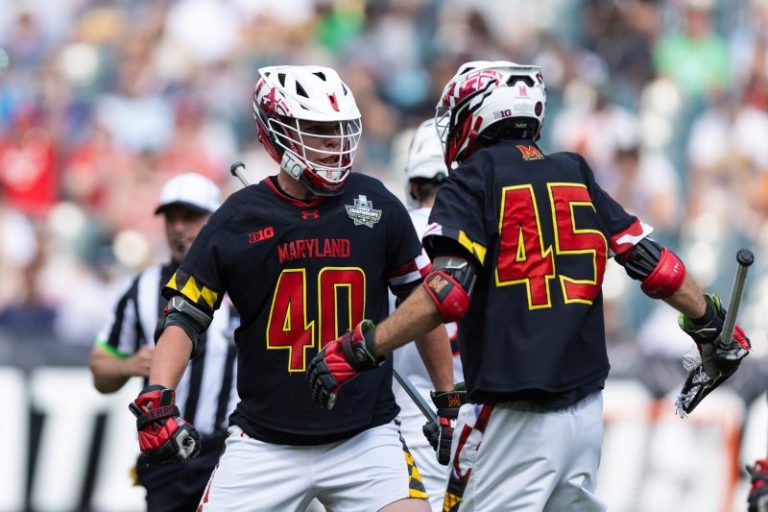
The quest for the top prize in collegiate men’s lacrosse is underway. Over the weekend the remaining 16 teams will be in action, with the ultimate aim of lifting the national championship trophy on Memorial Day in Foxborough, Massachusetts.

Regular followers of the sport will notice a few name-brand programs missing from the NCAA tournament field. Long-time powers Virginia and Johns Hopkins as well as past champions Denver and Loyola (Md.) didn’t make the cut. But that doesn’t necessarily mean we’ll add a new member to the first-time champions club. Most of the seeded teams have won titles before, though it’s been a while for some.

Here’s the weekend schedule, with seeded teams playing on their home fields. The winners will advance to quarterfinal sites next weekend in Hempstead, New York, and Annapolis, Maryland.

NCAA lacrosse tournament title contenders

In a parallel with the recently concluded men’s basketball tournament, there is a team seeking a rare three-peat but facing a difficult path to achieving it. Two-time defending champion Notre Dame is seeking a third title in a row, a feat last accomplished by Princeton from 1996-98. As mentioned, however, it will be a tough path for the Fighting Irish, who did enough to make the field but not enough to earn a seed. They’ll start their title defense on the road at Big Ten tournament champ Ohio State, coincidentally the school that kept the Irish from claiming the crown in football. While it’s undoubtedly the most compelling matchup in the round of 16, the committee did neither team a favor with this pairing. The Buckeyes picked up a 10-9 win at Notre Dame back on March 8, but a season-opening loss to Utah damaged OSU’s overall seed. The game in Columbus isn’t the only rematch of the weekend. Harvard picked up a 15-14 win at Syracuse back on Feb. 22, a result that ultimately helped the Crimson edge out Army for the last at-large spot in the field.

NCAA lacrosse tournament top players

The undisputed star of the sport this year is Cornell’s CJ Kirst. The Tewaaraton Award favorite broke the Division I record for career goals earlier in the season. He enters the tournament with 98 points on 68 goals and 30 assists thus far in the campaign, averaging a lofty 6.53 points per contest. With the help of his friends on the Big Red attack unit, Ryan Goldstein and Michael Long, Cornell leads the nation in scoring at 16.47 goals a game. But one shouldn’t overlook reigning Championship Weekend most outstanding player Chris Kavanagh, back in the tournament for Notre Dame. Other names to know include Syracuse attackman Joey Spallina, Maryland goalkeeper Logan McNaney and Duke do-everything midfielder Andrew McAdorey.

Most likely first-time NCAA lacrosse tournament champion

Ohio State and Penn State have both been to Championship Weekend but have yet to bring home the trophy. Unfortunately, at least one of them won’t be in Foxborough, as they’d be slated to meet in the quarterfinal round should they survive this weekend. Like the Buckeyes, however, the Nittany Lions have a tough draw of their own against a high-scoring Colgate squad that got hot at the right time in the Patriot League tournament.

NCAA lacrosse tournament schedule

(All times Eastern)

First round

Saturday, May 10

Richmond (13-3) at North Carolina (10-4), noon

Towson (11-5) at Princeton (12-3), 2:30 p.m.

Colgate (10-7) at Penn State (10-4), 5 p.m.

Georgetown (11-4) at Duke (12-5), 7:30 p.m.

Sunday, May 11

Notre Dame (8-4) at Ohio State (14-2), noon

Air Force (9-7) at Maryland (11-3), 2:30 p.m.

Harvard (10-4) at Syracuse (11-5), 5 p.m.

Albany (10-8) at Cornell (14-1), 7:30 p.m.

This post appeared first on USA TODAY

Edwards grabbed the ankle while on the court. The Timberwolves called timeout, and Edwards limped to the locker room with members of the team’s training staff.

Though the team listed Edwards as questionable to return to the game, he tested the ankle at halftime and was in the lineup to start the third quarter. Just before the third quarter began, the team had said he was available to return.

Edwards had seven points, four rebounds, three assists and three steals and the Timberwolves were ahead 37-19 when he left the game. Returning for the second half, he finished the game with 20 points, nine rebounds, five assists and three steals in 34 minutes as the Timberwolves cruised to a 117-93 win.

‘Feeling great, feeling great,” Edwards told TNT after the game when asked about his ankle.

Injuries continue to play a role in the playoffs. The Cleveland Cavaliers were without Darius Garland, Evan Mobley and De’Andre Hunter in their Game 2 loss to the Indiana Pacers, and Golden State Warriors star Steph Curry is out at least a week with a grade 1 left hamstring strain.

This story has been updated with new information.

The USA TODAY app gets you to the heart of the news — fastDownload for award-winning coverage, crosswords, audio storytelling, the eNewspaper and more.

This post appeared first on USA TODAY

Manny Pacquiao plans to end his retirement from boxing at 46 and is set to fight Mario Barrios July 19 in Las Vegas for the WBC welterweight championship, according to an ESPN report.

Pacquiao last fought in 2021, when he lost to Yordenis Ugas by unanimous decision.

Since then, he has spent time focused on his political career in the Philippines, where he has served as a senator and made an unsuccessful run for the presidency in 2022. Subsequently, rumblings of a possible return to the boxing ring had grown.

Boxing’s only eight-division world champion, Pacquiao has beaten the likes of Shane Mosley, Miguel Cotto and Erik Morales.

He lost to Floyd Mayweather Jr. by unanimous decision in 2015, when the two boxers combined to produce an estimated $400 million in pay-per-view buys – believed to be the biggest take in the sport’s history.

This post appeared first on USA TODAY

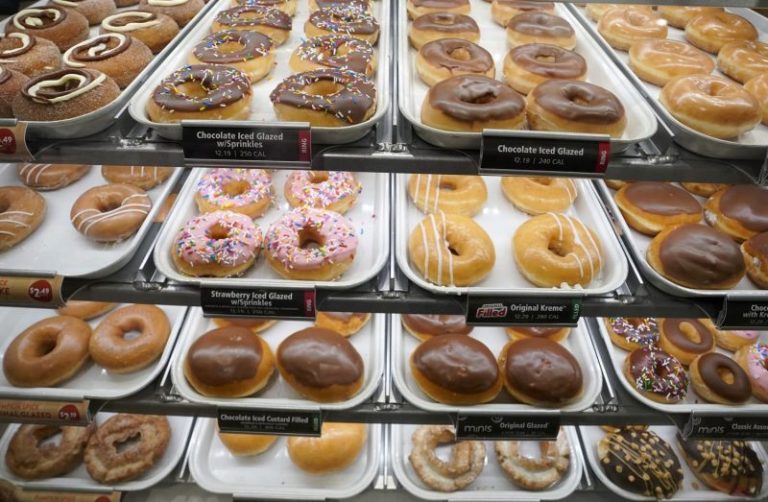
Krispy Kreme stock plunged 24% on Thursday morning after the doughnut chain said it is “reassessing” its rollout with McDonald’s and pulled its full-year outlook in part due to economic “softness.”

Krispy Kreme is not planning to launch its doughnuts in any additional McDonald’s locations in the second quarter, suspending a nationwide rollout. As of March 30, more than 2,400 of the burger chain’s roughly 13,500 domestic locations carried Krispy Kreme doughnuts.

“I remain confident in the long-term national opportunity, but we need to work together with them to identify levers to improve sales,” Krispy Kreme CEO Josh Charlesworth said.

Over the last year, Krispy Kreme shares have shed more than 70% of their value, dragging the company’s market value down to less than $600 million.

Truist downgraded the stock on Thursday from buy to hold.

“We are shocked by the speed at which the story fell apart,” Truist analyst Bill Chappell wrote. ”… We no longer have high conviction in management’s previously stated strategy and execution of these initiatives, and it will likely take several quarters before we or investors can regain confidence.”

The two restaurant companies announced more than a year ago that Krispy Kreme doughnuts would be sold in all McDonald’s U.S. locations by the end of 2026. The rollout began roughly six months ago.

While the beginning phases were promising, sales fell below projections, Krispy Kreme executives said on Thursday.

As consumers worry about the broader economy and a potential recession, they have been pulling back their spending at restaurants. McDonald’s reported a 3.6% decline in its U.S. same-store sales for the first quarter. McDonald’s CEO Chris Kempczinski said that the fast-food industry’s traffic fell as middle- and low-income diners visited restaurants less frequently.

For Krispy Kreme, profitability appears to be the key reason for slowing the rollout with McDonald’s.

“However, we are seeing that after the initial marketing launch demand dropped below our expectations requiring intervention to deliver sustainable, profitable growth,” Charlesworth told analysts on the company’s conference call.

“We are partnering with McDonald’s to increase sales by stimulating higher demand and cutting costs by simplifying operations,” he added. “At the same time, we are reassessing our deployment schedule together with McDonald’s as we work to achieve a profitable business model for all parties.”

Krispy Kreme reported a net loss of $33 million for the quarter ended March 30.

To supply all of McDonald’s U.S. restaurants, Krispy Kreme was investing in expanding capacity quickly, which weighed on profits. In the last year, the company has reported three quarters of net losses.

The company uses a “hub and spoke” model that lets it make and distribute its treats efficiently. Production hubs, which are either stores or doughnut factories, send off freshly made doughnuts every day to retail locations such as grocery stores and gas stations. Krispy Kreme is looking to prune its unprofitable locations, which could affect up to 10% of its U.S. network.

Krispy Kreme also pulled its 2025 outlook, citing “macroeconomic softness” and uncertainty around the schedule for the McDonald’s partnership.

This post appeared first on NBC NEWS

A group of investors sued UnitedHealthcare Group on Wednesday, accusing the company of misleading them after the killing of its CEO, Brian Thompson.

The class action lawsuit — filed in the Southern District of New York — accuses the health insurance company of not initially adjusting their 2025 net earning outlook to factor in how Thompson’s killing would affect their operations.

On Dec. 3 — a day before Thompson was fatally shot — the company issued guidance that included net earnings of $28.15 to $28.65 per share and adjusted net earnings of $29.50 to $30.00 per share, the suit notes. And on January 16, the company announced that it was sticking with its old forecast.

The investors described this as “materially false and misleading,” pointing to the immense public scrutiny the company and the broader health insurance industry experienced in the wake of Thompson’s killing.

The group, which is seeking unspecified damages, argued that the public backlash prevented the company from pursuing ‘the aggressive, anti-consumer tactics that it would need to achieve’ its earnings goals.

‘As such, the Company was deliberately reckless in doubling down on its previously issued guidance,’ the suit reads.

The company eventually revised its 2025 outlook on April 17, citing a needed shift in corporate strategy — a move that caused its stock to drop more than 22% that day.

‘The company denies any allegations of wrongdoing and intends to defend the matter vigorously,’ a UnitedHealthcare spokesperson said in a statement.

Thompson’s fatal shooting on the streets of New York City in broad daylight sent shockwaves across the nation.

Luigi Mangione, the 27-year-old man accused of the killing, has pleaded not guilty to federal and state charges against him. The legal defense fund for Mangione surpassed the $1 million mark in donations on Tuesday.

This post appeared first on NBC NEWS

The stock market’s action on Wednesday was a bit like trying to pick a dinner spot with friends—lots of back and forth, but no real direction.

The market started out higher and went up and down without much of a directional bias until the Fed made its expected interest rate decision and Fed Chairman Jerome Powell’s press conference. Stock prices dipped lower, but right before the close, another headline moving event surfaced: President Trump announced the rollback of some chip-related restrictions. This news gave the market a boost into the close.

Here’s how the broader indexes closed:

  • The Dow Industrials ($INDU) finished up 0.70%.
  • The S&P 500 ($SPX) rose 0.43%.
  • The Nasdaq Composite ($COMPQ) added 0.27%.

Tech Leads, but Alphabet Takes a Hit

In terms of sector performance, Technology came out on top, followed by Consumer Discretionary and Health Care. On the flip side, Real Estate, Communication Services, and Materials were the laggards.

The main reason behind the stumble in Communication Services was Alphabet, Inc. (GOOGL), which dropped by a whopping 7.26%. Why the selloff? An Alphabet exec testified that Google was losing search traffic to AI tools.

The StockCharts’ S&P 500 MarketCarpet (below) reflects Wednesday’s price action.

FIGURE 1. STOCKCHARTS MARKETCARPETS FOR MAY 7, 2025. It was mostly green with some pockets of red.Image source: StockCharts.com. For educational purposes.

Overall, Wednesday’s performance is leaning more positive than negative, but is it enough to break through critical resistance levels?

Resistance Levels in the S&P 500

To get a clearer picture, we need to check out the daily chart of the S&P 500 ($SPX).

FIGURE 2. S&P 500 FACING A LOT OF HEADWINDS. THE 61.8% Fibonacci retracement level is a resistance level the index is struggling to break above.Chart source: StockCharts.com. For educational purposes.

The S&P 500 is sandwiched between its 50- and 200-day simple moving averages (SMAs). The Fibonacci retracement levels drawn from the February high to April low show that the 61.8% retracement level is proving to be a stubborn ceiling. Add to that the downward-sloping 50-day SMA, and the market may have a tough time moving higher. To leave the downtrend in the rearview mirror, the S&P 500 would have to break above its 200-day SMA with the necessary follow-through to keep it above that level. So far, the price action suggests that the S&P 500 will face headwinds to get to that stage.

News Moves Markets, Like the Chip Surprise Today

Remember, the market’s price action is like riding a rollercoaster powered by headlines. This can sometimes send technical analysis into a disarray.

Take, for example, today’s news about lifting the chip restrictions, which sent semiconductor stocks higher. The VanEck Vectors Semiconductor ETF (SMH) jumped 2.05% (see chart below).

FIGURE 3. DAILY CHART OF SMH. Will the semiconductor ETF be able to break out above its May 2 high?Chart source: StockCharts.com. For educational purposes.

Like the chart of the S&P 500, SMH needs to work harder at breaking its downtrend. The one ray of hope is that Wednesday’s move reached the May 2 high. The downside: it wasn’t able to break above it. This shows investors are cautious about semiconductors and the overall equity market.

Volatility Says It All

The caution among investors can be seen clearly in the chart of the S&P 500 vs the Cboe Volatility Index ($VIX).

FIGURE 4. VIX VS. S&P 500. Even though the VIX pulled back from its April peak, it’s still above average.Chart source: StockCharts.com. For educational purposes.

What’s interesting is that while the VIX fell when the S&P 500 rose from mid-April, the VIX hasn’t dropped to its average level of 19. It’s still trading above it, which is another point that increases the probability of further downside in equities.

The Bottom Line

There is a lot going on: geopolitical tensions, trade deal updates, policy shifts. Any of these can jolt the market in either direction.

It was encouraging to see tech stocks and semiconductors bounce on Wednesday, but that doesn’t mean we’re headed back to the days of growth stock leadership. If you’re an investor, especially one managing retirement money or nearing retirement, the best approach is to be patient. We’re not out of the woods yet.

As always, stay alert and stick with your investment plan.


Disclaimer: This blog is for educational purposes only and should not be construed as financial advice. The ideas and strategies should never be used without first assessing your own personal and financial situation, or without consulting a financial professional.

In this video, Joe shares how to trade MACD signals using multiple timeframes, and how to spot stock market pullback setups that can help to pinpoint a great entry off a low. He then reviews sector performance to identify market leadership, covers key chart patterns, and discusses a looming bearish signal on QQQ and IWM. The video wraps with technical analysis on popular viewer-submitted stock symbols, including REAL, PSTG, and more.

The video premiered on May 7, 2025. Click this link to watch on Joe’s dedicated page.

Archived videos from Joe are available at this link. Send symbol requests to stocktalk@stockcharts.com; you can also submit a request in the comments section below the video on YouTube. Symbol Requests can be sent in throughout the week prior to the next show.

With all eyes and ears on this week’s Fed meeting, it’s worth taking a big step back to reflect on conditions related to momentum, breadth, and leadership.  And while the rally of the early April lows has been significant, the S&P 500 and Nasdaq 100 now face considerable resistance at the 200-day moving average.

With that backdrop in mind, here are three charts we’re watching that have not yet signaled an “all clear” for risk assets.

Our Market Trend Model Remains Medium-Term Bearish

Long-time market newsletter author Paul Montgomery used to point out that the most bullish thing the market can do is go up. The way we make this simple assessment of market trend is using our Market Trend Model.

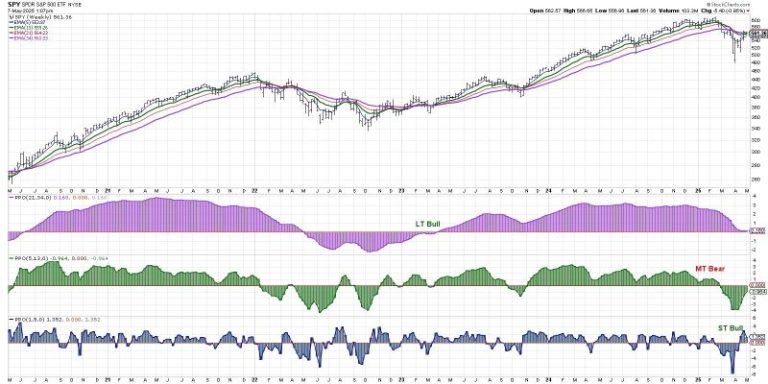
As of last Friday’s close, our Market Trend Model shows a short-term bullish signal, given the strength off the early April low. The medium-term model, however, remains bearish, as the recent bounce is still defined as a bear market rally. If the S&P 500 can push above its own 200-day moving average, that would likely be enough to move the medium-term model to the bullish side for the first time since October 2023.

Over the years, I’ve found the Market Trend Model to be a fantastic way of separating the short-term “flickering ticks” of day-to-day market movements from the more significant shifts in sentiment from bullish to bearish. And by staying on the right side of this model, I’ve been able to capture most of the market upside, and more importantly, avoid disastrous bear phases!


Don’t miss our daily market recap show, CHART THIS with David Keller, CMT. We’ll track how these charts evolve through the course of the week, highlight key stocks on the move, and boil down the most important market themes from a technical perspective. Join us live every trading day at 5pm ET, or catch the replay on our YouTube channel!


Will Key Stocks Breakout Above the 200-Day?

While the S&P 500 and Nasdaq 100 are testing their own 200-day moving averages, many S&P 500 members are in a very similar position. At the April 2025 market low, less than 10% of the S&P 500 stocks were above their 50-day moving average. That reading has reached almost 60% this week as literally half of the S&P 500 members have regained this short-term moving average.

While the bottom panel shows the percent of stocks above the 50-day moving average, the next panel up displays the percent of S&P 500 members above their 200-day moving average. While this has also increased over the last month, it still remains below 50%.

The countertrend rally in March 2025 saw this indicator go up to 50% and then reverse lower, providing a warning sign of further lows to come. Will we see a similar stall in this indicator in May 2025? If so, that could indicate a retest of the April low. On the other hand, if both of these gauges push above 50%, then investors should brace for much further upside for the S&P 500.

Offense Needs to Dominate Defense

Leadership themes could become incredibly important, as many leading growth stocks remain in a position of technical weakness. And unless the top growth stocks go into full rally mode, it’s hard to imagine meaningful upside for the S&P 500 and Nasdaq 100. One way to consider this relationship is to chart the ratio between Consumer Discretionary and Consumer Staples.

The top panel shows the cap-weighted sector ETFs, and the bottom panel shows the same ratio using equal-weighted sector ETFs. Both of these ratios made a major peak in Q1 2025, and both of them trended lower into a mid-April low. Over the last three weeks, we’ve seen a dramatic upside reversal in these offense-defense rations, indicating a rotation from defensive to offensive positioning.

Quite simply, I don’t see the major averages pushing higher unless these ratios continue to gain ground to the upside. We have observed strength in some Consumer Staples names, from Kroger (KR) to Coca Cola (KO), but it would take charts like Amazon (AMZN) making a significant move higher to give the S&P 500 any real chance of pushing above its own 200-day moving average. This ratio moving higher would confirm that “things you want” are outperforming “things you need”, and that has bullish implications for risk assets.

Investors are facing more uncertainty than ever as we brace for the latest Fed announcement, the newest tariff headline, and mixed results in the form of economic indicators. By watching charts like these, and keeping a watchful eye on the updated Market Summary page, StockCharts users can approach these markets with confidence.

RR#6,

Dave

P.S. Ready to upgrade your investment process? Check out my free behavioral investing course!


David Keller, CMT

President and Chief Strategist

Sierra Alpha Research LLC


Disclaimer: This blog is for educational purposes only and should not be construed as financial advice. The ideas and strategies should never be used without first assessing your own personal and financial situation, or without consulting a financial professional.

The author does not have a position in mentioned securities at the time of publication. Any opinions expressed herein are solely those of the author and do not in any way represent the views or opinions of any other person or entity.

The S&P 500 ($SPX) wrapped up Tuesday just below its intraday midpoint and posted one of the narrowest ranges we’ve seen in the past two months. That’s a clear sign traders are reluctant to take major bets ahead of Wednesday’s 2:00 PM ET Federal Open Market Committee (FOMC) decision.

And honestly, this caution makes sense. If we look back at how the stock market has reacted following the first two FOMC meetings of 2025, there has been a mix of hesitation and sharp moves.

Below is an updated chart marking each FOMC date since 2024 alongside the S&P 500. After the late January meeting, the S&P 500 zig-zagged to marginal new highs over the next two weeks before the first of two sharp down legs unfolded.

FIGURE 1. FOMC DATES SINCE 2024.

Coincidence or not, the S&P 500 is trading at nearly the same price level now, six weeks later, as it was back then. So, how close are today’s prices compared to the close on March 18, the day before the last Fed meeting?

This close (see chart below):

FIGURE 2. THE S&P 500 IS TRADING VERY CLOSE TO LAST FOMC MEETING LEVELS.

The difference is that the index has been rallying for four weeks, starting from the pivot low on April 7, a month ago today. In March, the S&P 500 was trying to bounce after topping four weeks earlier on February 19. That bounce continued for a few more days before dominant down-trending price action took over.

But over the last few weeks, the dominant trend is definitely higher. So the big question now is: can this mini uptrend resume after this pause?

A Short-Term Setup to Watch

A few days ago, the 14-period relative strength index (RSI) on the two-hour chart grazed the 70-overbought level for the first time since late January (see chart below). Yes, it took a nearly 18% rally in a very short time frame for it to finally happen, but remember, the indicator was coming off its lowest level since the COVID lows. Modest 3–5% pops were enough to trigger overbought readings for much of 2024. Not this time.

As you know, overbought conditions never persist, especially in very short timeframes like this. However, if this rally has anything left in the tank, we’ll see the indicator hit overbought again soon. That may not happen in the next day or two, but if the market reacts negatively to today’s news, but a bid returns soon after, it could keep some of the bullish patterns we’ve been tracking in play. That’s just one scenario, but one we’ll be closely watching.

FIGURE 3. TWO-HOUR CHART OF THE S&P 500.

Bullish Patterns Still Intact

There are two bullish pattern breakouts still in play on the S&P 500 chart:

And barring a very extreme and negative reaction, the patterns will stay alive today, as well.

FIGURE 4. INVERSE HEAD-AND-SHOULDERS AND CUP WITH HANDLE PATTERNS.

FIGURE 5. INVERSE HEAD-AND-SHOULDERS PATTERN IN THE S&P 500.

FIGURE 6. CUP WITH HANDLE PATTERN IN THE S&P 500.

A Bright Spot: Utilities

The Utilities Select Sector SPDR Fund (XLU) was the first sector ETF (and one of the first of all the ETFs we track) to notch a new 50-day high, which it hit on Tuesday. On the weekly chart, it’s clear the ETF is now trying to leverage a multi-month bottoming formation.

This is especially notable because the formation has developed above two bullish pattern breakouts from 2024. Ironically, XLU’s first major breakout of 2024 happened around this time last year (late April), which set the stage for an extremely strong run, at least through late November.

The current snapback is important to watch, given how well XLU has recently capitalized on bullish breakouts. Some upside follow-through from here would also put the former highs back in the crosshairs.

FIGURE 7. WEEKLY CHART OF UTILITIES SELECT SECTOR SPDR (XLU).

Invesco Solar (TAN) Still Has Work to Do

Invesco Solar ETF (TAN) has been rallying since the April lows, much like nearly every ETF we track. On the daily chart, it’s been trying to leverage a bullish cup and handle pattern, a formation we’ve also seen emerge in many other areas. It’s coming off an extremely oversold condition, with its 14-week RSI undercutting 30 for just the third time since 2021. So TAN could see some additional upside from here.

But the ETF will need to do much more to materially improve its long-term technical picture. Nearly every rally has stalled near the key weekly moving averages, all of which continue to slope lower. Selling strength in TAN has been a highly effective strategy since it peaked in early 2021.

FIGURE 8. WEEKLY CHART OF INVESCO SOLAR ETF (TAN).

Bitcoin Holding Up

Bitcoin has held its breakout from two weeks ago quite well so far. The next upside target remains near 103k. Again, regardless of whether or not you follow crypto, seeing the bid continue is a bullish sign for risk appetite across different asset classes, especially equities.

Fun fact: Bitcoin topped a few weeks before the SPX, so it can be a useful leading indicator.

FIGURE 9. BITCOIN BREAKS OUT.

Ethereum Playing Catch-Up

While Ethereum’s extreme relative weakness vs. Bitcoin has continued, it too has rallied over the last few weeks. It’s now close to breaking out from a cup with handle formation. At the same time, it’s testing its now flat 50-day moving average.

The combination of a bullish breakout and a move through the 50-day moving average produced a very strong follow-through rally in November, something Ethereum will try to replicate.

FIGURE 10. ETHEREUM BREAKS ABOVE 50-DAY MOVING AVERAGE.

Final Thoughts

As we head into the Fed decision, we’re seeing a lot of cautious optimism in the charts. Key bullish patterns are still holding, sectors like Utilities are showing strength, and crypto is flashing green.

The next few sessions will be important. If we get a knee-jerk reaction to the Fed, but buyers step in quickly it could set the stage for the next leg higher in this rally.

Stay alert.


Frank Cappelleri is the founder and president of CappThesis, an independent technical analysis newsletter firm. Previously, Frank spent 25 years on Wall Street, working for Instinet, the equity arm of Nomura and Smith Barney. Frank’s various roles included being an equity sales trader, technical analyst, research sales specialist and desk strategist. Frank holds the CFA and CMT designations and is a CNBC contributor.

https://cappthesis.com

https://www.youtube.com/@cappthesis

https://twitter.com/FrankCappelleri/

https://www.linkedin.com/in/frank-cappelleri-cfa-cmt-a319483/

Saga Metals Corp. (‘SAGA’ or the ‘Company’) (TSXV: SAGA) (OTCQB: SAGMF) (FSE: 20H) a North American exploration company specializing in the discovery of critical minerals, is pleased to announce the addition of 97 new claims covering 2,425 hectares, increasing the total area of the Radar Ti-V-Fe Project to 24,175 hectares.

The Company’s 100%-owned Radar Property is strategically located just 10 kilometres from the coastal city of Cartwright, Labrador. The location offers excellent infrastructure advantages, including:

  • Road access
  • Deep-water port on the Atlantic Ocean
  • Cartwright Airport
  • Proximity to hydroelectric power

With the recent expansion, the Radar Property now fully encompasses the Dykes River intrusive complex, a recently identified Mesoproterozoic layered mafic intrusion (Gower, 2017). The complex has garnered significant interest due to its geological resemblance to large AMCG-type intrusions and the presence of an extensive titanium-vanadium-iron (Ti-V-Fe) enriched layer containing vanadiferous titanomagnetite (‘VTM’).

Regional airborne magnetic surveys highlighted the mafic oxide layer, revealing an arcuate exploration target extending over 20 kilometers in length.

Michael Garagan, CGO & Director of SAGA commented: ‘To lay claim to the entire Dykes River Intrusion is an important milestone for SAGA and its shareholders. Throughout history, many of these mineralized geological settings have been shared amongst multiple companies vying to advance their projects. It’s a unique and significant opportunity to hold the entire 160 square km intrusion mapped at the surface and benefits from tremendous infrastructure. The claim acquisition consolidates the entire intrusion and allows the company to delegate zones for both additional infrastructure and further exploration. We’ve only just begun uncovering the true potential and extent of the oxide layering hosted within the intrusion.’

Figure 1: Map of the Radar project highlighting the oxide layering, road access, and proximity to the town of Cartwright, Labrador. SAGA’s 2024 field programs now confirm compilation of historical airborne geophysics.

Saga Metals Confirms Geological Success with Drilling:

The Company recently reported assays from the first two of seven holes drilled on the Hawkeye zone of the Radar Ti-V-Fe property. Please click here to review the full press release on drill holes #1 and #4. Highlights are listed below.

Highlights:

  • Drilled 2,200m confidently testing targets down to a depth of 200 meters, covering a 500-meter by 350-meter target panel.
  • Winter program analytical results have been obtained for the first two diamond drill holes.
  • Petrographic analysis and the new assays confirm that the main economic mineral is a vanadiferous titanomagnetite (‘VTM’), which is prospective for simplified metallurgical processing.
  • Exceptional intercepts of VTM included 31.5m @ 25.95% Fe + 5.34% TiO 2 + 0.28% V 2 O 5 in HEZ-01 and 50m @ 24.49% Fe + 4.74% TiO 2 + 0.305 % V 2 O 5 in HEZ-04.
  • Massive high-grade VTM samples including HEZ-01 with 0.3m @ 39.5% Fe + 9.4% TiO 2 + 0.339% V 2 O 5 and HEZ-01 with 0.5m @ 43.0% Fe + 9% TiO 2 + 0.512% V 2 O 5 .
  • Drilling intercepts average 20-40% VTM, and particular massive layers exceed 60% VTM.
  • Drilling to vertical depths of 200 meters confirms magnetic anomalies identified by geophysics.
  • Initial drilling covers just 1/40th of the identified 20 km strike extent of the oxide layering zone in the Dykes River intrusion.

Drilling also confirmed massive to semi-massive oxide layering, hosting VTM mineralization, with significant widths up to 210 meters within the drill core. The geological context identified by Dr. Al Miller’s petrographic studies substantially advanced the understanding of Radar Property mineralization. These findings indicate that the VTM mineralization system is advantageous for simplified metallurgical processing and potentially improves economic outcomes.

Figure 2: The prospective oxide layering zone on the Radar property extends for an inferred 20km strike length, as shown on a compilation of historical airborne geophysics, which SAGA confirmed in the 2024 field programs.

Figure 3: Hawkeye Zone displays a   500m strike by 350m width magnetic anomaly drilled in the winter 2025 program. (2024 Saga Metals. TMI Magnetic Survey).

Given the success of the maiden drill program within the Hawkeye zone over a 500 m strike and the strong correlation between drill core, rock samples and geophysics (Figure 3), SAGA plans to repeat this model over the five priority targets along the 20 km strike length of the oxide layer. The geophysical anomaly drilled in the Hawkeye zone is potentially one of the lesser anomalies. Early indications from geophysics being conducted over the Trapper zone report an even stronger magnetic response.

Qualified Person

Paul J. McGuigan, P. Geo. is an Independent Qualified Person as defined under National Instrument 43-101 and has reviewed and approved the technical information related to the Radar Ti-V-Fe Project disclosed in this news release.

About Saga Metals Corp.

Saga Metals Corp. is a North American mining company focused on the exploration and discovery of critical minerals that support the global transition to green energy. The company’s flagship asset, the Double Mer Uranium Project, is located in Labrador, Canada, covering 25,600 hectares. This project features uranium radiometrics that highlight an 18km east-west trend, with a confirmed 14km section producing samples as high as 0.428% U 3 O 8 and uranium uranophane was identified in several areas of highest radiometric response (2024 Double Mer Technical Report).

In addition to its uranium focus, SAGA owns the Legacy Lithium Property in Quebec’s Eeyou Istchee James Bay region. This project, developed in partnership with Rio Tinto, has been expanded through the acquisition of the Amirault Lithium Project. Together, these properties cover 65,849 hectares and share significant geological continuity with other major players in the area, including Rio Tinto, Winsome Resources, Azimut Exploration, and Loyal Lithium.

SAGA also holds additional exploration assets in Labrador, where the company is focused on the discovery of titanium, vanadium, and iron ore. With a portfolio that spans key minerals crucial to the green energy transition, SAGA is strategically positioned to play an essential role in the clean energy future.

On Behalf of the Board of Directors

Mike Stier, Chief Executive Officer

For more information, contact:
Saga Metals Corp.
Investor Relations
Tel: +1 (778) 930-1321
Email: info@SAGAmetals.com
www.SAGAmetals.com

The TSX Venture Exchange has not reviewed and does not accept responsibility for the accuracy or adequacy of this release. Neither the TSX Venture Exchange nor its Regulation Service Provider (as that term is defined in the policies of the TSX Venture Exchange) accepts responsibility for the adequacy or accuracy of this release.

Cautionary Disclaimer

This news release contains forward-looking statements within the meaning of applicable securities laws that are not historical facts. Forward-looking statements are often identified by terms such as ‘will’, ‘may’, ‘should’, ‘anticipates’, ‘expects’, ‘believes’, and similar expressions or the negative of these words or other comparable terminology. All statements other than statements of historical fact, included in this release are forward-looking statements that involve risks and uncertainties. In particular, this news release contains forward-looking information pertaining to the Company’s Radar Ti-V-Fe project. There can be no assurance that such statements will prove to be accurate and actual results and future events could differ materially from those anticipated in such statements. Important factors that could cause actual results to differ materially from the Company’s expectations include, but are not limited to, changes in the state of equity and debt markets, fluctuations in commodity prices, delays in obtaining required regulatory or governmental approvals, environmental risks, limitations on insurance coverage, risks and uncertainties involved in the mineral exploration and development industry, and the risks detailed in the Company’s final prospectus in Manitoba and amended and restated final prospectus for British Columbia, Alberta and Ontario dated August 30, 2024, filed under its SEDAR+ profile at www.sedarplus.ca, and in the continuous disclosure filings made by the Company with securities regulations from time to time. The reader is cautioned that assumptions used in the preparation of any forward-looking information may prove to be incorrect. Events or circumstances may cause actual results to differ materially from those predicted, as a result of numerous known and unknown risks, uncertainties, and other factors, many of which are beyond the control of the Company. The reader is cautioned not to place undue reliance on any forward-looking information. Such information, although considered reasonable by management at the time of preparation, may prove to be incorrect and actual results may differ materially from those anticipated. Forward-looking statements contained in this news release are expressly qualified by this cautionary statement. The forward-looking statements contained in this news release are made as of the date of this news release and the Company will update or revise publicly any of the included forward-looking statements only as expressly required by applicable law.

Photos accompanying this announcement are available at:
https://www.globenewswire.com/NewsRoom/AttachmentNg/e5fcaa32-0144-4ab1-8675-6311908d44c5

https://www.globenewswire.com/NewsRoom/AttachmentNg/4d825e7b-917e-4d9b-a851-f4e0bb4edee0

https://www.globenewswire.com/NewsRoom/AttachmentNg/19f0eab7-33e1-4997-b231-965227540f9a

News Provided by GlobeNewswire via QuoteMedia

This post appeared first on investingnews.com