Author

admin

Browsing

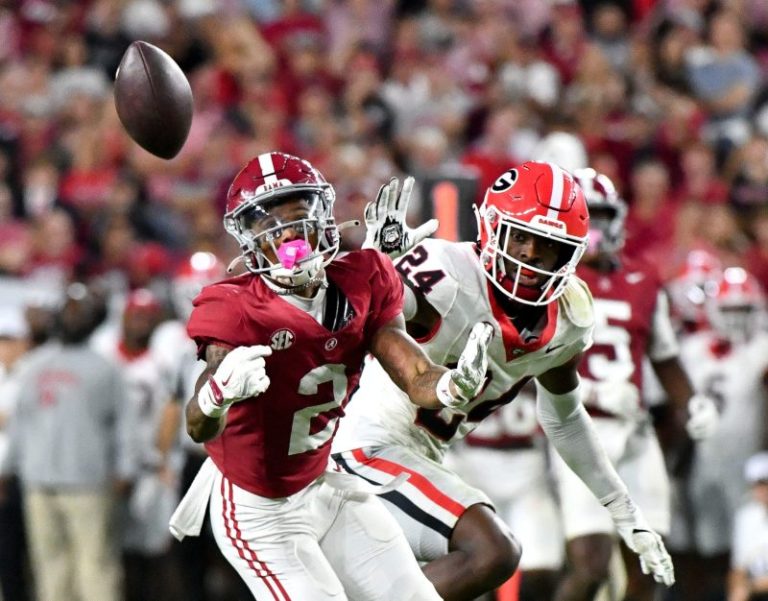
MIRAMAR BEACH, Fla. – SEC officials arrived here this week with a goal of zeroing in on a conference schedule format for football for 2026 and beyond. And they probably will leave here Thursday without approving a format.

Two factors continue to hold up a vote on a schedule format.

One: There’s not consensus behind a model. Some stakeholders want to stay at eight games. Others want to move to nine. Generally, the SEC’s coaches sound mostly interested in staying at eight, while the conference’s athletic directors seem to leave the door cracked a little wider toward nine. But, even within those groups, there’s not consensus.

LSU’s Brian Kelly said he’d favor nine conference games. Arkansas’ Sam Pittman prefers eight.

Texas athletic director Chris Del Conte would like nine, but he acknowledged he doesn’t speak for the room.

Back and forth the Ping-Pong ball goes.

The other element delaying the vote? The SEC is not up against a hard deadline. The conference’s 2025 schedule is set, and it retains some runway to drag out the decision for 2026. Amid the pandemic in 2020, the SEC scrapped its schedule and devised a new one less than six weeks before kickoff.

Don’t expect the SEC to repeat that 2020 timeline, but also don’t expect that all these diverging opinions will coalesce behind a solution within the conference’s spring meetings that end here Thursday.

Also affecting the decision: The College Football Playoff format for 2026 and beyond remains undecided, and multiple SEC coaches and administrators expressed reluctance to decide the conference schedule model until more information comes to light about the future playoff format and selection process.

Even Kelly, a proponent of nine conference games, says he’d slow-play this conference schedule vote, if it were up to him, and not give up that chip before knowing more about the playoff’s future.

The SEC has considered increasing to nine conference games for many years but consistently stayed at eight. The Big Ten and Big 12 play nine conference games. The ACC plays eight.

Around the conference, there remains “a variety of perspectives,” Sankey said.

“Some would say, ‘Let’s just go play nine games. More SEC games is better,’’ Sankey said. ‘Some would say, ‘Wait a second, I’m looking at bowl qualification, and it’s going to be harder to get to that six-win threshold as I build my program.’

“And then you have some who look at last year and say, ‘Our interpretation is, under the current selection criteria, losing weighs more (on the committee’s decision) than winning a solid game. Losing a game is more problematic, and until we have a better understanding on the future criteria or entry points for the CFP, we’re not willing to go to nine games.’

“I think those are three philosophies, but I think there are some who are ready to go to (nine).”

A majority vote would be required to reach a decision.

Will the SEC break camp on Thursday without making a decision?

“That’s my expectation,” Sankey said on “The Paul Finebaum Show.”

And, so, the can is kicked, a little further down the road. In the past, this familiar road always ends at eight.

Blake Toppmeyer is the USA TODAY Network’s national college football columnist. Email him at BToppmeyer@gannett.com and follow him on X @btoppmeyer.

This post appeared first on USA TODAY

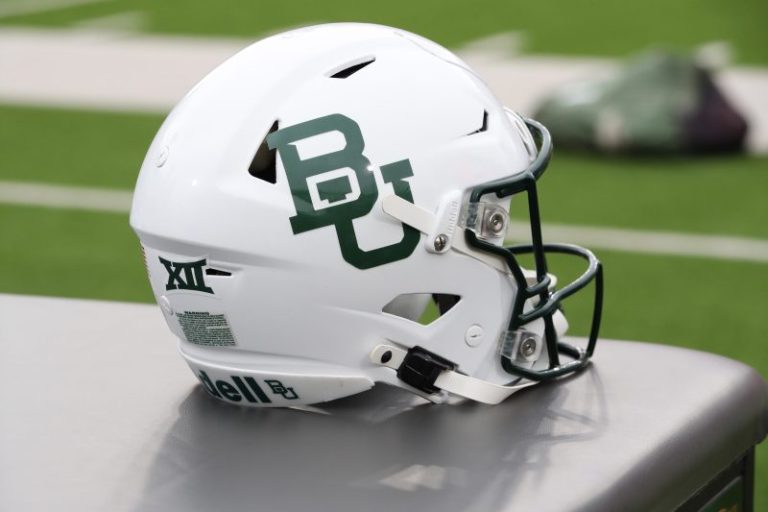
Baylor defensive lineman Alex Foster has died after being shot multiple times in Greenville, Mississippi, the Washington County Coroner’s Office confirmed to the Clarion Ledger, part of the USA TODAY Network. He was 18.

‘We are heartbroken by the unexpected loss of Alex Foster, a beloved teammate, friend and a cherished part of the Baylor Family,’ vice president and director of athletics Mack B. Rhoades and head football coach Dave Aranda said in a joint statement on Wednesday. ‘Our thoughts and prayers are with Alex’s family and all those who loved him.’

Authorities responded to a call of shots fired in the early morning of May 28 at 12:11 a.m., the Greenville Police Department confirmed to the Clarion Ledger. Officers found a male victim who had been shot multiples times in a car at the scene. He was transferred to Delta Health Center, where he died from his injuries less than an hour later.

‘In this time of deep sorrow, we draw strength from our faith and the unwavering love of the Baylor community,’ the university added in a statement. ‘Our immediate focus is on supporting Alex’s family and his teammates through this devastating loss. Alex’s memory will forever be a part of Baylor University.’

The 6-foot-5, 292-pound defensive lineman is a native of Greenville, Mississippi and attended St. Joseph High School, where he was a three-star recruit and the No. 13 overall recruit in Mississippi, according to 247sports. Foster received offers from multiple colleges, including Georgia Tech, Arkansas, Mississippi State, Kentucky and Texas before ultimately signing with the Baylor Bears in July 2023. He redshirted his freshman year and was set to enter his sophomore year this season.

John Baker, head coach of the St. Joseph Catholic football, told the Clarion Ledger that Foster was back home in Greenville for summer break. Baker added that Foster was scheduled to return to Baylor in Waco, Texas this weekend.

‘He was just a great guy,’ Baker told the newspaper. ‘Real quiet, soft-spoken guy, you know. Had his head on right and was wanting to make it out. He was a good dude, man.’

In a follow-up posted on X, Aranda described Foster as a ‘beloved member of our Baylor Family.’ He added, ‘In his time at Baylor he made a long-lasting impact on all of us in the program. Our hearts are broken, and our prayers are with his family, friends and all those who loved him so deeply.’

The Big 12 also shared condolences, writing, ‘The Big 12 Conference extends its deepest condolences to the family and loved ones of Baylor football student-athlete Alex Foster. We are deeply saddened by his passing and join the entire Baylor community during this time of mourning.’

This post appeared first on USA TODAY

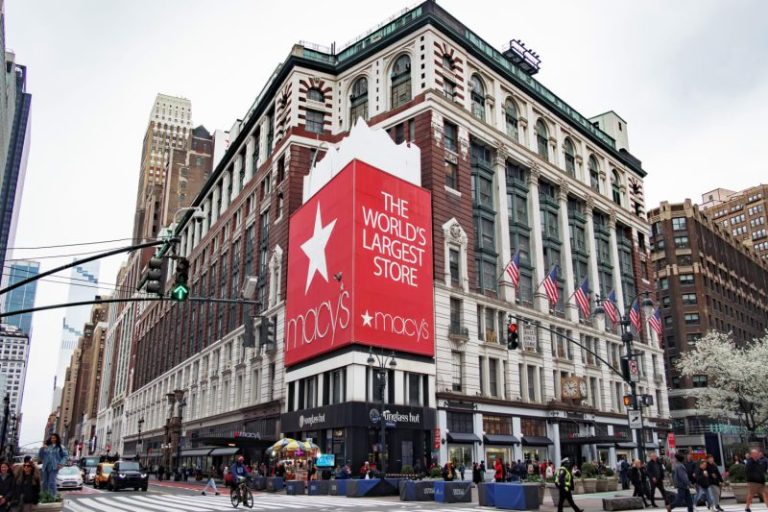
Macy’s cut its full-year profit guidance on Wednesday even as it beat Wall Street’s quarterly earnings expectations, as the retailer’s CEO said it will hike prices of certain items to offset tariffs.

In a news release, the department store operator said it reduced its earnings outlook because of higher tariffs, more promotions and “some moderation” in discretionary spending. Macy’s stuck by its full-year sales forecast, however.

For fiscal 2025, Macy’s now expects adjusted earnings per share of $1.60 to $2, down from its previous forecast of $2.05 to $2.25. It reaffirmed its full-year sales guidance of between $21 billion and $21.4 billion, which would be a decline from $22.29 billion in the most recent full year.

In an interview with CNBC, CEO Tony Spring said about 15 cents to 40 cents per share of the guidance cut is due to tariffs. He said about 20% of the company’s merchandise comes from China.

Macy’s will raise some prices and stop carrying certain items to mitigate the hit from tariffs, he added.

“You’re dealing with it on both the demand side as well as the increased cost side,” he said. “And so navigating that, we have a series of different scenarios to try to figure out kind of what will be the reality, and we want our guidance to reflect the flexibility of that uncertainty, so that we can react in real time to how we serve or better serve the consumer.”

Spring said the company will be “surgical” with price changes.

“It’s not a one-size-fits-all kind of approach,” he said. “There are going to be items that are the same price as they were a year ago. There is going to be, selectively, items that may be more expensive, and there are items that we might not carry because the pricing doesn’t merit the quality or the perceived value by the consumer.”

Here’s how Macy’s did during its fiscal first quarter, compared with what Wall Street was anticipating, based on a survey of analysts by LSEG:

In the three-month period that ended May 3, the company’s net income was $38 million, or 13 cents per share, compared with $62 million, or 22 cents per share, in the year-ago period. Sales dropped from $4.85 billion in the year-ago quarter. Excluding some one-time charges including restructuring charges, adjusted earnings per share were 16 cents.

The company’s shares were down more than 2% in early trading on Wednesday.

Economic uncertainty — including President Donald Trump’s on-again, off-again tariff announcements — has complicated Macy’s turnaround plans. The New York City-based legacy retailer is more than a year into a three-year effort to become a smaller, but healthier business. It’s shuttering weaker stores and investing in stronger parts of the company, including luxury department store Bloomingdale’s and beauty chain Bluemercury. It has also tried to improve the customer experience, including by speeding up online deliveries and adding staff to stores.

Spring told analysts on the earnings call that the tariff impact on Macy’s outlook includes the additional costs of inventory previously imported under the 145% China tariffs, which have since dropped to 30%. He said the outlook does not include a potential increase in tariffs on the European Union or any other U.S. trading partner.

Trump recently threatened to implement, and then delayed, a 50% tariff on the EU.

Macy’s sells a mix of national band private brands, which are sold exclusively at its stores and on its website. Spring told CNBC that the company has reduced the share of its private brands that comes from China to about 27% — a drop from 32% last year and more than 50% before the Covid pandemic.

CFO Adrian Mitchell said on the company’s earnings call that Macy’s has taken action to blunt the impact of tariffs on national brands it sells, too. He said the company has renegotiated orders with vendors, canceled some orders and delayed others.

“We’ve been able to gain some vendor discounts, which has been helpful to us, but we’re absorbing some of that price as well,” he said.

And in some cases, Macy’s is keeping prices the same despite higher costs to appeal to value-conscious customers and gain market share from competitors, Mitchell added.

Spring said on the company’s earnings call on Wednesday that Macy’s sales were stronger in March and April compared to February, attributing some of that to improving weather. So far, sales trends in the second quarter have been above those in March and April, he added.

Macy’s plans to close about 150 underperforming namesake stores across the country by early 2027.

In the fiscal first quarter, Macy’s namesake brand remained its weakest. Comparable sales across Macy’s owned and licensed business, plus its online marketplace, declined 2.1% year over year.

When Macy’s took out the stores that it plans to shutter, however, trends looked slightly better. Comparable sales of its go-forward business, including its owned and licensed business and online marketplace, declined 1.9%

On the other hand, comparable sales at Bloomingdale’s rose 3.8% year over year, including its owned, licensed and marketplace businesses. Comparable sales at Bluemercury climbed 1.5% year over year.

To try to turn its namesake stores around, Macy’s has invested in 50 locations — dubbed the “First 50” — with more staffing, sharper displays and changes to its mix of merchandise. It has expanded that initiative to 75 additional stores, bringing the total to 125 locations that have gotten increased attention. That’s a little over a third of the 350 namesake locations that Macy’s plans to keep open.

Those 125 locations performed better than the overall Macy’s brand. Comparable sales among those revamped stores owned and licensed by Macy’s were down 0.8% compared with the year-ago period.

On Macy’s earnings call in March — before Trump made several sudden tariff moves that baffled companies and investors — Spring said the company’s guidance “assumes a certain level of uncertainty” about the economic outlook. He said even Macy’s affluent customer “is just as uncertain and as confused and concerned by what’s transpiring.”

Earlier this spring, Macy’s announced a few key leadership changes — including a new chief financial officer. Macy’s new CFO, Thomas Edwards, will begin on June 22. He previously served as the chief financial officer and chief operating officer of Capri Holdings, the parent company of Michael Kors. He will succeed Mitchell, who is leaving Macy’s.

As of Tuesday’s close, Macy’s shares are down about 29% so far this year. That trails the S&P 500′s nearly 1% gains during the same period. Macy’s stock closed on Tuesday at $12.04 per share, bringing the retailer’s market value to $3.35 billion.

This post appeared first on NBC NEWS

23andMe on Tuesday announced it will voluntarily delist from the Nasdaq and de-register with the U.S. Securities and Exchange Commission, according to a release.

The move comes after Regeneron Pharmaceuticals said earlier this month that it will acquire “substantially all” of 23andMe’s assets for $256 million.

The drugmaker came out on top following a bankruptcy auction for 23andMe, a once high-flying genetic testing company that filed for Chapter 11 bankruptcy protection in March.

23andMe said it will file a Form 25 Notification of Delisting with the SEC on or around June 6, which would subsequently remove the stock from listing and registering with the Nasdaq.

The company said the Nasdaq had originally informed the company that a Form 25 would be filed in March, but since the exchange has not yet submitted the filing, 23andMe is doing so voluntarily.

23andMe exploded into the mainstream because of its at-home DNA testing kits that allowed customers to examine their genetic profiles. At its peak, the company was valued at around $6 billion.

But after going public via a merger with a special purpose acquisition company in 2021, the company struggled to generate recurring revenue and stand up viable research or therapeutics businesses.

Regeneron’s deal is still subject to approval by the U.S. Bankruptcy Court for the Eastern District of Missouri. Pending approval, it’s expected to close in the third quarter of this year.

This post appeared first on NBC NEWS
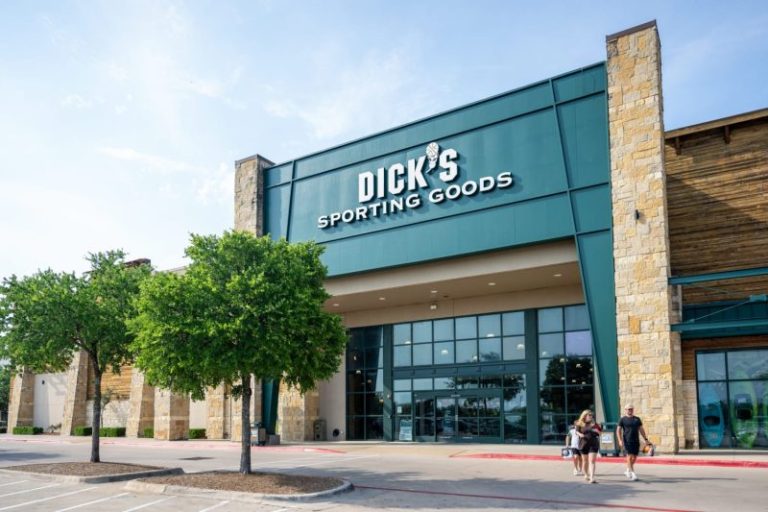
Dick’s Sporting Goods said Wednesday it’s standing by its full-year guidance, which includes the expected impact from all tariffs currently in effect.

The sporting goods giant said it’s expecting earnings per share to be between $13.80 and $14.40 in fiscal 2025 — in line with the $14.29 that analysts had expected, according to LSEG.

It’s projecting revenue to be between $13.6 billion and $13.9 billion, which is also in line with expectations of $13.9 billion, according to LSEG.

“We are reaffirming our 2025 outlook, which reflects our strong start to the year and confidence in our strategies and operational strength while still acknowledging the dynamic macroeconomic environment,” CEO Lauren Hobart said in a news release. “Our performance demonstrates the momentum and strength of our long-term strategies and the consistency of our execution.”

Here’s how the company performed in its first fiscal quarter compared with what Wall Street was anticipating, based on a survey of analysts by LSEG:

The company’s reported net income for the three-month period that ended May 3 was $264 million, or $3.24 per share, compared with $275 million, or $3.30 per share, a year earlier. Excluding one-time items related to its acquisition of Foot Locker, Dick’s posted earnings per share of $3.37.

Sales rose to $3.17 billion, up about 5% from $3.02 billion a year earlier.

For most investors, Dick’s results won’t come as a surprise because it preannounced some of its numbers about two weeks ago when it unveiled plans to acquire its longtime rival Foot Locker for $2.4 billion. So far, Dick’s has seen a mix of reactions to the proposed acquisition.

On one hand, Dick’s deal for Foot Locker will allow it to enter international markets for the first time and reach a customer that’s crucial to the sneaker market and doesn’t typically shop in the retailer’s stores. On the other hand, Dick’s is acquiring a business that’s been struggling for years and some aren’t sure needs to exist due to its overlap with other wholesalers and the rise of brands selling directly to consumers.

While shares of Foot Locker initially soared more than 80% after the deal was announced, shares of Dick’s fell about 15%.

The transaction is expected to close in the second half of fiscal 2025 and, for now, Dick’s outlook doesn’t include acquisition-related costs or results from the acquisition.

In the first full fiscal year post-close, Dick’s expects the transaction to be accretive to earnings and deliver between $100 million and $125 million in cost synergies.

This post appeared first on NBC NEWS
In this must-see market update, Larry Williams returns with timely stock market analysis, trading insights, and macroeconomic forecasts. Discover what’s next for the Federal Reserve, interest rates, and inflation — and how it could impact top stocks like Tesla (TSLA), Nvidia (NVDA), Apple (AAPL), and consumer staples (XLP).

This video originally premiered on May 27, 2025. Watch on StockCharts’ dedicated Larry Williams page!

Previously recorded videos from Larry are available at this link.

In this video, Chip Anderson, President of StockCharts, sits down with Tony for a conversation in the StockCharts studio! During this in-depth Q&A session, Chip and Tony explore the powerful features that make the OptionsPlay add-on a must-have for options traders using the StockCharts platform. They discuss the integration of the StockCharts Scanning Engine with OptionsPlay strategies—showcasing how this tool enhances your ability to find trade setups quickly and effectively.

This video premiered on May 23, 2025.

Confused by mixed market signals? Follow along as Julius analyzes sector rotation, asset rotation, and global market trends using daily and weekly Relative Rotation Graphs (RRGs).

In this video, Julius puts the current sector rotation in perspective on both weekly and daily Relative Rotation Graphs (RRGs). He also examines asset rotation and the position of the U.S. markets in relation to international equities.

This video was originally published on May 27, 2025. Click on the icon above to view on our dedicated page for Julius.

Past videos from Julius can be found here.

#StayAlert, -Julius

Get the latest stock market update with Mary Ellen McGonagle. Learn key downside signals, how to manage pullbacks, and which earnings reports could impact the market next week.

In this week’s episode, Mary Ellen reviews where the markets currently stand and what to watch for to signal further downside. She also highlights ways to combat inevitable pullbacks and shares the key earnings reports that are likely to move the markets in the upcoming week.

This video originally premiered May 23, 2025. You can watch it on our dedicated page for Mary Ellen’s videos.

New videos from Mary Ellen premiere weekly on Fridays. You can view all previously recorded episodes at this link.

If you’re looking for stocks to invest in, be sure to check out the MEM Edge Report! This report gives you detailed information on the top sectors, industries and stocks so you can make informed investment decisions.

Technology Back in Top-5

Last week’s market decline of 2-2.5% (depending on the index) has led to some notable shifts in sector performance and rankings.

This pullback, coming after a strong rally, is changing the order of highs and lows on the weekly chart — a particularly significant development, at least for me.

Let’s dive into the details and see what’s flying around in the market.

The composition of the top five sectors has seen some notable changes. Here’s how it stands now:

The big surprise here is Technology making its way into the top five, displacing Consumer Staples (now at #6). This shift suggests a gradual move from a more defensive positioning to sectors that are more cyclical and economically sensitive.

Another eye-catching move comes from Consumer Discretionary, jumping from #10 to #7 — a significant leap, albeit still in the bottom half of the ranking. Real Estate and Materials saw minor shifts, while Energy dropped to #10 and Health Care remains at #11.

  1. (1) Industrials – (XLI)
  2. (4) Communication Services – (XLC)*
  3. (3) Utilities – (XLU)
  4. (2) Financials – (XLF)*
  5. (6) Technology – (XLK)*
  6. (5) Consumer Staples – (XLP)*
  7. (10) Consumer Discretionary – (XLY)*
  8. (7) Real-Estate – (XLRE)*
  9. (8) Materials – (XLB)*
  10. (9) Energy – (XLE)*
  11. (11) Healthcare – (XLV)

Weekly/Daily RRG Analysis

The weekly Relative Rotation Graph (RRG) provides some interesting insights:

  • Utilities maintains very high readings, but Consumer Staples (highest on RS-Ratio ranking) is likely to be pushed down by weak daily chart readings.
  • Industrials continues to push further into the leading quadrant with stable momentum.
  • Financials and Communication Services are inside the weakening quadrant but have room to curl back towards leading.
  • Technology, despite having the second-lowest RS-Ratio reading, is rapidly improving with a strong RS-Momentum heading over recent weeks.

Remember, the ranking combines daily and weekly readings.

Technology’s high daily chart reading is propelling it into the top five, while Consumer Staples’ weak daily reading is pushing it out.

Industrials: The Leader Holding Strong

XLI is now pushing against its all-time high, just below 145. After two weeks of attempts, last week’s slight market decline confirms that this resistance level has worked.

We’re now looking for where any potential decline might stop and form a new low. The gap area from two weeks ago seems to be a good support area to watch.

The relative strength line breaking out of its consolidation formation continues to drag the RRG lines higher. XLI, for good reason, remains the strongest sector at the moment.

Communication Services: Stable Relative Uptrend

XLC is continuing its move higher with remarkable stability. The uptrend in the RS line is still valid, currently testing the lower boundary of the rising channel.

Due to the lack of upward relative momentum in recent weeks, both RRG lines are now pointing lower.

However, the RS-Ratio line remains well above 100, keeping the XLC tail on the right-hand side of the RRG.

Utilities: Testing Resistance

XLU is pushing against overhead resistance but has yet to manage a decisive break higher.

With defensive sectors under pressure, it’s questionable whether this breakout will happen in the short term.

The RS line versus SPY is dropping back into its trading range, unable to break away decisively. This drop is causing the RS-Momentum line to roll over and start pointing lower.

It’s the recent strength in relative strength that’s keeping Utilities inside the leading quadrant for now.

Financials: At a Crossroads

The Financial sector seems to be respecting the old rising support line as resistance, with the market dropping off that line last week and now trading around $50.

This move is affecting the relative strength line, which has returned to the lower boundary of the rising channel — a level that needs to hold to maintain a positive outlook for XLF.

The RS-Ratio line is stable around 102.50, high enough to keep Financials on the right-hand side of the graph.

The RS-Momentum line has just dropped below 100, positioning the XLF tail inside the weakening quadrant, but with enough room to curl back up before hitting lagging.

Technology: The Week’s Winner

XLK saw a significant jump two weeks ago and has since returned to test the old resistance area as support. If last week’s decline continues, there’s a bit more room to the downside — $220 seems to be a good level to watch for support, marking the bottom of the gap range from two weeks ago.

The jump has pushed the relative strength line above its falling resistance line, a good sign that seems to be breaking the relative downtrend in place since mid-last year.

This is changing the characteristics of the relative strength move for the Technology sector.

For now, it has only pushed the RS-Momentum line above 100, moving XLK into the improving quadrant on the weekly RRG, but it’s already starting to drag the RS-Ratio line higher.

Portfolio Performance

We’re clawing back some of the losses from recent weeks. The underperformance of almost 6% last week has now shrunk to 4.6%. Still behind the benchmark, but closing in again and narrowing the gap.

It’s a long-term game, so we keep pushing forward. So far, nothing out of the ordinary. Let’s wait and see whether we’ve seen the low in underperformance and how long it will take to return to SPY’s performance since inception.

#StayAlert –Julius