Author

admin

Browsing

(TheNewswire)

Anchors to:

Drill hole LBX25-095

  • 3.50 m@ 1.40 g/t Au and 2.30% Zn (162.50 m to 166.00 m) 

including:

  • 0.70 m @ 5.97 g/t Au,18.4 g/t Ag and 10.8% Zn. 

  • 4.50 m@ 2.00 g/t Au, 5.75 g/t Ag and 1.22% Zn(188.00 m to 192.50 m), 

including:

  • 0.50 m @ 3.30 g/t Au,17.8 g/t Ag and 6.84% Zn (188.00 m to 188.50 m),  

  • 2.40 m @ 3.00 g/t Au and 0.78% Zn (190.10 m to 192.50 m), and 

  • 0.55 m @ 12.15 g/t Au, 16.1 g/t Ag and 2.66% Zn (191.10 m to 192.50 m). 

Drill hole LBX25-096

  •          3.85 m @ 1.92 g/t Au and 0.13% Zn (38.70 m to 42.55 m),
    including:
     

  • 0.60 m @ 2.78 g/t Au, 6.30 g/t Ag and 0.62% Zn (40.60 m to 41.20 m), and 

  • 55 m @ 9.59 g/t Au, 5.50 g/t Ag and 0.11% Zn (42.00 m to 42.55 m). 

TORONTO, ONTARIO (January 7, 2026) – TheNewswire – LAURION Mineral Exploration Inc. (TSX-V: LME | OTC: LMEFF | FSE: 5YD) (‘LAURION’ or the ‘Corporation’) is very pleased to report assay results of the first two drill holes from recent diamond drilling at the A-Zone/McLeod/CRK Zone at the Ishkōday Project, located in the Beardmore–Geraldton Greenstone Belt of north-western Ontario, approximately 220 kilometres northeast of Thunder Bay.

The current drill program focuses on the A-Zone/McLeod/CRK Zone, a structurally controlled gold-base metal corridor where historic drilling, surface work, and more recent LAURION drilling demonstrate repeated gold, silver, zinc, and copper mineralization along strike and at depth.

‘These results reinforce what we have been methodically building at Ishkōday — a structurally controlled gold-zinc system with repeated mineralization along a coherent corridor, stated Cynthia Le Sueur Aquin, President and CEO of LAURION. ‘The combination of higher-grade intervals within broader mineralized zones, supported by both historic and recent drilling, gives us confidence that our targeting approach is working as intended. As we continue drilling, our focus remains on understanding continuity, structure, and scale.’

Drill hole LBX25-095 was designed to test a segment of the A-Zone/McLeod/CRK Zone structural corridor supported by proximal historic drill holes 90-41 and 90-49, as well as modern LAURION drill holes LBX20-021 and LBX20-017. Historic drill hole 90-41 intersected multiple gold-bearing intervals at various depths, including 0.55 m grading 3.69 g/t Au and 1.70% Zn, 0.55 m grading 11.88 g/t Au, 8.0 g/t Ag and 8.6% Zn, and deeper intersections including 0.91 m grading 1.63 g/t Au,16.0 g/t Ag, 0.16% Cu and 6.7% Zn, 0.66 m grading 2.12 g/t Au, 14.0 g/t Ag and 10.3% Zn, and 5.36 m grading 0.44 g/t Au, 6.16 g/t Ag and 4.28% Zn (Orient Resources Inc., Sturgeon River Property Diamond Drill Program Report, Claude Larouche, 1990). Nearby historic drill hole 90-49 returned 0.31 m grading 3.87 g/t Au and 1.73 m grading 3.46 g/t Au, 20.36 g/t Ag and 3.72% Zn (Orient Resources Inc., Claude Larouche, 1990). More recent drilling confirmed continuity of mineralization within the same corridor, including 14.08 m grading 0.89 g/t Au in drill hole LBX20-021 and additional gold-silver intervals in LBX20-017 (LAURION press release dated July 28, 2020).

Drill hole LBX25-095 intersected multiple gold-and-zinc-bearing intervals hosted within sheared and altered volcanic rocks consistent with the main A-Zone/McLeod/CRK Zone geological framework.

Reported assay results include 2.60 m grading 1.84 g/t Au from 27.40 to 30.00 m, including 0.60 m grading 7.25 g/t Au, 1.00 m grading 1.02 g/t Au from 45.30 to 46.30 m, and several broader intervals of lower-grade gold with elevated zinc.

A mid-depth mineralized zone returned 3.50 m grading 1.40 g/t Au and 2.30% Zn from 162.50 to 166.00 m, including a higher-grade interval of 0.70 m grading 5.97 g/t Au, 18.4 g/t Ag, 0.22% Cu and 10.8% Zn from 163.05 to 163.75 m.

Deeper in the hole, drilling intersected 4.50 m grading 2.00 g/t Au, 5.75 g/t Ag and 1.22% Zn from 188.00 to 192.50 m, including 0.50 m grading 3.30 g/t Au,17.8 g/t Ag and 6.84% Zn, 2.40 m grading 3.00 g/t Au, and 0.55 m grading 12.15 g/t Au,16.1 g/t Ag and 2.66% Zn.  

Drill hole LBX25-096, located approximately 52 metres east of LBX25-095, was designed to test the eastern continuation of the same structurally controlled mineralized corridor. Targeting for LBX25-096 was informed by proximal drill holes LBX12-006, LBX20-020, and LBX22-089, which intersected gold-bearing mineralization within the same stratigraphic and structural package. Notably, drill hole LBX20-020 returned broad gold-bearing intervals including 6.86 m grading 0.47 g/t Au and 10.84 m grading 0.48 g/t Au, demonstrating mineralized width and continuity and supporting step-out drilling to the east (LAURION press release dated July 28, 2020). Drill hole LBX25-096 subsequently intersected multiple gold-bearing intervals within this corridor, including 3.85 m from 38.70 m to 42.55 m grading 1.92 g/t Au, including a higher-grade interval of 0.55 m from 42.00 m to 42.55 m grading 9.59 g/t Au, and a shallow interval of 1.15 m from 8.35 m to 9.50 m grading 2.14 g/t Au, including 0.50 m from 9.00 m to 9.50 m grading 4.76 g/t Au.

Gold mineralization at Ishkōday occurs within an orogenic gold framework and is commonly accompanied by silver, consistent with orogenic systems globally. In addition, localized enrichment in silver and base metals reflects polymetallic mineralizing events that are overprinted and locally modified by the orogenic gold event. These observations align with structural and geochemical interpretations supporting a multi-phase mineralizing history, as outlined in the Keaton Strongman Report 2024 on the Ishkōday: Ancestral structural controls between Archean epithermal and orogenic gold mineralization.

TABLE Of ASSAYS FOR DRILL HOLES LBX25-095 AND LBX25-096


Hole ID

From (m)

To (m)

Core Length (m)

Au (g/t)

Ag (g/t)

Zn (%)

LBX25-095

27.40

30.00

2.60

1.84

0.45

0.02

including

27.90

28.50

0.60

7.25

1.10

LBX25-095

45.30

46.30

1.00

1.02

0.25

0.15

LBX25-095

91.25

95.25

4.00

0.11

0.25

0.01

LBX25-095

132.10

132.60

0.50

0.27

1.40

1.27

LBX25-095

135.20

135.70

0.50

0.53

6.10

0.24

LBX25-095

141.00

141.60

0.50

0.13

1.00

0.13

LBX25-095

143.80

147.80

4.00

0.12

1.71

0.17

LBX25-095

145.00

147.80

2.80

0.14

2.16

0.21

LBX25-095

162.50

166.00

3.50

1.40

4.27

2.30

Including

163.05

163.75

0.70

5.97

18.40

10.80

LBX25-095

167.20

169.35

2.15

0.21

1.36

0.18

LBX25-095

188.00

192.50

4.50

2.00

5.75

1.22

Including

188.00

188.50

0.50

3.30

17.80

6.84

Including

190.10

192.50

2.40

3.00

4.80

0.78

Including

191.1

192.50

0.55

12.15

16.10

2.66

LBX25-096

8.35

9.50

1.15

2.14

5.18

0.61

Including

9.00

9.50

0.50

4.76

8.40

1.35

LBX25-096

10.90

11.40

0.50

0.52

0.70

0.02

LBX25-096

35.75

36.25

0.50

0.31

1.70

0.02

LBX25-096

38.70

42.55

3.85

1.92

2.41

0.13

Including

40.60

41.20

0.60

2.78

6.30

0.62

Including

42.00

42.55

0.55

9.59

5.50

0.11

LBX25-096

98.20

98.70

0.50

0.47

1.80

0.03

LBX25-096

106.80

108.50

1.70

1.19

1.49

0.07

Including

106.80

107.30

0.50

3.14

2.20

0.07

LBX25-096

118.70

121.60

2.90

0.28

3.65

1.41

Including

118.70

119.20

0.50

0.90

14.90

8.18

LBX25-096

129.60

130.10

0.50

2.22

10.10

3.05


Name

Elevation

Azimuth

Dip

Easting

Northing

Depth (m)

LBX25-095

332.5

124

-47

446115.3

5512416

201

LBX25-096

331.4

125

-45

446168

5512429

168

TOTAL


369

Mineralization on the A-Zone/McLeod/CRK Zone is interpreted to be controlled by the interaction of north–south-trending quartz-gold extensional veins and northeast–southwest-trending sulphide-rich shear veins. Reactivation of earlier sulphide zones during later deformation, locally associated with magnetite-rich assemblages, provides a structural framework that explains repeated gold enrichment, localized grade enhancement within wider base metal envelopes, and strong strike continuity beneath cover.

The current drilling on the A-Zone/McLeod/CRK Zone has focused on refining LAURION’s understanding of the geometry, continuity, and structural controls of the mineralized system. Ongoing work by the LAURION’s technical team and independent consultants is centred on consolidating historical and modern drilling, validating geological interpretations, and strengthening the 3D structural framework. This work is intended to ensure that any future technical milestones are based on a robust, well-constrained geological model, while preserving strategic flexibility as the Ishkōday Project continues to evolve.

Sampling and QA/QC Protocols

All drill core is transported and stored inside the core facility located at the Ishkōday Project in Greenstone, Ontario. LAURION employs an industry standard system of external standards, blanks and duplicates for all of its sampling, in addition to the QA/QC protocol employed by the laboratory. After logging, core samples were identified and then cut in half along core axis in the same building and then zip tied individually in plastic sample bags with a bar code. Approximately five or six of these individual bags were then stacked into a ‘rice’ white material bag and stored on a skid for final shipment to the laboratory.

All core samples were shipped to the ALS facility in Thunder Bay, Ontario, which were then prepared by ALS Global Geochemistry in Thunder Bay and analyzed by ALS Global Analytical Lab in North Vancouver, British Columbia. Samples are processed by 4-acid digestion and analyzed by fire assay on 50 g pulps and ICP-AES (Inductively Coupled Plasma – Atomic Emission Spectroscopy). Over limit analyses are reprocessed with gravimetric finish.

A total of 5% blanks and 5% standard are inserted randomly within all samples. 5% of the best assay result pulps were sent for re-assays. All QA/QC were verified, and no contamination or bias have been observed. The remaining half of the core, as well as the unsampled core, is stored in temporary core racks at the core logging facility in Beardmore and moved to the core storage facility at the Ishkōday Project.

Note: QA/QC review of standards and duplicates indicates analytical results are reliable. One zinc standard adjacent to a high-grade zinc interval returned elevated values consistent with expected analytical behaviour following high-grade samples.

Qualified Person

The technical contents of this release were reviewed and approved by Jean-Philippe Paiement, P.Geo, MSc, a consultant to LAURION and a Qualified Person as defined by National Instrument 43-101 – Standards of Disclosure for Mineral Projects.

About LAURION Mineral Exploration Inc.

The Corporation is a mid-stage junior mineral exploration and development company listed on the TSXV under the symbol LME and on the OTCPINK under the symbol LMEFF. LAURION now has 278,716,413 outstanding shares, of which approximately 73.6% are owned and controlled by insiders who are eligible investors under the ‘Friends and Family’ categories.

LAURION’s emphasis is on the exploration and development of its flagship project, the 100% owned mid-stage 57 km2 Ishkōday Project, and its gold-rich polymetallic mineralization.

LAURION’s chief priority remains maximizing shareholder value. A large portion of the Corporation’s focus in this regard falls within the scope of its mineral exploration activities and more specifically, advancing the Ishkōday Project. A consequence of LAURION’s success and advancement over the past several years is that the Corporation has become positioned as an acquisition target for appropriate potential acquirors. Accordingly, the Corporation’s Board of Directors is aware that possible strategic alternatives and transactional opportunities may arise and/or could be procured in the short or medium terms. The Corporation will promptly issue a press release if any material change occurs.

FOR FURTHER INFORMATION, CONTACT:

Laurion Mineral Exploration Inc.

Cynthia Le Sueur-Aquin – President and CEO

Tel: 1-705-788-9186 Fax: 1-705-805-9256


Douglas Vass – Investor Relations Consultant

Email: info@laurion.ca

Website: http://www.LAURION.ca

Follow us on: X (@LAURION_LME), Instagram (laurionmineral) and LinkedIn ()


Caution Regarding Forward-Looking Information

This press release contains forward-looking statements, which reflect the Corporation’s current expectations regarding future events including with respect to LAURION’s business, operations and condition, management’s objectives, strategies, beliefs and intentions, the Corporation’s ability to advance the Ishkōday Project, the nature, focus, timing and potential results of the Corporation’s exploration, drilling and prospecting activities in 2026 and beyond, including the Corporation’s diamond drill program described in this press release and the Corporation’s other planned activities for the Ishkōday Project for the remainder of 2026, and the statements regarding the Corporation’s exploration or consideration of any possible strategic alternatives and transactional opportunities, as well as the potential outcome(s) of this process, the possible impact of any potential transactions referenced herein on the Corporation or any of its stakeholders, and the ability of the Corporation to identify and complete any potential acquisitions, mergers, financings or other transactions referenced herein, and the timing of any such transactions. The forward-looking statements involve risks and uncertainties. Actual events and future results, performance or achievements expressed or implied by such forward-looking statements could differ materially from those projected herein including as a result of a change in the trading price of the common shares of LAURION, the TSX Venture Exchange or any other applicable regulator not providing its approval for any strategic alternatives or transactional opportunities, the interpretation and actual results of current exploration activities, changes in project parameters as plans continue to be refined, future prices of gold and/or other metals, possible variations in grade or recovery rates, failure of equipment or processes to operate as anticipated, the failure of contracted parties to perform, labor disputes and other risks of the mining industry, delays in obtaining governmental approvals or financing or in the completion of exploration, as well as those factors disclosed in the Corporation’s publicly filed documents. Investors should consult the Corporation’s ongoing quarterly and annual filings, as well as any other additional documentation comprising the Corporation’s public disclosure record, for additional information on risks and uncertainties relating to these forward-looking statements. The reader is cautioned not to rely on these forward-looking statements. Subject to applicable law, the Corporation disclaims any obligation to update these forward-looking statements. All sample values are from grab samples and channel samples, which by their nature, are not necessarily representative of overall grades of mineralized areas. Readers are cautioned to not place undue reliance on the assay values reported in this press release.

NEITHER THE TSX VENTURE EXCHANGE NOR ITS REGULATION SERVICE PROVIDER (AS THAT TERM IS DEFINED IN THE POLICIES OF THE TSX VENTURE EXCHANGE) ACCEPTS RESPONSIBILITY FOR THE ADEQUACY OR ACCURACY OF THE CONTENT OF THIS NEWS RELEASE.


Copyright (c) 2026 TheNewswire – All rights reserved.

News Provided by TheNewsWire via QuoteMedia

This post appeared first on investingnews.com

The growing prevalence of chronic diseases like cancer and diabetes is driving increasing innovation in medical device technology. In 2024 alone, 30 new devices were approved by the US Food and Drug Administration (FDA).

Wearable medical devices and the use of artificial intelligence in medical technology are two key trends in this sector.

Investors who want exposure to this wave of growth may want to consider NASDAQ small-cap medical device stocks. Below is a list of the top NASDAQ medical device companies based on year-on-year gains.

All data was compiled on December 31, 2025, using TradingView’s stock screener, and the medical device makers listed below had market caps between US$50 million and US$500 million at that time.

1. MDxHealth (NASDAQ:MDXH)

Year-on-year gain: 50.86 percent
Market cap: US$173.24 million
Share price: US$3.50

MDxHealth is a commercial-stage precision diagnostics company specializing in molecular tests for urologic cancers, particularly prostate cancer, using genomic, epigenetic and exosomal technologies. Its US headquarters and operations are located in Irvine, California.

The company offers non-invasive and tissue-based diagnostic assays that run on standard PCR platforms.

In September, MDxHealth acquired Exosome Diagnostics from Bio-Techne (NASDAQ:TECH) for US$15 million, adding the ExoDx Prostate urine test to its portfolio. The deal also includes a CLIA-certified clinical laboratory and related assets. The deal is expected to generate over US$20 million in revenue in 2026.

2. KORU Medical Systems (NASDAQ:KRMD)

Year-on-year gain: 50.13 percent
Market cap: US$269.6 million
Share price: US$5.82

KORU Medical Systems develops and manufactures medical devices and supplies in the US and internationally, with a focus on mechanical infusion products. Its Freedom Syringe Infusion System first received FDA clearance in 1994.

Based on this system, its primary products include the Freedom60 and FreedomEdge syringe infusion systems, Precision Flow Rate Tubing and High-Flo Subcutaneous Safety Needle Sets.

KORU Medical Systems submitted a 510(k) premarket notification to the FDA on December 30, 2025, seeking clearance for its FreedomEdge system to deliver Phesgo — a HER2+ breast cancer targeted biologic — subcutaneously, targeting infusion centers to cut chair time and boost efficiency.

The company stated this is part of its strategy to expand the indications of FreedomEdge to the wider oncology infusion center market.

3. Vivani Medical (NASDAQ:VANI)

Year-on-year gain: 1.71 percent
Market cap: US$86.81 million
Share price: US$1.19

Vivani Medical is a clinical-stage biopharmaceutical company developing miniature, long-term subdermal drug implants using its proprietary NanoPortal technology to treat chronic conditions like obesity and type 2 diabetes.

Headquartered in Alameda, California, Vivani focuses on GLP-1 implants that provide steady drug release over six months to improve adherence and tolerability compared to daily pills or weekly injections.

In August, Vivani Medical reported positive Phase 1 results from its LIBERATE-1 trial of the NPM-115 exenatide implant, confirming safety and steady drug release for obesity treatment without major side effects.

The company plans to rapidly advance its NPM-139 semaglutide implant after it achieved preclinical results of sustained 20 percent weight loss. It is planning a Phase 1 clinical study in the first half of 2026.

Securities Disclosure: I, Meagen Seatter, hold no direct investment interest in any company mentioned in this article.

This post appeared first on investingnews.com

2025 marked a turning point for investment in the cannabis sector, shifting the focus toward operational resilience and consolidation after a sluggish 2024.

Key market drivers included an upswing in merger and acquisition (M&A) activity as stronger multi-state operators (MSOs) acquired distressed assets, alongside pivotal regulatory developments.

The central theme for the year was the expected US federal shift to Schedule III, a policy rollercoaster that culminated in an executive order to expedite rescheduling, focusing investor flows into scaled, cashflow-positive MSOs.

Internationally, incremental legalization in Europe, particularly the momentum in Germany, broadened the global footprint and provided new export channels for North American producers.

Within market trends, profitability pivoted away from bulk flower to high-margin consumables, with infused pre-rolls and edibles driving category growth and supporting a rerating of resilient operators.

US cannabis rescheduling a core shift

After 2024’s punishing drawdowns, cannabis navigated a high-stakes policy rollercoaster in 2025.

The sector bottomed in Q1 as anticipated US Drug Enforcement Administration (DEA) rescheduling hearings were delayed, but ignited in late Q3 and Q4 as the narrative shifted toward a decisive executive-led reclassification.

This momentum culminated in US President Donald Trump’s December 18 executive order, which expedites rescheduling and CBD access. It triggered a parabolic surge followed by a violent ‘sell the news’ correction.

“Cannabis is not just a volatile sector or industry. It is the most volatile place,” said Dan Ahrens, managing director and portfolio manager of the AdvisorShares Pure US Cannabis ETF (ARCA:MSOS). “It just proves the point, once again, that we really, really need this federal reform to be officially completed.”

Indeed, 2025 brought plenty of ups and downs. The year opened with Schedule III buzz, which came after prior Department of Health and Human Services recommendations and initial DEA scheduling proposals from late 2024; however, proceedings ground to a halt after the DEA postponed a key January hearing by over 180 days due to administrative turnover, bias claims and leadership gaps post-election. These disruptiosn kept Section 280E tax penalties in place and banking access frozen, keeping margins for MSOs compressed.

Meanwhile, House spending bills included language prohibiting the Department of Justice (DoJ) from spending any funds on rescheduling efforts, while Senate Farm Bill revisions redefined hemp to exclude intoxicating derivatives like delta-8 THC, capping them at trace levels and effectively imposing a nationwide hemp ban on high-potency alternatives.

The MSOS ETF’s portfolio construction exemplified the broader trend of investor flows concentrating into scaled, cash-flow-positive MSOs amid reform volatility. The fund’s top three holdings — Curaleaf Holdings (CSE:CURA,OTCQX:CURLF), Trulieve Cannabis (CSE:TRUL,OTCQX:TCNNF) and Green Thumb Industries (CSE:GTII,OTCQX:GTBIF) — accounted for over 68 percent of its total holdings as of December 31, underscoring confidence in these operators as resilient proxies for US cannabis maturation while smaller single-state players face dilution.

MSOS managers reinforced the shift in the year’s third quarter by trimming three underperformers from the ETF: 4Front Ventures (CSE:FFNT), Lowell Farms (CSE:LOWL) and Gold Flora.

Despite stalls in momentum, Trump kept hope alive in the cannabis sector throughout the year.

In September, he called cannabis reform an “80-20 issue” with broad public backing, and posted a Truth Social video promoting CBD for seniors and suggesting Medicaid coverage.

Those moves, alongside Representative Greg Steube’s (R-FL) Marijuana 1-to-3 Act, aimed at legislatively shifting cannabis to Schedule III, drove a surge in Q3 without any underlying procedural progress.

As mentioned, the December 18 executive order injected fresh life into the sector, directing the DoJ and DEA to expedite cannabis rescheduling to Schedule III, while launching a CMS Innovation Center pilot for federal health programs to cover hemp-derived CBD as early as April 2026, with up to US$500 annual reimbursement for eligible patients.

CMS Administrator Mehmet Oz previously endorsed Medicare reimbursement for CBD therapies during his confirmation hearings, framing them as “low-risk, high-impact” options for age-related ailments.

European cannabis legalization and international growth

2025 brought incremental legalization or medical frameworks in multiple jurisdictions, including Czechia, Malta, Poland, Switzerland and Luxembourg, broadening the investable global footprint.

This continental momentum has directly boosted North American producers through export ramps and licensing deals, with Canadian licensed producers capturing 43 percent of Germany’s Q2 imports alone.

The country’s CanG framework and adult‑use reform, which came into effect in April 2024, have made it Europe’s most important legal market, with 2025 medical sales expected to see explosive year-on-year growth.

Cannabis company trends in 2025

In 2025, cannabis companies pivoted toward operational resilience and product innovation amid persistent commoditization pressures. After 2024’s wholesale flower price declines, down roughly 32 percent since 2021 by some estimates, stronger MSOs like Tilray Brands (TSX:TLRY,NASDAQ:TLRY) are demonstrating pricing power through branded products and category expansion into edibles, vapes and infused pre-rolls.

Deal flow rebounded from 2024’s US$1.17 billion trough, with US transactions reaching US$2.1 billion.

Against that backdrop, cash-rich MSOs pursued distressed roll-ups in oversupplied states like California and New York, with Vireo Growth’s (CSE:VREO,OTCQX:VREOF) acquisitions in Minnesota and New York exemplifying the trend, achieving critical mass with premium valuations amid hemp restrictions.

Private equity and creative deal structures dominated in the cannabis market, preparing operators for federal reform, while consolidating fragmented retail.

Investor takeaway

2025 marked a transformative year for cannabis, with regulatory breakthroughs and market maturation set against the backdrop of volatility. Trump’s execuctive order has brought new life into the sector in the US with the promise of not only banking and tax relief, but also bipartisan momentum for normalization; however, investors remain cautious.

“Everybody is waiting for it to be real and for it to be completed. Because even though we think the executive order was huge … nothing’s complete yet. Nothing’s official yet,” explained Ahrens.

Looking to 2026, he emphasized that the path forward for cannabis isn’t a straight line, but rather a series of volatile ‘waves’ tied to incremental regulatory milestones. Ahrens anticipates that while the finalization of Schedule III should trigger an initial move, it is merely the first domino; subsequent upside depends on the DoJ providing clear guidance for state-legal adult-use programs and the eventual passage of banking reform.

While he does foresee cannabis stocks uplisting to major exchanges, and Big Pharma companies beginning to make acquisitions in the space, Ahrens remains cautious about timing, noting that even with a signed order, large institutional banks will likely keep the ‘blockade’ in place until the legal ink is truly dry.

Ultimately, while 2025’s executive action has established a concrete foundation for federal reform in the US, the cannabis sector remains poised in a state of high-stakes volatility, with its full maturation dependent on official completion of milestones in 2026 and beyond.

Securities Disclosure: I, Meagen Seatter, hold no direct investment interest in any company mentioned in this article.

This post appeared first on investingnews.com

(TheNewswire)

Crown Porphyry-Stockwork Drill Targets Confirmed

Vancouver, British Columbia, January 7th, 2026 TheNewswire Prismo Metals Inc. (‘Prismo’ or the ‘Company’) (CSE: PRIZ,OTC:PMOMF) (OTCQB: PMOMF) is pleased to announce it has received final assay results for samples taken at the Silver King Project from the Crown porphyry target area located on the east side of the property (Fig. 1).


Click Image To View Full Size

Figure 1.  Map showing the location of the Crown porphyry and stockwork and Black Diamond replacement exploration targets at the Silver King project.  Claim boundaries are shown in yellow.

Overlimit silver assays have been received for the samples taken in late 2025, showing high grade silver mineralization associated with quartz-sulfide veins hosted by the Crown porphyry (Fig 2, Table 1). These assays provide evidence for a high-priority drill target, especially when taken in conjunction with the high gold assays reported previously for the stockwork intrusion (see the News Release of Dec. 3, 2025).  

‘Prismo optioned Silver King with existing drill targets around the historically significant high-grade silver mine. Based on the geology and its location in a well mineralized region, we believed that additional mineralization was also likely present. Our work in the second half of 2025 indicates that we were correct, and we now have exceptional drill targets at the Crown porphyry and adjacent Black Diamond replacement areas,’ stated Craig Gibson, Chief Exploration Officer of the Company. He added, ‘With the high-grade gold assays reported in December and the copper assays at the Black Diamond replacement, we now have a very significant precious-metal and copper target at Silver King similar to other areas in this well mineralized district that includes the Magma mine and the Resolution copper deposit.’  

‘These additional assay results along with the IP survey information continue to enhance and support our exploration thesis of the Silver King mine and surrounding areas,’ stated Gordon Aldcorn.  ‘This modern-day review has yielded additional drill targets and prospective structures to our program in this already very strategically located project.’


Table 1. Assay results for selected samples from the Crown porphyry stockwork

Sample

Location

Easting

Northing

Width m

Au g/t

Ag g/t

Cu %

Pb %

Zn %

544559

Crown porphyry

492681

3687905

0.5 m

0.02

18.91

0.02

0.07

0.04

544561

Crown porphyry

492673

3687904

2 m

0.02

177

0.07

0.37

0.02

544563

Crown porphyry

492613

3687848

0.5m

0.03

176

0.09

0.01

544591*

Crown porphyry

492799

3687851

1.0

5.19

46.44

0.05

0.21

0.06

544592*

Crown porphyry

492793

3687823

1.0

4.06

13.97

0.02

0.10

0.07

*Assays previously released in News Release of December 3, 2025.


Click Image To View Full Size

Figure 2. Precious metal and copper assays from the Crown porphyry
and the Black Diamond replacement body at the Silver King Project.

IP Survey

The Company also completed a pole-dipole IP survey over a part of the Silver King project in December 2025.  This survey was designed to provide some additional 3-dimensional data for areas identified during the initial gradient array survey (see News Release dated December 3, 2025). This new survey confirmed the presence of important chargeability and resistivity anomalies at the Silver King project. The Silver King silver mine appears to be associated with a large low resistivity anomaly located on the contact of the Silver King diorite porphyry (Fig 3). There is also low resistivity anomalies associated with the Crown porphyry and near the replacement mineralization at Black Diamond (Fig 3). The highest chargeability anomalies appear to be associated with the altered country rocks along intrusive contacts, but a chargeability high is also associated with the Crown porphyry stockwork intrusion. The anomaly associated with the Crown porphyry is particularly interesting and can be traced from shallow levels to about 300 meters in depth.  


Click Image To View Full Size

Figure 3. IP resistivity map at a depth of 75 meters, overlain on geology and showing the Silver King glory hole (black line), Black Diamond replacement body in red, and the Crown porphyry-stockwork in magenta.  


Click Image To View Full Size

Figure 4. IP chargeability at a depth of 75 meters, overlain on geology and showing the Silver King glory hole (black line), Black Diamond replacement body in red, and the Crown porphyry-stockwork in magenta.  

Drilling Update

Alain Lambert, CEO of Prismo commented: ‘The results announced today confirm the vast exploration potential at Silver King. While we look forward to drilling these new targets in the future, our plans remain unchanged. Our immediate priority is to undertake our fully funded drill program, as previously announced. This drill campaign will primarily focus on the historic Silver King mine site and will be about 2,000 meters. The objective is to test the upper half of the steeply dipping pipelike Silver King mineralized body as well as potential mineralization adjacent to the dense stockwork that was the focus of historic mining.’

Mr. Lambert added: ‘We are pleased with the steady progress on the permitting front. The collaboration of Forest Service officials demonstrates a clear commitment to supporting mining activities in Arizona.’

Prismo recently announced that the Forest Service, the federal surface land management entity for Silver King, had determined that the Company’s proposed drill plan meets the regulatory requirements for processing, and that such plan is complete, as described in the regulations at 36 CFR 228.4(c).

The Forest Service is currently proceeding with the environmental analysis pursuant to 36 CFR 228(a)(5) in conformity with the National Environmental Policy Act (NEPA). This analysis is proceeding as a Categorical Exclusion, the lowest level of environment reviews applicable to projects that are not expected to have a significant effect on the environment, such as Silver King.

QA/QC

Samples were analyzed by SGS, an internationally recognized analytical lab, with preparation at the Tempe, Arizona facility and analyses at the Burnaby laboratory.  Prismo inserts controls samples consisting of a standard pulps and a coarse blanks in the sample stream, and the lab also inserts control samples.  

Qualified Person

Dr. Craig Gibson, PhD., CPG., a Qualified Person as defined by NI-43-01 regulations and Chief Exploration Officer and a director of the Company, has reviewed and approved the technical disclosures in this news release.  

About Prismo Metals Inc.

Prismo (CSE: PRIZ,OTC:PMOMF) is a mining exploration company focused on advancing its Silver King, Ripsey and Hot Breccia projects in Arizona and its Palos Verdes silver project in Mexico.

Please follow @PrismoMetals on Twitter, Facebook, LinkedIn, Instagram, and YouTube

Prismo Metals Inc.

1100 – 1111 Melville St., Vancouver, British Columbia V6E 3V6 Phone: (416) 361-0737


Contact:

Alain Lambert, Chief Executive Officer alain.lambert@prismometals.com

Gordon Aldcorn, President gordon.aldcorn@prismometals.com


Neither the Canadian Securities Exchange nor its Market Regulator (as that term is defined in the policies of the Canadian Securities Exchange) accepts responsibility for the adequacy or accuracy of this release.


Cautionary Note Regarding Forward-Looking Information

This release includes certain statements and information that may constitute forward-looking information within the meaning of applicable Canadian securities laws. Forward-looking statements relate to future events or future performance and reflect the expectations or beliefs of management of the Company regarding future events. Generally, forward-looking statements and information can be identified by the use of forward-looking terminology such as intends’ or anticipates’, or variations of such words and phrases or statements that certain actions, events or results may’, could’, should’, would’ or occur’. This information and these statements, referred to herein as ‘forward-looking statements’, are not historical facts, are made as of the date of this news release and include without limitation, statements regarding discussions of future plans, estimates and forecasts and statements as to management’s expectations and intentions with respect to, among other things: the timing, costs and results of drilling at Silver King; and the intended use of any proceeds raised under recent financings.

These forward-looking statements involve numerous risks and uncertainties, and actual results might differ materially from results suggested in any forward-looking statements. These risks and uncertainties include, among other things: the potential inability of the Company to utilize the anticipated proceeds of the Private Placement as anticipated; and those risks set out in the Company’s public disclosure record on SEDAR+ (www.sedarplus.com) under the Company’s issuer profile.

In making the forward-looking statements in this news release, the Company has applied several material assumptions, including without limitation, that the Company will use the proceeds of the Second Tranche as currently anticipated and on the timeline currently expected.

Although management of the Company has attempted to identify important factors that could cause actual results to differ materially from those contained in forward-looking statements or forward- looking information, there may be other factors that cause results not to be as anticipated, estimated or intended. There can be no assurance that such statements will prove to be accurate, as actual results and future events could differ materially from those anticipated in such statements. Accordingly, readers should not place undue reliance on forward-looking statements and forward- looking information. Readers are cautioned that reliance on such information may not be appropriate for other purposes. The Company does not undertake to update any forward-looking statement, forward-looking information or financial outlook that are incorporated by reference herein, except in accordance with applicable securities laws. We seek safe harbor.

Copyright (c) 2026 TheNewswire – All rights reserved.

News Provided by TheNewsWire via QuoteMedia

This post appeared first on investingnews.com

Evaluating NHL draft prospects at the world juniors is always an interesting process.

You’re watching players who are 17 or just recently turned 18 years old play up against the top under-20 talent in the world. It’s also a two-week tournament, which means there’s a small sample for what we are actually evaluating.

Whether it should be or shouldn’t be, NHL scouts value this tournament and other high-pressure events like the Under-18 World Championship quite highly. They look at how these players perform in high-leverage situations. They are looking to answer questions about the player.

Can they show up when it matters? Do they keep doing the small things when they are winning or losing a lopsided game? Are they able to elevate their game when they are playing the best competition?

Scouts inevitably make judgments on NHL draft-eligible prospects, so let’s look at how the stock for some of the top players changed at the World Junior Championship.

Stock up: Ivar Stenberg, LW, Sweden

In arguably his worst game of the tournament, Stenberg scored the game-winning goal in Sweden’s tournament-opening victory over Slovakia.

Then it was Stenberg, in one of his best games of the world juniors, who scored the empty-netter to seal the gold medal in the final.

Throughout this tournament, Stenberg got better and began to take over shifts and then periods and in the semifinal and gold medal game, he took over the game at times. 

Finishing with 10 points in seven games was impressive, good for fifth in scoring, but it was everything else that Stenberg did that bumps his stock up. His defensive intensity, excellent puck-carrying ability in transition and intelligent forechecking were all major factors throughout this event.

When Sweden needed someone to answer the bell, Stenberg was right there to do so. By the end of the tournament, he was arguably one of the best players on the gold medal-winning squad.

Stock down: Gavin McKenna, LW, Canada

It’s hard to say McKenna’s stock is down when he was second in tournament scoring with 14 points, and he helped Canada to a bronze medal. The reason that his stock is down is that his game was on full display with all of the eyes fixated on him at the highest level, and although his offensive game was evident, his play away from the puck left many questioning his ability to be the potential generational talent that he was once deemed to be. 

McKenna is a stud. His puckhandling and vision are elite among the elite. He sees the ice in a way very few players do. He exploits the opposing team’s small defensive mistakes with his passing.

He’s an unreal offensive talent, but when you’re a player looked at as a potential first overall franchise-altering player, NHL teams want a more complete game.

Stock up: Viggo Bjorck, C, Sweden

The unsung hero of Sweden, Bjorck, took on a massive role for the Swedes, playing down the middle on the second line when Anton Frondell and Eric Nilson moved to the wing.

The undersized forward has been viewed as too small or unable to play a pro-style game, but between the way he’s adapted in the Swedish League against men in Sweden and the two-way prowess that he displayed at the world juniors, Bjorck’s name should be moving up NHL draft boards. 

Bjorck has been an offensive juggernaut at every level as an underage player. He destroyed Sweden’s U-18 level and then proceeded to annihilate the U-20 level, setting the single-season scoring record at both levels as a 15 and 16-year-old.

Now at 17, he’s added a great deal of strength, defensive acumen and a work ethic that has overcome any issues scouts felt his size would impact.

Bjorck ended the world juniors with a gold medal around his neck while getting plenty of talk about whether he should have been on the tournament all-star team. 

Stock down: Adam Novotny, RW, Czechia

It wasn’t that Novotny had a bad tournament. But on a team where everyone seemed to make a big impact, Novotny wasn’t really a factor for much of the tournament.

He had two assists against Denmark and one against Canada in the semifinal. Only one of his assists, one of the two against Denmark, was primary. Novotny just seemed like he wasn’t getting bounces all tournament long. 

His speed wasn’t nearly as big a factor as expected coming into this tournament, and he wasn’t really comfortable being the primary puck carrier through the middle of the ice, one of his strengths.

Novotny ended up leading the tournament in shots on goal but didn’t have a single goal to show for it. Many of his shots came from distance, and he wasn’t getting to the middle of the ice much. A very weird, ineffective tournament for Novotny. 

Stock up: Alberts Smits, D, Latvia

Hands down, Alberts Smits was Latvia’s best player at the World Junior Championship.

There is a reason we will see him featured on the men’s team at the Olympics next month. Smits showed he has everything you could want in a defenseman. He has size, mobility and the ability to play effective hockey at both ends of the ice. Smits was a big reason Latvia pushed Canada to overtime in their round-robin game. 

Smits flexed his offensive chops as the tournament went on, adding five points in his last three games. Smits showed himself to be a defensively steady presence on the back end whenever the Latvians needed him to be, playing over 24 minutes a night.

All in all, Smits might be the closest thing to a Moritz Seider-level prospect that we’ve seen since the big German.

Stock steady: Oliver Suvanto, C, Finland

It was a bit of a head scratcher for some that Suvanto was named one of Finalnd’s best three players. He ended up with just two goals at the tournament, but it must be noted that the coaches vote on the top three players for each team, and coaches are suckers for a guy who does the little things right. 

Suvanto was a constant defensive presence for the Finns. He was a constant force in shutting down the opposition, using his size and strength to lean on puck carriers.

The Finnish center was always in the right position in both zones. He wasn’t able to get on the scoresheet often, but the 17-year-old pivot was a big reason the Finns were able to play their typical structured game, earning them a trip to the bronze medal game. 

Stock up: Tomas Chrenko, C, Slovakia

Chrenko isn’t a perfect player by any means, but for much of this tournament, he led the way in goals and points.

He is a bit on the smaller side, but he plays with pace, works hard to get the puck back, and he’s got some really nice finishing ability. Playing alongside his club teammate Adam Nemec, they both had a very solid tournament as draft eligibles. 

The Slovak team couldn’t keep up against the top-end teams, but Chrenko gave them a very solid counterpunch. His speed allowed him to put pressure on defenders in transition. When they were in the attacking zone, Chrenko was buzzing around the zone looking to get open.

Even though his team was eliminated in the quarters, Chrenko finished second in goal-scoring at the WJC. 

Stock steady: Chase Reid, D, USA

This was an interesting tournament for Reid. He’s the perfect example of why small samples shouldn’t be taken too seriously.

He was excellent early in the tournament, particularly against the lower-end teams, such as Germany or Slovakia.

But when the competition increased in difficulty, his impact fell off. He had a few notable turnovers against Sweden and Finland, looked a bit overwhelmed in his own end and showed his youth more often than not.

The positives were really great. He was pinching and activating, looking to be the player who dictates play. The lows were worrisome, though. All of that culminates to the opinion that Reid was fine overall. Anyone who got too high early or too low late needs to remember that this was a five-game sample and nothing more. 

Stock steady: Carson Carels, D, Canada

It was a bit of a surprise when Carels was added to Canada’s training camp roster, but not only did he make the team, he started the tournament in the top six over fellow draft-eligible prospect Keaton Verhoeff.

Carels was fine throughout the tournament, but he was often playing in a reduced role and was eventually healthy scratched for a couple of games. He looked his best when paired with Verhoeff, but both draft-eligible defenders had some ups and downs. 

Carels will get the boost from just having made this team, but his on-ice results brought some of the hype back down to reality. He is a 17-year-old defender on a team that wasn’t particularly strong in its own end.

Carels looked like a player worthy of a first-round pick, but the top-10 hype at the start of the world juniors may have been a bit premature.

Stock up: Tomas Galvas, D, Czechia

It’s very rare that an overage prospect is included here, but the tournament that Galvas just had justifies his inclusion.

Galvas was arguably the most effective two-way defenseman at this tournament. He was deservedly named to the tournament all-star team, the only undrafted player in the group. His mobility is elite, and he uses it at both ends of the ice. 

Galvas is a small defenseman who plays sound defensive hockey because of how he reads plays and cuts opponents off.

His offensive skill is incredibly fun to watch, firing passes through traffic and generating chances all over the zone.

Galvas getting drafted as a 19-year-old is gaining more steam. An NHL club is going to try to find a way to get this kind of person in their organization, somehow or another. He’s been too good not to at least take a late-round flyer.

For action-packed issues, access to the entire magazine archive and a free issue, subscribe to The Hockey News at THN.com/free. Get the latest news and trending stories by subscribing to our newsletter here. And share your thoughts by commenting below the article on THN.com or creating your own post in our community forum.

This post appeared first on USA TODAY

There’s always a lot of hype surrounding the NBA’s trade deadline, and sometimes the speculation ends up becoming reality.

Last year, for instance, the weeks surrounding this de facto league holiday delivered all kinds of transactional fireworks. Luka Doncic, Anthony Davis, Jimmy Butler, De’Aaron Fox and Brandon Ingram were among the notable players to switch teams, and the reverberations from those deals can still be felt now. But two years ago, none of the stars rumored to be on the trading block at the deadline were dealt and only a group of role players wound up changing teams.

So the 2026 NBA trade deadline, scheduled for Feb. 5 at 3 p.m. ET, is poised for more landscape-shifting moves based on names being rumored as possibly available during the opening few months of the 2025-26 regular season. Or it could yield mostly ancillary trades with the NBA’s salary cap limiting how many teams can chase after high-priced stars. It depends what reports you believe.

With that in mind, USA TODAY Sports picked one player from every NBA team that could be traded around the trade deadline next month. The selections are based on public trade reports and speculation, contracts and salary cap considerations, as well as the likelihood a deal is made before the NBA trade deadline arrives.

Players like Trae Young and Davis are included in this exercise for those reasons, while rumored trade targets such as Giannis Antetokounmpo, Ja Morant and LaMelo Ball are not. There are also a wide range of salaries represented depending on a team’s needs and current roster.

Here’s one player from all 30 NBA teams who could be dealt as part of the 2026 NBA trade deadline:

Trae Young, Atlanta Hawks

Speculation about Young’s future had been increasing throughout the start to this season and recent reports indicate Young and the Hawks are working together on a trade ahead of the deadline. Atlanta didn’t win any of the five games Young played after returning from injury last month and the Hawks front office seems ready to move on with Jalen Johnson as its leading star. Young could be the biggest star available at this year’s trade deadline, but his contract and defensive liabilities will limit his list of suitors.

Anfernee Simons, Boston Celtics

A month ago, Simons appeared a likely trade candidate with an inconsistent role on a new team and an expiring contract. But the Celtics now sit in third in the Eastern Conference standings, right as Simon’s play is on the uptick and a potential Jayson Tatum return draws closer. Simons might be better than any trade deadline addition Boston can make, but a big move would almost certainly involve his $27 million salary.

Michael Porter Jr., Brooklyn Nets

Porter is averaging career highs in points and 3-pointers while playing a leading role for the rebuilding Nets, but his experience as a role player for the Denver Nuggets in years past could make him a coveted trade piece at the deadline to teams looking for another offensive weapon.

Coby White, Chicago Bulls

The Bulls are once again treading water in the Eastern Conference, but they could be active at the trade deadline this year with a collection of expiring contracts. White is the biggest target for point guard-needy teams like the Minnesota Timberwolves, though Ayo Dosunmu might be an enticing consolation prize. Nikola Vucevic, Zach Collins, Kevin Huerter and Jevon Carter are also on expiring deals for Chicago. White recently returned from a calf injury.

Collin Sexton, Charlotte Hornets

Though LaMelo Ball is the biggest name from the Hornets attached to trade deadline rumors, his max rookie extension contract is going to be difficult to move mid-season. Sexton, a veteran guard playing for a Charlotte team that appears to be resetting around rookie Kon Knueppel, would be a useful scorer and ballhandler for a contender.

Dean Wade, Cleveland Cavaliers

This season hasn’t gone as smoothly for the Cavaliers as last year, but they aren’t reportedly ready to make a drastic move. Dealing one of their smaller expiring contracts is a more likely route to shake up the rotation a bit. Lonzo Ball and DeAndre Hunter also fit the bill, but Wade might be the most valuable to move given his $6.6 million salary and versatility as a stretch big.

Anthony Davis, Dallas Mavericks

What’s a team willing to give up for the oft-injured star who’s still plenty effective when he plays? And what are the Mavericks willing to take for the centerpiece of their failed Luka Doncic trade? Those questions linger over any potential Davis deal and could make a player like fellow center Daniel Gafford the more likely trade piece for Dallas to move at the deadline. But it appears the Mavericks need to rebuild around Cooper Flagg and they can’t fully embrace that until Davis is off the roster.

Peyton Watson, Denver Nuggets

The former first-round pick has not come to terms on a contract extension with the Nuggets and he’s having the most impactful season of his career. Denver could risk losing Watson for nothing after the season if he signs elsewhere, but he’s playing an important two-way role on the wing for an NBA title contender that already made a splashy offseason move to trade for wing Cameron Johnson.

Caris LeVert, Detroit Pistons

The Pistons don’t seem eager to part with any of the young players that have led them to the top of the Eastern Conference standings, but they could use another shooter. LeVert is averaging a career low in minutes after signing with Detroit this offseason, though he’s shooting 38.4% from 3-point range on three attempts per game and has postseason experience. A recent injury to veteran Tobias Harris complicates his trade value ahead of the deadline, but his expiring contract would likely be included should the Pistons opt for a bigger move.

Jonathan Kuminga, Golden State Warriors

Kuminga doesn’t want to play for the Warriors anymore and coach Steve Kerr isn’t playing him in the team’s rotation much. A divorce seems inevitable. It’s just a matter of when. Kuminga isn’t eligible to be traded until Jan. 15 due to the contract he signed this offseason as a restricted free agent after a lengthy stalemate in negotiations. That gives Golden State three weeks to execute a deal before the trade deadline.

Clint Capela, Houston Rockets

Capela is a luxury for the Rockets when Alperen Sengun and Steven Adams are healthy and the veteran’s return to Houston coincided with his smallest role since being a Rockets rookie in 2014. But his contract is reasonable and he could net Houston some insurance on the perimeter for the playoffs. Otherwise, the Rockets already made their big move this season by acquiring Kevin Durant.

Benedict Mathurin, Indiana Pacers

The Pacers are in the midst of a lost season after last year’s NBA Finals run and they have not signed Mathurin to a contract extension despite having the opportunity to do so. It would be prudent, then, to trade him and get some value from the former first-round pick before he departs via free agency this offseason. A recent thumb injury suffered by Mathurin would limit a trade if the recovery extends for more than a month.

Ivica Zubac, Los Angeles Clippers

Though the Clippers got off to a horrific start, they’ve perked up of late with a recent six-game win streak that occurred without Zubac in the lineup. Considering their first-round pick belongs to the Oklahoma City Thunder this year, the Clippers and aggressive owner Steve Ballmer don’t appear to be tanking candidates. Zubac is the team’s best asset if it’s looking to upgrade the overall roster, but the Clippers haven’t been open to trading him in the past. The expiring contracts of John Collins, Bogdan Bogdanovic and Chris Paul could help facilitate a deal at the deadline.

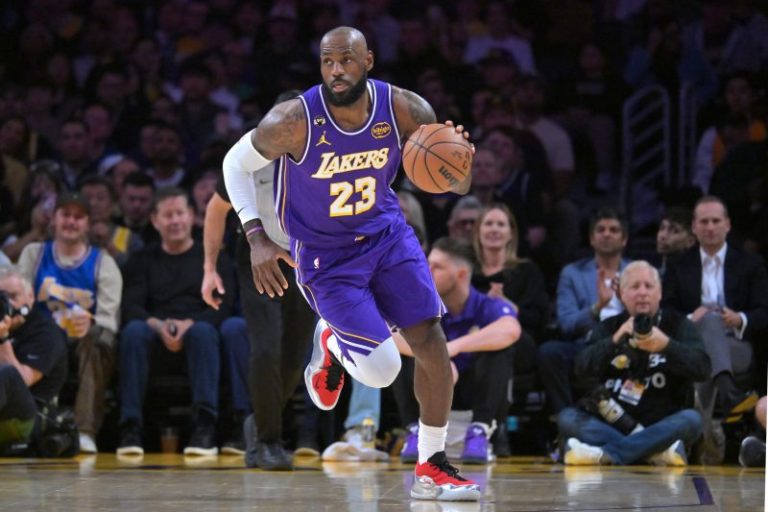
Rui Hachimura, Los Angeles Lakers

The Lakers need defensive help to support a starting lineup that will presumably feature Luka Doncic, Austin Reaves and LeBron James in the postseason. Hachimura’s expiring $18 million contract is likely to be used if they swing a deal for a two-way wing.

John Konchar, Memphis Grizzlies

There’s a lot of buzz about trading Ja Morant, but the Grizzlies don’t seem as keen on dealing their star at a relative low point compared to what his reputation was a few years ago. The franchise appears more likely to stand pat than shake up its roster at the deadline, even if recent results suggest the latter is an approach worth exploring. Perhaps, however, they will try to extract a draft pick or unload an unwanted contract ‒ Konchar, at more than $6 million through next season, fits the bill ‒ by latching on as an additional trade partner on the periphery of a bigger trade.

Andrew Wiggins, Miami Heat

The Heat are considered one of the more aggressive potential landing spots should Giannis and the Bucks part ways and Wiggins’ contract would help facilitate the deal. Though the 30-year-old former No. 1 pick is set to make $30 million next season, it’s a player option that he might decline in pursuit of more guaranteed years. The Heat could treat this like an expiring contract and deal it at the deadline to a contender looking for help on the wing. Wiggins has shown this season he’s still a net positive on the court.

Kyle Kuzma, Milwaukee Bucks

Though the rumors are flying about a potential Antetokounmpo trade, a deal this offseason appears more likely than a deadline move. But the relationship between the Bucks and their star continues to be trending towards its conclusion and all of Milwaukee’s potential moves over the next month revolve around Antetokounmpo. General Manager Jon Horst is looking for help on the wing by trying to trade for Zack LaVine or Malik Monk using the likes of Bobby Portis or Kyle Kuzma, according to a recent Sports Illustrated report. Kuzma is an expiring contract next season, while Portis has a player option for the 2027-28 season.

Donte DiVincenzo, Minnesota Timberwolves

The Timberwolves reportedly want to upgrade at point guard and DiVencenzo could wind up being the bait to get a deal done around the deadline given his reasonable $12 million salary and looming status as an expiring contract. Julius Randle is another intriguing trade option, but a team could be on the hook for more than $68 million in guaranteed money since Randle has a player option for 2027-28.

Saddiq Bey, New Orleans Pelicans

The Pelicans are in the midst of another awful season and the backcourt is going to get awfully crowded once Dejounte Murray returns from a torn Achilles suffered in January 2025. But trading Murray at the trade deadline is likely to be too complicated given his uncertain return date and Jordan Poole is owed more than $34 million next season. New Orleans could sell high on Bey, a former first-round pick who’s been among the team’s few bright spots and plays a sought-after position (wing) during this trade deadline.

Guerschon Yabusele, New York Knicks

The 30-year-old 2024 Paris Olympics star from France hasn’t worked out like the Knicks hoped thus far after signing with the team this offseason. Yabusele is likely to be included in a deal if the Knicks can upgrade their bench with an additional point guard or big man.

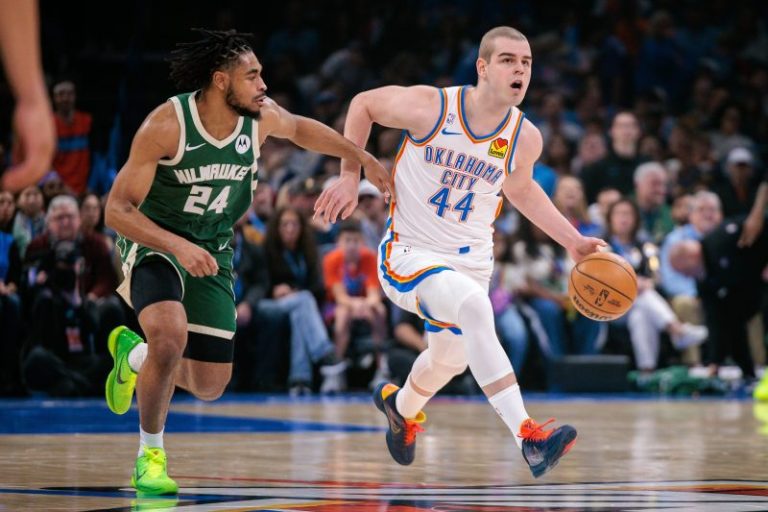
Lu Dort, Oklahoma City Thunder

The defending NBA champions are unlikely to shake up their core by dealing the longest-tenured member of the organization at the trade deadline, but Dort is on an expiring contract with an $18 million team option the Thunder probably can’t pick up with the bill on their stars coming due. If there’s a move to make involving a rotation player, Dort would be the easiest to part with for Thunder GM Sam Presti.

Jonathan Isaac, Orlando Magic

The Magic pushed their chips in by trading for Desmond Bane this past offseason and Isaac’s role as a defensive stopper has been diminished. His contract is filled with health-related provisions that could protect a team if Isaac’s injury issues limit his ability to fulfill the final three years of his $59 million deal. The Magic could use the salary cap relief.

Kelly Oubre Jr., Philadelphia 76ers

The Sixers would love to trade Joel Embiid or Paul George, but finding a team to take on those contracts is a long shot at this point. Of Philadelphia’s five expiring deals, Oubre’s $8.3 million is the easiest to move since Quentin Grimes reportedly has a no-trade clause in his contract.

Nick Richards, Phoenix Suns

The Suns are one of the NBA’s surprise teams this season after their strategy of unloading draft capital and assets in pursuit of big stars failed on the court. For that reason alone, a significant move is unlikely (and unwarranted). But they could get something of value for Richards, who seems to be an odd man out at center with younger options Mark Williams and Khaman Maluach on the roster.

Robert Williams, Portland Trail Blazers

Dealing Jerami Grant’s contract would be ideal for the Trail Blazers. Finding a team desperate enough to potentially commit more than $70 million to Grant over the next two seasons is the challenge. Williams is an expiring contract who was a lot more effective on a contender in Boston than he has been in Portland. Injuries are always a concern with him.

Malik Monk, Sacramento Kings

The Kings are reportedly willing to trade several prominent players in order to blow up their roster, but Monk and teammate Zack Lavine are the names that come up most often. Lavine’s $48 million salary next season will make his deal tougher to execute. Monk is three years younger at half the cost and a season removed from a career year.

Jeremy Sochan, San Antonio Spurs

The former top-10 pick is a restricted free agent after this season and averaging a career-low in minutes. He could present the Spurs with the easiest path to upgrade their roster this season without mortgaging any future assets.

Ochai Agbaji, Toronto Raptors

The Raptors are emerging as a potential contender in the wide-open Eastern Conference and Agbaji’s expiring contract and decreased role this season make him a prime candidate to be on the move.

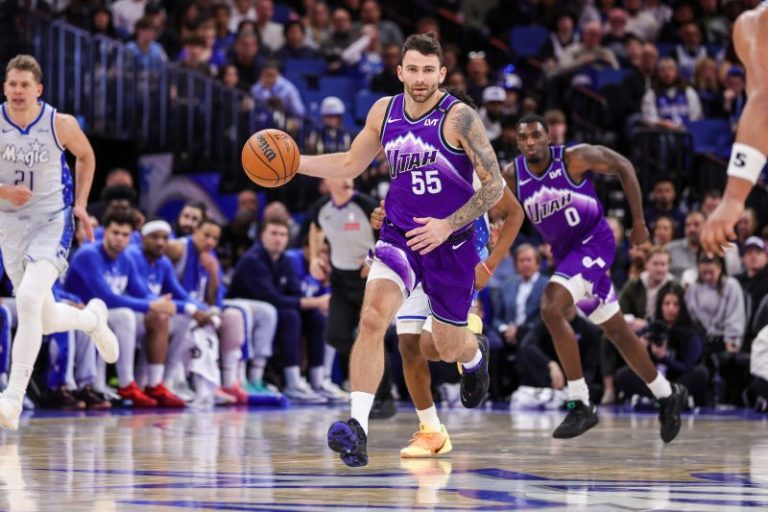
Jusuf Nurkic, Utah Jazz

Though Lauri Markannen is on a lot of wish lists this trade deadline, the Jazz have shown no signs of being willing to trade him for anything less than a blockbuster offer. Instead, Nurkic’s expiring contract could present an opportunity to add another draft asset or take a flier on a younger alternative.

CJ McCollum, Washington Wizards

The rebuilding Wizards acquired McCollum and Khris Middleton to provide some veteran guidance to a young roster and perhaps be included in a future trade. Well, the time has come. Both are on expiring contracts. McCollum is playing better and could help a contender. He’s already been linked in a potential deal for Young.

This post appeared first on USA TODAY

Ottawa Senators GM Steve Staios’ ‘state-of-the-union’ speech to local reporters last week raised eyebrows as his club tries to stay in contention for a playoff berth in the Eastern Conference.

Staios attempted to temper fan expectations, citing the club’s struggles, the parity around the league and their goaltending situation.

Meanwhile, reports from Postmedia say Staios continues to shop aggressively in the trade market seeking a right-shot defenseman and a depth forward, with the defense being the priority.

The Senators revisited their interest in Calgary Flames defenseman Rasmus Andersson, per a report. They’re not the only club interested in the 29-year-old blueliner, as the Vegas Golden Knights, Dallas Stars, Toronto Maple Leafs and Los Angeles Kings are believed to be among the suitors.

Some teams have asked Staios about prospect defensemen Carter Yakemchuk and Logan Hensler, but he doesn’t want to part with those promising youngsters. That’s understandable, as the Senators’ prospect pipeline is not as well-stocked as it once was.

Meanwhile, speculation persists over Kiefer Sherwood’s future with the Vancouver Canucks.

On Saturday, Sportsnet’s Elliotte Friedman reported the Canucks made another contract offer to the30-year-old right winger. However, he said that a significant gap remains between the two sides, adding that there’s no timetable for a trade or an agreement on a contract.

According to Ben Kuzma and Patrick Johnston of The Province, the possibility of the Canucks retaining Sherwood is “highly unlikely.” There’s not much interest in tripling his $1.5-million cap hit, and his style of play could fetch a good return from contenders such as the Dallas Stars and Boston Bruins.

Friedman also provided an update on Edmonton Oilers winger Andrew Mangiapane after he was a healthy scratch on Saturday for the second time in three games.

The Oilers signed Mangiapane to a two-year contract last July, but the 29-year-old left winger struggled to produce despite seeing top-six minutes during the first two months of this season. Being scratched from a Dec. 29 game against the Winnipeg Jets stoked speculation that he could be traded.

Friedman believes there are some clubs interested in Mangiapane, mentioning the Anaheim Ducks had been poking around. Meanwhile, David Staples of the Edmonton Journal indicated that NHL insider Frank Seravalli suggested the Winnipeg Jets and New Jersey Devils as potential trade partners.

For action-packed issues, access to the entire magazine archive and a free issue, subscribe to The Hockey News at THN.com/free. Get the latest news and trending stories by subscribing to our newsletter here. And share your thoughts by commenting below the article on THN.com or creating your own post in our community forum.

This post appeared first on USA TODAY

  • Nick Saban is not around to save SEC football anymore. But, would Saban coming out of retirement rally the SEC? Probably not much.
  • As the SEC descends, the Big Ten grows in strength.
  • Saban saw writing on the wall: NIL and transfer free agency would strip away at Alabama and SEC chokehold on power.

In any case, he’s not around to save SEC football anymore. The once-mighty conference is knee-deep in a postseason flop, while the GOAT who helped propel the SEC as Alabama’s coach breaks it all down on a television set.

As the SEC descends, the Big Ten grows in strength.

Is the SEC’s loss on its grip of power as simple as Saban retiring? No. That barely scratches the surface.

On this edition of ‘SEC Football Unfiltered,’ a podcast from the USA TODAY Network, hosts Blake Toppmeyer and John Adams debate why the SEC has fallen off its throne as college football’s overlord and why not even Saban could have prevented this.

Toppmeyer says Alabama’s whimpering finish under Indiana’s fist at the Rose Bowl shows just how far the SEC has fallen. He compares the Tide to a Big Ten team that finished 9-4.

Even Paul Finebaum, generally a staunch supporter of the SEC, says this postseason has been a “terrible” showing for the conference where it “Just Means More.”  

The SEC’s humbling outcomes include Tennessee losing to Illinois and Vanderbilt falling to Iowa, a pair of Big Ten flexes in bowl games. Indiana didn’t just flex on Alabama. It annihilated the Tide.

Here’s the upshot:

Did the SEC relinquish its perch because Nick Saban retired?

Toppmeyer: No. It’s the other way around. Saban had the foresight to realize the SEC and Alabama would have a tougher time maintaining its edge in a landscape where donors could openly pay players and athletes could transfer without penalty. He saw the writing on the wall and got out.

Give Saban his flowers. From the 2006 through 2022 seasons, a 17-year span, the SEC produced 13 national champions. Saban delivered six of those titles. His last came in the 2020 season. Notably, that was the final season before NIL and transfer free agency began.

Saban perfected the blueprint for the landscape before NIL and transfer free agency. Kirby Smart learned Saban’s blueprint and used it to win back-to-back national titles at Georgia.

College football’s evolutions since 2021 made it so that Saban’s sign, stockpile and develop blueprint isn’t the only way to pursue greatness.

Adams: No. The SEC didn’t stumble because Saban retired. Saban retired, because he knew the SEC (and Alabama) would stumble. Once it became harder for coaches to control the athletes, Saban wanted no part of this.

Why has the SEC slipped?

Toppmeyer: You can’t point to just one thing. A number of factors contributed to this. The SEC’s gleaming facilities, competitive recruiting budgets, unbridled fan and donor passion, and prime location in a portion of the country that pumps out premier recruits gave it a leg up in the era before NIL and transfer free agency.

Plus, the SEC sort of mastered the art of recruiting in a time before above-board pay-for-play, if you catch my drift. Even beyond the SEC’s footprint, before NIL, why wouldn’t a top prospect from California or Texas want to play for a blue blood like Alabama and compete inside the SEC’s cathedrals, while prepping for the NFL?

SEC schools, by and large, acquired the most high school talent, and retaining talent was easier within the old rules structure. Plus, the SEC generally attracted the nation’s best coaches.

Now that anyone can buy players, booster bucks are spreading out the talent to places like Texas Tech, Miami and lands in between. Schools that don’t sit in fertile high school recruiting terrain (see Indiana) can pack a punch by nabbing instant-impact transfers who come with experience.

The SEC still holds good cards, but it doesn’t horde them like before the 2021 rules changes.

Adams: Well said. I’ll add one more item for consideration. Used to be, players aimed to use college ball to set them up for NFL value. The best players were in the SEC, so that’s where the top recruits wanted to be, too.

It’s like Frank Sinatra sang about New York: If you can make it there, you can make it anywhere.

If you could make it in the SEC, you could make it in the NFL.

Now, players don’t have to wait for the NFL to cash in on their value. They can cash checks from a West Texas billionaire just as easily as they can cash checks in Alabama. Oregon’s got money, too. And Indiana. And Miami.

The talent’s getting spread out, because players are cashing in on their value now, and striking deals across the land, instead of everyone gravitating to one conference that served as the NFL’s minor leagues.

So, is the SEC still the top football conference?

Toppmeyer: No. The Big Ten has that claim right now.

You can’t argue the facts. The Big Ten has produced the past two national champions and is well positioned to produce another, with Indiana and Oregon in the semifinals. The B1G’s crème de la crème has become sweeter than the SEC’s. The SEC’s down-ballot depth advantage eroded, too. Iowa showed us that by handling Vanderbilt. The SEC remains a top-two conference, but it’s staring up at the Big Ten.

Adams: No. Advantage, Big Ten.

The SEC’s best argument at the moment might amount to: “Our last-place team is better than the Big Ten’s last-place team.” What a meek argument that is. That’s a loser’s battle cry.

Later in the episode

∎ Toppmeyer fesses up: He wishes he could make one change to his Heisman ballot, involving an SEC quarterback.

CFP semifinal picks against the spread!

Toppmeyer’s CFP picks (picks in bold):

∎ Oregon vs. Indiana (-4)

∎ Miami (-3.5) vs. Mississippi

Season record: 42-41 (3-1 last week)

Adams’ CFP picks (picks in bold):

Oregon vs. Indiana (-4)

∎ Miami (-3.5) vs. Mississippi

Season record: 44-39 (2-2 last week)

Blake Toppmeyer is the USA TODAY Network’s national college football columnist. John Adams is the senior sports columnist for the Knoxville News Sentinel. Subscribe to the SEC Football Unfiltered podcast, and check out the SEC Unfiltered newsletter, delivered straight to your inbox.

This post appeared first on USA TODAY

There’s an old saying about what NFL means for players and coaches who fail to meet expectations – Not For Long.

While there’s a short list of coaches with real staying power, the ranks of longest-tenured NFL head coaches is being rearranged this week, most notably after the Baltimore Ravens on Jan. 6 fired John Harbaugh, ending the Super Bowl-winning coach’s 18-year run with the franchise.

Harbaugh’s tenure was second-longest among active NFL coaches, behind only Mike Tomlin of the Pittsburgh Steelers. Tomlin is preparing the Steelers for an AFC wild-card showdown against the Houston Texans on Jan. 12 after Ravens kicker Tyler Loop missed the potential game-winning kick in the Steelers’ 26-24 win over the Ravens that clinched the AFC North title on Jan. 4.

Tomlin hasn’t been immune to calls for the Steelers to part ways with their longtime coach this season, but that conversation will be shelved as long as the Steelers remain Super Bowl contenders.

For now, here’s a look at the longest-tenured NFL coaches, which aside from Harbaugh was also changed by the Cleveland Browns’ firing of Kevin Stefanski (six years in Cleveland) on Jan. 5, this year’s ‘Black Monday.’

For those wondering, Curly Lambeau in Green Bay (1921-49) and Tom Landry in Dallas (1960-88) are tied for the longest tenure leading one team at 29 seasons.

1. Mike Tomlin, Pittsburgh Steelers

  • Age: 53
  • Number of seasons: 19
  • Record with Steelers (through 2025 regular season): 193-114-2 (.628)
  • Playoff berths (Super Bowls): 13 (2; won Super Bowl 43, lost Super Bowl 45)

2. Andy Reid, Kansas City Chiefs

  • Age: 67
  • Number of seasons: 13
  • Record with Chiefs: 149-64 (.700)
  • Playoff berths (Super Bowls): 10 (4; won Super Bowl 54, lost Super Bowl 55, won Super Bowl 57, won Super Bowl 58, lost Super Bowl 59)

T3. Sean McDermott, Buffalo Bills

  • Age: 51
  • Number of seasons: 9
  • Record with Bills: 98-50 (.662)
  • Playoff berths: 8

T3. Sean McVay, Los Angeles Rams

  • Age: 39
  • Number of seasons: 9
  • Record with Rams: 92-57 (.617)
  • Playoff berths (Super Bowls): 7 (2; lost Super Bowl 53, won Super Bowl 56)

T3. Kyle Shanahan, San Francisco 49ers

  • Age: 46
  • Number of seasons: 9
  • Record with 49ers: 82-67 (.550)
  • Playoff berths (Super Bowls): 5 (1; lost Super Bowl 54, lost Super Bowl 58)

T6. Matt LaFleur, Green Bay Packers

  • Age: 46
  • Number of seasons: 7
  • Record with Packers: 76-40-1 (.654)
  • Playoff berths: 6

T6. Zac Taylor, Cincinnati Bengals

  • Age: 42
  • Number of seasons: 7
  • Record with Bengals: 52-63-1 (.453
  • Playoff berths (Super Bowls): 2 (1; lost Super Bowl 56)

T8. Dan Campbell, Detroit Lions

  • Age: 49
  • Number of seasons: 5
  • Record with Lions: 48-36-1 (.571)
  • Playoff berths: 2

T8. Nick Sirianni, Philadelphia Eagles

  • Age: 44
  • Number of seasons: 5
  • Record with Eagles: 59-26 (.694)
  • Playoff berths (Super Bowls): 5 (2; lost Super Bowl 57, won Super Bowl 59)

T10. Mike McDaniel, Miami Dolphins

  • Age: 42
  • Number of seasons: 4
  • Record with Dolphins: 35-33 (.515)
  • Playoff berths: 2

T10. Todd Bowles, Tampa Bay Buccaneers

  • Age: 62
  • Number of seasons: 4
  • Record with Buccaneers: 35-33 (.515)
  • Playoff berths: 3
This post appeared first on USA TODAY