Author

admin

Browsing

(TheNewswire)

Silver Crown Royalties Inc. ( Cboe: SCRI, OTCQX: SLCRF, BF: QS0 ) ( ‘Silver Crown’ ‘SCRi’ the ‘Corporation’ or the ‘Company’ ) is pleased to announce that the Company has successfully closed the third and final tranche (‘ Final Tranche ‘) of its non-brokered offering of units ( ‘Units’ ) that was previously announced on February 6, 2025 (the ‘Offering’ ) and issued 89,400 Units at a price of C$6.50 per Unit, for gross proceeds of approximately C$581,100

Each Unit consists of one common share ( ‘Common Share’ ) and one Common Share purchase warrant ( ‘Warrant’ ), with each Warrant exercisable to acquire one additional Common Share at an exercise price of C$13.00 for a period of three years from the closing date. A total of 232,248 Units were issued in accordance with the Offering for cumulative gross proceeds of C$1,509,615.

The proceeds from the Final Tranche will be used to partially fund the second tranche of the Company’s silver royalty acquisition on the Igor 4 project in Peru, as well as general and administrative expenses. All securities issued are subject to a statutory hold period of four months plus one day from the date of issuance, in accordance with applicable securities legislation. The closing was subject to customary conditions, including the approval of Cboe Canada Inc.

Regarding the receipt of payments from the Company’s producing royalties, Silver Crown expects to receive cash payments equivalent to approximately 6,703 ounces of silver in the first quarter of 2025. This is driven by the early payment of the PPX/Igor 4 royalty as well as payments under the Elk Gold Royalty.

ABOUT Silver Crown Royalties INC.

Founded by industry veterans, Silver Crown Royalties ( Cboe: SCRI | OTCQX: SLCRF | BF: QS0 ) is a publicly traded, silver royalty company. Silver Crown (SCRi) currently has four silver royalties of which three are revenue-generating. Its business model presents investors with precious metals exposure that allows for a natural hedge against currency devaluation while minimizing the negative impact of cost inflation associated with production. SCRi endeavors to minimize the economic impact on mining projects while maximizing returns for shareholders. For further information, please contact:

Silver Crown Royalties Inc.

Peter Bures, Chairman and CEO

Telephone: (416) 481-1744

Email: pbures@silvercrownroyalties.com

FORWARD-LOOKING STATEMENTS

This release contains certain ‘forward looking statements’ and certain ‘forward-looking information’ as defined under applicable Canadian and U.S. securities laws. Forward-looking statements and information can generally be identified by the use of forward-looking terminology such as ‘may’, ‘will’, ‘should’, ‘expect’, ‘intend’, ‘estimate’, ‘anticipate’, ‘believe’, ‘continue’, ‘plans’ or similar terminology. The forward-looking information contained herein is provided for the purpose of assisting readers in understanding management’s current expectations and plans relating to the future. Readers are cautioned that such information may not be appropriate for other purposes. Forward-looking statements and information include, but are not limited to, the proceeds from the Final Tranche will be used to partially fund the second tranche of the Company’s silver royalty acquisition on the Igor 4 project in Peru, as well as general and administrative expenses. Forward-looking statements and information are based on forecasts of future results, estimates of amounts not yet determinable and assumptions that, while believed by management to be reasonable, are inherently subject to significant business, economic and competitive uncertainties and contingencies. Forward-looking information is subject to known and unknown risks, uncertainties and other factors that may cause the actual actions, events or results to be materially different from those expressed or implied by such forward-looking information, including but not limited to: the impact of general business and economic conditions; the absence of control over mining operations from which SCRi will purchase gold and other metals or from which it will receive royalty payments and risks related to those mining operations, including risks related to international operations, government and environmental regulation, delays in mine construction and operations, actual results of mining and current exploration activities, conclusions of economic evaluations and changes in project parameters as plans continue to be refined; accidents, equipment breakdowns, title matters, labor disputes or other unanticipated difficulties or interruptions in operations; SCRi’s ability to enter into definitive agreements and close proposed royalty transactions; the inherent uncertainties related to the valuations ascribed by SCRi to its royalty interests; problems inherent to the marketability of gold and other metals; the inherent uncertainty of production and cost estimates and the potential for unexpected costs and expenses; industry conditions, including fluctuations in the price of the primary commodities mined at such operations, fluctuations in foreign exchange rates and fluctuations in interest rates; government entities interpreting existing tax legislation or enacting new tax legislation in a way which adversely affects SCRi; stock market volatility; regulatory restrictions; liability, competition, the potential impact of epidemics, pandemics or other public health crises on SCRi’s business, operations and financial condition, loss of key employees. SCRi has attempted to identify important factors that could cause actual results to differ materially from those contained in forward-looking statements, there may be other factors that cause results not to be as anticipated, estimated or intended. There can be no assurance that such statements will prove to be accurate, as actual results and future events could differ materially from those anticipated in such statements. Accordingly, readers are advised not to place undue reliance on forward-looking statements or information. SCRi undertakes no obligation to update forward-looking information except as required by applicable law. Such forward-looking information represents management’s best judgment based on information currently available.

This document does not constitute an offer to sell, or a solicitation of an offer to buy, securities of the Company in Canada, the United States or any other jurisdiction. Any such offer to sell or solicitation of an offer to buy the securities described herein will be made only pursuant to subscription documentation between the Company and prospective purchasers. Any such offering will be made in reliance upon exemptions from the prospectus and registration requirements under applicable securities laws, pursuant to a subscription agreement to be entered into by the Company and prospective investors. There can be no assurance that forward-looking statements will prove to be accurate, as actual results and future events could differ materially from those anticipated in such statements. Accordingly, the reader is cautioned not to place undue reliance on forward-looking statements.

CBOE CANADA DOES NOT ACCEPT RESPONSIBILITY FOR THE ADEQUACY OR ACCURACY OF THIS NEWS RELEASE.

Copyright (c) 2025 TheNewswire – All rights reserved.

News Provided by TheNewsWire via QuoteMedia

This post appeared first on investingnews.com

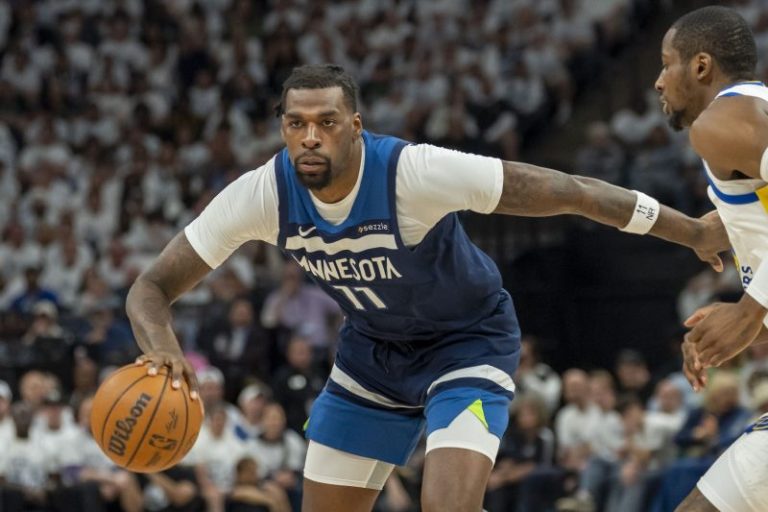
Game 4 of the Minnesota Timberwolves-Los Angeles Lakers series was fantastic.

Especially offensively with Minnesota’s Anthony Edwards and Julius Randle and Los Angeles’ Luka Doncic and LeBron James combining for 133 points – 43 from Edwards, 25 from Randle, 38 from Doncic and 27 from James.

The back-and-forth contest ended with the sixth-seeded Timberwolves taking Game 4 116-113 and taking a 3-1 lead against the third-seeded Lakers in their NBA Western Conference first-round playoff series.

Edwards’ two free throws with 10.7 seconds remaining – after Minnesota challenged a call and won, putting Edwards on the line – put the Timberwolves up 116-113, and Lakers guard Austin Reaves missed a 3-pointer to end the game.

Just 13 teams have come back from a 3-1 deficit, and it hasn’t happened since 2020 when Denver did it twice. The Lakers’ attempt to extend the series starts with Game 5 Wednesday in Los Angeles (10 p.m. ET, TNT).

Anthony Edwards’ star continues to rise and shine

For all the talk about the next “face of the NBA,” Edwards meets the requirement. He’s an elite talent. At the 2024 Paris Olympics, U.S. men’s basketball and Golden State coach Steve Kerr said, “As he continues to learn how to use (his talent) and be efficient in his play, he will be unguardable.”

He possesses the charismatic smile, the confidence and the humor. He’s in commercials (and yes, it would be nice if he limited his fines from the league office.)

Edwards put together one of his finest playoff performances, scoring a game-high 43 points on 12-for-23 shooting, including 5-for-10 on 3-pointers and 14-for-17 on free throws, and adding nine rebounds and six assists.

The talent and efficiency that Kerr mentioned was all there in Game 4. Edwards had 16 points, four rebounds, two assists and one block in the fourth quarter as the Timberwolves eliminated a 10-point deficit to start the fourth.

“You could see it in his eyes that he was going to bring it home,” Minnesota coach Chris Finch told reporters.

Lakers’ roster flaws exposed

Lakers coach JJ Redick mentioned the lack of rim protection after losing Game 3. Starting center Jaxson Hayes played just four minutes as the Lakers’ lack of versatility was exposed in Game 4.

It was Los Angeles’ best offensive game of the series (40% on 19 made 3-pointers and stellar production from James and Doncic). Yet, it wasn’t enough even though Rui Hachimura scored 23 points and Reaves added 17.

Take away shooting stats from James and Doncic, the Lakers were just 18-for-43 from the field (41.9%). Four Lakers played at least 40 minutes, including 46 minutes, 14 seconds from James and 45 minutes, 49 seconds from Doncic. The Lakers simply can’t go many minutes without either one on the court.

Minnesota’s bench outscored Los Angeles’ 25-6, and Dorian Finney-Smith, who played 41 minutes, was the only Lakers reserve to score.

Saving the coach’s challenge for the right time

Finch could’ve used his coach’s challenge long before 10 seconds remained in the fourth quarter. But he saved it. Saved it for just the right time.

With the Timberwolves leading 114-113 and in possession of the basketball, Edwards drove toward the rim. James swatted at the basketball, and it went out of bounds off of Edwards – Lakers ball, the refs ruled.

However, Finch still had his challenge available, and he used it, knowing that under review, the referees could call a foul on James. That’s what happened, sending Edwards to the free throw line for two foul shots, which he made.

Finch used his coach’s challenge 74 times this season and was successful 46 times (62.2% rate) – in the middle of the pack. A coach gets one challenge, and if they get that correct, they get one more in a game.

Each team has a behind-the-bench assistant coach who helps the head coach determine if a challenge should be made. For the Timberwolves, that’s Jeff Newton who has worked in the NBA for the past 12 seasons and had a stint as a head coach in the G League.

Finch and Newton made it work at the right time.

This post appeared first on USA TODAY

Jayson Tatum collected game highs of 37 points and 14 rebounds to lead the visiting Boston Celtics to a 107-98 victory over the Orlando Magic on Sunday in Game 4 of their NBA Eastern Conference first-round playoff series.

The second-seeded Celtics made 30 of their 32 free-throw attempts in the victory, which gave Boston a 3-1 edge in the best-of-seven series.

Orlando tied the score at 91 on a Wendell Carter Jr. putback with 4:18 to play, but the reigning NBA champions seized control by scoring 10 of the next 11 points.

Four of Boston’s five starters scored at least 18 points. Jaylen Brown had 21 points and 11 rebounds, Kristaps Porzingis tossed in 19 points and Derrick White finished with 18.

Paolo Banchero led seventh-seeded Orlando by scoring 31 points. Franz Wagner added 24 points, six rebounds and seven assists, and Carter finished with nine points and a team-high 11 rebounds.

Cory Joseph (12) and Anthony Black (10) were the other Magic players who scored in double figures.

Boston’s Jrue Holiday missed his second straight game in the series with a hamstring strain. Boston’s reserves were limited to six points, all from Sam Hauser.

The Celtics were 9 of 31 on 3-point attempts (29 percent). Orlando was 8 of 30 from behind the 3-point arc (26.7 percent).

Boston led 32-29 after one quarter and stretched its lead to nine, 42-33, with 7:46 left in the second. Orlando went in front 48-46 on a Banchero layup with 3:17 remaining in the first half. The Celtics finished the quarter on a 7-0 run and had a 53-48 halftime lead.

Orlando edged Boston 27-26 in the third quarter, which left Boston with a 79-75 advantage entering the final 12 minutes. Brown scored 11 of his 21 points in the third.

The Celtics can advance if they win Game 5 on Tuesday night in Boston.

This post appeared first on USA TODAY
It couldn’t have gone much worse for the Milwaukee Bucks on Sunday.

After suffering a 129-103 loss to the Pacers in Game 4 at Fiserv Forum, the Bucks will head to Indiana facing elimination in the first round of the NBA playoffs for the third consecutive season.

There isn’t much time for Bucks head coach Doc Rivers to ponder season-saving solutions. Game 5 is at Gainbridge Fieldhouse in Indianapolis on Tuesday.

The Bucks played without Lillard when he had a blood clot that kept him out a month before returning for Game 2 of this series.

Kevin Porter Jr. provides some hope

If there was any bright spot for the Bucks it was the play of backup guard Kevin Porter Jr.

Lillard left the game with just under six minutes left in the first quarter with a non-contact leg injury. Porter was thrust into a larger role and finished with 23 points, six assists and five rebounds.

Giannis Antetokounmpo carrying a heavy burden

Giannis Antetokounmpo came into the game averaging 35.7 points and 14 rebounds per game in the series.

He struggled in the first half with eight points on 3-for-10 shooting. But he still finished with 28 points, 15 rebounds and six assists.

The short-handed Bucks couldn’t keep up with the go-go Pacers, who were led by Tyrese Haliburton (17 points and 15 assists) and Myles Turner (23 points).

This post appeared first on USA TODAY
Basketball Hall of Famer Dick Barnett, who played guard in both of the New York Knicks’ NBA championship seasons, has died, the team announced Sunday. He was 88.

Barnett died in his sleep overnight at an assisted living facility in Largo, Florida, according to multiple media reports.

He was inducted into the Naismith Memorial Basketball Hall of Fame in 2024 as a player and as a three-time All-America for Tennessee A&I (now Tennessee State) teams that won three consecutive NAIA championships (1957-59) —the first HBCU program to win a national title in basketball.

‘Throughout his illustrious career, Dick Barnett embodied everything it meant to be a New York Knick, both on and off the court,’ the Knicks said in a statement. ‘He left a positive impact on everyone he encountered and this organization is incredibly fortunate to have him be such an integral part of its history. His jersey will forever hang in the rafters of Madison Square Garden, and his play throughout his career will forever be a part of Knicks fans memories.’

The Knicks won NBA crowns in 1970 and 1973 with large contributions from Barnett, a 6-foot-4 all-around player known for his unique ‘fall back, baby’ shooting style. His legs flew backward when the left-hander shot jumpers.

It worked for the native of Gary, Indiana, who was selected by the Syracuse Nationals with the fifth overall pick of the 1959 NBA draft.

He played for Syracuse for two seasons (1959-61) and one season for the Cleveland Pipers of the American Basketball League (1961-62). He returned to the NBA with the Los Angeles Lakers (1962-65) and finished his 14-year career with the Knicks (1965-74).

An All-Star in the 1967-68 season, Barnett averaged 15.8 points, 2.9 rebounds, 2.8 assists and 29.8 minutes in 971 NBA regular-season games. He also averaged 15.1 points, 2.7 rebounds, 2.4 assists and 27.3 minutes in 102 playoff games.

This post appeared first on USA TODAY

If President Donald Trump’s 145% levy against imports from China holds, Hasbro estimates it could see as much as a $300 million hit to its bottom line.

The toy maker posted better-than-expected earnings on Thursday, but investors and analysts were more focused on the ongoing trade war Trump’s White House has waged against the toy industry’s biggest manufacturer.

Hasbro maintained the full-year guidance it issued last quarter, citing the uncertainty of the current tariff environment.

“Our forecast assumes various scenarios for China tariffs, ranging from 50% to the rate holding at 145% and 10% for the rest of world,” said Gina Goetter, chief financial officer and chief operating officer at Hasbro, during Thursday’s earnings call. “This translates to an estimated $100 million to $300 million gross impact across the enterprise in 2025. Before any mitigation.”

CEO Chris Cocks said during the company’s earnings call that “while no company is insulated, Hasbro is well positioned,” noting the company’s unchanged guidance is “supported by our robust games and licensing businesses and our strategic flexibility.”

“Prolonged tariff conditions create structural costs and heighten market unpredictability,” he said, adding, “ultimately tariffs translate into higher consumer prices.”

Cocks also warned of “potential job losses as we adjust to absorb increased costs and reduced profit for our shareholders.”

The company’s U.S. games business benefits from digital and domestic sourcing, as many of its board games are made in Massachusetts. Its Wizards of the Coast division, which includes Magic: The Gathering and Dungeons & Dragons, has a tariff exposure of less than $10 million, Cocks said, as much of the domestic product is made in North Carolina, Texas and Japan.

The company’s toy segment faces higher exposure, as a larger portion of those goods are made in China. Cocks said the company is exploring options for moving its supply chain to other countries.

“Some of that, though, comes with the cost,” he said. “When we manufacture board games in the U.S., it is significantly more expensive to manufacture here than it is in China.”

He added that the company can shift the sourcing of Play-Doh, for example, from China to its factory in Turkey. Under that scenario, Turkey manufacturers would redirect shipments from Europe to the U.S. and Chinese factories could fill in to supply the European market.

Other products are more difficult to triage, especially those that include electronics, high end deco and foam components, Cocks said.

“China will continue to be a major manufacturing hub for us globally, in large part due to specialized capabilities developed over decades,” he said.

Goetter said that much of the manufacturing changes would be seen in 2026 and are dependent on if those countries already have the capabilities and infrastructure in place to make certain products.

Hasbro is also accelerating its $1 billion cost savings plan in an effort to offset tariff pressures, but noted that price hikes are unavoidable.

“We are going to have to raise prices inside of 145% tariff regime with China,” Cocks said. “We’re just trying to do it as selectively as possible and minimize the burden to the fans and families that we serve.”

Both Goetter and Cocks admitted that Hasbro’s plans are flexible and will change as the tariff situation evolves. The company is hopeful for a “more predictable and favorable U.S. trade policy environment.”

“We’re trying to play both defense and offense at the same time,” Goetter said.

This post appeared first on NBC NEWS

U.S. spirit exports reached a record $2.4 billion in 2024, driven in large part by tariff concerns and ongoing global trade disputes.

That is according to the American Spirits Exports report published by trade association the Distilled Spirits Council of the United States on Thursday.

“U.S. spirits exports hit a new high in 2024, recapturing lost market share since the UK and EU lifted retaliatory tariffs that were applied between 2018-2021,” said DISCUS President and CEO Chris Swonger. “Unfortunately, ongoing trade disputes unrelated to our sector have caused uncertainty, keeping many U.S. distillers on the sidelines and curtailing sales growth.”

U.S. spirits exports to the EU surged by 39%, fueled by concerns over the potential return of a 50% tariff on American whiskey imports in 2025, which was suspended in 2022.

In March, Trump threatened to put 200% tariffs on French Champagne and other EU spirits, which led European world leaders — specifically from Ireland, France and Italy — to advocate for bourbon tariffs not to return as part of retaliatory measures.

The threat of that specific tariff has faded somewhat as the U.S. and EU continue trade negotiations.

Approximately 50% of U.S. spirits were exported to the EU — totaling $1.2 billion — making it the largest export market.

Exports to the rest of the world, however, declined by nearly 10%, the report found, which reflects the broader softening alcohol category.

Suntory Beam, the Japanese maker of Jim Beam bourbon whiskey, said in December it was preparing for tariffs by stockpiling supply in Europe. The company is already heavily reliant on France and the United Kingdom, which make up over 50% of its global exports market over the last eight years, according to global trade data from Panjiva.

Several of the top states for exports in 2024 are significant bourbon economies, according to the report.

Still, American whiskey exports, which accounted for 54% of all U.S. spirits exports, dipped 5.4% to $1.3 billion.

Swonger said that while outlook for spirits remains highly unpredictable with ongoing trade disputes, one fact rings true in the data: Exports go to countries that have eliminated tariffs.

“We are thankful for President Trump’s early success in securing India’s reduction of its tariff on Bourbon from 150% to 100%,” Swonger said. “It’s our hope that the administration builds on this positive momentum by securing additional tariff reductions in India and reducing trade barriers in other countries.”

Headwinds remain for the industry. Canada, the second largest market for U.S. spirits exports, imposed a 25% tariff in on alcohol coming over the border in March, and several provinces have removed product from shelves.

Distiller and brewers also face steel and aluminum tariffs that impact materials costs for brewers like Constellation Brands, which lowered long-term 2027 and 2028 guidance significantly around “the anticipated impact of tariffs.”

This post appeared first on NBC NEWS

OKLAHOMA CITY — Amazon and Nvidia executives said Thursday that the construction of artificial intelligence data centers is not slowing down, as recession fears have some investors questioning whether tech companies will pull back on some of their plans.

“There’s been really no significant change,” Kevin Miller, Amazon’s vice president of global data centers, said at a conference organized by the Hamm Institute for American Energy. “We continue to see very strong demand, and we’re looking both in the next couple years as well as long term and seeing the numbers only going up.”

The comments run contrary to worrying buzz building on Wall Street about tech companies changing data center buildout plans. Wells Fargo analysts said Monday that Amazon Web Services is pausing some leases on data center commitments, citing industry sources. The magnitude of the pause was unclear, the analysts said, but the comments raised fears that Amazon was doing something similar to Microsoft’s recent move to pull back on some early stage projects.

Miller said “there’s been little tea leaf reading and extrapolating to strange results” about Amazon’s plans.

Nvidia is also not seeing signs of a slowdown, said Josh Parker, the chipmaker’s senior director of corporate sustainability.

“We haven’t seen a pullback,” Parker said. China’s artificial intelligence startup DeepSeek sparked a sell-off in power stocks earlier this year as investors worried that its artificial intelligence model is more efficient and data centers might need as much energy as originally anticipated.

But Parker said Nvidia sees computer and energy demand only rising due to AI, describing the reaction to DeepSeek as “kneejerk.” Anthropic co-founder Jack Clark said 50 gigawatts of new power capacity will be needed by 2027 to support AI. That is the equivalent of about 50 new nuclear plants.

“Anthropic and the other AI companies, what we’re seeing is tremendous growth in the need for new baseload power. We’re seeing unprecedented growth,” Clark said.

The executives were speaking at a gathering of tech and energy companies at a conference in Oklahoma City organized by the Hamm Institute to discuss how the U.S. can address the growing energy needs for AI. There is a growing consensus in both industries that natural gas will be needed to meet the power needs.

This post appeared first on NBC NEWS

OKLAHOMA CITY — Amazon and Nvidia executives said Thursday that the construction of artificial intelligence data centers is not slowing down, as recession fears have some investors questioning whether tech companies will pull back on some of their plans.

“There’s been really no significant change,” Kevin Miller, Amazon’s vice president of global data centers, said at a conference organized by the Hamm Institute for American Energy. “We continue to see very strong demand, and we’re looking both in the next couple years as well as long term and seeing the numbers only going up.”

The comments run contrary to worrying buzz building on Wall Street about tech companies changing data center buildout plans. Wells Fargo analysts said Monday that Amazon Web Services is pausing some leases on data center commitments, citing industry sources. The magnitude of the pause was unclear, the analysts said, but the comments raised fears that Amazon was doing something similar to Microsoft’s recent move to pull back on some early stage projects.

Miller said “there’s been little tea leaf reading and extrapolating to strange results” about Amazon’s plans.

Nvidia is also not seeing signs of a slowdown, said Josh Parker, the chipmaker’s senior director of corporate sustainability.

“We haven’t seen a pullback,” Parker said. China’s artificial intelligence startup DeepSeek sparked a sell-off in power stocks earlier this year as investors worried that its artificial intelligence model is more efficient and data centers might need as much energy as originally anticipated.

But Parker said Nvidia sees compute and energy demand only rising due to AI, describing the reaction to DeepSeek as “kneejerk.” Anthropic co-founder Jack Clark said 50 gigawatts of new power capacity will be needed by 2027 to support AI. That is the equivalent of about 50 new nuclear plants.

“Anthropic and the other AI companies, what we’re seeing is tremendous growth in the need for new baseload power. We’re seeing unprecedented growth,” Clark said.

The executives were speaking at a gathering of tech and energy companies at a conference in Oklahoma City organized by the Hamm Institute to discuss how the U.S. can address the growing energy needs for AI. There is a growing consensus in both industries that natural gas will be needed to meet the power needs.

This post appeared first on NBC NEWS

U.S. trucking is heading for a slowdown, with industry players fearing the “worst is yet to come” as tariffs start to crimp imports.

Trucking volumes have plunged to near pre-pandemic levels, according to Craig Fuller, founder of the logistics industry publication FreightWaves.

“With imports deteriorating, volumes are expected to fall by another 3-4% over the next month,” Fuller said Tuesday in a post on X, citing the real-time freight data platform Sonar, which he also founded. Fuller said that’s a worrying sign for truckers this year.

Container volumes are down 20% at the busy Port of Los Angeles since a year ago, FreightWaves reported Tuesday, saying “this downturn spells trouble” for trucking firms that ship the overseas cargo inland across the country. Freight trucks carrying goods out of the metro area are “converging downward toward 2020 lockdown levels,” the outlet said.

The flags come as warning signs pile up for the broader U.S. economy due to President Donald’s Trump’s evolving trade war.

The International Monetary Fund on Tuesday knocked down its forecast for the year, lowering its January projection for global gross domestic product growth to 2.8%, from 3.6% previously. The IMF also cut its outlook for U.S. growth to just 1.8%, down from 2.7%, citing “epistemic uncertainty and policy unpredictability” out of the White House. Fresh GDP data is due out next Wednesday.

Freight carriers are “heavily dependent on the health of the U.S. economy, and many industry insiders are waiting on the final outcome of tariffs prior to expressing opinions regarding their outlook,” said John Crum, head of specialty equipment finance at Wells Fargo.

Trucks are the nation’s freight mode of choice for everything from grain to gravel, as measured by weight, and also carry the lion’s share, by dollar value, of foodstuffs, electronics and vehicles, federal data shows. Imports accounted for 40% of freight tonnage moved domestically by truck as of 2023.

Despite freight firms’ broader reticence, many are still “expressing caution regarding freight volumes for 2025,” Crum said.

In a separate note, Wells Fargo supply chain finance managing director Jeremy Jansen said one silver lining is that companies “have a bit more profit margins than in 2018/19 to absorb some tariff actions.” 

The growing pessimism comes just months after industry experts were heralding a likely rebound in trucking volumes after two years of declines. Just days before Trump was sworn in to a second term in January, the American Trucking Association released a forecast projecting a 1.6% boost in freight for the year.

“Understanding the trends in our supply chain should be key for policymakers in Washington, in statehouses around the country and wherever decisions are being made that affect trucking and our economy,” ATA President and CEO Chris Spear said in a statement at the time.

But in the more than three months since then, consumers’ outlooks have nosedived, executives across industries have ramped up their warnings about slower sales, and Wall Street has swung wildly in response to ever-shifting signals about the administration’s trade agenda. Small-business owners say they’re doing their best to stockpile inventory before steeper tariffs take hold, even as many already get hit with higher bills from suppliers.

With much of Trump’s sweeping April 2 slate of tariffs temporarily rolled back, shipping volumes could jump in the second quarter “as consumers scoop up pre-tariff goods before prices go up,” logistics researchers at Cass Information Systems said in their March report. “But thereafter, the trade war is likely to extend the for-hire freight recession as higher prices reduce goods affordability and consumers’ real incomes.”

Overall U.S. exports rose 4.6% through February, federal researchers reported this month, while imports surged 21.4% as the trade war heated up.

The Cass Freight Index fell 5.5% in 2023 and 4.1% last year, “and so far, is trending toward another decline in 2025,” the analytics company said.

Mack Trucks recently announced layoffs of hundreds of workers at a Pennsylvania plant due to economic uncertainty, betting on slower demand for its iconic freight vehicles.

The decision drew sharp criticism last week from Pennsylvania Gov. Josh Shapiro, a Democrat, who said, “I fear that we’re going to see more like this” due to tariffs. “We’re going to see more rising prices, more layoffs, more companies not investing in the future.”

“The economy has COVID,” Fuller wrote in a follow-up X post on Wednesday, in response to downbeat manufacturing data released this week. “The only cure is a deescalation of the tariffs.”

This post appeared first on NBC NEWS