Author

admin

Browsing

MILAN – The American men’s hockey team goes into their last preliminary round game of the 2026 Winter Olympics having earned a measure of resilience.

Much as their Group C play so far has been against underdogs – and that won’t change in the final preliminary game on Sunday, Feb. 15, at Milano Santagiulia Ice Hockey Arena – the Americans’ 2-0 record hasn’t come without challenges. The Danes twice forced the U.S. to play from behind, and kept Saturday’s game close going into the third period before the U.S. pulled away, 6-3. Against Latvia, the Americans had to deal with two called-back goals.

‘I think it can serve us well moving forward,’ U.S. coach Mike Sullivan said after the victory over Denmark. ‘Because when you hit bumps in the road and you’re able to overcome those types of things, I think it says a lot about your group. And I think it galvanizes the group in a lot of ways.

‘It also provides hard evidence that we’re able to overcome anything that comes our way. And that’s an important part of success in this type of a tournament.’

A victory over Germany would put the U.S. in first play in group play, and earn a bye into the quarterfinals.

‘We’ve just got to keep building our game,’ Sullivan said. ‘I think that’s part of the process, is just trying to get better each and every day, and that’s what we’re trying to do. We’re trying to refine, we’re trying to define and refine, every single day. We’ve just got to keep moving the needle. We want to become a better version of ourselves.’

Jack Eichel described the team as an ‘unfinished product’ when asked what the Americans need to work on as the preliminary round wraps up.

‘I think you want to be good with puck management,’ he said. ‘You want to be good breaking the puck out and transitioning from defense to offense. Some of our D-zone structure, things like that, some of the breakdowns we’ve had, to continue to improve on. We’re going to continue to get better. It’s all part of this.’

The Americans didn’t start well against Denmark, falling behind 2-1 on a fluky goal when Jeremy Swayman didn’t see the puck that Nicholas B. Jensen fired from near his own bench. But in both of their preliminary games the Americans have put on dominant performances in the second period, putting themselves in position to put the games away in the third period.

‘I thought that if we played our game for 60 minutes, things would go our way, and they did,’ Eichel said. ‘I give them credit, they played really hard, they were opportunistic. They got a couple goals. No game is going to be easy, we realized that. I thought it was good of the group to continue to play our game for 60 minutes and find a way to win.’

Eichel set up Brady Tkachuk’s tying goal midway through the game and then scored to make it 3-2. Tkachuk is off to a great start in the tournament, with goals in each game and his usual strong physical presence.

‘He’s a beast,’ Sullivan said. ‘He’s a beast. His energy is contagious. He’s so vocal on the bench in between periods. He’s a positive guy. He drags everybody into the fight, literally and figuratively, and that’s what we love about him.’

From their first line to what masquerades as their fourth line (Jack Hughes is on it) and their defensive pairings and goaltending depth that numbers Swayman, Connor Hellebyck (who started against Latvia) and Jake Oettinger, the Americans are poised to earn a couple days before the quarterfinals if they take care of the Germans like they did the Latvians and Danes.

‘it’s one of those quick tournaments that you kind of have to find it quick,’ Tkachuk said. ‘I think that’s what’s so good about our group, is that we’re just kind of scratching at it right now and it’s going to work out that we’re going to peak at the right time.’

This post appeared first on USA TODAY

INGLEWOOD, CA — The NBA All-Star Weekend festivities have arrived. Saturday featured a wealth of events, highlighted by the mainstays: the NBA Slam Dunk and 3-Point Contests.

Before the main event of Sunday’s NBA All-Star Game, where the U.S. will take on the world in a new round-robin format, the crowd at Intuit Dome was entertained by the high-flying antics of Carter Bryant (San Antonio Spurs), Jaxson Hayes (Los Angeles Lakers), Keshad Johnson (Miami Heat), Jase Richardson (Orlando Magic).

USA TODAY Sports provided updates, highlights and results for the dunk and 3-point contests and the rest of Saturday night’s events:

NBA dunk contest highlights

NBA 3-point contest highlights

Shooting Stars contest highlights

Slam Dunk Contest: Heat forward Keshad Johnson wins

It won’t be one of the memorable Slam Dunk Contests that fans will talk about for years to come, but Miami Heat forward Keshad Johnson took the title in his first time competing in the event.

He topped Spurs rookie Carter Bryant with a final round score of 97.4 points. His top dunk of the night was a between-the-legs slam from the right baseline that he lobbed to himself. Johnson nearly hit his head on the backboard and slammed it home. The judges gave him a score of 49.6 for the dunk.

Final round, second dunk: Carter Bryant

It came down to the last dunk of the night. Bryant had to attempt a dunk several times and eventually had to bail. His first try was supposed to be a between-the-legs lob off the backboard that he then wanted to slam with a reverse. He had two attempts rim out, and as time wound down, he switched to a two-handed 360 dunk.

The judges gave him a score of 43.0, for a final round score of 93.0. That gave the Slam Dunk Contest title to Heat forward Keshad Johnson.

Final round, second dunk: Keshad Johnson

Using a long runway from well beyond half court, Johnson didn’t quite take off from the free throw line, but he did thunder it home with a swooping windmill.

The judges gave him a score of 47.8, for a final round total of 97.4.

Final round, first dunk: Carter Bryant

Another impressive dunk, Bryant caught a lob he threw to himself from the top of the key and slammed it home after putting the ball between his legs. He threw it down with power, getting a pop out of the crowd.

The judges gave him a perfect 50.

Final round, first dunk: Keshad Johnson

As he has all night long, Johnson danced his way through his turn. He went back to the dunk he had been trying late in the first round, doing a lobbed dunk underneath the basket that he also looped between his legs.

The judges were impressed, giving him a near-perfect score of 49.6, the highest of the night thus far.

Second dunk: Keshad Johnson

After he twice tried to do an in-between-the-legs dunk off of a lob, Johnson pivoted and did a two-hand, rock-the-cradle dunk from the baseline.

The judges gave him a score of 45.4, giving him a first-round score of 92.8. That moves him into the final, against Carter Bryant.

Second dunk: Carter Bryant

Bryant tossed a lob to himself and then flushed it down with a powerful windmill that showcased his jumping ability. It wasn’t necessarily a flashy dunk, but it was smooth and powerful.

The judges gave him a score of 49.2 to give him a first-round score of 94.8, securing his spot in the final.

Second dunk: Jase Richardson

Richardson used the help of a friend to try to lob the pass off the backboard, but a scary fall made him rethink the dunk. During that attempt, Richardson got caught on the backboard and fell flat on the court, appearing to hit the back of his head on the floor.

He got up and pivoted to a two-handed 360 slam.

The judges gave him a score of 43.4, for a total first-round score of 88.8.

Second dunk: Jaxson Hayes

Sensing that he needed to make up for his score, Hayes stood at the left wing and lobbed a pass and then, as he approached the ball, he tapped it with his right hand to himself before looping it between his legs for the dunk.

The judges gave him a score of 47.2 points on the dunk, for a total first-round score of 91.8.

Fourth up: Jaxson Hayes

Hayes seemed to know that his dunk wasn’t all that.

He took off from well within the backcourt and seemed to want to do a jump from the free throw line, but Hayes was well inside of that when he took off. From there, it was a pretty straightforward attempt, slamming it home.

The judges gave him a score of 44.6.

Third up: Keshad Johnson

Give him style points for coming out of the tunnel with rapper E-40, who wasn’t just a prop. Johnson took off from the right wing and jumped over E-40 — without any assistance or leverage — while posing at the apex with his left hand behind his head. Once he flushed it home, Johnson broke out into a little dance.

The judges gave him a score of 47.4, so far the highest total of the round.

Second up: Jase Richardson

The son of two-time Slam Dunk Contest winner Jason Richardson, Jase lobbed a pass to himself from the wing before grabbing the pass off the bounce for a reverse slam that he pumped once.

The judges gave him a score of 45.4, which was just 0.2 points behind Bryant.

First up: Carter Bryant

Looking loose and relaxed, Spurs forward Carter Bryant came from the left baseline and jumped underneath the basket, doing a 360-windmill, slamming it on his first attempt.

The judges gave him a score of 45.6; Dwight Howard was the judge who gave him the highest score of 48.

Judges

The judges for the Slam Dunk Contest will be Dominique Wilkins, Dwight Howard, Corey Maggette, Brent Barry (first Clipper to ever win the Slam Dunk Contest, in 1996) and Julius Erving.

NBA Shooting Stars competition: Team Knicks win

Final round: Team Knicks

Needing to post a big number to win the Shooting Stars competition, Team Knicks won it on the four-point spot, draining four shots from deep. That pushed their score to 47, topping Team Cameron by nine points.

Final round: Team Cameron

Competing against Team Knicks in the Shooting Stars final, Team Cameron (former Duke players Kon Knueppel, Jalen Johnson and former guard Corey Maggette) posted a score of 38. Team Cameron made good use of the four-point shots from near midcourt to pad their score. Team Knicks is up next.

Fourth up: Team Knicks

Posting the highest score of the first round, Team Knicks dropped 31 points, advancing to the final round with Team Cameron. Team Knicks are led by Karl-Anthony Towns, Jalen Brunson and retired Knick Allan Houston. The designated passer is Rick Brunson, who is an assistant on the Knicks staff and Jalen’s father.

Third up: Team Harper

Former NBA guard Ron Harper and his two sons Dylan (Spurs) and Ron Jr. (Maine Celtics) avoided elimination and scored 18. They did eliminate Team All-Star.

Second up: Team Cameron

With actor and comedian Anthony Anderson serving as the designated passer, Team Cameron (Kon Knueppel, Jalen Johnson and former guard Corey Maggette) posted a score of 24, which puts them in good position to move on to the final round. Team Cameron gets its name because all players came from Duke, which plays its home games at Cameron Indoor Stadium.

First up: Team All-Star

Up first in the Shooting Stars competition, which is a shooting game with three participants and a designated person passing the ball, Team All-Star (former Piston Richard Hamilton, Chet Holmgren and Scottie Barnes) scored 16 points.

3-Point Contest: Damian Lillard ties record with third career championship

Trail Blazers guard Damian Lillard isn’t playing this season because of a torn Achilles he suffered in the playoffs last season, when he was a member of the Bucks. It didn’t matter.

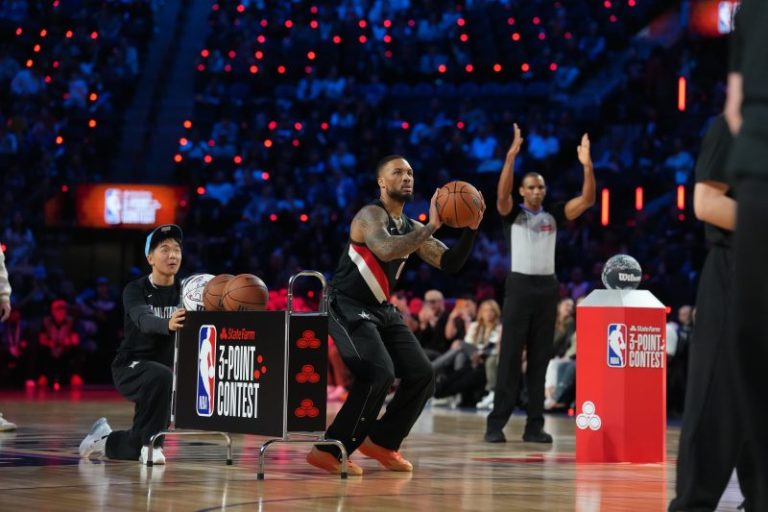
Lillard combined for 56 points across both rounds of the 3-Point Contest, including a final round score of 29, to win his third career title in the event. He joins Celtics legend Larry Bird and Craig Hodges as the only players to win the event three times.

‘That’s all I do it for, to keep adding to my legacy,’ Lillard said during an interview in the moments after he claimed his victory.

Final round: Devin Booker

Devin Booker was not playing around. He drained the first nine attempts of his final round to start hot, though he did cool off a touch. He entered the final rack with the chance to win the title, but he had two big misses that prevented him from catching Damian Lillard, who now wins his third career 3-Point Contest.

Final round: Damian Lillard

Lillard hit 4-of-5 shots on his first two racks to set the tone for a very solid 29 points that may be tough to beat. Devin Booker needs 30 or more to win the title.

Final round: Kon Knueppel

Knueppel made 4-of-5 shots in his first rack, but then struggled to sustain that momentum, hitting just four tries over his next two racks. His score of 17 likely won’t be enough to win it all.

Eighth up: Trail Blazers guard Damian Lillard

Competing as he’s recovering from a torn Achilles rupture, Lillard is still looking to win his record third career 3-Point Contest. Lillard actually started slowly and appeared as though he would be eliminated, but he drained 9 of his last 10 attempts, including four in the moneyball rack to post a score of 27 to move on. He joins Devin Booker (30) and Kon Knueppel (27) as the three finalists.

Seventh up: Suns guard Devin Booker

We now have a new leader. Devin Booker put on a clinic, especially in the moneyball rack that had each attempt worth two points. Leaving the moneyball rack for last, he hit 4-of-5 attempts and posted a score of 30, eliminating Heat guard Norman Powell.

Sixth up: 76ers guard Tyrese Maxey

Unfortunately for Maxey, one of the premier perimeter shooters in the NBA, he had several of his attempts rattle out and just miss. His score of 17 isn’t enough to move on to the second round.

Fifth up: Bucks forward Bobby Portis

Getting a score of only 15, Bucks forward Bobby Portis Jr. is eliminated. Portis, so far, has the lowest score of the contest.

Fourth up: Heat guard Norman Powell

Norman Powell, competing in front of his previous home fans, avoided elimination on the final rack. His score of 23 puts him in third place, though his spot is in danger. The top three contestants advance, so he’ll need the back half of the field to sputter. Powell eliminated Nuggets guard Jamal Murray.

Third up: Nuggets guard Jamal Murray

It looks like Murray won’t be moving on to the second round — unless he gets considerable help. Murray started slowly and was able to drain a few shots here and there, but he could never catch fire. He finishes with a first-round score of 18, which is nine behind current leader Kon Knueppel.

Second up: Cavaliers guard Donovan Mitchell

Wearing a Jaylon Tyson jersey to honor his teammate, Donovan Mitchell drained each shot from the first rack, but he cooled off a touch in the middle. His score of 24 is respectable, but he already trails Hornets rookie Kon Knueppel by three.

First up: Hornets rookie Kon Knueppel

First up to get the 3-Point Contest was Hornets rookie Kon Knueppel who didn’t show any nerves at all to begin the competition. He posted an excellent score of 27 after his first round, taking advantage of the moneyball rack.

Energy and buzz building in the Intuit Dome

Fans here are starting to take their seats and trickle into the Intuit Dome as buzz is starting to build in the arena before All-Star Saturday. Queen Latifah took center court to introduce the participants in the 3-Point Contest, and we’re only minutes away from getting underway.

How to watch the NBA All-Star Slam Dunk and 3-Point Contest?

  • When: Saturday, Feb. 14, 5 p.m. ET
  • Where: Intuit Dome (Inglewood, California)
  • Channel: NBC
  • Streaming: Peacock

Watch NBA All-Star Slam Dunk and 3-Point events on Peacock

When is the 2026 NBA All-Star Game?

The game will take place Sunday, Feb. 15 at 5 p.m. ET.

Where is the 2026 NBA All-Star Game?

Los Angeles will serve as host of All-Star weekend and all of its events, including the 2026 NBA All-Star Game, the Slam Dunk Contest and the 3-Point Contest. Events will take place at the Intuit Dome, the home venue of the Los Angeles Clippers.

What is the Shooting Stars competition?

Four teams of three players each will compete in two rounds, with the top two advancing to the finals. Teams have 70 seconds to hit a shot from seven different spots on the court. Each player on a team shoots at each spot in a set order.

Seven shooting spots

  • Right lane layup/dunk (2 points)
  • 18′ right baseline (worth 2 points)
  • Right elbow (2 points)
  • Right win 3-pointer (3 points)
  • top of the key (2 points)
  • Left corner 3-pointer (3 points)
  • Long range 3-pointer (4 points)

Shooting Stars Participants

Team Knicks

Jalen Brunson, Allan Houston, and Karl-Anthony Towns

Team Harper

Ron Harper Sr., Dylan Harper, and Ron Harper Jr.

Team All-Star

Richard Hamilton, Scottie Barnes, and Chet Holmgren

Team Cameron

Corey Maggette, Kon Knueppel, and Jalen Johnson

Is there a Skills Competition?

The skills challenge, first introduced in 2003 and testing players’ shooting, ball-handling, and passing in an obstacle-course format, has now been replaced by the Shooting Stars competition, which last appeared at All-Star Weekend in 2015.

What are the rules for the 2026 NBA All-Star Slam Dunk Contest?

The full list of rules for the NBA Slam Dunk Contest can be found on the All-Star website.

Four dunkers will compete in the two-round competition. For each dunk, a score from 40 to 50 will be given by each judge. The average of the five judges’ scores will be the individual dunk score. The two players with the highest dunk scores at the end of the first round will advance to the second and final round.

For each scored dunk in both rounds (Dunks #1 and #2 in the First Round and Dunks #1 and #2 in the Final Round), each dunker will have 90 seconds and a maximum of three attempts to complete the dunk. If the player has not completed the dunk at the expiration of the 90 seconds, he will be given a final try to complete the dunk. If the player does not complete the dunk, he will receive a score of 40 points.

Tiebreakers in the first round will be decided by a vote from the judges; the player with the most votes will advance. In the second round, a tiebreaker will be decided by a one-dunk dunk off to determine the champion.

Who won the NBA 3-point contest last year?

Miami Heat guard Tyler Herro netted 24 points in the final round of action to take the prize last year. He beat out the likes of sharpshooters Darius Garland and Buddy Hield.

Who won the NBA All-Star Slam Dunk Contest last year?

McClung won the dunk contest in 2025, capping off a three-peat for the G League star that began in 2023. Though he won’t be competing in 2026, McClung revealed on Twitter that he plans on sharing the dunks he had been working on after the contest ends.

NBA All-Star Slam Dunk Contest winners

Here are the previous five slam dunk winners:

  • 2025 (San Francisco): Mac McClung (Magic)
  • 2024 (Indianapolis): Mac McClung (Magic)
  • 2023 (Utah): Mac McClung (76ers)
  • 2022 (Cleveland): Obi Toppin (Knicks)
  • 2021 (Atlanta): Anfernee Simons (Trail Blazers)

Who is in the NBA 3-Point Contest?

Here are the participants competing in the three-point contest:

  • Charlotte Hornets forward Kon Knueppel
  • Cleveland Cavaliers guard Donovan Mitchell
  • Denver Nuggets guard Jamal Murray
  • Philadelphia 76ers guard Tyrese Maxey
  • Phoenix Suns guard Devin Booker
  • Portland Trail Blazers guard Damian Lillard
  • Milwaukee Bucks forward Bobby Portis
  • Miami Heat guard Norman Powell

Who is participating in the 2026 NBA All-Star Slam Dunk Contest?

  • Carter Bryant (San Antonio Spurs; rookie)
  • Jaxson Hayes (Los Angeles Lakers)
  • Keshad Johnson (Miami Heat)
  • Jase Richardson (Orlando Magic; rookie)

The dunk contest will have a new champion this year after three-time defending champion Mac McClung announced to ESPN through his father he’d be sitting out this year .

This year, the field features two rookies in Bryant and Richardson. Richardson, selected 25th overall by the Magic in last year’s draft, is the son of two-time Slam Dunk Contest winner Jason Richardson (2002 and 03). Hayes is in his third season with the Lakers and seventh NBA season in total.

While not a starter, he’s thrived in a backup role in LA and and has been the beneficiary of more than a few lobs from LeBron James and Luka Doncic. Johnson is in his second NBA season; his rookie year was split between Miami and their G League affiliate, the Sioux Falls Skyforce.

What time is the 2026 NBA All-Star Slam Dunk Contest?

The 2026 NBA All-Star dunk contest will be held on Saturday, Feb. 14 in Los Angeles at the Intuit Dome, home of the Clippers. The dunk contest will directly follow the 3-point contest and the return of the shooting stars competition.

All-Star Saturday begins at 5:00 p.m. ET.

What time is the 2026 NBA 3-Point Contest?

The 3-point contest is one part of the Saturday festivities, which begin at 5 p.m. ET. The 3-point contest will precede the popular slam dunk event.

This post appeared first on USA TODAY

It’s looking increasingly likely that rain could impact the 2026 Daytona 500, as the NASCAR’s Cup Series is set to get underway on Sunday.

The latest forecast shows a 55% chance of rain with the added possibility of thunderstorms creating the chance of a delay or even postponement of The Great American Race at Daytona International Speedway. NASCAR officials have already moved up the scheduled drop of the green flag by an hour to 1:30 p.m. ET.

In the past 15 years, the 500 has been moved to or finished on Monday because of inclement weather in 2012, 2020 and 2024. In 2021, the race was delayed six hours and didn’t finish until after midnight.

Kyle Busch – who has never won the Daytona 500 – is the pole sitter for the 68th edition of the historic competition. Chase Briscoe, Joey Logano, Chase Elliott and Ryan Blaney round out the starting top five. The race will also feature seven-time Cup Series champion Jimmie Johnson.

Buy your copy of our commemorative Dale Earnhardt book!

Daytona 500 weather forecast

Here’s the latest AccuWeather forecast for Daytona Beach, Florida:

  • Sunday, Feb. 15: Mostly breezy and cloudy. Morning showers in spots, then thunderstorms are possible in spots late in the afternoon. High temperature of 80 degrees and a low of 59. Chance of precipitation: 55%
  • Monday, Feb. 16: Passing showers are likely in the morning, with clouds giving way to some sun. Cooler and becoming breezy in the afternoon. High temperature of 65 degrees and a low of 53. Chance of precipitation: 55%.

When is the 2026 Daytona 500?

  • Date: Sunday, Feb. 15
  • Start time: 1:30 p.m. ET
  • Location: Daytona International Speedway (Daytona Beach, Florida)
  • TV: Fox
  • Streaming: Fubo (free trial), Sling
  • Defending champion: William Byron

Watch Daytona 500 on Fubo

This post appeared first on USA TODAY
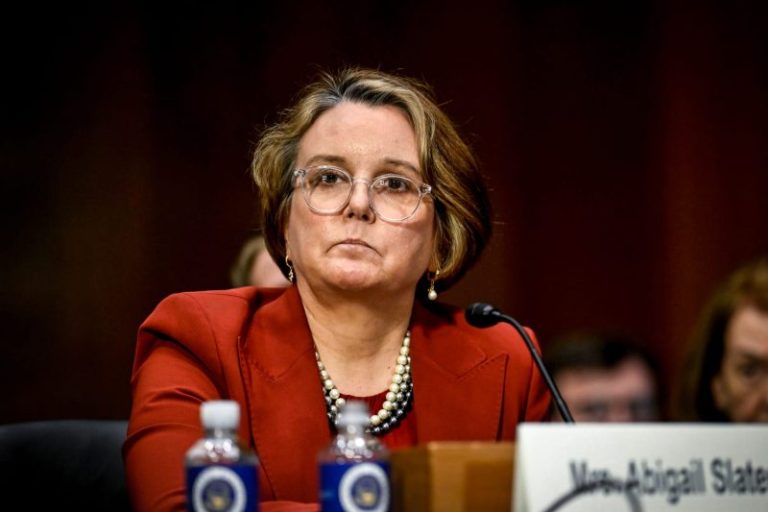
The head of the Justice Department’s antitrust unit said Thursday she is leaving the role, effective immediately, at a critical moment for corporate mergers in America.

Gail Slater, the assistant attorney general in charge of the Antitrust Division, wrote on X: ‘It is with great sadness and abiding hope that I leave my role as AAG for Antitrust today.’

Slater continued, ‘It was indeed the honor of a lifetime to serve in this role. Huge thanks to all who supported me this past year, most especially the men and women of’ the Department.

The White House referred questions to the Justice Department.

Attorney General Pam Bondi said in a statement, “On behalf of the Department of Justice, we thank Gail Slater for her service to the Antitrust Division which works to protect consumers, promote affordability, and expand economic opportunity.”

Slater is leaving just as media giants Netflix and Paramount Skydance battle for control of Warner Bros. Discovery.

President Donald Trump had said he was going to get involved in reviewing whichever Warner Bros. deal proceeds, an uncommon occurrence in antitrust matters.

But in an interview with NBC News, Trump slightly changed his tune. ‘I’ve been called by both sides, it’s the two sides, but I’ve decided I shouldn’t be involved,’ he said.

‘The Justice Department will handle it.’

Trump has met with executives from both of Warner Bros.’ bidders.

The Justice Department will also head to court in weeks in a bid to challenge concert venue manager Live Nation’s ownership of Ticketmaster.

Shares of Live Nation jumped as much as 5.8% after Slater announced her departure. By 1 p.m. ET, the rally had abated to around 2.5%.

When the Senate confirmed Slater, 78 senators from both sides of the aisle voted in her favor. Only 19 opposed her confirmation.

This week, her deputy in the Antitrust Division also departed.

Mark Hamer, deputy assistant attorney general for the Antitrust Division, wrote on LinkedIn, ‘Decided the time is right for me to return to private practice.’ He praised Slater as a ‘leader of exceptional wisdom, strength and integrity.’

This post appeared first on NBC NEWS

Keith Weiner, founder and CEO of Monetary Metals, shares his outlook for gold and silver in 2026, saying that while he expects higher prices there will be volatility.

He also outlines his thoughts on the role of precious metals in the monetary system.

Securities Disclosure: I, Charlotte McLeod, hold no direct investment interest in any company mentioned in this article.

This post appeared first on investingnews.com

We also break down next week’s catalysts to watch to help you prepare for the week ahead.

In this article:

    This week’s tech sector performance

    The Nasdaq Composite (INDEXNASDAQ:.IXIC) ended in the green on Monday (February 9) despite a weaker open.

    A rally in tech companies drove US stocks higher ahead of an economic data release, while Asian indexes also rose, led upward by Japan’s tech‑heavy Nikkei 225 (INDEXNIKKEI:NI225).

    It hit new record highs after Prime Minister Sanae Takaichi’s Liberal Democratic Party secured a landslide victory in the Lower House, clearing the path for tax cuts and higher defense spending.

    Tax planning and wealth management stocks fell on Tuesday (February 10) after financial software provider Altruist unveiled an artificial intelligence (AI) tool for creating tax strategies, echoing last week’s selloff in legal software stocks following the debut of a lawyer-focused AI platform.

    Broader tech‑driven weakness and softer‑than‑expected retail‑sales data dragged the Nasdaq down in Tuesday’s session. The index rose again on Wednesday (February 11) after January data showed labor market stability, potentially allowing the US Federal Reserve to keep interest rates steady as it monitors inflation.

    Software stocks resumed their slide, with Alphabet (NASDAQ:GOOGL) at one point down more than 2 percent, Microsoft (NASDAQ:MSFT) falling over 2.5 percent and Amazon (NASDAQ:AMZN) slipping about 1 percent.

    Personal computer makers also fell after Lenovo Group (HKEX:0992,OTCPL:LNVGF) warned of shipment pressure from a memory chip shortage. HP (NYSE:HPQ) and Dell Technologies (NYSE:DELL) each lost about 4.5 percent.

    After a muted close, investors turned their AI disruption fears to yet another corner of the market on Thursday (February 12). This time, it was logistics and trucking stocks, which plummeted after AI logistics firm Algorhythm Holdings (NASDAQ:RIME) said it has scaled freight volumes by 300 to 400 percent without increasing headcount.

    This event showed traders that AI is now affecting sectors previously thought to be resistant to automation and AI‑driven efficiency gains, leading to selloffs that also spilled into real estate and drug distribution.

    All three major indexes closed lower, with the Nasdaq hit hardest.

    A softer-than-expected US consumer price index report released on Friday (February 13) morning reinforced beliefs that the Fed is likely to cut interest rates this year, while global concerns about potential AI-driven disruptions kept investors cautious. European and Asian indexes lost ground, tracking Wall Street’s losses.

    While the S&P 500 (INDEXSP:.INX) closed slightly ahead on the day, mega-cap tech stocks dragged on the Nasdaq, which closed the week 1.77 percent below Monday’s open.

    3 tech stocks moving markets this week

    1.Cloudflare (NYSE:NET)

    Cybersecurity firm Cloudflare saw its share price surge after its sales guidance for the current quarter exceeded expectations. Shares closed 13.07 percent higher for the week.

    2. Applied Materials (NASDAQ:AMAT)

    Applied Materials, a provider of materials engineering solutions for the semiconductor sector, saw its share price rise sharply after reporting better-than-forecast quarterly financial results. Shares advanced 10.05 percent.

    3. Taiwan Semiconductor Manufacturing Company (NYSE:TSM)

    Taiwan Semiconductor Manufacturing Company rose after D.A. Davidson analyst Gil Luria gave it a ‘buy’ rating with a US$450 price target and called it a top AI foundry name. Shares advanced 5.02 percent.

    Cloudflare, TSMC and Applied Materials performance, February 9 to 13, 2026.

    Chart via Google Finance.

    Top tech news of the week

        • Alphabet completed two bond sales this week, raising a combined total of nearly US$52 billion. On Monday, the company sold US$20 billion in US dollars, followed by a nearly US$32 billion multi‑currency bond sale in British pounds and Swiss francs completed within 24 hours on Tuesday.

                                    Tech ETF performance

                                    Tech exchange-traded funds (ETFs) track baskets of major tech stocks, meaning their performance helps investors gauge the overall performance of the niches they cover.

                                    This week, the iShares Semiconductor ETF (NASDAQ:SOXX) advanced by 2.56 percent, while the Invesco PHLX Semiconductor ETF (NASDAQ:SOXQ) advanced by 1.89 percent.

                                    The VanEck Semiconductor ETF (NASDAQ:SMH) also increased by 2.19 percent.

                                    Tech news to watch next week

                                    Tech stocks face a quieter earnings backdrop next week, with no mega‑cap AI giants reporting; instead, the sector will be trading on macro cues and any guidance hints from mid‑tier semis and software names.

                                    Key US data includes jobs‑related releases and consumer confidence surveys.

                                    Securities Disclosure: I, Meagen Seatter, hold no direct investment interest in any company mentioned in this article.

                                    This post appeared first on investingnews.com

                                    Rio Tinto (ASX:RIO,NYSE:RIO,LSE:RIO) and Glencore (LSE:GLEN,OTCPL:GLCNF) said they will no longer be pursuing a merger, with Rio Tinto noting that the combination of the businesses would not deliver value to its shareholders.

                                    Glencore responded to Rio Tinto by saying that under the terms of the proposal, the Rio Tinto executive group would retain both the chair and CEO roles, which would undervalue Glencore’s contribution to the combined company.

                                    The deal would have created the world’s largest mining company with a combined market cap of US$260 billion. While the collapse of the proposed merger is drawing headlines, it comes at an accelerated pace for mergers and acquisitions in the industry, as majors seek to replenish their project pipelines and mid-cap producers look to grow their businesses.

                                    Among other notable mergers still on the books is Anglo American’s (LSE:AAL,OTCQX:NGLOY) merger with Canada-based Teck Resources (TSX:TECK.A,TECK.B,NYSE:TECK). That deal is currently working its way through regulatory approvals, with the most recent update that it is heading toward antitrust clearance in Europe.

                                    On Wednesday (February 11), Indonesia’s resources ministry ordered Eramet (EPA:ERA,OTCPL:ERMAF) and its joint venture partners, Tsingshan Holding Group, to slash production at the world’s largest nickel mine.

                                    Under the new work and budget plan, PT Weda Bay Nickel has been granted an initial quota of 12 million metric tons, down from the 42 million metric tons it was allowed in 2025.

                                    Nickel has been elevated this year, trading as high as US$18,725 on February 2. Although prices have fallen since that high, the announcement gave nickel some momentum, pushing prices to US$17,720 per metric ton on the London Metal Exchange on Wednesday. Prices eased again on Thursday (February 12), but remain well above 2025 averages.

                                    For more on what’s moving markets this week, check out our top market news round-up.

                                    Markets and commodities react

                                    Canadian equity markets were mixed this week.

                                    The S&P/TSX Composite Index (INDEXTSI:OSPTX) gained 2.88 percent over the week to close Friday (February 13) at 33,073.71, while the S&P/TSX Venture Composite Index (INDEXTSI:JX) shed 0.48 percent to 991.99.

                                    The CSE Composite Index (CSE:CSECOMP) dropped 2.7 percent to 163.24

                                    The gold price was largely flat, losing just 0.07 percent to close at US$5,032.68 per ounce on Friday at 4:00 p.m. EST. The silver price fared worse, closing the week down 8.43 percent at US$76.92 on Friday.

                                    In base metals, the Comex copper price recorded a 2.35 percent decrease this week to US$5.83.

                                    The S&P Goldman Sachs Commodities Index (INDEXSP:SPGSCI) was down 0.13 percent to end Friday at 583.86.

                                    Top Canadian mining stocks this week

                                    How did mining stocks perform against this backdrop?

                                    Take a look at this week’s five best-performing Canadian mining stocks below.

                                    Stocks data for this article was retrieved at 4:00 p.m. EST on Friday using TradingView’s stock screener. Only companies trading on the TSX, TSXV and CSE with market caps greater than C$10 million are included. Mineral companies within the non-energy minerals, energy minerals, process industry and producer manufacturing sectors were considered.

                                    1. Trinity One Metals (TSXV:TOM)

                                    Weekly gain: 104.55 percent
                                    Market cap: C$12.83 million
                                    Share price: C$0.45

                                    Trinity One Metals is a silver exploration and development company with a portfolio of mineral projects, including the recently acquired Silver 1 project in Ecuador.

                                    The property consists of the Silver-1 mine concession, which covers an area of 3,108 hectares and lies within the same mineral belt as Lundin Gold’s (TSX:LUG,OTCQX:LUGDF) Fruta Del Norte mine. Past mining at the site occurred between 1989 and 1994 and included 3,600 meters of underground development, along with a historic resource of 200,000 to 700,000 metric tons of ore averaging 400 to 800 grams per metric ton (g/t) silver and 3 g/t gold.

                                    The company announced the closing of the property acquisition on February 4 for a total consideration of US$540,000. In the release, the company said it will work swiftly to confirm the historic resource to modern standards.

                                    The news was followed on Tuesday (February 10), when the company announced a C$3.3 million non-brokered private placement, which was upsized to C$5.3 million on Thursday. The company said it will use proceeds from the placement to advance exploration projects across its portfolio.

                                    2. Cordoba Minerals (TSXV:CDB)

                                    Weekly gain: 74.68 percent
                                    Market cap: C$123.82 million
                                    Share price: C$1.38

                                    Cordoba Minerals is an explorer whose flagship project is Alacran in Colombia. The asset is a 50/50 joint venture with JCHX Mining Management (SHA:603979). The 20,000 hectare property hosts copper, gold and silver mineralization across five deposits: Alacran, Alacran North, Montiel East, Montiel West and Costa Azul.

                                    A feasibility study for the project released in February 2024 demonstrates an after-tax net present value of US$360 million with an internal rate of return of 23.8 percent and a payback period of three years.

                                    The resource estimate for the Alacran deposit and historical tailings shows an indicated resource of 99.46 million metric tons of ore with an average grade of 0.41 percent copper, 0.24 g/t gold and 2.65 g/t silver. Contained metal totals 904.53 million pounds of copper, 765,400 ounces of gold and 8.47 million ounces of silver.

                                    Following the completion of JCHX’s earn in for 50 percent of the project in July 2025, Cordoba said it had entered into a definitive agreement to sell its remaining 50 percent interest in Alacran.

                                    However, on January 2, the company reported that not all conditions for the sale had been met, and on Tuesday, announced that it had entered into an amended agreement.

                                    Under the new terms, the closing payment was increased to US$128 million from US$88 million, payable in a lump sum at closing. The release states that the bulk of the cash payment will be distributed to shareholders after settling liabilities and obligations, with the company retaining US$10 million for corporate purposes.

                                    3. Rio Silver (TSXV:RYO)

                                    Weekly gain: 52.38 percent
                                    Market cap: C$23.74 million
                                    Share price: C$0.64

                                    Rio Silver is an exploration company advancing its Maria Norte project in Peru.

                                    The property has changed hands several times in the 18 years prior to Rio’s acquisition in March 2025, but has seen little exploration during that time. However, in a February 5 release, the company notes that historic mining occurred at the site due to the presence of a reclaimed waste dump. The property covers the western portion of the Tangana West vein system, and although it has not yet completed an economic assessment for the property. In the announcement, the company said it plans to advance surface mapping and sampling in the third quarter of 2026.

                                    Throughout January, the company made several announcements regarding its exploration and development timeline. On January 6, the company reported results from technical work at the site, confirming the presence of silver mineralization with grades up to 991 g/t in a 0.7-meter channel sample.

                                    The company also announced on January 29 that it was launching a metallurgical program at the site, which it said will assist the company in determining the project’s potential value.

                                    4. Barksdale Resources (TSXV:BRO)

                                    Weekly gain: 48.15 percent
                                    Market cap: C$28.04 million
                                    Share price: C$0.2

                                    Barksdale Resources is a copper explorer focused on advancing its Sunnyside asset in Arizona, US. The property covers approximately 21 square kilometers, south of Tucson, Arizona. It hosts an intrusive complex that the firm believes to be an extension of the copper-zinc-lead-silver system found at South32’s (ASX:S32,OTCPL:SOUHY) Taylor deposit.

                                    In 2025, the company achieved several milestones under its earn-in agreement and completed the initial 51 percent in September following a C$1 million cash payment. Prior to the payment in June, Barksdale said it would work toward increasing its interest in the property to 67.5 percent.

                                    On January 21, the company announced plans to raise C$5 million to fund a Phase 2 drill plan required to increase its ownership stake in the Sunnyside project.

                                    On Wednesday, Barksdale announced the opening of an additional private placement to raise C$930,000. Funds raised from this round will also be used to fund exploration activities at Sunnyside.

                                    5. Pirate Gold (TSXV:YARR)

                                    Weekly gain: 48 percent
                                    Market cap: C$129.48 million
                                    Share price: C$0.37

                                    Formerly Sokoman Minerals, Pirate Gold is a discovery-oriented company with a portfolio of gold projects and one of the largest land positions in Newfoundland and Labrador, Canada.

                                    It also owns a 40 percent stake in the Killick lithium project, a 40/40/20 joint venture with Benton Resources (TSXV:BEX,OTCPL:BNTRF) and Piedmont Lithium.

                                    In October, the company combined its Moosehead and Crippleback claims to form the Treasure Island project, which hosts the largest mineral license and longest strike length along the Valentine Lake fault.

                                    Along with new claims, Pirate Gold’s land holdings in the area cover approximately 58,775 hectares and host multiple untested anomalies identified through historic data and exploration efforts by Pirate Gold.

                                    On Friday, Pirate Gold announced the initiation of project-scale surveys at Treasure Island, as well as the advancement of a 50,000 meter drill program, with two rigs mobilized to the site.

                                    Additionally, the company also said it had received drill permits to operate at the Crippleback Lake and Stony Lake areas, which would allow it to extend its exploration beyond the current footprint at Moosehead and test other high-priority targets along the fault zone.

                                    FAQs for Canadian mining stocks

                                    What is the difference between the TSX and TSXV?

                                    The TSX, or Toronto Stock Exchange, is used by senior companies with larger market caps, and the TSXV, or TSX Venture Exchange, is used by smaller-cap companies. Companies listed on the TSXV can graduate to the senior exchange.

                                    How many mining companies are listed on the TSX and TSXV?

                                    As of December 2025, 898 mining companies and 71 oil and gas companies are listed on the TSXV, combining for more than 60 percent of the 1,531 total companies listed on the exchange.

                                    As for the TSX, it is home to 175 mining companies and 51 oil and gas companies. The exchange has 2,089 companies listed on it in total.

                                    Together, the TSX and TSXV host around 40 percent of the world’s public mining companies.

                                    How much does it cost to list on the TSXV?

                                    There are a variety of different fees that companies must pay to list on the TSXV, and according to the exchange, they can vary based on the transaction’s nature and complexity. The listing fee alone will most likely cost between C$10,000 to C$70,000. Accounting and auditing fees could rack up between C$25,000 and C$100,000, while legal fees are expected to be over C$75,000 and an underwriters’ commission may hit up to 12 percent.

                                    The exchange lists a handful of other fees and expenses companies can expect, including but not limited to security commission and transfer agency fees, investor relations costs and director and officer liability insurance.

                                    These are all just for the initial listing, of course. There are ongoing expenses once companies are trading, such as sustaining fees and additional listing fees, plus the costs associated with filing regular reports.

                                    How do you trade on the TSXV?

                                    Investors can trade on the TSXV the way they would trade stocks on any exchange. This means they can use a stock broker or an individual investment account to buy and sell shares of TSXV-listed companies during the exchange’s trading hours.

                                    Article by Dean Belder; FAQs by Lauren Kelly.

                                    Securities Disclosure: I, Dean Belder, hold no direct investment interest in any company mentioned in this article.

                                    Securities Disclosure: I, Lauren Kelly, hold no direct investment interest in any company mentioned in this article.

                                    This post appeared first on investingnews.com

                                    More than three decades after diamonds transformed Canada’s Northwest Territories (NWT) into a global mining powerhouse, the industry that once defined the region’s modern economy is facing a painful reckoning.

                                    While governments and investors have spent the past several years focused on critical minerals and battery metals, the NWT’s diamond mines are grappling with falling prices, lab-grown competition, tariff disruptions and mounting financial strain.

                                    With one major mine set to close within weeks and others under pressure, leaders across the North are asking a seemingly once unthinkable question: what comes after diamonds?

                                    From staking rush to global player

                                    The modern diamond era in the NWT began in November 1991, when geologists Chuck Fipke and Stewart Blusson discovered 81 small diamonds at Lac de Gras. The find triggered the largest diamond staking rush in North American history and led to the development of the EKATI Diamond Mine, Canada’s first.

                                    By 2004, more than 28 million hectares across the NWT and Nunavut had been staked. Canada rose to become the world’s third-largest diamond producer by value, behind Botswana and Russia, largely on the strength of the NWT’s output.

                                    For decades, the sector generated thousands of high-paying jobs and helped build Indigenous-owned businesses across the territory. At its peak, more than 3,000 Indigenous workers were employed at the region’s three diamond mines.

                                    Today, that foundation is starting to show cracks.

                                    All pressure, no diamonds

                                    Rio Tinto’s (ASX:RIO,NYSE:RIO,LSE:RIO) Diavik mine, one of the pillars of the industry, is scheduled to close next month.

                                    Although the company recently unveiled a rare 158.2-carat yellow diamond from the site last year, described by COO Matt Breen as a “miracle of nature,” the symbolic discovery cannot reverse the mine’s finite life.

                                    In addition, De Beers ( a subsidiary of Anglo American (LSE:AAL,OTCQX:NGLOY)) and Mountain Province Diamonds’ (TSX: MPVD,OTC:MPVD) Gahcho Kué mine has paused a project that would have extended operations from 2027 to 2030, raising concerns about its longevity.

                                    Meanwhile, EKATI, owned by Australia’s Burgundy Diamond Mines (ASX:BDM), is battling financial distress after diamond prices fell at least 20 percent following its acquisition of the asset.

                                    In the legislature this week, Monfwi MLA Jane Weyallon Armstrong warned of the consequences.

                                    “The closure of Diavik and Gahcho Kué will have a significant impact on Tłı̨chǫ communities and today, the GNWT has no meaningful alternative,” she said.

                                    Premier R.J. Simpson acknowledged the challenge. “We’re at a point now where we know the diamond mines are winding down, and the question has been: ‘OK, well, what’s next?’” he said in a recent interview.

                                    Market headwinds multiply

                                    The industry’s struggles are not simply a matter of geology. Natural diamond prices have been under sustained pressure, battered by several macroeconomic forces converging at once.

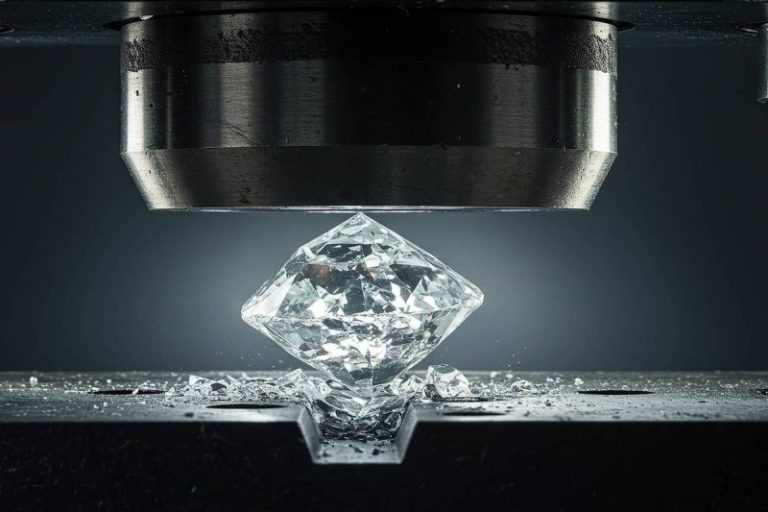
                                    For instance, lab-grown diamonds—chemically identical to natural stones and available at a fraction of the price—have rapidly gained acceptance among consumers. What was once a niche product is now mainstream, particularly among younger buyers drawn to lower costs.

                                    Canadian diamonds long marketed themselves as ethical alternatives to so-called “blood diamonds.” But synthetic stones can make similar claims, weakening one of the natural industry’s key selling points.

                                    Luxury spending has also softened, and new trade barriers have added further strain. A 50 percent US tariff on Indian imports has disrupted the global polishing pipeline, since most rough diamonds are cut and finished in India before being sold into the US market.

                                    The owner of EKATI has linked its financial difficulties in part to those tariffs, as well as to the broader collapse in natural diamond prices. The company recently received a C$115 million federal loan under a facility designed to assist businesses affected by US trade disruptions.

                                    Even so, EKATI suspended parts of its operations last year and has faced criticism from workers over layoffs and severance payments. Burgundy has publicly acknowledged serious financial problems and indicated it may need additional funding if prices fail to recover.

                                    At Gahcho Kué, Mountain Province Diamonds is navigating its own funding challenges. Acting president and CEO Jonathan Comerford said the company’s difficulties reflect “the prolonged weakness in the diamond sector.”

                                    “In this environment, our focus remains on carefully managing costs, protecting liquidity, and making measured decisions to support the long-term sustainability of our operations,” Comerford said.

                                    The company has received in-kind funding notices from joint-venture partner De Beers totalling approximately C$49.2 million related to unpaid cash calls.

                                    Political pressure builds

                                    Territorial leaders are also under growing pressure to respond.

                                    Minister of Industry Caitlin Cleveland described the Gahcho Kué announcement as “serious news for the Northwest Territories.”

                                    “Prices are weak, costs are high, and companies are having to make difficult calls,” Cleveland said in a recent statement. She emphasized that while the GNWT cannot control global markets, it will work to ensure worker supports are accessible and employers meet labour standards if job impacts occur.

                                    But some structural issues are harder to address. Yellowknife North MLA Shauna Morgan questioned how the government can enforce socio-economic commitments made by mining companies when they established operations.

                                    Simpson conceded that those agreements lack enforcement clauses such as fines.

                                    “This is about building relationships and ensuring that we’re staying on top of this,” he said.

                                    Meanwhile, calls for diversification are growing louder. “This announcement also reinforces a broader reality for our territory: our economic base remains too dependent on a single commodity,” Cleveland said.

                                    Searching for the next chapter

                                    There are hopes that critical minerals could help fill the gap. Exploration for rare earths and other strategic metals is increasing, reflecting global demand tied to electrification and defense technologies.

                                    Weyallon Armstrong has argued that infrastructure, including expanded road connections from the Tłı̨chǫ region, could unlock new development corridors.

                                    “We may not have a Ring of Fire, but we could have a frosty circle,” she said, referencing Ontario’s mineral-rich region.

                                    Yet even optimistic observers acknowledge that no single project is likely to replicate the scale and stability diamonds once provided. For community leaders, the uncertainty is deeply personal.

                                    “It’s kind of a scary situation,” Chief Fred Sangris of the Yellowknife Ndilo community of the Dene First Nation told the New York Times last year. “Where do we go from here? What’s the next project?”

                                    Diamonds have long symbolized permanence. In the Northwest Territories, especially this Valentine’s season where icons of everlasting love dominate the market, that symbolism now feels more strained than ever.

                                    Securities Disclosure: I, Giann Liguid, hold no direct investment interest in any company mentioned in this article.

                                    This post appeared first on investingnews.com

                                    Valentine’s Day has a funny way of bringing toxic relationships to light.

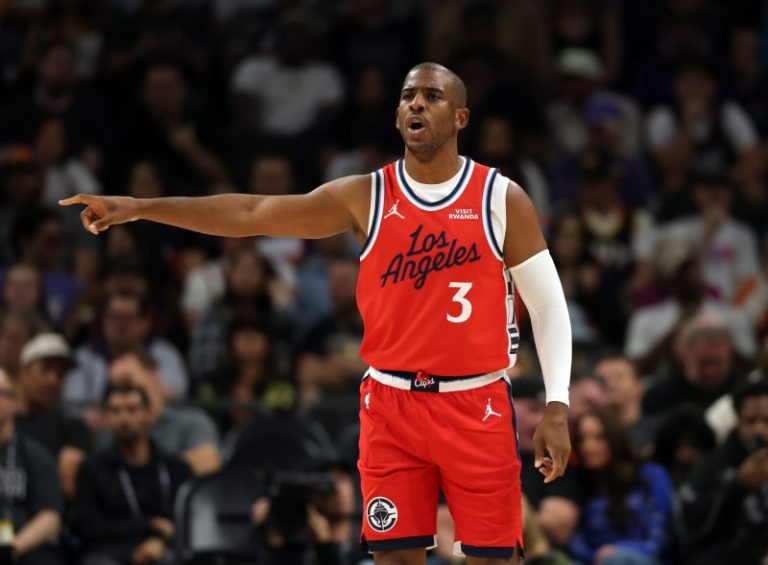
                                    After Chris Paul announcement his retirement from the NBA on Feb. 13 following his release from the Raptors, scuttling his initial plan to retire after the season, the team that arguably expedited his retirement shared a thank you video on social media. The Clippers, the team whose jersey many fans will associate Paul with in the annals of NBA history, shared a post on X (formerly known as Twitter) after they effectively booted him from the team in December.

                                    The thank you video from the team, posted after midnight ET, features a voiceover from Paul talking about his dreams for the Clippers cut in with some of his highlights, and ends with the words ‘FOREVER A LEGEND. THANK YOU, CP3.’

                                    Paul, of course, established himself as a franchise icon as part of the Lob City Clippers alongside Blake Griffin and DeAndre Jordan. But what was meant to be his swan song was cut short when he was effectively sent home from the team Dec. 3. At the time, president of basketball operations Lawrence Frank said in a statement:

                                    ‘Chris is a legendary Clipper who has had a historic career. I want to make one thing very clear. No one is blaming Chris for our underperformance. I accept responsibility for the record we have right now. There are a lot of reasons why we’ve struggled. We’re grateful for the impact Chris has made on the franchise.’

                                    It was later reported by ESPN’s Shams Charania Paul wasn’t on speaking terms with Clippers coach Tyronn Lue ahead of the ousting.

                                    Paul was traded to the Raptors with the Brooklyn Nets as a third trade partner on Feb. 5 ahead of the NBA trade deadline. After he was waived by Toronto on Feb. 13, he announced his retirement at 40 years old and after 21 seasons.

                                    This post appeared first on USA TODAY
                                    MILAN — An Olympic gold was in sight for the ‘Quad God.’ After his short program, something catastrophic would have had to happen for Ilia Malinin not to medal.

                                    And that’s exactly what happened.

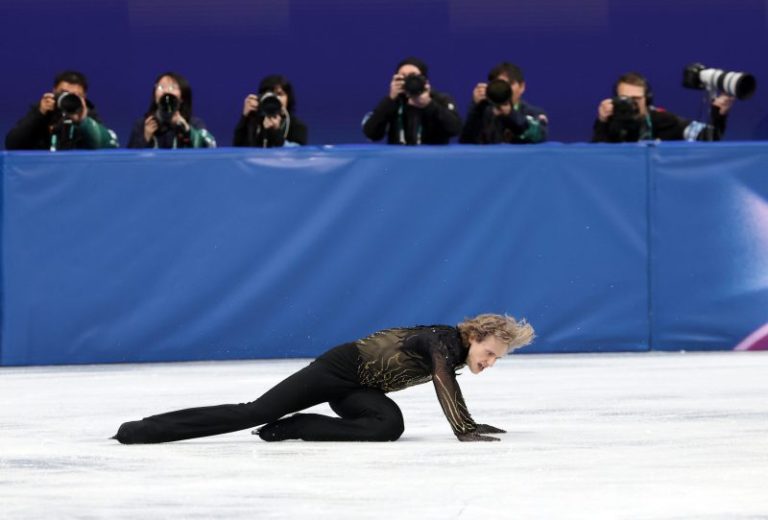
                                    Malinin fell twice and did not fully complete other elements of his typically unbeatable routine, finishing the men’s singles event at the 2026 Winter Olympics with a total score of 264.49 for eighth place overall.

                                    Mikhail Shaidorov (Kazakhstan) won the gold medal with a 291.58 total score, and Malinin congratulated him after. Silver and bronze went to a pair of skaters from Japan Yuma Kagiyama (280.06) and Shun Sato (274.90).

                                    ‘I blew it,’ Malinin said on the broadcast after the event. ‘That’s honestly the first thing that came to my mind, there’s no way that just happened. I was preparing the whole season, I felt so confident with my programs, so confident with everything. That happened. I have no words, honestly.’

                                    Watch Ilia Malinin Olympics video on Peacock

                                    The 21-year-old Malinin sat in first place — by a comfortable margin of five points — entering the free skate, but was among the many skaters who struggled to stay upright on the ice on Friday, Feb. 13 in Milan.

                                    ‘I felt really good this whole day, going really solid, and I just thought that I all I needed to do was go out there and trust the process that I’ve always been doing with every competition,’ he said. ‘But of course, it’s not like any other competitions, it’s the Olympics.”

                                    What happened to Ilia Malinin?

                                    The 21-year-old scored a 156.33 in his disastrous free skate, finishing in eighth place with a total score of 264.49. It’s the first event he’s lost since November 2023, and the first time he didn’t finish in the top three at a competition since March 2022. He didn’t land a single quad Axel the entire competition.

                                    ‘I was not expecting that. I felt like going into this competition, I was so ready,’ he said. ‘I just felt ready getting on the ice, but I think maybe that have been the reason that maybe I was too confident that I was (going to) go well. It honestly just happened. I can’t process what just happened. It happens.’

                                    ‘I think it was definitely mental. Just now experiencing that Olympic atmosphere, it’s crazy. It’s not like any other competition. It’s really different.’

                                    Breaking down Ilia Malinin’s free skate, jump by jump

                                    Here’s a breakdown of every element from Ilia Malinin’s free skate program, looking at what was planned and what actually happened.

                                    Ilia Malinin free skate video

                                    NBC broadcasts the Olympics and has replays of every event on TV, Peacock and the full video of Malinin’s routine is already on YouTube.

                                    Ilia Malinin 8th place finish

                                    Malinin finished in eight place finish in the men’s singles figure skating competition at the Olympics. It’s the first event he’s lost since November 2023, and the first time he didn’t finish in the top three at a competition since March 2022.

                                    What Ilia Malinin said on hot mic

                                    As Ilia Malinin sat in the Kiss-and-Cry section, waiting for his free skate score to be read out after his terrible performance at the 2026 Winter Olympics, he was caught on a hot mic talking about how things would have been different had he gone to the 2022 Beijing Games.

                                    ‘Beijing, I would not have skated like that,’ he was heard saying. Then, NBC commentator Johnny Weir told viewers what he said: That he would not have skated so terribly had he already had Olympic experience under his belt. 

                                    Malinin could be heard saying: ‘It’s not easy.’ The 21-year-old was later asked about the comment.

                                    ‘I think if I went to ’22, then I would have had more experience and know how to handle this Olympic environment,’ he said. ‘But also, I don’t know what the next stages of my life would look like if I went there.’

                                    Mikhail Shaidorov wins figure skating gold

                                    Ilia Malinin congratulates Mikhail Shaidorov

                                    Men’s singles figure skating results

                                    1. Mikhail Shaidorov (Kazakhstan): 291.58 total score, 198.64 free skate, 92.94 short program.
                                    2. Yuma Kagiyama (Japan): 280.06 total score, 176.99 free skate, 103.07 short program.
                                    3. Shun Sato (Japan): 274.90 total score, 186.20 free skate, 88.70 short program.
                                    4. Junhwan Cha (Korea): 273.92 total score, 181.20 free skate, 92.72 short program.
                                    5. Stephen Gogolev (Canada): 273.79 total score, 186.37 free skate, 87.42 short program.
                                    6. Petr Gumennik (Neutral Athlete): 271.21 total score, 184.49 free skate, 86.72 short program.
                                    7. Adam Siao Him Fa (France): 269.27 total score, 166.72 free skate, 102.55 short program.
                                    8. Ilia Malinin (United States): 264.49 total score, 156.33 free skate, 108.16 short program.
                                    9. Daniel Grassl (Italy):263.71 total score, 170.25 free skate, 93.46 short program.
                                    10. Nika Egadze (Georgia): 260.27 total score, 175.16 free skate, 85.11 short program.
                                    11. Kevin Aymoz (France): 259.94 total score, 167.30 free skate, 92.64 short program.
                                    12. Andrew Torgashev (United States): 259.06 total score, 170.12 free skate, 88.94 short program.
                                    13. Kao Miura (Japan): 246.88 total score, 170.11 free skate, 76.77 short program.
                                    14. Lukas Britschigi (Switzerland): 246.64 total score, 165.77 free skate, 80.87 short program.
                                    15. Matteo Rizzo (Italy): 243.18 total score, 158.88 free skate, 84.30 short program.
                                    16. Aleksandr Selevko (Estonia): 236.82 total score, 154.80 free skate, 82.02 short program.
                                    17. Boyang Jin (China): 229.08 total score, 142.53 free skate, 86.55 short program.
                                    18. Deniss Vasiljevs (Latvia): 226.46 total score, 144.02 free skate, 82.44 short program.
                                    19. Kyrylo Marsak (Ukraine): 224.17 total score, 137.28 free skate, 86.89 short program.
                                    20. Maxim Naumov (United States): 223.36 total score, 137.71 free skate, 85.65 short program.
                                    21. Vladimir Samoilov (Poland): 222.25 total score, 144.68 free skate, 77.57 short program.
                                    22. Donovan Carrillo (Mexico): 219.06 total score, 143.50 free skate, 75.56 short program.
                                    23. Yu-Hsiang Li (Chinese Taipei): 214.33 total score, 141.92 free skate, 72.41 short program.
                                    24. Adam Hagara (Slovakia): 202.38 total score, 122.08 free skate, 80.30 short program.

                                    Simone Biles stops by figure skating

                                    Eleven-time Olympic medalist and seven-time Olympic gold medalist Simone Biles stopped by the Milano Ice Skating Arena on Friday night to watch ‘Quad God’ Ilia Malinin and the rest of the men’s singles figure skaters compete for Olympic hardware.

                                    Maxim Naumov’s free skate

                                    Despite the mixed performance, the crowd shared its love for the skater. He even earned a standing ovation from actor Jeff Goldblum, who is in the crowd at Milano Ice Skating Arena. He again shared the photo of him as a child with his parents.

                                    Here’s more about his backstory:

                                    After Naumov finished in fourth place at the 2025 U.S. figure skating championships for the third straight year, his father, Vadim, wanted to game plan.

                                    Vadim and Maxim’s mother, Evgenia Shishkova, were two-time Olympic pair skaters for Russia, and they knew Maxim’s upcoming year was critical with the 2026 Winter Olympics on the horizon.

                                    A few days later, Vadim and Shishkova were among the 67 people killed in the midair collision between American Airlines Flight 5342 and an Army helicopter near Washington, D.C. They were among the 28 figure skating coaches, young athletes and parents who were returning from a development camp. An unimaginable tragedy, and Naumov didn’t know if he could skate anymore.

                                    Read the full story from reporter Jordan Mendoza.

                                    Why is Ilia Malinin called the ‘Quad God’?

                                    Simply put, Ilia Malinin has the greatest array of jumps any figure skater in history has ever possessed. He’s launched himself into the air for seven quadruple jumps in a single long program at last month’s Grand Prix Final and was the first skater to land a quad Axel.

                                    Malinin’s username used to be Lutz God, but he changed it to Quad God after landing his first quad jump. 

                                    “i didn’t think much about it … Days go by and people started asking, ‘Why’d you name yourself Quad God, you only landed one jump,’’ he said on Milan Magic, USA TODAY’s new Olympics podcast that drops its first episode Saturday. ‘And then I was like, ‘Oh, OK maybe I should be come a Quad God.’ From there I found my rhythm of landing quad after quad after quad and then of course landing the first quad axel.”

                                    “In the most humble way possible, I think it’s definitely helped my confidence in not only to skating in general but just feeling like I deserve to be recognized as who I am.”

                                    What makes Ilia Malinin so great? Skaters marveled by the ‘Quad God’

                                    These are the few ways to describe Ilia Malinin, and none of them are an exaggeration. Every sport gets an athlete that redefines everything you know about it. Basketball had Michael Jordan. Football had Tom Brady. Baseball has Shohei Ohtani. 

                                    Now, figure skating has its phenom, and it’s not just fans that are amazed by the 21-year-old. Those who have championed the sport and been through the grind are just as flabbergasted by how he’s turned figure skating upside down.

                                    ‘All the skaters that I sit with in the audience, they throw up their hands, and they think, ‘Oh, my God, this guy’s just so amazing,’” 1988 Olympic champion Brian Boitano said on USA TODAY’s Milan Magic podcast.

                                    Now, the entire world has its chance to be the next spectators wowed at the 2026 Winter Olympics. It’s been a journey four years in the making, and in his Olympic debut, Malinin is out to show why he is the present and future of figure skating. 

                                    He already did it in the team event, and now it’s time for him to do it in the men’s singles to become the next great American figure skating champion.

                                    Figure skating Olympics schedule

                                    Here is the remaining figure skating schedule in Milan. All times Eastern.

                                    • Feb. 15, 1:45 p.m.: Pairs short program
                                    • Feb. 16, 2 p.m.: Pairs free skate
                                    • Feb. 17, 12:45 p.m.: Women’s short program
                                    • Feb. 19, 1 p.m.: Women’s free skate

                                    Ilia Malinin’s parents

                                    Malinin was born into figure skating. His mother, Tatiana Malinina, is from the Soviet Union, Siberia specifically, and competed at 10 consecutive world figure skating championships for Uzbekistan. She finished eighth at the 1998 Winter Olympics in Nagano, the competition in which Tara Lipinski won the gold medal and Michelle Kwan the silver. Malinina finished fourth at the 1999 world championships as well, and she also competed at the 2002 Salt Lake City Olympics, but withdrew after the short program with the flu.

                                    Malinin’s father, Roman Skorniakov, represented Uzbekistan at the same two Olympics, 1998 and 2002, finishing 19th both times. He and Malinina were married in 2000 and became skating coaches in the United States, moving to the Northern Virginia suburbs of Washington, D.C., where, in December 2004, Ilia was born. He took the Russian masculine form of his mother’s last name because his parents were concerned that Skorniakov was too difficult to pronounce. 

                                    Are backflips allowed in figure skating?

                                    They are now. For nearly 50 years, the backflip was banned in figure skating, after American skater Terry Kubicka became the first one to execute it at the 1976 Innsbruck Games. French skater Surya Bonaly did it at the 1998 Winter Olympics, landing it on one blade, but the move was illegal and she was deducted for it. 

                                    The International Skating Union reversed course and made the move legal in 2024, paving the way for it to be done at the 2026 Winter Olympics, 50 years after it was first done.

                                    Ilia Malinin backflip

                                    The ‘Quad God’ performed his first skate during the team event Saturday, Feb. 7, and he became the first skater since 1998 to perform a backflip at the Games, and the first since it was unbanned.

                                    Malinin closed his performance with the stunning move than wowed the crowd at the Milano Ice Skating Arena. However, Malinin finished second in the event with a score of 98.00 after Japan’s Yuma Kagiyama pulled off a stunning routine that received 108.67 points.

                                    Malinin then landed a backflip on one foot during his long program of the team event. Malinin was the first to pull off the one-foot move since French figure skater Surya Bonaly at the 1998 Nagano Winter Games. Bonaly landed it on one blade despite it being banned at the time and was deducted for it.

                                    Quad axel in figure skating

                                    Malinin is the only skater in history to achieve a quadruple axel in competition. That feat earned him the nickname ‘Quad God.’

                                    What is a quad axel though? Here’s a full explanation of Malinin’s iconic move. A quadruple axel requires four-and-a-half rotations in order to complete. It’s so difficult, in fact, that it was once considered impossible to perform.

                                    When did figure skating start in the Olympics?

                                    Figure skating first made its Olympic debut at the Summer Games in London in 1908 and made another appearance in Antwerp in 1920, before becoming a Winter Olympic staple at the inaugural 1924 Chamonix Winter Games with men’s singles, women’s singles and pair skating events. Ice dancing was added to the program at the 1976 Innsbruck Winter Olympics, and the team event was first contested at the 2014 Sochi Winter Olympics.

                                    How is figure skating scored?

                                    A figure skating routine is made up of two scores: Technical elements score and program components score. The technical elements score is exactly what it sounds like: It’s for the jumps, spins and step sequences in a performance. The program components score is made of up composition, presentation and skating skills.

                                    This post appeared first on USA TODAY