Author

admin

Browsing

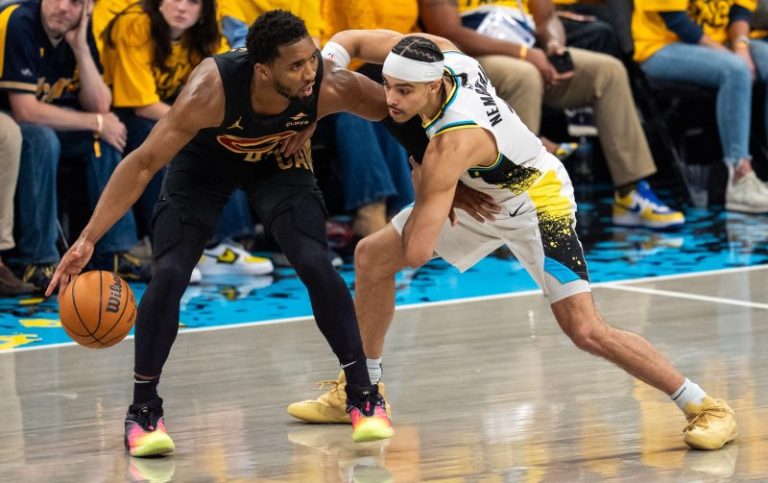
INDIANAPOLIS — Donovan Mitchell scored 43 points for a second consecutive 40-point outing, but this time it didn’t come in defeat as the Cavaliers beat the Pacers 126-104 in Game 3 of the Eastern Conference semifinals at Gainbridge Fieldhouse.

The Cavs trimmed the Pacers’ series lead to 2-1, avoiding the 3-0 deficit from which no NBA team has ever come back. Game 4 is 8 p.m. ET, Sunday at Gainbridge Fieldhouse. The Cavs’ win guarantees the series will go at least five games with Game 5 being in Cleveland.

Guard Max Strus had 20 points and seven assists for the Cavs. Center Jarrett Allen had 19 points and 12 rebounds. Forward Evan Mobley had 18 points and 13 rebounds. Bennedict Mathurin led the Pacers with 23 points. Forward Pascal Siakam added 18. Center Myles Turner added 15.

Here are three observations.

Donovan Mitchell, Evan Mobley refuse to allow Cavs to get swept

Mitchell gave the Cavs 48 points in a sensational performance in Game 2, but it still wasn’t enough for the Cavs to avoid a fourth-quarter collapse. He wasn’t about to let it happen again, and he also had more stars available to help him with Darius Garland, Evan Mobley and De’Andre Hunter all back after missing Game 2 with injury.

Mitchell, as he has been all series, was impossible to keep away from the rim without fouling. He scored 43 points on 14-of-29 shooting with much of that coming at the rim, but he also hit 5-of-13 3s. He was also 10-of-14 at the line and when he wasn’t scoring he was playmaking for others. He grabbed nine rebounds and also dished out five assists.

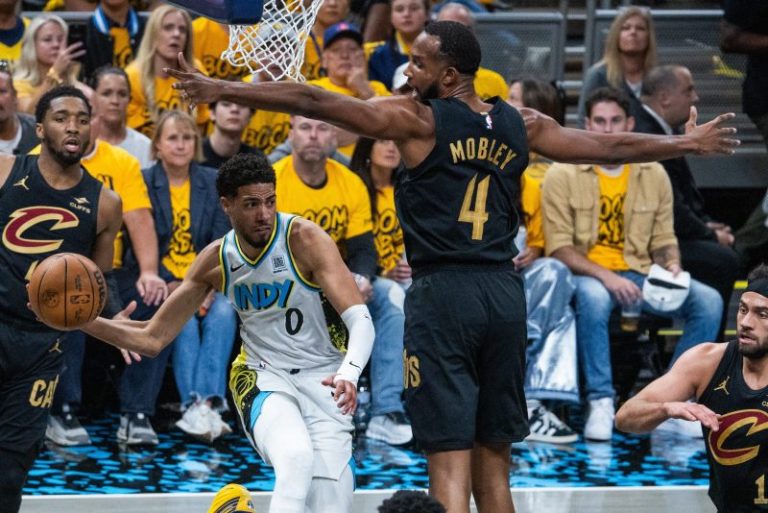
The Cavs had four other players in double figures but Mobley was the most important on both ends. He scored 18 points on 6-of-13 shooting but he was a bigger game-changer on the defensive end. The NBA’s Defensive Player of the Year grabbed 13 rebounds, including eight on defense, blocked three shots and registered three steals.

Pacers fall apart in second quarter

In three of the past four games, the Pacers have put together a truly awful offensive quarter in the first half to dig a hole for themselves. In Friday’s case it was the second quarter after a 13-point first quarter against the Bucks in Game 5 of the first round and a 15-point first quarter against the Cavs in Game 2.

The Pacers seemed totally flummoxed by the 3-2 zone the Cavs used, and Mobley personally blew up a lot of what the Pacers were trying to do. They lost the period 34-13 making just five of 22 field goals and missing all 11 of their 3-point shots. They managed five paint buckets in the period but that was almost all the offense they could muster.

Bennedict Mathurin brings another strong bench performance

In each game so far in this series, Mathurin has brought a spark to the Pacers when they absolutely had to have it and brought a sustained level of force on both ends.

The third-year wing broke the Pacers out of an early first-quarter funk with three buckets, including a pair of 3s. That helped the Pacers turn an 0-of-7 start from the field and a stretch where only Myles Turner could score points into a 32-point first quarter.

From there, Mathurin kept attacking the rim and kept drawing fouls and showed some shooting touch. He finished with 23 points on 6-of-11 shooting, including 3-of-8 from 3-point range and 8-of-9 from the line. He also caused Garland trouble on defense, getting him to pick up his fourth foul at a critical time.

Get IndyStar’s Pacers coverage sent directly to your inbox with the Pacers Update newsletter.

This post appeared first on USA TODAY

The defending champion Florida Panthers are back in their second-round series after downing the Toronto Maple Leafs 5-4 in overtime Friday.

Trade deadline acquisition Brad Marchand, a thorn in the Maple Leafs’ side during his Boston Bruins days, added a new chapter with his winning goal at 15:27 of overtime. It has his fourth career playoff overtime goal and also his 14th postseason game-winner, tops among active players.

The Panthers now trail the best-of-seven series 2-1 after coach Paul Maurice’s moves paid off.

He swapped out the entire fourth line, which provided energy and a goal. He also tweaked the top two lines, which were highly effective.

The Panthers still had to come back from 2-0 and 3-1 deficits to win. Sergei Bobrovsky, who looked shaky early, made several big saves in overtime in a game that was filled with lots of hits and fluky goals.

USA TODAY Sports provided live coverage for Game 3 between the Florida Panthers and Toronto Maple Leafs. Here are updates and highlights:

Panthers vs. Maple Leafs highlights

Panthers social media staff grateful for Marchand

Game 3 recap

Panthers-Maple Leafs final score: Brad Marchand wins it in overtime

Brad Marchand scores at 15:27 of overtime. After sustained pressure in the zone, Marchand skates toward the left faceoff circle and his shot hits something and deflects over Joseph Woll’s shoulder for a 5-4 win. The Panthers cut their series deficit to 2-1.

Another Sergei Bobrovsky save

Matthew Knies tracks down a loose puck, breaks in alone and Bobrovsky stops him.

Seven minutes left

Joseph Woll keeps the puck out as Panthers press. They’re scraping the ice with 6:56 left.

Big save by Sergei Bobrovsky

He stops William Nylander, who broke in after a long pass from the Leafs zone.

Overtime begins

Maple Leafs kill off the remaining 13 seconds of Max Pacioretty’s penalty.

Goal change

Jonah Gadjovich is awarded the goal originally given to Tomas Nosek. The puck defected off Gadjovich.

End of third period: Panthers 4, Maple Leafs 4

Morgan Rielly tied the game with a fluke goal in the third period. The Maple Leafs get some big blocks during a late Panthers power play and Sam Reinhart hits the post. We’re heading to overtime.

Maple Leafs hit crossbar

Game still tied.

Penalty missed

Morgan Rielly high-sticks Anton Lundell, but nothing is called.

Panthers-Maple Leafs score: Morgan Rielly scores on fluke play

He throws the puck at the end. Sergei Bobrovsky makes a blocker save and the puck goes off Panthers defenseman Seth Jones leg and into the net. Rielly had accidentally knocked the puck into his own net earlier in the game. Panthers 4, Maple Leafs 4

End of third period

This game has had several goals involving strange bounces and the Maple Leafs tie the game on one when Sergei Bobrovsky makes a blocker save and the puck goes off Panthers defenseman Seth Jones and into the net. Morgan Rielly got the goal. Both teams hit the post afterward and we’re going to overtime.

Panthers go on power play

Max Pacioretty is called for tripping Seth Jones. There’s 1:47 left in regulation. Sam Reinhart hits the post. Maple Leafs get some blocks and it’s heading to overtime. There will be 13 seconds left on the power play once overtime starts.

Midway through third period

More deliberate pace so far. Shots are 3-2 Toronto.

Third period underway

Goalie Joseph Woll was a near-giveaway early but recovers to stop Anton Lundell.

End of second period: Panthers 4, Maple Leafs 3

Toronto scores early and Florida controls like, just like the first period. The difference this time: Florida puts in three goals to take the lead. The Panthers led in shots, 9-4, and had another 20-plus hits in the period. The Maple Leafs led after two periods in the first two games of the series

Tomas Nosek slow to get up

Tomas Nosek, who scored the go-ahead goal, barrels into the net and is slow to get up. He starts heading to the dressing room but comes back to the bench.

Maple Leafs-Panthers score: Florida takes lead

Panthers coach Paul Maurice changed out his fourth line and the new one connects. Tomas Nosek takes a shot that deflects several times. He’s credited for now, his first goal of the playoffs. Fourth line looking good in this game. Panthers 4, Maple Leafs 3

Maple Leafs go on power play

Dmitry Kulikov holds Max Domi. Toronto already has a power-play goal in this game. Florida’s Brad Marchand gets the best chance. Penalty killed.

Maple Leafs-Panthers score: Carter Verhaeghe ties it up

Carter Verhaeghe has a wide-open net after a great pass from Sam Bennett. Two Florida goals in 64 seconds and we’re tied. Panthers 3, Maple Leafs 3

Maple Leafs-Panthers score: Florida scores weird goal

Brandon Carlo uses a broken stick to stop the puck from crossing the line. Sam Reinhart scores but it’s not clear that’s in until a replay shows the puck over the line. Maple Leafs 3, Panthers 2

Maple Leafs-Panthers score: John Tavares scores again

With the Maple Leafs on a power play, John Tavares tips a Mitch Marner point shot. It goes in off Panthers defenseman Gustav Forsling. Maple Leafs 3, Panthers 1

Second period underway

2-1 Toronto.

End of first period: Maple Leafs 2, Panthers 1

Florida got off to a disastrous start by giving up a Mathew Knies goal 23 seconds in, the Maple Leafs’ quickest playoff goal in 62 years. Toronto added another goal off the rush (Florida was too aggressive on the forecheck) before the game was six minutes old. But the Panthers started controlling play after and got an Aleksander Barkov goal (knocked in by Morgan Rielly). Shots are 12-10 Toronto. Florida has a huge edge in hits, 24-10.

Panthers back on power play

Max Domi called for roughing Carter Verhaeghe. But power play doesn’t last long. Verhaeghe is called for holding the stick. Before Florida can touch the puck, Mitch Marner is stopped on a short-handed breakaway. Florida kills off the abbreviate Toronto power play.

Panthers go on power play

Brandon Carlo in the penalty box for his hit on Matthew Tkachuk. Panthers get some looks, Sam Reinhart hits the post and Toronto kills it off.

Panthers-Maple Leafs score: Aleksander Barkov gets one back

Aleksander Barkov throws a hit, takes a Sam Reinhart pass and drives the net. Morgan Rielly accidentally puts it into his own net. Maple Leafs 2, Panthers 1

Panthers-Maple Leafs score: John Tavares doubles lead

Maple Leafs get a 3-on-2 break. John Tavares gets the puck and scores on a wraparound at 5:57. Sergei Bobrovsky can’t get back in time. Max Pacioretty and William Nylander continue their strong play by picking up the assists. Maple Leafs 2, Panthers 0

Panthers-Maple Leafs score: Toronto strikes early

Matthew Knies scores 23 seconds into the game. Not the start Florida wants. Knies knocks in a rebound after Mitch Marner’s shot hits the crossbar. Maple Leafs 1, Panthers 0

Game underway

Auston Matthews line vs. Aleksander Barkov line.

What time is Panthers vs. Maple Leafs?

Game 3 between the Florida Panthers and Toronto Maple Leafs will start at 7 p.m. ET on Friday, May 9, at Amerant Bank Arena in Sunrise, Florida.

How to watch Panthers vs. Maple Leafs playoff game: TV, stream

  • Date: Friday, May 9
  • Time: 7 p.m. ET
  • Location: Amerant Bank Arena in Sunrise, Florida
  • TV: TNT, truTV
  • Stream: Sling, Max

Panthers vs. Maple Leafs, Game 3

Panthers lineup change

According to the Panthers roster report, Tomas Nosek, A.J. Greer, Jonah Gadjovich are dressing for this game, replacing fourth-liners Mackie Samoskevich, Nico Sturm and Jesper Boqvist. Evan Rodrigues moves to the top line and Carter Verghaeghe goes to the second line.

Sergei Bobrovsky stats in second round

Panthers goalie Sergei Bobrovsky uncharacteristically has given up nine goals on 50 shots in the series.

‘Our confidence (in Bobrovsky) is never wavering,’ forward Sam Reinhart said. ‘We feel we’ve got the best goalie in the world back there. Our job is to make it as easy as possible for him. I think we can do a better job of that.’

This post appeared first on USA TODAY

Connor Hellebuyck made 21 saves to help the Winnipeg Jets even their Western Conference semifinal series against the Dallas Stars with a 4-0 win in Game 2 on Friday night.

Hellebuyck, the front-runner to win a third Vezina Trophy as the NHL’s top goalie and also also finalist for the Hart Trophy, has 49 shutouts in his career, including four in the postseason.

Game 3 in the best-of-seven series is scheduled for Sunday afternoon in Dallas.

Nikolaj Ehlers had two goals and an assist, Gabriel Vilardi and Adam Lowry also scored and Dylan DeMelo had two assists for the Jets, who won the Presidents’ Trophy for the best record during the regular season.

Jake Oettinger turned aside 21 shots for the Stars, who were coming off a 3-2 road victory in Game 1 on Wednesday.

Tyler Seguin was called for a double-minor high-sticking penalty on Josh Morrissey 17 seconds into the game, and Vilardi scored with 42 seconds left on the four-minor power play to give the Jets a 1-0 lead.

Ehlers took a shot that clipped off Oettinger’s skate, hit the post, came back and hit Oettinger’s skate blade and was heading back toward the goal line when Vilardi pushed it across.

Morrissey had missed Game 1 after sustaining an upper-body injury in Game 7 against the St. Louis Blues on Sunday.

The Jets scored again when a centering pass by Ehlers went off the skate of Dallas defenseman Esa Lindell and redirected into his own net, giving Winnipeg a 2-0 lead at 7:07 of the first.

The Jets extended the lead to 3-0 at 11:02 of the second.

A shot from the right point by DeMelo was deflected wide and caromed off the end boards and out the other side. Lowry was there to sweep the puck into the net from the bottom of the left circle before Oettinger could slide over.

Hellebuyck made two more Grade-A saves in the second period, a sprawling stop on Evgenii Dadonov at 14:16, followed by a left pad save on Jamie Benn off a rush at 15:32.

Hellebuyck led the NHL in wins (47), goals-against average (2.00) and shutouts (eight) during the regular season, and was second in save percentage (.925). However, he had struggled in the playoffs entering Game 2, owning a 4-4 mark,a 3.75 GAA and a .836 save percentage.

Ehlers scored into an empty net with 3:40 left to make it 4-0.

This post appeared first on USA TODAY

The 2025 NBA playoffs continued Friday with Game 3 between the Cleveland Cavaliers and Indiana Pacers. 

Donovan Mitchell’s 43-point performance guided the Cavaliers to a 126-104 rout over the Pacers and their first victory in the series. Indiana still holds a 2-1 lead with the road team winning each game in the series.

While Mitchell had a busy night, it was a fairly quiet night for Pacers star Tyrese Haliburton, who was limited to just four points.

Jarrett Allen (19 points and 12 rebounds) and Evan Mobley (18 points and 13 rebounds) produced double-doubles in the victory. Max Strus added 20 points.

The Pacers staged a remarkable comeback in Game 2, winning 120-119 when Haliburton made a last-second 3-pointer to sink the top-seeded Cavaliers. Bennedict Mathurin scored a team-high 23 points for Indiana.

Cavaliers vs. Pacers highlights

Final: Cavaliers 126, Pacers 104

End of third quarter: Cavaliers 97, Pacers 79

The Pacers outscored the Cavs 34-31 in the quarter after Indiana showed signs of life with an 11-2 run during a two-minute stretch in the third quarter. The Cavs were able to gain some momentum after Myles Turner left the game briefly.

Turner went back to the locker room with close to six minutes left in the quarter after a potential foot injury. Turner returned just minutes later after having his ankle retaped.

The Cavs have led by as many as 24 points through the first three quarters of play. The Pacers have not led at any point during the game.

End of second quarter: Cavaliers 66, Pacers 45

The Cavaliers outscored the Pacers 34-13 in the second quarter to take a comfortable lead into the locker room. Donovan Mitchell produced 17 points and five rebounds in the first half while Jarrett Allen and Max Strus finished with 13 points each.

Tyrese Haliburton went scoreless in the second quarter for the Pacers after scoring just two points in the first quarter.

The Pacers shot just 3-for-11 against the Cavaliers’ zone defense in the first half. All three shots came in the second quarter, according to ESPN.

End of first quarter: Cavaliers 32, Pacers 32

It was a roller coaster first quarter in Indianapolis.

The Cavaliers sprinted out to an 11-0 lead and pushed it to 19-5, but Indiana slowly crawled back throughout the frame and tied it up with under 5 seconds to play on a Ben Sheppard 3-pointer.

Myles Turner has a game-high 12 points for Indiana, and Bennedict Mathurin added eight off the bench. Evan Mobley and Max Strus led Cleveland with eight points apiece in the first.

What time is Cavaliers vs. Pacers Game 3?

Game 3 between the Cleveland Cavaliers and Indiana Pacers will tip at 7:30 p.m. ET on Friday at Gainbridge Fieldhouse in Indianapolis on Friday, May 9.

How to watch Cavaliers vs. Pacers Game 3: TV, stream

  • Time: 7:30 p.m. ET
  • Location: Gainbridge Fieldhouse (Indianapolis)
  • TV: ESPN
  • Stream: Fubo

Watch Cavaliers-Pacers Game 3 with Fubo

Cavaliers vs. Pacers NBA playoff schedule, results

(Pacers lead series, 2-0)

  • Game 1: Pacers 121, Cavaliers 112
  • Game 2: Pacers 120, Cavaliers 119
  • Game 3: Cavaliers at Pacers | Friday, 7:30 p.m. | ESPN, Fubo
  • Game 4: Cavaliers at Pacers | Sunday, May 11 | 8 p.m. | TNT, truTV, Max, Sling TV
  • Game 5: Pacers at Cavaliers | Tuesday, May 13 | TBD | TNT, truTV, Max, Sling TV*
  • Game 6: Cavaliers at Pacers | Thursday, May 15 | TBD | ESPN, Fubo*
  • Game 7: Pacers at Cavaliers | Sunday, May 18 | TBD | TBD*
This post appeared first on USA TODAY

PHOENIX — Clay Holmes was initially stunned, then numb and eventually, well, rather intrigued.

Here he was, a two-time All-Star closer with 307 career appearances in the bullpen, never pitching more than 70 innings in any of his eight seasons, and suddenly he’s being asked to make a dramatic career change.

He had one, then two, then three teams calling him this winter to inquire whether if he was interested in giving up his role as a reliever, and be converted into a starter.

Meanwhile, three other teams called and made him offers to remain as a closer or late-inning reliever.

Holmes, a free agent for the first time, not only had to decide where he wanted to play – but what he wanted to do.

He could continue closing and accept one of the offers guaranteeing him more than $40 million.

Or he could gamble, earn a bit less money as a starting pitcher and take on a role he hadn’t played since his rookie season in 2018.

Holmes, 32, bet on himself.

He signed a three-year, $38 million contract with the New York Mets, believing he could potentially go where no pitcher has gone since Hall of Famer John Smoltz.

Holmes, who grew up in Georgia as a huge fan of the Atlanta legend, could become the only active player to be an All-Star as both a reliever and starting pitcher.

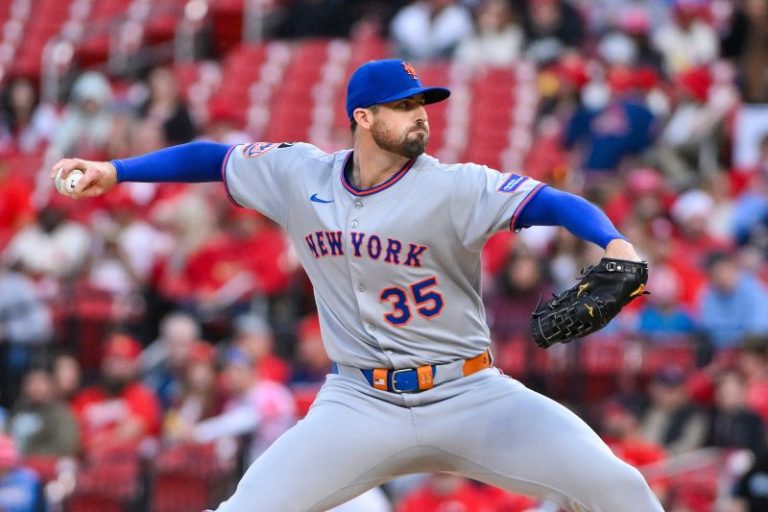
Holmes, who starts Friday in a first-place matchup against the Chicago Cubs at Citi Field in New York, is putting himself in the All-Star conversation with a 4-1 record and 2.95 ERA. He not only has been one of baseball’s biggest surprises, but also invaluable to the Mets this season, who have been without veteran starters Frankie Montas and Sean Manaea.

“I definitely went into the offseason not expecting to be a starter,’ Holmes told USA TODAY Sports. “I mean, it wasn’t like the World Series ended and I went out seeking to be a starter. It was nothing I thought about.

“Then a couple of weeks later, my agent came to me and said there’s a couple of teams that are throwing out the idea, and were gauging my interest. I started thinking about it, and said, ‘Hey, why not? Let’s see what’s out there.’ ‘

‘Sense of desire from the Mets’

The Mets weren’t the first team to express interest in Holmes as a starter, said B.B. Abbott, Holmes’ agent, but they were the most convincing. They showed how their analytical studies proved it will work. Holmes was also familiar with manager Carlos Mendoza and assistant pitching coach Desi Druschel, his former Yankee coaches. And he loves playing in New York.

“They did a good job laying it all out for him,’ Abbott said. “They saw his pitches. They had the analytic guys talk to him. Ultimately, it down to the familiarity of the staff, the way they were going to utilize him, the comfort of New York, and being on a winning team.’

The Yankees, who helped develop Holmes into one of the game’s top closers, never once did brought up the idea of Holmes becoming a starter. They were lightly engaged in talks with him in the offseason about a possible return, but strictly as a reliever.

“I mean, there were jokes about it last year,’ Holmes said, “but that was it. I started throwing a change-up in bullpen sessions, and before you knew it, I was throwing five [different] pitches down there. There would be jokes about it, like ‘man, you should be starting with all of these pitches,’ but it was nothing more than a joke.

“But when the idea came up in the offseason, it really got my the wheel turning, like, I know I can do this. I can expand my arsenal.’

Abbott knew that Holmes was taking the idea seriously and by the time it was ready to make a decision, Holmes was informed he could make more money remaining as a closer, but the challenge burned inside him.

“Clay has always been very analytical, very intelligent, and he grasps the analytic side of pitching,’ Abbott said. “He always talked about stuff he was working on. So, it didn’t surprise me, honestly. What surprised me was how many teams were along for the ride. Some teams weren’t even interested in signing him but were asking questions, ‘Hey, did you ever think about starting?’

“Well, he had some curiosities in the back of his mind, but it sure wasn’t anything we discussed. He’s just a guy who loves to be intellectually and physically challenged.’

The Mets ultimately proposed that challenge, and Holmes was ready to embrace it, intrigued by Mets president David Stearns and the coaching staff’s plans for him.

“I felt like there was a real sense of desire from the Mets,’ Holmes said. “Stearns asked me a lot of questions, and there was a real belief that I could not only be just a starter, but a really good starting pitcher. I think that goes a long way, and obviously just a desire to win and what they’re trying to build here with the Mets.

“They really just drew me in, and it felt right.’

‘He had the weapons’

Still, despite all of the analytics and belief by the Mets that it could be possible, Holmes’ conversion was a surprise move for a team vying to win its first World Series title since 1986.

“I remember when we first signed him,’ Mets reliever Ryne Stanek said, “and I was like, ‘Oh, that’s cool. That’s a good deal. He’s going to really help our bullpen.’ But then when I heard he was going into the rotation, I sure didn’t see that coming.

“And when I saw him in spring training, I thought, ‘You know, if there’s someone that can do it, it’s him. He’s just such a good pitcher, and he’s been in those tight ballgames in big environments. If things get a little hairy, he can go out and do it.’

Said Mets All-Star right fielder Juan Soto, who played for the Yankees last season: “I never thought about him being a starter. Never. I mean, I knew he worked hard every day, but to go from throwing one inning to being a starter, that’s tough. What he’s doing now is so impressive.’

Seven starts into the season and Holmes now has everyone in New York believing in him, hoping it can last all season. He has pitched 36 ⅔ innings, already just 27 ⅓ innings shy of last year’s entire total.

“Physically, he’s a big boy (6-foot-5, 245 pounds), so if someone can manage that workload and make that transition, it would be him,’ Mendoza said. “My biggest question making that transition was what his third and fourth pitches would be, because in my years with the Yankees, it was sinker/slider. He was very tough on righties, so I knew as a starter, teams were going to load up with the lefties.

“Well, what we’ve seen is that with teams loading up lefties against him, the changeup is not just a pitch, it’s a weapon.’

Said Druschel: “All of his pitches are above average, but that changeup has been devastating.’

Holmes, who had not thrown a single changeup in a game since 2019 with the Pirates, has already thrown 98 this season, accounting for 16% of his pitches. Hitters have been virtually helpless, batting just .182 with only one extra-base hit and a 38% swing-and-miss rate. He now has had a six-pitch mix with his sinker (35%), changeup (16%), sweeper (16%), slider (13%), cutter (11.9%) and four-seam fastball (8.9%).

“There was really not a need for the changeup before,’ Druschel said, “but with the transition, we needed more depth in his repertoire to go multiple times through the order. Then, he’s in tune and adept with the analytics and understanding the numbers. You know, ‘I need this for this purpose with lefties or righties or whatnot. I need to fill these gaps,’ and that’s basically what he’s done.

“I was pretty sure that he had the weapons, and I was really confident that he would be able to do this because he’s so smart. He knew he had to train differently to be a starter than a reliever.’’

Holmes spent the winter in Georgia working on his conditioning, improving his cardiovascular activity, and began throwing earlier than in the past. Holmes has never thrown this much by early May since 2018, but he insists he feels fresh.

The $38 million question now is whether he can sustain this workload for an entire season.

It was just a year ago when Jordan Hicks was converted from a reliever to a starter with the San Francisco Giants. Everything went smooth for the first 11 starts when he was 4-1 with a 2.33 ERA, but he was out of the starting rotation two months later. He never won another game, finishing with a 6.10 ERA the final four months, yielding a .321 batting average and .920 OPS.

The Mets are carefully monitoring Holmes. They have used a six-man rotation, and with a scheduled day off each week during May, will be able to give all of their starters an extra day between starts. Holmes, who has not gone longer than six innings or thrown more than 92 pitches in his seven starts, has pitched just once since April 26.

‘You train the body to accept the demands that you’re asking of it, which he has, I see no reason why you can’t push that innings limit up to any normal starter,’ Druschel said.

Besides, if he needs a role model, he has to look no further than former teammate Michael King of the San Diego Padres. They were in the Yankee bullpen together when King was traded to the Padres in the Soto trade. King became a full-time starter with the Padres, increased his workload from 104 ⅔ innings in 2023 to 185 ⅔ across the regular season and postseason last season, and felt as strong in October as April.

“I mean you can look at some of the older guys,’ Holmes said. “They would go from being a reliever to a starter, and go from 65 innings to 200 innings, four years in a row, and have no problems. So, we’ll see. If we need to recalibrate, we can.’

For now, well, the biggest adjustment may be his souvenir baseball collection. He saved the baseball from each of his 74 career saves with the Yankees, but now that he’s a starter, well, the cupboard remains bare.

“Well, maybe when I get that first complete game,’ he said, laughing. “Right now, I’m more focused on making the adjustment in my routine.’

‘Journey’ going perfect so far

When Holmes was with the Yankees, he showed up at the ballpark knowing he could be appearing in any game. Now that he’s a starter, he’s five days’ notice.

“As a reliever, there’s a there’s just a certain energy the way you kind of go about things,’ Holmes said. “It’s like your whole day is just building to a moment. You become accustomed to that. It’s a thing you really enjoy, kind of a thrilling experience.

“As a starter, it’s just very different, you spend the week preparing for that moment. Even though I’m not impacting the game every day, which I miss, just the starter routine and be able to make a huge impact on that one game is something I enjoy more than I thought. Instead of having that quick adrenaline rush, you have a slow buildup.

“So far, this journey has been great, and this thing honestly has worked out perfectly so far.’

Certainly, Holmes’ transition has drawn the attention of pitchers around baseball.

“For him to do this is pretty impressive,’ said Arizona Diamondbacks veteran Shelby Miller, who spent the first seven years of his career as a starter and the past four as a reliever. “You see a lot of starters go into the bullpen later in their careers, but pretty rare to go as a reliever to a starter. It’s really special to see him do this.’

If Holmes continues his success, he could be helping open the door for teams to experiment with their own relievers, knowing that a pitcher who can make 30 starts a year is more valuable than someone pitching 60 to 70 innings out of the pen. Look at Seth Lugo. He was a reliever for most of his time with the Mets, signed with the Padres and became a full-time starter and last year finished second in the AL Cy Young race by going 16-9 with a 3.00 for the Kansas City Royals.

“There’s a lot of relievers in the big leagues who were starters at some point,’ Holmes said, “so there might be some desire there. I think as the game grows, and the ability to have the different pitch designs, you might see more guys doing it now. Teams are looking for value, and if they see guys in the pen that they might be able to move into the starting rotation, they’re going to be open to doing that.

“We’ll see where it all goes.

“But I can definitely see a trend happening, and it feels good to be a part of it.’

Follow Nightengale on X: @Bnightengale

The USA TODAY app gets you to the heart of the news — fastDownload for award-winning coverage, crosswords, audio storytelling, the eNewspaper and more.

This post appeared first on USA TODAY

Robinhood Markets, Inc. (HOOD) is back in the spotlight, wrestling with its four-year highs and turning heads on Wall Street. It debuted in 2021 as an IPO darling, capturing the imagination of young Gen Z traders before its dramatic fall as a meme stock fueled by crypto and an unhealthy dose of FOMO.

Now, with year-to-date gains outpacing the S&P 500 ($SPX), the former disruptor is looking to claim its space as a serious contender rather than a speculative fad.

Robinhood Stock’s Price Action: Breaking Out or Topping Out?

If you’ve been checking the StockCharts Technical Rank (SCTR) Reports, you’ve probably noticed the stock popping up on the Large Cap Top 10 list.

FIGURE 1. SCTR REPORT LARGE CAP TOP 10. Robinhood is second from the top.

If you’re eyeing HOOD, you’re likely asking two key questions: How is it performing relative to its Financials sector peers, and how strong is the sector itself in terms of market breadth? Just as important, you’ll want a longer-term view: How has the stock held up over time, both on its own and compared to the broader S&P 500?

Let’s tackle all those questions in one shot.

Financial Sector Breadth Shows Bullish Tailwinds for HOOD

The chart below, which tracks the Financial Sector Bullish Percent Index, offers a quick read on sector strength and market positioning.

NOTE: The BPI spans three years.

FIGURE 2. FINANCIAL SECTOR BPI. Market breadth and comparative price performance look exceedingly bullish.

From a breadth perspective, the Financial sector looks bullish, bordering on overbought, with over 82% of the stocks within the sector triggering Point & Figure Buy Signals, according to its Bullish Percent Index (BPI) reading. Meanwhile, HOOD is crushing it on a 3-year relative basis—outperforming its sector by 250% and the S&P 500 by nearly 300%.

This paints a bullish picture. But before jumping to conclusions, let’s take a step back and look at HOOD’s price history, going back to when it IPO’d in 2021.

From Meme Craze to Measured Recovery

Check out the weekly chart below.

FIGURE 3. WEEKLY CHART OF HOOD. It’s above the 10-week and 40-week SMAs, but it has quite a distance to go before testing its yearly high.

You don’t need annotations to spot where HOOD’s meme-stock frenzy peaked and where the crash began, fueled by a sharp drop in retail trading activity, crypto market volatility, and intensifying regulatory pressure.

After basing for two years, HOOD began picking up steam in 2024. Its improving technical strength is reflected in the sharp spike of its SCTR, breaking above the 90 line. Fundamentally, HOOD began to recover as it started raking in profits, expanding its product lineup, and reigniting its user growth.

It’s trading above its 10-week and 40-week simple moving average (SMA), which is equivalent to a 50-day and 200-day SMA, respectively. Still, it has quite a way to go before testing its high of $66.90.

Short-Term Trading Setup

If you’re looking to buy HOOD, you’ll need to zoom in to find favorable entry points. Let’s switch over to a daily chart.

FIGURE 4. DAILY CHART OF HOOD. Support levels are clear and accumulation looks promising.

HOOD was in an intermediate-term downtrend starting in early February, where it peaked at $66.90, all the way down to the early part of April, where it bottomed sharply at around $29. HOOD quickly recovered, breaking above $50 (a local swing high) to $54, where it is now (at the time of writing).

Can HOOD Hold Its Gains or Is Consolidation Coming?

The Stochastic Oscillator warns that HOOD may be overbought and due for a pullback. Here are a couple of scenarios to consider, and note that the Ichimoku Cloud visually provides a wider range of potential support:

  • Watch for support at $46 or $39, both recent swing lows.
  • If it stalls between those levels, it could signal a failed breakout and continued consolidation until a new catalyst emerges.
  • If it drops below $39, the next key level is at $29, but be a little cautious at that point, as such a deep retracement may indicate weakening momentum, sentiment, and fundamental weakness.

On the bullish side of things, the Accumulation/Distribution Line (ADL), currently well above the price, is indicating strong accumulation, suggesting that demand is outpacing supply—which, if it continues, can drive prices higher.

At the Close

Robinhood’s stock price is showing real signs of strength, not just on a chart, but in its fundamentals. With relative performance beating its sector and the S&P 500, and strong accumulation under the surface, HOOD’s comeback narrative is gaining technical validation. But with overbought signals flashing and key support levels in play, the next move may depend on whether bulls defend the breakout, or if the stock consolidates further while waiting for its next catalyst.

In either case, keep a close eye on volume, momentum shifts, and those support zones. HOOD may still have more room to run, but timing your entry could make all the difference.


Disclaimer: This blog is for educational purposes only and should not be construed as financial advice. The ideas and strategies should never be used without first assessing your personal and financial situation, or without consulting a financial professional.

When the US Food and Drug Administration (FDA) rejected Lykos Therapeutics’ new drug application for MDMA-assisted therapy last August, the initial disappointment cast a shadow over the psychedelics industry.

However, the sector is seeing a resurgence of optimism in 2025 on the back of various US developments.

“The psychedelic industry in 2025 will likely see significant advancements in clinical applications, particularly in treating PTSD, depression, and addiction, as research continues to validate their therapeutic potential,” Dr. Markus Ploesser, chief innovation officer at Open Mind Health, told Microdose in January.

This sentiment is underscored by a variety of recent positive developments, including the FDA’s approval of Johnson & Johnson’s (NYSE:JNJ) ketamine-derived nasal spray to combat treatment-resistant depression, and an initiative to study MDMA-assisted therapy efficacy for post-traumatic stress disorder (PTSD) and alcohol use disorder in veterans.

In addition, alternative medicine advocate Robert F. Kennedy Jr.’s appointment as head of the US Department of Health and Human Services has created potential for further policy shifts related to mental health and psychedelics research.

Combined, these factors could make 2025 a pivotal year for the industry.

Legal state psychedelics markets take shape

Psychedelic compounds remain federally illegal in the US, but some states have pursued legalization and decriminalization. In November 2020, Oregon became the first state to legalize psilocybin for therapeutic use through the Oregon Psilocybin Services Act. From 2021 to 2022, the Oregon Health Authority and the Psilocybin Advisory Board created rules for the act and began taking applications on January 2, 2023.

Oregon also decriminalized personal possession of all drugs in 2020 through the Drug Addiction Treatment and Recovery Act, which went into effect in February 2021. Many of the provisions in that bill have since been reversed, with the possession of small amounts of hard drugs like fentanyl, methamphetamine and heroin being recriminalized as of September 1, 2024. However, psilocybin remains legal for therapeutic and facilitated use.

As of the end of March, Oregon Psilocybin Services counted 374 state-wide psilocybin facilitators, 29 service centers, 10 manufacturers and 808 worker permits. Satya Therapeutics, located in Ashland, is recognized as one of the state’s most experienced and successful service providers, with roughly 40 to 50 clients serviced monthly.

Publicly traded Florida-based cannabis company Kaya Holdings (OTCQB:KAYS) was awarded a license to operate a psilocybin service center in Oregon through its Fifth Dimension Therapeutics subsidiary in May 2024. Its treatment center, called the Sacred Mushroom, opened its doors in Portland on July 2, 2024.

In 2025, industry advocates are focused on analyzing outcomes from Oregon’s psychedelics program in order to fine tune areas requiring improvement. In February, state lawmakers sought to expand psychedelic therapy through the introduction of HB 3817, which establishes an access pathway for individuals with PTSD to access ibogaine. At the time of this writing, the bill had not yet been scheduled for a public hearing or committee vote.

Despite its growth, affordability has been a barrier to the development of Oregon’s psilocybin therapy program, with sessions typically costing over US$1,500. Some communities in the state also voted to ban psilocybin and psilocybin businesses in 2024, reflecting ongoing public concerns about drug liberalization.

In Colorado, a series of legislative actions regarding psychedelic substances led to state legalization in November 2022. Proposition 122 legalized the regulated access to psilocybin and psilocin in healing centers for adults over 21, decriminalized the personal use and cultivation of these substances and established a Natural Medicine Advisory Board.

SB 23-290, signed in May 2023, amended Proposition 122’s regulations and created a legal framework for healing centers. HB 22-1344, passed in June 2022, paved the way for MDMA-assisted therapy for PTSD if federally approved.

The final rules for licensed psilocybin therapy centers were filed with the secretary of state and became effective on December 15, 2024. Colorado then began accepting applications for licenses. In March, the Department of Revenue issued its first healing center license to the Center Origin in Denver. As of May 2 of this year, there were over 50 pending applications for healing centers, cultivation facilities and manufacturers.

As the psychedelics industry begins to take shape in Colorado, Tasia Poinsatte, the state’s director of the nonprofit Healing Advocacy Fund, told Stateline that centers plan to offer sliding-scale rates and discounts for veterans, Medicaid enrollees and low-income individuals to help address the affordability problem.

New psychedelics laws and research initiatives

Apart from Oregon and Colorado, a wave of legislative activity concerning psychedelics is evident across the US, with states like Illinois, Indiana, Missouri, Maine and New York pursuing various forms of legalization, including decriminalization, research funding and regulated therapeutic programs. Additionally, several cities in Washington and Michigan have decriminalized certain substances, with Washington also considering bills to create a regulated psilocybin services market and to provide funding to study ibogaine for opioid use disorder.

Utah passed legislation in March 2024 to create a program for psilocybin and MDMA as alternative treatments at the University of Utah Health and Intermountain Health. The program began in May 2024 and will run for three years.

Multiple institutions in Maryland, Texas and North Carolina are also conducting studies to assess the efficacy of psychedelics in treating various mental health conditions.

Senate Bill 242 established a working group tasked with studying the therapeutic use of entheogens in Nevada in 2023. A recommendations report was delivered in December 2024, and has garnered support from key legislative figures.

Several cities in California have deprioritized the enforcement of laws against the personal use and possession of certain psychedelics, and the state is considering a psilocybin pilot program for veterans and first responders.

Massachusetts has multiple bills focused on decriminalization and therapeutic pilot programs. In April of this year, New Mexico’s governor signed a bill for a therapeutic psilocybin program.

Meanwhile, Rhode Island has a bill that would legalize psilocybin possession if the federal government reschedules it, and Alaska established a task force in May 2024 to prepare for potential federal legalization of psychedelic therapies.

These actions reflect a shift in psychedelics sentiment and a growing trend of exploring their therapeutic potential.

Psychedelics investing options

To track the financial health of the psychedelic industry, investors can use the Psychedelic Invest Index, which monitors publicly traded companies in the space. Some of the top stocks in the index include Pasithea Therapeutics (NASDAQ:KTTA), MindMed (NASDAQ:MNMD), Compass Pathways (NASDAQ:CMPS) and Cybin (NYSEAMERICAN:CYBN), all of which are involved in developing psychedelic compounds for mental health treatments.

MindMed has developed a synthetic LSD analog, MM120, currently in Phase III trials for generalized anxiety disorder (GAD) and major depressive disorder (MDD). An oral tablet of MM120 was awarded a patent in July 2024.

Cybin has developed a proprietary deuterated psilocybin analog called CYB003, as well as CYB004, a proprietary deuterated DMT compound; both are protected by patents. The company also acquired SPL028, another deuterated DMT compound, through its merger with Small Pharma in 2023. Phase 2 CYB004 topline safety and efficacy data in GAD is expected in H1 2025. A pivotal study of CYB003 is scheduled for mid-2025.

Meanwhile, Compass Pathways’ Phase 2b randomized controlled study evaluating its synthetic psilocybin therapy, COMP360, was the most extensive psilocybin clinical trial to date. With data presented in 2022, the trial found that one 25 milligram dose of COMP360 resulted in a decline in depressive symptoms after three weeks when combined with psychological guidance, with positive effects reportedly lasting for as long as 12 weeks.

Other key players in the psychedelics market include atai Life Sciences (NASDAQ:ATAI), GH Research (NASDAQ:GHRS), Bright Minds Biosciences (NASDAQ:DRUG) and Silo Pharma (NASDAQ:SILO).

Canadian companies in this sector include Numinus Wellness (TSX:NUMI,OTCQB:MTPLF), Optimi Health (CSE:OPTI,OTCQX:OPTHF), BetterLife Pharma (CSE:BETR,OTCQB:BETRF), Pharmala Biotech (CSE:MDMA,OTCQB:MDXXF) and Restart Life Science (CSE:REST,OTC Pink:NMLSF).

Other avenues for investors include strategic investments in specialized real estate ventures.

Healing Realty Trust (HRT) specializes in acquiring healthcare infrastructure assets, focusing on developing mental and behavioral healthcare facilities. The company established preferred real estate partnership agreements with providers like NeuroSpa, Cambridge Biotherapies and Cathexis in 2024. It has also secured the first tranche of a US$25 million Series A funding round, with the funds earmarked to acquire healthcare facilities in Texas, Ohio and Connecticut.

HRT is reportedly preparing for an initial public offering, with a potential listing in late 2025 or early 2026.

Investor takeaway

Against this backdrop, the psychedelics market could see promising growth in 2025.

While challenges remain, the expansion of legalization and decriminalization, combined with ongoing research, positions the industry for growth and presents potential opportunities for investors.

Securities Disclosure: I, Meagen Seatter, hold direct investment interest in some of the companies mentioned in this article.

This post appeared first on investingnews.com

NorthStar Gaming Holdings Inc. (TSXV: BET) (OTCQB: NSBBF) (‘NorthStar’ or the ‘Company’) today announces that its principal regulator, the Ontario Securities Commission, has granted its request for a management cease trade order (‘MCTO’) effective May 8, 2025.

As previously announced on April 29, 2025, the Company applied for the MCTO due to a delay in filing its annual audited financial statements, management’s discussion and analysis and related certifications for the financial year ended December 31, 2024 (the ‘Annual Filings’) which were required to be filed by April 30, 2025.

The delay is primarily due to a restatement of certain amounts owed by the Company’s payment service providers as well as player loyalty bonuses for the prior fiscal years. During the year-end reconciliation process, the Company identified that its payment processor had deducted additional merchant fees from daily remittances, which had not been properly accounted for. Specifically, service provider fees (cost of revenue) were previously understated, while the amounts due from the payment processor and accounts receivable were overstated in the financial statements for the year ended December 31, 2023.

The Company is working diligently and expeditiously to complete the Annual Filings as soon as practicable, and currently anticipates it will be in a position to file the Annual Filings on or before May 15, 2025.

The MCTO restricts the Company’s Chief Executive Officer and the Chief Financial Officer from trading in the Company’s securities but does not affect the ability of other shareholders, including the public, to trade in securities of the Company.

About NorthStar

NorthStar proudly owns and operates NorthStar Bets, a Canadian-born casino and sportsbook platform that delivers a premium, distinctly local gaming experience. Designed with high-stakes players in mind, NorthStar Bets Casino offers a curated selection of the most popular games, ensuring an elevated user experience. Our sportsbook stands out with its exclusive Sports Insights feature, seamlessly integrating betting guidance, stats, and scores, all tailored to meet the expectations of a premium audience.

As a Canadian company, NorthStar is uniquely positioned to cater to customers who seek a high-quality product and an exceptional level of personalized service, setting a new standard in the industry. NorthStar is committed to operating at the highest level of responsible gaming standards.

NorthStar is listed in Canada on the TSX Venture Exchange (‘TSXV’) under the symbol ‘BET’ and in the United States on the OTCQB under the symbol ‘NSBBF’. For more information on the company, please visit: www.northstargaming.ca.

No stock exchange, securities commission or other regulatory authority has approved or disapproved the information contained herein. Neither the TSXV nor its Regulation Services Provider (as that term is defined in the policies of the TSXV) accepts responsibility for the adequacy or accuracy of this press release.

Cautionary Note Regarding Forward-Looking Information and Statements

This communication contains ‘forward-looking information’ within the meaning of applicable securities laws in Canada (‘forward-looking statements’), including without limitation, statements with respect to the following: expected performance of the Company’s business, and the timing of the release of the Company’s financial results. The foregoing is provided for the purpose of presenting information about management’s current expectations and plans relating to the future and allowing investors and others to get a better understanding of the Company’s anticipated financial position, results of operations, and operating environment. Often, but not always, forward-looking statements can be identified by the use of words such as ‘plans’, ‘expects’, ‘is expected’, ‘budget’, ‘scheduled’, ‘estimates’, ‘continues’, ‘forecasts’, ‘projects’, ‘predicts’, ‘intends’, ‘anticipates’ or ‘believes’, or variations of, or the negatives of, such words and phrases, or state that certain actions, events or results ‘may’, ‘could’, ‘would’, ‘should’, ‘might’ or ‘will’ be taken, occur or be achieved. This information involves known and unknown risks, uncertainties and other factors that may cause actual results or events to differ materially from those anticipated in such forward-looking statements. This forward-looking information is based on management’s opinions, estimates and assumptions that, while considered by NorthStar to be appropriate and reasonable as of the date of this press release, are subject to known and unknown risks, uncertainties, assumptions and other factors that may cause the actual results, levels of activity, performance, or achievements to be materially different from those expressed or implied by such forward- looking information. Such factors include, among others, the following: risks related to the Company’s business and financial position; risks associated with general economic conditions; adverse industry risks; future legislative and regulatory developments; the ability of the Company to implement its business strategies; and those factors discussed in greater detail under the ‘Risk Factors’ section of the Company’s most recent annual information form, which is available under NorthStar’s profile on SEDAR+ at www.sedarplus.ca. Many of these risks are beyond the Company’s control.

If any of these risks or uncertainties materialize, or if the opinions, estimates or assumptions underlying the forward-looking information prove incorrect, actual results or future events might vary materially from those anticipated in the forward-looking statements. Although the Company has attempted to identify important risk factors that could cause actual results to differ materially from those contained in the forward-looking statements, there may be other risk factors not presently known to the Company or that the Company presently believes are not material that could also cause actual results or future events to differ materially from those expressed in such forward-looking statements. There can be no assurance that such information will prove to be accurate, as actual results and future events could differ materially from those anticipated in such information. No forward-looking statement is a guarantee of future results. Accordingly, you should not place undue reliance on forward-looking information, which speaks only as of the date made. The forward-looking information contained in this press release represents NorthStar’s expectations as of the date specified herein, and are subject to change after such date. However, the Company disclaims any intention or obligation or undertaking to update or revise any forward-looking information whether as a result of new information, future events or otherwise, except as required under applicable securities laws.

All of the forward-looking information contained in this press release is expressly qualified by the foregoing cautionary statements.

For further information:

Company Contact:
Corey Goodman
Chief Development Officer 647-530-2387
investorrelations@northstargaming.ca

Investor Relations:
RB Milestone Group LLC (RBMG)
Northstar@rbmilestone.com

To view the source version of this press release, please visit https://www.newsfilecorp.com/release/251431

News Provided by Newsfile via QuoteMedia

This post appeared first on investingnews.com

Errawarra Resources Ltd (ASX: ERW) is pleased to advise that it has awarded its inaugural drilling contract at the high-grade Elizabeth Hill Project, located in the Pilbara region of Western Australia.

HIGHLIGHTS:

  • Inaugural Drilling Contract awarded for Elizabeth Hill.
  • West Core Drilling has been awarded the diamond drilling contract under a partial drill for equity arrangement. Drilling is anticipated to commence imminently post EGM.
  • Drill targeting currently being finalised following site visit by Errawarra’s Management to ground truth targets.
  • Regional Soils program targeting regional structures with associated historical silver in soil anomalism is almost completed with 1,766 soils samples and 89 rock chip samples having been collected.
  • Rock chip sampling is aided using pXRF technology to qualitatively assess with the samples in the field.
  • Laboratory results are expected in 6-8 weeks.

Following a competitive tender process, the Company has awarded the diamond drilling contract to West Core Drilling. The upcoming drill program will be completed under a partial drill-for-equity arrangement and will focus on high-priority mine and near-mine targets. These include:

  • Near-surface mineralisation,
  • Down-plunge extensions, and
  • Strategic drill holes to enhance the geological understanding and structural orientation of the mineralised system.

Drilling is anticipated to commence in the week following the Company’s upcoming General Meeting (GM) planned for 19 May 2025.

Executive Director Bruce Garlick commented:

“We are delighted to partner with West Core as part of our inaugural drilling program. This contract award demonstrates our continued progression of the project, and we look forward to testing the asset with the drill bit in the coming weeks. It was also fantastic for the board to recently visit site and see all the readily available nearby infrastructure that could potentially feed into our development planning.”

Targeting for the drill program is currently being finalised, with active involvement from the Board of Errawarra and technical consultants ERM Consulting. A recent site visit completed by management has enabled ground-truthing of the high-priority targets.

As part of Errawarra’s ongoing project development and planning, management visited the Radio Hill processing plant, approximately 15 kilometres to the north which is owned by Artemis Resources (ASX: ARV) and currently in care and maintenance.

During the same site visit, the team also observed the almost completed regional soil sampling campaign which is targeting regional structures with associated historical silver in soil anomalism. A total 1,766 soil samples and 89 rock chips samples have been collected to date during this program which is anticipated to be completed in the coming week.

Click here for the full ASX Release

This post appeared first on investingnews.com