Author

admin

Browsing

TSX Venture Exchange: BSK
Frankfurt Stock Exchange: MAL2
OTCQB Venture Market (OTC): BKUCF

Blue Sky Uranium Corp. (TSXV: BSK) (FSE: MAL2) (OTC: BKUCF), (‘Blue Sky’ or the ‘Company’) is pleased to announce an update to the 2025 drill program to advance the Ivana Uranium-Vanadium deposit towards feasibility. The drill program is being planned and executed by Blue Sky’s joint-venture operating company Ivana Minerales S.A., (‘ JVCO ‘, a partnership with Abatare Spain, S.L.U.).

The updated programs have led to a doubling of the original budget to US$6.0M , beyond the minimum annual commitment of US$3M for the first year stipulated in the joint-venture agreement. The new estimate includes US$4.4M for the infill drilling program and US$1.6M for a subsequent exploration drilling program.

Nikolaos Cacos , President & CEO of the Company stated, ‘It is clear that JVCO has decided to move forward with an aggressive work plan aimed at achieving technical and economic feasibility in the shortest possible time. This supports the near-term goal for Ivana: building a strong asset for our shareholders that offers Argentina a potential domestic uranium supply for its nuclear energy generation.’

As previously reported, the next program is expected to include up to 6,000 metres of reverse circulation (‘ RC ‘) drilling. The program has been refined to include approximately 330 drill holes with an estimated average depth of 18 metres as shown in Figure 1 . This will include infill drilling to support the reclassification of some inferred mineral resources to indicated mineral resources and to improve the geological modeling to allow the design of the deposit to be adjusted for mining. A second phase RC drill program of up to 2,500 metres now been planned to follow the infill program. This program will test at least two new high-potential exploration targets surrounding Ivana.

Drilling proposals are currently being evaluated, and the JVCO team is prioritizing the availability of equipment and the possibility of having two rigs drilling simultaneously to accelerate the work plan.

The Company expects the drill program to begin this fiscal quarter once the final technical, legal and community requirements have been completed.

In addition to planning the drill program, the JVCO technical team is continuing its process of evaluating engineering companies capable of advancing the other technical and economic aspects of the project toward feasibility. In adherence to the principles of both joint-venture participants, the winning bid will offer the highest standards of modern and sustainable mining, extensive local experience, the ability and assurance of meeting the proposed goals within the required timeline and a commitment to an appropriate budget.

Qualified Persons

The technical contents of this news release have been reviewed and approved by Mr. Ariel Testi , CPG, who works for the Company and is a Qualified Person as defined in National Instrument 43-101.

About Ivana Minerales S.A.

Ivana Minerales S.A. is the operating company for the joint-venture between Blue Sky and its partner Abatare Spain, S.L.U. (‘ COAM ‘) to advance the Ivana Uranium-Vanadium deposit in Rio Negro Province of Argentina . The activities of JVCO are subject to the earn-in transaction (the ‘ Agreement ‘) in which COAM will fund cumulative expenditures of US$35 million to acquire a 49.9% indirect equity interest in the Ivana deposit, and then has the further right to earn up to an 80% equity interest in JVCO by completion of a feasibility study and funding the costs and expenditures up to US$160,000,000 to develop and construct the project to commercial production, subject to the terms and conditions in the Agreement. For additional details, please refer to the News Release dated February 27, 2025 , as well as the Company’s latest Financial Statements & MD&A available at blueskyuranium.com .

About Blue Sky Uranium Corp.

Blue Sky Uranium Corp. is a leader in uranium discovery in Argentina . The Company’s objective is to deliver exceptional returns to shareholders by rapidly advancing a portfolio of surficial uranium deposits into low-cost producers, while respecting the environment, the communities, and the cultures in all the areas in which we work. Blue Sky has the exclusive right to properties in two provinces in Argentina . The Company’s Amarillo Grande Project was an in-house discovery of a new district that has the potential to be both a leading domestic supplier of uranium to the growing Argentine market and a new international market supplier. Blue Sky is advancing its flagship Ivana Uranium-Vanadium Deposit through a joint venture with subsidiaries of Corporación América Group. The Company is a member of the Grosso Group, a resource management group that has pioneered exploration in Argentina since 1993.

ON BEHALF OF THE BOARD

‘Nikolaos Cacos’
_____________________________________
Nikolaos Cacos , President, CEO and Director

Neither TSX Venture Exchange nor its Regulation Services Provider (as that term is defined in policies of the TSX Venture Exchange) accepts responsibility for the adequacy or accuracy of this release.

This news release may contain forward-looking statements and forward-looking information (collectively, the ‘forward-looking statements’) within the meaning of applicable securities laws. Forward-looking statements address future events and conditions and therefore involve inherent risks and uncertainties. Any statements that are contained in this press release that are not statements of historical fact may be deemed to be forward-looking statements. Forward-looking statements are often identified by terms such as ‘may’, ‘should’, ‘anticipate’, ‘will’, ‘estimates’, ‘believes’, ‘intends’ ‘expects’ and similar expressions which are intended to identify forward-looking statements. More particularly and without limitation, this press release contains forward-looking statements that, other than statements of historical fact, address activities, events or developments the Company believes, expects or anticipates will or may occur in the future, including, without limitation, statements about the Company’s planned drilling campaign at the Ivana deposit and the timing thereof and the prospective nature of the ‘Bajo Huenteleo’ target area. Forward-looking statements are not guarantees of future performance and accordingly undue reliance should not be put on such statements due to the inherent uncertainty therein.

Forward-looking statements are subject to a number of risks and uncertainties that may cause the actual results of the Company to differ materially from those discussed in the forward-looking statements and, even if such actual results are realized or substantially realized, there can be no assurance that they will have the expected consequences to, or effects on, the Company. Factors that could cause actual results or events to differ materially from current expectations include, among other things: uncertainty relating to mineral resources; risks related to heavy metal and transition metal price fluctuations, particularly uranium and vanadium; ri   sks relating to the dependence of the Company on key management personnel and outside parties;   the potential impact of global pandemics; risks and uncertainties related to governmental regulation and the ability to obtain, amend, or maintain licenses, permits, or surface rights; risks associated with technical difficulties in connection with mining activities; and the possibility that future exploration, development or mining results will not be consistent with the Company’s expectations, including in respect of the Company’s planned drilling program described in this news release. Actual results may differ materially from those currently anticipated in such statements. Readers are encouraged to refer to the Company’s public disclosure documents for a more detailed discussion of factors that may impact expected future results. The forward-looking statements contained in this press release are made as of the date of this press release, and the Company does not undertake any obligation to update publicly or to revise any of the included forward-looking statements, whether as a result of new information, future events or otherwise, except as expressly required by securities law.

View original content to download multimedia: https://www.prnewswire.com/news-releases/blue-sky-uranium-expands-drill-plan-to-advance-the-ivana-uranium-vanadium-project-302454695.html

SOURCE Blue Sky Uranium Corp.

View original content to download multimedia: http://www.newswire.ca/en/releases/archive/May2025/14/c4892.html

News Provided by Canada Newswire via QuoteMedia
This post appeared first on investingnews.com

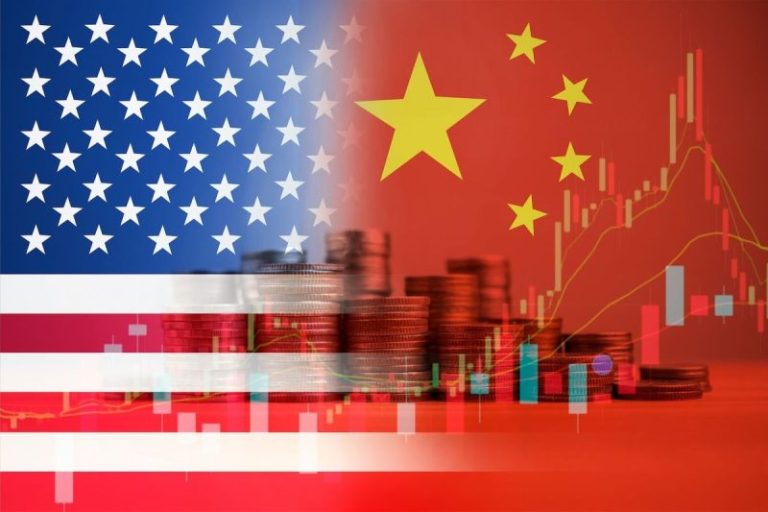
The US and China agreed on Monday (May 12) to pause the majority of their tariffs for a period of 90 days, marking a significant de-escalation in trade tensions between the two countries.

The US will reduce its tariffs on most Chinese goods from 145 percent to 30 percent; meanwhile, China will lower its tariffs on US goods by a similar amount, dropping them from 125 percent to 10 percent.

In addition to the suspension of tariffs, a number of non-tariff measures will be suspended or reversed. These include removing rare earths export restrictions and taking some US tech and defense firms off trade blacklists.

The US will maintain a 20 percent tariff geared at pressuring China to curb the flow of fentanyl to the US. The other 10 percent is the baseline levy that the US has imposed on imports from most nations.

The Trump administration also said the lower tariff rate won’t apply to automobiles, steel and aluminum.

The deal is expected to bring a resumption of shipments to west coast port cities like Los Angeles and Seattle. Recent data indicates a significant reduction in activity as tariffs have pushed the price of goods beyond what many importers can afford. Port activity has dropped to levels not seen since the COVID-19 pandemic disrupted global supply chains.

Although the tariff pause is only temporary, the 90 day break will give the countries time to negotiate a more permanent deal and mitigate a growing trade war that began shortly after Donald Trump assumed the presidency in January.

‘Now, while the 90-day pause is a big step towards easing tensions, it’s crucial to remember that it doesn’t guarantee a complete resolution of the trade war,’ he explained.

‘Once those 90 days are up, everyone will be keeping a close eye on what happens next, especially the results of ongoing negotiations and whether the tariffs will be permanently cut or brought back.’

Market response was mixed on Tuesday (May 13), with the S&P 500 (INDEXSP:INX) jumping 0.9 percent to reach 5,896 points in morning trading and the Nasdaq-100 (INDEXNASDAQ:NDX) surging 1.75 percent to 21,231 points. The Dow Jones Industrial Average (INDEXDJX:.DJI) went the opposite direction, shedding a half percent to 42,216 basis points.

The gold price fell as low as US$3,208.80 per ounce on Monday, a drop of more than US$100 compared to last week’s closing price. It regained some ground on Tuesday and was trading in the US$3,250 range by 1:00 p.m EDT.

The silver price also saw an immediate decline on Monday, but was trading in the US$33 per ounce range on Tuesday.

Securities Disclosure: I, Dean Belder, hold no direct investment interest in any company mentioned in this article.

This post appeared first on investingnews.com

Steve Kerr’s Golden State Warriors had just beaten the Minnesota Timberwolves in Game 1 of the Western Conference semifinals, but his tone was somber.

“Obviously, we’re all concerned about Steph,” Kerr said, “but it’s part of the game.’

Part of the game. Always has been. Always will be. That doesn’t take away the sting from the game’s best players missing playoff games due to injury.

And the sting has had an impact, from Curry’s injury to Milwaukee guard Damian Lillard’s torn Achilles to Cleveland guard Darius Garland’s sprained left toe – and now Boston forward Jayson Tatum has a lower right leg injury.

It is not uncommon.

Last season, Lillard missed some of the playoffs, and teammate Giannis Antetokounmpo missed all of the playoffs. Boston’s Kristaps Porzingis was in and out of the lineup and didn’t play in the Eastern Conference finals and played in just three games in the NBA Finals. Zion Williamson sustained a hamstring injury in the play-in game and missed the first round, and Kawhi Leonard was available for just two first-round games in 2024. New Yok’s OG Anunoby missed the end of the Indiana series, and Joel Embiid was not close to 100%.

A 2021 ESPN headline: “NBA Finals 2021: How injuries shaped the title run and what it means for the 2022 playoffs.”

As Kerr said, it’s part of the game.

Injuries affecting the 2025 NBA playoffs

Cleveland Cavaliers

The Cavaliers reduced minutes for key players this season in hopes of being healthy and not overly tired for the playoffs. However, all the best intentions can go awry, and they have for the Cavs. All-Star Darius Garland played in two of four first-round games and missed Games 1-2 against the Indiana Pacers in the Eastern Conference semifinals. Defensive Player of the Year Evan Mobley missed Game 2 with a sprained left ankle, and De’Andre Hunter, one of the NBA’s best reserves, missed Game 2 with a sprained right thumb.

This is how much a series can tilt because of injuries: The Cavs were without Garland, Mobley and Hunter in Game 2 – a game in which they led 98-81 with 6.3 seconds left in the third quarter and 119-112 with 57.6 seconds left in the fourth. They lost 120-119.

Boston Celtics

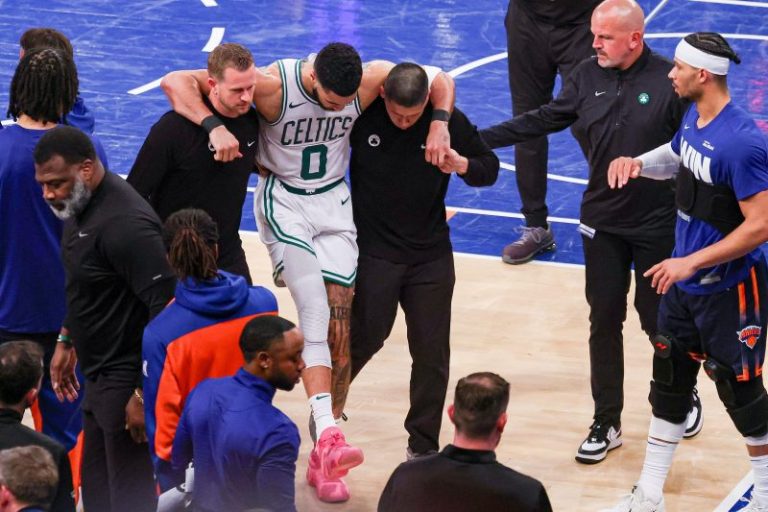
The Tatum injury is devastating. Though the Knicks had taken control of the game late in the fourth quarter, Tatum was spectacular with 42 points on 16-for-28 shooting. Down 3-1, the prospect of coming back to win the series without Tatum, an All-Star who is headed for another All-NBA selection this season, seems impossible.

It not only sways the direction of this season, but next season as well as the Celtics ponder a future that includes new owners and a payroll that will approach nearly $500 million, luxury taxes included, in 2025-26.

Big man Kristaps Porzingis has been available but also limited in the playoffs due to lingering effects of a viral infection that forced him in and out of the lineup late in the regular season. In two of the four games against the Knicks in the East semifinals, Porzingis played less than 14 minutes in two games and less than 20 minutes in three of the four.

Jrue Holiday (strained right hamstring) missed the final three games of the first round against Orlando, and while he is no longer on the injury report and has played in all four games against New York, he has scored just 12 points in the past two games.

Boston’s depth has suffered, too, with Sam Hauser’s sprained ankle which has kept him out of Games 2-4.

Golden State Warriors

Just watching the Warriors without Curry in the past three games against Minnesota – all Timberwolves victories – shows how much they need Curry to win a game in the series. They miss his shooting, scoring, playmaking and defense. They miss the Curry aura that makes him one of the best to have ever played in the NBA.

Curry sustained a grade 1 hamstring strain in Game 1 against Minnesota in the West semifinals, and the Warriors are down 3-1. The Timberwolves are good and still might be up in the series even with Curry playing, but the Warriors struggle when he’s not available. There’s a remote chance Curry returns for Game 5 Wednesday, and while it’s plenty to ask of one player, Golden State’s chances to make this a six- or seven-game series depend on Curry.

Golden State’s Jimmy Butler missed Game 3 against Houston in the first round with a pelvic contusion.

Milwaukee Bucks

After missing the final 14 games of the regular season and the first game of the first round against Indiana with deep vein thrombosis in his right calf, Lillard went down with a torn left Achilles tendon against Indiana in Game 4.

The Bucks lost the series in five games, their third consecutive first-round playoff loss.

This is another injury that potentially reshapes the league. Lillard, who could miss all of next season, can become a free agent in the summer of 2026, and All-NBA star Giannis Antetokounmpo will consider what his future with the team looks like. The conjecture will dominate NBA transactional discussions through the end of the Finals, through the draft and into free agency.

Denver Nuggets

Michael Porter Jr. is not on Denver’s injury report, but he sprained a joint in his left shoulder against the Los Angeles Clippers in the first round and has it wrapped during the West semifinals against the Oklahoma City Thunder.

His inability to move that shoulder the way he wants has limited his shooting effectiveness. An 18.2-points a game scorer and 50.4% shooter from the field and 39.5% on 3-pointers during the regular season, Porter is at 8.5 points per game, 31.4% shooting from the field and 31.8% on 3s against the Thunder.

Porter told reporters it’s an injury that can sideline a player for 4-6 weeks.

Memphis Grizzlies

The Thunder swept the Grizzlies in the first round, and Memphis guard Ja Morant exited in the second quarter of Game 3 with a bruised hip. He didn’t return and was ruled out for Game 4.

This post appeared first on USA TODAY

Stallion Uranium Corp. (the ‘ Company ‘ or ‘ Stallion ‘ ) ( TSX-V: STUD ; OTCQB: STLNF ; FSE: FE0 ) announces that the British Columbia Securities Commission (the ‘ BCSC ‘), as the principal regulator of the Company, issued a cease trade order (‘ CTO ‘) against the Company on May 7 th 2025 for the Company’s failure to file its audited annual financial statements, accompanying management discussion and analysis and certifications for the financial year ended December 31 st 2024 (the ‘ Annual Filings ‘). As a result of the CTO, the TSX Venture Exchange (the ‘ Exchange ‘) has suspended trading of the Company’s common shares.

The Company continues to work diligently with its auditors to facilitate the completion of the Annual Filings and expects to file the Annual Filings on or before May 20 th , 2025.

The CTO was issued under Multilateral Instrument 11-103 – Failure-To-File Cease Trade Orders In Multiple Jurisdictions and prohibits the trading or purchase by any person or company of any securities of the Company in each jurisdiction in Canada in which the Company is a reporting issuer for as long as the CTO remains in effect; however, the CTO provides an exception for beneficial securityholders of the Company who are not currently (and who were not as of May 7 th , 2025) insiders or control persons of the Company who may sell securities of the Company if both of the following criteria are met: (a) the sale is made through a foreign organized regulated market, as defined in Section 1.1 of the universal market integrity rules of the Investment Industry Regulatory Organization of Canada; and (b) the sale is made through an investment dealer registered in a jurisdiction of Canada in accordance with applicable securities legislation.

About Stallion Uranium Corp.

Stallion Uranium is working to ‘Fuel the Future with Uranium’ through the exploration of roughly 2,700 sq/km in the Athabasca Basin, home to the largest high-grade uranium deposits in the world. The company, with JV partner Atha Energy holds the largest contiguous project in the Western Athabasca Basin adjacent to multiple high-grade discovery zones and deposits.

Our leadership and advisory teams are comprised of uranium and precious metals exploration experts with the capital markets experience and the technical talent for acquiring and exploring early-stage properties. For more information visit stallionuranium.com .

On Behalf of the Board of Stallion Uranium Corp.

Matthew Schwab
CEO and Director

Corporate Office:
700 – 838 West Hastings Street,
Vancouver, British Columbia,
V6C 0A6

T: 604-551-2360
info@stallionuranium.com

Neither the TSX Venture Exchange nor its Regulation Services Provider (as that term is defined in the policies of the TSX Venture Exchange) accepts responsibility for the adequacy or accuracy of this release.

This news release contains forward-looking statements and forward-looking information within the meaning of Canadian securities legislation (collectively, ‘forward-looking statements’) that relate to the Company’s current expectations and views of future events. Any statements that express, or involve discussions as to, expectations, beliefs, plans, objectives, assumptions or future events or performance (often, but not always, through the use of words or phrases such as ‘will likely result’, ‘are expected to’, ‘expects’, ‘will continue’, ‘is anticipated’, ‘anticipates’, ‘believes’, ‘estimated’, ‘intends’, ‘plans’, ‘forecast’, ‘projection’, ‘strategy’, ‘objective’ and ‘outlook’) are not historical facts and may be forward-looking statements and may involve estimates, assumptions and uncertainties which could cause actual results or outcomes to differ materially from those expressed in such forward-looking statements. No assurance can be given that these expectations will prove to be correct and such forward-looking statements included in this material change report should not be unduly relied upon. These statements speak only as of the date they are made.

Forward-looking statements are based on a number of assumptions and are subject to a number of risks and uncertainties, many of which are beyond the Company’s control, which could cause actual results and events to differ materially from those that are disclosed in or implied by such forward-looking statements. The Company undertakes no obligation to update or revise any forward-looking statements, whether as a result of new information, future events or otherwise, except as may be required by law. New factors emerge from time to time, and it is not possible for the Company to predict all of them or assess the impact of each such factor or the extent to which any factor, or combination of factors, may cause results to differ materially from those contained in any forward-looking statement. Any forward-looking statements contained in this presentation are expressly qualified in their entirety by this cautionary statement .

News Provided by GlobeNewswire via QuoteMedia

This post appeared first on investingnews.com

Objectors to the proposed settlement of three athlete-compensation antitrust cases against the NCAA and the Power Five conferences have argued in new filings that even a recently amended version of the deal remains unfair to athletes who could lose their places on teams due to sport-by-sport roster limits that are part of the agreement.

The limits had been set to go into effect on July 1 for any school that chooses to participate in another feature of the agreement: paying athletes directly for the use of their name, image and likeness (NIL). But on April 23, U.S. District Judge Claudia Wilken refused to grant final approval, saying in an order that the roster arrangement is “not fair” because thousands of athletes who are supposed to be benefiting from the deal stood to lose their places on teams after the current school year.

She gave the sides two weeks to address her concerns, and wrote that one solution would be “to ensure that no (athletes) who have or had a roster spot will lose it as a result of the immediate implementation of the settlement agreement.”

On May 7, lawyers for the plaintiffs, the NCAA and the conferences wrote that they had agreed to a setup under which schools would have the option to exempt from the limits any athlete who was on a roster in 2024-25 and who has been or would have been removed for 2025-26 because of the limits for the remainder of their college careers. It also would let schools similarly accommodate any high school senior who was ‘recruited to be, or was assured they would be’ on a Division I school’s roster for the 2025-26 school year.

However, this would not remove the roster limits from the settlement. And this would not require schools to keep all of their current athletes on their rosters. Lawyers for the NCAA wrote that ‘there are no guarantees’ that these athletes ‘will get or maintain roster spots. But that does not adversely affect any’ athlete, the NCAA said, because athletes’ roster spots always have been ‘at the discretion of the coach’ and the school.

In filings on May 9 and May 13, three lawyers for objectors who had been allowed by Wilken to have input in how the agreement would by modified, separately argued, basically, that athletes have been on teams or promised spots should be assured that they will not lose those positions because of the limits.

 “A settlement like this one, which vests (the schools) with ‘discretion’ to provide relief – or not – is no settlement at all,” wrote a group represented by Chicago-based attorney Steve Molo. “Indeed, numerous Objectors are hearing that schools have no intention of relaxing roster limits at all, leaving many student-athletes in the same position as under the settlement (Wilken) rejected as unfair.”

Molo’s group proposed that all athletes currently on a roster or promised a spot should not count against the limits for the duration of their careers. This group said schools would have the discretion to cut athletes “for legitimate reasons unrelated to the roster cap, such as conduct violations and poor athletic or academic performance,” but if there is dispute about this, the athlete could ask for an arbitrator to decide the matter.

Another objector lawyer, Laura Reathaford, argued for mandatory grandfathering of current athletes and of high school seniors who had “accepted an offer” to join a team in 2025-26 until their eligibility expires.

“By making grandfathering … optional, the (athletes) are still not treated equitably relative to each other and relief is not being provided to each (athlete covered by the settlement) as the law requires,” she wrote. “Instead … conflicts persist by protecting some athletes while leaving the others exposed.”

A third group of lawyers led by Denver-based attorneys Douglas DePeppe and Robert Hinckley endorsed the other objectors’ proposals but argued for what they termed “a formal grievance” and “oversight” system.

The plaintiffs, the NCAA and the conferences can respond to these in arguments they must provide to Wilken no later than May 16.

Wilken has written that she was inclined to approve the rest of the deal over a variety of other objections. That means she already was otherwise prepared to accept an arrangement under which $2.8 billion in damages would be paid to current and former athletes — and their lawyers — over 10 years, and Division I schools would be able to start paying athletes directly for use of their NIL, subject to a per-school cap that would increase over time and be based on a percentage of certain athletics revenues.

This post appeared first on USA TODAY

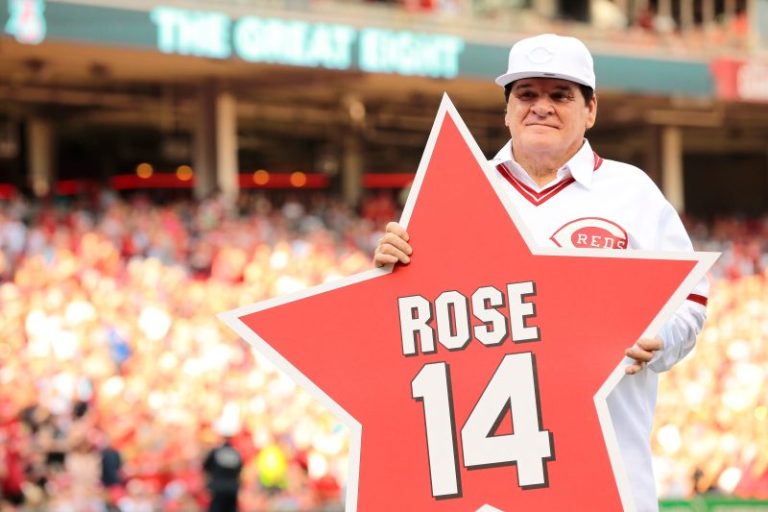
Pete Rose is, somewhat stunningly, off Major League Baseball’s permanently ineligible list.

But that doesn’t mean he’s automatically in the Hall of Fame.

Casual baseball fans often equated Rose’s ban from baseball – which lasted past his September 2024 death until commissioner Rob Manfred reinstated him Tuesday following pressure from President Donald Trump – with a banishment from Cooperstown’s shrine. But reinstatement doesn’t ensure enshrinement.

Certainly, Hall of Fame officials deferred to MLB with regards to Rose’s eligibility, a procedural choice that kept their hands out of the Rose quagmire for decades. Yet with Rose now eligible, when might fans unbothered by Rose’s many indiscretions see the slap-hitting scourge have his day in Cooperstown?

When will Pete Rose come up for Hall of Fame election?

Per Hall regulations, Rose’s candidacy won’t come up for a couple of years. As a player whose greatest contributions to the game came before 1980, he’ll be under consideration by the 12-person Classic Baseball Committee, a group that also considers candidates from the Negro Leagues and pre-Negro League stars. The group will next vote in December 2027 for induction in July 2028.

While Rose broke Ty Cobb’s all-time hits record in 1985, he played 17 of his 24 seasons before 1980, amassing 3,372 of his 4,256 hits in that span. That puts him in the same bucket as players like Dave Parker, who debuted 10 years after Rose in 1973 and played until 1991, and was elected by the Classic Baseball Committee for enshrinement in July.

How will Rose get on the ballot?

The 2027 ballot for the Classic Baseball Era Committee will be determined by the Historical Overview Committee, a group of 10 baseball historians appointed by the Baseball Writers’ Association of America. That group includes eight current or former baseball writers, a university professor and a statistician.

Last year, the committee included Parker, fellow electee Dick Allen, Tommy John, Ken Boyer, John Donaldson, Steve Garvey, Vic Harris and Luis Tiant on the Classic Baseball ballot.

Who will vote on Rose’s candidacy?

Should the committee include Rose in the group of eight Classic Era finalists, his candidacy will be voted on by a 16-member electorate. In 2024, that group was comprised of Hall of Famers Paul Molitor, Joe Torre, Lee Smith, Tony Perez, Eddie Murray and Ozzie Smith, along with Angels owner Arte Moreno, four other baseball executives and five baseball writers and historians.

The committee was chaired by Hall of Fame chairman of the board Jane Forbes Clark.

Clark and the Hall managed to keep a distance from the emotional Rose issue, deferring over the decades to whomever sat in the commissioner’s chair. In a statement Tuesday, Clark said the Hall is prepared to consider Rose’s case.

‘The National Baseball Hall of Fame has always maintained that anyone removed from Baseball’s permanently ineligible list will become eligible for Hall of Fame consideration,’ she said. ‘Major League Baseball’s decision to remove deceased individuals from the permanently ineligible list will allow for the Hall of Fame candidacy of such individuals to now be considered. The Historical Overview Committee will develop the ballot of eight names for the Classic Baseball Era Committee – which evaluates candidates who made their greatest impact on the game prior to 1980 – to vote on when it meets next in December 2027.’

Would Rose’s election be a slam dunk?

Not necessarily.

Just like with Hall of Fame voting done by hundreds of BBWAA members, Rose would need to garner support on 75% of ballots, or 12 of 16 committee members.

In what will surely become an ongoing measuring stick of perceived moral turpitude, all-time home run king Barry Bonds failed to reach that plateau in his first year under Contemporary Era Committee review in 2022.

Bonds received less than four votes, the Hall announced, meeting the same fate as Roger Clemens and Rafael Palmeiro, two other players closely tied to performance-enhancing drug use.

While Rose is the game’s all-time hits king, Bonds is the objectively superior player, amassing 162.8 career WAR to Rose’s 79.6. Bonds still holds a significant advantage if his years before well-documented ties to PEDs began: From 1986 through 1998, he produced 99.9 WAR.

That means future committees will face the same ethical quandary BBWAA voters did in the decade Bonds, Clemens and others were on the Hall ballot: Is gambling on games you managed – and, likely, played in – a disqualifying violation?

For decades, MLB commissioners upholding Rose’s permanent ban made that a non-issue. In coming years, it will be in the hands of 16 electors.

This post appeared first on USA TODAY

Former MLB legends ‘Shoeless’ Joe Jackson and Pete Rose shockingly were reinstated by league commissioner Rob Manfred on Tuesday.

Jackson and Rose were two of 17 deceased individuals reinstated by MLB, as Manfred noted MLB’s punishment of banned players ends upon their death.

The move allows for Jackson and Rose (the all-time hits leader) to both be elected to the National Baseball Hall of Fame. The two were previously viewed as stains on the game, based on their gambling participation during their playing careers.

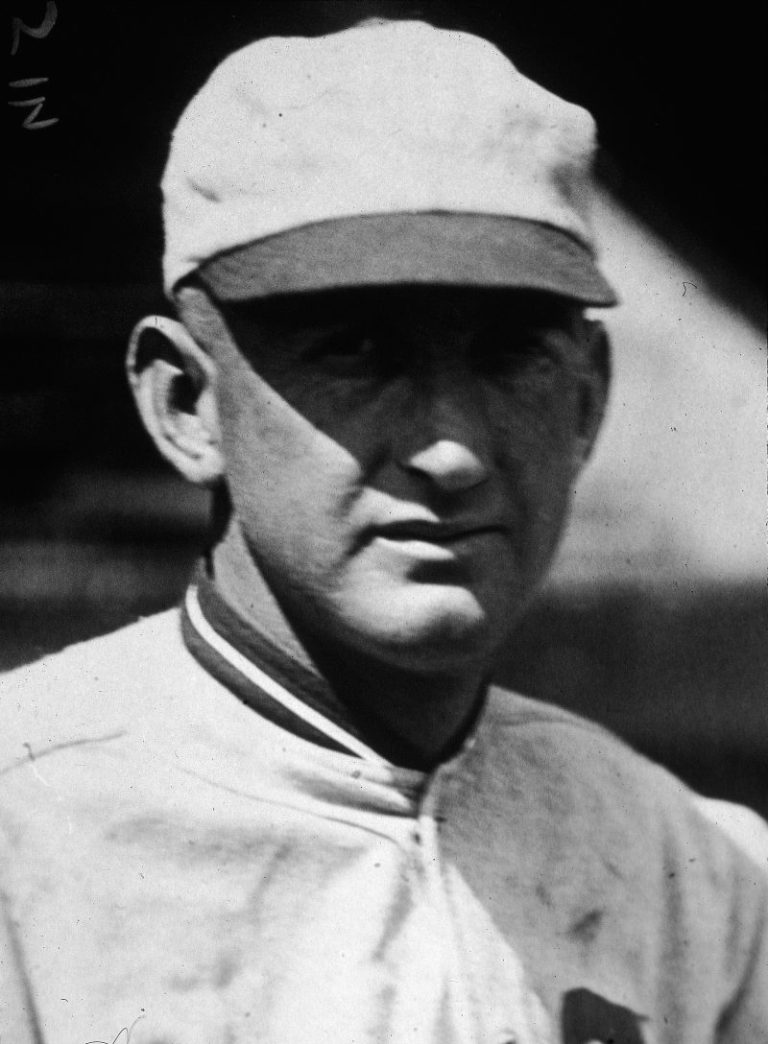
Jackson was banned from baseball in 1921, along with seven other Chicago White Sox players, for fixing the 1919 World Series. He ranks fourth in MLB history in batting average (.356).

Here’s everything to know about Jackson, who might be headed to the Hall of Fame over 100 years after his playing career ended:

Who was ‘Shoeless’ Joe Jackson?

Jackson was an MLB outfielder from 1908-20, but was most known for his time with the White Sox. He won the 1917 World Series with Chicago but was also a part of one of MLB’s most well-known controversies.

Jackson played 12 MLB seasons, primarily in the outfield. He was one of the best contact hitters ever, with a career line of .356/.423/.517. His best seasons came with Cleveland from 1910-15, and he also played for the Philadelphia Athletics (1908-09) and the White Sox (1915-20).

Jackson is also a notable character in the baseball movie ‘Field of Dreams,’ and is depicted by Ray Liotta.

Why was ‘Shoeless’ Joe Jackson banned?

Jackson, along with seven of his teammates, were banned from MLB after the 1920 season for attempting to fix the 1919 World Series. The players were accused of accepting $5,000 each to purposefully lose the series.

The White Sox players were actually acquitted by a Chicago jury but were banned from MLB anyway by the league’s first commissioner, Kenesaw Mountain Landis. Jackson had 12 hits in the series, a record that wasn’t broken until 1964. He also wasn’t charged with an error.

‘Shoeless’ Joe Jackson stats

Here are Jackson’s career stats in 12 MLB seasons:

  • Career: 62.2 WAR, 1,772 hits with 54 home runs, 873 runs, 792 RBIs and 202 stolen bases. .356 batting average with .423 on-base percentage and .517 slugging percentage.

Who were the 17 reinstated individuals?

Pete Rose: All-time hits leader was permanently banned in 1989.

Black Sox: Eight members of the Chicago White Sox were permanently suspended by commissioner Kenesaw Mountain Landis in 1921 for conspiring with gamblers to throw the 1919 World Series to the Cincinnati Reds. Those players were pitchers Eddie Cicotte and Lefty Williams, outfielder Happy Felsch, first baseman Chick Gandil, shortstop Swede Risberg, third baseman Buck Weaver, utility infielder Fred McMullin, and ‘Shoeless’ Joe Jackson, one of the greatest hitters in baseball history.

Joe Gedeon: A member of the St. Louis Browns at the time of the Black Sox scandal, Gedeon was present during meetings between gamblers and the aforementioned White Sox players.

Gene Paulette: Once the Black Sox scandal ruling was made by Landis, Paulette was retroactively suspended permanently from the game for allegedly receiving gifts from gamblers to throw games while playing for the Philadelphia Phillies.

Benny Kauff: Banned by Landis, despite being acquitted by a jury, for allegedly stealing a car. It seems Landis, a former judge, had made up his mind — despite the jury’s decision — that Kauff was guilty.

Lee Magee: Magee and the notorious Hal Chase — who was a fine baseball player in his own right, but also had a reputation for allegedly conspiring with gamblers — were accused of throwing a game while Magee’s Chicago Cubs played Chase’s Philadelphia Phillies. It should be noted that Chase was not among the 17 individuals reinstated by Manfred.

Phil Douglas: Landis permanently suspended Douglas for writing a letter offering to desert his New York Giants — due to quarrels with feisty manager John McGraw — and hurt his team’s pennant-winning chances in 1922.

Jimmy O’Connell: While playing for the Giants in 1924, O’Connell offered an opposing player $500 to throw games in order to help his Giants win the pennant.

Cozy Dolan: Dolan was a coach on O’Connell’s Giants and also was suspended as part of O’Connell’s attempt to bribe a Phillies player to throw games.

William Cox: Cox’s tenure as owner of the Phillies was brief. After buying the team in March 1943, Cox was indefinitely suspended by Landis in November 1943 for placing bets on his own team.

This post appeared first on USA TODAY

Pete Rose, the deceased all-time hit king whose gambling on baseball banished him from the game, was posthumously removed from Major League Baseball’s permanently ineligible list by commissioner Rob Manfred, a stunning turn in one of sport’s longest-running dramas that could pave the way for Rose to earn enshrinement in the game’s Hall of Fame.

Manfred issued a sweeping ruling May 13 that declared ‘permanent ineligibility ends upon the passing of the disciplined individual, and Mr. Rose will be removed from the permanently ineligible list.”

Rose, who died on Sept. 30 at 83, passed away with one of his last, great wishes unfulfilled: Entry to baseball’s Hall of Fame. Despite his 4,256 career hits – still a record – and 17 All-Star appearances, Rose’s Hall prospects, once a sure thing, were dashed in 1989 when commissioner A. Bartlett Giamatti issued a lifetime ban in an agreement with Rose.

Yet in a letter to Rose’s attorney, Jeffrey M. Lenkov, Manfred determined that ‘a person no longer with us cannot represent a threat to the integrity of the game. Moreover, it is hard to conceive of a penalty that has more deterrent effect than one that lasts a lifetime with no reprieve.’

Relive Pete Rose’s wild baseball career in new book

Manfred’s sweeping action posthumously reinstates 17 players permanently banned, MLB said, including ‘Shoeless’ Joe Jackson and the seven other members of the Chicago White Sox involved in the 1919 ‘Black Sox’ scandal, which framed the league’s zero tolerance stance covering betting on baseball.

Manfred’s action comes two months after President Donald Trump expressed on social media that he’d issue a full pardon for Rose and that Rose should be eligible for and inducted into the Hall of Fame.

Rose agreed to the ban in return for baseball to not make a formal determination about whether he bet on the game.

Yet voluminous evidence surfaced in special counsel John Dowd’s report that Rose bet on games involving the Cincinnati Reds while he was manager. And after Giamatti’s death just days after striking the agreement with Rose, a succession of commissioners – Fay Vincent, Bud Selig and Manfred – heard multiple pleas from Rose and his lawyers for reinstatement yet held firm on the ban.

Meanwhile, Rose admitted in a 2004 memoir that he had bet on baseball, including Reds games that he managed, but not as a player. In 2015, a notebook surfaced that strongly indicated Rose did, in fact, bet on games as a player.

That same year, Manfred considered but took no action on Rose’s bid for reinstatement, keeping with a hard line from the commissioner’s office that spanned nearly three decades at that point.

Until this year.

Manfred met with Rose’s representatives in January, according to ESPN, and weeks later Trump demanded in a social media post that Rose be reinstated by MLB and granted entry to the Hall of Fame.

In April, Manfred met with Trump at the White House to, according to an MLB statement, ‘discuss issues pertaining to baseball with the president.’

The league does not control the Hall of Fame’s machinations, and the museum largely deferred eligibility concerns back to the league, leaving Rose in a limbo, locked out of the Hall, despite protests from many fans.

Now, the Hall appears ready to welcome Rose, provided he is nominated and elected by a veteran’s committee of electors.

‘The National Baseball Hall of Fame has always maintained that anyone removed from Baseball’s permanently ineligible list will become eligible for Hall of Fame consideration,’ the museum said in a statement released moments after MLB’s announcement. ‘Major League Baseball’s decision to remove deceased individuals from the permanently ineligible list will allow for the Hall of Fame candidacy of such individuals to now be considered. The Historical Overview Committee will develop the ballot of eight names for the Classic Baseball Era Committee – which evaluates candidates who made their greatest impact on the game prior to 1980 – to vote on when it meets next in December 2027.’

The notion that dozens of honorees were far from perfect exemplars of character only fueled that outcry, which picked up some steam after the 2018 Supreme Court legalization of sports betting, forcing MLB into a relationship with sports gambling that it heartily embraced.

Now, after nearly four decades, it has rescued one of the game’s darkest figures from limbo, a startling departure from its stance that gambling on the game resulted in permanent punishment.

Cincinnati Reds react to Pete Rose news

‘On behalf of the Reds and our generations of loyal fans, we are thankful for the decision of Commissioner Manfred and Major League Baseball regarding the removal of Pete Rose from the permanently ineligible list,’ the club said in a statement.

‘Pete is one of the greatest players in baseball history, and Reds Country will continue to celebrate him as we always have. We are especially happy for the Rose family to receive this news and what this decision could mean for them and all of Pete’s fans.’

‘Dark day for baseball’ says Bart Giamatti’s son

“It’s a serious dark day for baseball,’ Marcus Giamatti, the 63-year-old son of late former commissioner Bart Giamatti, who permanently suspended Rose in 1989, told USA TODAY Sports.

“For my dad, it was all about defending the integrity of baseball. Now, without integrity, I believe the game of baseball, as we know it, will cease to exist. 

– Bob Nightengale

Mike Schmidt says Pete Rose decision is ‘great day for baseball’

The Philadelphia Phillies released a statement supporting MLB’s decision to remove Rose from the permanently ineligible list.

‘As one of the greatest players in the history of the game, Pete made significant on-field contributions to the Phillies over his five seasons (1979-83) with the club, highlighted by our first World Series title in 1980,’ the Phillies said.

Hall of Famer Mike Schmidt included his own statement: “It’s a great day for baseball as Commissioner Manfred has reinstated Pete Rose, making him eligible for the National Baseball Hall of Fame. The ongoing question of whether Pete Rose should or shouldn’t be in the Hall will be answered by a select panel in the next Classic Baseball Era Committee.

“Congratulations to Pete’s family, his teammates, as well as his supporters who have waited many years for this opportunity for consideration.”

The USA TODAY app gets you to the heart of the news — fastDownload for award-winning coverage, crosswords, audio storytelling, the eNewspaper and more.

This post appeared first on USA TODAY

UnitedHealth Group announced a new chief executive Tuesday, a sudden and surprising change following the fatal shooting in December of its UnitedHealthcare subsidiary’s leader.

Andrew Witty stepped down from leading UnitedHealth for unspecified “personal reasons,” the company said. Stephen J. Hemsley, who served as chief executive from 2006 to 2017, will return to the role and remain board chairman. Witty will serve as a senior adviser to Hemsley, the company said in a news release. 

UnitedHealth has been the focus of sharp criticism over the health insurance industry’s practices and has seen its stock plummet in the past year. The Justice Department has investigated its business activities.

UnitedHealth’s shares fell more than 17% Tuesday. The stock, which is part of the 30-company Dow Jones Industrial Average, closed at $311.38 a share, well off its recent high of $630.73 in November.

The company also said that it has suspended its annual outlook for 2025, to include ‘more types of benefit offerings than seen in the first quarter’ and because ‘the medical costs of many Medicare Advantage beneficiaries new to UnitedHealthcare remained higher than expected.’

‘The company expects to return to growth in 2026,’ the statement added.

In December, United Healthcare CEO Brian Thompson was fatally shot in what police described as a “premeditated, preplanned targeted attack” in midtown Manhattan as he was walking to an investors’ conference. 

Luigi Mangione, now 27, was arrested after a five-day manhunt at a McDonald’s in Altoona, Pennsylvania.

He faces federal and state charges in New York and Pennsylvania in connection with the shooting. He has pleaded not guilty to the murder and terrorism charges in New York, and not guilty to federal stalking and murder charges. If convicted of federal charges, Mangione could be sentenced to death.


This post appeared first on NBC NEWS

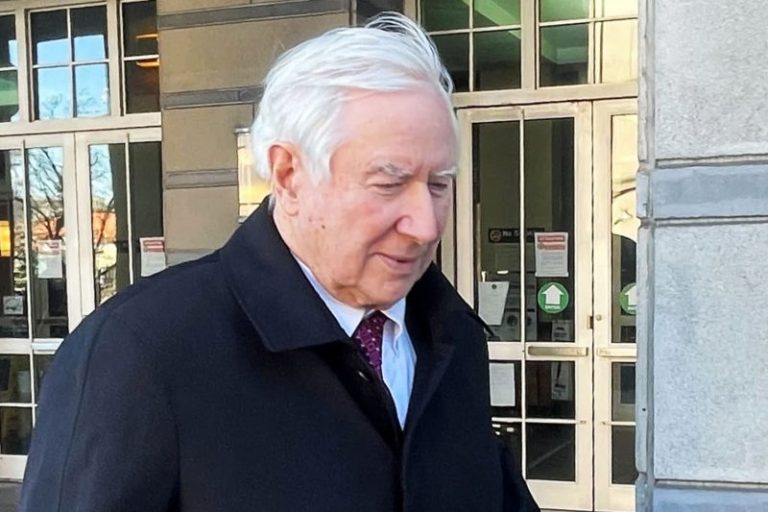
CAMDEN, N.J. — The father and son duo behind a stock fraud scheme involving the infamous $100 million New Jersey deli were sentenced to several months in prison Tuesday.

Peter Coker Jr. was sentenced to 40 months. With credit for time served, he owes about 12 months locked up. But he could be released sooner than that given how federal inmates are granted time off for good conduct.

Earlier Tuesday, the 56-year-old’s father, North Carolina businessman Peter Coker Sr., was sentenced to six months in jail, to be followed by six months of home confinement, for his role in the case.

The Cokers and a third man, James Patten, admitted to the scheme in orchestrated the fraudulent inflation of the share price of two companies to better position them for mergers with private firms.

One of the companies, Hometown International, ended up having a market capitalization of more than $100 million despite owning just a small, money-losing deli in South Jersey.

The other company, E-Waste, had an even larger market cap, despite having no business operations.

Coker Jr. was brutally attacked while in a Thai prison awaiting extradition in early 2023, his attorney said at his sentencing for securities fraud in New Jersey federal court on Tuesday.

Coker Jr. was set upon by as many as 10 fellow inmates in the Thai lock-up, his lawyer said. Coker Jr. was being held there after police found him in Thailand while under indictment in the United States for the securities fraud scheme involving the deli owner and a related shell company

Coker Jr.’s lawyer, John Azzarello, cited his time in the Thai prison and in the 26 or so months he has served in an Essex County jail, in asking a judge to sentence him to effectively time served, or only a few months more.

Azzarello called those conditions in both jails “inhumane.”

Azzarello also detailed how Coker Jr. was suffering from severe cirrhosis of the liver as the result of alcohol abuse — “a bottle of whiskey a day” — before he was arrested in Thailand.

He said Coker Jr. had been hospitalized several times for his condition, and that doctors were considering doing a liver transplant.

Coker Jr., speaking to Judge Christine O’Hearn in U.S. District Court in Camden, said, “This crime has changed me profoundly.”

“The assault and the horrors I experienced in Bangkok prison, I wouldn’t wish on my worst enemy,” Coker Jr. said, wearing a yellow one-piece jailhouse uniform.

“It was the lowest point in my life.”

He also expressed regret for his role in the scheme, which involved his father and another man.

“It’s very important to me that your honor and my parents know I wish I could go back,” and not commit the crime, Coker Jr. said.

“It kills me, every time I think about it, how my actions affected my parents,” he said.

“My parents should have never been associated with this abhorrent crime,” Coker Jr. said.

“My greed destroyed us both.”

Coker Jr. faces deportation after he serves his sentence. He renounced his U.S. citizenship in 2019, and holds citizenship in the Caribbean nation St. Kitts.

During his sentencing, Coker Sr. was ordered to pay a $500,000 fine and pay up to $644,000 in restitution.

“I do stand before you extremely remorseful for my actions,” Coker Sr. said as his wife, daughter, grandchildren, and friends looked on.

“I’m terribly sorry for my part. This episode has been the worst time of my life,” the 82-year-old Chapel Hill resident said. “I’m sorry for every investor who has been harmed by my actions.”

Federal sentencing guidelines had suggested a prison sentence of 51 to 63 months for Coker Sr.

But prosecutors said they wanted less time than that, namely the top end of a range of zero to 24 months that they stipulated when he pleaded guilty.

Judge O’Hearn said she would have sentenced Coker Sr. to much more time in jail if he was not as old as he is.

“This was a fraudulent scheme from the inception,” Judge O’Hearn said at the start of the hearing.

“The companies are, in fact, worthless, and there is no prospect for recovery,” O’Hearn said.

“This was a multi-year, very sophisticated fraudulent scheme involving a sort of esoteric corporate structure, of which I’ve learned more than I ever care to,” the judge said. “One that was illegal … and it caused harm.”

The judge opened the hearing by delivering a blow to defense lawyers, adopting prosecutors’ argument that there were nearly $5 million in losses from the scheme, which included investments by Duke and Vanderbilt universities.

“What is the motivation here other than greed? Because I don’t see it,” O’Hearn asked at one point, after noting that all three defendants were each worth millions of dollars apiece.

Coker Sr., who was a star college basketball player at Dartmouth and then North Carolina State, has a net worth of $6 million, the judge said.

Patten is due to be sentenced on June 10.

The younger Coker was not in court while his father was sentenced, because of a long delay in transporting him from a jail in Essex County. He has been detained there without bail since being extradited from Thailand in March 2023 following his arrest there as a fugitive.

Coker Sr.’s lawyer, Zach Intrater, asked O’Hearn to sentence him to no prison time after describing him as a good family man who never disputed his criminal conduct after he was first charged.

“I don’t think they make very many more like Pete anymore,” the defense attorney said. “He’s courtly, his manners are impeccable.”

Intrater repeatedly referenced Susan Coker, who has been married to Peter for 61 years, asking the judge to allow the couple to remain together for what remains of their lives.

“He bears responsibility for engaging in an offense that didn’t just hurt other peopl,e that didn’t just hurt his family, but that involved his son, his only son, and knowing that his son has been incarcerated in part from his own actions and knowing what has happening to his son during that term of incarceration.”

“Judge, I think having to live with that is a punishment that could be worse than even what you could impose,” Intrater said.

The attorney also argued that Coker Sr. was not the “prime mover” for the scheme.

Susan Coker told the judge, “He’s just a wonderful guy.”

“I know if he had a second chance, he never would have done any of this,” Susan said, her voice cracking.

Coker Sr. and Patten were arrested in September 2022, months after both Hometown merged with a bioplastics company, and more than a year after E-Waste did its own merger with an electric vehicle company.

Coker Jr., who previously resided in Hong Kong, was arrested months later.

The men were indicted more than a year after CNBC detailed a web of questionable connections between Hometown and E-Waste, as well as the prior criminal and civil court cases of Coker Sr. and of Patten, and consulting deals with both companies that benefited those two men. 

The fraud came to light in April 2021 when hedge fund manager David Einhorn wryly noted that Hometown International’s market capitalization was $100 million despite owning just one asset whose annual revenue from selling sandwiches, soda, and chips was less than $36,000 for the past two years combined.

“The pastrami must be amazing,” Einhorn wrote in a letter to clients.

Intrater on Tuesday said that he believed the case was prosecuted in large part because of the Einhorn letter, which generated significant coverage in the media.

The scam, which ran from 2014 through September 2022, coordinated trading of the stocks of the companies, creating the false impression of demand for shares that traded on OTC Marketplace.

The scheme began when Patten suggested the creation of Hometown as an umbrella corporation to his friend Paul Morina, a high school principal and renowned wrestling coach. The company would go on to own the Your Hometown Deli in Paulsboro, New Jersey.

Morina and the other deli owner were unaware of Patten’s scheme to manipulate Hometown’s stock.

Hometown’s stock price rose by more than 900% during the scheme. The price of E-Waste rose by nearly 20,000%.

In 2010, Patten pleaded guilty in New Jersey federal court to a mail fraud charge in connection with sending a client a false financial statement to cover up bad investments he made using her money. He was sentenced to 27 months in prison in that case.

Four years before, Patten was barred by the broker-dealer FINRA from acting as a stockbroker for failing to satisfy an arbitration award of more than $753,000, violating securities laws, and unauthorized trading for churning a client’s account. 

Coker Sr. years ago was sued for allegedly hiding money from creditors and alleged business-related fraud. He denied wrongdoing in those cases.

This post appeared first on NBC NEWS