Metro Mining (MMI:AU) has announced Reserve and Resource Update
Download the PDF here.
This post appeared first on investingnews.com


Metro Mining (MMI:AU) has announced Reserve and Resource Update
Download the PDF here.

Silver has lagged behind gold’s record run, causing the gold-silver ratio to stretch near historic extremes.
With the gold price buoyed by central bank buying and silver increasingly tied to industrial demand, the disconnect between the two traditional safe-haven metals has widened.
But could the silver price finally be poised for a breakout?
During a recent silver-focused webinar, Sprott (TSX:SII,NYSE:SII) founder Eric Sprott, former Hecla Mining (NYSE:HL) CEO Phil Baker and technical analyst Michael Oliver joined host Simon Catt of Arlington Group to unpack what’s driving silver’s sluggish performance, and whether a reversal could be on the horizon.
The panelists explored silver’s shifting applications, the impact of macro forces like Bitcoin speculation and why some investors see today’s dynamics as a potential launchpad for silver’s next big move.
The silver price surged in 2024, rising from around US$22 per ounce at the start of the year to nearly US$35 by the end of October. Since then, silver has largely stayed in the US$30 to US$32 range, briefly breaking US$34 mark in March.
The metal has seen some support in 2025 due to instability in global financial markets caused by US President Donald Trump’s tariffs and the threat of reciprocal import fees against key trading partners.
These foreign policy shifts by the world’s largest economy have created uncertainty for investors who have been increasingly looking to traditional safe havens like silver and gold to de-risk their portfolios.
However, today’s tariff turmoil overshadows a fundamental shift in the silver market over the past several years, which has seen industrial demand growth start to outpace traditional investment demand.
The most notable demand increase has been due to the energy transition and silver’s use in solar panels.
While firms like Goldman Sachs (NYSE:GS) have predicted that industrial demand will wane over the next few years, Catt’s panelists presented different points of view. Sprott said there will be further demand from the electric vehicle (EV) market as producers look to solid-state batteries, which are not only safer, but also quicker to charge.
“I think (solid-state batteries) will bring back EVs to being viewed as economic,’ he said. ‘Plus the whole processing of solar panels and generating electricity more and more inexpensively over time, it’s just going to make the demand for silver continue to rise here when we already have a shortfall,” he told listeners.
Baker pointed out that solar currently makes up 29 percent of silver’s total 1.2 billion ounces of annual demand, and noted that if that were to disappear, it would have a massive impact on the silver market. However, he also said that even if there were a significant policy shift in the US, there would still be considerable demand for solar worldwide.
“Even in the US, the policy really is ‘all of the above’ — all forms of energy. So I’m not concerned about solar cells diminishing. Could they go flat? Yeah, that’s fine. Flat at 300 million ounces? That’s great demand for silver,” he added.
While most solar demand comes from China, the panelists also discussed India’s growing role in the sector. The country has recently been working to increase domestic production of solar panels.
“(Prime Minister Narendra) Modi made a policy decision a year ago to grow the solar industry in India. So in India, only about 10 percent of their demand for silver is used for industrial purposes. In China, it’s 90 percent, and so what you’re going to have in India is you’re going to see their solar panel growth skyrocket,” Baker said.
Of course, demand isn’t the only factor influencing the silver industry.
Supply constraints have helped push the market into a structural deficit over the past several years.
Silver is primarily a by-product metal in the production of copper, nickel, zinc and gold, which makes it highly dependent on dynamics in those markets. As Baker pointed out, silver isn’t a significant source of revenue.
“So even if the price of silver rises significantly, they’re not going to change their operations because it’s not going to matter for a big copper producer,” he explained. Unless there are dramatic production swings for those commodities, supply and demand are unlikely to come into balance in the near term.
Over the past year, silver has tested US$35 twice. Using technical analysis, Oliver compared this to how the silver price tested resistance at the US$26 level three times before breaking through.
What he’s seeing in momentum indicators now is similar to what happened at that time. In the lead up, momentum was flat, but once silver hit US$26, momentum saw an immediate 10 percent gain.
‘It came back up a third time to US$26, watch out. It blew your head off,’ he said. ‘Okay, you go back to US$35 again, and the price says, ‘You better watch out, I’m at a triple top, and if I go to US$36, it’s a triple-top breakout.”
“The only issue is now which week punches up there to that 10 percent over level. I think — who knows, it might even be tomorrow, but I think soon we’ll get up there,” Oliver said.
Silver price, May 15, 2022, to May 16, 2025.
Oliver went on to examine the gold-silver ratio, which he said could be suggesting a breakout is overdue. Traditionally, the ratio falls between 40 and 80 to 1, but it’s now closer to 100 to 1.
“I bet both of these metrics will pretty much coincide in terms of upturn, meaning not only a net price upturn in silver, but a relative performance upturn in silver versus gold, and I think that’ll shock people more than anything … especially if all of a sudden silver wakes up in a shocking, rapid way,’ Oliver noted.
‘That’s going to surprise most investors. I think it’s about to happen, the technicals are ripe.’
Addressing manipulation, Sprott suggested silver has been manipulated for the last half century.
‘I look at silver as a market that’s been manipulated for 50 years. We have about eight to 12 major international banks who are short over 500 million ounces of silver on the COMEX, have always been short that product,’ he said.
‘They always make stabs at knocking it down, trying to cover, but the shorts go back up.’
However, Sprott said as the price has gone from the US$20 range to closer to US$35 it has become more difficult for these banks to maintain their positions. “The same thing is true in gold, but in gold we all know that in the last year, when it broke through US$2,000 (per ounce) for the fourth time, it was over for the commercial banks,” he noted.
He went on to discuss how trading on the COMEX seems contrary to what is going on in other markets, saying that when international markets are open, gold and silver prices trade higher, but when the COMEX opens, they tend to fall.
“If you just traded COMEX and you bought silver at the starting value, it’d be worth about 2 or 3 percent of what it started at, whereas if you bought it in non-COMEX hours, it would be worth 600 percent more,’ Sprott said.
In his view, the suppression is ‘obvious.’ However, he predicts that the gold-silver ratio will correct in the near future, and the silver price will start to outperform gold.
For his part, Sprott sees the silver price going much higher.
“I’m sure we’re going to be through US$50. It used to trade at 15 to 1 to the price of gold. At today’s price of gold, that would be over US$200. I have no reason to think we’re not going there,” he said.
Oliver had a similar price prediction.
“I think the first surge could get you well above US$50. I think you’d get up in the US$60s and US$70s before you even pause, and I think it could occur rapidly,” he said. Oliver also explained that cryptocurrencies like Bitcoin aren’t an alternative and appear more like a speculative bubble. Given the size of the US debt, Treasuries aren’t as attractive to investors, which is causing further compression in monetary metals markets.
Although Baker didn’t provide a price prediction, he did express support for a market driven by supply and demand fundamentals, saying that “this is a very, very unique time.”
Securities Disclosure: I, Dean Belder, hold no direct investment interest in any company mentioned in this article.

Brightstar Resources (BTR:AU) has announced High-grade results incl 16m @ 8g/t Au in Menzies drilling
Download the PDF here.

Learn how to analyze stock price gaps with Dave! In this video, Dave discusses the different types of price gaps, why all price gaps are not the same, and how you can use the StockCharts platform to identify key levels and signals to follow on charts where price gaps occur. Charts discussed include the S&P 500, First Solar (FSLR), Microsoft (MSFT), and more!
This video originally premiered on May 19, 2025. Watch on StockCharts’ dedicated David Keller page!
Previously recorded videos from Dave are available at this link.
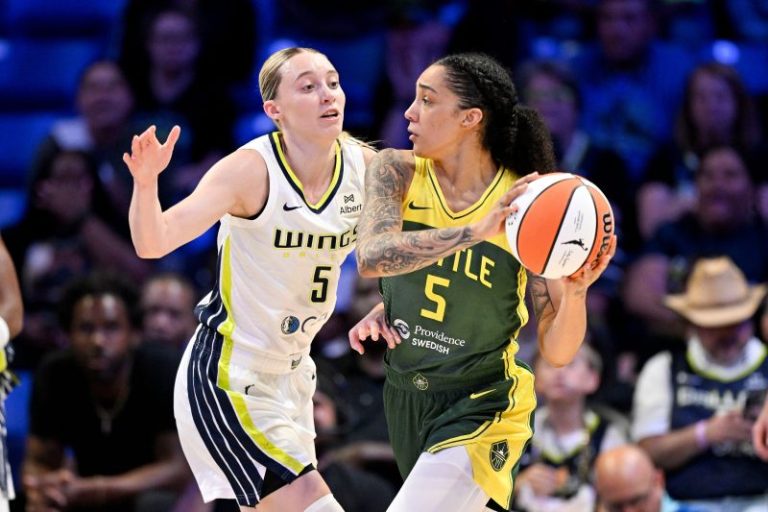
Paige Bueckers and the Dallas Wings hosted the Seattle Storm on Monday night.
Skylar Diggins and the Storm were coming off a season-opening loss to the Phoenix Mercury on the road. Meanwhile, the Wings looked to bounce back from a season-opening loss to the Minnesota Lynx on Friday.
Bueckers, the No. 1 pick in the 2025 WNBA draft, had 10 points and seven rebounds in her pro debut against the Lynx. She did even better Monday in Arlington, Texas, in her second game, but the Storm got the better of the Wings, with a 79-71 road victory. Bueckers looked nothing like a rookie, scoring a team-high 19 points, while adding eight assists, five rebounds and two steals.
For a lot of this game, Dallas actually looked like the superior team, but the second and fourth quarters were not kind to the Wings. Seattle won those quarters by a combined score of 44-25.
Nneka Ogwumike led the Storm with a monster double-double of 23 points and 18 rebounds. Diggins tallied 21 points and nine assists, and Gabby Williams added 17 points, five rebounds and five assists.
USA TODAY Sports provided updates and highlights throughout the game. Scroll below for the full recap of Storm vs. Wings:
The fourth quarter got off to a slow start. With both teams playing to prevent three-pointers, it took over two minutes for the first bucket of the quarter, when after a Bueckers missed jump shot, Kaila Charles was able to grab the rebound and shovel a quick pass to Maddie Siegrist for an easy layup.
After that bucket though, it was all Seattle. The Storm scored eight points before the Wings could record another bucket. Arike Ogunbowale particularly struggled, shooting just 2-of-14 on the night and just 1-of-8 from three. Ogunbowale has earned a little leeway given her strong career, but her poor shooting definitely contributed to Seattle’s loss.
It’s been a back-and-forth affair. Even though the Storm have been leading for most of this game, the push-and-pull from Dallas has been unforgiving. Every time the Storm think they have figured something out, the Wings storm back to make it interesting, outscoring the Storm 20-10 in the third.
Bueckers improved drastically with her ball control between the second and third quarters, recording three assists, a huge part of Dallas’ comeback attempt. Although Bueckers only had four points, she had two rebounds and two steals as well, creating opportunities on both ends of the floor, while Seattle has continued to rely on the Nneka Ogwumike (15 points), Gabby Williams (17), and Skylar Diggins (18) to provide almost all of the scoring. In fact, the rest of the Storm combined only have 14 points. Seattle will need someone else to step up in the final 10 minutes if they want to prevent Dallas from coming back.
Well, if you thought Dallas’ offensive outburst at the end of the first quarter would carry into the second, you’d be dead wrong. It was Seattle that stormed back (buh dum tss), almost furious at their performance at the end of the first.
The Storm outscored their opponents 31-15. Seattle shot 9-of-11 from beyond the arc.
Bueckers especially struggled in this quarter, tallying only five points (only three through the first 9.5 minutes) while recording some unfortunate turnovers in transition that led to points for Seattle. With about three minutes left in the quarter, there was one instance where a missed shot from the Storm led to a counterattack for Dallas. Bueckers tried threading the needle to her teammate who was out in front, but the pass was intercepted by Alysha Clark. On the ensuing defensive possession, Bueckers jumped in the air anticipating a pass, but Gabby Williams just drove past her instead and kicked the ball out to the corner, leading to a three-pointer from Skylar Diggins.
Bueckers has taken some big steps forward in between her first game and tonight. After all, she’s already set a career-high with 11 points, but plays like the one above will make it tough for Dallas to come back in the second half.
It’s been a close game through 10 minutes, with the Storm out in front of the Wings. Dallas’ Paige Bueckers had seven points in the first quarter, including a clutch three-pointer with under a minute to go to give Dallas the lead. The Wings ended the quarter on a 15-7 run.
Dallas’ passing also played a massive role in their comeback in the quarter. The team tallied seven assists on their first eight baskets and nine assists throughout the whole quarter. Myisha Hines-Allen had four of those assists for Dallas. However, Seattle’s Skylar Diggins leads all hoopers with five assists through the first.
Seattle’s Nneka Ogwumike leads all scorers with eight, but Dallas’ Bueckers and McCowan are close behind with seven and six respectively.
The Seattle Storm will play the Dallas Wings at College Park Center in Arlington, Texas, on Monday, May 19, 2025. Tip-off is scheduled for 8 p.m. ET.
Tyree writes, ‘Bueckers paced all Dallas Wings starters with 30 minutes in her debut and amassed 10 points alongside seven rebounds and a pair of assists. She wasn’t far off 22.5 despite shooting just 3-for-10 from the field against Minnesota. The WNBA is a step up from college but Bueckers shot better than 52% from the field in all four of her campaigns at UConn and only fell short of 41.0% from three in 2021-22.’
Dewey writes, ‘Seattle’s offense was stuck in mud in its season opener, while the Wings put up a cool 84 points in a loss to the Minnesota Lynx – who were one of the best defensive teams in the WNBA last season. Trading away Loyd for draft capital signaled to me that the Storm were willing to take a step back, and they lack proven scoring options after Skylar Diggins and Nneka Ogwumike.’
Edgington writes, ‘Paige Bueckers did score 10 points in her first WNBA game, but did so on only 30% shooting and zero made threes, along with four free throws. Hopefully, having first-game jitters out of the way, she has a more efficient shooting night against the Storm.’
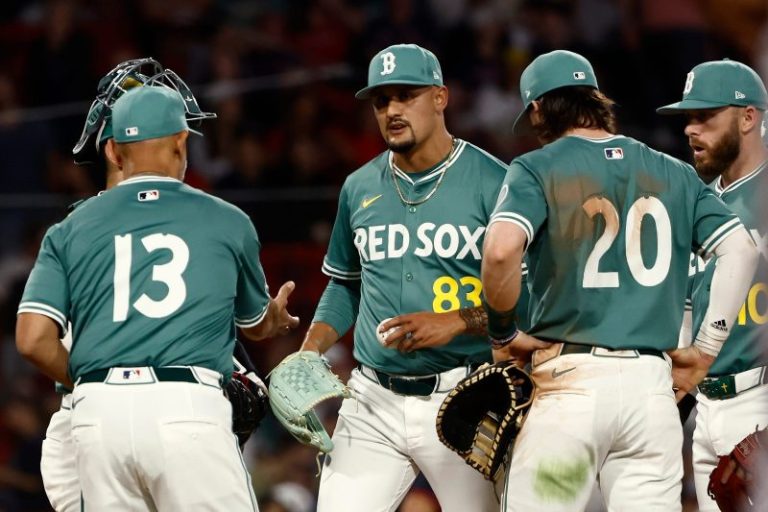
In reality, Rafael Devers is among the least of the Boston Red Sox’s worries.
Devers’ reticence – or flat-out refusal – to move to first base after he agreed to a shift to designated hitter created plenty of headlines and prompted owner John Henry to fly to Kansas City and talk it out with his $313.5 million slugger.
Unfortunately for the Red Sox, Henry didn’t pack any pitching reinforcements on the plane.
Since that summit, Devers has been nearly unstoppable – with 15 hits in 34 at-bats, three homers and 13 RBIs in nine games. But the Red Sox are slowly slipping from shouting distance of the first-place New York Yankees, with 11 losses in their past 17 games to fall six spots in USA TODAY Sports’ power rankings.
It might have been 12 losses in 17 games if not for Devers, who saved them with his first career walk-off homer against Atlanta on Saturday.
A few hours later in the series finale, he erased an early deficit 3-0 with a grand slam. But the Red Sox gave up that lead and more, as they’ve done often lately. In losing five of its last six, Boston has twice given up 10 runs in a game and 14 in another. Their rotation ERA now languishes at 4.28, 22nd in the majors.
And nowadays, that means it doesn’t much matter how many runs the Red Sox score.
A look at our updated rankings:
The USA TODAY app gets you to the heart of the news — fast. Download for award-winning coverage, crosswords, audio storytelling, the eNewspaper and more.
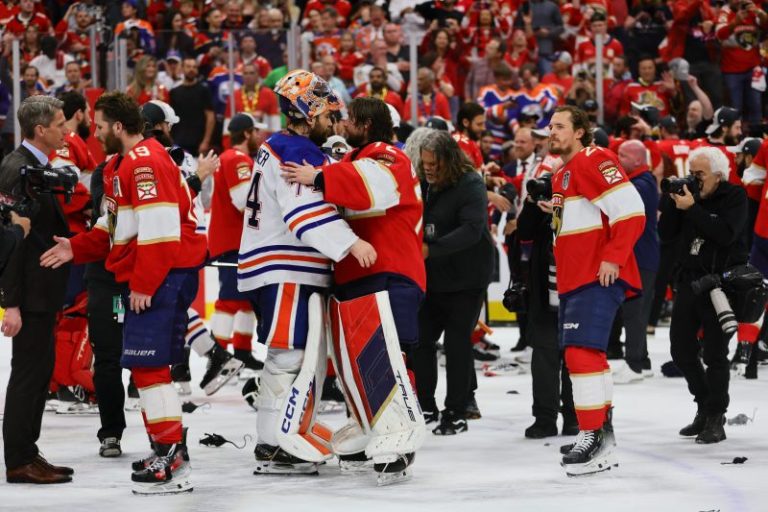
The Edmonton Oilers and Dallas Stars are facing each other in the NHL Western Conference finals for the second year in a row, starting Wednesday night in Dallas.
In the Eastern Conference finals, the Florida Panthers and Carolina Hurricanes will meet in a rematch of the 2023 series. That series will open on Tuesday in Raleigh, North Carolina.
That leaves four possible matchups in the Stanley Cup Final: Stars vs. Hurricanes, Stars vs. Panthers, Oilers vs. Hurricanes or Oilers vs. Panthers, last year’s championship round.
Which matchup would be the best one to watch? All have their merits. USA TODAY ranks the four possibilities for the 2025 Stanley Cup Final:
Why not a rematch? Last year’s Stanley Cup Final certainly was entertaining, at least by the end. Florida won the first three games and appeared poised to sweep, only to be blown out 8-1 in Game 4. The Oilers forced a Game 7, but the Panthers found their game and won 2-1 at home for their first Stanley Cup title.
Both teams are filled with stars and are deeper than they were last season. Edmonton and Florida have the top offenses of the four remaining teams. Plus, the storylines abound. Can the Panthers repeat, and would we call them a dynasty if they do after three consecutive trips to the final? Will the Oilers become the first Canadian team since the 1993 Montreal Canadiens to win the Stanley Cup? Will Edmonton’s Connor McDavid, last year’s playoff MVP, and Leon Draisaitl win their first championships? The Oilers would have home-ice advantage this time.
Want some fresher faces? This one works. Dallas was last in the final in 2020, Carolina in 2006. Plus, there is the Mikko Rantanen factor. He already beat the Colorado Avalanche this postseason after that team surprisingly traded him to the Hurricanes earlier in the season. He would have a chance to knock off another former team because the Hurricanes dealt him to the Stars when they feared he wouldn’t sign in Carolina. He has been a force in the playoffs with a league-best nine goals and 19 points. The Hurricanes, though, have been good at neutralizing other teams’ stars. Carolina’s Andrei Svechnikov is right behind Rantanen with eight goals.
These teams were well-represented at the 4 Nations Face-Off, so there is top-end talent. The Finnish Olympic team certainly would be paying attention. These teams also have the best remaining power plays. Panthers coach Paul Maurice and Stars coach Peter DeBoer are friends and are highly quotable. We would want this to go to Game 7 because DeBoer is 9-0 in winner-take-all games and Maurice is 6-0.
This would be the top remaining offense (Edmonton) vs. the best defense (Carolina), though the Hurricanes’ style isn’t always the most exciting to watch. This would also be a rematch of the 2006 Stanley Cup Final. The Hurricanes led that series 3-1, but the eighth-seeded Oilers fought back before Carolina won in Game 7. Rod Brind’Amour was the first player to lift the Stanley Cup as Hurricanes captain. Will he get to lift the trophy for the first time as a coach?

(TheNewswire)
TORONTO, ON TheNewswire – May 20, 2025 Silver Crown Royalties Inc. ( Cboe: SCRI, OTCQX: SLCRF, BF: QS0 ) ( ‘Silver Crown’ ‘SCRi’ the ‘Corporation’ or the ‘Company’ ) is pleased to announce a non-brokered offering (the ‘ Offering ‘) for gross proceeds of up to C$2,000,000.
The Company intends to issue up to 307,692 units (‘ Units ‘) of the Company at a price of C$6.50 per Unit pursuant to the Offering. Each Unit will consist of one common share in the capital of the Company (‘ Common Share ‘) and one Common Share purchase warrant (‘ Warrant ‘). Each Warrant will be exercisable to acquire one (1) additional Common Share at an exercise price of C$13.00 for a period of three years from the date of the closing of the Offering (the ‘ Expiry Date ‘). Closing of the Offering will be subject to customary conditions precedent, including the prior approval of Cboe Canada Inc.
Peter Bures, Silver Crown’s Chief Executive Officer, commented, ‘In the current market environment, this financing paves the way to free cash flow in Q4 of this year by facilitating the completion of the second tranche of our silver royalty on PPX Mining Corp.’s Igor 4 project and other growth initiatives.’
ABOUT Silver Crown Royalties INC.
Founded by industry veterans, Silver Crown Royalties ( Cboe: SCRI | OTCQX: SLCRF | BF: QS0 ) is a publicly traded, silver royalty company. Silver Crown (SCRi) currently has four silver royalties of which three are revenue-generating. Its business model presents investors with precious metals exposure that allows for a natural hedge against currency devaluation while minimizing the negative impact of cost inflation associated with production. SCRi endeavors to minimize the economic impact on mining projects while maximizing returns for shareholders. For further information, please contact:
Silver Crown Royalties Inc.
Peter Bures, Chairman and CEO
Telephone: (416) 481-1744
Email: pbures@silvercrownroyalties.com
FORWARD-LOOKING STATEMENTS
This release contains certain ‘forward looking statements’ and certain ‘forward-looking information’ as defined under applicable Canadian and U.S. securities laws. Forward-looking statements and information can generally be identified by the use of forward-looking terminology such as ‘may’, ‘will’, ‘should’, ‘expect’, ‘intend’, ‘estimate’, ‘anticipate’, ‘believe’, ‘continue’, ‘plans’ or similar terminology. The forward-looking information contained herein is provided for the purpose of assisting readers in understanding management’s current expectations and plans relating to the future. Readers are cautioned that such information may not be appropriate for other purposes. Forward-looking statements and information include, but are not limited to, In the current market environment, this financing paves the way to free cash flow in Q4 of this year by facilitating the completion of the second tranche of our silver royalty on PPX Mining Corp.’s Igor 4 project and other growth initiatives’ . Forward-looking statements and information are based on forecasts of future results, estimates of amounts not yet determinable and assumptions that, while believed by management to be reasonable, are inherently subject to significant business, economic and competitive uncertainties and contingencies. Forward-looking information is subject to known and unknown risks, uncertainties and other factors that may cause the actual actions, events or results to be materially different from those expressed or implied by such forward-looking information, including but not limited to: the impact of general business and economic conditions; the absence of control over mining operations from which SCRi will purchase gold and other metals or from which it will receive royalty payments and risks related to those mining operations, including risks related to international operations, government and environmental regulation, delays in mine construction and operations, actual results of mining and current exploration activities, conclusions of economic evaluations and changes in project parameters as plans continue to be refined; accidents, equipment breakdowns, title matters, labor disputes or other unanticipated difficulties or interruptions in operations; SCRi’s ability to enter into definitive agreements and close proposed royalty transactions; the inherent uncertainties related to the valuations ascribed by SCRi to its royalty interests; problems inherent to the marketability of gold and other metals; the inherent uncertainty of production and cost estimates and the potential for unexpected costs and expenses; industry conditions, including fluctuations in the price of the primary commodities mined at such operations, fluctuations in foreign exchange rates and fluctuations in interest rates; government entities interpreting existing tax legislation or enacting new tax legislation in a way which adversely affects SCRi; stock market volatility; regulatory restrictions; liability, competition, the potential impact of epidemics, pandemics or other public health crises on SCRi’s business, operations and financial condition, loss of key employees. SCRi has attempted to identify important factors that could cause actual results to differ materially from those contained in forward-looking statements, there may be other factors that cause results not to be as anticipated, estimated or intended. There can be no assurance that such statements will prove to be accurate, as actual results and future events could differ materially from those anticipated in such statements. Accordingly, readers are advised not to place undue reliance on forward-looking statements or information. SCRi undertakes no obligation to update forward-looking information except as required by applicable law. Such forward-looking information represents management’s best judgment based on information currently available.
This document does not constitute an offer to sell, or a solicitation of an offer to buy, securities of the Company in Canada, the United States or any other jurisdiction. Any such offer to sell or solicitation of an offer to buy the securities described herein will be made only pursuant to subscription documentation between the Company and prospective purchasers. Any such offering will be made in reliance upon exemptions from the prospectus and registration requirements under applicable securities laws, pursuant to a subscription agreement to be entered into by the Company and prospective investors. There can be no assurance that forward-looking statements will prove to be accurate, as actual results and future events could differ materially from those anticipated in such statements. Accordingly, the reader is cautioned not to place undue reliance on forward-looking statements.
CBOE CANADA DOES NOT ACCEPT RESPONSIBILITY FOR THE ADEQUACY OR ACCURACY OF THIS NEWS RELEASE.
Copyright (c) 2025 TheNewswire – All rights reserved.
News Provided by TheNewsWire via QuoteMedia
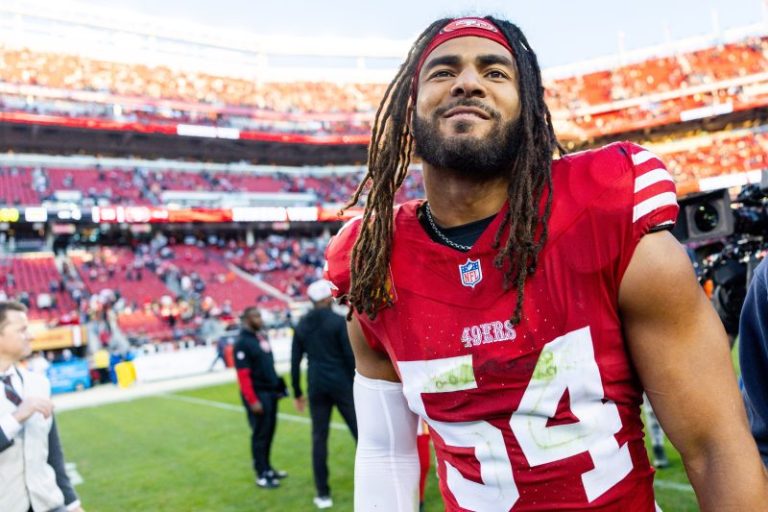
The San Francisco 49ers continue to dole out big-money contract extensions to their best players. Their latest extension is for linebacker Fred Warner.
Warner and the 49ers agreed to a three-year, $63 million contract extension including $56 million guaranteed, a source confirmed to USA TODAY Sports’ Tyler Dragon.
This is the second extension Warner’s signed since the 49ers drafted him in the third round, No. 70 overall in the 2018 NFL Draft out of BYU. He’s only missed one regular season game in seven years in the league and was a starter immediately.
Warner was a first-team All-Pro in 2020, the same year he made his first Pro Bowl. He’s made both in each of the last three seasons as one of the best linebackers in the NFL.
Warner had two years left on the extension he’d signed prior to the 2021 season. That deal made him the highest-paid linebacker in the league and this new extension does so again.
Warner joins tight end George Kittle and quarterback Brock Purdy among 49ers players who signed multi-year extensions this offseason. Kittle became the highest-paid tight end in the league with his deal.
The 2025 season marks Warner’s age-29 campaign and his eighth in the NFL. San Francisco’s defense could look much different this fall after losing players in free agency and bringing in new talent via the NFL Draft. Longtime coordinator Robert Saleh is back in the building as well.
Since Warner entered the league in 2018, only three players have tallied more tackles than him: Bobby Wagner, Roquan Smith and Foyesade Oluokun.
Here’s how his stats have looked every season:
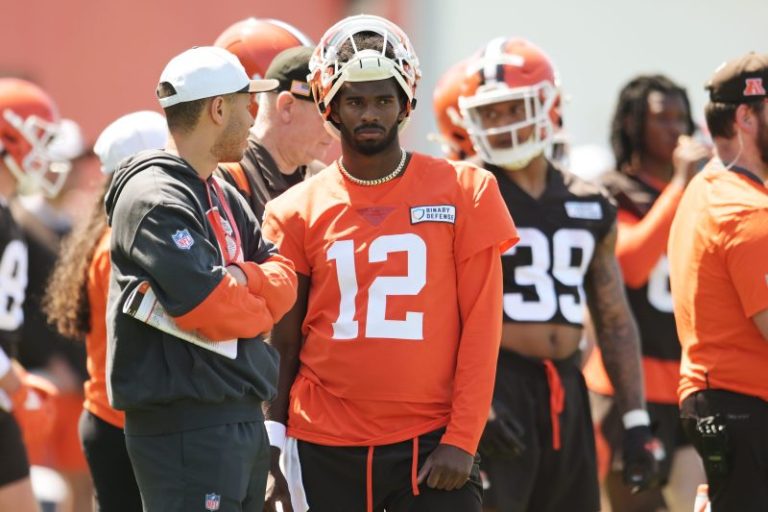
While he had to wait until the fifth round of the 2025 NFL Draft to hear his name called, the 144th pick didn’t have to wait long before inking his deal to play in the league.
The Cleveland Browns announced on Monday that they have signed Sanders to his rookie deal. The contract is a four-year deal worth $4.6 million. For reference, fellow 2025 draft pick and current teammate Dillon Gabriel will eventually receive a slotted four-year deal worth $6.2 million for being drafted two rounds earlier.
It hasn’t been an easy road this offseason, but the ink is dried and now the work begins. Here’s what to know about Sanders’ first NFL contract.
Sanders signed a four-year deal worth $4.6 million.
The quarterback will carry an average annual value (AAV) of about $1.16 million and received a signing bonus of $446,553, according to Spotrac.
It represents a steep drop from the contract that is slotted in the first round, which would’ve been a four-year deal worth over $40 million in total value if drafted inside the top five.
Early in the process, Sanders was considered in the running for the No. 2 pick, which later became his college teammate, Travis Hunter. The Jacksonville Jaguars’ two-way player received a contract worth $46.5 million in total value.
Sanders carried an NIL evaluation of $6.5 million, according to On3 Sports, but elected to pass on his final year of eligibility to enter the NFL draft.
The move hasn’t worked out from a monetary standpoint, but he did land on a team that presents an opportunity to start. It’s a crowded room in Cleveland, but anyone’s guess who eventually ends up with the job.
So while it’s a rocky start for Sanders in the pros, things change quickly – especially if he outplays that rookie deal.