Metals Australia (MLS:AU) has announced Thick High-Grade Graphite Drilling Results In New Zone
Download the PDF here.
This post appeared first on investingnews.com


Metals Australia (MLS:AU) has announced Thick High-Grade Graphite Drilling Results In New Zone
Download the PDF here.
Silver47 Exploration Corp. (TSXV: AGA) (OTCQB: AAGAF) (‘Silver47’ or the ‘Company’) is pleased to announce that it has been approved for graduation from Tier 2 to Tier 1 issuer status on the TSX Venture Exchange (the ‘TSXV’) effective May 23, 2025.
The TSXV classifies issuers into different tiers based on various factors, including financial performance, stage of development, and available resources. Tier 1 is the TSXV’s highest designation and is reserved for more advanced companies with significant financial resources. This upgrade signifies Silver47’s continued growth and its commitment to providing long-term value for its shareholders.
As a result of this graduation to Tier 1 status, the securities of Silver47, previously subject to the escrow provisions of Tier 2 issuers, will now be governed by the release provisions of Tier 1 issuers, with the securities being released over an 18-month period. The following securities will be immediately releasable: 3,952,748 common shares, 462,500 options, and 131,250 restricted share units and/or any common shares after the exercise of such convertible securities. The remaining escrowed securities will be releasable as follows: 3,952,763 common shares, 462,500 options, and 131,2500 restricted share units will be releasable on November 14, 2025, which is 12 months from listing (and/or any common shares after the exercise of such convertible securities); and 3,952,764 common shares, 462,500 options, and 131,250 restricted share units will be releasable on May 14, 2026, which is 18 months from listing (and/or any common shares after the exercise of such convertible securities).
About Silver47 Exploration Corp.
Silver47 Exploration Corp. is a Canadian-based exploration company that wholly-owns three silver and critical metals (polymetallic) exploration projects in Canada and the US. These projects include the Red Mountain Project in southcentral Alaska, a silver-gold-zinc-copper-lead-antimony-gallium VMS-SEDEX project. The Red Mountain Project hosts an inferred mineral resource estimate of 15.6 million tonnes at 7% ZnEq or 335.7 g/t AgEq, totaling 168.6 million ounces of silver equivalent, as reported in the NI 43-101 Technical Report dated March 2, 2023. The Company also owns the Adams Plateau Project in southern British Columbia, a silver-zinc-copper-gold-lead SEDEX-VMS project, and the Michelle Project in the Yukon Territory, a silver-lead-zinc-gallium-antimony MVT-SEDEX project. For detailed information regarding the resource estimates, assumptions, and technical reports, please refer to the NI 43-101 Technical Report and other filings available on SEDAR at www.sedarplus.ca. The Common Shares are traded on the TSXV under the ticker symbol AGA.
For more information about the Company, please visit www.silver47.ca and see the Technical Report filed on SEDAR+ (www.sedarplus.ca) and titled ‘Technical Report on the Red Mountain VMS Property Bonnifield Mining District, Alaska, USA with an effective date January 12, 2024, and prepared by APEX Geoscience Ltd.’.
Follow us on social media for the latest updates:
On Behalf of the Board of Directors
Mr. Gary R. Thompson
Director and CEO
gthompson@silver47.ca
For investor relations
Meredith Eades
info@silver47.ca
778.835.2547
No securities regulatory authority has either approved or disapproved of the contents of this release. Neither the TSXV nor its Regulation Services Provider (as that term is defined in the policies of the TSXV) accepts responsibility for the adequacy or accuracy of this release.
FORWARD-LOOKING STATEMENTS
This release contains certain ‘forward looking statements’ and certain ‘forward-looking information’ as defined under applicable Canadian securities laws. Forward-looking statements and information can generally be identified by the use of forward-looking terminology such as ‘may’, ‘will’, ‘expect’, ‘intend’, ‘estimate’, ‘upon’ ‘anticipate’, ‘believe’, ‘continue’, ‘plans’ or similar terminology. Forward-looking statements and information include, but are not limited to: trading as a Tier 1 issuer on the TSX Venture Exchange and release from escrow of escrowed shares; the statements in regards to existing and future products of the Company; and the Company’s plans and strategies. Forward-looking statements and information are based on forecasts of future results, estimates of amounts not yet determinable and assumptions that, while believed by management to be reasonable, are inherently subject to significant business, economic and competitive uncertainties and contingencies. Forward-looking statements and information are subject to various known and unknown risks and uncertainties, many of which are beyond the ability of the Company to control or predict, that may cause the Company’s actual results, performance or achievements to be materially different from those expressed or implied thereby, and are developed based on assumptions about such risks, uncertainties and other factors set out herein, including but not limited to: the ability to close the Offering, including the time and sizing thereof, the insider participation in the Offering and receipt of required regulatory approvals; the use of proceeds not being as anticipated; the Company’s ability to implement its business strategies; risks associated with general economic conditions; adverse industry events; stakeholder engagement; marketing and transportation costs; loss of markets; volatility of commodity prices; inability to access sufficient capital from internal and external sources, and/or inability to access sufficient capital on favourable terms; industry and government regulation; changes in legislation, income tax and regulatory matters; competition; currency and interest rate fluctuations; and the additional risks identified in the Company’s financial statements and the accompanying management’s discussion and analysis and other public disclosures recently filed under its issuer profile on SEDAR+ and other reports and filings with the TSXV and applicable Canadian securities regulators. The forward-looking information are made based on management’s beliefs, estimates and opinions on the date that statements are made and the Company undertakes no obligation to update forward-looking statements if these beliefs, estimates and opinions or other circumstances should change, except as required by applicable securities laws.
No forward-looking statement can be guaranteed, and actual future results may vary materially. Accordingly, readers are advised not to place undue reliance on forward-looking statements.
To view the source version of this press release, please visit https://www.newsfilecorp.com/release/253159
News Provided by Newsfile via QuoteMedia
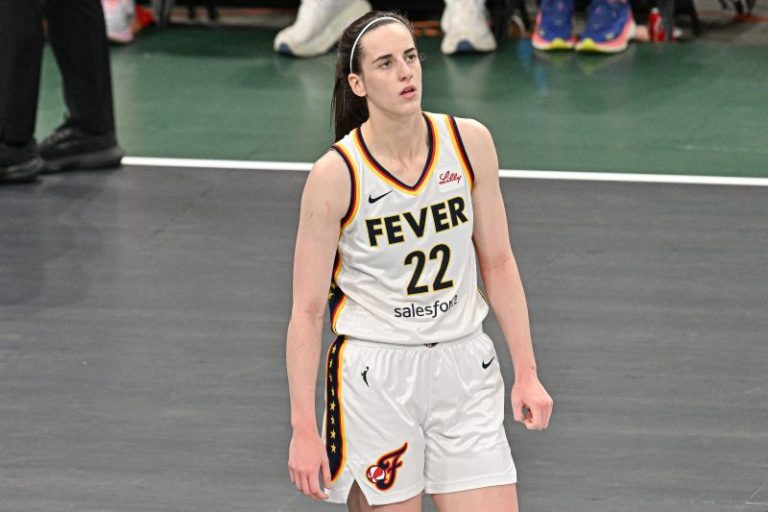
No Caitlin Clark 3-pointers? No problem for the Indiana Fever.
The Fever star didn’t hit a single 3-pointer for the first time in her WNBA career, but her team held on to beat the Atlanta Dream 81-76 on Thursday.
It was a frustrating 3-point shooting night for Indiana overall, but especially for Clark. She was mostly quiet on the night as she dealt with foul trouble, finishing with 11 points, six assists and four rebounds. From 3-point land, she went 0-for-5.
It’s the first time she’s played a game without a made 3 since Jan. 13, 2022, when she was a sophomore at Iowa.
Despite the tough night for Clark, Indiana dominated near the bucket. Natasha Howard had a game-high 26 points on 12-for-17 shooting as the Fever outscored Atlanta 46-20 in the paint. The Dream did most of their damage from behind the arc with 10 made 3-pointers. Rhyne Howard led Atlanta with 24 points and three makes from behind the arc.
It was back-and-forth for much of the game and Atlanta led with less than three minutes to go, but Kelsey Mitchell made her first 3-pointer of the night when it mattered most, putting the Fever ahead for good with 85 seconds left. Indiana closed the game on a 10-1 run.
Indiana gets revenge after Atlanta defeated the Fever at Gainbridge Fieldhouse on Tuesday and moves to 2-1 on the season.
Indiana is on its way to hanging on, leading 80-76 with five seconds left. Caitlin Clark found Aliyah Boston for a critical layup to extend the lead, and Atlanta couldn’t respond.
Kelsey Mitchell hits her first 3-pointer of the game to give Indiana a 76-75 lead. Caitlin Clark then hits one of two free throw attempts to make it a two-point ballgame in the final minute.
It’s been a frustrating night for Clark, and it could end early. She picked up her fifth foul with 2:32 left in the game and one more will result in her fouling out. Atlanta has a 75-71 lead.
It’s another early exit for Brittney Griner. She fouls out with 3:38 left in the contest, the second straight game she has fouled out against Indiana. It wasn’t a quiet night for Griner as she was mostly in foul trouble with five points, seven rebounds and one block.
Atlanta leads 71-68.
This game looks like it will go down to the wire with the Fever up by three points with 10 minutes left.
Atlanta had a run sparked by Te-Hina Paopao to tie it midway through the third quarter before Indiana gained some control back. Despite the lead, it’s been a relatively quiet night for Clark as she has just six points, five assists and one rebound. However, it’s been the Natasha Howard show for Indiana. She’s been efficient on the floor with a game-high 21 points on 10-for-14 shooting as the Fever have dominated near the bucket.
Despite not shooting the ball as well as Indiana, Atlanta has relied on the 3-point shot to keep the game close with nine deep shots made.
An 8-0 run by Atlanta has the score knotted up at 46-all with 5:31 left in the third quarter. The run has been sparked by rookie Te-Hina Paopao, who drilled back-to-back 3-pointers and has 11 points on the night. She’s one of three Atlanta players in double-figures alongside Rhyne Howard and Brionna Jones.
A furious second quarter by the Fever has given Indiana a slight lead at halftime. After trailing by as much as eight points in the first quarter, Indiana got out to an 11-0 run to start the second frame and outscored Atlanta 24-16 in the quarter. It was primarily Kelsey Mitchell that got the Fever going with all nine of her points so far coming in the second quarter.
Rhyne Howard and Brionna Jones have been clicking for Atlanta as they account for 24 of the Dream’s points. Each player has also made two 3-pointers.
It was a mostly quiet effort from Clark in the first half with just four points, and she already has three fouls.
Sophie Cunningham has made a positive impact in her first game with Indiana as she’s dealt with an ankle injury. She was a +12 in the first half with five points, five rebounds and three assists.
Indiana is starting to click with a 11-0 run to start the second quarter to take a 24-18 lead.
Atlanta used a hot start to get an early lead on Indiana and lead by five after the first quarter.
The Dream started the game on a 12-4 run before Indiana’s offense found some rhythm to get back in the game. The combination of Rhyne Howard and Brionna Jones have done most of the damage for Atlanta with seven points each.
Clark was mostly quiet to start with just two points in the first 10 minutes.
Things have gotten chippy early with Clark and Howard exchanging words after they shoved each other.
Toward the end of the first quarter, Howard was guarding Clark as she brought the ball up court. A foul was called on Howard and immediately afterward, the two shoulder checked the other. Words were exchanged and the two were separated. No excessive foul was called on either player.
The Dream have gotten out to a solid start in their first home game of the season. Atlanta leads 12-4 with 4:33 left in the first quarter.
Indiana has struggled shooting and taking care of the ball. It’s just 2-for-8 from the field with four turnovers. Clark scored the first bucket of the night for the Fever and has two points.
The Indiana Fever vs. Atlanta Dream game will tip off at 7:30 p.m. ET on Thursday, May 22 at State Farm Arena in Atlanta.
Odds via BetMGM
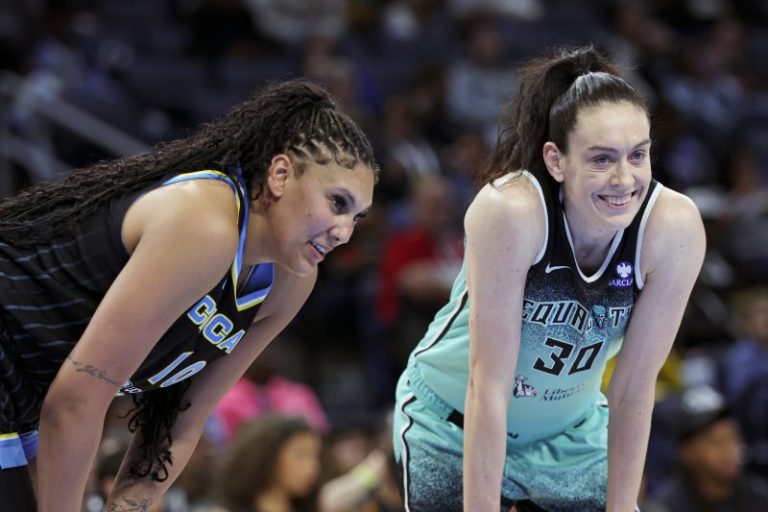
CHICAGO — News that the New York Liberty have a valuation of $450 million, a record for a women’s sports team, isn’t just cause for celebration.
It’s a warning shot.
The days of treating women’s teams like charity projects with owners thinking they can run their franchises on the cheap are over. You can either invest, like the Liberty’s Clara Wu Tsai and husband Joe Tsai have, or you’re going to get left behind.
That should have been clear after the Chicago Sky lost pretty much the entire 2021 championship team to free agency. Or from the mass exodus from the Connecticut Sun this past off-season.
If it wasn’t, and we’ll get to that in a moment, the Liberty valuation is making it clear. With fireworks and blaring lights, no less.
According to The Athletic, the Liberty recently sold a portion of the team to investors in a deal that valued the franchise at $450 million. That not only makes the defending champions the most valuable women’s franchise in the world, it is more than double a $208 million valuation for the Dallas Wings just a year ago.
“I’ve been in this league for a really long time, and it’s just great to see the evolution,” Liberty coach Sandy Brondello said ahead of Monday night’s game against the Sky.
“Everyone is pushing for excellence, and it does start at the top. It starts with ownership,” she said. “We’ve got the best owners in the WNBA and they’re going to keep pushing for us to keep growing, us and collectively as a league.”
This isn’t just a case of the Liberty being a New York team or having a roster of stars. Once relegated to suburban Westchester County, Wu Tsai has described the Liberty as “a distressed asset” when she and her husband bought them in 2019.
But they invested. Quickly and deeply. They moved the team to Brooklyn. Gave the team first-class facilities at Barclays Center. Created a mascot, Ellie the Elephant, who has become a social media phenomenon — and money maker — in her own right.
It was these kind of moves that attracted the big names, like MVPs Breanna Stewart and Jonquel Jones. The sponsors followed in droves. Liberty Mutual. Rihanna’s Fenty Beauty. Essie. And on and on it goes.
“It’s a testament to what investment will do,” said Natasha Cloud, who came to the Liberty in an off-season trade. “If you fully invest as our owners have, as our front office, as our staff has, that (valuation) number clearly is a reason as to why.
“That’s what we talk about when investing into women’s sports,” Cloud added. “It’s not only enough to be here supporting. You have to put your money into it, too, so that we can continue to climb. The demand has never been higher.”
This is where the warning part comes in.
The players know their value. They’ve always known it, but now that they know others do, too, they’re not going to settle for less. The smart owners know that, which is why we’ve seen the facilities arms race accelerate so quickly.
But there are still teams that are treading water. Yes, Los Angeles Sparks, Chicago Sky, Washington Mystics and Connecticut Sun, this means you.
The Sky did announce plans last year to build their own practice facility — not anywhere close to the city, mind you — and even had a groundbreaking ceremony. But now it’s delayed by six months. Which means Angel Reese, Kamilla Cardoso, Courtney Vandersloot and Co. will spend yet another season sharing their practice space with senior citizens and weekend warriors at a suburban rec center that is even less close to the city.
And despite the Sky saying they planned to recognize their 20th season with an anniversary logo “across on-court, in-arena, digital, content, and merch assets,” that logo was conspicuously absent from the Wintrust Arena court Thursday night.
These things sneak up on you, I guess.
Connecticut has at least acknowledged its inability to keep pace, with Sportico reporting two weeks ago that the Mohegan Sun have hired an investment firm to explore a sale of the franchise.
There’s money to be made in women’s sports. A lot of money, when the new $2 billion media rights deal begins next year. But like in all businesses, you’re going to have to spend money in order to make money.
Owners who can’t, or won’t, are on notice.
Follow USA TODAY Sports columnist Nancy Armour on social media @nrarmour.
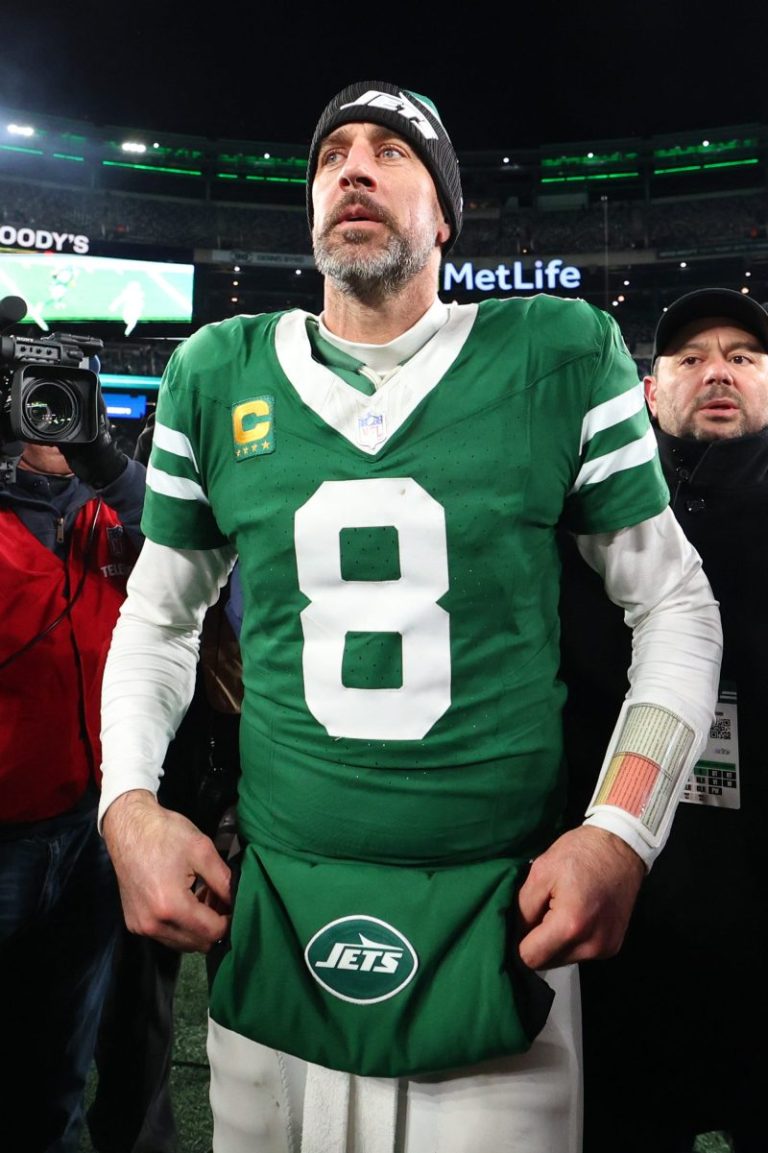
Aaron Rodgers has still not yet clarified whether he will play during the 2025 NFL season, even amid his strong connection to the Pittsburgh Steelers.
Pittsburgh appears to still be in a holding pattern six weeks later. Rooney echoed his patient approach when asked about the team’s pursuit of Rodgers as this week’s NFL owners meetings in Minneapolis.
‘A little while longer,’ Rooney said, per ESPN’s Jeremy Fowler. ‘I’ll say the same thing.’
Rooney did not provide further information about the state of the Steelers’ discussions with Rodgers. In April, the Steelers owner had expressed confidence the 41-year-old would eventually sign with the team.
‘We keep getting positive sort of signals about it,’ Rooney said at the NFL’s annual meeting, per ESPN’s Brooke Pryor. ‘So yeah, I’d say we feel pretty good about it at this point.’
The Steelers presently have three quarterbacks on their roster, none of whom were with the team in 2024. Mason Rudolph, who spent six seasons with the Steelers before playing for the Tennessee Titans last season, currently tops the team’s depth chart ahead of sixth-round rookie Will Howard and former Miami Dolphins quarterback Skylar Thompson.
Pittsburgh’s general manager Omar Khan made it clear the Steelers will carry four quarterbacks into training camp, so the team will likely sign another signal-caller soon. It’s just a matter of whether it will be Rodgers or someone else.
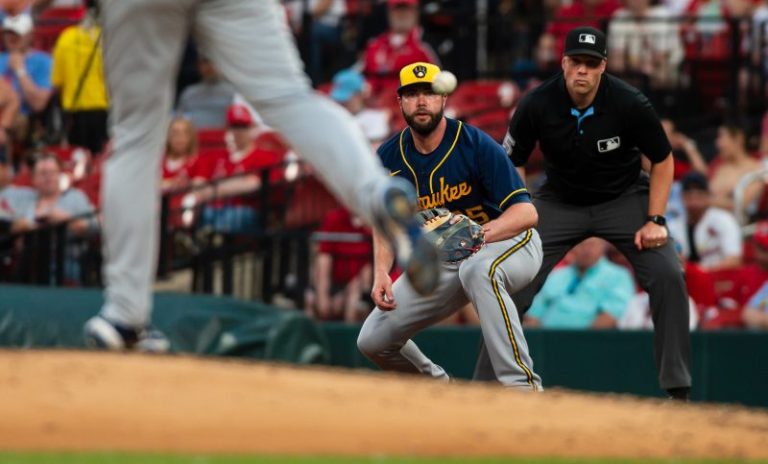
A former Milwaukee Brewers first baseman is suing the Cincinnati Reds over an injury at the ballpark he says ended his professional career.
While chasing a foul ball during a June 2023 game at Great American Ball Park, Darin Ruf injured himself on a tarp roller used to cover the infield during bad weather, according to a May 22 lawsuit filed in Hamilton County (Ohio) Common Pleas.
He fractured his kneecap and deeply lacerated his right knee, causing him to leave the game and be placed on the 60-day injured list, according to CBS Sports.
Ruf says the tarp roller had no protective cushioning or cap over the end of the roller, which was made of sharp metal. He also says he couldn’t see the exposed metal because a Gorilla Glue advertisement was covering it, according to the lawsuit.
“This didn’t need to happen. I wish it didn’t happen.” said Ruf in a news release. “Players shouldn’t have to worry about hidden hazards like that on a Major League field.”
A Cincinnati Reds spokesman did not immediately return The Enquirer’s request for comment.
Darin Ruf was a utility player in MLB for nine seasons, having stints with the Philadelphia Phillies, San Francisco Giants, New York Mets and Milwaukee Brewers. He also spent three years playing professionally in South Korea.
For his MLB career, Ruf registered a .239 batting average to go along with 67 home runs and 205 RBI. He also recorded an on-base percentage of .329.
He was 36 years old when he suffered the knee injury at Great American Ball Park in 2023.
The USA TODAY app gets you to the heart of the news — fast. Download for award-winning coverage, crosswords, audio storytelling, the eNewspaper and more.
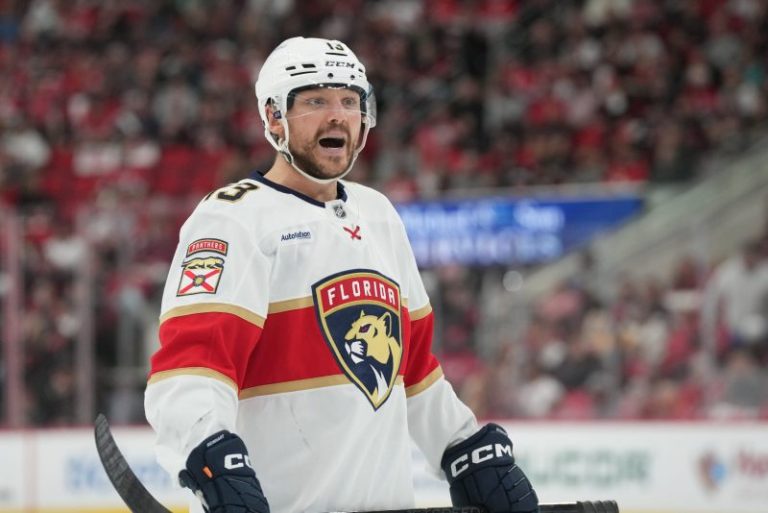
The only downside to the Florida Panthers’ dominant 5-0 win in Game 2 against the Carolina Hurricanes on Thursday was that key forward Sam Reinhart went down with an injury.
The Panthers announced during the second period that Reinhart, who was sent flying by a Sebastian Aho hit in the first period, had a lower-body injury and wouldn’t return to the game. He had been grimacing on the bench before heading to the dressing room.
Panthers coach Paul Maurice had no update after the game, saying Reinhart would be examined on Friday. He expected to have an answer by Saturday.
Reinhart plays on the top line with Aleksander Barkov and had 57 goals last season. He’s a finalist (along with Barkov) for the Selke Trophy as top defensive forward after finishing with five short-handed goals.
The Panthers had a 3-0 lead after one period but still had two periods to play. Other players, including fourth-liner A.J. Greer, rotated onto the top line throughout the rest of the game.
‘That guy, you can’t really replace. He does everything,’ Barkov said of Reinhart. ‘Every single guy who played there, he was great.’
The USA TODAY app gets you to the heart of the news — fast. Download for award-winning coverage, crosswords, audio storytelling, the eNewspaper and more.
It took six months, countless hours on hold and intervention from state regulators before Sue Cover says she finally resolved an over $1,000 billing dispute with UnitedHealthcare in 2023.
Cover, 46, said she was overbilled for emergency room visits for her and her son, along with a standard ultrasound. While Cover said her family would eventually have been able to pay the sum, she said it would have been a financial strain on them.
Cover, a San Diego benefits advocate, said she had conversations with UnitedHealthcare that “felt like a circular dance.” Cover said she picked through dense policy language and fielded frequent calls from creditors. She said the experience felt designed to exhaust patients into submission.
“It sometimes took my entire day of just sitting on the phone, being on hold with the hospital or the insurance company,” Cover said.
Cover’s experience is familiar to many Americans. And it embodies rising public furor toward insurers and in particular UnitedHealthcare, the largest private health insurer in the U.S., which has become the poster child for problems with the U.S. insurance industry and the nation’s sprawling health-care system.
The company and other insurers have faced backlash from patients who say they were denied necessary care, providers who say they are buried in red tape and lawmakers who say they are alarmed by its vast influence.
UnitedHealthcare in a statement said it is working with Cover’s provider to “understand the facts of these claims.” The company said it is “unfortunate that CNBC rushed to publish this story without allowing us and the provider adequate time to review.” CNBC provided the company several days to review Cover’s situation before publication.
Andrew Witty, CEO of UnitedHealthcare’s company, UnitedHealth Group, stepped down earlier this month for what the company called “personal reasons.” Witty had led the company through the thick of public and investor blowback. The insurer also pulled its 2025 earnings guidance this month, partly due to rising medical costs, it said.
UnitedHealth Group is by far the biggest company in the insurance industry by market cap, worth nearly $275 billion. It controls an estimated 15% of the U.S. health insurance market, serving more than 29 million Americans, according to a 2024 report from the American Medical Association. Meanwhile, competitors Elevance Health and CVS Health control an estimated 12% of the market each.
It’s no surprise that a company with such a wide reach faces public blowback. But the personal and financial sensitivity of health care makes the venom directed at UnitedHealth unique, some experts told CNBC.
Shares of UnitedHealth Group are down about 40% this year following a string of setbacks for the company, despite a temporary reprieve sparked in part by share purchases by company insiders. In the last month alone, UnitedHealth Group has lost nearly $300 billion of its $600 billion market cap following Witty’s exit, the company’s rough first-quarter earnings and a reported criminal probe into possible Medicare fraud.
In a statement about the investigation, UnitedHealth Group said, “We stand by the integrity of our Medicare Advantage program.”
Over the years, UnitedHealthcare and other insurers have also faced numerous patient and shareholder lawsuits and several other government investigations.
UnitedHealth Group is also contending with the fallout from a February 2024 ransomware attack on Change Healthcare, a subsidiary that processes a significant portion of the country’s medical claims.
More recently, UnitedHealthcare became a symbol for outrage toward insurers following the fatal shooting of its CEO, Brian Thompson, in December. Thompson’s death reignited calls to reform what many advocates and lawmakers say is an opaque industry that puts profits above patients.
The problems go deeper than UnitedHealth Group: Insurers are just one piece of what some experts call a broken U.S. health-care system, where many stakeholders, including drugmakers and pharmacy benefit managers, are trying to balance patient care with making money. Still, experts emphasized that insurers’ cost-cutting tactics — from denying claims to charging higher premiums — can delay or block crucial treatment, leave patients with unexpected bills, they say, or in some cases, even mean the difference between life and death.
In a statement, UnitedHealthcare said it is ″unfortunate that CNBC appears to be drawing broad conclusions based on a small number of anecdotes.”
Frustration with insurers is a symptom of a broader problem: a convoluted health-care system that costs the U.S. more than $4 trillion annually.
U.S. patients spend far more on health care than people anywhere else in the world, yet have the lowest life expectancy among large, wealthy countries, according to the Commonwealth Fund, an independent research group. Over the past five years, U.S. spending on insurance premiums, out-of-pocket co-payments, pharmaceuticals and hospital services has also increased, government data show.
While many developed countries have significant control over costs because they provide universal coverage, the U.S. relies on a patchwork of public and private insurance, often using profit-driven middlemen to manage care, said Howard Lapin, adjunct professor at the University of Illinois Chicago School of Law.
But the biggest driver of U.S. health spending isn’t how much patients use care — it’s prices, said Richard Hirth, professor of health management and policy at the University of Michigan.
There is “unbelievable inflation of the prices that are being charged primarily by hospitals, but also drug companies and other providers in the system,” said Sabrina Corlette, co-director of the Center on Health Insurance Reforms at Georgetown University.
Lapin said factors such as overtreatment, fraud, health-care consolidation and administrative overhead raise costs for payers and providers, who then pass those on through higher prices. U.S. prescription drug prices are also two to three times higher than those in other developed countries, partly due to limited price regulation and pharmaceutical industry practices such as patent extensions.
While patients often blame insurers, the companies are only part of the problem. Some experts argue that eliminating their profits wouldn’t drastically lower U.S. health-care costs.
Still, UnitedHealthcare and other insurers have become easy targets for patient frustration — and not without reason, according to industry experts.
Their for-profit business model centers on managing claims to limit payouts, while complying with regulations and keeping customers content. That often means denying services deemed medically unnecessary, experts said. But at times, insurers reject care that patients need, leaving them without vital treatment or saddled with hefty bills, they added.
Insurers use tools such as deductibles, co-pays, and prior authorization — or requiring approval before certain treatments — to control costs. Industry experts say companies are increasingly relying on artificial intelligence to review claims, and that can sometimes lead to inaccurate denials.
“It’s all part of the same business model — to avoid paying as many claims as possible in a timely fashion,” said Dylan Roby, an affiliate at the UCLA Center for Health Policy Research.
While other private U.S. insurers employ many of the same tactics, UnitedHealth Group appears to have faced the most public backlash due to its size and visibility.
UnitedHealth Group’s market value dwarfs the sub-$100 billion market caps of competitors such as CVS, Cigna and Elevance. UnitedHealth Group booked more than $400 billion in revenue in 2024 alone, up from roughly $100 billion in 2012.
It has expanded into many parts of the health-care system, sparking more criticism of other segments of its business — and the company’s ability to use one unit to benefit another.
UnitedHealth Group grew by buying smaller companies and building them into its growing health-care business. The company now serves nearly 150 million people and controls everything from insurance and medical services to sensitive health-care data.
UnitedHealth Group owns a powerful pharmacy benefit manager, or PBM, called Optum Rx, which gives it even more sway over the market.
PBMs act as middlemen, negotiating drug rebates on behalf of insurers, managing lists of drugs covered by health plans and reimbursing pharmacies for prescriptions. But lawmakers and drugmakers accuse them of overcharging plans, underpaying pharmacies and failing to pass savings on to patients.
Owning a PBM gives UnitedHealth Group control over both supply and demand, Corlette said. Its insurance arm influences what care is covered, while Optum Rx determines what drugs are offered and at what price. UnitedHealth Group can maximize profits by steering patients to lower-cost or higher-margin treatments and keeping rebates, she said.
The company’s reach goes even further, Corlette added: Optum Health now employs or affiliates with about 90,000 doctors — nearly 10% of U.S. physicians — allowing UnitedHealth Group to direct patients to its own providers and essentially pay itself for care.
A STAT investigation last year found that UnitedHealth uses its physicians to squeeze profits from patients. But the company in response said its “providers and partners make independent clinical decisions, and we expect them to diagnose and document patient information completely and accurately in compliance with [federal] guidelines.”
Other insurers, such as CVS and Cigna, also own large PBMs and offer care services. But UnitedHealth Group has achieved greater scale and stronger financial returns.
“I think the company is certainly best in class when it comes to insurers, in terms of providing profits for shareholders,” said Roby. “But people on the consumer side probably say otherwise when it comes to their experience.”
No one knows exactly how often private insurers deny claims, since they aren’t generally required to report that data. But some analyses suggest that UnitedHealthcare has rejected care at higher rates than its peers for certain types of plans.
A January report by nonprofit group KFF found that UnitedHealthcare denied 33% of in-network claims across Affordable Care Act plans in 20 states in 2023, one of the highest rates among major insurers. CVS denied 22% of claims across 11 states, and Cigna denied 21% in eight states.
UnitedHealth did not respond to a request for comment on that report. But in December, the company also pushed back on public criticism around its denial rates, saying it approves and pays about 90% of claims upon submission. UnitedHealthcare’s website says the remaining 10% go through an additional review process. The company says its claims approval rate stands at 98% after that review.
In addition, UnitedHealth Group is facing lawsuits over denials. In November, families of two deceased Medicare Advantage patients sued the company and its subsidiary, alleging it used an AI model with a “90% error rate” to deny their claims. UnitedHealth Group has argued it should be dismissed from the case because the families didn’t complete Medicare’s appeals process.
A spokesperson for the company’s subsidiary, NaviHealth, also previously told news outlets that the lawsuit “has no merit” and that the AI tool is used to help providers understand what care a patient may need. It does not help make coverage decisions, which are ultimately based on the terms of a member’s plan and criteria from the Centers for Medicare & Medicaid Services, the spokesperson said.
Meanwhile, the reported Justice Department criminal probe outlined by the Wall Street Journal targets the company’s Medicare Advantage business practices. In its statement, the company said the Justice Department has not notified it about the reported probe, and called the newspaper’s reporting “deeply irresponsible.”
Inside the company, employees say customers and workers alike face hurdles.
One worker, who requested anonymity for fear of retaliation, said UnitedHealthcare’s provider website often includes doctors listed as in-network or accepting new patients when they’re not, leading to frequent complaints. Management often replies that it’s too difficult to keep provider statuses up to date, the person said.
UnitedHealthcare told CNBC it believes “maintaining accurate provider directories is a shared responsibility among health plans and providers,” and that it “proactively verifies provider data on a regular basis.” The vast majority of all inaccuracies are due to errors or lack of up-to-date information submitted by providers, the company added.
Emily Baack, a clinical administrative coordinator at UMR, a subsidiary of UnitedHealthcare, criticized the length of time it can take a provider to reach a real support worker over the phone who can help assess claims or prior authorization requests. She said the company’s automated phone system can misroute people’s calls or leave them waiting for a support person for over an hour.
But Baack emphasized that similar issues occur across all insurance companies.
She said providers feel compelled to submit unnecessary prior authorization requests out of fear that claims won’t be paid on time. Baack said that leads to a massive backlog of paperwork on her end and delays care for patients.
UnitedHealthcare said prior authorization is “an important checkpoint” that helps ensure members are receiving coverage for safe and effective care.
The company noted it is “continually taking action to simplify and modernize the prior authorization process.” That includes reducing the number of services and procedures that require prior authorization and exempting qualified provider groups from needing to submit prior authorization requests for certain services.
While UnitedHealthcare is not the only insurer facing criticism from patients, Thompson’s killing in December reinforced the company’s unique position in the public eye. Thousands of people took to social media to express outrage toward the company, sharing examples of their own struggles.
The public’s hostile reaction to Thompson’s death did not surprise many industry insiders.
Alicia Graham, co-founder and chief operating officer of the startup Claimable, said Thompson’s murder was “a horrible crime.” She also acknowledged that anger has been bubbling up in various online health communities “for years.”
Claimable is one of several startups trying to address pain points within insurance. It’s not an easy corner of the market to enter, and many of these companies, including Claimable, have been using the AI boom to their advantage.
Claimable, founded in 2024, said it helps patients challenge denials by submitting customized, AI-generated appeal letters on their behalf. The company can submit appeals for conditions such as migraines and certain pediatric and autoimmune diseases, though Graham said it is expanding those offerings quickly.
Many patients aren’t aware that they have a right to appeal, and those who do can spend hours combing through records to draft one, Graham said. If patients are eligible to submit an appeal letter through Claimable, she said they can often do so in minutes. Each appeal costs users $39.95 plus shipping, according to the company’s website.
“A lot of patients are afraid, a lot of patients are frustrated, a lot of patients are confused about the process, so what we’ve tried to do is make it all as easy as possible,” Graham told CNBC.
Some experts have warned about the possibility of health-care “bot wars,” where all parties are using AI to try to gain an edge.
Mike Desjadon, CEO of the startup Anomaly, said he’s concerned about the potential for an AI arms race in the sector, but he remains optimistic. Anomaly, founded in 2020, uses AI to help providers determine what insurers are and aren’t paying for in advance of care, he said.
“I run a technology company and I want to win, and I want our customers to win, and that’s all very true, but at the same time, I’m a citizen and a patient and a husband and a father and a taxpayer, and I just want health care to be rational and be paid for appropriately,” Desjadon told CNBC.
Dr. Jeremy Friese, founder and CEO of the startup Humata Health, said patients tend to interact with insurers only once something goes wrong, which contributes to their frustrations. Requirements such as prior authorization can be a “huge black box” for patients, but they’re also cumbersome for doctors, he said.
Friese said his business was inspired by his work as an interventional radiologist. In 2017, he co-founded a prior-authorization company called Verata Health, which was acquired by the now-defunct health-care AI startup Olive. Friese bought back his technology and founded his latest venture, Humata, in 2023.
Humata uses AI to automate prior authorization for all specialties and payers, Friese said. The company primarily works with medium and large health systems, and it announced a $25 million funding round in June.
“There’s just a lot of pent-up anger and angst, frankly, on all aspects of the health-care ecosystem,” Friese told CNBC.
UnitedHealth Group also set a grim record last year that did little to help public perception. The company’s subsidiary Change Healthcare suffered a cyberattack that affected around 190 million Americans, the largest reported health-care data breach in U.S. history.
Change Healthcare offers payment and revenue cycle management tools, as well as other solutions, such as electronic prescription software. In 2022, it merged with UnitedHealth Group’s Optum unit, which touches more than 100 million patients in the U.S.
In February 2024, a ransomware group called Blackcat breached part of Change Healthcare’s information technology network. UnitedHealth Group isolated and disconnected the affected systems “immediately upon detection” of the threat, according to a filing with the U.S. Securities and Exchange Commission, but the ensuing disruption rocked the health-care sector.
Money stopped flowing while the company’s systems were offline, so a major revenue source for thousands of providers across the U.S. screeched to a halt. Some doctors pulled thousands of dollars out of their personal savings to keep their practices afloat.
“It was and remains the largest and most consequential cyberattack against health care in history,” John Riggi, the national advisor for cybersecurity and risk at the American Hospital Association, told CNBC.
Ransomware is a type of malicious software that blocks victims from accessing their computer files, systems and networks, according to the Federal Bureau of Investigation. Ransomware groups such as Blackcat, which are often based in countries such as Russia, China and North Korea, will deploy this software, steal sensitive data and then demand a payment for its return.
Ransomware attacks within the health-care sector have climbed in recent years, in part because patient data is valuable and relatively easy for cybercriminals to exploit, said Steve Cagle, CEO of the health-care cybersecurity and compliance firm Clearwater.
“It’s been a very lucrative and successful business for them,” Cagle told CNBC. “Unfortunately, we’ll continue to see that type of activity until something changes.”
UnitedHealth Group paid the hackers a $22 million ransom to try to protect patients’ data, then-CEO Witty said during a Senate hearing in May 2024.
In March 2024, UnitedHealth Group launched a temporary funding assistance program to help providers with short-term cash flow.
The program got off to a rocky start, several doctors told CNBC, and the initial deposits did not cover their mounting expenses.
UnitedHealth Group ultimately paid out more than $9 billion to providers in 2024, according to the company’s fourth-quarter earnings report in January.
Witty said in his congressional testimony that providers would only be required to repay the loans when “they, not me, but they confirm that their cash flow is normalized.”
Almost a year later, however, the company is aggressively going after borrowers, demanding they “immediately repay” their outstanding balances, according to documents viewed by CNBC and providers who received funding. Some groups have been asked to repay hundreds of thousands of dollars in a matter of days, according to documents viewed by CNBC.
A spokesperson for Change Healthcare confirmed to CNBC in April that the company has started recouping the loans.
″We continue to work with providers on repayment and other options, and continue to reach out to those providers that have not been responsive to previous calls or email requests for more information,” the spokesperson said.
The pressure for repayment drew more ire toward UnitedHealth Group on social media, and some providers told CNBC that dealing with the company was a “very frustrating experience.”
The vast majority of Change Healthcare’s services have been restored over the last year, but three products are still listed as “partial service available,” according to UnitedHealth’s cyberattack response website.
Witty’s departure and the company’s warning about elevated medical costs, combined with the fallout from Thompson’s murder and the Change Healthcare cyberattack, could mean UnitedHealth faces an uphill battle.
UnitedHealth Group appears to be trying to regain the public’s trust. For example, Optum Rx in March announced plans to eliminate prior authorizations on dozens of drugs, easing a pain point for physicians and patients.
But policy changes at UnitedHealth Group and other insurers may not drastically improve care for patients, health insurance industry experts previously told CNBC.
They said there will need to be structural changes to the entire insurance industry, which will require legislation that may not be high on the priority list for the closely divided Congress.
The spotlight on UnitedHealth Group may only grow brighter in the coming months. The trial date for Luigi Mangione, the man facing federal stalking and murder charges in connection with Thompson’s shooting, is expected to be set in December. Mangione has pleaded not guilty to the charges.
As Burger King enters the next phase of its turnaround efforts, the fast-food chain is trying to lure families back to its restaurants with colored Whopper buns and kid-friendly movie partnerships.
Starting Tuesday, the Restaurant Brands International chain will sell new menu items inspired by the “live action” remake of “How to Train Your Dragon.” The collaboration is more than just a one-time partnership — it’s part of Burger King’s broader strategy to lift U.S. sales.
“Where we’re really starting to lean in now that we’ve made some progress in both operations and in our restaurants is on a family-first marketing strategy,” Burger King U.S. and Canada President Tom Curtis told CNBC.
Burger King’s U.S. business has been in turnaround mode for more than 2½ years. After falling behind burger rivals McDonald’s and Wendy’s, the company announced plans to invest hundreds of millions of dollars in a comeback strategy to renovate its restaurants, improve its operations and spend on advertising. The chain even bought its largest U.S. franchisee with the goal of accelerating its restaurant remodels.
“We’re finding that there will be chapters to this as we go through time, and right now is this family strategy chapter, where we’ve done enough work and transformed our restaurant operations to the extent that we’re proud of,” Curtis said. “We’re inviting families back in, and we’re finding that we’re getting better retention when they do come back in.”
Curtis said focusing on families gives Burger King the opportunity to attract customers across age cohorts, from millennials to Generation Alpha, which is roughly defined as people born between 2010 and 2025. Plus, parents’ avid use of social media means that word spreads quickly, giving the approach a leg up compared with targeting a single demographic that isn’t as enthusiastic online.
The limited-time themed menu items include the Dragon Flame-Grilled Whopper, with a red and orange marbled bun; Fiery Dragon Mozzarella Fries, made with Calabrian chili pepper breading; Soaring Strawberry Lemonade; and the Viking’s Chocolate Sundae, with Hershey’s syrup and black and green cookie crumbles.
Movie collaborations aren’t anything new for fast food — or Burger King. It was one of the first fast-food chains to lean into movie tie-ins. In 1977, the chain sold “Star Wars” drinking glasses ahead of the film’s release.
McDonald’s wasn’t far behind, following with a Star Trek-themed Happy Meal two years later, kicking off decades of movie, TV and toy tie-ins aimed at kids. More recently, the Golden Arches’ collaboration with “A Minecraft Movie” across more than 100 markets sold out within two weeks in the U.S., about half the time earmarked for the promotion.
In Burger King’s more recent past, under Curtis’ leadership, the chain has had two major partnerships: one with “Spider-Man: Across the Spider-Verse” two years ago and another with the Addams Family franchise, timed for Halloween last year.
Both of those menus featured Whoppers with thematic, colored buns, dyed using natural colorants, like beet juice or ube.
“Not having artificial dyes and colors is something that’s been important to us for a while,” Curtis said.
Burger King use of natural dyes comes as artificial food dyes have come under fire from health-concerned parents. Following a push from Health and Human Services Secretary Robert F. Kennedy Jr., the Food and Drug Administration recently announced plans to phase out the use of petroleum-based synthetic dyes in food and drinks.
The two previous collaborations also were Burger King’s top-selling Whopper innovations, based on the number sold, according to Curtis.
“What we found in the Addams Family promotion specifically was, as we dug into the property, traffic was fairly flat, but sales were up,” he said, attributing the sales growth to families, which have a higher average check than a solo diner or a couple.
The expected sales lift from the “How to Train Your Dragon” menu comes at a crucial time for Burger King.
In its most recent quarter, the company’s comeback stumbled. The chain’s U.S. same-store sales slid 1.1%, mirroring an industrywide slump as fears about the economy and bad weather kept diners at home.
But Curtis is confident that Burger King is on the right track, pointing to the chain’s relative outperformance compared with its two biggest competitors: McDonald’s and Wendy’s.
“I know that they’re scrambling, and sometimes, frankly, copying some of the things that we do, which, you know, plagiarism is the sincerest form of flattery,” he said. “When we see them doing that, it gives us more conviction to stay on course.”
When the live-action version of “How to Train Your Dragon” hits theaters on June 13, it’s expected to be one of the summer’s big blockbusters. After all, the animated trilogy has grossed more than $1.6 billion worldwide.
Burger King has similar expectations for its menu tie-in.
The past success of the Spider-Verse and Addams Family menu items pushed Burger King to “dramatically” up its forecast for the “How to Train Your Dragon” menu, according to Curtis. And Burger King is also planning on changing its advertising strategy, which could drastically increase demand for the Dragon Flamed-Grilled Whoppers.
“In the past, we would just kind of associate ourselves with the movie property, but we wouldn’t necessarily advertise the association — you’d just see it and hear about it in social media,” Curtis said.
The promotion is supposed to run through early July, but in case Burger King burns through its supply in just three weeks, the chain is prepared to monitor what locations have run out of the menu items. That’s a lesson it learned during its Spider-Verse promotion, when it had to launch a tracker on its website to help customers find the coveted Whopper.
As it learns from every experience, Burger King is planning to dive deeper into franchise partnerships, betting that the extra effort will drive long-term loyalty for the brand.
“We’re doing a couple more of them than we have in the past,” Curtis said. “We’ve got one toward the end of the year that we’re very, very excited about … and we’re getting some lined up for next year as well. In every one of those, we’ll go all in.”
Disclosure: Comcast owns CNBC and Universal Studios, the producer and distributor of “How to Train Your Dragon.”
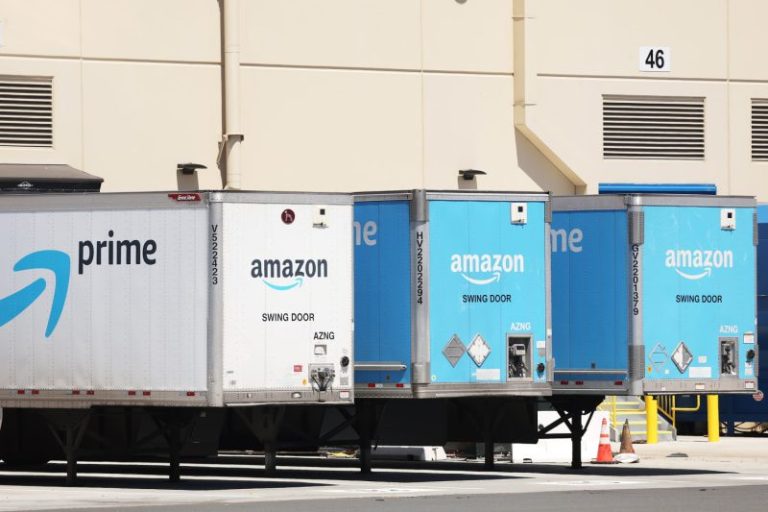
Department of Justice officials on Tuesday charged members or associates of an Armenian organized crime ring with stealing more than $83 million worth of cargo from Amazon by posing as legitimate truck drivers and siphoning off goods destined for the company’s warehouses.
Since at least 2021, at least four people linked to the crime ring carried out a scheme across California to steal truckloads of merchandise, ranging from smart TVs and GE icemakers to SharkNinja vacuums and air fryers, the DOJ alleged.
“At present, Amazon is plagued by recurring thefts of its shipments, which is commonly referred to as ‘cargo theft,’” the complaint says.
Amazon has ramped up its efforts to track and shut down fraudulent, deceptive and illegal activities on its sprawling online store. Eliminating stolen goods is particularly challenging. CNBC reported in 2023 that Amazon suspended dozens of third-party merchants it alleged were selling stolen goods, though many of those sellers claimed they were unknowingly caught in the scheme, putting their businesses at risk of survival.
Amazon isn’t the only retailer afflicted by cargo theft. Experts told CNBC cargo theft-related losses are estimated at close to $1 billion or more a year.
In its complaint, the DOJ said the alleged fraudsters operated four transport carriers — AK Transportation, NBA Holdings, Belman Transport and Markos Transportation — that would obtain contracted freight routes from Amazon Relay, an application used by truckers to obtain work, also referred to as loads.
Each trucker is assigned a load for pickup from a manufacturer’s warehouse to be dropped off at an Amazon facility. Instead, the groups would divert from their designated routes, take a portion of the goods off the trucks and resell them or gift them to associates, prosecutors allege.
In some cases, the “self-styled carriers” would complete their deliveries at an Amazon warehouse several days after they were expected to show up, according to the complaint.
DOJ officials seized the alleged fraudsters’ iPhones and found photos and videos of warehouses lined with boxes of crockpots, Keurig coffee machines, keratin shampoo, Weber grills and other goods.
Amazon teams cooperated with DOJ officials in their investigation, including sharing information about the stolen goods, and details of the alleged fraudsters’ accounts on its online marketplace.
An Amazon spokesperson said in a statement that the company has “zero tolerance” for cargo theft and other forms of organized retail crime. Amazon relies on a mix of internal teams and technologies to prevent ORC schemes. The company has also referred “thousands” of ORC bad actors to law enforcement officials.
“These referrals have resulted in arrests, product seizures and recoveries, and the dismantling of ORC networks in the U.S. and around the world,” they said in a statement.
DOJ officials linked the defendants to a litany of other alleged crimes, including attempted murder, kidnapping, illegal firearm possession and health-care fraud. Several of the 13 defendants are expected to appear in a Los Angeles district court on Tuesday and Wednesday, while one of the defendants appeared in a court in Fort Lauderdale, Florida, on Tuesday and was detained.