Author

admin

Browsing

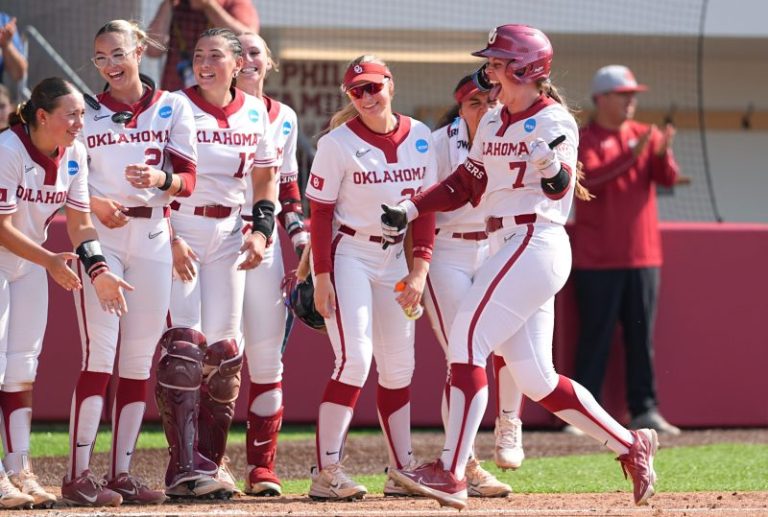
The 2025 Women’s College World Series field is set.

No. 2 Oklahoma dominated No. 15 Alabama in the super regionals, advancing to Oklahoma City for the ninth consecutive time while also searching for its fifth straight national championship. No. 12 Texas Tech earned its first ever WCWS appearance, and Tennessee and Texas fought back from Game 1 losses to advance.

The eight-team field was finalized on Sunday with four ‘if necessary’ games: No. 3 national seed Florida downed Georgia 5-2 in the Gainesville Super Regional; No. 7 seed Tennessee beat Nebraska in the Knoxville Super Regional; No 9 UCLA beat No. 8 South Carolina in the Columbia Super Regional; and unseeded Ole Miss beat No. 4 seed Arkansas in the Fayetteville Super Regional.

Here’s the full bracket and schedule for the 2025 WCWS, which kicks off May 29:

WCWS bracket 2025

All times Eastern

  • No. 3 Florida vs. No. 6 Texas
  • No. 2 Oklahoma vs. No. 7 Tennessee
  • Ole Miss vs. No. 12 Texas Tech
  • No. 16 Oregon vs. No. 9 UCLA | 9:30 p.m. ESPN2 (Fubo)

WCWS schedule 2025

All times Eastern.

Thursday, May 29

  • Game 1: No. 3 Florida vs. No. 6 Texas | noon | ESPN (Fubo)
  • Game 2: No. 2 Oklahoma vs. No. 7 Tennessee | 2:30 p.m. | ESPN (Fubo)
  • Game 3: Ole Miss vs. No. 12 Texas Tech | 7 p.m. | ESPN2 (Fubo)
  • Game 4: No. 16 Oregon vs. No. 9 UCLA | 9:30 p.m. ESPN2 (Fubo)

Friday, May 30

  • Game 5: Game 1 loser vs. Game 2 loser | 7 p.m. | ESPN2 (Fubo)
  • Game 6: Game 3 loser vs. Game 4 loser | 9:30 p.m. | ESPN2 (Fubo)

Saturday, May 31

  • Game 7: Game 1 winner vs. Game 2 winner 3 p.m. | ABC (Fubo)
  • Game 8: Game 3 winner vs. Game 4 winner 7 p.m. | ESPN (Fubo)

Sunday, June 1

  • Game 9: Game 5 winner vs. Game 8 loser 3 p.m. | ABC (Fubo)
  • Game 10: Game 6 winner vs. Game 7 loser 7 p.m. | ESPNU (Fubo)

Monday, June 2

  • Game 11: Game 7 winner vs. Game 9 winner | noon | ESPN (Fubo)
  • Game 12 (if necessary): Game 7 winner vs. Game 9 winner | 2:30 p.m. | ESPN (Fubo)
  • Game 13: Game 8 winner vs. Game 10 winner | 7 p.m. | ESPN2 (Fubo)
  • Game 14 (if necessary): Game 8 winner vs. Game 10 winner | 9:30 p.m. | ESPN2 (Fubo)

WCWS finals

  • Game 1 (June 4): Game 11 winner vs. Game 12 winner | 8 p.m. | ESPN (Fubo)
  • Game 2 (June 5): Game 11 winner vs. Game 12 winner 8 p.m. | ESPN (Fubo)
  • Game 3 (June 6) (if necessary): Game 11 winner vs. Game 12 winner8 p.m. | ESPN (Fubo)

Who’s in the Women’s College World Series?

  • No. 2 Oklahoma
  • No. 3 Florida
  • No. 6 Texas
  • No. 7 Tennessee
  • No. 9 UCLA
  • No. 12 Texas Tech
  • No. 16 Oregon
  • Ole Miss
This post appeared first on USA TODAY

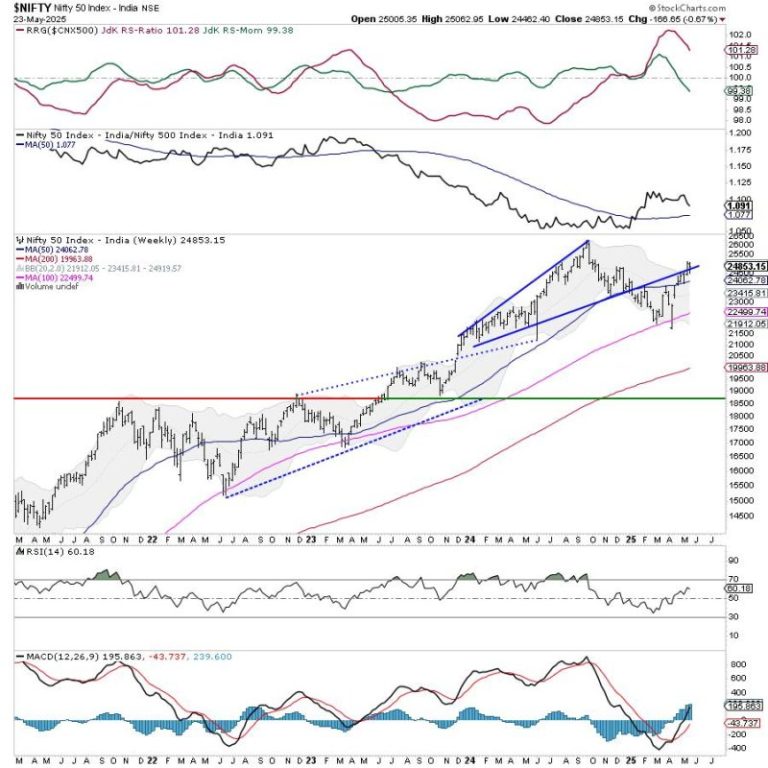
After a very strong move in the week before this one, the markets chose to take a breather. They moved in a wide range but ended the week on a mildly negative note after rebounding from their low point of the week. While defending the key levels, the markets largely chose to stay within a defined range. The trading range remained reasonably wide; the Nifty oscillated in a 600.55-point range over the past five sessions. The volatility inched modestly higher; the India Vix rose 4.40% to 17.28 on a weekly basis. While keeping its head above crucial levels, the headline index closed with a net weekly loss of 166.65 points (-0.67).

The coming week will be an expiry week; we will have monthly derivatives expiry playing out as well. Going by the options data, the Nifty has created a trading range between 25100 and 24500 levels. The markets are likely to consolidate in this 600-point trading range. A directional bias would emerge only if the Nifty takes out 25100 on the upside convincingly or ends up violating the 24500 level. While the underlying trend stays intact, the markets are unlikely to develop any sustainable trend so long as they do not move past the 25100 level. While the markets stay in the defined range, it would be prudent to vigilantly guard profits at higher levels and rotate sectors effectively to remain invested in the relatively stronger pockets.

The coming week is likely to see the levels of 25000 and 25175 acting as potential resistance points. The supports come in lower at 24600 and 24450 levels.

The weekly RSI is at 60.14; it stays neutral and does not show any divergence against the price. The weekly MACD is bullish and stays above its signal line.

The pattern analysis shows that the Nifty has formed a trading range between 25100 on the higher side and 24500 on the lower side. This means that a directional bias would emerge only if Nifty moves past 25100 convincingly or violates the 24500 level. Until either of these two things happens, we will see the Nifty consolidating in this defined range. The Nifty has so far defended the pattern support level that also exists in the 24400-24500 zone.

Overall, the markets continue to remain in a challenging environment and face strong resistance near the 25100 level. So long as the Nifty stays below this level, it stays prone to corrective spikes, which may also keep volatility at slightly elevated levels as well. Given the current technical structure, it would be imperative that not only the sectors be rotated properly to stay invested in relatively stronger pockets, but all existing gains must also be vigilantly guarded at current levels by the investors. While continuing to keep leveraged exposures at modest levels, a cautious outlook is advised for the coming week.


Sector Analysis for the coming week

In our look at Relative Rotation Graphs®, we compared various sectors against the CNX500 (NIFTY 500 Index), representing over 95% of the free-float market cap of all the listed stocks. 

Relative Rotation Graphs (RRG) show that while the Nifty Consumption, PSU Bank, Infrastructure, Banknifty, FMCG, and Commodities indices are in the leading quadrant, all are showing a distinct slowdown in their relative momentum against the broader Nifty 500 Index. While these groups are likely to show resilience and may relatively outperform, except for the Consumption Index, they are giving up in favor of other sectors that are showing renewed relative strength.

The Nifty Financial Services Index has rolled inside the weakening quadrant. The Nifty Metal and Services Sector Indices are also inside the weakening quadrant.

While the Nifty Pharma Index continues to languish inside the lagging quadrant, the IT Index, which is also inside the lagging quadrant, is showing sharp improvement in its relative momentum against the broader markets.

The Nifty Realty, Auto, Midcap 100, and Energy Sector Indices are inside the improving quadrant. These groups are expected to continue bettering their relative performance against the broader markets.


Important Note: RRG charts show the relative strength and momentum of a group of stocks. In the above Chart, they show relative performance against NIFTY500 Index (Broader Markets) and should not be used directly as buy or sell signals.  


Milan Vaishnav, CMT, MSTA

Consulting Technical Analyst

www.EquityResearch.asia | www.ChartWizard.ae

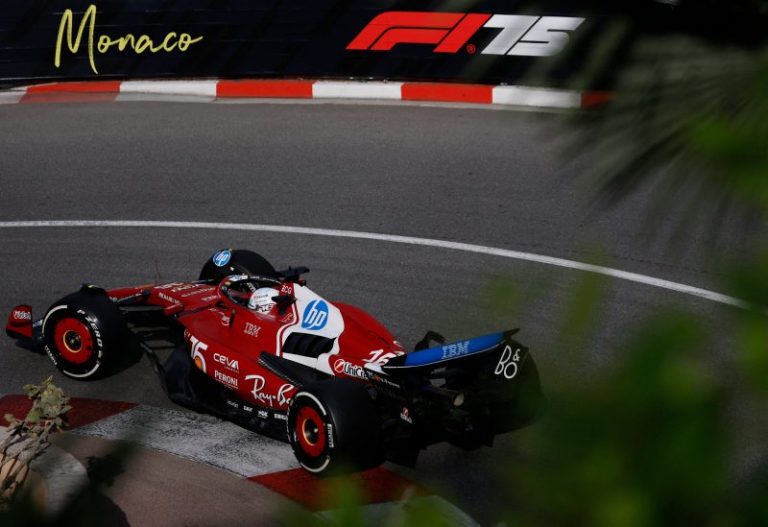
Few motorsports events in the world have the same draw as the Formula 1 Monaco Grand Prix. The crown jewel of the F1 calendar sees some of the biggest names in sports and entertainment in attendance to see some of the best drivers in the world battle in close quarters.

Despite the star-studded group of attendees, the Monaco Grand Prix often is far from an exciting race. The nature of modern F1 cars means passing is nearly impossible in the tight, twisting corners with barriers just inches away from cars at almost every point of the Circuit de Monaco.

Qualifying is more important at Monaco than any other track on the F1 calendar. How the cars line up on Sunday is often how they’ll end up come the checkered flag.

Things could be different this year, though, as F1 officials have mandated all drivers must use at least three different sets of tires, which requires at least two pit stops during the race. That’s a change from the two-set minimum for dry conditions for all other races.

Tire wear in Monaco is low because it’s the slowest track on the calendar. That means we could see teams get creative in choosing how best to deploy the two-stop minimum. Monaco’s close barriers often mean a crash is near-inevitable which could a wrench into teams’ plans.

It could be a more exciting race than we’ve seen in Monte Carlo in recent years. Here’s how to catch the action:

How to watch the 2025 Monaco Grand Prix: TV, streaming

Here are the options for F1 viewers in the U.S.:

  • Date: Sunday, May 25
  • Time: 9 a.m. ET
  • Location: Circuit de Monaco, Monte Carlo, Monaco
  • TV: ABC, ESPN3
  • Streaming: ESPN+, F1TV, Fubo

Watch the 2025 Formula 1 championship season with Fubo

This post appeared first on USA TODAY

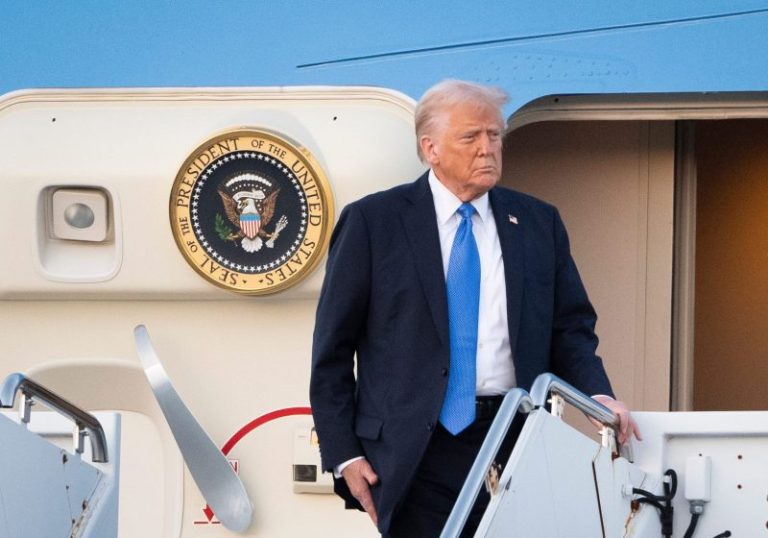
President Donald Trump knows a thing or two about staying in the conversation.

From the Super Bowl and College Football Playoff games to the Daytona 500 and everything in between, the president is no stranger to big sporting events. So when the ‘greatest day in motorsports’ is on the calendar, it begs the question, will Trump be in attendance?

Options are aplenty on this Sunday of Memorial Day Weekend.

There’s the Monaco Grand Prix in Formula 1, the Coca-Cola 600 in NASCAR and, of course, the Indy 500 in IndyCar.

After attending the Coca-Cola 600 in 2024 and the Daytona 500 in 2025, it became a question whether the president would make the trek to Indianapolis to check out the ‘greatest spectacle in racing’ at the famous Indianapolis Motor Speedway for the 109th Indianapolis 500.

Will Trump be in attendance at Indy this year? Here is your answer.

Is Donald Trump going to 2025 Indy 500?

Trump will not be at the Indianapolis 500 in 2025.

The president was invited by IndyCar and Indianapolis Motor Speedway owner Roger Penske during a visit to the White House on April 9. While there is always a possibility of a surprise visit or last-minute change when it comes to Trump, the president appears ready to skip the event this year.

News of Trump opting to not attend the event was first reported by Politico’s Adam Wren. A person with direct knowledge of the situation told IndyStar, part of the USA TODAY Network, the speedway was of the same understanding of the decision.

Has POTUS ever attended Indy 500?

No sitting President of the United States has ever attended the Indianapolis 500.

Several former presidents, however, attended the legendary race after their time in the White House. Gerald Ford was the first former president to attend when he was at the track in 1979. In 2003, former President George H.W. Bush and former President Bill Clinton both attended on race day.

On the other hand, presidents have been at race day prior to their election. Harry Truman attended the Indy 500 in the late 1930s before he was elected, and Trump actually attended the 2002 edition of the race.

In 2011, Trump was named the pace car driver for the 100th Indy 500, but it came during controversial statements he made regarding then-President Barack Obama’s citizenship and his possible run in the 2012 election. After backlash of Trump’s selection for the centennial edition of the race, Trump backed out of his position and was replaced by four-time Indy 500 winner A.J. Foyt.

This post appeared first on USA TODAY

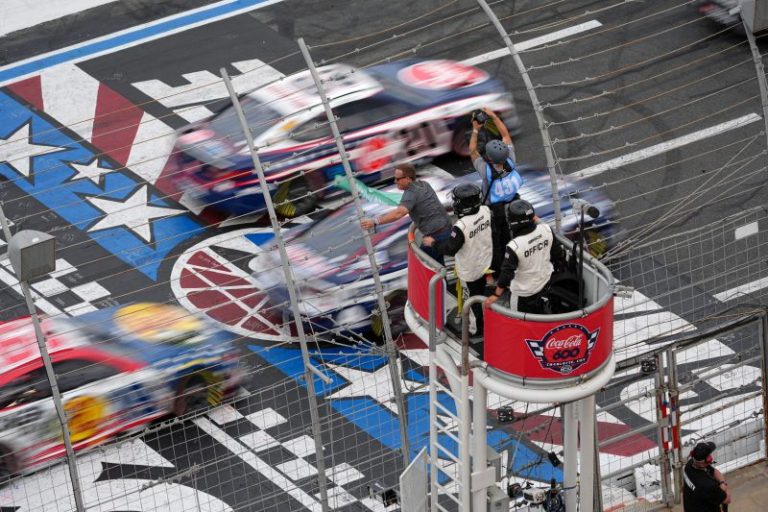
The NASCAR Cup Series rolls into Charlotte Motor Speedway Sunday evening to close out the most exciting day in motor sports.

Following Formula One’s Monaco Grand Prix and IndyCar’s Indianapolis 500, the Coca-Cola 600 takes center stage for NASCAR’s annual Memorial Day weekend event and the series’ longest race of the year at 600 miles.

All eyes will be on Kyle Larson, who is attempting the motor sports double for the second consecutive year. Larson will begin his day at Indianapolis, where he starts 19th in the Indy 500 in the No. 17 Arrow McLaren Chevrolet. Following his afternoon at Indy, he will immediately fly to North Carolina and hop into his No. 5 Hendrick Motorsports Chevrolet for the Coca-Cola 600, as he seeks to become the first driver since Tony Stewart in 2001 to race 1,100 total miles and complete the Indy-Charlotte double.

Larson won the Coca-Cola 600 in 2021 en route to his first Cup Series championship. Can he do it again this year? Here’s all the information you need to get ready for the race:

What time does the NASCAR Coca-Cola 600 start?

The Coca-Cola 600 is scheduled to start at 6 p.m. ET Sunday at Charlotte Motor Speedway in Concord, North Carolina.

What TV channel is the NASCAR Coca-Cola 600 on?

There is no national TV broadcast for Sunday’s race. Amazon Prime Video is broadcasting the 2025 Coca-Cola 600, the first of five consecutive NASCAR Cup Series races on the streamer. Prime will air a pre-race show at 5 p.m. ET.

Will there be a live stream of the Coca-Cola 600?

The race can be live streamed on Amazon Prime Video.

How many laps is the Coca-Cola 600?

NASCAR’s longest race is 400 laps around the 1.5-mile track for a total of 600 miles. The race will feature four segments (laps per stage) — Stage 1: 100 laps; Stage 2: 100 laps; Stage 3: 100 laps; Stage 4: 100 laps.

How will Kyle Larson get from Indianapolis to Charlotte for the Coca-Cola 600?

As soon as Larson’s day is done in the Indy 500 – pending any possible weather delays – the Hendrick Motorsports driver will immediately board a helicopter at Indianapolis Motor Speedway and then get on a plane to fly to Charlotte. Another helicopter will take Larson to Concord, North Carolina, for the race at Charlotte Motor Speedway.

Who won the Coca-Cola 600 last year?

Christopher Bell led 90 of 249 laps, including the final 18, in the rain-shorted race on May 26, 2024. Bell was declared the winner under red-flag conditions with Brad Keselowski finishing second and William Byron third.

What is the lineup for the NASCAR Coca-Cola 600?

(Car number in parentheses)

  1. (19) Chase Briscoe, Toyota
  2. (5) Kyle Larson, Chevrolet
  3. (24) William Byron, Chevrolet
  4. (17) Chris Buescher, Ford
  5. (16) AJ Allmendinger, Chevrolet
  6. (42) John Hunter Nemechek, Toyota
  7. (54) Ty Gibbs, Toyota
  8. (4) Noah Gragson, Ford
  9. (48) Alex Bowman, Chevrolet
  10. (20) Christopher Bell, Toyota
  11. (47) Ricky Stenhouse Jr., Chevrolet
  12. (45) Tyler Reddick, Toyota
  13. (7) Justin Haley, Chevrolet
  14. (2) Austin Cindric, Ford
  15. (71) Michael McDowell, Chevrolet
  16. (22) Joey Logano, Ford
  17. (84) Jimmie Johnson, Toyota
  18. (21) Josh Berry, Ford
  19. (10) Ty Dillon, Chevrolet
  20. (11) Denny Hamlin, Toyota
  21. (12) Ryan Blaney, Ford
  22. (9) Chase Elliott, Chevrolet
  23. (38) Zane Smith, Ford
  24. (8) Kyle Busch, Chevrolet
  25. (99) Daniel Suarez, Chevrolet
  26. (3) Austin Dillon, Chevrolet
  27. (43) Erik Jones, Toyota
  28. (60) Ryan Preece, Ford
  29. (41) Cole Custer, Ford
  30. (88) Shane Van Gisbergen, Chevrolet
  31. (35) Riley Herbst, Toyota
  32. (23) Bubba Wallace, Toyota
  33. (87) Connor Zilisch, Chevrolet
  34. (34) Todd Gilliland, Ford
  35. (6) Brad Keselowski, Ford
  36. (51) Cody Ware, Ford
  37. (44) Derek Kraus, Chevrolet
  38. (66) Josh Bilicki, Ford
  39. (77) Carson Hocevar, Chevrolet
  40. (1) Ross Chastain, Chevrolet
This post appeared first on USA TODAY

No Sam Reinhart, sitting out Game 3 after being injured in Game 2.

No Eetu Luostarinen, ejected in the first period for a boarding infraction.

A new look in the Carolina Hurricanes net with Pyotr Kochetkov getting the start.

It didn’t matter. The Florida Panthers improved to 3-0 against the Hurricanes after a 6-2 win on Saturday night. They have outscored Carolina 16-4 in the series and can earn their third consecutive trip to the Stanley Cup Final on Monday with a win at home.

Kochetkov kept the game close as the teams entered the third period tied 1-1. But Jesper Boqvist, reinserted in the lineup after the Reinhart injury, broke the tie early in the third period and the Panthers poured in five consecutive goals in a little more than nine minutes.

Niko Mikkola and Aleksander Barkov each scored twice, and Brad Marchand also scored as the Panthers took advantage of turnovers.

Hurricanes defenseman Dmitry Orlov was minus-4 and slammed his stick in frustration after his turnover led to a Barkov goal. He was beaten on another goal and had one deflect in off his skates.

‘You can’t put it all on him … but you can’t be winning at this time of year when you make mistakes like that,’ Hurricanes coach Rod Brind’Amour said.

The only disadvantage for the Panthers: Mikkola left the game after going hard into the boards, though coach Paul Maurice said after the game, ‘We think he’s going to be OK.’

Highlights from Game 3 of the Eastern Conference finals between the Carolina Hurricanes and Florida Panthers:

Panthers vs. Hurricanes highlights

Game recap

Final score: Panthers 6, Hurricanes 2

The Hurricanes kept it a game for two periods and still got crushed. That’s 15 consecutive losses in the conference finals, dating to 2009. One more Carolina loss Monday night and the Panthers will return to the Stanley Cup Final for the third year in a row.

Game getting feisty

Andrei Svechnikov and Sam Bennett slash each other and also get misconducts. Then there’s another scrum and Florida’s A.J. Greer goes down the tunnel with an injury.

NHL scores: Panthers 6, Hurricanes 2

Matthew Tkachuk goes after Sebastian Aho, who had injured Sam Reinhart in Game 2. On the ensuing power play, Seth Jarvis scores 11 seconds in.

NHL scores: Panthers 6, Hurricanes 1

Brad Marchand scores as the Panthers pour it on.

NHL scores: Panthers 5, Hurricanes 1

The Panthers take advantage of another turnover. Aleksander Barkov’s pass attempt goes in off Shayne Gostisbehere’s stick.

Niko Mikkola injury

The Panthers defenseman, who has two goals, goes hard into the boards and leaves the game.

NHL scores: Panthers 4, Hurricanes 1

‘Dmitry Orlov’s pass is stolen by Matthew Tkachuk and Aleksander Barkov finishes off the play to give Florida two goals in 29 seconds. Orlov slams his stick in frustration. He’s minus-4 for the game.

NHL scores: Panthers 3, Hurricanes 1

Niko Mikkola scores his second goal of the game, jumping into the rush. The Hurricanes had hit the post not long before that while Sergei Bobrovsky was without his stick.

NHL scores: Panthers 2, Hurricanes 1

The Hurricanes kill off the penalty but turn over the puck in the neutral zone. Jesper Boqvist makes a great move around Dmitry Orlov before scoring on Pyotr Kochetkov. Tough night for Orlov, who had the first Panthers goal go off his skates. Boqvist is in the game because of an injury to Sam Reinhart.

Third period underway

Florida starts on the power play.

End of second period: Panthers 1, Hurricanes 1

Much better period by the Hurricanes. After not connecting on their five-minute power play, they do score on their next one as Logan Stankoven ties the game. But Carolina will need to kill the remainder of a Panthers power play to start the third period.

Panthers go on power play

They pin Carolina in their defensive zone and Sebastian Aho is called for holding Carter Verhaeghe. The power play will carry over into the third period.

NHL scores: Hurricanes 1, Panthers 1

Brent Burns takes a shot from the point and Logan Stankoven knocks in the rebound. The Hurricanes had a lot of movement on that power play before connecting.

Hurricanes go on power play

Gustav Forsling puts the puck over the glass and is called for delay of game.

Panthers go on power play

Near the end of the Eetu Luostarinen penalty, Carolina’s Jesperi Kotkaniemi is called for cross-checking. The Hurricanes kill it off.

Second period underway

Jackson Blake is back on the ice. Panthers still has to kill nearly two minutes of Eetu Luostarinen’s boarding major. No much going for Carolina and Florida gets a couple short-handed rushes.

End of first period: Panthers 1, Hurricanes 0

Hurricanes coach Rod Brind’Amour started Pyotr Kochetkov in net to ‘change the vibes,’ and the goalie has shined. The only shot that got past him went in off his defenseman. Still, the Hurricanes trail 1-0 in a must-win game.

We’ll have to see whether Carolina’s Jackson Blake can return after being slammed into the boards. Florida’s Eetu Luostarinen won’t. He receives a five-minute major and game misconduct for that hit. Carolina has two minutes left on the power play to start the second period.

Hurricanes go on power play

They get a five-minute power play after an Eetu Luostarinen boarding penalty and game misconduct is confirmed on review. Hurricanes get a few shots, and about two minutes of the penalty will carry over to the second period.

Jackson Blake injured; Eetu Luostarinen ejected

Hurricanes forward Jackson Blake is slammed into the boards by Eetu Luostarinen and is down on the ice for several minutes before going off. Luostarinen is ejected for boarding.

NHL scores: Panthers 1, Hurricanes 0

Panthers defenseman Niko Mikkola throws the puck to the front of the Hurricanes net and it goes in off the skate of Carolina defenseman Dmitry Orlov. The Panthers now have 14 goals from their defensemen.

Panthers go on power play

Pyotr Kochetkov, who has been busy so far in net, is called for tripping Evan Rodrigues. Carolina kills it off, allowing only one shot.

Pyotr Kochetkov saves

He stops Sam Bennett in close, stops him later and scrambles later to keep the puck out of the net.

Game underway

Panthers lead series 2-0.

Panthers vs. Hurricanes starting lines

It will be Florida’s Sam Bennett line vs. the Hurricanes’ Sebastian Aho line. Sergei Bobrovsky vs. Pyotr Kochetkov in net.

What time is Hurricanes vs. Panthers Game 3?

Game 3 of the Carolina Hurricanes-Florida Panthers series is set to begin at 8 p.m. ET on Saturday in Sunrise, Florida.

How to watch Hurricanes vs. Panthers NHL playoff game: TV, stream

  • Time: 8 p.m. ET
  • Location: Amerant Bank Arena (Sunrise, Florida)
  • TV: TNT/truTV
  • Stream: Sling TV, Max

Stream Hurricanes vs. Panthers Game 3 on Sling

Carolina Hurricanes lineup

Sean Walker injury update

The Hurricanes defenseman was on the ice for warmups but is listed among the scratches on the NHL roster report. Rookie defenseman Alexander Nikishin will be in the lineup.

Florida Panthers lineup

Jalen Chatfield injury update

Chatfield will miss his fourth consecutive game with an undisclosed injury.

Hurricanes’ Sean Walker injury update

Coach Rod Brind’Amour said the defenseman is a game-time decision. Walker left Game 2 with an injury.

Hurricanes goalie Pyotr Kochetkov will start Game 3

Hurricanes backup goalie Pyotr Kochetkov will get the Game 3 start against the Panthers.

“Just change the vibes a little bit,” Hurricanes coach Rod Brind’Amour said Saturday morning. “I don’t blame Freddy for any of the goals that went in.”

Kochetkov played the third period of Game 2, giving up one goal on five shots after Andersen yielded four in the first two period.

Kochetkov, who had a 2.60 goals-against average during the regular season, won Game 5 in the first round, 5-4 in overtime against the New Jersey Devils, in his lone previous start when Andersen missed that game because of an injury.

Who is Jesper Boqvist?

Panthers coach Paul Maurice said Jesper Boqvist will play on the top line in Game 3 in place of injured Sam Reinhart.

Boqvist had already played with Aleksander Barkov on that line when Evan Rodrigues was hurt. Rodrigues has returned, so the top line for Game 3 is Barkov, Rodrigues and Boqvist.

‘There’s a familiarity there that lets those guys just go and play,’ Maurice said.

Boqvist signed as a free agent in July and had 12 goals and 23 points during the regular season. He also kills penalties and scored a short-handed goal. He has a goal and an assist in nine games this postseason.

Panthers’ Sam Reinhart won’t play in Game 3

Panthers forward Sam Reinhart won’t play in Game 3 and is day-to-day after being injured during the team’s 5-0 win in Game 2 against the Hurricanes.

Reinhart was sent flying by a Sebastian Aho hit during the first period of Thursday’s game and didn’t return because of a lower-body injury.

Reinhart plays on the top line with Aleksander Barkov and had 57 goals last season. He’s a finalist (along with Barkov) for the Selke Trophy as top defensive forward after finishing with five short-handed goals.

This post appeared first on USA TODAY

The once-solid relationship between President Donald Trump and Apple CEO Tim Cook is breaking down over the idea of a U.S.-made iPhone.

Last week, Trump said he “had a little problem with Tim Cook,” and on Friday, he threatened to slap a 25% tariff on iPhones in a social media post.

Trump is upset with Apple’s plan to source the majority of iPhones sold in the U.S. from its factory partners in India, instead of China. Cook confirmed this plan earlier this month during earnings discussions.

Trump wants Apple to build iPhones for the U.S. market in the U.S. and has continued to pressure the company and Cook.

“I have long ago informed Tim Cook of Apple that I expect their iPhone’s that will be sold in the United States of America will be manufactured and built in the United States, not India, or anyplace else,” Trump posted on Truth Social on Friday.

Analysts said it would probably make more sense for Apple to eat the cost rather than move production stateside.

“In terms of profitability, it’s way better for Apple to take the hit of a 25% tariff on iPhones sold in the US market than to move iPhone assembly lines back to US,” Apple supply chain analyst Ming-Chi Kuo wrote on X.

UBS analyst David Vogt said that the potential 25% tariffs were a “jarring headline” but that they would only be a “modest headwind” to Apple’s earnings, dropping annual earnings by 51 cents per share, versus a prior expectation of 34 cents per share under the current tariff landscape.

Experts have long held that a U.S.-made iPhone is impossible at worst and highly expensive at best.

Analysts have said that iPhones made in the U.S. would be much more expensive, CNBC previously reported, with some estimates ranging between $1,500 and $3,500 to buy one at retail. Labor costs would certainly rise.

But it would also be logistically complicated.

Supply chains and factories take years to build out, including installing equipment and staffing up. Parts that Apple imported to the United States for assembly might be subject to tariffs as well.

Apple started manufacturing iPhones in India in 2017 but it was only in recent years that the region was capable of building Apple’s latest devices.

“We believe the concept of Apple producing iPhones in the US is a fairy tale that is not feasible,” wrote Wedbush analyst Dan Ives in a note on Friday.

Other analysts were wary about predicting how Trump’s threat ultimately plays out. Apple might be able to strike a deal with the administration — despite the eroding relationship — or challenge the tariffs in court.

For now, most of Apple’s most important products are exempt from tariffs after Trump gave phones and computers a tariff waiver — even from China — in April, but Apple doesn’t know how the Trump administration’s tariffs will ultimately play out beyond June.

“We’re skeptical” that the 25% tariff will materialize, wrote Wells Fargo analyst Aaron Rakers.

He wrote that Apple could try to preserve its roughly 41% gross margin on iPhones by raising prices in the U.S. by between $100 and $300 per phone.

It’s unclear how Trump intends to target Apple’s India-made iPhones. Rakers wrote that the administration could put specific tariffs on phone imports from India.

Apple’s operations in India continue to expand.

Foxconn, which assembles iPhones for Apple, is building a new $1.5 billion factory in India that could do some iPhone production, the Financial Times reported Thursday.

Apple declined to comment on Trump’s post.

This post appeared first on NBC NEWS

This week, while everyone else is focused on NVIDIA Corp. (NVDA), we will focus our attention on stocks with earnings that may get overlooked.

We’re watching a different group of stocks heading into earnings: Okta, Inc. (OKTA), AutoZone, Inc. (AZO), and Salesforce.com, Inc. (CRM). OKTA and AZO are making new highs as they head into their earnings call, while CRM is struggling.

Let’s break down the best risk/reward set-ups as we kick off the week.

Okta, Inc. (OKTA): Volatility Now, Potential Later

Okta’s stock price broke out to new 52-week highs a week before it posts its quarterly numbers. The cybersecurity company has experienced extreme volatility after posting earnings. In the last three quarters, the stock saw some pretty big swings—up 24.3%, up 5.4%, and down 17.6%. Its average price change post-earnings is +/-10.2%.

Technically, I love this setup. Let’s look at a five-year daily chart.

Shares have broken out ahead of earnings and have a lot to reverse. If we see weakness after results, there are several support areas where we would want to enter the stock with favorable risk/reward. The first strong support area is between $115/$118, an old resistance level that the stock just eclipsed. Old resistance could act as new support and provide an opportunity.

Outside of recent weakness due to “Liberation Day,” OKTA’s stock price has outperformed its peers and held key moving averages. Use levels just below the 50-day moving average around $110 as a near-term stop if $115 doesn’t hold.

To the upside, there is much to reverse and targets of $150 to $160 are attainable. If you’re a longer-term investor, the downtrend is broken and the bulls are back in charge.

AutoZone, Inc. (AZO): Riding Steady 

The retail leader in automotive replacement parts and accessories, AutoZone, Inc. (AZO), continues to rise, slowly and steadily, despite market volatility. The stock price is up 20% year-to-date, and we hope to add to those gains when they report on Tuesday morning.

One thing that has helped AZO’s continued growth is that the average car is roughly 12 years old. Consumers are investing more in maintenance and repairs instead of purchasing new vehicles. And with tariffs, buying a new car becomes more expensive, which benefits the car repair and maintenance business.

Let’s look at that long-term uptrend on a weekly chart going back five years.

The stock is a juggernaut. It has ridden the 50-week moving average consistently since Covid. It is in a beautiful uptrend and made new highs again just last week.

While the trend itself appears a tad extended above its averages, any trip back towards its recent uptrend line gives investors a strong entry point, with downside risk towards its 50-week moving average.

It’s also the best in class when compared to its top competitors, such as O’Reilly Automotive (ORLY) and Advanced Auto Parts (AAP). When looking at strong uptrends in a challenging environment, it’s best to find the best in class, and AZO continues to be just that. The trend continues to be the investor’s best friend.

Salesforce (CRM) Hits a Crossroads

A year ago, Salesforce (CRM) shocked investors with a revenue miss for the first time since 2006. This resulted in the stock price dropping 20% (red box in the chart below). It marked the stock’s low point, as it rallied as much as 74% over the next seven months. It now sits in the middle of a wide year-long range and is poised to move again.

Which way will it go? To examine that question, let’s look at the daily chart of CRM.

Technically, shares are at a crossroads. Shares dropped 37% from their December peak after forming a double top. It just broke its near-term downtrend from its post-Liberation Day lows, experiencing a 28% rally, but paused right at its 200-day moving average.

Momentum appears to be negative. The Moving Average Convergence/Divergence (MACD) has formed a bearish crossover, and shares failed to eclipse the 200-day. Shares are down -18% for 2025, underperforming the tech sector and the S&P 500. CRM sold off late Friday, hitting its 50-day moving average, on news that it’s in talks to acquire Informatica.

If you’re thinking of buying CRM, you may want to hold your horses. Watch the 50-day moving average around $270 to see if it can hold. On strength, look for confirmation and a close above the $295 level for an all clear that momentum has finally shifted in favor of the bulls.

Final Thoughts

OKTA, AZO, and CRM are thoughtful plays based on technical trends and real-world fundamentals. OKTA and AZO could have favorable risk/reward setups. As for CRM, add it to your ChartLists and monitor it regularly.


In this insightful overview, Grayson dives into StockCharts’ powerful scanning capabilities. He shows you how to navigate the markets quickly with the sample scan library, and automate your stock screening with the scheduled scans feature.

This video originally premiered on May 23, 2025. Click on the above image to watch on our dedicated Grayson Roze page on StockCharts TV.

You can view previously recorded videos from Grayson at this link.

My main question going into this weekend was, “Will the S&P 500 finish the week above its 200-day moving average?” And while the S&P 500 did indeed finish the week above this long-term trend barometer, our main equity benchmark is now within the gap range from earlier this month.

We’ll get to that crucial S&P 500 chart a little later, but first, I’d like to explain why gaps matter, why the price action post-gap is so important, and then apply these lessons to the SPX.

The “Gap and Run” Scenario Suggests an Influx of Buyers

One of two things tends to happen after a gap higher within an uptrend phase. The first scenario, which I call a “gap and run” pattern, is when additional buyers come in to push the price even higher.

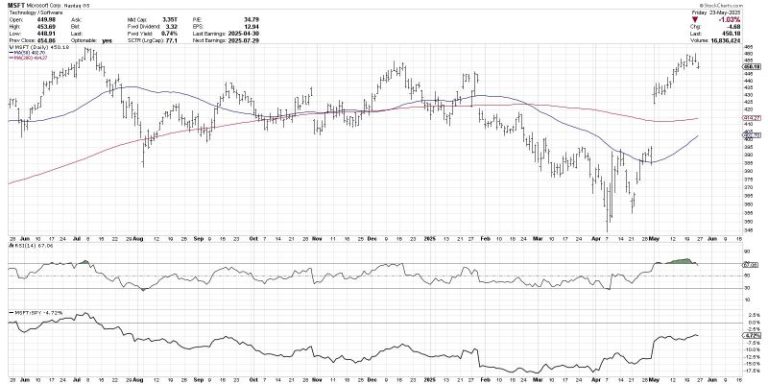
Microsoft Corp. (MSFT) features this gap and run pattern, with the gap higher on their Q1 earnings report followed by an additional appreciation in price.  Basically, investors are not afraid to accumulate more MSFT, even after the stock gapped up from $395 to $430 overnight.


Did you catch our recent webcast, “Sell in May 2025: Seasonal Strategy or Outdated Myth?” We looked at the performance in May-June-July since the COVID low, then made a comparison between 2025 and the first half of 2022, when a break below the 200-day moving average was a sign of much further deterioration to come.  Check out this excerpt on our YouTube channel!


Shares of Howmet Aerospace (HWM) demonstrated a similar gap and run pattern recently, although this example is perhaps even more significant because the gap took the price to a new all-time high! Again, we can see that additional buyers are coming in and accumulating more HWM, fueling further gains after the gap.

The “Gap and Fail” Pattern Shows a Lack of Willing Buyers

Sometimes, a chart will show a very different path after the gap, forming what I’ve termed a “gap and fail” pattern.  Unlike the previous examples, here you’ll see that a lack of willing buyers causes the stock to quickly reverse lower into the range of the price gap.

In the case of semiconductor producer Monolithic Power Systems (MPWR), the gap higher earlier this month was followed by two additional up days, which propelled the stock above its 200-day moving average. This short-term pop higher was followed by a sudden downside reversal, representing an exhaustion of buyers after the upside gap.

First Solar (FSLR) is demonstrating a similar pattern to MPWR, with a gap higher which pushed the stock just above the 200-day moving average to test the 38.2% Fibonacci retracement level. A couple days later, FSLR was back below the 200-day moving average, followed by further deterioration that eventually closed the gap from earlier in May.

The S&P 500 Could Test Its Own Gap Support

So what do those example charts have to do with the S&P 500? Well, the SPX traded higher for about a week after the upside gap in early May. We’ve drawn a green-shaded range to highlight the gap from around 5725 to 5780. This gap includes the 200-day moving average and also lines up with the late March swing high.

I see the S&P 500 as in a constructive pattern as long as it remains above this price gap range. If we can see an upswing after this week’s pullback, then this could just be a pause within a broader recovery phase for the S&P.

On the other hand, if we see any further price weakness from the major benchmarks next week, then the chart of the S&P 500 will start to look pretty similar to other “gap and fail” charts that confirm a lack of willing buyers. If we do see that downside follow-through next week, we’d expect further deterioration to the 5500 level, representing a 50% retracement of the February to April selloff phase.

RR#6,

Dave

P.S. Ready to upgrade your investment process? Check out my free behavioral investing course!


David Keller, CMT

President and Chief Strategist

Sierra Alpha Research LLC

marketmisbehavior.com

https://www.youtube.com/c/MarketMisbehavior


Disclaimer: This blog is for educational purposes only and should not be construed as financial advice. The ideas and strategies should never be used without first assessing your own personal and financial situation, or without consulting a financial professional.

The author does not have a position in mentioned securities at the time of publication. Any opinions expressed herein are solely those of the author and do not in any way represent the views or opinions of any other person or entity.