Author

admin

Browsing

Unlock the power of divergence analysis! Join Dave as he breaks down what a bearish momentum divergence is and why it matters. Throughout this video, Dave illustrates how to confirm (or invalidate) the signal on the S&P500, Nasdaq100, equal‑weighted indexes, semiconductors, and even defensive names like AT&T (T).

This video originally premiered on June 10, 2025. Watch on StockCharts’ dedicated David Keller page!

Previously recorded videos from Dave are available at this link.

Micron Technology, Inc. (MU) appears poised for an explosive breakout, both technically and fundamentally. While it remains to be seen whether this materializes by its Q3 earnings report on June 25, the setup suggests a high-probability move is about to happen, and soon.

The fundamental case for a breakout is backed by MU’s deep involvement in the AI memory boom. Its high-bandwidth memory (HBM) is powering Nvidia’s next-gen Blackwell chips, demand is outstripping supply, and prices are rising. With sold-out capacity for 2025 and earnings projected to surge 437% this year, MU’s Q3 report could be the next major catalyst.

In light of these forecasts, let’s put things into context and see where MU has stood over the past year in its comparative performance with VanEck Vectors Semiconductor ETF (SMH), our semiconductor industry proxy, Technology Select Sector SPDR Fund (XLK), for a sector comparison, and Invesco QQQ Trust (QQQ), a stand-in for the Nasdaq 100 Index ($NDX).

MU vs. SMH, XLK, and QQQ: Tracking Relative Performance

Despite its recent rally, MU remains a relative laggard. Whether it breaks out will depend on how effectively it positions itself amid shifting industry dynamics.

FIGURE 1. PERFCHARTS OF MU RELATIVE TO ITS INDUSTRY, SECTOR, AND THE NASDAQ 100.  MU has been the big laggard over the past year. You need to take a closer and more detailed look to gain more insight into MU’s current upward momentum.

While analysts are optimistic about its role in the evolving AI-driven landscape, that thesis will be put to the test when the company reports earnings in the coming weeks.

A Shift in Momentum? What the MarketCarpets Are Revealing

While MU lags its industry peers, it might help you to get a more granular view of performance within the semiconductor industry. This is where the StockCharts MarketCarpets Semiconductors summary can be helpful.

FIGURE 2. MARKETCARPETS – SEMICONDUCTORS. In contrast to its peers, a 5-day view shows that MU is the strongest performer.

Though MU has trailed its industry peers over the past year, the 5-day MarketCarpets view reveals a shift in momentum. With a 13.32% gain over the past week, MU is rapidly narrowing the gap and beginning to outpace its peers.

Weekly Chart Levels: Resistance, Support, and Entry Zones

Typically, you’d drill down to a daily chart for more precision, but, with MU, the weekly chart alone highlights the key levels worth watching.

FIGURE 3. WEEKLY CHART OF MU. The weekly chart shows all key levels, from entry to profit targets and stop loss levels.

The weekly chart view clearly outlines support, resistance, and potential entry and exit points. Listed below are the key levels and scenarios to watch.

MU Price Scenarios: Breakout or Breakdown?

  • Watch the rectangle formation: MU is approaching a breakout above key resistance at $115, just ahead of its June 25 earnings report. A decisive move above the rectangle could trigger long entries from bullish traders.
  • Upside scenario: A beat on earnings and strong forward guidance could fuel continued upside—unless derailed by broader geopolitical risks.
  • Downside scenario: If the breakout fails, look for support near the bottom of the formation. The Volume-by-Price indicator shows a heavy concentration of trading at that level, reinforcing its significance as a support zone. However, a breakdown there may cast doubt on the current uptrend thesis.
  • Profit-taking zone: If MU continues its bullish trajectory, expect resistance and likely profit-taking between $127 and $137, an area marked by multiple highs and consolidation levels throughout 2024.

Why $127 to $137, when the weekly chart shows $130 to $135? Here’s where zooming in helps.

FIGURE 4. ZOOMING N TO A DAILY CHART OF MU. This shows, in much greater detail, the potential resistance levels above.

The top and bottom of this consolidation provide a clearer view of potential resistance, which may also serve as profit-taking levels for short-term traders, so keep an eye on this.

  • Last thing – watch the peak: A second round of resistance and potential profit-taking may occur near $155, a key level that previously marked the stock’s all-time high.

Momentum-wise—and note we’re looking at a longer-term time frame—the Relative Strength Index (RSI) suggests there’s still plenty of room to run before MU enters overbought territory. Volume-wise, however, you will want to see the Chaikin Money Flow (CMF) levels increase once the breakout occurs, confirming that buying pressure is supporting the move.

Quick Take: The Setup at a Glance

In a nutshell: Watch for a breakout above $115 ahead of MU’s June 25 earnings by setting an alert using the Technical Alert Workbench. Note that entering a position ahead of earnings is always a risky prospect. If you are planning to take any action at all, make sure it’s in alignment with your own personal trading strategy and criteria.

A beat on earnings and strong guidance could fuel further upside, but watch out! If Wall Street decides to “sell the news,” due to any detail that dampens investor or analyst sentiment, a sharp decline could follow. If MU moves strongly to the upside, look for confirmation via rising CMF levels, which would signal real buying pressure.

If the breakout fails, key support lies near the bottom of the current trading range. On the upside, expect potential resistance and profit-taking between $127–$137, with a secondary ceiling near $155. The RSI still shows room for further gains before MU becomes overbought.

Final Thoughts: Will MU Deliver on the AI Hype?

MU may be lagging now, but, as the MarketCarpets data shows, momentum is quietly shifting, and the shift may accelerate as MU approaches both a potential breakout level and its earnings date. With a critical breakout level in sight and earnings just days away, consider preparing for a potential surge in volatility, which could move the stock in either direction. If MU does break to the upside, whether it can maintain its momentum post-breakout will depend on volume, CMF strength, and how convincingly MU rides the AI memory wave.


Disclaimer: This blog is for educational purposes only and should not be construed as financial advice. The ideas and strategies should never be used without first assessing your own personal and financial situation, or without consulting a financial professional.

Alvopetro Energy Ltd. (TSXV: ALV) (OTCQX: ALVOF) announces May 2025 sales volumes and an operational update, including results from our 183-D4 well. Based on cased hole logs and logs while drilling, the well encountered 61 metres total vertical depth (‘TVD’) potential net natural gas pay in the Caruaçu Formation 106 metres updip of our 183-A3 well.

President & CEO, Corey C. Ruttan commented:

‘May sales included the first full month of production from our first two wells drilled in Western Canada averaging 346 bopd gross (173 bopd net), exceeding our pre-farmin expectations and we are looking forward to drilling our next two wells here starting this summer. We are also encouraged by our 183-D4 results and expect to have this well on production in Q3 to fuel continued production growth in Brazil .’

May Sales Volumes

Natural gas, NGLs and crude oil sales:

May

2025

April

2025

Q1

2025

Brazil:

Natural gas (Mcfpd), by field:

Caburé

10,800

12,636

11,710

Murucututu

1,500

844

2,093

Total natural gas (Mcfpd)

12,300

13,480

13,803

NGLs (bopd)

111

126

135

Oil (bopd)

10

Total (boepd) – Brazil

2,161

2,373

2,446

Canada:

Oil (bopd) – Canada

173

90

Total Company – boepd (1)

2,334

2,463

2,446

(1)

Alvopetro reported volumes are based on sales volumes which, due to the timing of sales deliveries, may differ from production volumes.

May sales volumes in Brazil averaged 2,161 boepd, including natural gas sales of 12.3 MMcfpd and associated natural gas liquids sales from condensate of 111 bopd, based on field estimates. Sales volumes decreased 9% compared to April due to turnarounds at both Alvopetro facilities and Bahiagás end user plants, which impacted demand in the month. In Canada , with a full month of production in May, Alvopetro’s net 50% share of oil sales volumes increased to 173 bopd, bringing the Company’s total sales to 2,334 boepd, based on field estimates.

Operational Update

183-D4 Well Results

We have now completed the sidetrack and drilling of our 183-D4 well on our 100% Murucututu natural gas field. The well was drilled to a total measured depth of 3,072 metres and has been cased and cemented. The well encountered the Caruaçu Member of the Maracangalha Formation 106 metres structurally updip of our 183-A3 success.

Based on cased-hole gamma ray logs and normalized gas while drilling, the well encountered potential natural gas pay in the Caruaçu Member of the Maracangalha Formation, with an aggregate 61 metres of potential natural gas pay between 2,439 and 2,838 meters TVD.

Based on these drilling results, we plan to complete the well in up to 5 intervals and expect the well to be on production to the field production facility in the third quarter.

Caburé Unit Development Drilling Program

Our planned Caburé Unit development drilling program has commenced. The first well has now been spud and we expect to have four wells drilled by the end of the third quarter.

Western Canadian Capital Plan

In Western Canada , well pad construction for our next two wells has commenced and we expect the wells to be drilled in the third quarter.

Annual General Meeting

Alvopetro’s annual general and special meeting (the ‘Meeting’) will be held on Wednesday, June 18, 2025 at the offices of Torys LLP (Suite 4600, 525 8 th SW, Calgary, Alberta ) beginning at 9:30 a.m. Mountain time. The management information circular and all related materials are available on our website and www.sedarplus.ca .

All interested parties are invited to attend the Meeting. We will also be broadcasting the meeting via live webcast for the interest of all shareholders. Please be advised that shareholders will not be able to vote any shares through this webcast format. Details for joining the event are as follows:

DATE: June 18, 2025
TIME : 9:30 AM Mountain/ 11:30 AM Eastern
LINK: https://us06web.zoom.us/j/89512204386
DIAL-IN NUMBERS:
https://us06web.zoom.us/u/kenh5nLlte
WEBINAR ID   : 895 1220 4386

Corporate Presentation

Alvopetro’s updated corporate presentation is available on our website at:
http://www.alvopetro.com/corporate-presentation .

Social   Media

Follow Alvopetro on our social media channels at the following links:

Twitter – https://twitter.com/AlvopetroEnergy
Instagram – https://www.instagram.com/alvopetro/
LinkedIn – https://www.linkedin.com/company/alvopetro-energy-ltd

Alvopetro Energy Ltd. is deploying a balanced capital allocation model where we seek to reinvest roughly half our cash flows into organic growth opportunities and return the other half to stakeholders. Alvopetro’s organic growth strategy is to focus on the best combinations of geologic prospectivity and fiscal regime. Alvopetro is balancing capital investment opportunities in Canada and Brazil where we are   building off the strength of our Caburé and Murucututu natural gas fields and the related strategic midstream infrastructure.

Neither the TSX Venture Exchange nor its Regulation Services Provider (as that term is defined in the policies of the TSX Venture Exchange) accepts responsibility for the adequacy or accuracy of this news release.

Abbreviations:

boepd

=

barrels of oil equivalent (‘boe’) per day

bopd

=

barrels of oil and/or natural gas liquids (condensate) per day

BRL

=

Brazilian Real

Mcf

=

thousand cubic feet

Mcfpd

=

thousand cubic feet per day

MMcf

=

million cubic feet

MMcfpd

=

million cubic feet per day

NGLs

=

natural gas liquids (condensate)

BOE Disclosure

The term barrels of oil equivalent (‘boe’) may be misleading, particularly if used in isolation. A boe conversion ratio of six thousand cubic feet per barrel (6 Mcf/bbl) of natural gas to barrels of oil equivalence is based on an energy equivalency conversion method primarily applicable at the burner tip and does not represent a value equivalency at the wellhead. All boe conversions in this news release are derived from converting gas to oil in the ratio mix of six thousand cubic feet of gas to one barrel of oil.

Well Results

Data obtained from the 183-D4 well identified in this press release, including hydrocarbon shows, cased-hole logging data, and potential net pay should be considered preliminary until testing, detailed analysis and interpretation has been completed. Hydrocarbon shows can be seen during the drilling of a well in numerous circumstances and do not necessarily indicate a commercial discovery or the presence of commercial hydrocarbons in a well. There is no representation by Alvopetro that the data relating to the 183-D4 well contained in this press release is necessarily indicative of long-term performance or ultimate recovery. The reader is cautioned not to unduly rely on such data as such data may not be indicative of future performance of the well or of expected production or operational results for Alvopetro in the future.

Forward-Looking Statements and Cautionary Language

This news release contains forward-looking information within the meaning of applicable securities laws. The use of any of the words ‘will’, ‘expect’, ‘intend’, ‘plan’, ‘may’, ‘believe’, ‘estimate’, ‘forecast’, ‘anticipate’, ‘should’ and other similar words or expressions are intended to identify forward-looking information. Forward‐looking statements involve significant risks and uncertainties, should not be read as guarantees of future performance or results, and will not necessarily be accurate indications of whether or not such results will be achieved. A number of factors could cause actual results to vary significantly from the expectations discussed in the forward-looking statements. These forward-looking statements reflect current assumptions and expectations regarding future events. Accordingly, when relying on forward-looking statements to make decisions, Alvopetro cautions readers not to place undue reliance on these statements, as forward-looking statements involve significant risks and uncertainties. More particularly and without limitation, this news release contains forward-looking statements concerning potential net natural gas pay in the 183-D4 well and expectations regarding future completion plans for the well as well as timing of production commencement from the well, future production and sales volumes, plans relating to the Company’s operational activities, and other exploration and development activities in both Canada and Brazil and the timing for such activities. Forward-looking statements are necessarily based upon assumptions and judgments with respect to the future including, but not limited to the success of future drilling, completion, testing, recompletion and development activities and the timing of such activities, the performance of producing wells and reservoirs, well development and operating performance, expectations and assumptions concerning the timing of regulatory licenses and approvals, equipment availability, environmental regulation, including regulations relating to hydraulic fracturing and stimulation, the ability to monetize hydrocarbons discovered, the outlook for commodity markets and ability to access capital markets, foreign exchange rates, the outcome of any disputes, the outcome of redeterminations, general economic and business conditions, forecasted demand for oil and natural gas, the impact of global pandemics, weather and access to drilling locations, the availability and cost of labour and services, and the regulatory and legal environment and other risks associated with oil and gas operations. The reader is cautioned that assumptions used in the preparation of such information, although considered reasonable at the time of preparation, may prove to be incorrect. Actual results achieved during the forecast period will vary from the information provided herein as a result of numerous known and unknown risks and uncertainties and other factors. Current and forecasted natural gas nominations are subject to change on a daily basis and such changes may be material. In addition, the declaration, timing, amount and payment of future dividends remain at the discretion of the Board of Directors. Although we believe that the expectations and assumptions on which the forward-looking statements are based are reasonable, undue reliance should not be placed on the forward-looking statements because we can give no assurance that they will prove to be correct. Since forward looking statements address future events and conditions, by their very nature they involve inherent risks and uncertainties. Actual results could differ materially from those currently anticipated due to a number of factors and risks. These include, but are not limited to, risks associated with the oil and gas industry in general (e.g., operational risks in development, exploration and production; delays or changes in plans with respect to exploration or development projects or capital expenditures; the uncertainty of reserve estimates; the uncertainty of estimates and projections relating to production, costs and expenses, reliance on industry partners, availability of equipment and personnel, uncertainty surrounding timing for drilling and completion activities resulting from weather and other factors, changes in applicable regulatory regimes and health, safety and environmental risks), commodity price and foreign exchange rate fluctuations, market uncertainty associated with trade or tariff disputes, and general economic conditions. The reader is cautioned that assumptions used in the preparation of such information, although considered reasonable at the time of preparation, may prove to be incorrect. Although Alvopetro believes that the expectations and assumptions on which such forward-looking information is based are reasonable, undue reliance should not be placed on the forward-looking information because Alvopetro can give no assurance that it will prove to be correct. Readers are cautioned that the foregoing list of factors is not exhaustive. Additional information on factors that could affect the operations or financial results of Alvopetro are included in our AIF which may be accessed on Alvopetro’s SEDAR+ profile at www.sedarplus.ca . The forward-looking information contained in this news release is made as of the date hereof and Alvopetro undertakes no obligation to update publicly or revise any forward-looking information, whether as a result of new information, future events or otherwise, unless so required by applicable securities laws.

SOURCE Alvopetro Energy Ltd.

View original content: http://www.newswire.ca/en/releases/archive/June2025/10/c2914.html

News Provided by Canada Newswire via QuoteMedia

This post appeared first on investingnews.com

Red Mountain Mining Limited (“RMX” or the “Company”) is pleased to report that Highly Anomalous Antimony soil assays have been confirmed at Oaky Creek, part of RMX’s 100% owned Armidale Antimony-Gold Project. A newly defined south-east trend away from the Oaky Creek North pits has been revealed, additionally a new area near Oaky Creek South has opened where up to 333pm Sb in soil has been discovered. The distribution of Antimony in the soils suggests a network across Oaky Creek, of multiple veins existing over 2.3km along the Namoi Fault and up to 400m from the fault. The supporting rock chip assays are pending and expected to be received by the end of June.

HIGHLIGHTS

  • Highly Anomalous Antimony-in-Soil results reveal new target zones beyond known source areas at both Oaky Creek North and Oaky Creek South
  • Two New Highly Anomalous areas defined, with assays up to 333ppm Sb in soil
  • New Northern Antimony area is potentially a strike extension of Oaky Creek North, ~1km south-east away from the historic pits
  • A newly defined Antimony soil trend north of Oaky Creek South also confirms a previously undiscovered trend
  • High Gold-in-soil assay result lies in the New Northern Antimony area
  • Rock Chip assay results are anticipated to be received by the end of June

Red Mountain Widens Antimony Mineralisation at Oaky Creek

Red Mountain is pleased to report that it has discovered a new anomalous antimony target zone, which includes a spot high of 333ppm Sb and located 400m to the north of the Oaky Creek South pits. This new area represents a possible ENE strike similar to the trend at Oaky Creek South.

At Oaky Creek North distribution of antimony suggests a south easterly extension of around 1km with a strong response towards the end of the extension. The area in between is cropped and cultivation may have subdued the surface geochemical response. Local reports indicate historical pits were infilled, and displaced rock piles contained visible stibnite, identified by the onsite geologist (ASX Announcement 30 May 2025).

Antimony-in-soil anomalies also validate the mineralisation at both the historic Oaky Creek North and Oaky Creek South pits, where coarse stibnite was previously extracted by hand from the shafts/pits (Figure 1).

Red Mountain analysed the soils for gold in the Aqua regia multielement suite, although not as sensitive as a Fire Assay technique, encouragingly gold was reported in several areas (refer to Figure 2 for the Gold Heat map). The high gold-in-soil sample lies on strike to the north of the 99ppm Sb soil sample on the Oaky Creek North trend. At Oaky Creek South, gold-in-soil was located just west of the old workings.

Click here for the full ASX Release

This post appeared first on investingnews.com

DY6 Metals Ltd (ASX: DY6, “DY6” or “Company”) is pleased to announce the initial results from the reconnaissance exploration program at the Central Rutile Project, Cameroon. Desktop studies incorporating detailed geological mapping, geophysics, and known mineral occurrences, were used to define initial, high priority targets for ground-truthing. The reconnaissance programme, which consisted of auger sampling, road-cutting channel sampling, soil sampling and stream sediment sampling, was successful in identifying heavy mineral (HM) and natural rutile mineralisation across all five tenements that make up the Central Rutile project. Rutile nuggets, ranging in size from 1mm+ to 2cm+, were observed in alluvial and eluvial (residual) sources. Samples collected from the initial exploration programme are currently being prepped for dispatch to the Company’s laboratory for analysis in South Africa, with results expected in August 2025.

HIGHLIGHTS

  • Reconnaissance auger and grab sampling programme nearing completion at the Central Rutile Project, with a detailed soil sampling programme to commence shortly
  • Soil sampling programme will be used to rapidly identify areas of higher grade HM and rutile mineralisation, which will be followed up on with a large auger drilling campaign in the September quarter
  • Reconnaissance sampling undertaken across the 5 Central Rutile Project tenements has identified visible natural rutile from both alluvial and eluvial (residual) sources
  • The identification of rutile across the entire tenement package is highly encouraging and reaffirms the Company’s belief that the region is an emerging, globally significant rutile province
  • Samples collected from the reconnaissance program are due to be submitted for laboratory analysis in the coming weeks, with results expected in the September quarter
  • The Company’s reconnaissance program at the Douala Basin HMS Project is ongoing, with initial results expected in the coming weeks

Non-executive Chairman, Dan Smith, commented:

“The in-country team has done a great job of mobilising to site so quickly. We are pleased with the initial results from the reconnaissance program at the Central Rutile project and the confirmation of widespread, natural rutile across the licences from both residual and alluvial sources. I look forward to the receipt of the assays in the coming months, as well as results from the ongoing exploration at the Douala Basin project.”

Technical Consultant, Cliff Fitzhenry, commented:

“The Central Rutile project covers a large (2,140km2) area, so this initial reconnaissance programme has only just scratched the surface of the potential for this area. We always knew the licences were in the right address, having the correct underlying geology, deep in-situ weathering profile, and known, historic rutile occurrences. The solid work of the in-country team, in conjunction with our Senior Exploration Geologist, Troth Saindi, is already paying dividends. Having achieved our initial goals, exploration at the Central Rutile project will shift from reconnaissance in nature to that of a detailed soil sampling programme. This will allow us to achieve greater coverage over the tenement package and will help to rapidly define zones of higher grade heavy mineral occurrences, which will be followed up with a large-scale auger sampling programme.

I am excited to get on the ground as soon as possible to help drive the exploration work as the project story unfolds.”

Reconnaissance exploration at the Central Rutile Project

As announced on 5 June 2025, the Company has commenced reconnaissance auger and grab sampling programmes at the Central Rutile and Douala Basin HMS projects, Cameroon. To date, at the Central Rutile Project the Company has completed 3 auger drill holes (refer Figure 1), collecting 10 samples in the process, as well as collected 42 channel samples from 7 road cutting exposures, 1 surface grab sample and 2 stream sediment samples for analysis (refer Tables 1-4).

Click here for the full ASX Release

This post appeared first on investingnews.com

This week, with the approval of the House vs. NCAA settlement, college sports officially split into two. The power conference schools are going to pay their athletes, make their own rules and take the responsibility of enforcement and punishment from an NCAA that was never very good at it in the first place. 

Is there fear and resentment across the rest of the college sports landscape about where this is all headed? Of course there is. Schools at the lower end of Division I see a power grab led by the Big Ten and SEC and wonder if the clock is ticking on their conference’s automatic access to NCAA championships and perhaps even a full divorce. To many folks in the smaller conferences, it feels like they’re paying the price for a problem they didn’t cause. 

But in a world where it increasingly feels like the new financial realities of the Big Ten and SEC are driving a land grab for postseason bids, starting with the College Football Playoff but undoubtedly trickling down to every sport in the future, this year’s College World Series shows why some traditions are worth preserving. 

The eight teams that advanced to Omaha over the last few days represent seven different conferences:

  • The SEC (LSU and Arkansas)
  • The Big 12 (Arizona)
  • The ACC (Louisville)
  • The Big Ten (UCLA)
  • The Sun Belt (Coastal Carolina)
  • The Missouri Valley (Murray State)
  • The Pac-12 (Kind of. Oregon State played as an independent this season but was crucial in the effort to resurrect a new Pac-12, which will begin play in the 2026-27 academic year.)

Is such a huge conference spread a bit of an anomaly? Absolutely. In recent renditions of the CWS, you’ll see a whole lot of SEC and ACC representation, some strong Big 12 and Pac-12 programs (before it imploded) and your occasional interloper from outside the power conferences. 

But this year’s field underscores a very simple point that the SEC and Big Ten would be wise to remember as they go about the business of remaking college sports: At the end of the day, competition is what this is all about. And even if that means you come up on the short end some years, it’s nothing to be afraid of. That’s just sports.

Though we can find a thousand things the NCAA has done wrong on its journey toward the professionalization of college sports, it did one thing that was really genius. In constructing its format for national championship tournaments, it ensured that all Division I conferences would be represented by an automatic qualifier. 

This means that when the men’s basketball players at SIU-Edwardsville began last season, they could dream of playing in March Madness. Was there a realistic chance to win a national championship? Of course not. Were they even likely to win a game? Heck no. Were they better than dozens of basketball teams who missed the tournament? According to the computers, they weren’t even in the top 200. 

But they won their conference, earned their moment on the big stage and got blown off the court by Houston. That’s what usually happens. But every now and then, you get an upset everyone remembers. Either way, the possibility of that moment keeps those programs viable and those communities invested in college basketball. Overall, it’s a pretty great system.

Folks at those lower levels have good reason to wonder if they’ll keep those automatic bids going forward, not just in basketball but a variety of sports. SEC commissioner Greg Sankey, in particular, has made public comments that could be considered threatening to the notion of equal access regardless of conference size or strength. 

Meanwhile, there was talk a few weeks back that the SEC and Big Ten could be interested in a 16-team CFP format where they get four automatic bids each, with the ACC and Big 12 getting two apiece and one going to the top-ranked Group of Five champion. 

It seems as if that idea has subsequently died down. Even though the ACC and Big 12 locking in two bids each might have been tempting on the surface, formalizing an existence as second-class citizens would not have gone over well with those fan bases. 

If you were to construct the CWS on the same kinds of principles that the Big Ten and SEC have been flirting with this year in their CFP expansion discussions, you’d never have seven conferences involved like this year. And the reason it’s such a timely development for college sports is that it should remind people in the industry why they do this in the first place. 

Everyone understands that a true level playing field is impossible, but competition is about more than revenue on a spreadsheet. And when it comes to the structure of Division I, giving an automatic bid to every conference underlines that they are partners in an enterprise whose mission is to deliver a good product – even if a lot of those partners can’t stack up competitively to the mighty SEC.

You can’t deliver as good of a product for the sport – the entire sport – by stacking the deck and using historical performance to engineer future outcomes in your favor. 

You can only do it by making the postseason possibility available to everyone and letting the chips fall where they may. Even in a more complicated and professionalized world, you don’t need to apologize for the outcome when you just let sports do its thing.   

This post appeared first on USA TODAY

Resolution Minerals Ltd (“RML” or the “Company”) (ASX: RML) is pleased to announce that it has entered into a binding agreement for the acquisition of a brownfields Antimony and Gold project located in Idaho of the United States of America.

HIGHLIGHTS

  • Resolution Minerals Ltd (ASX:RML) has entered into a binding agreement to acquire the Horse Heaven Antimony-Gold-Silver-Tungsten Project (“Horse Heaven” or “Project”), located in the historical Stibnite Mining District of Valley County, central Idaho.
  • Horse Heaven shares its eastern boundary with NASDAQ-listed Perpetua Resources’ Stibnite Gold- Antimony Project (PPTA.NAS ~A$2bn market cap).
  • Horse Heaven hosts two highly prospective Gold- Antimony-Tungsten prospects known as the Antimony Ridge Fault Zone (“ARFZ”) and the Golden Gate Fault Zone (“GGFZ”).
  • Drill-ready targets; drilling planned to start in 2025
  • The Antimony Ridge Fault Zone has an approximate strike length of 1.2 km and hosts known gold–antimony– silver-tungsten mineralisation associated with hydrothermally altered and sheared granodiorite.
  • The Golden Gate Fault Zone has an approximate strike length of 3.5km and hosts the Golden Gate Hill target. It hosts known disseminated gold mineralisation, like Antimony Ridge Fault Zone, associated with hydrothermally altered and sheared granodiorite.
  • Tungsten was produced from Golden Gate Hill between the 1950’s and 1980’s.
  • Results from past systematic sampling and preliminary drilling at both prospects are highly encouraging, indicating large tonnage mining potential.
  • Highlight past rock chip results at Horse Heaven (Antimony Ridge) (Appendix C) include:
    • Rock chip sample 329003 with 3.68g/t gold, 303g/t silver and 2.72% antimony over 4m.
    • Rock chip sample 329014 with 1.33g/t gold, 367g/t silver and 13.75% antimony over 1m.
    • Rock chip sample 329015 with 4.65g/t gold, 70.5g/t silver and 19.15% antimony over 1m.
    • Rock chip sample 329085 with 3.21g/t gold, 178g/t silver and 0.37% antimony over 3m.
    • Rock chip sample 329089 with 5.99g/t gold, 246g/t silver and 0.71% antimony over 1m.
  • Highlight past drilling results at Horse Heaven (Appendix B) include drill intersections of:
    • Drill hole 87-GGR-31: 85.34m @ 0.937g/t Au (true width unknown), including 38.10m @ 1.459g/t Au.
    • Drill hole 86-GGR-10: 105.16m @ 0.787g/t Au (true width unknown); including 51.82m @ 0.990g/t Au.
    • Drill hole 86-GGR-01: 30.48m @ 1.354g/t Au (true width unknown).
  • Historical, non-JORC gold resource of 216,000 ounces of gold in 7,256,800 tons of material at a grade of 0.93g/t at Golden Gate Hill, and gold resource of 70,000 ounces of gold in 3,174,850 tons of material at a grade of 0.69g/t at Antimony Hill are noted in previous reports of Horse Heaven.

Cautionary note:

The estimate is a ‘historical estimate’ under ASX Listing Rule 5.12 and is not reported in accordance with the JORC Code. A Competent Person has not yet undertaken sufficient work to classify the historical estimate as mineral resources or ore reserves in accordance with the JORC Code. It is uncertain that, following evaluation and/or further exploration work, it will be possible to report this historical estimate as mineral resources or ore reserves in accordance with the JORC Code.

  • Horse Heaven also hosts 10km to 15km of additional strike length of potentially mineralised faults and shears traversing favourable host rocks.
  • The Exploration Model applicable for the Horse Heaven Project is Intrusion Related Gold System (“IRGS”) and a deposit analogue for the Horse Heaven Project is the adjacent NASDAQ-listed Perpetua Resources Corp (PPTA.NAS, ~A$2 billion market cap) owned Stibnite Gold Mine.*
  • The Stibnite Gold Mine is located 5km to the east of the Horse Heaven Project and, once reopened, will be the only domestically mined source of antimony in the U.S.1
  • Past exploration at Horse Heaven includes historical (1890 to 1950), late 1900s (1970 to 1990s) and modern (2000 to 2023) exploration phases, with the latter mainly conducted by TSX-V-listed Stallion Uranium Corp.
  • Antimony, Tungsten and Gold at record high prices as China tightens grip on critical minerals exports.
  • The Horse Heaven Project complements the Company’s recently acquired Australian Au-Sb-Cu projects to create a dynamic portfolio highly leveraged for gold and antimony.

RML’s Executive Director, Aharon Zaetz commented:

“The Board considers that the acquisition of the Horse Heaven Project has the potential to be a transformative event for RML. As many governments around the world look to onshore their supply of critical minerals, such as antimony and tungsten, we have secured a commanding ground position with known antimony occurrences and next to what is likely to become the largest antimony producer in the USA.

RML’s entry into US critical minerals comes at a terrific time, with the market attributing huge premiums to ASX-listed companies operating in the space over the last 8 weeks, such as Dateline Resources (DTR), Trigg Minerals (TMG) and Locksley Resources (LKY) which have all seen significant re-ratings in recent weeks, thanks to the supportive pro-mining policies of new President Donald Trump.”

Click here for the full ASX Release

This post appeared first on investingnews.com

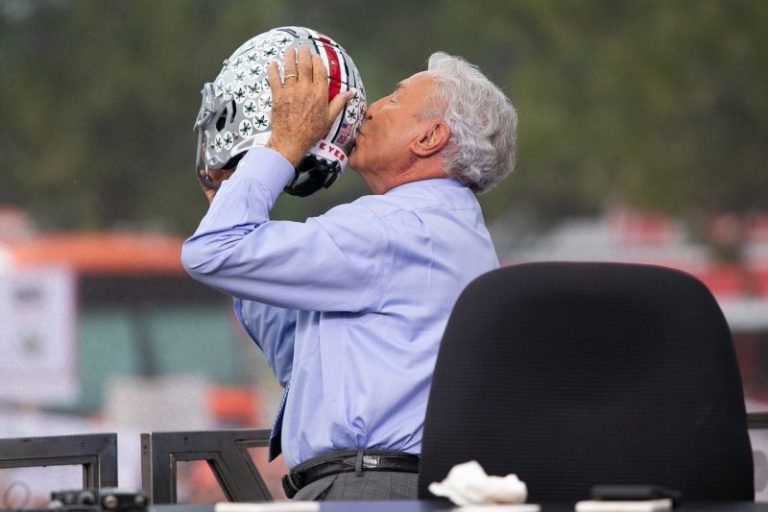
College football is just around the corner, and ESPN’s ‘College GameDay’ has already set its location for Week 1 of the 2025 season, which will be Lee Corso’s final appearance on the show.

‘GameDay’ will be headed to Columbus, Ohio, for an expected top-five ranked matchup between Ohio State, the reigning national champions, and Texas in a rematch of the Cotton Bowl in the College Football Playoff semifinals.

The 89-year-old who has been a key member of the show since its inception in 1987 will receive a celebratory sendoff.

Ohio State-Texas will still be the site of ‘GameDay’ in Week 1, despite the game airing on Fox. Alabama-Florida State and LSU-Clemson will occupy ABC’s primetime slots at 3:30 p.m. ET and 7:30 p.m. ET.

Corso has a 286-144 all-time record on headgear picks and will look to add his 287th when Ohio State and Texas face off on Saturday, Aug. 30.

“My family and I will be forever indebted for the opportunity to be part of ESPN and ‘College GameDay’ for nearly 40 years,” Corso said in a news release in April. “I have a treasure of many friends, fond memories and some unusual experiences to take with me into retirement.”

This post appeared first on USA TODAY

INDIANAPOLIS — Tyrese Haliburton used to have the video staff assemble clips of his made shots and assists.

Then, Rick Carlisle became his coach with the Indiana Pacers.

“He’s really helped me learn how to watch film, which I think is important,” Haliburton said. “I think that’s something that’s not talked about enough. … If you’re just watching and trying to find your highlights, that’s much different than really trying to dissect things.’

Carlisle and Haliburton are spending time dissecting video of Oklahoma City’s defense on Haliburton and the Pacers through the first two games of the NBA Finals.

While the series is tied at 1-1, the Thunder have led for all but one minute and 53.3 seconds of the 96 minutes over two games.

Headed into Game 3 Wednesday, June 11 (8:30 p.m. ET, ABC), attention is on Haliburton and his ability to break down Oklahoma City’s top-ranked defense.

“We’ve gone through these situations many times, not only during the playoffs but during the regular season, not just this season but prior seasons,” Carlilse said. “We’re going to have to adjust and create better situations. We’re going to have to be better.”

In the Thunder’s 123-107 victory in Game 2 on Sunday, June 8, Haliburton scored 17 points and had six assists, but 12 points came in the fourth quarter when the Thunder had established control.

It doesn’t mean the Pacers can’t learn from those points and help Haliburton create better offensive opportunities.

Carlisle and Haliburton acknowledged that it is difficult playing against the Thunder’s top-ranked defense.

“Oklahoma City has more people to throw at a great player – really at both of our All-Stars,” Carlisle said. “They can throw bigger, smaller, medium guys at Tyrese and at Pascal (Siakam). It’s one of their strengths.”

The Thunder made a change to their lineup at the start of the Finals, inserting Cason Wallace into the starting lineup and putting Isaiah Hartenstein on the bench. That gives the Thunder more versatility with a smaller but still strong lineup. That decision takes away some of Indiana’s ability to find favorable matchups.

According to nba.com player-tracking data, Oklahoma City’s Lu Dort, a first-team All-Defensive selection this season, Jalen Williams, a second-team All-Defensive selection this season, Alex Caruso, an All-Defensive choice in 2023 and 2024, and MVP Shai Gilgeous-Alexander are guarding Haliburton the most. They are using their size, strength and speed to help defend Haliburton.

“They got more guys than most teams in the NBA that are high level at the point of attack,” Haliburton said. “They’re really connected on the defensive end. I feel like they mix up coverages. I think (Thunder) coach (Mark) Daigneault isn’t afraid to do things on the fly. He doesn’t do everything that’s like very traditional.”

Haliburton hinted at a couple of solutions. Getting into the offense quicker in the shotclock and curtailing pick-and-roll sets.

“That starts with me just getting us in better positions, playing out of different spots, all those things,” Haliburton said. “Definitely got to mix it up against these guys.”

During the regular season, 37.7% of Indiana’s shots were taken with 15 or more seconds remaining on the 24-second shot clock. In the Finals, just 30.5% of the Pacers’ shot attempts came with 15 or more seconds on the shot clock.

“I feel like I probably got caught in too many high pick-and-rolls where they can really pack it in and end up getting shots late against the clock, especially the first half of both games,” Haliburton said.

In the fourth quarter of Game 2, the Pacers found success getting Haliburton the basketball on the go, using multiple screens to give him space in the paint and at the 3-point line.

None of that is easy, especially with the Thunder using their physicality, and Haliburton is a banged up with what he termed a “lower (right) leg thing” but he says he is fine and will be ready for Game 3.

“Keep watching film, see where I can get better,” Haliburton said. “The answers always lie in the film.”

Follow NBA reporter Jeff Zillgitt on social media @JeffZillgitt

This post appeared first on USA TODAY