Author

admin

Browsing

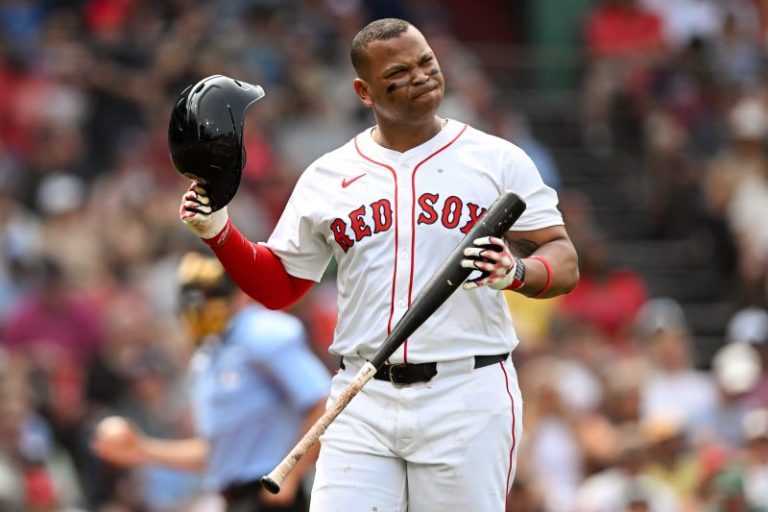
There was no name-calling, finger-pointing or ugly accusations when the Boston Red Sox front office tried to explain why they traded their biggest star and face of the franchise a day earlier.

Yet, Red Sox president Sam Kennedy and Red Sox chief baseball officer Craig Breslow made it clear during their 40-minute call with reporters that there was one, and only one reason, why Rafael Devers was traded to the San Francisco Giants.

“In the end, I think it’s pretty clear that we couldn’t find alignment with Raffy,’ Kennedy said. “We all worked at it over the last several months, going back to the offseason. We worked at it. We had a different vision for him going forward than he had. And we couldn’t get there. We couldn’t find alignment.

“We reached an inflection point and made the decision to make a big move.’

Simply, once Devers refused to play the field even after first baseman Triston Casas underwent season-ending knee surgery in May, and third baseman Alex Bregman injured his right quad weeks later, the Red Sox knew they had to trade Devers.

Breslow said that Devers, 28, never formally demanded a trade, but his agents made it clear that it would be best for all parties for a fresh start elsewhere. That fresh start began when they informed Devers on the team plane that he was traded to the San Francisco Giants for pitchers Kyle Harrison, reliever Jordan Hicks, outfield prospect James Tibbs III and rookie pitcher Jose Bello. The Giants also agreed to assume the remainder of Devers’ $313.5 million contract – about $260 million.

Breslow acknowledged that the timing stunk considering the Red Sox just won five consecutive games and swept the Yankees, but pushed back on the idea that they are giving up on contending for a playoff berth this season. They opened the night with a 37-36 record, 6 ½ games behind the New York Yankees, just one-half game out of a wild card berth.

“This is no way signifies a waving of the white flag in 2025,’ Breslow said.

Breslow, even after losing one of the game’s finest sluggers, insists they may be a better team without Devers once the smoke clears.

“I understand why the initial reaction would be that it would be tough to sit here and say, ‘When you move a player of Raffy’s caliber, how could I sit here and say that we’re a better team?’’ Breslow said. “I acknowledge that on paper, we’re not going to have the same lineup that we did, but this isn’t about the game that is played on paper. This is about the game that is played on the field and ultimately about winning the most games that we can.

“I do think there’s a real chance that at the end of the season, we’re looking back and we’ve won more games than we otherwise would have.’

The Red Sox, who have won four World Series titles since 2004 – more than any team in baseball – believe that while they may be less talented, Devers’ behavior could bring down the entire team, particularly loaded with young players.

They were incensed originally this spring when Devers, the last remaining member of the Red Sox’s 2018 championship team, refused to switch positions when they signed free agent third baseman Alex Bregman to a three-year, $120 million contract. Devers kept insisting he was their third baseman, and when he finally relented, saying he’d be their DH, he was seething when the Red Sox asked him to return to the field after Casas’ season-ending injury.

“I know I’m a ballplayer, but at the same time,’ Devers said in May, “they can’t expect me to play every single position out there.’

The Red Sox tried to persuade him to change his mind, even with owner John Henry flying to Kansas City with Kennedy and Breslow to meet in person, but Devers refused to budge.

The Red Sox waited for Devers to relent, but he never did. They began engaging with other club, and after weeks of exchanging trade proposals with the Giants, decided it was a move they needed to make. Several GMs were puzzled why the Red Sox didn’t shop him, but Breslow defended the strategy, saying they had conversations with other teams to understand his value.

“We did have conversations with other clubs… ,’ Breslow said. “It’s not that this was the best deal that we could get, because the best deal that we could get may not necessarily be good enough to trade a player like Raffy Devers.

“But when you consider all the factors here, this is the one that made sense.’’

The Giants, whose first-base production is the fourth-worst in baseball, didn’t hesitate, getting a three-time 30-home run hitter who’s hitting .272 with a .401 on-base percentage, .504 slugging percentage with 15 homers and 58 RBI.

“We’re excited about adding one of the best hitters in all of major league baseball to our lineup,” Posey said in a conference call. “We’re obviously taking on a lot of dollars, but there’s a belief that adding a guy like this puts us in a good position keep winning ballgames, get into the playoffs and try to win a World Series, which is our ultimate goal.”

The Red Sox insist it’s still their goal, too, with Breslow saying they’re a more functional team now with more flexibility, and an environment that will permit their young players to thrive. They didn’t promise they’re going to go out and spend the money this winter on free agent outfielder Kyle Tucker or someone else. This doesn’t mean they’re going to use the money to keep Bregman after the season. They simply said they have a “more functional roster’ and will use the money to address future needs.

Still, no matter what transpires moving forward, the spotlight will be on Breslow. He’s the one in charge. He’s the one responsible for making sure the communication between the players and the front office is strong. And he certainly deserves the bulk of the blame for the relationship between Devers and the organization becoming fractured beyond repair.

“This is not the outcome that we had expected,’’ Breslow said, “and it’s forced me to reflect on the interactions that I’ve had, not just with Rafi, but with other players and opportunities to communicate differently. … I need to own things that I could have done better.

“I don’t know if this outcome would have played out any differently. I think that there’s a decent chance that it wouldn’t have, but I absolutely need to have the humility to think back on the interactions and figure out what I could have done better.’

Still, it’s not as if this is just an isolated case. The Red Sox traded away their biggest star before the 2020 season in future Hall of Famer Mookie Betts, believing they couldn’t sign him. They walked away from All-Star shortstop Xander Bogaerts after the 2022 season when he badly wanted to stay, and likely would have signed for at least $100 million less than the $280 million he eventually received from the San Diego Padres. And now, Devers is gone, too.

“We understand that many fans may be feeling disappointment … ‘ Kennedy said. “As Brez said, maybe we need to look back at things we could have handled better. But it’s definitely a two way street, and we didn’t get to the alignment that we needed in the best interest of the of the Boston Red Sox. So, so we made the decision that we made. …

“We did what we felt was in the best interest of the Red Sox, on and off the field, to win championships, and to continue to ferociously and relentlessly pursue a culture that we want everyone in in that clubhouse to embody.’’

While the Red Sox front office kept reiterating that it was a pure baseball trade, the honest truth is that it was a culture trade. They didn’t believe they could win another championship with Devers. They believed he was the wrong guy to be the centerpiece of the franchise. They didn’t think he would become a leader.

So, he is gone.

And becomes the latest sta to depart Boston.

“It’s ok, this sometimes happens in a long-term relationship,’’ Kennedy said. “We hopefully did the absolute best thing in the best interest of the Boston Red Sox, and in this case, in Rafael Devers. …We just didn’t have the same shared vision for roles in the best interest of the team on the field.’’

Time will tell whether it was a decision that will haunt the Red Sox for years like Betts, or if it was a move that will be instrumental to the club’s future.

For now, it’s an ugly divorce with no winners or losers, just a whole lot of pain.

Follow Nightengale on X: @Bnightengale
This post appeared first on USA TODAY

NBA historians, fill up the inkwell and prepare your quill pens.

History is arriving as fast as Oklahoma City’s Shai Gilgeous-Alexander fills up a box score.

A couple of teams from small markets are about to do something gigantic. Well, one of them anyway, as the NBA Finals shift back to Indianapolis.

Game 6 is Thursday, June 19, with the Oklahoma City Thunder leading the Indiana Pacers 3-2 in the best-of-seven series. And here’s what you need to know:

OKC is one victory from its first title since the franchise moved from Seattle in 2008. The Pacers are two victories from winning their first championship in franchise history. And before we disclose any championship parade route information, there are some questions to ponder.

Can Tyrese Haliburton and his injured right leg bounce back after a poor showing in Oklahoma City’s 120-109 victory over Indiana in Game 5 on Monday, June 16, in Oklahoma City?

If not, any chance Indiana Fever star Caitin Clark can suit up for the Pacers? (After all, the Fever and Pacers are owned by the same people, play in the same arena and, boy, the Pacers could use a few of those logo 3s if Haliburton is misfiring again.) If not, she’ll have to continue to serve as a good-luck charm.

Regardless of which team wins, city planners should have a dusty map of the parade route ready. After all, the Thunder made it to the NBA Finals in 2012 before losing to the Miami Heat, and the Pacers reached the Finals in 2000 before losing to the Los Angeles Lakers.

But enough about the teams. What about the fans?

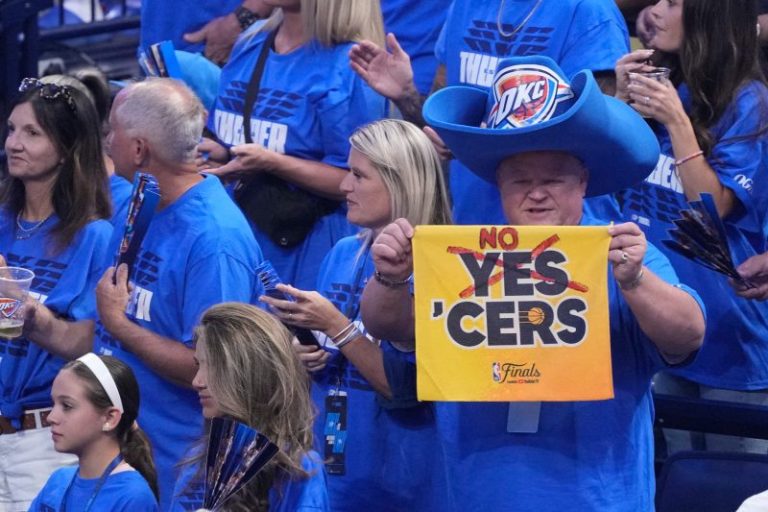
The Thunder faithful were color coordinated in their white-and-blue T-shirts during Game 5 and belting out those spirited chants of “OKC!” Everybody, on three, “Awwwww.”

How long are we going to be able to tolerate the chants of “OKC!’’ All joking aside, suck it up, sports fans, because they’ve earned the right to chant as long as they want if they win Game 6 or Game 7.

“Unreal,’’ coach Mark Daigneault said about the Thunder’s home crowd after his team won Game 5. “They’ve been unreal forever, but they just put the wind at our back and we have to give the reason to.’’

Small-market teams do not lack zealous fans. The Pacers faithful at Gainbridge Fieldhouse in Indianapolis on Thursday night are at risk of vocal cord damage if that’s what it takes to propel their team to victory and force a deciding Game 7.

It’ll all be worth writing about, fellow historians, especially if you’re equipped with a quill pen.

(This story has been updated to add a new video).

This post appeared first on USA TODAY

As Starbucks aims to bring back customers and assuage investors with its turnaround strategy, it is also winning over its store managers with promises to add more seating inside cafes and promote internally.

Since CEO Brian Niccol’s first week at the company, he’s been pledging to bring the company “back to Starbucks” to lift sluggish sales. That goal was in full view at the company’s Leadership Experience, a three-day event in Las Vegas for more than 14,000 store leaders this week.

Starbucks unveiled a new coffee called the 1971 Roast, a callback to the year that its first location opened at Pike Place in Seattle. The finalists at Starbucks’ first-ever Global Barista Championships referred to “back to Starbucks” as they prepared drinks for judges. Even the Wi-Fi password was “backtostarbucks!”

To investors, Niccol has already presented a multi-part strategy that involves retooling the company’s marketing strategy, improving staffing in cafes, fixing the chain’s mobile app issues and making its locations cozier. The company also laid off roughly 1,100 corporate workers earlier this year, saying it aimed to operate more efficiently and reduce redundancies.

Starbucks shares have climbed nearly 20% since April and are trading just shy of where they were after a nearly 25% spike the day Niccol was announced as CEO.

While Starbucks has taken major steps to win back customers and Wall Street, it’s also trying to regain faith among its employees. Staffers have had concerns about hours and workloads for years, sparking a broad union push across the U.S.

To excite the chain’s store managers, Starbucks executives’ pitch this week focused on giving them more control. Before launching new drinks, like a protein-packed cold foam, the company is first testing them in five stores to gain feedback from baristas.

When the chain increases its staffing this summer, managers will have more input on how many baristas they need. And next year, most North American stores will add an assistant manager to their rosters.

“You are the leaders of Starbucks. Your focus on the customer is critical. Your leadership is critical. And as you return to your coffeehouses, please remember: coffee, community, opportunity, all the good that follows,” Niccol said on Tuesday.

Niccol’s “back to Starbucks” strategy centers on the idea that the company’s culture has faltered. Its Leadership Experience, typically held every couple of years, was the first since 2019 — three CEOs ago.

“We are a business of connection and humanity,” Niccol said on Tuesday afternoon, addressing a crowd of more than 14,000 managers. “Great people make great things happen.”

As more customers order their lattes via the company’s app, its cafes have lost their identity as a “third place” for people to hang out and sip their drinks.

To return to Starbucks’ prior culture, the company is unwinding previous decisions — like removing seats from its cafes. In recent years, the chain has removed 30,000 seats from its locations. Those renovations have irritated both customers and employees; the manager of Niccol’s local Starbucks in Newport Beach, California, even asked him to remove her store from its renovation list because she wanted to keep the seating, according to Niccol.

“We’re going to put those seats back in,” Niccol said, bringing a big wave of applause from the audience.

He earned more applause from the audience when discussing the chain’s plans to promote internally as it eventually adds 10,000 more locations in the U.S.

Although historically roughly 60% of Starbucks store managers have been internal promotions, the company wants to raise that to 90% for its retail leadership roles. Thousands of new cafes means 1,000 more district managers, 100 regional directors and 14 regional vice presidents for the company — and more upward career mobility for its store leaders.

Staffing more broadly has been a concern for Starbucks and its employees, fueling a wave of union elections across hundreds its stores. Past management teams have cut down on the labor allotted to stores, helping profit margins at the cost of burning out baristas and slowing service.

Under Niccol, Starbucks is changing the trend. The company is accelerating plans to roll out its new Green Apron labor model by the end of the summer, because tests have shown that it improves service times and boosts traffic. As part of the model, managers will have more input on how much labor their store needs.

And Chief Partner Officer Sara Kelly received a standing ovation from the crowd for her announcement that most North American locations will receive a full-time, dedicated assistant store manager next year.

“For much of the time, your store is operating without you there, and you share that even when you’re not in the store, you’re not able to fully disconnect, and it can feel like the weight of everything is on your shoulders. … It affects everything, the partner experience, the customer experience, the performance of your store,” Kelly said, addressing the store managers in the audience.

Underscoring the challenges Niccol faces in recapturing the company’s brand, the two speakers who scored the most applause from store managers are no longer actively involved in the company.

Former chairwoman Mellody Hobson scored standing ovations during both her entry and exit onto the arena’s stage. Hobson, wiping tears from her eyes, thanked the Starbucks employees whom she said always made her feel welcome in their stores.

She stepped down from her position earlier this year, ending a roughly two-decade tenure that culminated with her becoming the first African American woman to become the independent chair of a Fortune 500 company. Hobson also serves as co-CEO of Ariel Investments.

Hobson ceded her position as chair of the board to Niccol when he joined the company in September. Niccol credited her with poaching him from Chipotle as Starbucks sought to find a leader who could turn around its flailing business.

“A quick conversation [with Hobson] turned into something really special for me,” Niccol said.

And Hobson’s longtime friend Howard Schultz also earned standing ovations from store managers.

Schultz, the three-time CEO who grew Starbucks from a small chain into a coffee powerhouse, made a surprise appearance at the Leadership Experience on Wednesday morning. It marked the first time that he’s appeared with Niccol publicly since the board tossed out his handpicked successor, Laxman Narasimhan, and selected the then-Chipotle CEO to take the reins.

Starbucks has long been plagued by questions about its succession, given Schultz’s former willingness to return to the helm of the company. But since Niccol’s appointment, industry analysts have thought that he might finally be the CEO who manages to escape Schultz’s lingering influence over the coffee giant.

The ghost of Schultz lingered earlier in the event. Niccol shared a story about being inspired hearing Schultz speak at Yum Brands, Niccol’s then-employer, back in 2008. The 71-year-old chairman emeritus also appeared in video form on Tuesday afternoon to thank Hobson for her service to the company.

During his conversation with Niccol on Wednesday, Schultz co-signed his plan to get “back to Starbucks,” saying that he did a cartwheel in his living room the first time that he heard about it.

He also asked managers to bring that energy back to their own Starbucks locations.

“Be true to the coffee, be true to your partners,” Schultz told the audience. “And I know we’re going to come out of here … like a tidal wave and surprise and delight the world and prove all those cynics wrong again, just as we did in 1987.”

This post appeared first on NBC NEWS

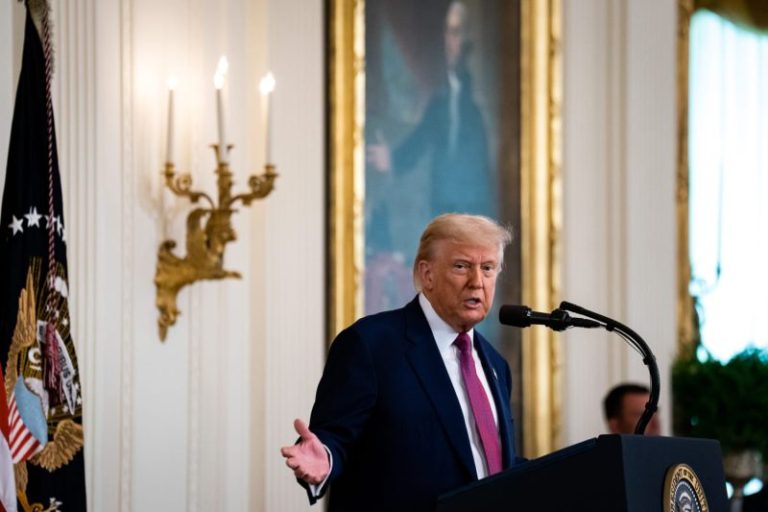
President Donald Trump continues to enjoy income streams from scores of luxury properties and business ventures, many of which are worth tens of millions of dollars, according to a financial disclosure form filed late Friday.

Released by the Office of Government Ethics, Trump’s 2025 financial disclosure spans 234 pages in all, including 145 pages of stock and bond investments. It is dated Friday with Trump’s signature.

One of the largest sources of income is the $57,355,532 he received from his ownership stake in World Liberty Financial, the cryptocurrency platform launched last year. The form shows that World Liberty’s sales of digital tokens have been highly lucrative for Trump and his family. Trump’s three sons, Donald Jr., Eric and Barron, are listed on the company’s website as co-founders of the firm.

Separately, Trump’s meme coin, known on crypto markets simply as $TRUMP, was not released until January and is therefore not subject to the disclosure requirements for this form, which covered calendar year 2024.

It was a lucrative year for Trump when it came to royalty payments for the various goods that are sold featuring his name and likeness.

Among the royalty payments:

The filing also includes a listing of liabilities, including at least $15,000 on an American Express credit card and payments due to E. Jean Carroll, the woman who successfully sued Trump over sexual abuse and defamation, though he is still seeking to appeal the decision.

The rest of the document includes dozens of pages of lengthy footnotes about his various assets.

The form was filed to comply with federal requirements for executive branch office holders. By comparison, the form former President Joe Biden filed in 2024 was 11 pages and consisted largely of conventional sources of income like bank and retirement accounts, while Kamala Harris’ was 15 pages.

Many of Trump’s key assets are held in a revocable trust overseen by Donald Trump Jr., his eldest son. They include more than 100,000 shares of Trump Media and Technology Group, the social media company that went public in 2024. Trump is the largest shareholder, and his nearly 53% is worth billions of dollars. Those holdings were still disclosed in the form.

This post appeared first on NBC NEWS

This Time Technology Beats Financials

After a week of no changes, we’re back with renewed sector movements, and it’s another round of leapfrogging.

This week, technology has muscled its way back into the top five sectors at the expense of financials, highlighting the ongoing volatility in the market.

Communication Services and Consumer Staples have swapped places since last week, while Technology has entered at number five, pushing Financials down to sixth. The remaining sectors from seven to eleven remain unchanged.

This constant shuffling is a clear indicator of the market’s indecision. Imho, such volatility usually doesn’t accompany a sustainable trend, and that’s precisely what’s hurting trend-following models right now.

  1. (1) Industrials – (XLI)
  2. (2) Utilities – (XLU)
  3. (4) Communication Services – (XLC)*
  4. (3) Consumer Staples – (XLP)*
  5. (6) Technology – (XLK)*
  6. (5) Financials – (XLF)*
  7. (7) Real-Estate – (XLRE)
  8. (8) Materials – (XLB)
  9. (9) Consumer Discretionary – (XLY)
  10. (10) Healthcare – (XLV)
  11. (11) Energy – (XLE)

Weekly RRG Analysis

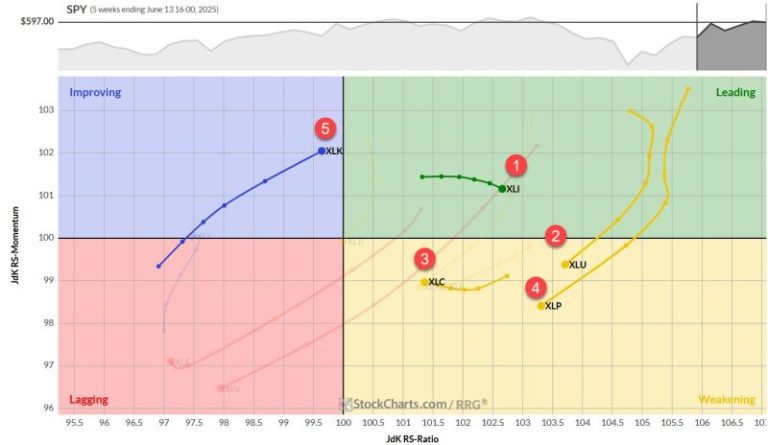
On the weekly Relative Rotation Graph, the Technology sector is showing impressive strength. Its tail is well-positioned in the improving quadrant, nearly entering the leading quadrant with a strong RRG heading. This movement explains Technology’s climb back into the top ranks.

Industrials remains the only top-five sector still inside the leading quadrant on the weekly RRG. It continues to gain relative strength, moving higher on the JdK RS-Ratio axis, while slightly losing relative momentum. All in all, this tail is still in good shape.

Utilities, Communication Services, and Consumer Staples are all currently in the weakening quadrant. Utilities and Staples show negative headings but maintain high RS-Ratio readings, giving them room to potentially curl back up. Communication Services is losing ground on the RS-Ratio scale but starting to pick up relative momentum.

Daily RRG: A Different Picture

Switching our focus to the daily RRG reveals a somewhat different story:

  • Industrials has moved into the lagging quadrant, losing ground on the RS-Ratio scale
  • Utilities and Staples are rolling back into the lagging quadrant with negative headings — not a great sign
  • Communication Services remains close to the benchmark
  • Technology shows the strongest tail, nearly completing a leading-weakening-leading rotation

This daily view underscores the strength we’re seeing in the Technology sector on the weekly timeframe.

Industrials: Facing Resistance

XLI dropped back below its previous high after a strong showing the week prior. There’s significant resistance between $142.50 and $145.

In a worst-case scenario, I think XLI could even retreat to the gap area between $137.50 and $139.

The uptrend remains intact, but more buying power is needed for a convincing break to new highs.

Utilities: Range-Bound

XLU is now trading in a range between roughly $80 on the downside and $83 on the upside.

It needs to break above the former high to continue building relative strength.

The raw RS line has returned to its trading range, dragging both RRG lines lower — not the strongest outlook for this defensive sector.

Communication Services: Testing Resistance

The sector peaked almost exactly at resistance offered by its previous high around $105, then closed at the lower end of the bar.

The raw RS line is managing to stay within its rising channel, albeit horizontally.

A sustained upward price movement is crucial for maintaining relative strength here.

Consumer Staples: Struggling to Break Higher

XLP continues to face heavy overhead resistance between $82 and $83.

Its inability to break higher is starting to hurt relative strength.

The raw RS line has moved down from a recent high, dragging the RRG lines lower.

The RS-Momentum line has already crossed below 100, positioning the weekly tail inside the weakening quadrant.

Technology: The Comeback Kid

XLK, the new kid on the block (again), tested its overhead resistance level around $244, peaking slightly above it last week before closing lower.

Recent strength has pushed the raw RS line convincingly higher, taking out its previous peak from mid-December.

Both RRG lines are pointing strongly upward, with RS-Momentum already above 100 and RS-Ratio rapidly approaching 100.

Portfolio Performance

With all this sector leapfrogging, especially involving the heavyweight Technology sector, the gap between the top five sectors’ performance and SPY has widened to around 7%.

The drawdown continues, but I’m sticking with this experiment and trusting the model to come back and start beating SPY again.

Yes, a 7% lag sounds significant (and it is), but it can change rapidly in such a concentrated portfolio. One or two strong weeks could easily turn this performance around, particularly if big sectors like Technology and potentially Consumer Discretionary become part of the top five.

#StayAlert and have a great week. –Julius


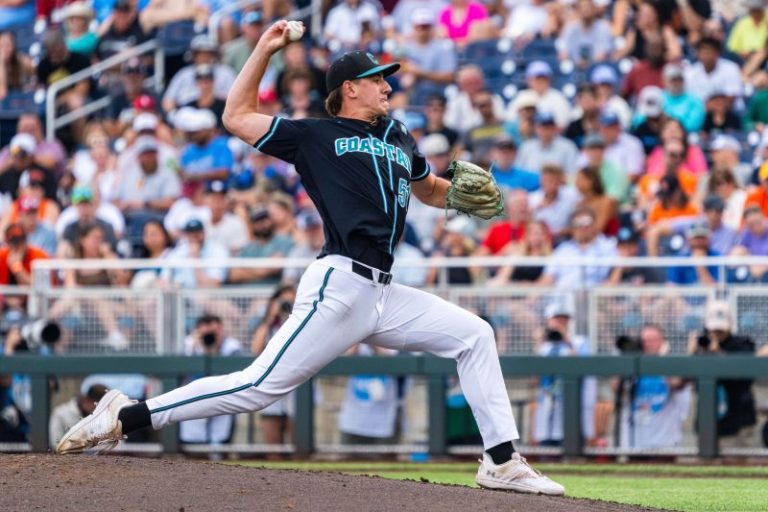
Coastal Carolina baseball’s Jacob Morrison brought his A-game against Oregon State at the College World Series.

The Sun Belt Pitcher of the Year in 2025 was electric outside of a solo home run he allowed in the bottom of the third inning, as he retired 16 hitters in a row from that point forward. The streak lasted into the eighth inning. He became only the third pitcher since 2011 to retire 16 or more batters in a College World Series game, according to the program.

The 6-foot-8 ace for the No. 13 Chanticleers set the tone in their 6-2 win over the No. 8 Beavers on June 15, allowing one run on five hits with seven strikeouts across 7 2/3 innings. The redshirt sophomore dropped his season ERA from 2.15 to 2.08 with the performance.

The win improved Morrison’s record to 12-0 on the year, as Coastal Carolina is undefeated in games where Morrison has earned a decision. His 2.15 ERA entering Sunday’s game is the sixth-best mark in college baseball this season, and best among all pitchers still alive at the CWS.

Morrison has been outstanding for the Chanticleers in his three NCAA tournament starts, as he went six innings and allowed one run with six strikeouts against No. 4 Auburn in the Auburn Super Regional to reach Omaha, Nebraska. He allowed four runs on seven hits in five innings against East Carolina in the Conway Regional in his first postseason outing.

Coastal Carolina’s ace will be available again if the Chanticleers reach the national championship series, and he has a chance to make even more of a name for himself at the sport’s biggest stage, as his team is looking for its second national championship since 2016.

Here’s a look at Morrison’s stats this season, which rank among the best in college baseball:

Jacob Morrison stats

Stats as of Saturday, June 14.

Here’s a look at Morrison’s 2025 stats at Coastal Carolina:

  • 2025 (redshirt sophomore): 11-0 record with 2.15 ERA and 95 strikeouts in 96 1/3 innings pitched. 0.93 WHIP and .195 batting average against.
  • 2024: Redshirted
  • 2023 (freshman): 6-1 record with 6.55 ERA and 68 strikeouts in 57 2/3 innings. 1.56 WHIP and .304 batting average against.
This post appeared first on USA TODAY

The summer solstice is later this week, marking the official start of the season. However, something just as exciting is on the horizon: fantasy football drafts.

Our team of reporters, analysts and editors at USA TODAY Sports came together to make their picks. It’s always fascinating to see where top rookies like Travis Hunter, Ashton Jeanty and Tetairoa McMillan are selected.

Mock drafts are a helpful tool for deciphering position value. Some years, wide receivers fly off of the board, while mocks can also be an identifier of the running backs who are most highly coveted.

It’s never too early to start preparing for the fantasy football season. Our first 10-team mock draft will help you gain the upper hand over your league mates.

This mock draft featured the following participants, listed in order of their first-round selections: Tom Viera, Steve Gardner, Sherlon Christie, Jack McKessy, Jacob Camenker, Ayrton Ostly, Casey Moore, Jon Hoefling, Elisha Twerski and Nick Brinkerhoff.

This league is a 10-team format with PPR scoring.

Round 1

  • 1. Bijan Robinson, ATL (RB1) – Viera
  • 2. Ja’Marr Chase, CIN (WR1) – Gardner
  • 3. Saquon Barkley, PHI (RB2) – Christie
  • 4. Jahmyr Gibbs, DET (RB3) – McKessy
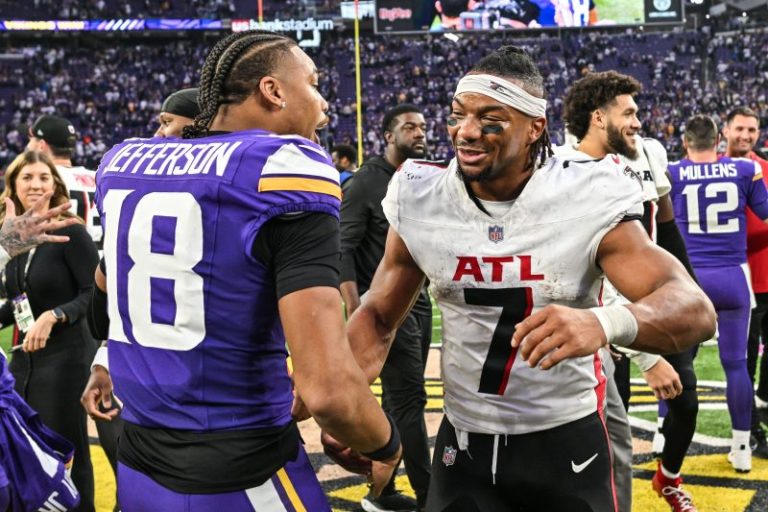
  • 5. Justin Jefferson, MIN (WR2) – Camenker
  • 6. Malik Nabers, NYG (WR3) – Ostly
  • 7. CeeDee Lamb, DAL (WR4) – Moore
  • 8. Puka Nacua, LAR (WR5) – Hoefling
  • 9. Ashton Jeanty, LV (RB4) – Twerski
  • 10. Nico Collins, HOU (WR6) – Brinkerhoff

Round 2

  • 11. Amon-Ra St. Brown, DET (WR7) – Brinkerhoff
  • 12. Brian Thomas Jr., JAX, (WR8) – Twerski
  • 13. De’Von Achane, MIA (RB5) – Hoefling
  • 14. Christian McCaffrey, SF (RB6) – Moore
  • 15. Drake London, ATL (WR9) – Ostly
  • 16. Derrick Henry, BAL (RB7) – Camenker
  • 17. Bucky Irving, TB (RB8) – McKessy
  • 18. Jaxon Smith-Njigba, SEA (WR10) – Christie
  • 19. A.J. Brown, PHI (WR11) – Gardner
  • 20. Chase Brown, CIN (RB9) – Viera

Round 3

  • 21. Tee Higgins, CIN (WR12) – Viera
  • 22. Jonathan Taylor, IND (RB10) – Gardner
  • 23. Brock Bowers, LV (TE1) – Christie
  • 24. Ladd McConkey, LAC (WR13) – McKessy
  • 25. Terry McLaurin, WASH (WR14) – Camenker
  • 26. Trey McBride, ARI (TE2) – Ostly
  • 27. Kyren Williams, LAR (RB11) – Moore
  • 28. Garrett Wilson, NYJ (WR15) – Hoefling
  • 29. Josh Jacobs, GB (RB12) – Twerski
  • 30. Rashee Rice, KC (WR16) – Brinkerhoff

Round 4

  • 31. Breece Hall, NYJ (RB13) – Brinkerhoff
  • 32. Davante Adams, LAR (WR17) – Twerski
  • 33. Josh Allen, BUF (QB1) – Hoefling
  • 34. Lamar Jackson, BAL (QB2) – Moore
  • 35. Jayden Daniels, WASH (QB3) – Ostly
  • 36. James Cook, BUF (RB14) – Camenker
  • 37. Mike Evans, TB (WR18) – McKessy
  • 38. Tyreek Hill, MIA (WR19) – Christie
  • 39. Jalen Hurts, PHI (QB4) – Gardner
  • 40. George Kittle, SF (TE3) – Viera

Round 5

  • 41. DK Metcalf, PIT (WR20) – Viera
  • 42. Kenneth Walker III, SEA (RB15) – Gardner
  • 43. Quinshon Judkins, CLE (RB16) – Christie
  • 44. Joe Burrow, CIN (QB5) – McKessy
  • 45. Alvin Kamara, NO (RB17) – Camenker
  • 46. Aaron Jones, MIN (RB18) – Ostly
  • 47. Sam LaPorta, DET (TE4) – Moore
  • 48. Omarion Hampton, LAC (RB19) – Hoefling
  • 49. Marvin Harrison Jr., ARI (WR21) – Twerski
  • 50. T.J. Hockenson, MIN (TE5) – Brinkerhoff

Round 6

  • 51. Zay Flowers, BAL (WR22) – Brinkerhoff
  • 52. Isiah Pacheco, KC (RB20) – Twerski
  • 53. Chuba Hubbard, CAR (RB21) – Hoefling
  • 54. DJ Moore, CHI (WR23) – Moore
  • 55. James Conner, ARI (RB22) – Ostly
  • 56. Patrick Mahomes, KC (QB6) – Camenker
  • 57. Joe Mixon, HOU (RB23) – McKessy
  • 58. Bo Nix, DEN (QB7) – Christie
  • 59. Courtland Sutton, DEN (WR24) – Gardner
  • 60. Chris Godwin, TB (WR25) – Viera

Round 7

  • 61. TreVeyon Henderson, NE (RB24) – Viera
  • 62. David Montgomery, DET (RB25) – Gardner
  • 63. Jordan Addison, MIN (WR26) – Christie
  • 64. Calvin Ridley, TEN (WR27) – McKessy
  • 65. Travis Kelce, KC (TE6) – Camenker
  • 66. Jaylen Waddle, MIA (WR28) – Ostly
  • 67. RJ Harvey, DEN (RB26) – Moore
  • 68. DeVonta Smith, PHI (WR29) – Hoefling
  • 69. Baker Mayfield, TB (QB7) – Twerski
  • 70. D’Andre Swift, CHI (RB27) – Brinkerhoff

Round 8

  • 71. Travis Hunter, JAX (WR30) – Brinkerhoff
  • 72. Rome Odunze, CHI (WR31) – Twerski
  • 73. Chris Olave, NO (WR32) – Hoefling
  • 74. Jerry Jeudy, CLE (WR33) – Moore
  • 75. Xavier Worthy, KC (WR34) – Ostly
  • 76. Jameson Williams, DET (WR35) – Camenker
  • 77. Jakobi Meyers, LV (WR36) – McKessy
  • 78. Brian Robinson Jr., WASH (RB28) – Christie
  • 79. Tony Pollard, TEN (RB29) – Gardner
  • 80. George Pickens, DAL (WR37) – Viera

Round 9

  • 81. Tetairoa McMillan, NE (WR38) – Viera
  • 82. Brandon Aiyuk, SF (WR39) – Gardner
  • 83. Jordan Mason, MIN (RB30) – Christie
  • 84. Kaleb Johnson, PIT (RB31) – McKessy
  • 85. Jauan Jennings, SF (WR40) – Camenker
  • 86. Jaylen Warren, PIT (RB32) – Ostly
  • 87. Khalil Shakir, BUF (WR41) – Moore
  • 88. Jonnu Smith, MIA (TE7) – Hoefling
  • 89. Mark Andrews, BAL (TE8) – Twerski
  • 90. Ricky Pearsall, SF (WR42) – Brinkerhoff

Round 10

  • 91. Tyrone Tracy Jr., NYG (RB33) – Brinkerhoff
  • 92. Josh Downs, IND (WR43) – Twerski
  • 93. Javonte Williams, DAL (RB34) – Hoefling
  • 94. Travis Etienne Jr., JAX (RB35) – Moore
  • 95. Jayden Reed, GB (WR44) – Ostly
  • 96. Rhamondre Stevenson, NE (RB36) – Camenker
  • 97. Jared Goff, DET (QB8) – McKessy
  • 98. Jalen McMillan, TB (WR45) – Christie
  • 99. Zach Charbonnet, SEA (RB37) – Gardner
  • 100. Kyler Murray, AZ (QB9) – Viera

Round 11

  • 101. Deebo Samuel, WASH (WR46) – Viera
  • 102. Evan Engram, DEN (TE9) – Gardner
  • 103. Jordan Love, GB (QB10) – Christie
  • 104. Cam Skattebo, NYG (RB38) – McKessy
  • 105. Stefon Diggs, NE (WR47) – Camenker
  • 106. Emeka Egbuka, TB (WR48) – Ostly
  • 107. Cooper Kupp, LAR (WR49) – Moore
  • 108. Justin Herbert, LAC (QB11) – Hoefling
  • 109. Jaydon Blue, DAL (RB39) – Twerski
  • 110. Bhayshul Tuten, JAX (RB40) – Brinkerhoff

Round 12

  • 111. Justin Fields, NYJ (QB12) – Brinkerhoff
  • 112. Jaylen Wright, MIA (RB41) – Twerski
  • 113. Tyler Warren, IND (TE10) – Hoefling
  • 114. David Njoku, CLE (TE11) – Moore
  • 115. Trevor Lawrence, JAX (QB13) – Ostly
  • 116. Rachaad White, TB (RB42) – Camenker
  • 117. Rashid Shaheed, NO (WR50) – McKessy
  • 118. Tucker Kraft, GB (TE12) – Christie
  • 119. Brock Purdy, SF (QB14) – Gardner
  • 120. Ray Davis, BUF (RB43) – Viera

Round 13

  • 121. Najee Harris, LAC (RB44) – Viera
  • 122. Eagles D/ST (DST1) – Gardner
  • 123. Matthew Golden, GB (WR51) – Christie
  • 124. Colston Loveland, CHI (TE13) – McKessy
  • 125. Keon Coleman, BUF (WR52) – Camenker
  • 126. Broncos D/ST (DST2) – Ostly
  • 127. Dak Prescott, DAL (QB15) – Moore
  • 128. Steelers D/ST (DST3) – Hoefling
  • 129. Kyle Williams, NE (WR53) – Twerski
  • 130. Brandon Aubrey, DAL (K1) – Brinkerhoff

Round 14

  • 131. Luther Burden III, CHI (WR54) – Brinkerhoff
  • 132. Cameron Dicker, LAC (K2) – Twerski
  • 133. J.K. Dobbins, DEN (RB45) – Hoefling
  • 134. Ravens D/ST (DST4)- Moore
  • 135. Evan McPherson, CIN (K3) – Ostly
  • 136. Jake Bates, DET (K4) – Camenker
  • 137. Ka’imi Fairbairn, HOU (K5) – McKessy
  • 138. J.J. McCarthy, MIN (QB16) – Christie
  • 139. Jake Ferguson, DAL (TE14) – Gardner
  • 140. Texans D/ST (DST5) – Viera

Round 15

  • 141. Chase McLaughlin, TB (K6) – Viera
  • 142. Wil Lutz, DEN (K7) – Gardner
  • 143. Michael Penix Jr., ATL (QB17) – Christie
  • 144. Lions D/ST (DST6) – McKessy
  • 145. Vikings D/ST (DST7) – Camenker
  • 146. Roschon Johnson, CHI (RB46) – Ostly
  • 147. Chris Boswell, PIT (K8) – Moore
  • 148. Younghoe Koo, ATL (K9) – Hoefling
  • 149. Bills D/ST (DST8) – Twerski
  • 150. KC D/ST (DST9) – Brinkerhoff

All the NFL news on and off the field. Sign up for USA TODAY’s 4th and Monday newsletter.

This post appeared first on USA TODAY

FMR Resources Limited (ASX:FMR) (FMR or Company) is pleased to announce it has entered into a conditional Binding Term Sheet giving it the right to earn up to a 60% interest in a highly prospective copper-gold-molybdenite project in central Chile (Transaction). The Company will joint venture (JV) into selected tenements (the JV Tenements or Concessions) within the Llahuin Project (Llahuin or the Project) held by Southern Hemisphere Mining Ltd (SUH) which overlie the Southern Porphyry Target.

Highlights

  • Large Cu-Au-Mo porphyry target untested at depth
  • Coincidental datasets suggest substantial copper porphyry system
  • Shallow historic drilling confirms porphyry mineralisation above target
  • Drilling of targets to commence early Q4 2025
  • Oliver Kiddie joins FMR as Managing Director
  • Firm commitments received for $2.2m capital raising at $0.16 through a placement to existing and new sophisticated investors
  • Mark Creasy to join the FMR register as major shareholder

The Southern Porphyry JV gives FMR exposure to a potential Company-making discovery. Coincidental datasets captured across the Southern Porphyry target area suggest a large, untested copper porphyry system below historic exploration. With proven fertility along a ~6km corridor at Llahuin, including historic shallow copper porphyry mineralisation directly above the Southern Porphyry target, this JV delivers FMR drill-ready targets for Q4 2025. The Company looks forward to updating shareholders as we progress towards maiden drilling of these exciting targets.

In conjunction, FMR is pleased to announce the appointment of Oliver Kiddie as Managing Director. Mr Kiddie is a geologist with over 20 years’ experience across exploration, resource definition, project development, and production throughout Australia and internationally. He has extensive experience in base metal and gold exploration through senior management, executive, and directorship positions, including Dominion Mining, European Goldfields, the Creasy Group, and Legend Mining.

Oliver Kiddie said:“I am very excited to be joining the FMR team as the Company expands its exploration portfolio with the Llahuin Project in Chile. I look forward to leading the Company through the next stage of growth and working with the experienced SUH team as the compelling Southern Porphyry drill targets are tested in Q4 this year, with the clear aim of a Company-making discovery.”

Project Description

Porphyry-style Cu-Au-Mo mineralisation identified to date at the Llahuin Project is largely hosted in three main mineralised zones – the Central Porphyry Zone, Cerro do Oro and Ferrocarril, which occur along a +2.5 km N-S strike (open north and south, with a total strike length of up 6 km). These zones are coincident with a north-south trending valley, potentially reflecting weathering of more regressive units or a structure.

Llahuin was initially acquired in July 2011 by SUH through an intermediary from Antofagasta plc. Drilling completed across the project to date comprises 296 holes for 64,503m with a total of 62 holes for 11,927m completed on the JV Tenements, of which 9,156m reports to the Ferrocarril zone and are therefore not relevant to the Southern Porphyry Target. Drilling has resulted in the delineation of Mineral Resources which do not form part of the JV and do not form part of the transaction (see Figures 1 and 7).

In addition to drilling SUH has completed extensive geochemical and geophysical surveys at Llahuin, including detailed magnetics (MAG), induced polarisation (IP), and magnetotellurics (MT). These datasets have indicated a “blind” porphyry-style target at the southern end of the Llahuin Project named the Southern Porphyry Target. This target is defined by a coincident magnetic anomaly, IP resistivity anomaly, and MT resistivity anomaly. The target is modelled as a circular feature 1.5km – 2km in diameter and centred approximately 1,000m below surface (see Figures 1, 2, 3, 4, and 5).

Click here for the full ASX Release

This post appeared first on investingnews.com

J.J. Spaun earned the right to dance in the rain after making the longest putt of the 2025 U.S. Open, clinching his first win in a golf major on Sunday.

Caddie Mark Carens walked over and joined Spaun as the duo watched the ball travel 64 feet and to secure victory. The men embraced as the ball fell into the 18th hole.

‘When I hit it, I thought it was a little short,’ Spaun told NBC Sports’ Mike Tirico during the trophy ceremony. ‘… but it was looking really good … fortunately it was my time.’

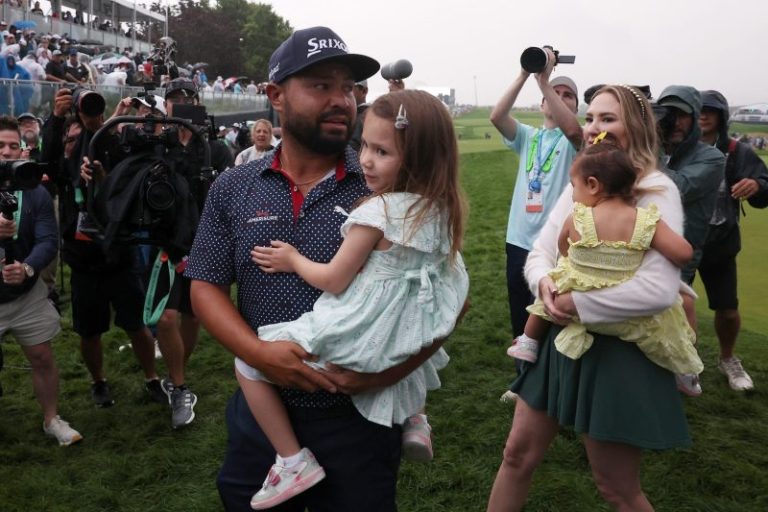
An emotional Spaun reunited with his wife, Melody, and their daughters, Emerson Lili and Violet Windsor, to celebrate the win on Father’s Day.

‘It was a dream week and scenario to have my kids here,’ Spaun said about having his family in attendance. ‘It’s awesome and a cherry on top for an awesome week.’

The Los Angeles native became the 92nd different player to win the tournament.

Watch J.J. Spaun’s putt to win 2025 U.S. Open

The biggest stories, every morning. Stay up-to-date on all the key sports developments by subscribing to USA TODAY Sports’ newsletter.

This post appeared first on USA TODAY