Author

admin

Browsing

The 2024-25 NBA season – through the promise of a fresh start in October to the dog days of late January to the late-season push for the postseason in late March, early April to the two-month playoffs schedule to determine a champion – comes down to one more game.

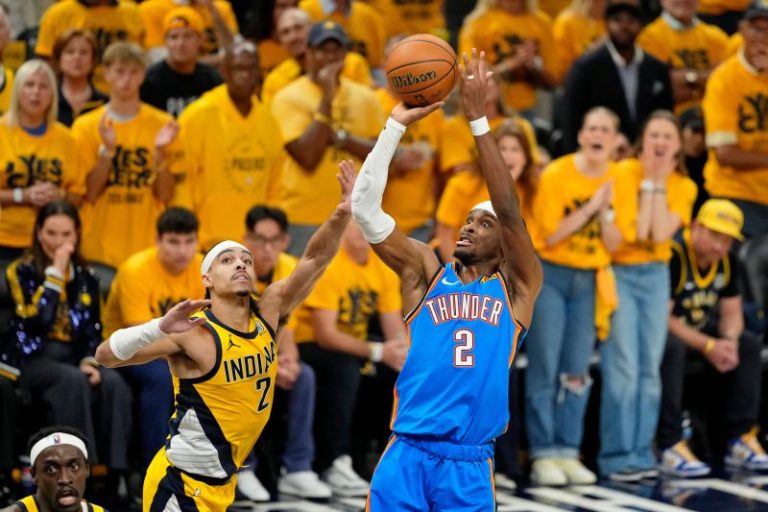
Game 7 between the Oklahoma City Thunder and Indiana Pacers in the NBA Finals on Sunday, June 22 (8 p.m. ET, ABC). Forty-eight minutes – possibly more – between two talented, deep, well-coached and exhausted teams.

‘One game for everything you ever dreamed of,’ Thunder star and this season’s MVP Shai Gilgeous-Alexander said. ‘If you win it, you get everything. If you lose it, you get nothing. It’s that simple.’

Simple in theory. Difficult in practice.

Because winning a championship isn’t easy. It shouldn’t be.

One more game. The 20th Game 7 in NBA Finals history. Pacers-Thunder.

Indiana has never won an NBA title; since relocating to Oklahoma City from Seattle in 2008, the Thunder have never won a title.

‘Just really focused on Game 7 and trying to take it just a moment at a time,’ Pacers star Tyrese Haliburton said. ‘Really enjoying what we’re doing. Understanding this is going to be one of the biggest, if not the biggest, game most of us ever play in in our lives, and for our organization from a historical standpoint, as well. That’s something that you don’t take for granted and you enjoy as a competitor.’

Here’s how each team can win Game 7:

How Thunder can win NBA Finals Game 7

It starts with Shai Gilgeous-Alexander

The MVP needs to play like the MVP, and he can’t have more turnovers than made shots as he did in Indiana’s Game 6 victory. Making mid-range shots, getting to the rim and free throw line, knocking down the occasional 3-pointers and making sure his teammates are involved. The Thunder are at their best when Gilgeous-Alexander scores around 30 points, five assists, two steals and attempts 10 free throws and has no more than three turnovers.

Limit turnovers

In Indiana’s Game 3 victory, the Thunder committed 19 turnovers, and in Indiana’s Game 6 victory, the Thunder turned the ball over 21 times. It’s one thing if shots are falling, it’s another to have that many possessions with a field goal attempt.

Offense from Jalen Williams and Chet Holmgren

The Thunder don’t need 40 points from Williams like they got from him in Game 5. However, an efficient Jalen Williams who is attacking the basket off the dribble and in transition and scoring 20-plus points while rebounding and collecting assists gives the Thunder a much better chance of winning.

It’s clear Holmgren needs to be involved offensively. He had just six points in the Game 1 loss and four points in the Game 6 loss and was 4-for-18 from the field in those two games. He’s averaging 12.7 points and 10.7 rebounds in Finals victories and 10 points and 7.3 rebounds in Finals losses.

Bench contributions

The Thunder have used depth to their advantage all season. Getting 3s from Cason Wallace, Alex Caruso and Aaron Wiggins is important. Caruso has scored just two points in the past two games and was scoreless in Game 6. Wallace, Caruso and Wiggins were 1-for-6 on 3s in Game 6 and 7-for-14 in Game 5 and 14-for-26 in Game 2.

Home-court advantage

The Thunder are not immune to home losses – they lost Game 1 of the Western Conference semifinals to Denver and Game 1 of the NBA Finals to Indiana at home. However, they were 35-6 at home during the regular season and 10-2 during the playoffs. Oklahoma City provides one of the best home crowds in the league, and the Thunder can use that energy. LeBron James often said home-court advantage doesn’t mean anything until a Game 7.

How the Pacers can win Game 7

Tyrese Haliburton’s ability to play through injury

Haliburton has a strained calf, and if this were the regular season and even earlier in the playoffs, he might not be playing. But in Game 6 and Game 7 of the Finals, he is. He only played 23 minutes in the Pacers’ Game 6 blowout victory and had 14 points, five assists and two steals. That kind of per-minute production should keep the Pacers in the game with a chance to win.

Feisty, unpredictable defense

The Pacers’ improved defense is a major reason they are in this position. They like to pressure the basketball, sometimes full court, and that kind of intensity for four quarters wears down an opponent. Indiana wants to force turnovers, limit Oklahoma City’s offensive opportunities and keep Gilgeous-Alexander from dominating with his scoring. In Game 6, the Pacers held the Thunder to 91 points, which is the Thunder’s lowest-scoring game of the playoffs and just the second time they didn’t reach 100 this postseason.

3-point shooting

The Pacers have been the best 3-point shooting team percentage-wise in the playoffs (.390) and have made 36.4% against the Thunder in the Finals. In their three Finals victories, they have outscored the Thunder 126-87 on 3-pointers. Aaron Nesmith, Andrew Nembhard, Pascal Siakam, Myles Turner, Obi Toppin and Haliburton need to combine for about 15 3-pointers. The Pacers average 14 made 3s in their Finals victories and 12 in their Finals losses.

Bench play

When T.J. McConnell, Bennedict Mathurin and Toppin are providing quality minutes, the Pacers are tough to beat. McConnell’s bulldog mentality is an important part of Indiana’s success.

Pascal Siakam’s experience

Siakam is the only Pacers player with championship experience (Toronto Raptors, 2019), and he has been a fantastic two-player in this series. If the Pacers win the title, he just might be Finals MVP. He’s averaging 19.8 points, 8.3 rebounds, 4.0 assists, 1.7 steals and 1.3 blocks and shooting 46.4% from the field and 82.5% on free throws.

Pacers coach Rick Carlisle’s strategy

Carlisle has extracted the maximum from this roster. Can he yield another victory? He has a great coaching staff, and Carlisle and his assistants have assembled outstanding game plans for this series. He has found ways to get points against Oklahoma City’s top-rated defense and slow down the Thunder’s No. 3 offense. It’s no secret he’s one of the league’s best coaches over the past two decades, and he has been at the top of his game during the past two seasons with Indiana.
This post appeared first on USA TODAY

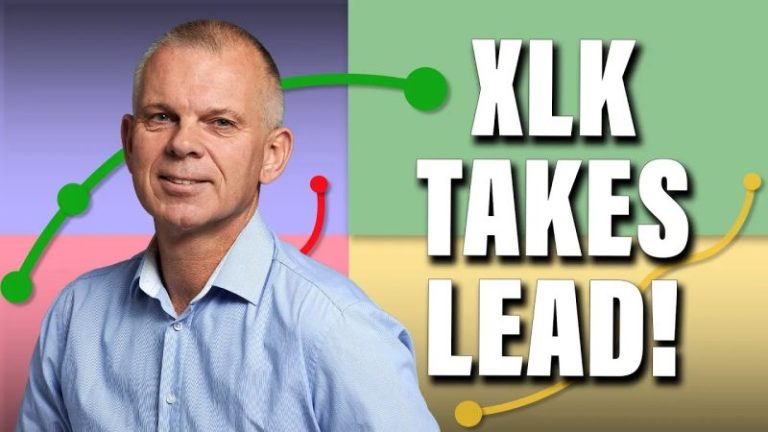
This week, Julius breaks down the current sector rotation using his signature Relative Rotation Graphs, with XLK vaulting into the leading quadrant while utilities and staples fade. He spotlights strength in the technology sector, led by semiconductors and electronic groups that are outpacing the S&P 500. Microchip heavyweights AMD, NVDA, and AVGO are displaying bullish RRG tails, reinforcing the trend. Communication Services and Energy are gaining momentum as well, rounding out a playbook that rewards disciplined trend-following amid risk from geopolitical headlines.

This video was originally published on June 20, 2025. Click on the icon above to view on our dedicated page for Julius.

Past videos from Julius can be found here.

#StayAlert, -Julius

Friday (June 20) was the last day for the spring session of Canada’s parliament before its summer break.

On the agenda for the day was a vote on bill C-5, “The One Canadian Economy Act,” which was introduced on June 5.

The bill is in part a response to the recent shift in US trade policy under Donald Trump’s administration. It will provide a new framework to fast-track projects of national interest, including mining and energy projects, to boost Canada’s economy.

However, it hasn’t been without controversy. Primarily, it has been met with opposition from some Indigenous groups, who feel it will override treaty obligations and environmental review processes.

In parliament, it also met some resistance from the conservative opposition, who amended the bill to close loopholes they felt would allow the government to skirt conflict of interest and lobbying laws.

The bill is widely expected to pass the House of Commons and the Senate, with broad support from the Conservative Party.

Also on Friday, Statistics Canada released April’s monthly mineral production survey.

The data shows across-the-board declines in both production and shipments of copper, gold and silver from the previous month.

Copper production dropped the most in April, down to 35.1 million kilograms from 40.1 million in March, while shipments slipped to 30.1 million kilograms from the 50.5 million recorded the previous month.

Gold and silver production fell slightly, with gold declining from 17,059 to 16,708 kilograms, and silver declining from 26,700 to 25,412 kilograms. However, shipments of both fell more precipitously between March and April. Gold shipments dropped from 19,049 to 14,848 kilograms, while silver shipments fell from 29,578 to 22,106 kilograms.

In the United States, the Federal Reserve held its fourth meeting of the year to determine the direction of the benchmark Federal Funds Rate on Tuesday (June 17) and Wednesday (June 18).

The central bank decided to hold the rate at the current 4.25 to 4.5 percent range, which it last set in November 2024. The decision comes as it awaits the effects of tariffs to be felt more broadly in the economy, noting uncertainty whether it will be a one-time shock or be more persistent through the rest of the year.

The decision fell in line with analysts’ expectations, who are not predicting a rate cut until the Fed’s September meeting.

Markets and commodities react

In Canada, major indexes were mixed at the end of the week. The S&P/TSX Composite Index (INDEXTSI:OSPTX) was largely flat, posting a small 0.14 percent loss during the week to close at 26,497.57 on Friday. The S&P/TSX Venture Composite Index (INDEXTSI:JX) fared worse, losing 2.18 percent to 711.18, although the CSE Composite Index (CSE:CSECOMP) jumped 1.58 percent to 117.36.

US equities were all in negative territory this week, with the S&P 500 (INDEXSP:INX) losing 0.55 percent to close at 6,967.85, the Nasdaq-100 (INDEXNASDAQ:NDX) slipping 0.23 percent to 21,626.39 and the Dow Jones Industrial Average (INDEXDJX:.DJI) sinking 0.88 percent to 42,206.83.

The gold price was down this week, losing 0.42 percent to US$3,371.39 at by Friday’s close. Although it jumped to a high of US$37.29 mid-week, the silver price pulled back and ultimately lost 0.82 percent to end the week at US$36.02.

In base metals, the COMEX copper price gained 1.88 percent over the week to US$4.88 per pound. Meanwhile, the S&P GSCI (INDEXSP:SPGSCI) posted a gain of 5.47 percent to close at 580.99.

Top Canadian mining stocks this week

How did mining stocks perform against this backdrop?

Take a look at this week’s five best-performing Canadian mining stocks below.

Stock data for this article was retrieved at 4 p.m. EDT on Friday using TradingView’s stock screener. Only companies trading on the TSX, TSXV and CSE with market capitalizations greater than C$10 million are included. Mineral companies within the non-energy minerals, energy minerals, process industry and producer manufacturing sectors were considered.

1. Royalties Inc. (CSE:RI)

Weekly gain: 183.33 percent
Market cap: C$24.75 million
Share price: C$0.085

Royalties Inc. is a company focused on building cash flow through the acquisition mineral and music royalty assets.

The company has a 100 percent interest in the Bilbao silver property in Zacatecas, Mexico, which hosts silver, zinc and lead deposits. As silver prices improve, the company is seeking to monetize the property.

Shares in Royalties Inc. surged this week after its 88 percent owned subsidiary Minera Portree won its lawsuit against Capstone Copper (TSX:CS), asserting its ownership of a 2 percent net smelter return royalty on five mineral concessions at the Cozamin copper-silver mine in Zacatecas.

The protracted legal dispute began after Capstone re-assigned the royalty to itself through a 2019 contract without informing or paying Minera Portree.

Under the terms of the judgment, the 2 percent NSR will revert back to Minera Portree along with royalties for the exploitation of concessions between 2002 and 2019. The amounts for those royalties will be set at the execution phase. Capstone Gold is also ordered to pay royalties from the Portree 1 concession from August 2019 to present.

Earlier in the week, Royalties Inc. increased its stake in Music Royalties, which pays a 7.2 percent annual yield from 30 music catalogues. The company will now receive royalties of C$102,000 per year from its investment.

2. Altima Energy (TSXV:ARH)

Weekly gain: 100 percent
Market cap: C$21.14 million
Share price: C$0.42

Altima Energy is a light oil and natural gas exploration and development company with operations in Alberta, Canada.

Its primary asset is the Richdale property in Central Alberta. The property consists of five producing light oil wells and sits on 5,920 acres of long-term reserves. According to a company presentation from April 2025, the property hosts combined proved and probable reserves of just under 2 billion barrels of oil equivalent, with a pre-tax net present value of C$25.8 million.

The company also owns two wells at its Twinning light oil site near Nisku, seven producing wells at its Red Earth property in Northern Alberta and two multi-zone wells at its Chambers Ferrier liquid gas production property.

Although Altima hasn’t released news in the last few months, its share price surged mid-week.

3. Trillion Energy (CSE:TCF)

Weekly gain: 71.43 percent
Market cap: C$11.62 million
Share price: C$0.06

Trillion Energy is an oil and gas producer focused on supplying the European and Turkish markets.

The company owns a 49 percent share in the SASB gas field with Turkish Petroleum (TPAO) owning the remainder. The field is located in the southwestern Black Sea, and covers a license block area of 12,387 hectares. Trillion also owns a 19.6 percent interest in the Cendre oil field, with TPAO owning the majority 80 percent.

On April 26, the company released its 2024 year end reserve report. In the announcement, Trillion reported that its attributable total proved and probable reserves at the SASB gas field increased to 62.3 billion cubic feet of gas and 247 million barrels of oil, with a pre-tax NPV of US$363.6 million.

Trillion Energy’s share price climbed in the second half of the week. Although it did not put out a press release, the company stated in posts on X Wednesday and Friday that the partners are “actively engaged on-site” advancing gas lift operations through “carefully managed on-platform efforts.”

4. Search Minerals (TSXV:SMY)

Weekly gain: 52 percent
Market cap: C$18.81 million
Share price: C$0.380

Search Minerals is a rare earth element exploration and development company working to advance its flagship Deep Fox project in Newfoundland and Labrador, Canada.

The project is located near the port of St. Lewis on the Southeast Labrador coast and consists of 63 mineral claims covering an area of 1,575 hectares. The company also owns the nearby Foxtrot deposit. A May 2022 technical report reported a combined indicated mineral resource estimate for the two properties of 375 parts per million (ppm) praseodymium, 1,402 ppm neodymium, 185 ppm dysprosium and 32 ppm terbium from 15.09 million metric tons of ore.

Search Minerals released a corporate update on June 13 announcing that its shares were being reinstated for trading on the TSXV. The update detailed how, under previous management, the company’s TSXV listing was subject to a cease trade order in April 2024 due to the previous management team failing to file annual financial statements for 2023. Search’s new board and management team, elected and appointed in mid-2024, brought the company back into compliance.

Search recommenced trading Monday, and its shares climbed on June 19 after the company announced unreleased assay results from a 2022 Phase 4 drill program at Deep Fox. Highlighted assays included one hole with a 29.92 meter interval grading 256 ppm dysprosium, 1,848 ppm neodymium, 496 ppm praseodymium and 43.5 ppm terbium.

The company said the results validate their belief in the mineralization at the site, and that it would drive forward development of Deep Fox, which it called a generational asset, without delay.

5. Homeland Nickel (TSXV:SHL)

Weekly gain: 50 percent
Market cap: C$12.26 million
Share price: C$0.06

Homeland Nickel is an exploration company with projects in the US and Canada.

The company owns four nickel projects in Oregon: Cleopatra, Red Flat, Eight Dollar Mountain and Shamrock. The projects are in the early exploration stage, with the company being guided by historic work at each property.

Homeland is also working on the Great Burnt copper-gold project in Newfoundland and Labrador, Canada. The project is a 30/70 joint venture with Benton Resources (TSXV:BEX,OTC Pink:BNTRF), which earned its stake in the property through an earn-in agreement with Homeland in July 2024.

While the company did not release any news, on June 11, Noble Mineral Exploration (TSXV:NOB) and Canada Nickel’s (TSXV:CNC) announcement on June 11 of positive assay results from their joint venture Mann nickel project in Ontario. Homeland owns 2.95 million shares in Canada Nickel and 9.96 million shares of Noble.

FAQs for Canadian mining stocks

What is the difference between the TSX and TSXV?

The TSX, or Toronto Stock Exchange, is used by senior companies with larger market caps, and the TSXV, or TSX Venture Exchange, is used by smaller-cap companies. Companies listed on the TSXV can graduate to the senior exchange.

How many mining companies are listed on the TSX and TSXV?

As of February 2025, there were 1,572 companies listed on the TSXV, 905 of which were mining companies. Comparatively, the TSX was home to 1,859 companies, with 181 of those being mining companies.

Together the TSX and TSXV host around 40 percent of the world’s public mining companies.

How much does it cost to list on the TSXV?

There are a variety of different fees that companies must pay to list on the TSXV, and according to the exchange, they can vary based on the transaction’s nature and complexity. The listing fee alone will most likely cost between C$10,000 to C$70,000. Accounting and auditing fees could rack up between C$25,000 and C$100,000, while legal fees are expected to be over C$75,000 and an underwriters’ commission may hit up to 12 percent.

The exchange lists a handful of other fees and expenses companies can expect, including but not limited to security commission and transfer agency fees, investor relations costs and director and officer liability insurance.

These are all just for the initial listing, of course. There are ongoing expenses once companies are trading, such as sustaining fees and additional listing fees, plus the costs associated with filing regular reports.

How do you trade on the TSXV?

Investors can trade on the TSXV the way they would trade stocks on any exchange. This means they can use a stock broker or an individual investment account to buy and sell shares of TSXV-listed companies during the exchange’s trading hours.

Article by Dean Belder; FAQs by Lauren Kelly.

Securities Disclosure: I, Dean Belder, hold no direct investment interest in any company mentioned in this article.

Securities Disclosure: I, Lauren Kelly, hold no direct investment interest in any company mentioned in this article.

This post appeared first on investingnews.com

Here’s a quick recap of the crypto landscape for Friday (June 20) as of 9:00 p.m. UTC.

Get the latest insights on Bitcoin, Ethereum and altcoins, along with a round-up of key cryptocurrency market news.

Bitcoin and Ethereum price update

Bitcoin (BTC) is priced at US$103,366, a decrease of 0.9 percent in the last 24 hours. The day’s range for the cryptocurrency brought a low of US$102,624 and a high of US$106,042 as the market opened.

Bitcoin price performance, June 20, 2025.

Chart via TradingView.

The Bitcoin price stalled after reaching around US$106,500, then sank below US$104,000 as an unusually large expiry of options and futures contracts worth US$6.8 trillion occurred on US stock indexes.

The US Federal Reserve held interest rates steady on Wednesday (June 18), but Christopher Waller, a member of the Federal Reserve Board of Governors, said a cut is possible next month if inflation remains controlled.

Cuts typically boost risk assets like Bitcoin. Markets have already pushed the US dollar index to a three year low, so a surprise rate cut could further weaken the dollar and propel Bitcoin forward.

Ethereum (ETH) is currently priced at US$2,415.98, a 3.5 percent decrease over the past 24 hours. Its lowest valuation on Friday was US$2,396.50, and its highest valuation was US$2,556.46 as trading commenced.

Altcoin price update

  • Solana (SOL) was priced at US$139.45, down 4.1 percent over 24 hours. SOL experienced a low of US$136.98 after peaking at its opening price of US$147.68.
  • XRP pulled back from its opening price of US$2.17, its highest valuation of the day, to trade at US$2.12 as the markets wrapped, a 2.1 percent decrease in 24 hours. Its lowest valuation on Friday was US$2.09.
  • Sui (SUI) closed at US$2.72, a declineof 3.9 percent over the past 24 hours. Its price also peaked this morning at US$2.85 and its lowest valuation was US$2.66.
  • Cardano (ADA) is priced at US$0.5783, down 3.6 percent in 24 hours. Its lowest valuation on Friday was US$0.5636, and its highest valuation was US$0.6044.

Today’s crypto news to know

Coinbase launches Stablecoin payments platform for e-commerce

Coinbase Global (NASDAQ:COIN) has unveiled a new product called Coinbase Payments, designed to help online retailers accept stablecoins like USDC with minimal friction. The system is built to mirror traditional card infrastructure so that merchants can plug it in without having deep cryptocurrency knowledge.

The platform targets marketplaces such as Shopify (TSX:SHOP,NYSE:SHOP) and eBay (NASDAQ:EBAY), giving small to medium businesses a cost-effective alternative to credit card fees.

Shopify is the first to integrate the system, allowing merchants to accept USDC payments through Coinbase’s Layer 2 Base network. The platform supports crypto wallets like Coinbase Wallet, MetaMask and Phantom and includes features for transaction authorization, refunds and recurring payments.

Circle surges as Senate approves Stablecoin Bill

Circle (NYSE:CRCL) shares continued to rally on Friday, jumping another 11 percent after a 34 percent surge the day before, as momentum builds behind a Senate-approved bill to regulate stablecoins.

The GENIUS Act, a bipartisan effort, could bring long-awaited legal clarity to stablecoin issuers like Circle, which manages the US$32 billion USDC token. Although the bill still needs approval from the House and requires a signature from US President Donald Trump, investors are already optimistic.

Circle shares are now trading at US$221, up from an initial public offering price of just US$31 — signaling massive investor confidence amid a changing regulatory climate.

South Korea’s central bank weighs in on stablecoins

Bank of Korea Governor Rhee Chang-yong said at a press conference this week that the central bank is not opposed to a won-based stablecoin, but is concerned about managing the FX of the token, according to Reuters report.

‘Issuing won-based stablecoin could make it easier to exchange them with a dollar stablecoin rather than working to reduce the use of a dollar stablecoin. That in turn could increase demand for dollar stablecoin and make it difficult for us to manage forex,’ Chang-yong told reporters in Seoul.

Earlier this month, South Korea’s Democratic Party proposed the Digital Asset Basic Act, which aims to establish a regulatory framework to enable local companies to issue won-denominated stablecoins.

Parataxis to launch institutional Bitcoin treasury company

Parataxis Holdings, an affiliate of digital asset-focused investment company Parataxis Capital Management, announced Friday that it has entered a definitive agreement to acquire a controlling interest in biotech company Bridge Biotherapeutics (KOSDAQ:288330) for an investment of 25 billion South Korean won, roughly US$18.5 million.

Following the closing of the deal, Parataxis will become Parataxis Korea and be repurposed as a treasury vehicle for institutional Bitcoin exposure, joining a growing list of companies holding Bitcoin on their balance sheet.

“Inspired by the growing interest in BTC treasury strategies seen in companies like Strategy in the US and Metaplanet in Japan, we believe institutional interest in this space is increasing globally,” said Andrew Kim, a partner at Parataxis Capital. “We see South Korea as an important market in the evolution of BTC adoption.”

“We are incredibly excited to create the first BTC treasury company in South Korea backed by an institutional-grade platform. Given the strategic nature of BTC on the global stage and its finite supply, we believe that building and growing a company like Parataxis Korea and accumulating a BTC treasury will benefit our shareholders as well as the country over the long run,” echoed founder Edward Chin.

Kraken introduces Bitcoin staking with Babylon partnership

Kraken, a leading cryptocurrency exchange, made a landmark announcement on Thursday (June 19), revealing a strategic partnership with Bitcoin staking protocol Babylon to introduce a staking product that allows Kraken users to earn interest on their Bitcoin holdings without the need for bridging, wrapping or lending.

These traditional methods, while enabling some forms of yield generation, can introduce additional risks and technical hurdles for users. Kraken and Babylon aim to provide a more streamlined, secure and accessible way for Bitcoin holders to generate passive income. The interest earned through this new product will come in the form of BABY tokens, the native cryptocurrency of the Babylon protocol.

Arizona advances bill to create state Bitcoin reserve

Arizona is one step closer to becoming the second US state with an official Bitcoin reserve, after its Senate narrowly passed House Bill 2324. The bill allows the state to hold abandoned digital assets as unclaimed property and establishes a Bitcoin and digital assets reserve fund for those holdings. The news comes on the heels of House Bill 2749, which was signed into law in April and amended Arizona’s forfeiture laws to recognize digital assets.

HB2324 will now return to the House for final approval before heading to the governor’s desk. Earlier efforts to invest seized funds directly into BTC were vetoed by Governor Katie Hobbs, who cited concerns over crypto’s volatility.

If passed, Arizona would join New Hampshire in formalizing a state-level Bitcoin reserve.

Similar legislation is pending in Texas.

Securities Disclosure: I, Giann Liguid, hold no direct investment interest in any company mentioned in this article.

Securities Disclosure: I, Meagen Seatter, hold no direct investment interest in any company mentioned in this article.

This post appeared first on investingnews.com

Ericsson (NASDAQ:ERIC) and Rogers Communications (NYSE:RCI) have activated Canada’s first underground private 5G network at the Northern Center for Advanced Technology’s (NORCAT) Sudbury mine.

The move is part of a bid to transform traditional mining operations with cutting-edge connectivity.

At the heart of this innovation is the Ericsson Private 5G system, which the company says delivers seamless, high-performance, low-latency coverage from the surface to depths of more than a mile.

Built on Ericsson’s EP5G technology and integrated with Rogers’ private network expertise, the setup is designed for smart mining applications that Wi‑Fi cannot adequately support. These include autonomous haul trucks, remote-controlled drilling rigs, environmental monitoring sensors and real-time asset tracking.

‘The NORCAT Underground Centre provides an extraordinary platform for companies worldwide to showcase their cutting-edge technologies in a real operating mine, shaping the future of the mining industry,’ said NORCAT CEO Don Duval in a Thursday (June 19) press release, calling it an ‘ecosystem like no other in the world.’

Duval also emphasized the importance of collaboration in making sustainable impacts in mining. Adam Burley, director of IoT and wireless private networks at Rogers, stressed the collaborative roots of the breakthrough as well:

“Rogers and Ericsson have worked together for more than 35 years … Every industry is looking for operational efficiency, and if you develop or rely on technology for mining, NORCAT is where you go to test and certify products that work within a real-world environment.”

The company’s private 5G setup is scalable and future proof, allowing agile adaptation as new technology needs emerge — from integrating 4G systems to deploying large-scale sensor networks.

Use cases across various aspects of mining

Ericsson views the network as an extension of its quality of service features — ideal for mission-critical mining operations where data reliability matters — that apply in different facets of the mining process.

Industry forecasts validate the broader relevance of private networks.

A McKinsey report indicates demographic shifts in mining workforces that make modernization a priority — aging employees are nearing retirement and younger workers are expecting digital environments.

Around 71 percent of mining leaders cite talent shortages as barriers to production targets, reinforcing the dual mandate of digital adoption and workforce transformation.

Beyond workforce and safety, remote operations and asset management benefit from the technology.

Remote control centers with scalable data pipelines and robust connectivity eliminate the need for staff to occupy large numbers of underground positions while maintaining compliance with environmental and safety regulations.

Similarly, data-centric asset management, powered by sensors, HD video cameras and predictive analytics, brings down costs, extends equipment lifespans and reduces unplanned downtime.

Mining contributes an estimated US$1.5 trillion to the global economy, per World Mining Data 2020.

As these operations move toward automation, private 5G networks may prove foundational, enabling safer, faster and greener production systems. NORCAT’s smart mine could become a template for the future, demonstrating how next-generation connectivity can bridge the gap between current operations and fully digitalized mining.

Securities Disclosure: I, Giann Liguid, hold no direct investment interest in any company mentioned in this article.

This post appeared first on investingnews.com

Jeffrey Christian, managing partner at CPM Group, shares his latest thoughts on gold, silver and platinum-group metals, outlining potential price scenarios for the months ahead.

He also discusses his broader outlook for the US economy.

Securities Disclosure: I, Charlotte McLeod, hold no direct investment interest in any company mentioned in this article.

This post appeared first on investingnews.com

Investment Insight

Coelacanth Energy presents strong growth potential in the Canadian light oil and natural gas sector with encouraging well test results, a robust infrastructure buildout, and a management team with a track record of repeated success, making it a compelling growth story.

Overview

Coelacanth Energy (TSXV:CEI) is a junior oil and natural gas exploration and development company, focusing primarily on the prolific Montney region in northeastern British Columbia, Canada. With a substantial landholding of approximately 150 net sections in the Two Rivers area of Montney, Coelacanth is strategically positioned to harness the potential of one of the most resource-rich natural gas basins in North America.

Coelacanth distinguishes itself with a two-pronged strategy: near-term production growth and long-term resource development. Supported by advanced geological delineation and a robust infrastructure buildout, the company is poised to scale efficiently as it transitions from exploration to production.

Backed by a management team that has built and sold six successful oil and gas companies, Coelacanth is focused on delivering returns through disciplined capital deployment and operational execution.

The Montney Advantage

The Montney Formation spans British Columbia and Alberta and is known for its high levels of recoverable natural gas and liquids. Montney has attracted numerous large oil and gas producers, including companies like Canadian Natural Resources (CNQ), Shell, ARC Resources (ARX), Tourmaline Oil Corp (TOU), and ConocoPhillips (COP). The presence of such large players highlights the importance of this region in contributing to both the Canadian and global energy markets.

Coelacanth’s landholdings are strategically located in the Two Rivers area of Montney, giving it access to a highly productive portion of the basin. Unlike many junior exploration companies, Coelacanth is drill-ready, positioning it favorably among its peers. By securing significant infrastructure and landholdings, Coelacanth ensures its ability to tap into the natural gas and oil resources that lie beneath its properties, a key advantage in the competitive Montney region.

Company Highlights

  • Over 150 net sections of contiguous land in the Two Rivers area, located in the Montney geological fairway, a prolific oil and liquids-rich natural gas region.
  • Strategic proximity to major producers like ARC Resources, Tourmaline Oil Corp, Shell and ConocoPhillips.
  • Fully permitted and funded infrastructure development program, with first production from Two Rivers East Pad started in June 2025 and expected to ramp through the summer.
  • Phase 1 facilities will support initial production of 8,000 boe/d; Phase 2 will add compression and double total capacity by Q4 2025.
  • Nine wells have been drilled and tested at the 5-19 pad, collectively flowing at over 11,000 boe/d in flush test rates.
  • Estimated production growth: 4,000 boe/d in 2025; 11,000 boe/d in 2026; 15,000 boe/d in 2027.

Key Projects

Two Rivers East and Two Rivers West

The Two Rivers Montney development is the cornerstone of Coelacanth’s growth strategy. This multi-zone resource play features Lower, Upper, Basal and Middle Montney formations, offering significant running room for future development. The company has drilled and tested nine wells on the 5-19 pad (seven Lower Montney, one Upper, one Basal), yielding impressive flush production test rates totaling more than 11,000 boe/d, on a combined basis. Some wells tested at over 1,200 boepd with 50 percent light oil, highlighting strong liquids yields.

Two Rivers Asset Advantage

Two Rivers East started first production in June 2025, with production to be systematically ramped up over the summer. This production is supported by a new Phase 1 facility capable of processing 30 mmcf/d of gas and associated oil. Phase 2, planned for late 2025, will double capacity with added compression.

The Two Rivers West project, already in production, complements the East project with upside in the Upper Montney and delineation potential across additional benches. Test wells have demonstrated commercial deliverability and support long-term production sustainability.

Market Access and Takeaway Agreements

Coelacanth has secured long-term gas takeaway for its growing production base. The company holds firm commitments for up to 100 mmcf/d of natural gas takeaway capacity and has secured processing capacity of up to 60 mmcf/d at a third-party facility. Oil and condensate produced from the Montney light oil window can be trucked to regional terminals or connected via infrastructure to major hubs including Fort Saskatchewan, Edmonton and Prince George.

On the gas side, Coelacanth has egress options through pipelines such as NGTL, Westcoast and Alliance, and is strategically positioned to benefit from future access to LNG Canada via the Coastal GasLink system.

Board and Management

Rob Zakresky – President and CEO

Rob Zakresky has a significant background in the oil and gas sector, previously serving as the president and CEO of Leucrotta Exploration as well as five additional predecessor companies. He has been with Coelacanth Energy since its inception and is recognized for his strategic leadership and focus on enhancing shareholder value. His expertise in financial management and operations is reflected in his approach to driving the company’s growth.

Bret Kimpton – Vice-president of Operations and COO

Bret Kimpton joined Coelacanth Energy in 2022, bringing a wealth of experience from his previous role as vice president of production at Storm Resources, where he contributed to significant production growth. He has a strong background in construction and operations, especially in the Montney region of British Columbia, managing various fields. His role at Coelacanth focuses on overseeing operational efficiency and implementing the company’s growth strategies.

Nolan Chicoine – Vice-president of Finance and CFO

Nolan Chicoine has also been with Coelacanth Energy since its inception. His responsibilities encompass financial oversight, including financial planning, reporting, and analysis. He plays a crucial role in aligning the financial strategies with the company’s operational goals. His background includes significant experience in financial management as CFO for Leucrotta Exploration, Crocotta Energy, and Chamaelo Energy.

Jody Denis – Vice-president of Drilling & Completions

Jody Denis is the former drilling, engineering & operations engineer at Leucrotta Exploration. Prior to that, he was senior operations advisor at Black Swan Energy, drilling manager at ARC Resources, and drilling and completions manager at Birchcliff Energy.

John Fur – Vice-president Geosciences

John Fur is the former manager, exploration of Leucrotta Exploration, and former senior geophysicist at Crocotta Energy, Chamaelo Energy, Chamaelo Exploration, Viracocha Energy, Canadian Natural Resources, Post Energy, Amber Energy and Husky Oil.

This post appeared first on investingnews.com

Canelo Alvarez and Terence Crawford met Fridaym June 20 in Saudi Arabia for a press conference to promote their megafight, scheduled for Sept. 13 in Las Vegas. But a Saudi powerbroker spoke first.

He is Turki Alalshikh (a.k.a. “His Excellency”), the central figure in Saudi Arabia becoming a big player in professional boxing as a deep-pocketed promoter.

“I hate Tom and Jerry’s kind of boxing,’ Alalshikh said, referring to the famous animated series as well as boxers who run from their opponents. ‘I am sure (Alvarez and Crawford) will deliver for me smashing face and blood and this is the boxing.’

Additionally, Alalshikh said, ‘We will have in this fight and our next fight’s a bonus for a KO.’

He did not provide specifics, but his message was clear. Alvarez and Crawford will be expected to deliver, despite recent history.

Alvarez (63-2-2, 39 KOs) is coming off a lackluster victory over William Scull by unanimous decision in May. The crowd booed as Scull spent most of the fight running from Alvarez, who exerted modest effort to chase down Scull. It also happened to be the first fight of Alvarez’s five-fight deal with the Saudis.

Crawford (41-0, 31 KOs) has not fought since August 2024, and that was an unforgettable bout, too. He beat Israil Madrimov by unanimous decision. Like Alvarez, he heard boos during a fight that included no knockdowns.

Alalshikh suggested he didn’t want a 12-by-12 ring to ensure adequate action for the fight. But apparently he thought it would be a good idea to have dinner with Alvarez and Crawford before the press conference.

“We talked yesterday and they are professional,’’ Alalshikh said later in the press conference. “But I think starting from last night they know what they need to do.’

Do Alvarez, Crawford get it?

Neither Alvarez or Crawford sounded as if Alalshikh’s words will have great impact when they fight at Allegiant Stadium, home of the Las Vegas Raiders, for the undisputed super middleweight championship.

Crawford, 37, is moving up two weight classes (14 pounds) to fight Alvarez at super middleweight. His standing toe-to-toe with Alvarez would enthrall the fans and perhaps create the fight that Alalshikh wants. But don’t count on it.

“I’m not going to let somebody else force or tell me how to fight,’’ Crawford said. “When I’ve been in fighting my whole life, I won’t be running. I could tell you that, but I will be doing a lot of touching.’’

 In defense of Crawford, before the fight against Madrimov, he’d won 11 straight fights by knockout.

Alvarez, 34, suggested his fight would be one for the history books. But it’s worth revisiting recent history – his fight against Scull. It was a dreadful fight.

“…but we win,’’ Alvarez said. “That’s all that matters.’’

If Alvarez had been listening, at the dinner or at the press conference, he’d know that’s not all that matters to Alalshikh – or, largely speaking, boxing fans.

Alvarez’s next knockout will be his first since 2021 – when he finished Caleb Plant with an 11th-round TKO.

Maybe it’s something “His Excellency’’ will address during another dinner with Alvarez and Crawford.

The USA TODAY app gets you to the heart of the news — fastDownload for award-winning coverage, crosswords, audio storytelling, the eNewspaper and more.

This post appeared first on USA TODAY

The latest first has come to the current era of college football, with name, image and likeness (NIL) reigning supreme.

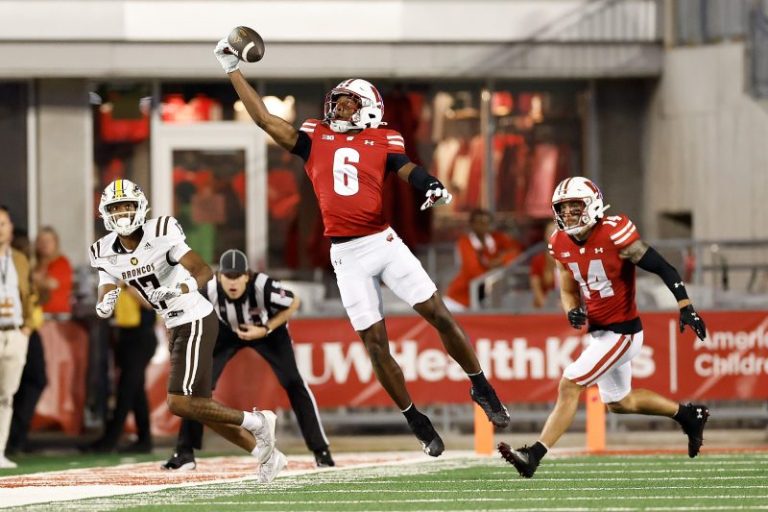
Wisconsin football and its NIL collective filed a complaint in state court on June 20 against Miami over alleged recruiting interference, according to a report from Yahoo Sports’ Ross Dellenger. The move is the first of its kind and a potentially precedent-setting action.

The situation revolves around former Wisconsin defensive backXavier Lucas, with the school claiming that Miami interfered with Lucas’ revenue-binding contract with the Badgers and their NIL collective. Lucas left Wisconsin for Miami in January.

Lucas notably transferred to Miami without entering his name in the transfer portal, according to numerous reports in January. Lucas had announced his intention to enter the portal in December, but Wisconsin reportedly refused to put his name in the portal after he had already signed a contract with the school.

The documents obtained by Yahoo Sports claims Miami communicated with Lucas despite knowing the defensive back had already signed a contract with Wisconsin.

“Miami interfered with UW-Madison’s relationship with Student-Athlete A (Lucas) by making impermissible contact with him and engaging in tampering,” the suit writes, according to Yahoo Sports

“We stand by our position that respecting and enforcing contractual obligations is essential to maintaining a level playing field,” Wisconsin said in a statement to Yahoo Sports. “In addition to our legal action, we will continue to be proactive to protect the interests of our student-athletes, our program and the broader collegiate athletics community.”

Dellenger also reported the Big Ten support Wisconsin on the matter.

Revenue sharing was approved in a House settlement on June 6, allowing for schools to directly pay athletes across all sports. The Wisconsin-Miami case could serve precedent for future situations of alleged or potential tampering.

Lucas finished his freshman season at Wisconsin with 18 total tackles, a sack and an interception. The 6-foot-2 defensive back from Pompano Beach, Florida, withdrew from classes at Wisconsin and enrolled at Miami as a student in order to skirt the NCAA transfer rules regarding enter your name in the transfer portal during the two separate portal windows.

Lucas reportedly signed a two-year revenue sharing contract with Wisconsin, according to Yahoo Sports. The contract binds the player’s non-exclusive rights to the school, allowing it to market their NIL. The contract forbids the player’s NIL rights to be used by other schools.

This post appeared first on USA TODAY

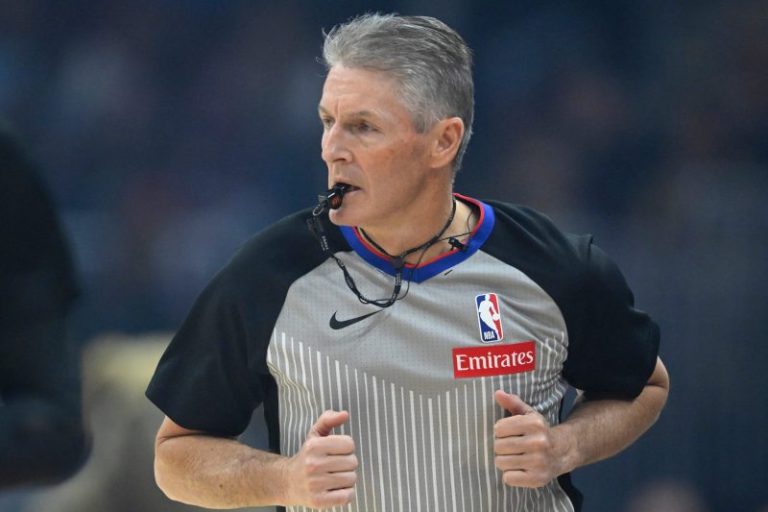
It is a strong likelihood that NBA referee Scott Foster will officiate Game 7 of the NBA Finals between the Indiana Pacers and Oklahoma City Thunder Sunday, June 22.

Foster, who is one of the NBA’s top referees based on a multi-pronged ratings system that uses feedback from teams, called Game 4 in Indianapolis, and Pacers fans were unhappy with his whistle in the Thunder victory.

The NBA does not publicly reveal referees until 9 a.m. ET of game day, but given the rotation of the Finals refs, it makes sense that Foster would get the assignment since he has reffed just one 2025 Finals game and hasn’t been in the rotation since Game 4.

Pacers coach Rick Carlisle defended Foster at media availability before Game 5.

“I think it’s awful some of the things I’ve seen about officiating, and Scott Foster in particular,” Carlisle said on Sunday, June 15. “I’ve known Scott Foster for 30 years. He is a great official. He has done a great job in these playoffs. We’ve had him a lot of times. The ridiculous scrutiny that is being thrown out there is terrible and unfair and unjust and stupid.”

Before the Finals began, the NBA announced the 12 referees who were selected to officiate Finals games based on evaluations from playoff games this season.

Not every ref will get two games, but it won’t be a surprise if Foster gets Game 7.

Foster is working his 18th Finals and has reffed 25 Finals games, including Game 7 in the 2010 Finals between the Boston Celtics and Los Angeles Lakers and Game 7 of the 2013 Finals between the Miami Heat and San Antonio Spurs.

James Capers, Tyler Ford, Ben Taylor, Josh Tiven and Sean Wright are the other officials who have had just one Finals games this season. A crew of Foster plus a combination of Capers, Tiven and Williams makes sense. Ford and Taylor called their first Finals games this month.

In Game 4, both teams combined to shoot 71 free throws, including 38 by the Thunder. On the NBA’s Last Two-Minute Report, referee operations examined 17 plays and found they were all “correct calls” or “correct no-calls.”

Foster had reffed one previous Pacers playoff game this season.

Some fans have given Foster the nickname “The Extender,” claiming that he has a history of making dubious calls during the playoffs that have extended series.

Longtime NBA writer Tom Haberstroh, however, referenced a study that says there’s “not much evidence at all” of Foster’s ability to ‘extend’ the series.

How are NBA Finals referees selected?

According to the NBA, playoff referees are selected, “based on their overall performance throughout the first three rounds of the NBA Playoffs 2025. Officials were evaluated by the NBA Referee Operations management team after each round to determine advancement in this year’s postseason.”

Who is NBA referee Scott Foster?

Foster is considered one of the best referees in the league.

An official in his 30th season with the NBA, Foster entered this season having officiated 1,675 regular season games and 241 postseason games. Friday night was Foster’s 25th time officiating an NBA Finals game. This is his 18th NBA Finals, overall..

Foster is also a noted pickleball player.

This post appeared first on USA TODAY