Author

admin

Browsing

Lode Gold Resources Inc. (TSXV: LOD) (OTCQB: LODFF) (‘Lode Gold’ or the ‘Company’) is pleased to announce that it has engaged experienced capital markets and strategic advisors to support the advancement of its Fremont Mine in Mariposa, California. These advisors will assist in securing strategic investors and partners as the Company moves into the next phase of development.

As part of its current development strategy, Lode Gold is also engaging with mining contractors and progressing with engineering evaluations aimed at optimizing the mine plan and initiating permitting. The Company’s evaluation is focused on three key priorities:

  • High-grading during early production years to enhance initial project economics
  • Scaling production to over 100,000 ounces per year in later phases

‘Our objective is to take a disciplined and scalable approach to developing the Fremont Project,’ said Wendy T. Chan, CEO and Director at Lode Gold. ‘By securing the right strategic partnership, we will focus on various technical initiatives to optimize project economics, expedite permitting and get to production in near term. Being in a jurisdiction that is now increasingly aligned with domestic resource development, Fremont presents an interesting investment opportunity.’

The Fremont Mine is an advanced-stage exploration and development asset, on 100% private and patented land. It is located in Mariposa, an Opportunity Zone designated to attract investments with tax incentives provided by Trump’s Administration. The 2023 Preliminary Economic Assessment (PEA) outlined positive project economics at a gold price of USD $1,750, based on an annual production rate of approximately 130,000 ounces. More recently, an NI 43 -101 compliant mineral resource estimate (MRE 2025) was completed with a new geological model that separately evaluated vein and stockwork mineralization. Only 8% of the total mineral resource, filed at SEDAR+ (April 2025) has been extracted, mostly in the first 250 m. At a 1 g/t cut-off, the average true width is 53 m (at 3 g/t cut-off, the width is 16.8 m).

Upcoming Near Term 2025-2026 Catalysts:

  • Rehabilitation of 2 km underground workings
  • Expedite access to two adits, out of a total of 14
  • Channel sampling to upgrade resources to M&I
  • Metallurgy and Recovery Studies
  • Geotechnical work and rock mechanics assessments
  • Drilling 3,000 m to initiate Pre-Feasibility Study
  • Completion of Pre-Feasibility Study (underground bulk mining and other optimized methods will be evaluated)

About Lode Gold

Lode Gold (TSXV: LOD) is an exploration and development company with projects in highly prospective and safe mining jurisdictions in Canada and the United States.

In Canada, its assets in Yukon sit on the southern portion of the prolific Tombstone Belt. It covers 99.5 km2 across a 27 km strike.  Over 4,500 m have been drilled with confirmed gold endowment and economic drill intercepts over 50 m. There are four reduced-intrusive targets (RIRGS), in addition to sedimentary-hosted orogenic exploration gold.

In New Brunswick, Lode Gold, through its subsidiary 1475039 B.C. Ltd. (soon to be spun out into Gold Orogen), has created one of the largest land packages with its Acadian Gold Joint Venture, consisting of an area that spans 445 km2 with a 44 km strike. It has confirmed gold endowment with mineralized rhyolites.

In preparation for the spin-out, NI 43 101 technical reports have been prepared for all assets in Yukon and New Brunswick in 2024.

In the United States, the Company is focused on its advanced exploration and development asset, the Fremont Mine in Mariposa, California. According to the NI 43- 101 Compliant 2025 MRE, the asset contains 1.3 Moz at 4.4 g/t (3 g/t cut-off) with an average true width: 16.8 m.

Fremont was previously mined at 10.7 g/t. During gold mining prohibition in WWII, its mining license was suspended. Only 8% of the resource identified in the 2025 MRE has been extracted. This asset has exploration upside and is open at depth (three step-out holes at 1,300 m hit structure and were mineralized) and on strike. This is a brownfield project with over 43,000 m drilled, 23 km of underground workings and 14 adits. The project has excellent infrastructure and is close to electricity, water, roads, railhead and port.

Recently, the Company completed an internal scoping study, with a strategic pivot to 100% underground mining. Previously, in March 2023, the Company completed an NI 43-101 Preliminary Economic Assessment (‘PEA’) with an open pit and underground combination mine. The NI 43-101 technical reports are available on the Company’s profile on SEDAR+ (www.sedarplus.ca) and the Company’s website (www.lode-gold.com).

Qualified Person Statement

The scientific and technical information contained in this press release has been reviewed and approved by Jonathan Victor Hill, Director, BSc (Hons) (Economic Geology – UCT), FAusIMM, and who is a ‘qualified person’ as defined by National Instrument 43-101 – Standards of Disclosure for Mineral Projects (‘NI 43-101’).

ON BEHALF OF THE COMPANY
Wendy T. Chan 
CEO & Director

Information Contact:

Winfield Ding 
CFO
info@lode-gold.com
+1-(604)-977-GOLD (4653)

Jenna Mosher 
Investor Relations
jenna@lode-gold.com
+1 (604) -977-GOLD (4653) 

Cautionary Note Related to this News Release and Figures

This news release contains information about adjacent properties on which the Company has no right to explore or mine. Readers are cautioned that mineral deposits on adjacent properties are not indicative of mineral deposits on the Company’s properties.

Cautionary Statement Regarding Forward-Looking Information

Neither the TSX Venture Exchange nor its Regulation Services Provider (as that term is defined in the policies of the TSX Venture Exchange) accepts responsibility for the adequacy or accuracy of this release.

This news release includes ‘forward-looking statements’ and ‘forward-looking information’ within the meaning of Canadian securities legislation. All statements included in this news release, other than statements of historical fact, are forward-looking statements including, without limitation, statements with respect to the use of proceeds, advancement and completion of resource calculation, feasibility studies, and exploration plans and targets. Forward-looking statements include predictions, projections and forecasts and are often, but not always, identified by the use of words such as ‘anticipate’, ‘believe’, ‘plan’, ‘estimate’, ‘expect’, ‘potential’, ‘target’, ‘budget’ and ‘intend’ and statements that an event or result ‘may’, ‘will’, ‘should’, ‘could’ or ‘might’ occur or be achieved and other similar expressions and includes the negatives thereof.

Forward-looking statements are based on a number of assumptions and estimates that, while considered reasonable by management based on the business and markets in which the Company operates, are inherently subject to significant operational, economic, and competitive uncertainties, risks and contingencies. These include assumptions regarding, among other things: the status of community relations and the security situation on site; general business and economic conditions; the availability of additional exploration and mineral project financing; the supply and demand for, inventories of, and the level and volatility of the prices of metals; relationships with strategic partners; the timing and receipt of governmental permits and approvals; the timing and receipt of community and landowner approvals; changes in regulations; political factors; the accuracy of the Company’s interpretation of drill results; the geology, grade and continuity of the Company’s mineral deposits; the availability of equipment, skilled labour and services needed for the exploration and development of mineral properties; currency fluctuations; and impact of the COVID-19 pandemic.

There can be no assurance that forward-looking statements will prove to be accurate and actual results, and future events could differ materially from those anticipated in such statements. Important factors that could cause actual results to differ materially from the Company’s expectations include a deterioration of security on site or actions by the local community that inhibits access and/or the ability to productively work on site, actual exploration results, interpretation of metallurgical characteristics of the mineralization, changes in project parameters as plans continue to be refined, future metal prices, availability of capital and financing on acceptable terms, general economic, market or business conditions, uninsured risks, regulatory changes, delays or inability to receive required approvals, unknown impact related to potential business disruptions stemming from the COVID-19 outbreak, or another infectious illness, and other exploration or other risks detailed herein and from time to time in the filings made by the Company with securities regulators, including those described under the heading ‘Risks and Uncertainties’ in the Company’s most recently filed MD&A. The Company does not undertake to update or revise any forward-looking statements, except in accordance with applicable law.

To view the source version of this press release, please visit https://www.newsfilecorp.com/release/256755

News Provided by Newsfile via QuoteMedia

This post appeared first on investingnews.com

Germany and Italy are facing mounting domestic pressure to repatriate more than a third of their gold reserves — worth an estimated US$245 billion — currently held in New York by the US Federal Reserve.

Germany and Italy hold the world’s second and third largest gold reserves, trailing only the US. A substantial portion of this metal is stored overseas, primarily in Manhattan’s Federal Reserve Bank.

This longstanding arrangement, based largely on postwar financial realities and New York’s role as a major global gold-trading hub, is now being questioned by officials and commentators across Europe’s political spectrum.

Fabio De Masi, a former member of European Parliament now affiliated with Germany’s new left-wing populist BSW party, told the Financial Times there are “strong arguments” to bring more of Germany’s bullion back home.

Taxpayers Association of Europe (TAE) President Michael Jäger echoed the same sentiments last month: ‘Trump wants to control the Fed, which would also mean controlling the German gold reserves in the US,’ he told Reuters.

‘It’s our money, it should be brought back.’

Similar calls are being echoed in Italy, where economic commentator Enrico Grazzini recently warned that “leaving 43 per cent of Italy’s gold reserves in America under the unreliable Trump administration is very dangerous for the national interest.’ He was writing in Il Fatto Quotidiano ahead of Prime Minister Giorgia Meloni’s visit to Washington.

Fueling this renewed concern are statements made by US President Donald Trump, who earlier this month warned that he may have to “force something” if the US Federal Reserve does not lower interest rates.

Trump has also made direct appeals to the Department of Energy to stimulate oil production, signaling what critics interpret as increasing politicization of independent institutions like the Fed.

The TAE has urged both Germany and Italy to reconsider their reliance on the Fed. “We are very concerned about Trump tampering with the Federal Reserve Bank’s independence,” Jäger said. “Our recommendation is to bring the (German and Italian) gold home to ensure European central banks have unlimited control over it at any given point in time.”

Public skepticism over the safety of foreign gold holdings is not new.

In Germany, a grassroots movement that began in 2010 eventually prompted the Bundesbank to repatriate 674 metric tons of gold from New York and Paris between 2013 and 2017. The operation, which cost 7 million euros, resulted in half of Germany’s reserves being stored domestically by 2020. Nevertheless, 37 percent of its gold remains in the US.

Meloni’s Brothers of Italy party once echoed similar sentiments while in opposition, pledging in 2019 to bring Italy’s gold back home. But since assuming power in 2022, Meloni has largely gone silent on the issue.

Skepticism about US stewardship is not limited to political rhetoric.

According to the World Gold Council’s latest survey on central bank gold reserves, 43 percent of the central banks surveyed plan to increase their gold holdings in the coming year — a record high.

The overwhelming majority of respondents (95 percent) expect global central bank gold reserves to keep rising, citing gold’s performance during crises, its inflation-hedging capabilities and its role as a diversifier. Notably, 59 percent of central banks surveyed reported holding at least part of their gold reserves domestically, up from 41 percent in 2024.

Although the Bank of England remains the most popular vaulting location, the World Gold Council’s survey reveals growing caution over US custodianship: only 7 percent of respondents said they planned to increase domestic storage last year, but the figure jumped significantly in 2025.

New bill calls for US gold audit

Adding another layer of complexity is the push in Washington for greater transparency about America’s gold reserves. House Bill 3795, introduced by Representative Thomas Massie and backed by three co-sponsors, calls for the first comprehensive audit of US gold holdings in over six decades.

The bill would mandate a full inventory and assay of gold stored at Fort Knox, West Point and the Denver Mint, as well as a forensic accounting of all transactions involving US gold over the last 50 years.

“The question as to who actually owns the bars outright is really the most crucial question. And if it is shown that America does not actually own the gold, if the gold is there, but America does not own it, (or) if it has been pledged or leased or swapped or otherwise encumbered in any way … this would be a huge, huge detriment to the US and the global economy.”

Cortez emphasized that prior audits of US gold reserves have been insufficient.

“These aren’t audits that have been done on the metal itself, but rather the storage containers that the metal is supposedly stored in,’ he said. “Owners or operators of a depository who functioned like this would go to jail.”

He also pointed out that much of the gold held by the US government is impure by modern market standards, having been melted down from older coinage. That means even if the bars are there, refinement questions will remain.

While Trump has not explicitly endorsed HB 3795, he has expressed interest in the issue, stating, ‘We’re actually going to Fort Knox to see if the gold is there. Because maybe somebody stole the gold. Tons of gold.’

Securities Disclosure: I, Giann Liguid, hold no direct investment interest in any company mentioned in this article.

This post appeared first on investingnews.com

The arbitrator, Christopher Droney, dismissed the arbitration of the NFL Players’ Association “in its entirety” earlier this year. But Droney noted that the NFL Management Council – which negotiates with the players’ union and other entities on behalf of the 32 owners – “encouraged 32 member Clubs of the NFL to reduce guarantees in future contracts with players at the March 2022 annual meeting.” The clubs, however, did not engage in collusive conduct, the report found.

Both the NFL and NFLPA declined to comment when reached Tuesday by USA TODAY Sports. The ruling had been kept a secret until Torre published his findings on June 24.

The March 2022 meeting at the center of the arbitration claim took place not long after the Cleveland Browns traded for and signed quarterback Deshaun Watson to a fully guaranteed contract worth $230 million over five years.

According to the report, eight owners, Goodell, high-profile player agents, Russell Wilson and Lamar Jackson testified at a hearing held by Droney over 10 days in New York last summer.

The NFLPA initially brought the case under former executive director DeMaurice Smith, who was replaced by Lloyd Howell in 2023. The union alleged a high-ranking league executive asked New England Patriots owner Robert Kraft to tell fellow owners to not negotiate with large, fully guaranteed contracts. Both Goodell and Kraft denied this at the hearings, and Droney agreed Goodell did not make the request.

In March 2022, per the ruling, the management council presented to the league about the salary cap and a 42% increase in salary guarantees.

Kyler Murray (five years, $230.5 million with $160 million guaranteed), Wilson (five years, $245 million with $165 million guaranteed) and Jackson (five years, $260 million with $185 million guaranteed) all signed extensions within the next calendar year.  

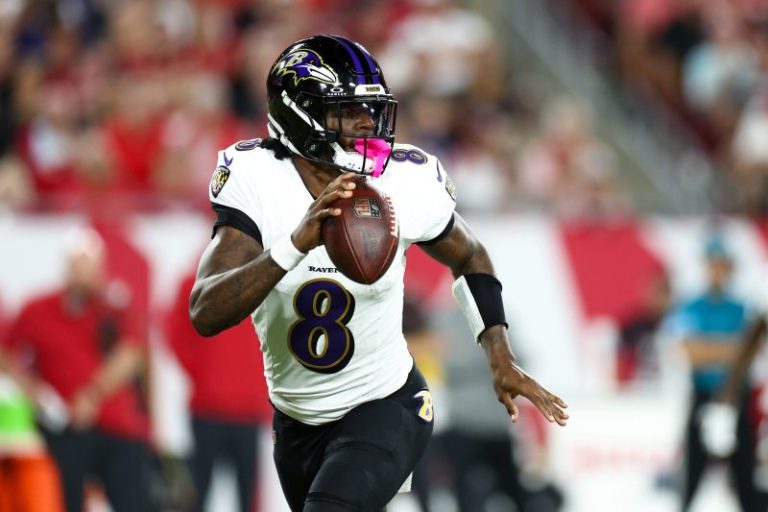
Jackson, who does not have an agent and represents himself, had a contentious negotiation with the Ravens and general manager Eric DeCosta. No team reached out directly to Jackson after the team placed the non-exclusive franchise tag on him. Jackson apparently did not supply a list of teams he’d be interested in playing for because of phone issues.

Ranking all 32 NFL teams from most to least entertaining: Who will be most fun in 2025?

“Only a couple of teams expressed interest to DeCosta in signing him prior to the Ravens’ decision to franchise him,” the report said.

The document also unveiled text communication between two owners, the Cardinals’ Michael Bidwill and the Los Angeles Chargers’ Dean Spanos.

“Your deal helps us for our QB next year,” Spanos wrote.

“I think many teams will be happy with it once they have a chance to review,” Bidwill wrote back. “Cleveland really screwed things up, but I was resolved to keep the guaranteed relatively ‘low.’”

Droney’s role in the arbitration is set by the collective bargaining agreement between the league and union. The same CBA lays out severe penalties for collusion between teams, including the union’s right to terminate the CBA in the event of widespread collusion. Proving collusion also requires more than a preponderance of evidence.

This post appeared first on USA TODAY

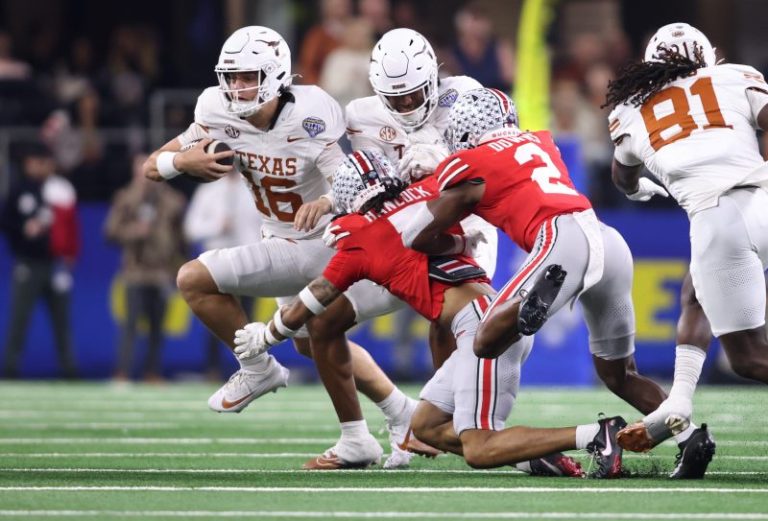
Fresh off its second straight College Football Playoff semifinal appearance, Texas football enters the 2025 college football season as one of the most looked-forward-to and hyped around teams in the country.

The leading contributing factor to that is Arch Manning, the presumed favorite to win the Heisman Trophy and a preseason frontrunner for No. 1 overall pick in the 2026 NFL Draft, officially running the Longhorns offense.

But as the hype surrounding Manning and Texas continues to build up, former Florida and South Carolina football coach Steve Spurrier isn’t so sure about those expectations. He appeared to have said that much during a recent appearance on the ‘Another Dooley Noted Podcast.’

‘You only have to ask Coach Sark how come you played that one instead of this one. Hopefully, he will say, because he was better than that one.’

Arch, a New Orleans native, is currently listed as the favorite to win the Heisman Trophy according to oddsmakers on BetMGM at +600 odds. Texas has not had a Heisman Trophy winner since Ricky Williams won it in 1998.

The 6-foot-4 quarterback, however, hasn’t had to sit in the passenger seat that whole time, especially this past season. Manning showed flashes of his dual-threat skill set and passing acumen in 2024 for the Longhorns, as he started two games for Texas when Ewers was out with an injury and came on in short-yardage situations late in the season.

In 10 games this past season for Texas, Manning completed 67.8% of his passes for 939 yards and nine touchdowns while rushing for 108 yards and four touchdowns on 25 carries — an unusual sight for a member of the Manning family. In his first career start vs. UTSA on Sept. 14, Manning became the only FBS or NFL quarterback in the last 25 years to record a 75+ yard touchdown pass, a 65-yard rushing touchdown and another 50+ yard touchdown pass in the same game according to OptaStats.

Manning is set to start his first game as Texas’ full-time quarterback on the road at Ohio Stadium in Columbus, Ohio against defending national champion Ohio State, on Aug. 30 at noon ET.

The USA TODAY app gets you to the heart of the news — fastDownload for award-winning coverage, crosswords, audio storytelling, the eNewspaper and more.

This post appeared first on USA TODAY

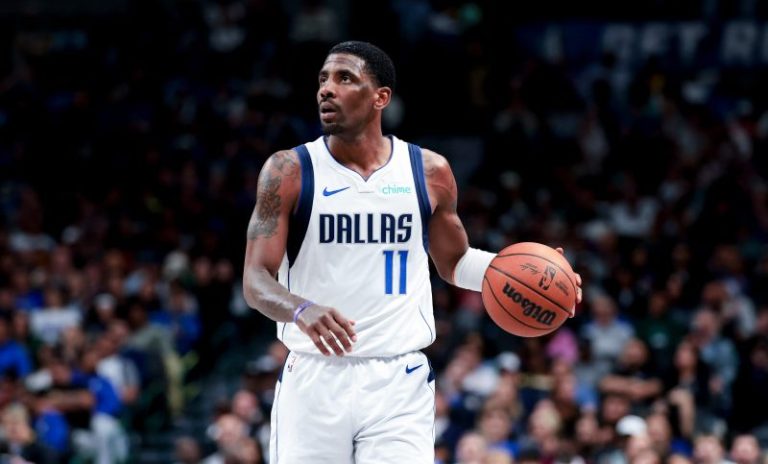
All-Star guard Kyrie Irving opted out of the final year of his contract with the Dallas Mavericks for the 2025-26 season and plans to sign a three-year, $119 million deal with the Mavs, according to ESPN.

Irving, 33, had one season and $42.9 million left on his three-year, $120 million deal but decided to seek a longer contract. He underwent surgery on March 26 for a torn anterior cruciate ligament in his left knee – an injury sustained against the Sacramento Kings – and will miss a significant portion of next season.

As the Mavericks try to maintain roster flexibility under the salary cap, they plan to sign Irving to a longer deal but at an amount closer to $40 million per season. Irving opting out and planning to sign at a lower number should give the Mavs access to a $5.7 million mid-level exception for a roster addition, according to ESPN front-office insider Bobby Marks.

Irving averaged 24.7 points, 4.8 rebounds, 4.6 assists and 1.3 steals and shot 47.3% from the field, 40.1% on 3-pointers and 91.6% from the free throw line this season. He made the All-Star team for the ninth time in 2025.

The Mavericks are expected to take Cooper Flagg with the No. 1 pick in the draft on Wednesday, June 25, assembling a team that features Anthony Davis, Daniel Gafford, Dereck Lively II, Klay Thompson, Max Christie, Irving and Flagg.

Dallas lost to Boston in the 2024 NBA Finals and missed the playoffs this season. The Mavericks traded Luka Doncic to the Los Angeles Lakers at the trade deadline, a move that didn’t sit well with Mavs fans. However, the Mavs won the draft lottery with 1.8% odds and rekindled their championship aspirations.

The USA TODAY app gets you to the heart of the news — fastDownload for award-winning coverage, crosswords, audio storytelling, the eNewspaper and more.

This post appeared first on USA TODAY

As the NBA calendar crosses off another day and moves on from the NBA Finals – congratulations to Oklahoma City Thunder, and even though the Indiana Pacers came up short, it was enjoyable to watch their commitment – it’s time for the NBA draft.

The Dallas Mavericks, who are still trying recover from trading Luka Doncic, have the No. 1 pick in the first round Wednesday, June 25 (8 p.m., ESPN) and by all accounts, they will select Duke one-and-done forward Cooper Flagg.

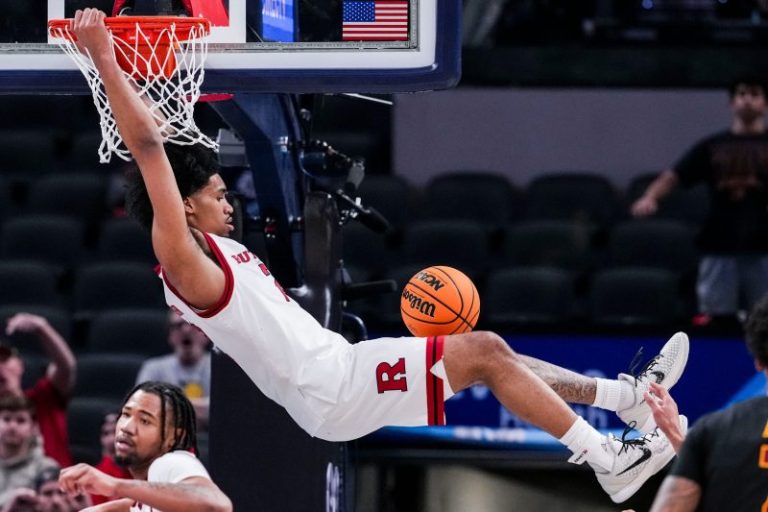
Rutgers’ Dylan Harper is the projected No. 2 pick by the San Antonio Spurs, and from there, Baylor’s VJ Edgecombe, Rutgers’ Ace Bailey, Texas’ Tre Johnson, Oklahoma’s Jeremiah Fears and Duke’s Khaman Maluach and Kon Knueppel are in the top-10 mix. All were freshmen last season.

Here’s a look at USA TODAY Sports’ latest NBA mock draft :

(Age listed is age at time of the draft; for U.S. college players, height (without shoes) and weight taken at NBA draft combine)

2025 NBA mock draft

1. Dallas Mavericks: Cooper Flagg, Duke

  • Freshman, guard-forward, 6-7¾ , 221, 18 years old
  • 2024-25 stats: 19.2 ppg, 7.5 rpg, 4.2 apg, 1.4 spg, 1.4 bpg, 48.1% FG, 38.5% 3PT, 84% FT

The do-it-all young star led the Blue Devils in scoring, rebounding, assists and steals. Flagg has outstanding footwork, especially in the low post. He can use either hand on shots in the paint, knows how to run plays, can hit catch-and-shoot 3s and is an active weakside defender. Flagg, who added more muscle since the start of the year, is a physical player who initiates contact, is confident and plays with force when necessary. He led Duke to an impressive season, which includes the ACC regular-season title, ACC tournament title and Final Four appearance. He had 30 points, seven assists and six rebounds in a regional semifinal victory against Arizona and 16 points and nine rebounds in a regional final against Alabama. Flagg had 27 points, seven rebounds, three blocks and two steals in a Final Four loss to Houston.

2. San Antonio Spurs: Dylan Harper, Rutgers

  • Freshman, guard, 6-4½ , 213, 19
  • 2024-25 stats: 19.4 ppg, 4.6 rpg, 4.0 apg, 1.4 spg, 48.4% FG, 33.3% 3PT, 75% FT

The lefty stroke will remind some of Jalen Brunson, but Harper has far more size at 6-6 and tremendous length with a wingspan of 6-foot-10. Harper’s best asset at the next level might be his versatility to run point and play off the ball. In Rutgers’ lone Big Ten tournament game, Harper had 27 points (9-for-21 shooting), eight rebounds, eight assists, two steals and two blocks in a double-overtime loss to Southern California.

3. Philadelphia 76ers: VJ Edgecombe, Baylor

  • Freshman, guard, 6-4, 193, 19
  • 2024-25 stats: 15.0 ppg, 5.6 rpg, 3.2 apg, 2.1 spg, 43.6% FG, 34% 3PT, 78.2% FT

The Bahamian native has displayed his athleticism, has shown he can be explosive and has an elite knack for steals. He will be able to contribute at the NBA level and can be aggressive at the point of attack. The freshman is a high-level off-ball scorer but can improve when it comes to on-ball scoring. Edgecombe logged significant minutes at the end of the season. He had 16 points, six rebounds and one steal in a NCAA Tournament second-round loss to Duke.

4. Charlotte Hornets: Ace Bailey, Rutgers

  • Freshman, guard-forward, 6-7½ , 202, 18
  • 2024-25 stats: 17.6 ppg, 7.2 rpg, 1.3 apg, 1.3 bpg, 46% FG, 34.6% 3PT, 69.2% FT

Bailey is a hyper-athletic wing with length and size coming into a league that prioritizes players built exactly the way he is with exactly the skill set he has: an effortless and reliable shot and an attack-first mentality with an ability to finish at the rim. Needs to improve as a playmaker on the pass and free throws. But even when offense isn’t easy, he remains active on defense. He had 17 points, seven rebounds, three steals and one block in season-ending loss to USC. He is the only U.S. player who has not worked out for any teams, and his approach to the draft could impact where he is drafted.

5. Utah Jazz: Tre Johnson, Texas

  • Freshman, guard, 6-4¾, 190, 19
  • 2024-25 stats: 19.9 ppg, 3.1 rpg, 2.7 apg, 42.7% FG, 39.7% 3PT, 87.1% FT

Johnson is a natural shooter and scorer. He does well when scoring on the move and is a decent playmaker for his size. He still needs to work on his ability to make plays for others. He must also work on his strength and his explosiveness in order to assert himself as a finisher at the rim. He had three 30-point games in the past two months, including 39 against Arkansas on Feb. 26. He had 23 points and six rebounds in an NCAA Tournament loss to Xavier.

6. Washington Wizards: Jeremiah Fears, Oklahoma

  • Freshman, guard, 6-2½, 180, 18
  • 2024-25 stats: 17.1 ppg, 4.1 apg, 4.1 rpg, 1.6 spg, 43.4% FG, 28.4% 3PT, 85.1% FT

Solid start to his freshman season; quick on the dribble; has strength going to the rim and can finish; operates well in the pick-and-roll as a scorer and passer; needs to improve his 3-point shot but potential is there. Fears scored a season-high 31 points and added five assists and four rebounds in a win against ranked Missouri. Fears had a strong SEC tournament, producing 29 points, six rebounds and five steals plus five turnovers in a victory against Georgia and 28 points, five assists, four rebounds and three steals (just one turnover) in a loss to Kentucky. He generated 20 points, five rebounds and four assists in a NCAA Tournament first-round loss to UConn.

7. New Orleans Pelicans: Kon Knueppel, Duke

  • Freshman, guard-forward, 6-5, 219, 19
  • 2024-25 stats: 14.4 ppg, 4.0 rpg, 2.7 apg, 47.9% FG, 40.6% 3PT, 91.4% FT

He can ignite an offense with his 3-point shot, thanks to an efficient motion, seemingly always ready to receive the ball in his shooting pocket. He can also lace shots from midrange, take care of the ball and is money on free throws. In the ACC tournament, Knueppel averaged 21 points (28 against Georgia Tech) and shot 48.6% from the field, stepping up with Flagg injured. He averaged 20.5 points and shot 11-for-22 from the field (4-for-6 on 3s) in two regional games. He had 21 points, five rebounds and five assists in an Elite Eight victory against Alabama, and 16 points and seven rebounds in a Final Four loss to Houston.

8. Brooklyn Nets: Khaman Maluach, Duke

  • Freshman, center, 7-0½, 253, 18
  • 2024-25 stats: 8.6 ppg, 6.6 rpg, 1.3 bpg, 71.2% FG, 76.6% FT

Playing about 20 minutes per game, Maluach is a mobile big who excels in pick-and-rolls and has the hands to catch lobs for easy dunks; soft touch at the rim; shot-blocker/rim protector; active on the offensive glass; will get stronger and has a great aptitude for the game, learning concepts quickly. In four NCAA Tournament games, Maluach, who played for South Sudan at the 2024 Paris Olympics, averages 11.5 points, 4.2 rebounds, 2.0 blocks and shoots 86.9% from the field (20-for-23) and had 14 points and nine rebounds in Elite Eight victory against Alabama. He struggled to make an impact in the Final Four loss to Houston with just six points and no rebounds.

9. Toronto Raptors: Kasparas Jakucionis, Illinois

  • Freshman, guard, 6-4¾, 205, 19
  • 2024-25 stats: 15.0 ppg, 5.7 rpg, 4.7 apg, 44% FG, 31.8% 3PT, 84.5% FT

Jakucionis is a playmaker – a scorer and passer. He has range with a nice 3-ball, can shoot off the dribble from deep, including on step-back 3s, and looks for an open teammate when he draws multiple defenders. Jakucionis sees the court well with savvy passes and likes to get to the rim for layups. But he can be turnover-prone. He struggled offensively at the end of the season, shooting 32.5% from the field and committing 24 turnovers in the final four games. He had 16 points, 10 assists and nine rebounds in a first-round NCAA Tournament victory against Xavier.

10. Houston Rockets (traded to Suns for Kevin Durant): Derik Queen, Maryland

  • Freshman, center, 6-9¼, 248, 20
  • 2024-25 stats: 16.5 ppg, 9.0 rpg, 1.9 apg, 1.1 spg, 1.1 bpg, 52.6% FG, 76.6% FT

An active, physical big man, Queen has a soft touch around the rim with either hand but has a power game, too. He can run the court and handle the basketball well for a power forward-center. He is another potential first-round pick with good hands and footwork and has the mechanics to become a shooter who can stretch the floor. Queen had 27 points, five rebounds and two steals in a Sweet 16 loss to eventual champion Florida.

11. Portland Trail Blazers: Carter Bryant, Arizona

  • Freshman, forward, 6-6½, 215, 19
  • 2024-25 stats: 6.5 ppg, 4.1 rpg, 1.0 apg, 1.0 bpg, 46% FG, 37.1% 3PT, 69.5% FT

The athletic forward provides a solid combination of strength and fluidity. He has lateral quickness to stay in front of the ball and the ability to block shots. He can still improve on his technique as a finisher and in scoring efficiency. He will get an increased opportunity to impress scouts and executives at the draft combine if he enters the draft. Bryant scored 12 points and collected five rebounds and three blocks in 20 minutes in a victory against Akron in the NCAA Tournament.

12. Chicago Bulls: Noa Essengue, Ratiopharm Ulm (Germany)

  • Forward, 6-10, 198, 18
  • 2024-25 stats: 10.8 ppg, 4.8 rpg, 1.1 apg, 51.6% FG, 27% 3PT, 70.5% FT

The next forward with elite finishing ability to come out of France, Essengue figures to be more of a developmental prospect, but his size, instincts at the rim and plus-defensive ability could make him a star if he bulks up.

13. Atlanta Hawks: Collin Murray-Boyles, South Carolina

  • Sophomore, forward, 6-6½, 239, 20
  • 2024-25 stats: 16.8 ppg, 8.3 rpg, 2.4 agp, 1.5 spg, 1.3 bpg, 58.6% FG, 26.5% 3PT, 70.7% FT

Although he’s a bit undersized for a power forward, Murray-Boyles plays with intense effort and determination, which will very quickly please his NBA coaches. He also has plenty of strength to finish at the rim and was the SEC’s No. 3 rebounder. Murray-Boyles had 35 points and seven rebounds against Arkansas late in the regular season and had 20 points and 12 rebounds in a loss to Arkansas in the SEC tournament.

14. San Antonio Spurs: Egor Demin, BYU

  • Freshman, forward, 6-8¼, 199, 19
  • 2024-25 stats: 10.3 ppg, 5.4 apg, 3.8 rpg, 1.2 spg, 41% FG, 27.1% 3PT, 67.5% FT

The Russian is a playmaker who can make quick decisions and facilitate for others. Demin is the size of a wing player but has guard-like skills. On defense, he uses his length to his advantage while forcing turnovers and being active in passing lanes. His shooting efficiency is a concern. Demin had difficulty with his offense as the season progressed. He had just three points with four turnovers, three assists and three rebounds in a Big 12 conference tournament victory against Iowa State and six points on 2-for-9 shooting (1-for-7 on 3s) with four assists and five turnovers in a conference tournament loss to Houston. In three NCAA tournament games, he averaged 13.7 points, 5.7 assists and 4.7 rebounds and was 15-for-35 from the field.

15. Oklahoma City Thunder: Asa Newell

  • Freshman, forward, 6-9, 224, 19
  • 2024-25 stats: 15.4 ppg, 6.9 rpg, 1.0 spg, 1.0 bpg, 54.3% FG, 29.2% 3PT, 74.8% FT

Based off of his size, Newell wouldn’t appear to be as quick and fluid as he is, which should make him an instant threat in pick-and-roll situations. He was one of the lone bright spots for the Bulldogs in a loss against No. 1 Auburn with a team-high 20 points. His scoring dipped at the end of the regular season, however, he had 20 points and eight rebounds in a first-round NCAA Tournament loss to Gonzaga.

16. Memphis Grizzlies (from Orlando): Joan Beringer, KK Cedevita (Adriatic League)

  • Forward-center, 6-10, 230, 18
  • 2024-25 stats: 5.0 ppg, 4.6 rpg, 1.4 bpg, 61.5% FG, 58.4% FT

Beringer has gained traction among NBA scouts and executives as a mobile big man who can run the pick-and-roll as a screener on offense and guard the pick-and-roll. He doesn’t have a lot of experience but his potential, especially as a rim protector, has made him a first-round prospect. Another player who has improved throughout the season.

17. Minnesota Timberwolves: Jase Richardson, Michigan State

  • Freshman, guard, 6-0½, 178, 19
  • 2024-25 stats: 12.1 ppg, 3.3 rpg, 1.9 apg, 49.3% FG, 41.2% 3PT, 83.6% FT

Richardson improved as the season progressed and turned into the Spartans’ steady hand with the basketball as a shooter (inside and out) and facilitator. He is an active defender with surprising bouts of athleticism. He also has a knack for collecting rebounds, big plays and poise under pressure. He had an up-and-down NCAA Tournament in four games – 5-for-11 shooting and 15 points against Bryant, 1-for-10 shooting against New Mexico, 20 points on 6-for-8 shooting against Ole Miss, and 4-for-13 shooting against Auburn.

18. Washington Wizards: Thomas Sorber, Georgetown

  • Freshman, forward-center, 6-9¼, 263, 19
  • 2024-25 stats: 14.5 ppg, 8.5 rpg, 2.4 apg, 2.0 spg, 53.2% FG, 72.4% FT

The standout freshman required surgery to repair a foot injury suffered Feb. 15 and missed the rest of the season. That could alter his plans for the draft, but Sorber is a stellar inside threat who’s just as comfortable cutting to the basket on pick-and-rolls as he is backing down opponents. His rebounding and rim protection will make him an asset, as he continues to grow into his frame.

19. Brooklyn Nets: Liam McNeeley, UConn

  • Freshman, forward, 6-6¾, 215, 19
  • 2024-25 stats: 14.5 ppg, 6.0 rpg, 2.3 apg, 38.1% FG, 31.7% 3PT, 86.6% FT

What McNeeley may lack in fluid athleticism, he more than makes up for with a smooth, natural shot and knack for drawing fouls and getting to the free throw line. He also has a quick release and plenty of range to suggest that he should get early minutes. He bounced back since suffering an ankle injury New Year’s Day that had sidelined him for a few weeks. McNeeley struggled with his shot at times down the stretch. In a Big East tournament loss to Creighton, McNeeley had 13 points on 6-for-20 shooting (0-for-5 on 3-pointers), and in his final eight games before the NCAA Tournament, he shot 34.1% from the field and 28.2% on 3s. In two NCAA Tournament games, he was 8-for-29 from the field, including 3-of-16 on 3s.

20. Miami Heat: Nolan Traore, Saint-Quentin (France)

  • Guard, 6-4, 175, 19
  • 2024-25 stats: 12 ppg, 4.8 apg, 1.9 rpg, 40.9% FG, 31.4% 3PT, 72.8% FT

Traore is a point guard who can score and pass and has court awareness but also a propensity for bad turnovers. He’s quick, can get to the rim and is comfortable taking his defender off the dribble. Needs to work on his shooting efficiency, especially on 3s. His brother, Armel, was on a two-way contract with the Los Angeles and South Bay Lakers before being waived in February.

21. Utah Jazz: Nique Clifford, Colorado State

  • Fifth-year graduate season, guard, 6-5¼, 202, 23
  • 2024-25 stats: 18.9 ppg, 9.6 rpg, 4.4 apg, 1.2 spg, 49.6% FG, 37.7% 3PT, 77.7% FT

Clifford is a versatile wing who does a lot of things – scoring, rebounding, passing and defending. He has a quick burst on drives to the basket and can finish with force or finesse. He logged big minutes for Colorado State and was excellent in the Rams’ final six games before the NCAA tournament, posting 25.3 points, 7.8 rebounds, 5.2 assists and 1.5 steals and shooting 60% from the field, including 54.8% on 3s. He had 36 points against Boise State at the end of the regular season and recorded two double-doubles in the Mountain West tournament. Clifford had 21 points, seven rebounds, six assists and two blocks in an NCAA tournament second-round loss to Maryland.

22. Atlanta Hawks: Cedric Coward, Washington State

  • Senior, guard, 6-5¼, 213, 21
  • 2024-25 stats: 17.7 ppg, 7.0 rpg, 3.7 apg, 55.7% FG, 40% 3PT, 83.9% FT

Coward started his college career at Division III Willamette University, then transferred to Eastern Washington and then switched to Washington State. He played in just six games in 2024-25 with a shoulder injury ending his senior season in November. Coward has great size for a guard, is solid on catch-and-shoot 3s and has the ability to get to the rim.

23. New Orleans (from Indiana): Danny Wolf, Michigan

  • Junior, forward-center, 6-10½, 252, 21
  • 2024-25 stats: 13.2 ppg, 9.7 rpg, 3.6 apg, 1.4 bpg, 49.7% FG, 33.6% 3PT, 59.4% FT

The Yale transfer turned into a first-round selection thanks to his fluid scoring and play-making portfolio in the package of a 7-foot stretch big. Wolf played point guard at times this season for the Wolverines just like he played center. His handles make him a threat as the initiator in pick-and-roll actions and his range should translate to the NBA. Wolf had 21 points and 14 rebounds against Maryland in the Big Ten tournament semifinals and shot 52.9% from the field as the Wolverines won the conference tourney. He had 20 points and six rebounds in a NCAA regional semifinals loss to Auburn.

24. Oklahoma City Thunder: Will Riley, Illinois

  • Freshman, forward, 6-8¼, 186, 19
  • 2024-25 stats: 12.6 ppg, 4.1 rpg, 2.2 apg, 43.2% FG, 32.6% 3PT, 72.4% FT

Great size for a shooting guard who can make 3s and find open teammates. Like many, looks for offensive rebounds. His shot is a work in progress but the mechanics are there and he improved as a shooter and scorer as the season progressed. He shot 37-for-72 (51.4%) from the field and averaged 16.3 points in the Illini’s final six games.

25. Orlando Magic: Rasheer Fleming, Saint Joseph’s

  • Junior, forward, 6-8¼, 232, 20
  • 2024-25 stats: 14.75 ppg, 8.5 rpg, 1.5 bpg, 1.4 spg, 1.3 apg, 53.1% FG, 39% 3PT, 74.3% FT

Fleming is a mobile forward who plays a physical game and has strong footwork to finesse his way around defenders. He likes to get easy buckets in transition, his 3-point percentage in nearly five attempts per game is encouraging and he is valuable in pick-and-rolls as the screener. Defensively, he deflects passes and can protect the rim. Fleming averaged 18.8 points and 7.7 rebounds and shot 58.9% in the last six regular-season Atlantic 10 Conference contests.

26. Brooklyn Nets: Maxime Raynaud, Stanford

  • Senior, center, 7-0¼, 237, 22
  • 2024-25 stats: 20.2 ppg, 10.6 rpg, 1.7 apg, 1.4 bpg, 46.7% FG, 34.7% 3PT, 77% FT

Born in Paris, Raynaud spent four seasons at Stanford and was first-team All-ACC his senior season. He can make 3s, rebound, protect the rim – the easy comparison is Oklahoma City’s Chet Holmgren. Raynaud works well in the pick-and-roll, runs the floor well, sees the court and can play in the low post.

27. Brooklyn Nets: Walter Clayton Jr., Florida

  • Senior, guard, 6-2, 199, 22
  • 2024-25 stats: 18.3 ppg, 4.2 apg, 3.7 rpg, 1.2 spg, 44.8% FG, 38.6% 3PT, 85.7% FT

Named the Most Outstanding Player of the Final Four, Clayton had 34 points in the national semifinals against Auburn and 11 points, seven assists and five rebounds in the championship victory against Houston. He also scored 30 points in a regional final against Texas Tech and was 21-for-42 from the field in the Gators’ final three games. Has range on 3-point shots and can shoot off the dribble or pass but needs to improve as a playmaker and defender.

28. Boston Celtics: Hugo Gonzalez, Real Madrid (Spain)

  • Guard-forward, 6-7, 207, 19
  • 2024-25 stats: 3.2 ppg, 1.7 rpg, 41% FG, 28.1% 3PT, 73.9% FT

One of Europe’s top young NBA prospects, Gonzalez is a versatile wing with the ability to score inside and out. He can handle the basketball, pass and is a surprising shot-blocker. He’s still raw.

29. Phoenix Suns: Drake Powell, North Carolina

  • Freshman, guard-forward, 6-5¼, 200, 19
  • 2024-25 stats: 7.4 ppg, 3.4 rpg, 1.1 apg, 48.3% FG, 37.9% 3PT, 64.8% FT

Active on both ends of the court as a shot-blocker and physical and versatile defender, and as a player who likes to run the court, launch catch-and-shoot 3s and go one-on-one in the halfcourt. Playing on a deep team, especially on the perimeter, Powell doesn’t possess eye-popping offensive stats but his shooting stats reveal his potential. Was an efficient scorer in limited opportunities and can be a solid rebounder from the perimeter.

30. Los Angeles Clippers: Ben Saraf, Ratiopharm Ulm (Germany)

  • Guard, 6-6, 200, 19
  • 2024-25 stats: 12.2 ppg, 4.3 apg, 2.6 rpg, 1.2 spg, 45.5% FG, 28.6% 3PT, 72.7% FT

He’s just as comfortable knocking down a step-back jumper, finding creases in the paint and dishing the ball with excellent vision. He may need some time to develop as he adjusts to NBA athletes, but his length and size at point guard will make him an intriguing prospect.

This post appeared first on USA TODAY

A top NCAA policy-making group on Tuesday, June 24 voted to propose that the association change its rules to allow Division I athletes and athletics staff members to bet on professional sports events, the association announced.

The move by the NCAA Division I Council will not become final until the group concludes meetings on June 25 and will not take effect unless similar governance groups representing Division II and Division III approve the move later this summer. In addition, it will require formal adoption by the Council in October. This past April, the Division III Management Council “took action to support, in concept, noncontroversial legislation deregulating betting on professional sports.”

At that time, by a 21-1 vote, it directed the Council — a panel mainly comprising athletics directors — to: “adopt legislation to deregulate the prohibition on wagering on professional sports and directed the NCAA staff to develop concepts for the appropriate committees to consider regarding a safe harbor, limited immunity or reduced penalties for student-athletes who engage in sports wagering but seek help for problem gambling.” And the Board of Directors has the authority to overrule the Council.

Current NCAA Division I rules say athletes, coaches and administrators cannot “knowingly participate in sports wagering activities or provide information to individuals involved in or associated with any type of sports wagering activities concerning intercollegiate, amateur or professional athletics competition.”

In 2023, 25 athletes from Iowa State and Iowa were arrested for illegal sports betting. Some of those athletes were alleged to have bet on college games. Many of the criminal charges were based on underage betting.

The NCAA’s announcement said that under the Council’s recommendation, college athletes and staff members would continue to be prohibited from betting on college sports and from sharing information with bettors about college sports events. The NCAA also said it would continue to keep NCAA championships free from ‘advertising and sponsorships associated with betting.’

Many college sports coaches’ and athletics directors’ contracts with schools expressly prohibit their involvement with sports betting of any kind. For example, Alabama’s agreement with football head coach Kalen DeBoer states that he is barred from: ‘Soliciting, placing, or accepting … a bet or wager on any intercollegiate or professional athletic contest whether through a bookmaker, a pool, online, or any other person, means, or method, or permitting, encouraging, or condoning such acts by any member of (his) coaching staff, any student-athlete, or any other person; or:

‘Furnishing … information or data relating in any manner to football or any other sport or to any student-athlete to any individual known to (him) to be or whom (he) should reasonably know to be a gambler, bettor, or bookmaker, or an agent of any such person, or the consorting or associating by (DeBoer) with such persons;…’

The Council’s move comes against the backdrop of a proliferation of legalized sports betting in the United State since the Supreme Court struck down federal limits on the activity in May 2018. It is now legal in 38 states and the District of Columbia, according to the American Gaming Association.

‘NCAA rules prohibiting sports betting at all levels were written and adopted at a time when sports gambling was largely illegal nationwide,’ Illinois athletics director and Division I Council chair Josh Whitman said in the NCAA’s statement. ‘As betting on sports has become more widely accepted across the country, Division I members have determined that further discussion of these sports betting rules is warranted, particularly as it relates to the potential distinctions between betting on professional versus collegiate sports. Throughout our discussions, the council has remained focused on student-athlete wellness and educating student-athletes about the risks and potentially harmful impacts of betting.’

NCAA President Charlie Baker has been lobbying lawmakers across the country to ban prop bets on college sports events.

In April, the NCAA and Genius Sports announced the extension of a contract under which the firm provides data to sportsbooks. Under agreement, the firm agreed ‘to strengthen integrity protections and promote responsible betting practices, including limiting risky bet types, ensuring compliance and safeguarding student-athletes,’ according to an announcement by the firm.

This story has been updated with new information

This post appeared first on USA TODAY

Sports merchandising giant Fanatics is aiming to build a training camp for athletes to prepare them for life off the field.

More than two dozen NBA, NFL and NHL players participated in the company’s Athlete Immersion Program this past weekend as part of Fanatics Fest in New York City. The program included three days of workshops on business, entrepreneurship, tech and more.

“This definitely opened my eyes,” said Cole Anthony, a guard for the NBA’s Memphis Grizzlies. “I’m already trying to do things on the business side with my partners, my family. It just motivates me more.”

The “coaches” for the business boot camp included Fanatics founder Michael Rubin, Goldman Sachs CEO David Solomon, Apollo Global cofounder and Philadelphia 76ers managing partner Josh Harris, Raising Cane’s founder Todd Graves, ESPN Chairman Jimmy Pitaro and Boardroom cofounder and CEO Rich Kleiman.

Aaron Donald, who retired from the NFL’s Los Angeles Rams in 2024 after winning the Super Bowl, has already begun a new career in business, including an ownership stake in sports nutrition company Ready. But Donald, likely a future Hall of Famer, said he was blown away by the all-star team of business leaders.

“I think it’s one of hell of an opportunity,” said Donald. “I’m in a room with guys running companies worth billions of dollars. How many opportunities are you going to get to do that? You have to take advantage of all of those opportunities and knowledge.”

Fanatics launched the Athlete Immersion Program in 2023 and this year is partnering with Boardroom, a media and advisory company cofounded by Kleiman and NBA superstar Kevin Durant.

“I think it’s great to be able to give them a bit of a blueprint,” said Kleiman. “Being able to put them in the room with people that have the answers, that have done it, that lead industries. I think you get so much power and opportunity just from the information you get from watching, from learning and from being in these rooms and understanding how to move.”

Kleiman pointed to former NBA player Junior Bridgeman, who made less than $3 million during his 12-year career in the league, but built a net worth of more than $1 billion after retirement primarily through investments in Wendy’s, Pizza Hut and Chili’s franchises and then later through Coca-Cola distribution.

“What he did, he’s exceptional,” said Kleiman of Bridgeman, who died in March. “He wasn’t just a name. He actually built an operational team, built them up, oversaw them, and he was a tycoon of a business mind.”

Fanatics Chief People Officer Toretha McGuire said the program is focused on helping athletes use their playing days, what they describe as their “1.0 career” to fuel their “2.0 career.”

It’s an experience similar to a business school with lectures, case studies and projects, in which each athlete creates their own limited-edition clothing line with vintage sports apparel company Mitchell & Ness, a subsidiary of Fanatics.

“They go through a base business case, we teach them business fundamentals, we take them through the Fanatics business case where we bring them to 2021 where Michael [Rubin] did a final capital raise and we basically say, ‘What would you have done?’” McGuire said.

Most professional athletes retire from playing when they’re still young, she added.

“The opportunities they have in their 1.0 careers in terms of access and expanding their networks are going to be very critical,” she said.

Graves, who founded the popular fried chicken chain Raising Cane’s, spoke on a panel about the realities and challenges of entrepreneurship

“If you absolutely want to start a business, imagine how hard it is, multiply that by infinity to be able to make it work,” he said. “You have to be passionate, you have to be in the details 100%. And you have to know what you don’t know, right? So that is bringing in great people to try and grow it.”

The Athlete Immersion Program is meant to be a continuous learning opportunity through which players receive support, education and networking opportunities from Fanatics and Boardroom before and after they begin their business journey.

The next session will be held in December for WNBA, NWSL and MLB athletes in the offseason.

For Anthony, who was recently traded to the Grizzlies from the Orlando Magic, it’s also shown him the real parallels between competing in sports and competing in business.

“The common thing with everyone who has spoken to us and I’ve been able to talk to one-on-one is that every person I met here has been a grinder,” he said. “They make whatever it is they are passionate about, or what they are working on their priority. I think that’s just dope to hear from other people I can relate to in that sense.”

A decade ago, reports suggested 16% of NFL players ultimately filed for bankruptcy — a sign of the type of financial strain many professional athletes face and a cautionary tale of life after the game.

But today, many of the people participating in the Fanatics curriculum believe opportunities like the Athlete Immersion Program can change the narrative — and their financial future.

For Donald, who will be remembered as one of the greatest defenders in NFL history, the focus now is finding the greatest opportunities for the next chapter of his life.

“It would be silly for me to stop the hard work, discipline, the structure that got me to a certain point,” he said. “I’m trying to build generational wealth for my kids.”

This post appeared first on NBC NEWS

In this video, Mary Ellen opens with a look at the S&P 500, noting that the index remains above its 10-day average despite a brief pullback—a sign of healthy market breadth. She points to ongoing sector leadership in technology, while observing that energy and defense stocks are breaking higher and offering fresh opportunities. From there, Mary Ellen shares stocks that experienced strong earnings, talks AI-related stocks that are on the move higher, and looks at winners and losers following the passage of the Genius Act.

This video originally premiered on June 20, 2025. You can watch it on our dedicated page for Mary Ellen’s videos.

New videos from Mary Ellen premiere weekly on Fridays. You can view all previously recorded episodes at this link.

If you’re looking for stocks to invest in, be sure to check out the MEM Edge Report! This report gives you detailed information on the top sectors, industries and stocks so you can make informed investment decisions.

This week, we’re keeping an eye on three major stocks that are reporting earnings. Two of them have been beaten down and are looking to turn things around, while the third has had a tremendous run and is looking to keep its extraordinary momentum going. Let’s take a closer look at each one.

Could FedEx Be Ready for a Comeback?

FedEx (FDX) had a rough go last quarter, missing its EPS estimates and slashing its full-year outlook thanks to softening demand and losing a USPS contract. That combination of earnings shortfall and downgraded guidance spooked investors, with FDX’s stock price tumbling more than 10% in the days following the release. After “Liberation Day,” share prices traded even lower.

FedEx continues to take steps to cut costs and segment spinoffs to streamline and turn the stock around. Can FedEx do it fast enough? Any positive forward guidance will be critical to drive a sustained rebound in the stock’s price.

From a technical perspective, FDX shares have bounced back to the levels traded after its last quarterly results. The stock price is coiling between its longer-term downtrend and near-term uptrend from the lows.

The good news is that shares have recaptured their 50-day moving average; the bad news is that price is bumping up to its longer-term downtrend. Something’s got to give.

  • The average move post-earnings is +/-5.6%. 
  • An upward move should break it out of this downtrend and set shares on a path towards its 200-day moving average, which is just under $255.
  • A downward move would break the near-term downtrend, but could pause around the 50-day moving average and a consolidation area around $215.

Playing this stock into earnings has been a fool’s game. Wait for the dust to settle before jumping in. That could mean:

  • A break below the 50-day moving average and a move to the $200 level.
  • A gap up, which could mean the end of this downtrend and should be chased to the 200-day moving average.

Micron: Time for a Breather?

Micron Technology (MU) has been on fire since selling off during the “Liberation Day” chaos. It broke below a major support area, but quickly recaptured it.

The pendulum price action was a wild swing in the opposite direction. MU’s stock price broke out above a major resistance area and is in a precarious position as Micron heads into Wednesday’s quarterly results.

MU’s stock price is extremely overbought and may struggle to keep this upward momentum going. We have seen other tech stocks, such as Broadcom (AVGO) and CrowdStrike (CRWD), experience similar moves going into earnings. Both stocks reported solid quarters and guided higher, yet sold off.

Given the 100% gain from its April 7 lows, the overbought condition, and natural support areas (old resistance) at the $114 area, a pullback to here seems logical. The area below $114 to watch is the rising 200-day moving average, which is around $96 and seems like a better entry point than chasing the stock now.

Good earnings numbers should see a small fade to the $114 area and then hold. That is what happened in other stocks with big run-ups into earnings: a fade back to the recent breakout. If Micron reports numbers below estimates and/or weak guidance, expect a deeper pullback to the 200-day, which should act as strong support if tested again. Any further rally should be faded as MU nears $150 and all-time highs. That could put its relative strength index (RSI) into the 90s; historically, that doesn’t hold for very long.

Nike (NKE): Waiting for a Spark

Nike (NKE) has traded lower after eight of its last nine earnings reports, including the last six in a row. Shares are still down 66% from their 2021 all-time highs and, year-to-date, are lower by 21%.

It has been a tough environment for the iconic sports brand. Shareholders have been anxiously waiting for new management to turn things around, but high inventories and now tariff concerns have stymied any sense of a sustainable rally.

Technically speaking, things aren’t looking good. Investors are looking for any sign of a turnaround or a tradable bottom. While there has been minor progress coming off the lows, there’s nothing to indicate the stock is back.

Momentum indicators have turned bearish. The RSI has crossed below its midline, while the moving average convergence/divergence (MACD) had a bearish crossover.

Entering the week, the stock is at a good support level around $59, which brings the 50-day moving average and recent lows into play. While NIKE’s stock price has a lot to reverse and looks tempting, there is still much overhead resistance to give the all clear and jump into the trade, based on this week’s earnings. Positive news could see a tradeable upside to its 200-day moving average, which should then be faded.

For this stock to finally reverse, it needs more time and a few quarters of solid growth. It may be wiser to buy shares on a breakdown towards its lows around $52. If that occurs, then expect it to hold and rally back over the weeks ahead of its next quarterly result. 

The Bottom Line

This week’s earnings action is a good reminder to stay patient and be selective. Watch how these stocks react after earnings rather than trying to forecast the move. Sometimes, waiting for confirmation is the best strategy, especially when markets are so reactive.