Author

admin

Browsing

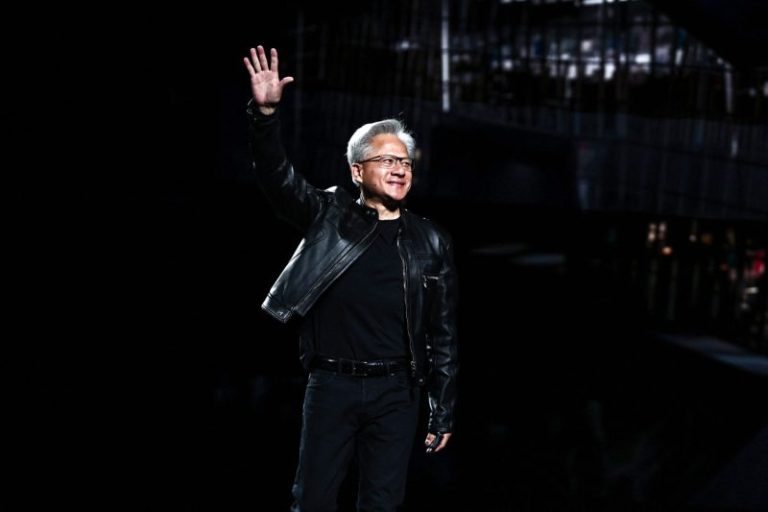
Nvidia CEO Jensen Huang sold 100,000 shares of the chipmaker’s stock on Friday and Monday, according to a filing with the U.S. Securities and Exchange Commission.

The sales are worth nearly $15 million at Tuesday’s opening price.

The transactions are the first sale in Huang’s plan to sell as many as 600,000 shares of Nvidia through the end of 2025. It’s a plan that was announced in March, and it’d be worth $873 million at Tuesday’s opening price.

The Nvidia founder still owns more than 800 million Nvidia shares, according to Monday’s SEC filing. Huang has a net worth of about $126 billion, ranking him 12th on the Bloomberg Billionaires Index.

The 62-year-old chief executive sold about $700 million in Nvidia shares last year under a prearranged plan, too.

Nvidia stock is up more than 800% since December 2022 after OpenAI’s ChatGPT was first released to the public. That launch drew attention to Nvidia’s graphics processing units, or GPUs, which were needed to develop and power the artificial intelligence service.

The company’s chips remain in high demand with the majority of the AI chip market, and Nvidia has introduced two subsequent generations of its AI GPU technology.

Nvidia continues to grow. Its stock is up 9% this year, even as the company faces export control issues that could limit foreign markets for its AI chips.

In May, the company reported first-quarter earnings that showed the chipmaker’s revenue growing 69% on an annual basis to $44 billion during the quarter.

This post appeared first on NBC NEWS

Cooper Flagg is a virtual lock to be the No. 1 pick of Wednesday night’s NBA draft. However despite filling his trophy case, including national player of the year honors, during his sublime freshman (and only) season at Duke University – not to mention a reputation burnished by holding his own against Team USA’s superstars prior to last year’s Paris Olympics – Flagg is not a virtual lock to become a professional legend commensurate with his presumed draft position. Yes, his hype train quickly built in high school, where he led the Montverde Academy Eagles to 34-0 record and a national championship as a senior, before driving the Blue Devils to this year’s Final Four.

Doesn’t mean Flagg will revitalize the Dallas Mavericks, who, one year removed from losing in the NBA Finals, are apparently hoping he can, on some level, fill the Luka Dončić-sized hole in their lineup. Pro sports rarely work that tidily. For every LeBron James, there’s a Kwame Brown and maybe even an Andrea Bargnani or Ben Simmons. For every Peyton Manning, there’s a Jeff George. And the spotlight is even harsher when it comes to top picks. Highly regarded Bears quarterback Caleb Williams had a decent rookie season in 2024 despite the regrettable circumstances around him. Yet his career is already being (unfairly?) measured against the man chosen right after him, Washington Commanders counterpart Jayden Daniels, who may have had the greatest NFL season ever by a rookie QB.

Welcome to the Association, Coop. To illustrate the daunting climb ahead of you, I’m going to rank this century’s No. 1 picks in the NFL – I’m old enough to have covered LeBron and Brown when they were NBA newbies, but football is my area of (alleged) expertise – from best to worst. This year’s top selection, Cam Ward of the Tennessee Titans, gets a one-year exemption, for obvious reasons …

1. QB Eli Manning, San Diego Chargers (2004)

Tabbed by the Bolts against his family’s will, he was traded to the New York Giants within an hour of being picked in a megadeal involving Philip Rivers. Both passers will likely find their way to the Hall of Fame eventually, though Manning was not elected in 2025, his first year of eligibility. But he does own a pair of Super Bowl MVP trophies after vanquishing Tom Brady’s New England Patriots in style two times over. Maybe Eli wasn’t as good individually as older brother Peyton, the No. 1 pick in 1998 and a five-time league MVP, but that doesn’t detract from the exceptional performer and ambassador he was for the Giants over 16 seasons.

2. QB Matthew Stafford, Detroit Lions (2009)

A late-career surge with the Los Angeles Rams, which included a Super Bowl win to cap the 2021 season, will probably certify Stafford’s Canton credentials. But he deserves more credit than he probably gets for his often-scintillating play on some Lions teams that were overly reliant on him and WR Calvin Johnson for seven years. And Stafford’s relative excellence in Motown hardly subsided in the five seasons following Megatron’s retirement after the 2015 campaign.

3. DE Myles Garrett, Cleveland Browns (2017)

From a personal perspective – four-time All-Pro, 2023 Defensive Player of the Year, 102½ sacks in 117 NFL games – he’s probably already done enough to gain entry into the Hall. In terms of team success, the Browns only have one playoff win since Garrett got there – not that he’s remotely to blame.

4. QB Joe Burrow, Cincinnati Bengals (2020)

Admittedly, this is something of a projection for a guy who’s played the equivalent of four full seasons when you take injuries into account. But Burrow has already carried Cincy to a Super Bowl – a huge feather in his cap – and a pair of appearances in the AFC championship game. He seems to be an MVP-in-waiting, and perhaps that comes this season if he’s able to – forced to? – overcome a deficient Cincinnati D. After leading the league with 4,913 yards and 43 touchdowns through the air in 2024, many league observers thought Burrow deserved quite a bit of MVP consideration despite the Bengals’ failure as a team.

5. QB Jared Goff, Los Angeles Rams (2016)

Despite starting Super Bowl 53, he was part of the package the Rams gave up for Stafford in 2021 – and his relocation to Detroit was widely viewed as something of a salary dump at the time. But give Goff, a two-time Pro Bowler in LA, copious credit – he’s become an even better quarterback with the Lions, throwing for at least 4,400 yards each of the past three seasons and leading the franchise to a level success (including successive division titles) it had not previously experienced during the Super Bowl era (since 1966).

6. QB Cam Newton, Carolina Panthers (2011)

During his first five seasons, the super-sized dual threat lived up to his Superman persona – faster than a speeding linebacker, more powerful than a … linebacker – peaking in 2015 with league MVP honors while the Panthers won the NFC. But Newton was notably terrible in Super Bowl 50 and experienced a steady descent afterward, dogged by injuries and inconsistency.

7. QB Andrew Luck, Indianapolis Colts (2012)

Targeted as the virtually irreplaceable Peyton Manning’s successor, Luck seemed up to the unenviable task … when he was healthy enough to play. He led the Colts to a 33-15 record and a trio of playoff appearances during his first three seasons, which culminated with a loss in the 2014 AFC championship game. But, like Newton, Luck was a big man who was also a big target as he often resorted to a devil-may-care playing style. He only posted 38 times over his final four seasons – he was named Comeback Player of the Year in 2018, when he passed for 39 TDs and nearly 4,600 yards – and shockingly retired during the 2019 preseason, no longer able to shoulder the pain and expectations of his job. The Colts have yet to recover.

NFL LOTTERY? Three reasons league likely won’t ever adopt NBA draft model

8. QB Michael Vick, Atlanta Falcons (2001)

While it probably wouldn’t be accurate to say he’s the paradigm of the dual-threat quarterbacks who are becoming the rule rather than the exception in the modern NFL – I’m giving that credit to Randall Cunningham – Vick certainly inspired a legion of uber-athletic passers who followed him. Had he worked harder as a younger player rather than relying on his gifts – just ask Vick – remained clear of dogfighting and the jail time it earned him and avoided injuries later in his career, he might have wound up a Super Bowl champion and Hall of Famer. Regardless – legend.

9. QB Carson Palmer, Cincinnati Bengals (2003)

For a brief moment, it appeared he might be the guy to do what Burrow seems to be managing and lead the Bengals out of the wilderness. But Palmer tore up his knee on the first pass of his playoff debut – a 66-yard completion – and Cincinnati retreated into irrelevance. Fed up with the organization in later years, Palmer was traded to another backwater in 2011, joining the Raiders for 25 forgettable games. He eventually enjoyed a renaissance with the Cardinals and nearly took them to the Super Bowl.

10. QB Baker Mayfield, Browns (2018)

He emerged as Cleveland’s choice at the 11th hour – a decision he largely vindicated. However the Browns’ decisions to dump Mayfield for Deshaun Watson in 2022 will forever be viewed as an unequivocal disaster. But it may have also catalyzed Mayfield into becoming the player he is now – a two-time Pro Bowler who’s thrown for 69 TDs and nearly 9,000 yards in two years with the Buccaneers. He has plenty of runway ahead to move much further up this list.

11. DE Mario Williams, Houston Texans (2006)

He was the surprising choice over electric USC RB Reggie Bush. But Williams justified his very unpopular selection with the locals, compiling nearly 100 sacks in 11 NFL seasons. A four-time Pro Bowler, most of his career was spent in virtual anonymity with bad teams in Houston and Buffalo. Williams never started a playoff game.

12. QB Alex Smith, San Francisco 49ers (2005)

He spent his career as NFL hurdler – overcoming the transition from Urban Meyer’s college offense at Utah to a pro scheme; getting chosen (instead of Aaron Rodgers) by a bad Niners squad; losing his job to Colin Kaepernick after suffering a concussion in 2012; losing his job to Patrick Mahomes in Kansas City in 2018; and suffering a gruesome leg injury late in his career at Washington but one he miraculously came back from. Still, Smith, a three-time Pro Bowler, was a good player, outstanding teammate and great interview who made the most of his 16-year career (though two seasons were wiped out by injuries).

13. LT Jake Long, Miami Dolphins (2008)

He was a Pro Bowler and dominant player in each of his first four seasons before injuries largely short-circuited the balance of his nine-year career. The Fins thought enough of Long to choose him instead of future league MVP Matt Ryan.

14. LT Eric Fisher, Kansas City Chiefs (2013)

His draft wasn’t exactly star-studded, and Fisher emerged as something of a surprise choice at the top of it. Nevertheless, he was a solid player over the course of a decade, earned a pair of Pro Bowl nods and is one of just three players – along with Eli Manning and Stafford – to play in and win a Super Bowl after being selected No. 1 overall in the 21st century.

15. QB Kyler Murray, Arizona Cardinals (2019)

His potential hasn’t sufficiently matched the production to this point, though he was the Offensive Rookie of the Year and followed that up with Pro Bowl recognition in 2020 and ’21. But Murray ended the 2021 season with a poor performance in a wild-card loss to the Rams and has had to answer a lot of questions about his health and work habits in recent years. Still, plenty of time yet for his career to truly take off, and the Cards seem to be perched for a breakout.

16. DE/OLB Jadeveon Clowney, Texans (2014)

A three-time Pro Bowler, the peripatetic pass rusher has been a very good player who maybe hasn’t been given due credit for his all-around game given edge players are so often judged by sacks − and Clowney has never even had 10 in a single season. Yet it is probably fair to say that he’s never lived up to his highlight-reel promise while at the University of South Carolina.

17. QB Trevor Lawrence, Jacksonville Jaguars (2021)

Projected as a generational prospect years before the Jags secured the opportunity to take him, Lawrence has fallen well short of fulfilling that hype … so far. However, the Meyer debacle of his rookie year and last year’s injury weren’t Lawrence’s fault. And he did flash during the 2022 playoffs while leading Jacksonville to the divisional round. His story is far from written, and a new chapter awaits with the arrival of super-hyped rookie Travis Hunter to help the cause in Duval County.

18. OLB/DE Travon Walker, Jaguars (2022)

A dark horse who galloped to the top of the draft board, Walker has reached double-digit sacks each of the past two seasons. Yet, to date, he hasn’t been nearly the player Detroit’s Aidan Hutchinson, who was drafted directly after him, is. But it’s obviously early in the process.

19. QB Caleb Williams, Chicago Bears (2024)

Greatness is expected of him. But as a rookie, he was the victim of an insufficient organizational infrastructure, one that likely contributed to Williams reverting to some of his troubling college habits – and that meant too many sacks and fumbles. However the arrival of offensively brilliant coach Ben Johnson could spark exponential improvement in Williams’ performance.

20. QB Jameis Winston, Tampa Bay Buccaneers (2015)

Talented. Enigmatic. Beloved. Vexing. If you need a season to sum up Winston, it would be 2019, when he passed for more than 5,000 yards, 33 TDs and 30 INTs. If you need a game to sum up Winston, it occurred last season – when he threw for 497 yards and six TDs (four to his Cleveland teammates, two to Denver Broncos defenders) in a memorable Monday night loss. Usually a favorite in any locker room he graces, Winston has mostly been a backup since the Bucs replaced him with Tom Brady after that 2019 campaign that nearly drove then-coach Bruce Arians crazy.

21. QB Sam Bradford, St. Louis Rams (2010)

His injury history at Oklahoma was predictive of similar setbacks in the NFL. In a sense, his pro career peaked when he won Offensive Rookie of the Year honors. Bradford played for four teams, finishing with a career passer rating of 84.5 and a 34-48-1 record in 83 starts. He never appeared in the postseason.

22. QB Bryce Young, Panthers (2023)

He struggled massively as a rookie and was benched in the early stages of his sophomore season. But after getting back into the lineup, Young started to serve reminders of why Carolina loved him in the first place. Now enjoying continuity under second-year coach Dave Canales, Young has a chance to blossom in 2025.

23. QB David Carr, Texans (2002)

The first selection in club history, he’s probably best known for being sacked a single-season record 76 times during his rookie season. Carr was constantly running for his life in Houston, subsequently developed poor on-field habits and never settled in as the franchise’s foundation. He was a solid backup later in his career, winning a ring with the 2011 Giants.

24. DE Courtney Brown, Browns (2000)

Need a snapshot of why the Browns have almost always stunk? Brown was the No. 1 pick a year after Cleveland kicked off the 1999 draft by choosing QB Tim Couch. Both were waylaid by injuries and their enlistment by an expansion team. Brown wound up with 19 sacks in six NFL seasons – basically what T.J. Watt does for the archrival Pittsburgh Steelers in a year.

DRAFT BUSTS: *50 biggest of past 50 years

25. QB JaMarcus Russell, Oakland Raiders (2007)

Woof. Russell, who began his career with a lengthy holdout, never approached the hype generated by his howitzer arm and legendary pro day. He lasted just three seasons, losing 18 of 25 starts and compiling an abysmal 65.2 passer rating, before laziness and weight gain washed him out of the league. Who could the Raiders have taken instead? Calvin Johnson, Joe Thomas, Adrian Peterson, Patrick Willis, Marshawn Lynch and Darrelle Revis all came off the board in the first half of Round 1 in ’07.

This post appeared first on USA TODAY

There’s really nothing on the baseball calendar for June 26 that makes it especially memorable. (OK, maybe Derek Jeter’s birthday …) Perhaps appropriately, just a regular Thursday is a special day at one of MLB Network’s flagship programs.

For “MLB Central” hosts Robert Flores, Lauren Shehadi and Mark DeRosa, it will mark the 1,000th show since they first got together in 2018. But don’t expect them to spend too much time celebrating.

“Sure, we’re obsessed with the big events and the big milestones,” Shehadi says, “but on a random Tuesday in August, we want to be at our best.

“It consumes us how much we love this show and this job and how much we want to honor the game and the players.”

And therein lies the key to the show’s staying power.

Day in, day out

After this many shows, the three hosts have their routine down pat. Get to the studio at 6:45 a.m. every weekday from spring training through the playoffs. Plot out the segments and guest appearances before going on the air from 10 a.m. to noon ET. Then continue what Flores calls ‘the free flow of ideas’ over texts and calls throughout the rest of the day.

But “MLB Central” isn’t a typical baseball program.

“We try to show you a baseball side that maybe you didn’t see or maybe didn’t pick up on during the game,” says DeRosa, who played 16 seasons in the majors from 1998-2013.

“But we try and honor the stories of the players and we try and make you laugh.”

The chemistry they have together is a big part of that. DeRosa and Shehadi quickly agree Flores has the quickest wit among them. But there’s still something else that makes everything click.

“Authenticity,” Shehadi says, pointing out she and Flores have journalism backgrounds. “I think we consume baseball so differently, as do the fans, so we ask questions that the fans want to know.” Meanwhile, DeRosa provides the on-field experience.

“It’s a beautiful harmony,” she explains.

Silly + serious = ‘awesome’

From their collaborative process, many ideas surface. But not all of them make it on the air.

Generally, it’s DeRosa who gets the ball rolling – working with editorial producer Eric Nehs on something technical such as a player’s defensive footwork or Vladimir Guerrero Jr.’s swing plane. But there’s always room for something fun, too.

“DeRo is the most unique analyst I’ve ever worked with because he has a great feel for TV,” Flores says. “There are a lot of analysts who can tell you what happened, but DeRo thinks about it like a TV producer.”

One recent example stemmed from a rash of injuries the Minnesota Twins had experienced. The three were discussing how to deal with the “injury bug” when DeRosa had a vision of Twins manager Rocco Baldelli as an exterminator.

“It was so silly … and so awesome,” Shehadi recalls.

Soon after, the production team whipped up the perfect graphics to help DeRosa pull it off.

The result is an informative and entertaining two-hour block that keeps casual fans and baseball experts equally engaged. Ratings are pacing 6% ahead of last year in the latest Nielsen figures, according to Sports Business Journal.

“We know that there are players watching, there are coaches, there are managers, front office executives, owners. Anyone connected with major league baseball, they are watching,’ DeRosa says. ‘So we take that very seriously.”

Glimpse into the future

After passing the big milestone, the “MLB Central” crew is always looking forward to what’s next.

In the near-term, they’ll be keeping their eyes on the July 31 trade deadline. The Rafael Devers to San Francisco deal was a stunner, but who else might be moved?

Marlins pitcher Sandy Alcantara and Diamondbacks third baseman Eugenio Suarez, says DeRosa. Flores offers up Cardinals reliever Ryan Helsley, but with a caveat: “The Cardinals are just one game back (in the wild card race).”

Ah yes, the playoffs.

“I think the Cubs have a chance to win the whole thing,” DeRosa says.

“Don’t sleep on the Giants,” Flores counters. “That’s a team that could make a deep run with what they’ve got.”

Even further down the road, everyone’s mind keeps looking for ways to improve, to shake things up, to book interesting guests.

The guest they’d all love to have someday: Shohei Ohtani.

“In a world where we know everything about everyone, I still feel like he’s the most mysterious, magical player maybe in all of pro sports,” Flores says. “Maybe in all of the world.”

DeRosa goes in a different direction. “I’d like to get some A-list celebrities like Tom Cruise, Brad Pitt,” he offers.

MLB Central has made its mark by being different from other sports talk shows that may rely more on high volume, bluster and hot takes.

“While all these other shows are doing whatever,” Flores says, ‘we’re trying to give them smart analysis and insight and celebrating the game and trying to make you laugh, all in the same two hours.”

This post appeared first on USA TODAY
Chris Schwegmann is getting creative with how artificial intelligence is being used in law.

At Dallas-based boutique law firm Lynn Pinker Hurst & Schwegmann, he sometimes asks AI to channel Supreme Court Chief Justice John Roberts or Sherlock Holmes.

Schwegmann said after uploading opposing counsel’s briefs, he’ll ask legal technology platform Harvey to assume the role of a legal mind like Roberts to see how the chief justice would think about a particular problem.

Other times, he will turn to a fictional character like Holmes, unlocking a different frame of mind.

“Harvey, ChatGPT … they know who those folks are, and can approach the problem from that mindset,” he said. “Once we as lawyers get outside those lanes, when we are thinking more creatively involving other branches of science, literature, history, mythology, that sometimes generates some of the most interesting ideas that can then be put, using proper legal judgement, in a framework that works to solve a legal problem.”

It’s just one example of how smaller businesses are putting AI to work to punch above their weight, and new data shows there’s an opportunity for much more implementation in the future.

Only 24% of owners in the recent Small Business and Technology Survey from the National Federation of Independent Business said they are using AI, including ChatGPT, Canva and Copilot, in some capacity.

Notably, 98% of those using it said AI has so far not impacted the number of employees at their firms.

At his trial litigation firm of 50 attorneys, Schwegmann said AI is resolving work in days that would sometimes take weeks, and said the technology isn’t replacing workers at the firm.

It has freed up associate lawyers from doing “grunt work,” he said, and also means more senior-level partners have the time to mentor younger attorneys because everyone has more time.

The NFIB survey found AI use varied based on the size of the small business. For firms with employees in the single digits, uptake was at 21%. At firms with fifty or more workers, AI implementation was at nearly half of all respondents.

“The data show clearly that uptake for the smallest businesses lags substantially behind their larger competitors. … With a little attention from all the relevant stakeholders, a more equal playing field is possible,” the NFIB report said.

For future AI use, 63% of all small employers surveyed said the utilization of the technology in their industry in the next five years will be important to some degree; 12% said it will be extremely important and 15% said it will not be important at all.

Some of the most common uses in the survey were for communications, marketing and advertising, predictive analysis and customer service.

“We still have the need for the independent legal judgment of our associate lawyers and our partners — it hasn’t replaced them, it just augments their thinking,” Schwegmann said. “It makes them more creative and frees their time to do what lawyers do best, which is strategic thought and creative problem solving.”

The NFIB data echoes a recent survey from Reimagine Main Street, a project of Public Private Strategies Institute in partnership with PayPal.

Reimagine surveyed nearly 1,000 small businesses with annual revenue between $25,000 and $50,000 and also found that a quarter had already started integrating AI into daily workflows.

Schwegmann said at his firm, AI is helping to even the playing field.

“One of the things Harvey lets us do is review, understand and incorporate and respond much faster than we would prior to the use of these kinds of AI tools,” he said. “No longer does a party have an advantage because they can paper you to death.”

This post appeared first on NBC NEWS

Join Dave as he shares how he uses the power of Fibonacci retracements to anticipate potential turning points. He takes viewers through the process of determining what price levels to use to set up a Fibonacci framework, and, from there, explains what Fibonacci retracements are telling him about the charts of NCLH, RTX, and the S&P 500

This video originally premiered on June 24, 2025. Watch on StockCharts’ dedicated David Keller page!

Previously recorded videos from Dave are available at this link.

As the cycle of uncertainty continues to yield confusion than clarity, investors are again caught having to decide between taking an offensive and defensive posture in the market. The tough part in today’s market environment is how fast situations can shift. With headlines driving the action, sentiment can flip on a dime. So how do you position yourself when breaking news drives the market?

No one can predict how the stock market will play out in the coming months. But keeping an eye on the ratio of “offense” to “defense” stocks can offer some clues. This may not give you a decisive trade scenario, but it can provide a clearer context that can help you form a more bullish or bearish decisive bias.

For this article, let’s refer to the StockCharts Market Summary tool and zoom in on the Technology vs. Utilities ratio (XLK:XLU), which you can find in the Key Ratios – Offense vs Defense panel.

Why XLK:XLU Ratio Matters

This ratio compares the Technology Select Sector SPDR Fund (XLK) with the Utilities Select Sector SPDR Fund (XLU), both being sector proxies (see the one-year ratio chart below).

FIGURE 1. TECH VS UTILITIES RATIO: From a one-year perspective, utilities have outperformed tech.

The key question is whether capital will continue chasing innovation and growth or seek shelter in the relative stability of power grids and water systems. The answer, when it eventually comes, could signal the economy’s next move.

On the one-year chart, the XLK:XLU ratio shows an attempted recovery from a general decline. Note how the ratio percentage is negative. That’s because, over the past year, utilities have generally performed stronger than tech. But we’re seeing tech’s performance strengthening, and a sustained move toward (and eventually into) positive territory would suggest a stronger shift in bullish sentiment.

Notably, XLK and XLU are trading at their respective highs, with XLK already breaking above it. The question remains which sector may be topping or outpacing the other in a more sustained manner.

XLK Breaks Higher: A Bullish Signal?

Here’s a daily chart of XLK.

FIGURE 2. DAILY CHART OF XLK. A proxy for the tech sector, XLK has broken above resistance. The key question now is whether it can hold above this level and follow through, or if it’s topping out amid the current geopolitical uncertainties.

XLK’s surge from its April bottom, including the gap above $243, signals bullish momentum. It’s also trading above the 200-day simple moving average (SMA) while its StockCharts Technical Rank (SCTR) score has climbed above 76, signaling technical strength. Volume-wise, the Chaikin Money Flow (CMF) shows renewed strength in buying pressure, though CMF levels are down considerably since their highest levels in May.

XLU’s Rally: Strong, But Losing Steam

Compare XLK’s chart to XLU’s daily chart.

FIGURE 3. DAILY CHART OF XLU. The Utilities sector is challenging its highs, but is XLU losing steam, and will XLK eventually outpace it?

XLU is attempting to challenge its highs near the $82.50 range, though it hasn’t penetrated the top. Its SCTR score is also bullish at 77, though it’s not as convincing as that of XLK. XLU’s CMF reading also shows weakened buying pressure, as its levels are barely hovering above the zero line.

What These Charts Are Saying

Taken together, these charts aren’t about calling the next big trade. They’re about reading near-term sentiment and getting a feel for where investors think the economy is headed amid this tense geopolitical backdrop.

When both offense and defense are rising, it suggests uncertainty, with capital flowing in both directions. But when one sector pulls ahead, it may signal where institutional money is placing its bets. Whether you’re a short-term trader or long-term investor, tracking this ratio can help anchor your outlook, especially as global events continue to fuel market volatility.

Keep XLK and XLU on your ChartLists and continue to monitor this ratio, along with other comparative tools on the Market Summary page. Also, pay close attention to news developments.

At the Close

The XLK:XLU ratio might not give you the most comprehensive or surefire signal about investor sentiment, but it’s an important piece of the puzzle. It can help you see the bigger picture, which is a crucial step before placing any trades.


Disclaimer: This blog is for educational purposes only and should not be construed as financial advice. The ideas and strategies should never be used without first assessing your own personal and financial situation, or without consulting a financial professional.

Copper miners with productive assets have much to gain as supply and demand tighten.

In May 2024, the copper price hit a new all-time high of US$10,954 per metric ton (MT) on the London Metal Exchange and US$5.20 per pound on the COMEX on the back of increasing demand and growing supply concerns.

Copper is one of the most important resources for the energy transition. However, in recent years, demand for the red metal has outpaced mining supply. While construction and electrical grids have long been major markets for copper, today the rise in demand for electric vehicles, EV charging infrastructure and energy storage applications are emerging drivers of copper consumption.

Another trend driving future copper demand is the rapid urbanization in the Global South, as rural populations migrate to cities, putting pressure on electricity grids.

Due to the challenges associated with finding, developing, permitting and mining copper deposits, the higher demand is being met by slow growth of new supply. Mines that are in operation tend to be quite large and operate for decades as copper producers concentrate on mine expansions and brownfield projects aimed at extending mine lifetimes.

Given those factors, investors should keep an eye on the world’s top copper miners and their operations.

This list of the 10 largest copper-mining companies in the world is ranked by attributable copper production for 2024.

1. BHP (ASX:BHP,NYSE:BHP,LSE:BHP)

Copper production: 1.46 million metric tons

BHP is one of the world’s largest mining companies, and its global portfolio of assets includes significant copper mining operations in Chile, Australia and Peru.

According to the company’s quarterly operational review data, the mining giant reported consolidated copper production of 1.46 million metric tons across the calendar year 2024.

Its most significant copper asset is the Escondida mine, the world’s largest copper mine. BHP holds a 58 percent stake in the Chilean operation, which, according to MDO data, produced 2.04 billion pounds of copper in 2024. The company wholly owns the Pampa Norte operations in Chile, which produced 586 million pounds of copper in 2024.

BHP also owns the Olympic Dam polymetallic mine, the largest mine in Australia. The South Australian mine hosts one of the world’s largest copper deposits as well as the largest uranium deposit. In 2023, BHP expanded its portfolio in the state with its acquisition of OZ Minerals and its Prominent Hill and Carrapateena copper operations.

2. Codelco

Copper production: 1.44 million metric tons

The Chilean state-owned Codelco is the world’s third-largest producer with copper production of 1.44 million metric tons in 2024. According to its 2024 annual report, its copper output increased 1.2 percent from 1.42 million metric tons in 2023.

Its largest asset is the Chuquicamata mine located in Northern Chile, between 2017 and 2021 annual production was in the 700 million to 850 million pound range. However, lower grades in recent years have led to production falling below 600 million pounds. In 2024, Chuquicamata increased slightly to 637 million pounds.

The mine transitioned from an open pit to an underground mine beginning in 2019. In its report, the company stated that phase one of its continuity infrastructure project had reached 73 percent completion and that plans for the second phase were undergoing feasibility studies.

The company’s other significant Chilean mines include El Teniente, Quebrada Blanca and Andina.

3. Freeport-McMoRan (NYSE:FCX)

Copper production: 1.26 million metric tons

Freeport-McMoRan is consistently ranked among the world’s top copper producers, and its share of copper production from its mines totaled 1.26 million metric tons of copper in 2024. The company reported producing 4.21 billion pounds, or 1.9 million metric tons, of the red metal, calculated on a 100 percent basis for all operations except its Morenci joint venture.

The largest contributor to its output is the Grasberg copper-gold mine in Indonesia. The mine itself is a joint venture between Freeport and state-owned Indonesia Asahan Aluminum, with the entities holding interests of 48.76 percent and 51.24 percent respectively. According to MDO, copper output for the mine in 2024 totaled 1.8 billion pounds.

Grasberg has undergone a transition from an open pit to an underground block cave, and expansion work continues at the site. As of the close of 2024, the mine had 469 open drawbells.

Additionally, Freeport holds a 55 percent stake in the Cerro Verde copper-molybdenum complex in Peru. The mine routinely produces between 800 million and 1 billion pounds of copper and is expected to be in operation until 2052.

Its largest US based operation is its 72 percent owned Morenci mine in Arizona, which produced 700 million pounds in 2024. It also owns the Safford and Sierrita mines in the same state.

4. Glencore (LSE:GLEN,OTC Pink:GLCNF)

Copper production: 951,600 metric tons

Mining major Glencore’s copper production dipped by 6 percent in 2024 to 951,600 metric tons from the 1.01 million metric tons produced in 2023. The company’s 2024 annual report attributed the decline to lower planned production at its Antapaccay and Collahuasi mines due to factors including lower grades, water constraints and geotechnical challenges.

Located along Chile’s coast, Collahuasi is the company’s largest operation, a 44/44/12 joint operation between Glencore, Anglo American (LSE:AAL,OTCQX:NGLOD) and Japan’s Mitsui & Co. (OTC Pink:MITSF,TSE:8031). The mine produced 558,600 metric tons of copper in 2024.

The partners are working to build a large-scale desalination plant designed to help overcome water shortage issues. The plant reached 86 percent completion in 2024 and is expected to begin operating in 2026. Once open, it will provide 1,050 litres of desalinated water per second to the mine via a 194 kilometer pipeline.

Other significant copper-producing assets in the company’s portfolio include Antamina in Peru, Mount Isa in Australia and the Katanga Complex in the Democratic Republic of the Congo.

5. Southern Copper (NYSE:SCCO)

Copper production: 883,462 metric tons

A majority-owned, indirect subsidiary of Grupo Mexico (OTC Pink:GMBXF), Southern Copper recorded 883,462 metric tons of total copper production for 2024, a 6.9 percent increase over 2023. In the company’s 2024 results, the company attributed the increase to higher production across all operations, with a 10.7 percent increase from its Peruvian assets and a 4.3 percent increase from Mexican production.

The company operates major copper mines in Peru and Mexico and has exploration projects in Argentina, Chile, Ecuador, Mexico and Peru.

Its largest copper-producing asset is the Buenavista mine in Northern Mexico, which sits atop one of the world’s largest porphyry copper deposits. According to MDO, the site produces approximately 700 billion to 750 billion pounds of copper per year.

Its other copper operations include the Cuajone and Toquepala mines in Peru and the La Caridad mine in Mexico.

6. Anglo American (LSE:AAL,OTCQX:NGLOD)

Copper production: 772,700 metric tons

British miner Anglo American reported a 6.5 percent decrease in copper production to 772,700 metric tons from 826,200 metric tons in 2023.

The company attributed the decline to lower recovery and grades at the Collahuasi and Los Bronces operations in Chile, noting that the planned closure of the Los Bronces processing plant also impacted production. The company holds a 44 percent stake in Collahuasi and 50 percent in Los Bronces.

In addition to Collahuasi, the company also owns a 60 percent stake in the Quellaveco mine in Peru, with Mitsubishi owning the remaining 40 percent. The open pit mine started operating in 2022 and, according to MDO, produced 675 million pounds of copper in 2024.

It also owns a 50 percent stake in the El Soldado mine in Chile, which it operates in partnership with Mitsui, which holds a 30 percent stake, and Mitsubishi Materials (OTC Pink:MIMTF), which holds the remaining 20 percent. Data from MDO shows that the mine produced 48,200 metric tons of copper in 2024.

7. KGHM Polska Miedz (FWB:KGHA.F)

Copper production: 729,700 metric tons

Poland’s KGHM Polska Miedz Group has operations in Europe, North America and South America, and says that it controls over 40 million metric tons of copper ore resources worldwide. In 2024, KGHM produced 729,700 metric tons of copper, a slight increase from the 710,900 metric tons of copper produced in 2023.

According to MDO, KGHM’s largest operation is the Polkowice-Sieroszowice mine in Western Poland. The mine has been in operation since 1968 and produces approximately 430 million to 440 million pounds of copper annually.

The company’s Polish operations also include the Rudna mine, which produced 338 million pounds of copper last year, and the Lubin mine, which produced 156 million pounds.

Other options under the KGHM banner include the Robinson mine in Nevada, United States, and the 55 percent owned Sierra Gorda mine in Chile.

8. CMOC Group (OTC Pink:CMCLF,HKEX:3993)

Copper production: ~502,600 metric tons

CMOC Group is a new addition to the top 10 after its copper production jumped significantly in 2024, with its share of production from its joint venture copper-cobalt mines in the Democratic Republic of the Congo totaling approximately 502,600 metric tons. On a 100 percent basis, the company reported annual copper production of 650,161 metric tons.

The majority of CMOC’s copper production came from its Tenke Fungurume copper-cobalt mine, an 80/20 joint venture with the state-owned mining firm Gecamines. According to MDO data, the mine has experienced significant growth over the past few years, ramping up from 400 million pounds of copper in 2020 to 618 million pounds in 2023. In 2024, Tenke Fungurume’s copper production soared to 992 million pounds, or 450,138 metric tons.

Its other DRC mine is Kisanfu, a 71/24/5 joint venture with Chinese battery manufacturer Contemporary Amperex Technology (SZSE:300750) and the DRC government. The mine produced 200,013 metric tons of copper cathode in 2024, up substantially from 114,000 in 2023.

9. Antofagasta (LSE:ANTO)

Copper production: 448,800 metric tons

Antofagasta’s share of copper production from its four joint venture operations in Chile totaled 448,800 metric tons in 2024.

The company’s largest operation is its 60 percent owned Los Pelambres mine, a joint venture with Mitsubishi. According to MDO, Los Pelambres’ copper production totaled 320,000 metric tons in 2024, up from 300,000 the previous year.

Its Centinela mine is another significant producer, with 224,000 metric tons of copper mined in 2024. The company is constructing a second concentrator at Centinela that, once it comes online in 2027, should add 144,000 metric tons of copper production annually and extend Centinela’s mine life by 15 years to 2051.

The company’s other Chilean joint ventures are the Antucoya and Zaldivar mines.

10. Teck (TSX:TECK.A,TECK.B,NYSE:TECK)

Copper production: 358,910 metric tons

Rounding out the top 10 is Canada’s Teck, which increased consolidated copper production by 50 percent in 2024, reaching 446,000 metric tons. On an attributable basis, the copper company’s production totaled 358,910 metric tons in 2024.

Much of the gain came from the ramp-up of the Quebrada Blanca mine in Chile. The mine started production in 2023 and produced just 122 million pounds of copper that year. 2024 saw a significant advancement, with the mine producing 458 million pounds of the red metal.

Teck holds a 60 percent ownership stake in the mine, while Japan’s Sumitomo (OTC Pink:SSUMF,TSE:8053) controls a 30 percent stake and Chile’s state-run Codelco owns the final 10 percent.

Teck also owns the Highland Valley mine in British Columbia, Canada. The mine is one of the largest open pit mines in Canada and produced 226 million pounds of copper in 2024.

Other copper operations in the Teck portfolio include Antamina in Peru and Carmen de Andacollo in Chile.

Securities Disclosure: I, Dean Belder, hold no direct investment interest in any company mentioned in this article.

This post appeared first on investingnews.com

The stock market has been on quite the rollercoaster of late, thanks to news headlines. But investors seem to have shrugged off the past weekend’s geopolitical tensions, at least for now. 

On Tuesday, we saw a surge of enthusiasm. Investors were diving back into stocks and selling off their oil and precious metals holdings. Last week, oil prices spiked amid Middle East tensions, but have now fallen to pre-conflict levels. After what felt like a few weeks of the market moving sideways, maybe the stock market got the catalyst it needed to push the major indexes out of their trading range. A ceasefire between Israel and Iran was enough to get things going.

Stocks Get a Boost

Tuesday’s positive tone helped move the stock market higher, with the S&P 500 ($SPX) closing up 1.1%, finally breaking above the top of its trading range. The Nasdaq Composite ($COMPQ) followed suit, with both indexes within spitting distance of their all-time highs. The Nasdaq 100 ($NDX), which closed 1.53% higher, hit a new all-time high. And let’s not forget the Dow Industrials ($INDU), which is also making a strong attempt to push through key resistance levels, even though it’s a little bit further from its all-time high.

Given the Nasdaq 100’s strong performance on Tuesday, it’s worth taking a closer look at the daily chart of the Invesco QQQ Trust (QQQ).

FIGURE 1. DAILY CHART OF QQQ. The ETF hit a new high on June 24 with a potential Golden Cross. If the relative strength index and percentage price oscillator confirm upside momentum, QQQ could rise higher.Chart source: StockCharts.com. For educational purposes.

Besides hitting a new high, note that the 50-day simple moving average (SMA) crossed above the 200-day SMA. This is referred to as a Golden Cross and can be an early sign of bullishness. While it’s not a guaranteed “green light” at such an early stage, it’s worth watching to see if the 50-day SMA continues to stay above the 200-day SMA.

The relative strength index (RSI) is getting closer to overbought territory. If it crosses above 70, it would be another sign of strong bullish momentum. Similarly, the percentage price oscillator (PPO) needs to move into positive territory, meaning the shorter moving average should cross above the longer one. They’re close, but remember these are lagging indicators, meaning they’ll confirm trends that are already underway. Thus, if the 50-day SMA remains above the 20-day SMA, RSI crosses above 70, and PPO confirms upside momentum, it would confirm further upside move in QQQ.

Another interesting point to note: The Cboe Volatility Index ($VIX) closed at 17.48, which suggests investors are relatively complacent. The VIX was relatively subdued during the Middle East conflict, hitting a high of around 22. With less fear, the charts of the major indexes look like they’re going to hit fresh highs. On Tuesday, Technology, Financials, and Communication Services were the top-performing sectors.

Tech Regains Lead

The Technology sector was powered by semiconductors, which have been driving the market lately. The VanEck Vectors Semiconductor ETF (SMH) has broken above the range it’s been trading within for the last couple of weeks and is now close to its 52-week high (see daily chart of SMH below).

FIGURE 2. DAILY CHART OF SMH. Semiconductors have been driving the stock market lately and broke out above the range from the last couple of weeks.Chart source: StockCharts.com. For educational purposes.

Looking at individual stocks, NVIDIA Corp. (NVDA) was the most actively traded S&P 500 stock. A handful of big names are hitting new all-time highs, too; this includes Broadcom, Inc. (AVGO), Cisco Systems, Inc. (CSCO), International Business Machines (IBM), JP Morgan Chase (JPM), Microsoft Corp. (MSFT), and Netflix Inc. (NFLX), just to name a few. For the complete list, check out the “New Highs” panel in your StockCharts Dashboard; you’ll likely notice a significant percentage of tech stocks on the list.

The positive price action on Tuesday suggests investors are rotating into growth stocks, which signals further upside moves in the S&P 500 and Nasdaq stocks. Here’s a more encouraging sign: even the S&P 500 Equal-Weighted Index ($SPXEW) is breaking out and moving towards its highs. This indicates that the market’s strength isn’t limited to a few big, heavily-weighted growth stocks; participation is much broader.

Travel Stocks Get a Lift

Beyond tech stocks, consumer discretionary stocks also traded higher. The top three performers in the Consumer Discretionary sector were Carnival Corp. (CCL), Norwegian Cruise Lines Holdings (NCLH), and Caesars Entertainment (CZR). The MarketCarpet for the Consumer Discretionary sector below shows travel stocks were strong performers on Tuesday.

FIGURE 3. MARKETCARPET FOR THE CONSUMER DISCRETIONARY SECTOR. The table on the right shows CCL, NCLH, and CZR were the top performers.Image source: StockCharts.com. For educational purposes.

CCL’s stock price gapped up after the company reported strong earnings and guidance. An increase in cruise line bookings indicates consumer sentiment is strong. As a result, cruise lines and travel stocks traded higher. This goes against June’s Consumer Confidence report, which showed weakening confidence. It didn’t seem to impact the market, but it may come back to bite us depending on what news headlines we are likely to receive on Wednesday.

Closing Position

Tuesday’s price action suggests that equities are back on their bullish track after a period of consolidation. Will the upside move hold, or will a negative news headline bring the bears back into the market?

This is where your StockCharts tools come in handy! Keep a close eye on the performance of the major indexes and other helpful indicators such as the RSI and PPO. By using these tools, you can stay on top of the stock market and make investment decisions with greater confidence.


Disclaimer: This blog is for educational purposes only and should not be construed as financial advice. The ideas and strategies should never be used without first assessing your own personal and financial situation, or without consulting a financial professional.

Lode Gold Resources Inc. (TSXV: LOD) (OTCQB: LODFF) (‘Lode Gold’ or the ‘Company’) is pleased to announce that it has engaged experienced capital markets and strategic advisors to support the advancement of its Fremont Mine in Mariposa, California. These advisors will assist in securing strategic investors and partners as the Company moves into the next phase of development.

As part of its current development strategy, Lode Gold is also engaging with mining contractors and progressing with engineering evaluations aimed at optimizing the mine plan and initiating permitting. The Company’s evaluation is focused on three key priorities:

  • High-grading during early production years to enhance initial project economics
  • Scaling production to over 100,000 ounces per year in later phases

‘Our objective is to take a disciplined and scalable approach to developing the Fremont Project,’ said Wendy T. Chan, CEO and Director at Lode Gold. ‘By securing the right strategic partnership, we will focus on various technical initiatives to optimize project economics, expedite permitting and get to production in near term. Being in a jurisdiction that is now increasingly aligned with domestic resource development, Fremont presents an interesting investment opportunity.’

The Fremont Mine is an advanced-stage exploration and development asset, on 100% private and patented land. It is located in Mariposa, an Opportunity Zone designated to attract investments with tax incentives provided by Trump’s Administration. The 2023 Preliminary Economic Assessment (PEA) outlined positive project economics at a gold price of USD $1,750, based on an annual production rate of approximately 130,000 ounces. More recently, an NI 43 -101 compliant mineral resource estimate (MRE 2025) was completed with a new geological model that separately evaluated vein and stockwork mineralization. Only 8% of the total mineral resource, filed at SEDAR+ (April 2025) has been extracted, mostly in the first 250 m. At a 1 g/t cut-off, the average true width is 53 m (at 3 g/t cut-off, the width is 16.8 m).

Upcoming Near Term 2025-2026 Catalysts:

  • Rehabilitation of 2 km underground workings
  • Expedite access to two adits, out of a total of 14
  • Channel sampling to upgrade resources to M&I
  • Metallurgy and Recovery Studies
  • Geotechnical work and rock mechanics assessments
  • Drilling 3,000 m to initiate Pre-Feasibility Study
  • Completion of Pre-Feasibility Study (underground bulk mining and other optimized methods will be evaluated)

About Lode Gold

Lode Gold (TSXV: LOD) is an exploration and development company with projects in highly prospective and safe mining jurisdictions in Canada and the United States.

In Canada, its assets in Yukon sit on the southern portion of the prolific Tombstone Belt. It covers 99.5 km2 across a 27 km strike.  Over 4,500 m have been drilled with confirmed gold endowment and economic drill intercepts over 50 m. There are four reduced-intrusive targets (RIRGS), in addition to sedimentary-hosted orogenic exploration gold.

In New Brunswick, Lode Gold, through its subsidiary 1475039 B.C. Ltd. (soon to be spun out into Gold Orogen), has created one of the largest land packages with its Acadian Gold Joint Venture, consisting of an area that spans 445 km2 with a 44 km strike. It has confirmed gold endowment with mineralized rhyolites.

In preparation for the spin-out, NI 43 101 technical reports have been prepared for all assets in Yukon and New Brunswick in 2024.

In the United States, the Company is focused on its advanced exploration and development asset, the Fremont Mine in Mariposa, California. According to the NI 43- 101 Compliant 2025 MRE, the asset contains 1.3 Moz at 4.4 g/t (3 g/t cut-off) with an average true width: 16.8 m.

Fremont was previously mined at 10.7 g/t. During gold mining prohibition in WWII, its mining license was suspended. Only 8% of the resource identified in the 2025 MRE has been extracted. This asset has exploration upside and is open at depth (three step-out holes at 1,300 m hit structure and were mineralized) and on strike. This is a brownfield project with over 43,000 m drilled, 23 km of underground workings and 14 adits. The project has excellent infrastructure and is close to electricity, water, roads, railhead and port.

Recently, the Company completed an internal scoping study, with a strategic pivot to 100% underground mining. Previously, in March 2023, the Company completed an NI 43-101 Preliminary Economic Assessment (‘PEA’) with an open pit and underground combination mine. The NI 43-101 technical reports are available on the Company’s profile on SEDAR+ (www.sedarplus.ca) and the Company’s website (www.lode-gold.com).

Qualified Person Statement

The scientific and technical information contained in this press release has been reviewed and approved by Jonathan Victor Hill, Director, BSc (Hons) (Economic Geology – UCT), FAusIMM, and who is a ‘qualified person’ as defined by National Instrument 43-101 – Standards of Disclosure for Mineral Projects (‘NI 43-101’).

ON BEHALF OF THE COMPANY
Wendy T. Chan 
CEO & Director

Information Contact:

Winfield Ding 
CFO
info@lode-gold.com
+1-(604)-977-GOLD (4653)

Jenna Mosher 
Investor Relations
jenna@lode-gold.com
+1 (604) -977-GOLD (4653) 

Cautionary Note Related to this News Release and Figures

This news release contains information about adjacent properties on which the Company has no right to explore or mine. Readers are cautioned that mineral deposits on adjacent properties are not indicative of mineral deposits on the Company’s properties.

Cautionary Statement Regarding Forward-Looking Information

Neither the TSX Venture Exchange nor its Regulation Services Provider (as that term is defined in the policies of the TSX Venture Exchange) accepts responsibility for the adequacy or accuracy of this release.

This news release includes ‘forward-looking statements’ and ‘forward-looking information’ within the meaning of Canadian securities legislation. All statements included in this news release, other than statements of historical fact, are forward-looking statements including, without limitation, statements with respect to the use of proceeds, advancement and completion of resource calculation, feasibility studies, and exploration plans and targets. Forward-looking statements include predictions, projections and forecasts and are often, but not always, identified by the use of words such as ‘anticipate’, ‘believe’, ‘plan’, ‘estimate’, ‘expect’, ‘potential’, ‘target’, ‘budget’ and ‘intend’ and statements that an event or result ‘may’, ‘will’, ‘should’, ‘could’ or ‘might’ occur or be achieved and other similar expressions and includes the negatives thereof.

Forward-looking statements are based on a number of assumptions and estimates that, while considered reasonable by management based on the business and markets in which the Company operates, are inherently subject to significant operational, economic, and competitive uncertainties, risks and contingencies. These include assumptions regarding, among other things: the status of community relations and the security situation on site; general business and economic conditions; the availability of additional exploration and mineral project financing; the supply and demand for, inventories of, and the level and volatility of the prices of metals; relationships with strategic partners; the timing and receipt of governmental permits and approvals; the timing and receipt of community and landowner approvals; changes in regulations; political factors; the accuracy of the Company’s interpretation of drill results; the geology, grade and continuity of the Company’s mineral deposits; the availability of equipment, skilled labour and services needed for the exploration and development of mineral properties; currency fluctuations; and impact of the COVID-19 pandemic.

There can be no assurance that forward-looking statements will prove to be accurate and actual results, and future events could differ materially from those anticipated in such statements. Important factors that could cause actual results to differ materially from the Company’s expectations include a deterioration of security on site or actions by the local community that inhibits access and/or the ability to productively work on site, actual exploration results, interpretation of metallurgical characteristics of the mineralization, changes in project parameters as plans continue to be refined, future metal prices, availability of capital and financing on acceptable terms, general economic, market or business conditions, uninsured risks, regulatory changes, delays or inability to receive required approvals, unknown impact related to potential business disruptions stemming from the COVID-19 outbreak, or another infectious illness, and other exploration or other risks detailed herein and from time to time in the filings made by the Company with securities regulators, including those described under the heading ‘Risks and Uncertainties’ in the Company’s most recently filed MD&A. The Company does not undertake to update or revise any forward-looking statements, except in accordance with applicable law.

To view the source version of this press release, please visit https://www.newsfilecorp.com/release/256755

News Provided by Newsfile via QuoteMedia

This post appeared first on investingnews.com