Author

admin

Browsing

Copper has become a hot topic due to its role in the green energy transition and its necessity for urbanization. However, the lack of incoming supply in the long term has experts concerned.

Due to its importance in construction, energy transmission and new technologies, copper is a critical metal needed to power the future of our society. However, mined supply has not kept pace with demand, with few new operations coming online, and older mines facing decreasing grades and lower outputs.

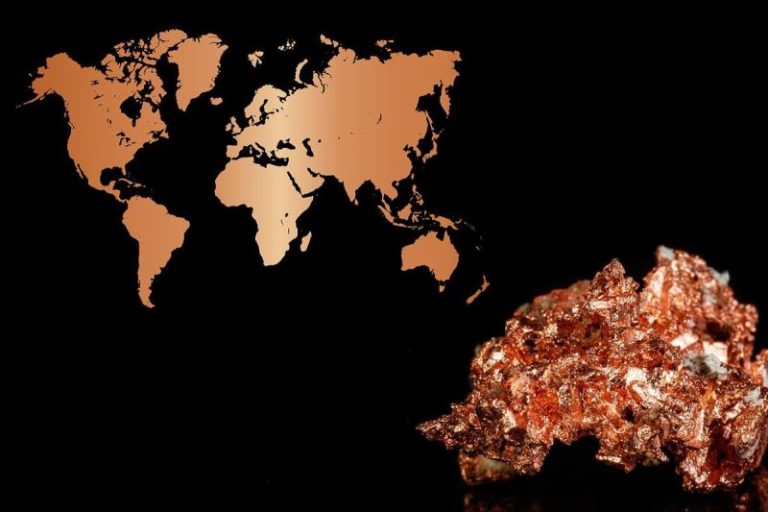
The term “peak copper” was coined because some experts believe that copper reserves may be diminishing. According to the US Geological Survey (USGS), more than 700 million metric tons of copper have been mined throughout history, and current economic global copper reserves stand at 980 million metric tons.

Nearly all of that mined copper is still in circulation, as the red metal’s recycling rate is higher than that of any other engineering metal, but it is still not enough to keep up with escalating demand. As a result, it’s prudent to know the top copper reserves by country, especially when considering investing in the copper mining industry.

Reserve data for this article was sourced from the USGS’s 2025 Mineral Commodity Summary and supplemented with datasets from Mining Data Online (MDO) and the UN Comtrade Database.

Top 5 copper reserves by country

The countries with the largest copper reserves are Chile, Australia, Peru, the Democratic Republic of Congo (DRC) and Russia. These five countries hold more than 55 percent of the world’s total copper reserves and will be critical to a world with soaring demand for copper.

Read on to learn about these copper kingpins.

1. Chile

Copper reserves: 190 million metric tons

Chile holds the largest copper reserves globally at 190 million metric tons, nearly as much as Australia and Peru hold combined. Additionally, Chile is also the world’s top copper producer, with its 5.3 million metric tons of copper in 2024 representing nearly a quarter of global output.

The mining industry is essential to the Chilean economy, making up more than 50 percent of the country’s exports and contributing US$40 billion of its GDP in 2023. Copper alone accounting for more than US$29 billion of that total.

Due to the sheer quantity of copper in the country, it should come as no surprise that Chile is home to the world’s largest copper mine, Escondida. According to MDO, Escondida produced 927,000 metric tons of copper in concentrate in 2024 and sits atop proven and probable copper reserves of 37.62 million metric tons. The mine is a 57.5/30/12.5 joint venture between BHP (ASX:BHP,NYSE:BHP,LSE:BHP), Rio Tinto (ASX:RIO,NYSE:RIO,LSE:RIO) and Japan’s JECO.

2. Australia

Copper reserves: 100 million metric tons

Australian copper reserves are pegged at 100 million metric tons, tying it for the second largest country by copper reserves. The resource industry is an essential sector in Australia, contributing AU$385 billion during the 2024/2025 fiscal year. Of that, copper was the sixth largest contributor with AU$13.2 billion, a AU$1.8 billion increase over 2023/2024.

While Australia hosts significant copper reserves, it lags the other countries on the list with similarly sized reserves in terms of production at 800,000 metric tons in 2024. More than a quarter of that came from BHP’s Olympic Dam mine in South Australia, which produced 216,000 metric tons of copper cathode. The polymetallic mine contains substantial proven and probable copper reserves totaling 10.68 million metric tons.

Another significant operation in Australia is Newmont’s (TSX:NGT,NYSE:NEM,ASX:NEM) Cadia Valley mine, which hosts probable reserves of 3.1 million metric tons of contained copper. Cadia Valley produced 87,000 metric tons of copper in concentrate in 2024.

2. Peru

Copper reserves: 100 million metric tons

Copper reserves in Peru stand at 100 million metric tons, tying it with Australia for the second largest copper country. Much like its neighbor Chile, copper is an essential part of Peru’s economy, accounting for 49 percent of the value of its US$47.7 billion in mining exports.

Peru is home to some of the world’s biggest mining operations, and produced 2.6 million metric tons of copper last year. Two mines accounted for a third of the country’s total output.

The top producer in the country is the Cerro Verde Complex, a 55/21/19.6 venture with Freeport-McMoRan (NYSE:FCX), Sumitomo Metal Mining (TSE:5713) and Minas Buenaventura (NYSE:BVN). Cerro Verde hosts hosts proven and probable reserves of 11.45 million metric tons of copper and produced 949 million pounds of copper metal in concentrate in 2024.

Not to be outdone, the second highest is Antamina, a 33.75/33.75/22.5/10 joint venture between BHP, Glencore (LSE:GLEN,OTC Pink:GLCNF), Teck Resources (TSX:TECK.B,TSX:TECK.A,NYSE:TECK) and Mitsubishi (TSE:8058). Last year, output at the mine fell just short of Cerro Verde’s at 941 million pounds of copper in concentrate. Antamina hosts a proven and probable reserve of 4.53 million metric tons of contained copper.

The mine with the largest copper reserves in Peru is Southern Copper’s (NYSE:SCCO) Toquepala mine, home to 13.79 million metric tons of copper in proven and probable reserves. The mine produced 496 million pounds of copper in concentrate last year.

4. Democratic Republic of Congo

Copper reserves: 80 million metric tons

Copper reserves in the Democratic Republic of Congo stood at 80 million metric tons in 2024, making it the fourth largest country by copper reserves. The DRC’s economic copper reserves have seen a staggering rise in recent years, climbing from an estimated 19 million metric tons in 2019.

The mining sector has been critical to GDP growth in the DRC, with copper being the largest contributor. World Bank reports that the extraction sector has outpaced other segments of the DRC’s economy, increasing 12.8 percent in 2024, while non-mining sectors grew by only 3.2 percent.

According to data from the United Nations, in 2023 the DRC exported US$17 billion in refined copper and unwrought alloys, a large jump from US$7.34 billion in 2019. The country’s copper ore exports contributed US$2.16 billion in 2023, nearly double the US$1.11 billion four years prior.

Among the contributing factors in the rise in mining and export activity has been the development of the Lobito Corridor, which connects mineral-rich regions in Zambia, the DRC and Angola to the port at Lobito in Angola.

This link allows greater access for large-scale operations like Ivanhoe Mines (TSX:IVN) and Zijin Mining’s (HKEX:2899,SHA:601899) Kamoa-Kakula complex in the Southern DRC. One of the largest copper operations in the world, Kamoa-Kakula hosts a probable reserve of 17.69 million metric tons of contained copper and produced 964 million pounds of copper in concentrate in 2024.

4. Russia

Copper reserves: 80 million metric tons

Russia’s copper reserves are estimated to be 80 million metric tons, tying it with the DRC. While commodities are important to the Russian economy, contributing US$417 billion in 2024, the metals sector represented 15 percent of that total at US$60 billion.

Russia has been under significant sanctions since it invaded Ukraine in February 2022. According to the UN Comtrade Database, Russia’s copper exports from in 2021 were valued at US$5.98 billion.

In 2024, Russia produced 930,000 metric tons of copper, an increase from the 890,000 metric tons produced in 2023. Among the main contributing factors was a ramp-up in production at Udokan Copper’s Udokan mine in Siberia, which was expected to produce 135,000 metric tons in 2024 and, according to the mine’s website, hosts a JORC-compliant copper resource of 26.7 million metric tons.

Securities Disclosure: I, Dean Belder, hold no direct investment interest in any company mentioned in this article.

This post appeared first on investingnews.com

Stefan Gleason, CEO of Money Metals, shares his outlook for gold, silver and platinum.

He also weighs in on Tether Investments’ recent deal with Elemental Altus Royalties (TSXV:ELE,OTCQX:ELEMF) and advances in US sound money policies.

Securities Disclosure: I, Charlotte McLeod, hold no direct investment interest in any company mentioned in this article.

This post appeared first on investingnews.com

Investor Insight

Horizon Minerals’ near-term cash-flow potential, large-scale gold resource base, and strategic processing infrastructure in the prolific Western Australian Goldfields position the company to transition into a sustainable, standalone mid-tier gold producer. Recent acquisitions, operational start-ups and high-grade resource expansions strengthen Horizon’s ability to leverage record gold prices and deliver consistent shareholder returns.

Overview

Horizon Minerals (ASX:HRZ,OTC:HRZMF) is an emerging standalone gold producer strategically positioned in the heart of Western Australia’s world-class goldfields. The company has built a robust portfolio of high-quality gold projects complemented by significant base and precious metal resources, all within easy haulage distance of key processing infrastructure.

Horizon currently holds 1.8 Moz of resources across 1,386 sq km of exploration tenure.

Following the transformational merger with Poseidon Nickel in early 2025 and the acquisition of the Gordons project in August 2025, Horizon now controls a total mineral resource of 1.82 million ounces (Moz) of gold at an average grade of 1.84 grams per ton (g/t), along with substantial silver, zinc, nickel, cobalt and manganese resources.

Central to Horizon’s growth strategy is the 2.2 Mtpa Black Swan processing facility, acquired through the Poseidon transaction. Located just 40 km north of Kalgoorlie, the plant is currently on care and maintenance but is fully permitted and connected to power and water. A low-capex refurbishment and conversion to a gold CIL circuit is underway, forming the backbone of Horizon’s plan to establish a sustainable ~100,000 ounce per annum production profile from late 2026.

The Black Swan processing facility is at the heart of Horizon’s stand-alone gold production strategy.

In parallel, Horizon is generating strong near-term cash flow from ore sales and toll milling arrangements at its Boorara and Phillips Find operations, respectively, both of which have delivered first gold in 2025. These operations, together with high-grade satellite deposits such as Burbanks, Penny’s Find, Cannon and the newly acquired Gordons Dam, will provide the feedstock for Black Swan’s initial five-year mine plan.

The company’s consolidated 1,386 sq km landholding spans some of the most prospective geological trends in the Goldfields, offering a mix of advanced development assets, near-mill open pits, and highly prospective exploration ground. With approximately 50,000 metres of drilling budgeted for FY25–26, Horizon is targeting both resource growth and upgrades in confidence across its portfolio.

Leveraging record gold prices and a strong balance sheet, Horizon is now at an inflection point – transitioning from a developer with multiple growth options into a fully integrated, cash-generating, standalone Western Australian gold producer.

Company Highlights

  • Emerging standalone gold producer with an extensive WA Goldfields portfolio and a total mineral resource of 1.82 million ounces gold plus significant silver, zinc, nickel, cobalt and manganese resources.
  • Acquisition of Poseidon Nickel delivers the 2.2 million tonnes per annum (Mtpa) Black Swan processing facility, strategically located 40 km north of Kalgoorlie, with refurbishment studies underway for conversion to a gold carbon-in-leach (CIL) plant.
  • Acquisition of the Gordons project from Yandal Resources adds 77 sq km of tenure near Black Swan, including the Gordons Dam deposit (365 kt @ 1.7 grams per ton gold for 20 koz) with strong exploration upside.
  • Continuous cash flow generation from two producing mines, via the ore sale agreement for Boorara (~AU$30 million estimated free cashflow at AU$3,600/oz) and the joint venture toll milling agreement at Phillips Find.
  • Record gold prices (>AU$5,000/oz) underpin robust margins and fund ~50,000 metres of drilling in FY25–26, targeting both resource growth and confidence upgrades.
  • Combined landholding of 1,386 sq km in Western Australia’s most productive gold belts, following the Poseidon and Gordons acquisitions

Key Projects

Boorara Gold Project

The Boorara gold project, located just 15 kilometres east of Kalgoorlie-Boulder, is Horizon’s cornerstone operation and the foundation of its near-term cashflow strategy. Over the past decade, extensive reverse circulation and diamond drilling has defined a substantial JORC 2012 mineral resource of 10.53 Mt grading 1.27 g/t gold for 428,000 ounces. Boorara is strategically positioned within trucking distance of multiple third-party processing facilities and only two kilometres from Horizon’s 100-percent-owned Nimbus silver-zinc project.

Mine operations at the Boorara gold project

Open pit mining commenced in August 2024, marking the start of Horizon’s transition to gold production. First ore was exposed and mined in late September 2024, with the inaugural gold pour achieved in January 2025. Mining operations are planned over approximately 14 months, with processing to occur over 19 months. A binding ore sale agreement with Paddington Gold provides for the processing of 1.24 Mt of Boorara ore at their Paddington mill until Q2 2026. The agreement is forecast to deliver more than AU$30 million in free cash flow at a gold price of AU$3,600/oz, with upside potential given current spot prices exceeding AU$5,000/oz.

Importantly, Boorara is not just a standalone deposit; it is the central baseload feed source in Horizon’s integrated production plan. It will be supplemented by higher-grade satellite ore from projects such as Burbanks, Penny’s Find, Cannon, Phillips Find and Gordons Dam. This blend of tonnage and grade is designed to optimise mill feed once Black Swan is recommissioned, extending the life of mine and improving overall project economics..

Phillips Find Gold Project

The Phillips Find gold project, 45 kilometres northwest of Coolgardie, is a high-grade goldfield with a production history of about 33,000 ounces. Horizon is advancing the project under a low-risk joint venture with BML Ventures, which funds and manages all mining and operational activities.

First ore was mined in late 2024, with the initial gold pour in February 2025 from toll treatment at FMR Investments’ Greenfields mill. Early campaigns processed 56,300 dry tonnes at 1.63 g/t gold for 2,807 ounces, sold at an average AU$4,894/oz, generating approximately AU$13.7 million in gross revenue to the JV.

Milling agreements include capacity at the Greenfields mill from February to June 2025 and a September-October 2025 campaign for 70,000 tonnes at Focus Minerals’ Three Mile Hill plant. An additional 80,000 tonnes of capacity has been reserved at Greenfields for future ore, giving Horizon strong processing flexibility while complementing production from Boorara and other satellite deposits.

Burbanks Gold Project

Horizon’s high-grade growth asset, the Burbanks gold project, lies nine kilometres southeast of Coolgardie on the prolific Burbanks Shear Zone. With historical production exceeding 420,000 ounces, Burbanks now hosts 465,000 ounces at 2.80 g/t gold across open pit and underground resources. The deposit remains open in all directions, and recent drilling has demonstrated strong potential for significant extensions, with a major 30,000 metre drill campaign underway to support the Black Swan five-year mine plan.

Gordons Project

In August 2025, Horizon expanded its near-mill project pipeline with the acquisition of the Gordons project from Yandal Resources. This 77 sq km package, only 10 kilometres from the Black Swan facility, includes the Gordons Dam deposit with 20,000 ounces in resource and multiple drill-ready prospects, such as Star of Gordon and Malone. The strategic location and exploration upside of Gordons make it an ideal fit for Horizon’s centralised processing strategy.

Black Swan Processing Facility

Existing flotation circuit and planned changes to facilitate gold production at Black Swan

At the heart of Horizon’s stand-along gold production strategy is the Black Swan processing facility, secured through a February 2025 merger with Poseidon Nickel. This 2.2 Mtpa concentrator, currently on care and maintenance, is being refurbished and converted to include a gold CIL circuit. All necessary approvals are in place, and engineering studies led by GR Engineering are progressing towards first gold production from Black Swan in late 2026. The plant’s location and capacity offer Horizon the ability to unlock value from its own resources and potentially treat stranded third-party ores.

Other Projects

Cannon Underground Project

  • Fully permitted high-grade underground project 30km ESE of Kalgoorlie
  • Pre-feasibility study complete

Penny’s Find

  • High-grade UG project with MRE of 0.43Mt @ 4.57g/t Au for 63koz
  • Pre-feasibility completed December 2024

Nimbus Silver-Zinc Project

  • 12.1 Mt @ 52 g/t silver, 0.2 g/t gold, 0.9 percent zinc for 20.2 Moz silver, 77 koz gold, 104 kt zinc
  • High-grade core: 0.26 Mt @ 774 g/t silver, 12.8 percent zinc
  • Concept study supports concentrate production pathway

Management Team

Ashok Parekh – Non-executive Chairman

Ashok Parekh has over 33 years of experience advising mining companies and service providers in the mining industry. He has spent many years negotiating mining deals with publicly listed companies and prospectors, leading to new IPOs and the initiation of new gold mining operations. Additionally, he has been involved in managing gold mining and milling companies in the Kalgoorlie region, where he has served as managing director for some of these firms. Parekh is well-known in the West Australian mining industry and has a highly successful background in owning numerous businesses in the Goldfields. He was the executive chairman of ASX-listed A1 Consolidated Gold (ASX:AYC) from 2011 to 2014. He is a chartered accountant.

Warren Hallam – Non-executive Director

Warren Hallam is currently a non-executive director of St Barbara Limited and Poseidon Nickel Limited, and non-executive chairman of Kingfisher Mining Limited. Hallam has built a strong track record over 35 years in operations, corporate and senior leadership roles across multiple commodities. This includes previous Managing Director roles at Metals X Limited, Millenium Metals and Capricorn Metals. Hallam is a metallurgist with a Master in Mineral Economics from Curtin University.

Grant Haywood – Managing Director and Chief Executive Officer

Grant Haywood brings over three decades of experience in both underground and open-cut mining operations. During his career, he has served in senior leadership capacities in various mining companies, guiding them from feasibility through to development and operations. His experience spans various roles within junior and multinational gold mining companies, predominantly in the Western Australian goldfields, including positions at Phoenix Gold, Saracen Mineral Holdings, and Gold Fields. He is a graduate of the Western Australian School of Mines (WASM) and has also earned a Masters in Mineral Economics from the same institution.

Julian Tambyrajah – Chief Financial Officer & Company Secretary

Julian Tambyrajah is an accomplished global mining finance executive with more than 25 years of industry expertise. He is a certified public accountant and chartered company secretary. He has served as CFO of several listed companies including Central Petroleum (CTP), Crescent Gold (CRE), Rusina Mining NL, DRDGold, and Dome Resources NL. He has extensive experience in capital raising, some of which includes raising US$49 million for BMC UK, AU$122 million for Crescent Gold and AU$105 million for Central Petroleum.

Stephen Guy – Chief Geologist

Stephen Guy is a geologist with over 25 years of experience in the mining industry, specialising in exploration, production, and project start-ups for both open pit and underground operations. His career spans key regions in Australia, including Western Australia, New South Wales, and Queensland, where he has collaborated with leading companies such as BHP, Newcrest, St Barbara Gold, Fortescue Metals Group (FMG), and Gindalbie Metals. Guy’s expertise covers a diverse range of commodities, including gold, copper, nickel, base metals, and iron ore.

Rob Waugh – Non-Executive Director

Rob Waugh is a senior mining executive with more than 35 years’ experience in the resources sector, operating predominantly in gold and base metals. With a strong track record of exploration and discovery success, Waugh has held senior exploration management roles at WMC Resources and BHP and was previously the managing director of Musgrave Minerals, which was acquired for AU$200 million by Ramelius Resources in 2023.

This post appeared first on investingnews.com

Alice Queen (ASX:AQX) is a gold exploration company focused on district-scale discoveries and near-term production opportunities. Its flagship asset is the Viani Gold Project in Fiji, where early drilling indicates a major epithermal gold system, comparable to other systems along the Pacific Ring of Fire. Fiji itself hosts the 10 Moz Vatukoula Gold Mine, underscoring the region’s proven prospectivity. With a portfolio spanning both the Pacific Ring of Fire and Australia’s most prolific gold belts, Alice Queen combines strong geological potential with strategic access to capital.

The company’s secondary asset, Horn Island, hosts over half a million ounces of gold in a JORC-compliant resource. A 2021 scoping study indicated an NPV of more than AU$500 million, based on an internal update using AU$5,000/oz gold. Ongoing discussions with development partners aim to unlock value from this project, which has the potential to generate over AU$800 million in free cash flow across an eight-year mine life.

Alice Queen’s shareholder base is anchored by Gage Resource Development (51 percent) and supported by significant, well-funded Australian investors with a long-term outlook. The company is advancing a balanced strategy focused on drilling success, strategic partnerships, and asset-level monetization.

Company Highlights

  • High-impact Discovery at Viani in Fiji: Drilling at the Viani project has confirmed a significant low-sulphidation epithermal gold system with mineralization over a ~5 km strike, with assay results from recent drilling expected imminently.
  • Established Gold Resource at Horn Island: The Horn Island project hosts a 524,000 oz JORC-compliant gold resource and is being advanced through potential development partnerships, offering near-term monetization opportunities.
  • Strategic Financial Backing: Backed by major shareholder Gage Resource Development, a subsidiary of Beijing-based Gage Capital (US$1.6 billion AUM), ensuring access to growth capital and long-term support.
  • Exceptional Leadership: Led by a highly experienced management team with a successful track record in global business and resource development.

This Alice Queen Limited profile is part of a paid investor education campaign.*

Click here to connect with Alice Queen (ASX:AQX) to receive an Investor Presentation

This post appeared first on investingnews.com

The Pittsburgh Steelers may be without their top rookie for the near future.

Defensive tackle Derrick Harmon was carted off the field during the Steelers’ preseason finale against the Carolina Panthers.

Harmon was injured while rushing from the interior. Panthers lineman Brandon Walton blocked him on the play and Harmon ended up on the ground as Carolina quarterback Jack Plummer rolled out to his right.

Harmon was later seen on the broadcast reacting to his injury on the back of the cart. He’s been ruled out of the rest of tonight’s game.

Pittsburgh drafted Harmon at No. 21 overall in the first round out of Oregon. One of the top interior defensive line prospects in the class, he is expected to start for the Steelers this season alongside Keeanu Benton and Cameron Heyward.

That may change after tonight’s injury.

This story will be updated with more information when available.

This post appeared first on USA TODAY

  • The SEC just tossed one of its cupcake games into the trash. Now, will the Big Ten dare strengthen its schedule?
  • The SEC will join the Big Ten and Big 12 in playing a ninth conference game starting in 2026.
  • SEC keeps requirement for members to play a Power Four non-conference opponent.

The SEC just tossed one of its cupcakes into the rubbish bin. Thank goodness. Good riddance. About time.

In news that ought to be welcomed by any college football fan who enjoys compelling matchups, instead of games against overmatched directional schools, the SEC announced Thursday, Aug. 21 it will increase to playing nine conference games starting in 2026. That will equal the number of conference games played by the Big Ten and Big 12.

Importantly, the SEC still will require its members play at least one non-conference game against either a Power Four opponent or Notre Dame.

Let me translate that: SEC teams will be required to play a minimum of 10 games against opponents seated at the big-kids table, leaving room for a maximum of two cupcake games.

Hallelujah.

Too many irrelevant games had long been one of the few stains on college football’s regular season. This decision by the SEC helps rectify that.

This move also makes the Big Ten’s scheduling model look pitiable.

Your move, Tony Petitti.

SEC stiffening schedule puts ball in Big Ten’s court

The Big Ten plays nine conference games, but its members are not required to play a Power Four non-conference opponent.

Some Big Ten teams choose to play a marquee non-conference clash, but others – cough, cough, Indiana, cough, cough – pursue the path of least resistance and avoid any non-conference opponent with a pulse.

Penn State’s non-conference lineup this season consists of Nevada, Florida International and Villanova. That’s a bad joke, and unless the Big Ten addresses its scheduling, it won’t enjoy a leg to stand on when trying to stump for its members’ résumés compared to those forged in the SEC. Six Big Ten teams will not play a single non-conference game against a Power Four opponent this season.

For years, the Big Ten fans and coaches held one good card in arguments against SEC peers about which league played a tougher schedule: The Big Ten played one additional conference game compared to the SEC. The SEC would counter that its conference, top to bottom, was stronger than other conferences, but it could not escape the reality that its membership collectively feasted on more cupcakes than other leagues.

No more.

The SEC’s addition of another conference game while maintaining its Power Four non-conference requirement solidifies its strength of schedule campaign and leaves the Big Ten standing on its back foot.

SEC aces offseason while Big Ten monkeys around

While the Big Ten spent the offseason floating absurd College Football Playoff formats that failed to gain traction, the SEC deftly moved chess pieces to strengthen its positioning in the playoff construct that currently exists – and might continue to exist in 2026 and beyond.

First, the SEC waged an offseason messaging campaign focused on its desire for the playoff selection committee to more greatly consider strength of schedule when awarding at-large bids. That campaign hit pay dirt this week. The CFP announced that, effective immediately, it will more greatly weight victories against good competition, minimize the penalty for losses against tough teams, and devalue triumphs over cupcakes.

Next, the SEC positioned itself to further capitalize on the CFP’s strength of schedule tweaks by adding a ninth conference game.

To stick the landing, the SEC could cement a 16-team, 5+11 playoff model that would unlock access to up to 75% of the playoff bracket, while knowing it enjoys the strongest cards in strength of schedule debates.

And what’s the Big Ten been up to? Well, teams like Nebraska and Indiana got busy canceling future Power Four opponents while filling their plate with tasty cupcakes.

Great move, guys. Enjoy those empty calories.

There’s really only one move for the Big Ten to make. It must reinstate an old requirement that membership play at least 10 games against Power Four opponents. Maybe, Indiana can tape together that contract it tore up when it decided to duck Virginia.

Better yet, the Big Ten could stop playing catchup and get ahead of the game by requiring not 10 but 11 total games against Power Four opponents, thereby gaining a trump card over the SEC.

Let’s hear it, Big Ten. Are you willing to join the SEC and dispose of some cupcake games?

The SEC making this overdue decision to add a ninth conference game places it in an unimpeachable position for future résumé debates. The Big Ten’s only response can be to add more meat to its schedule.

Blake Toppmeyer is the USA TODAY Network’s national college football columnist. Email him at BToppmeyer@gannett.com and follow him on X @btoppmeyer.

This post appeared first on USA TODAY

  • The NFL documented 190 concussions in 2024, the lowest since the league began tracking them in 2015.
  • The league attributes concussion decline to its new ‘dynamic kickoff’ rule and two other factors.
  • The NFL also says unsportsmanlike gestures, including sexual ones, were up 133% in 2024. Reducing them is a point of emphasis in 2025.

The NFL conducted a video call with reporters Thursday in a bid to share updates on player health and safety along with the league’s game operations. And, boy, did the information provided run the gamut.

The good: The league is thrilled with the results of its ‘dynamic kickoff’ alterations and has permanently adopted the measure with further tweaks for 2025.

The better: Player concussions dropped to their lowest level – the 2020 season impacted by the COVID-19 pandemic, notwithstanding – since the league began tracking them in 2015.

The ugly: Players performing sexual gestures and other taunts during games rose 133% last season. (More on that later.)

NFL concussions are down, but why?

Jeff Miller, the league’s executive vice president in charge of player health and safety, revealed that 190 concussions were suffered by players in 2024 – that figure including preseason, regular season and postseason games along with practices. That represented a decrease from 227 in 2023. Over the previous 10 seasons, the high-water mark was 291 in 2017. (There were 178 in 2020 during the pandemic. The league canceled preseason that year, had a virtual offseason and highly modified training camp that included extensive social distancing.)

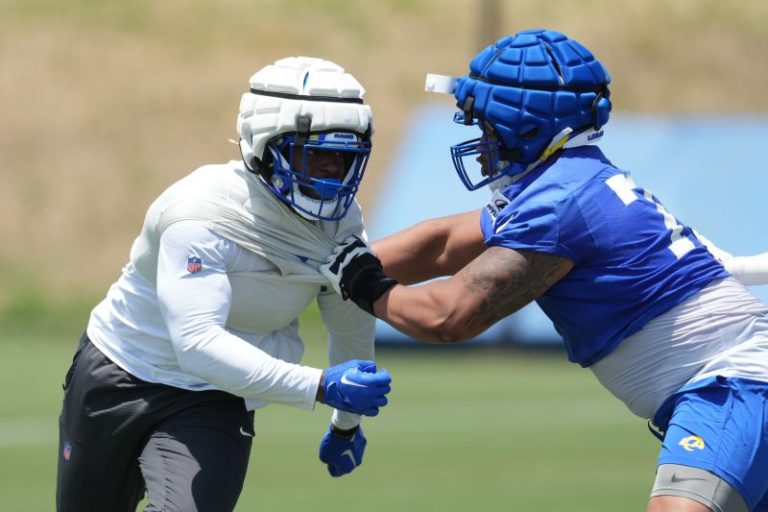
Miller attributed the decline in concussions to increasingly safer helmets, the broader use of Guardian Caps in practice – players were also permitted to start wearing them in games in 2024 – and the implementation of the dynamic kickoff set-up, which precludes players from sprinting downfield and fueling dangerous collisions at top speed.

He noted that helmet technology has improved so much that some shells are safer on their own than older helmets covered by a Guardian Cap, the padded device players often wear to reduce concussive hits. In collaboration with the NFL Players Association, the league is hoping to convince roughly 30% of its players to transition into the highest-performing helmets.

Seven older models were outlawed this season. Pittsburgh Steelers quarterback Aaron Rodgers is among the players who have been forced to don a newer, safer helmet, and he hasn’t been shy about sharing his complaints.

‘Dynamic kickoff’ here to stay

After installing the new format last year, the league has moved to its new kickoff architecture permanently. Previously, the kickoff had been the game’s most dangerous play, Miller saying the injury and concussion rates spiking two- to fourfold compared to plays run from scrimmage. Injuries and concussions suffered on the dynamic kickoff, per Miller, had essentially become aligned with the risk level that occurs on plays from scrimmage.

There were other benefits from dynamic kickoff:

About one-third of kickoffs were returned last season after the figure had fallen to about one-fifth in 2023, when the league became concerned the play had basically become ceremonial. Super Bowl 58 between the Kansas City Chiefs and San Francisco 49ers included 13 kickoffs, none of them returned.

Fifty-nine returns covered at least 40 yards in 2024, the most since 2016. Seven returns resulted in touchdowns, the most since 2021.

Due to the frequently improved field position created by dynamic kickoffs, the punting rate also dropped 4.5% in 2024, which had the added benefit of reducing what had been the game’s second-most dangerous play, per Miller.

Touchbacks will be brought out to the 35-yard line this year (not the 30) in an attempt to provide further incentive for returns.

A team trailing in a game can also now declare an onside kick at any point. Last year, they could only be attempted by the trailing team in the fourth quarter.

Sportsmanship to be a point of emphasis in 2025

Back to those inappropriate gestures − the league doesn’t want to see them and plans to enforce its rules to curb their increasing occurrence.

“Sportsmanship is a point of emphasis and clarification for the players and the clubs this year,” said Walt Anderson, the league’s officiating rules analyst and formerly an NFL referee for 17 seasons.

“Our taunting was up about 55 percent last year. Unsportsmanlike gestures – whether they were either simulating or either shooting a gun or brandishing of a gun or inappropriate gestures like a throat slash or unfortunate sexual gestures that were made – those were up almost 133 percent.’

Former Seahawks star Marshawn Lynch became infamous for the commonly used sexual gesture, even performing it as an exclamation point during his legendary ‘Beast Quake’ touchdown run in Seattle during the 2010 playoffs.

“It’s just one of those areas that the league wants to work actively on. There are plenty of (other) ways for players to be able to celebrate,’ continued Anderson. ‘We want them to focus on those and not the inappropriate areas.”

Unsportsmanlike fouls result in 15-yard penalties on the field and can also result in fines, particularly for repeat offenders.

This post appeared first on USA TODAY

Serena Williams is opening up about her experience with GLP-1 medications. The 43-year-old tennis star has lost 31 pounds on the drug Zepbound, a type of medication typically prescribed for diabetes and now also used for weight management. 

Williams’ struggles with body image began with postpartum changes after she gave birth to her first daughter, Alexis Olympia, in 2017, and continued after her second daughter, Adira River, was born in August 2023. She lost “a lot” of weight in the two weeks after River’s birth, she told People, but afterwards, “never lost another pound.” 

The tennis star’s candor may help to dispel the pesky health inaccuracy that weight loss is a simple matter of exercise. While an active life and healthy eating can help with the process, new research suggests that outside factors like genetics may play a bigger role than previously thought. As arguably one of the world’s greatest athletes, Williams’ decision to share her journey with GLP-1s may help to reshape the image of the drugs.

‘A misconception is that it’s a shortcut,’ she said in the interview. ‘As an athlete and as someone that has done everything, I just couldn’t get my weight to where I needed to be at a healthy place − and believe me, I don’t take shortcuts.’

Female stars struggle under the spotlight 

In a 2018 interview with Teen Vogue, Williams shared details of the body shaming she’d experienced throughout her career: “People would say I was born a guy, all because of my arms, or because I’m strong. I was different to Venus: she was thin and tall and beautiful, and I am strong and muscular − and beautiful, but, you know, it was just totally different.”

In March 2025, Meghan Trainor also opened up about struggles with body image postpartum. The Grammy winner, 31, told USA TODAY she had been looking forward to getting breast implants since she was a teenager, but pregnancy and two C-sections intensified the desire. 

“It was tough to look at my body,” she said at the time. “I’m always singing about loving myself, and it got harder and harder with all the scars and stretch marks. And then after losing weight, too, these boobs were just purely empty, just flat and just felt like skin on my body.”

Likewise, rugby champion Ilona Maher has used her platform to become a revolutionary body-positive activist and an inspiration for younger generations of women and athletes. 

Williams says it’s important to teach people to be confident at any size, like she tries to be. 

“The size I was before, there was nothing wrong with it. It’s just not what I wanted to have,” she clarified. “I just knew that I wanted to be where I personally felt comfortable.”

“Weight loss should never really change your self image,” she said. “Women often experience judgment about their bodies at any size, and I’m no stranger to that. So I feel like you should love yourself at any size and any look.” 

While the rise of GLP-1s brings a myriad of valid concerns − such as its contribution to disordered eating and promotion of thinness as the ideal body type − Williams’ outspokenness is a crucial, balanced example of healthy and transparent GLP-1 usage.

Celebrities should be transparent about their weight loss

We’re not just in a period of rapid, GLP-1 induced weight loss, we’ve also entered the “undetectable era” of plastic surgery. Cosmetic procedures and filler are no longer obvious on celebrities’ faces, rather more celebrities simply look like they haven’t aged. 

Mental health experts agree that celebrities sharing what work they’ve had done, or how they’ve gone about transformative weight loss journeys, can help fans maintain healthy, realistic beauty standards. The undetectable era may bring less transparency − making it more crucial than ever for people to stop comparing their looks to celebrities’. 

‘It may establish an unattainable ideal, and I think that the more we get comfortable with who we are, the less that becomes an issue,’ psychotherapist Stephanie Sarkis previously told USA TODAY. ‘We tend to not compare ourselves with others when we are feeling OK about ourselves.’

Williams wants to have an ‘honest conversation’ about GLP-1s

While the drugs, which have skyrocketed in popularity and ripped through Hollywood, offered Williams the extra boost she needed, she told Vogue she was aware of how much of a stigma remained.

‘I’m not saying any of this lightly, which is why it’s so important to have an honest conversation about this topic,’ she said. ‘I’m the mom of two girls, and I wanted to be very honest about what I’m doing so they can always be the same with me and we can have an open relationship.’

The medications, which work by targeting certain hormones to suppress appetite, have made Williams feel ‘sexier’ and ‘more confident,’ she said. And as for those who say if you work hard enough in the gym, you won’t need the drugs, Williams says they’re misinformed.

‘Sometimes you need help. Your story is your story, and it’s okay to make that choice to do it if you want to,’ she told Vogue. ‘I did, and I’m really happy with it.’

This post appeared first on USA TODAY

  • The SEC is shifting to a nine-game conference schedule in the 2026 college football season.
  • The SEC has played a nine-game conference schedule for college football since 1992.
  • The SEC will join the Big Ten and Big 12 as Power 4 conferences with a nine-game schedule.

This story was updated with new information

One of college football’s longest-standing debates is over.

On Aug. 21, the SEC announced that beginning with the 2026 college football season, the conference will shift to a nine-game conference schedule format for college football.

‘Adding a ninth SEC game underscores our universities’ commitment to delivering the most competitive football schedule in the nation,’ SEC Commissioner Greg Sankey said in a statement. ‘This format protects rivalries, increases competitive balance, and paired with our requirement to play an additional Power opponent, ensures SEC teams are well prepared to compete and succeed in the College Football Playoff.’

The SEC currently plays an eight-game conference schedule for college football and has done so since the 1992 season. The decision also now lines the SEC up with the Big Ten and the Big 12, two Power Four conferences that have already adopted a nine-game conference schedule.

The shift to a nine-game regular season schedule for the SEC also comes less than a day after the College Football Playoff selection committee announced that it will put a greater emphasis on strength of schedule in determining the 12-team field for the CFP this season. The CFP selection committee also announced it is introducing a record strength metric that will go ‘beyond a team’s schedule strength to assess how a team performed against that schedule’ to its selection process.

Here’s what to know the SEC’s announcement that it is implementing a nine-game conference schedule:

SEC schedule format

Here’s what the full nine-game conference format would look like beginning in 2026, per the SEC’s release:

  • The SEC will continue with a single-standings, non-divisional structure
  • Each school will play three annual opponents focused on maintaining many traditional rivalries
  • Each team’s remaining six games will rotate among the remaining conference schools
  • Each team will face every other SEC program at least once every two years and every opponent home and away in four years

Additionally, SEC teams will be required to schedule at least one additional high-quality non-conference game from the ACC, Big Ten or Big 12 conferences or Notre Dame each season under this new format.

When is SEC moving to 9-game schedule?

In its announcement on Thursday, the SEC announced that it will shift to a nine-game regular season conference schedule starting in 2026. It is the first adjustment to the SEC’s conference schedule since 1992, when the conference first expanded from a 10-team membership to 12-team membership with the additions of Arkansas and South Carolina.

Power Four college football scheduling formats

With the SEC’s announcement on Thursday, the ACC is the outlier among the Power Four conferences that won’t play a nine-game conference schedule starting in 2026.

Noted by Yahoo Sports’ Ross Dellenger prior to the SEC’s official announcement on Thursday, the ACC is expected to follow suit with the SEC by adopting a nine-game conference schedule.

SEC statement on conference scheduling

Here’s an additional statement from Sankey on the conference’s shift to a nine-game conference schedule:

‘The SEC has established itself as the leader in delivering the most compelling football schedule in college athletics,’ Sankey said. ‘Fans will see traditional rivalries preserved, new matchups more frequently, and a level of competition unmatched across the nation.’

The USA TODAY app gets you to the heart of the news — fastDownload for award-winning coverage, crosswords, audio storytelling, the eNewspaper and more.

This post appeared first on USA TODAY